REVIEW · ROME
Rome: Wonders of Ancient Rome at Dusk
Book on GetYourGuide →Operated by Touriks · Bookable on GetYourGuide
Rome’s ancient streets feel different at dusk. This 2-hour walk brings the Colosseum area to life with stories of emperors, gladiators, and the everyday politics of Ancient Rome, all while the worst daytime crowds fade.
I especially love the dusk timing and the calmer pace. You’re still in the heart of the sites, but the atmosphere lets the details land without the usual daytime chaos.
I also like that the guide work is built for listening—sterilised headsets help you catch every story point. One drawback to know up front: this tour is outside only, so you won’t go inside the Colosseum, Roman Forum, or Trajan’s Forum.
In This Review
- Key takeaways before you go
- Dusk in Rome: Why this 2-hour walk feels calmer
- Meeting at P.za del Colosseo: Start easy, arrive early
- Colosseum from the outside: Construction, crowds, and gladiator drama
- Arch of Constantine: A quick stop with big political symbolism
- Roman Forum at night: Temple of Castor and Pollux, Senate House, and the politics behind it
- Trajan’s Forum and the Column of Trajan photo moment
- Capitoline Hill viewpoint: The payoff of walking the city’s ancient nerve center
- What I like about the guide experience: headsets, story pace, and real names
- Group size options: small groups (up to 10) or private
- Price and value: Is $81 worth it for a dusk walk?
- Itinerary reality check: what each stop teaches you
- Comfortable shoes and night-walk basics
- Who this tour suits best
- Should you book this Rome: Wonders of Ancient Rome at Dusk tour?
- FAQ
- Is entrance to the Colosseum included?
- How long is the Rome: Wonders of Ancient Rome at Dusk tour?
- Where is the meeting point, and when should I arrive?
- Which languages are available for the live guide?
- Can I choose a small group or a private tour?
- Is the tour wheelchair accessible, and what should I bring?
Key takeaways before you go
- A 2-hour dusk window that trades midday crowds for softer light and easier walking
- Outside-only access to the Colosseum and major forum sights
- Headsets included, so the guide’s explanations stay clear
- Trajan’s Forum plus Capitoline Hill for a strong photo moment and a real viewpoint payoff
- Small group option (max 10) or private tour for more tailored pacing
Dusk in Rome: Why this 2-hour walk feels calmer
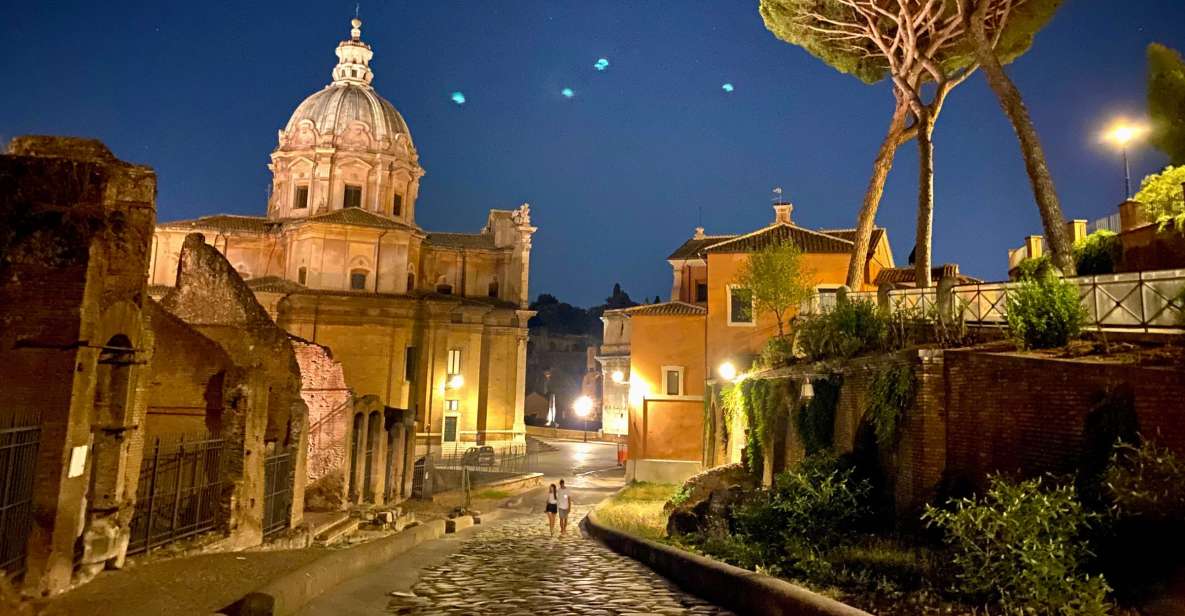
Rome at night has a different rhythm. The same stones and arches still stand there, but the city feels more human, less like a checklist. This tour leans into that: you get a guided story tour through the core ancient sites during the hours when sightseeing is less frantic.
The big win is pacing. With only two hours, the route is tight enough to stay focused, but not so rushed that you’re sprinting between stops. If you want the highlights without burning a full day (or fighting crowds), dusk is a smart compromise.
And it’s not just atmosphere. A guide ties the landmarks together into a single picture—how power worked, how public spectacles were staged, and how the Roman world kept reinventing itself across centuries.
You can also read our reviews of more tours and experiences in Rome.



Meeting at P.za del Colosseo: Start easy, arrive early
The tour starts at P.za del Colosseo, 21, right outside the Colosseo metro station (Line B, blue line). Meet at the green kiosk at street level, and look for staff holding a yellow Touriks sign.
Two practical tips: first, meet downstairs at the street level area, not the upper exit of the metro station. Second, arrive 30 minutes early so you can settle in before the guide begins.
This matters because it’s a walking tour. If you arrive late, you’ll spend your first minutes playing catch-up instead of getting your bearings.
Colosseum from the outside: Construction, crowds, and gladiator drama
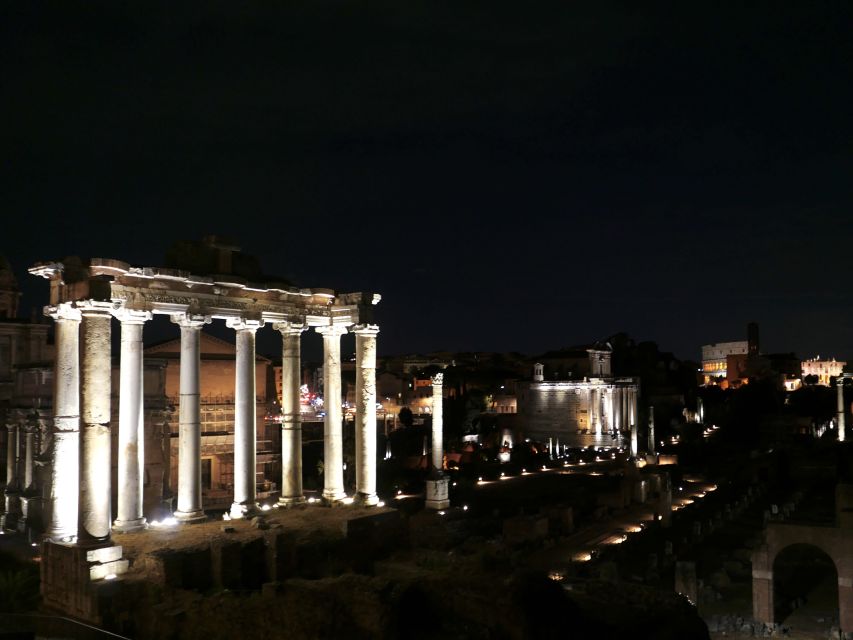
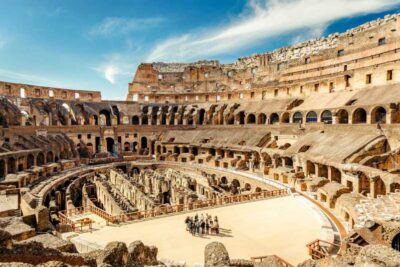
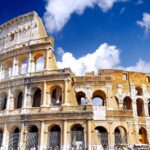
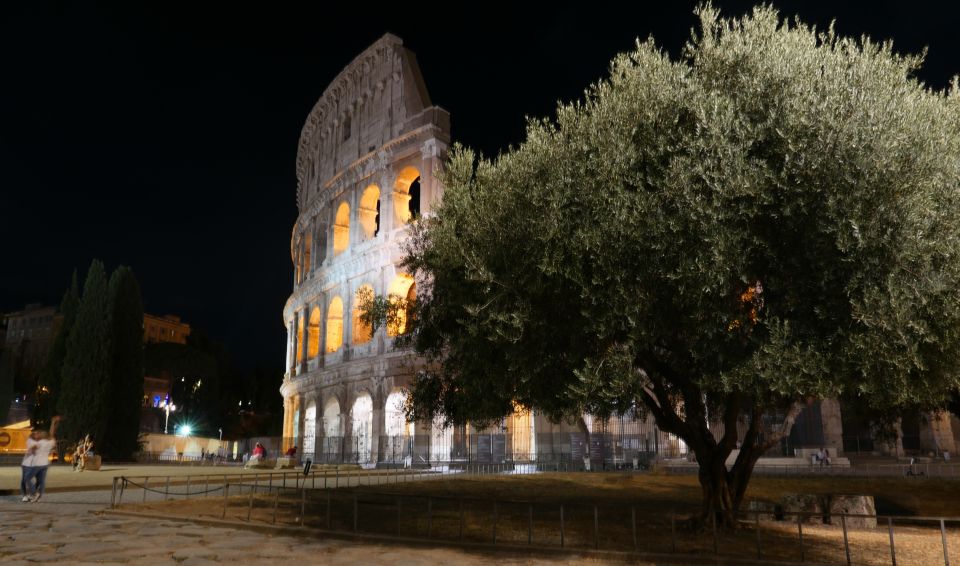
Your first major stop is the Colosseum area for about 40 minutes. You don’t enter the arena, but you still get the landmark impact—plus context that makes the building mean more than a photo.
The guide’s focus is on how the Colosseum worked as a political machine. You’ll hear about construction and how the arena hosted the bloody spectacle that defined Roman entertainment. The story angle is what turns the exterior into something you can actually “read.”
When the guide connects the structure to the purpose—movement of crowds, the spectacle, the messaging to citizens—the Colosseum becomes less like a static ruin and more like a stage designed for control. That’s the kind of framing you’ll carry to every forum stone afterward.
Arch of Constantine: A quick stop with big political symbolism
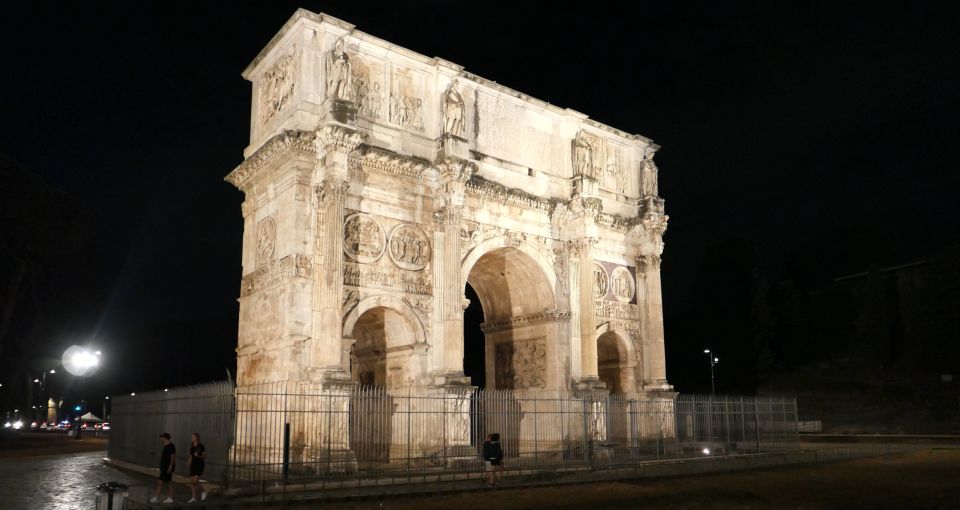
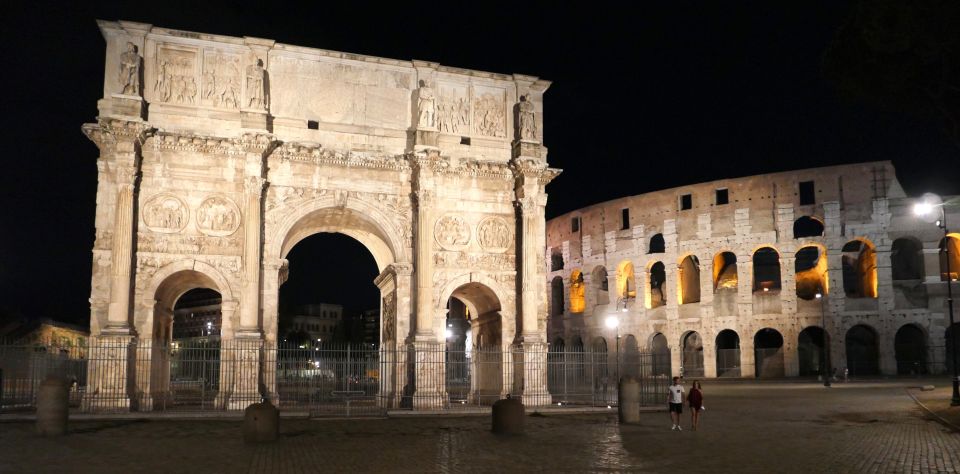
Next comes a 10-minute guided look at the Arch of Constantine. Even without stepping inside anything, this is a useful breather because it’s a short segment packed with meaning.
Arches are never just decoration in this part of Rome. They’re political statements, built to broadcast legitimacy and victory. If you listen closely, you’ll start noticing how often Roman power shows up in monuments like this—public messaging carved into marble.
Think of this stop as a hinge. It helps bridge the Colosseum’s spectacle and the Forum’s daily governance world.
Roman Forum at night: Temple of Castor and Pollux, Senate House, and the politics behind it
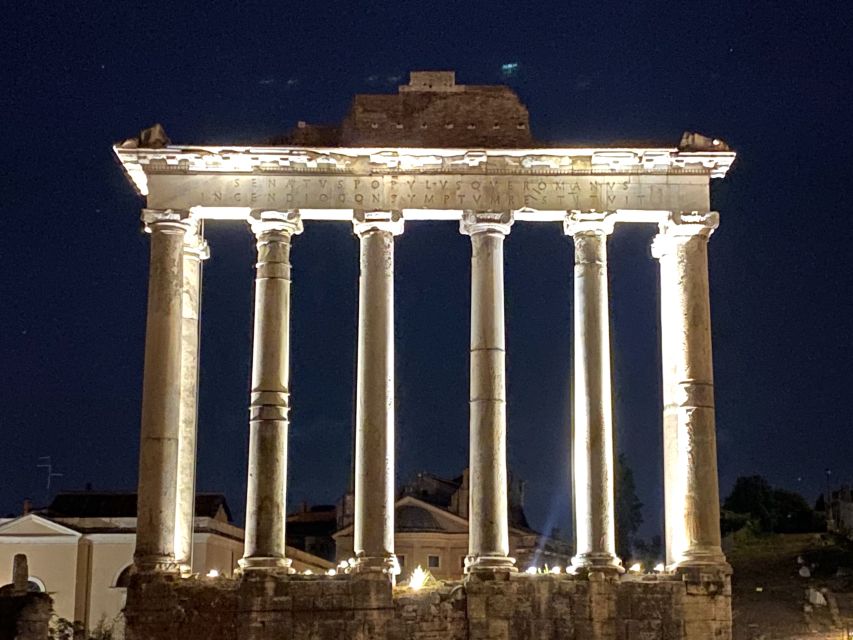
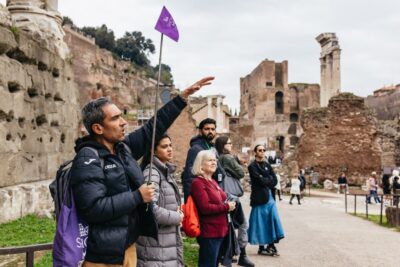
After the Arch of Constantine, the walk moves into the Roman Forum area for about 40 minutes. Here you’ll get the experience most people crave: seeing the Forum’s key remnants in the same setting where Roman public life unfolded.
You’ll focus on sights such as:
- the Temple of Castor and Pollux
- the Arch of Titus
- the Senate House
This is where your guide work really matters. The Forum is easy to find and easy to photograph—but it’s hard to understand without a framework. With a good explanation, you start connecting the architecture to what it represented: authority, tradition, and the public theater of rulership.
And the nighttime timing helps. It’s not that ruins suddenly become full of color; it’s that you can think. You’ll likely find it easier to absorb why the Forum mattered than when you’re being pushed along in peak daylight flow.






Trajan’s Forum and the Column of Trajan photo moment
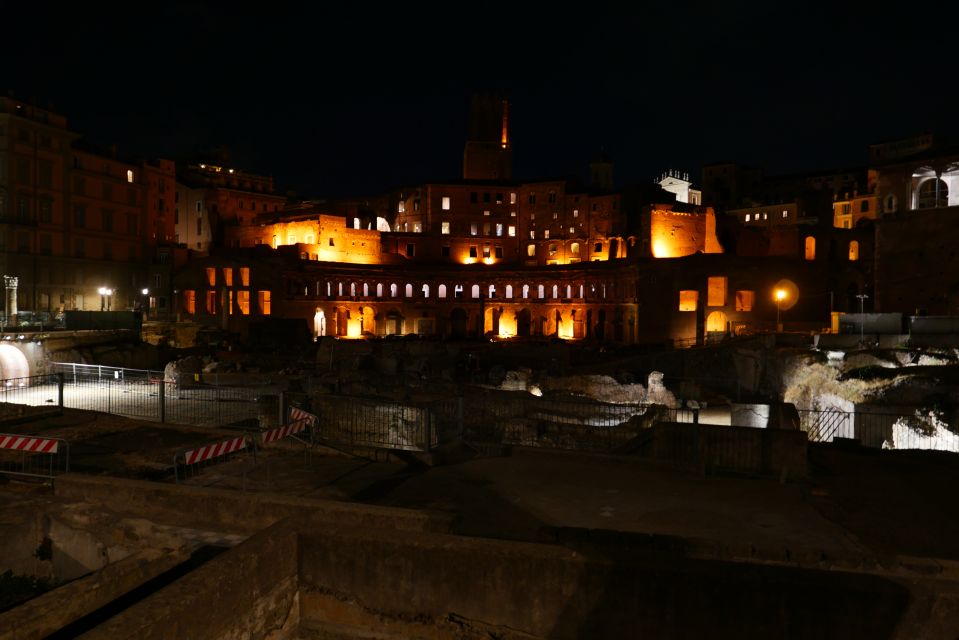
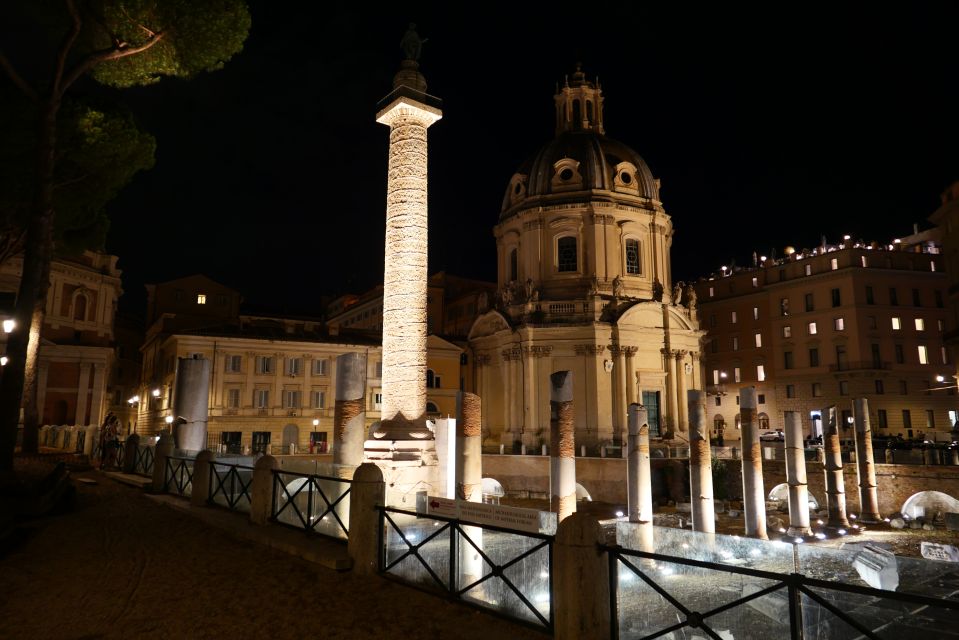
Then you’ll move to Trajan’s Forum for about 15 minutes. This portion is short, but it’s a highlight because it gives you a clean, recognizable centerpiece to anchor the story—especially the chance to snap a photo in front of the Column of Trajan.
Columns like this weren’t just commemorations; they were propaganda in vertical form. Trajan’s reign gets wrapped into imagery and narrative meant to signal power, order, and achievement. Even from outside viewpoints, the Column becomes a key reference point for understanding the Roman idea of winning, documenting, and ruling.
If you’re the kind of person who likes photos with context, this is a good payoff stop. You’ll come away with images that match the story you were told, not just a random monument shot.
Capitoline Hill viewpoint: The payoff of walking the city’s ancient nerve center
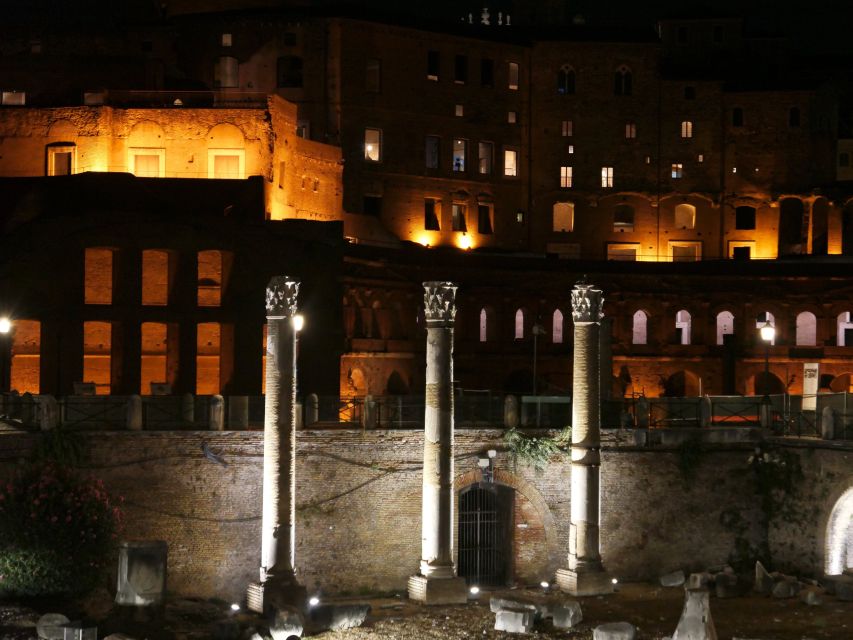
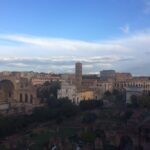
The final guided segment is about 15 minutes at Piazza del Campidoglio (Capitoline Hill). This is where you get your panoramic moment—an overlook that helps your brain connect everything you just walked past.
Views do something guides can’t: they let you understand scale. From the hill, Rome’s layout makes more sense, and you can see why this area mattered strategically and politically. It’s the end-of-tour mental click.
If you’ve been taking pictures on your phone throughout, this is where you’ll switch from “documenting” to “seeing.” That viewpoint is the natural closure to a walking tour designed around imperial Rome.
What I like about the guide experience: headsets, story pace, and real names
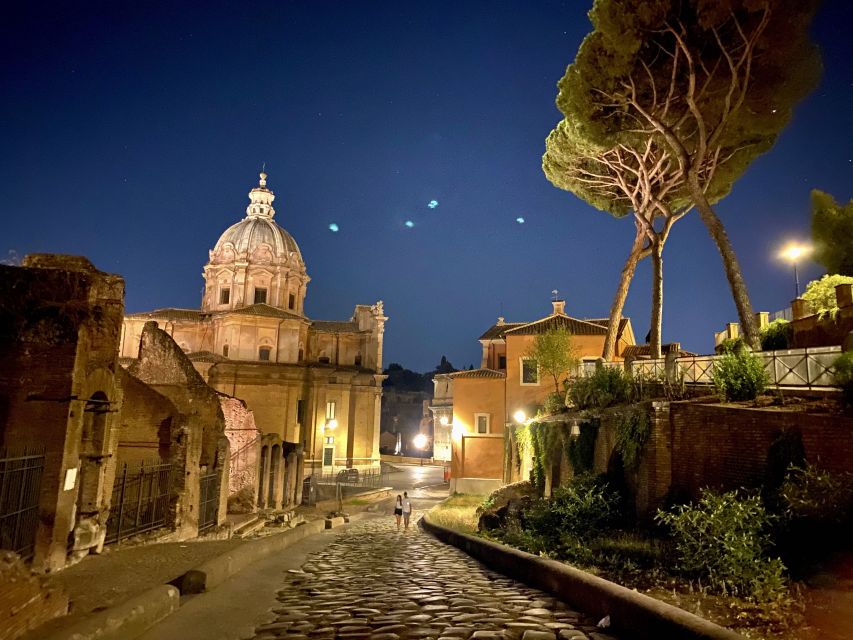
This tour is built around professional guiding, and you’ll wear sterilised headsets to hear clearly. For night walks around busy, echo-prone stone spaces, that’s a practical advantage. You’re less likely to strain your ears or lose key details.
The tour also runs with live guides in multiple languages: English, Italian, Spanish, Portuguese, French, and German. If you’re traveling with language flexibility, you should be able to pick a time that matches your comfort level.
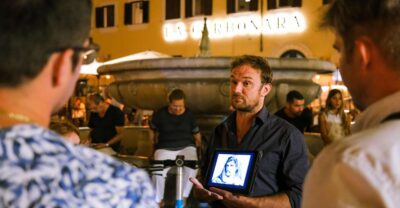
And about guide style: I found the best part is how the guide makes the people feel real. Some guides use photo-based explanations to connect the audience to everyday life and power dynamics. In particular, José stood out for using that kind of visual storytelling to make the 2 hours feel much shorter. Another guide, Matilde, also earned strong praise for keeping the experience energetic and focused.
You won’t necessarily know which guide you’ll get, but the format is consistent: talk + context + a path that keeps you moving while everything stays understandable.
Group size options: small groups (up to 10) or private
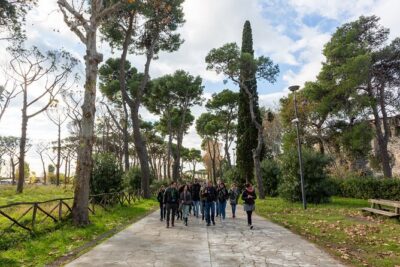
You can choose between a small group (maximum of 10 participants) or a private tour. This choice matters more than it sounds.
With small groups, you get a quieter, more manageable pace through the same public space where big crowds surge during the day. With a private tour, you can generally expect the guide to adjust pacing to your questions, and you can take photos without feeling rushed.
If you hate being herded or you want deeper explanations, private is worth considering. If you just want a solid highlights-and-stories route, the small group option should feel like the sweet spot.
Price and value: Is $81 worth it for a dusk walk?
At $81 per person for a 2-hour tour, this is priced like an expert-guided highlights experience. It’s not cheap like a free self-guided walk, but it is less expensive than multi-hour, entry-included tours.
Here’s the value equation:
What you get:
- a professional guide
- sterilised headsets
- full on-site assistance
- all fees and taxes
- a route that hits the Colosseum area, Roman Forum sights, Trajan’s Forum, and Capitoline Hill
What you don’t get:
- no entrance tickets into the Colosseum, Roman Forum, or Trajan’s Forum
- no food or drinks
- no hotel pickup/drop-off
So the question becomes: do you want guided context more than you want to pay for site entry? If you’re already planning to visit the interior of these major sites later, this outside-focused dusk tour can be a smart “warm-up.” It gives you story and orientation, so later visits feel clearer.
If you’re hoping to walk into the Colosseum or the Forum ruins themselves, this is the big mismatch. One guest noted disappointment because they expected interior access, and that’s the key point to respect: this tour keeps things outside, on purpose.
Itinerary reality check: what each stop teaches you
A good walking tour doesn’t just show monuments. It teaches you how to interpret them.
- Colosseum area: you learn the entertainment/power connection and why gladiator spectacle wasn’t random—it was messaging.
- Arch of Constantine: you get a quick primer on propaganda-style architecture and how Rome broadcast legitimacy.
- Roman Forum highlights: you see the remnants linked to governance and civic life, including Senate House and the Temple of Castor and Pollux.
- Trajan’s Forum: you anchor the story with the Column of Trajan and the idea of commemorated rule.
- Capitoline Hill viewpoint: you finish with a spatial understanding that helps the whole route make sense.
If you like to understand what you’re looking at—rather than just collecting landmarks—this sequence is built for you.
Comfortable shoes and night-walk basics
The tour is outdoors and runs rain or shine unless weather becomes unsuitable. That means you should plan for wet pavement if it rains and wear shoes that can handle uneven stone and evening footing.
This is not a tour for dress shoes or brand-new sneakers that haven’t been broken in. Your body will thank you for comfortable support, especially once you’re climbing and then walking toward viewpoints.
If you’re sensitive to cold evenings, consider layers. Night in Rome can feel cooler than midday, even in seasons that look mild on paper.
Who this tour suits best
This experience fits especially well if you:
- want a guided introduction to Ancient Rome’s most famous corners
- prefer nighttime sightseeing to daylight crowds
- like stories about emperors, politics, and the spectacle culture around gladiators
- want a short, focused route that still ends with a major viewpoint
It’s also ideal for first-timers who feel overwhelmed by how much Rome has to offer. You’ll leave with a map in your head: what belongs where, and why it mattered.
And it’s a good match for language learners who want clear, headset-supported narration in a supported language. The guide format helps you follow even if your Italian history knowledge is patchy.
Should you book this Rome: Wonders of Ancient Rome at Dusk tour?
Yes—if you want a guided, outside-only highlights walk that makes Rome’s imperial era easier to understand. The headsets, the dusk timing, and the story-driven approach are exactly what you want when the goal is clarity, context, and strong photo moments in a tight 2 hours.
Skip it or pair it carefully if your priority is entering the Colosseum, Roman Forum, or Trajan’s Forum interiors. This tour is designed for viewing and interpretation from outside, not for ticketed access.
If you’re on the fence, think of it like this: it’s a fast, guided “how to read the stones” experience. And when you return later to the sites on your own or with another ticketed tour, the whole area will finally click.
FAQ
Is entrance to the Colosseum included?
No. This tour does not include entry into the Colosseum, the Roman Forum, or Trajan’s Forum. It focuses on seeing the sites from the outside.
How long is the Rome: Wonders of Ancient Rome at Dusk tour?
The tour lasts about 2 hours.
Where is the meeting point, and when should I arrive?
Meet at the green kiosk at street level right outside the Colosseo metro station (Line B, blue line). Staff will be holding a yellow Touriks sign. Arrive 30 minutes before the tour starts.
Which languages are available for the live guide?
You can choose a guide speaking English, Italian, Spanish, Portuguese, French, or German.
Can I choose a small group or a private tour?
Yes. There’s a small group option with a maximum of 10 participants, and private tours are also available.
Is the tour wheelchair accessible, and what should I bring?
The tour is wheelchair accessible. Wear comfortable shoes, since it’s a walking tour.