REVIEW · ROME
Secrets of Rome: Historical True Crime Small Group Tour
Book on GetYourGuide →Operated by City Stories Tours · Bookable on GetYourGuide
Rome has a darker side. This Secrets of Rome historical true crime walk trades the usual sightseeing for murders, poison, and political scandal, guided with expert storytelling and a small group of 15. I like the pacing and the way the stories connect to what you’re actually seeing on the street; one note, though: it focuses on older historical cases more than modern true crime or paranormal scares.
You’ll start in Campo de’ Fiori and finish at Castel Sant’Angelo, with stops that take you through Rome’s quieter lanes rather than a straight museum route. The tour is fully outdoors and runs rain or shine, so pack for weather, and plan on a short restroom/drinks break at a local bar (food and drinks aren’t included). On past departures, guides such as Ben, Ivana, and Ariel have been praised for keeping the mood engaging, funny in the right places, and easy to follow even when the subject matter turns grim.
In This Review
- Key highlights you’ll feel right away
- Starting at Campo de’ Fiori: Bruno’s square and where your guide grabs attention
- Piazza Farnese, Ponte Sisto, and Via Giulia: the route that keeps the stories moving
- The local bar break: a needed reset mid-story
- The characters of forbidden Rome: Bruno, Cagliostro, Maidalchini, Tofana, the Borgias, Beatrice Cenci
- The quiet stop between the big ones: the tour’s “hidden” corner strategy
- Castel Sant’Angelo finale: why the walk lands here
- Price and value: what $29 buys you in Rome time
- Who should book this (and who might skip it)
- Tips to get the most out of your two hours
- Should you book Secrets of Rome: Historical True Crime Small Group Tour?
- FAQ
- How long is the Secrets of Rome historical true crime tour?
- Where do I meet the guide?
- Is the tour indoors or outdoors?
- How big is the group?
- What language is the tour offered in?
- What’s included in the price?
Key highlights you’ll feel right away
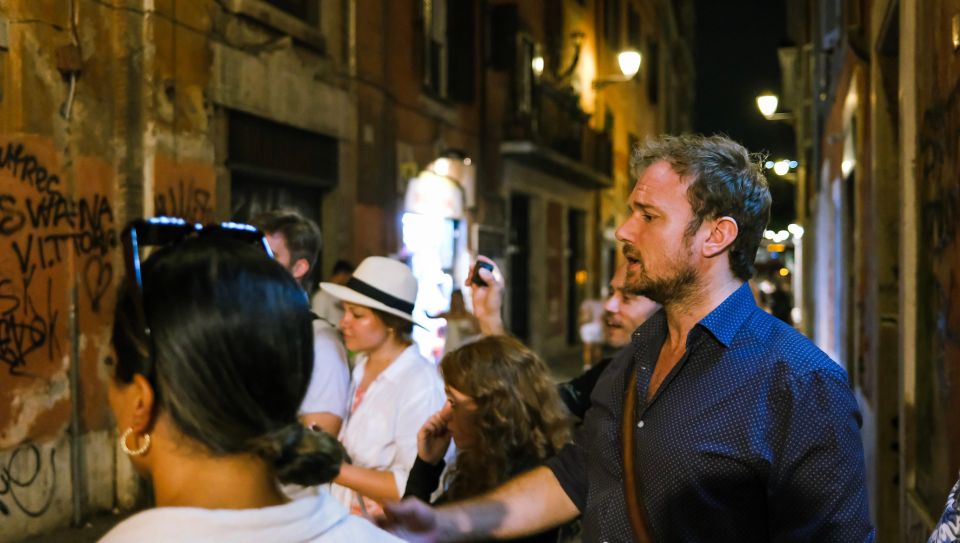
- Small group size (max 15) keeps the walking and Q&A comfortable, not crowded
- Expert storyteller guides who bring names like Bruno, Cagliostro, and Giulia Tofana to life with strong pacing
- Evening-friendly route that shows you Rome’s backstreets at a human speed
- A short break at a local bar so you don’t lose the thread of the stories
- Rain or shine format, so bring an umbrella and keep moving
Starting at Campo de’ Fiori: Bruno’s square and where your guide grabs attention
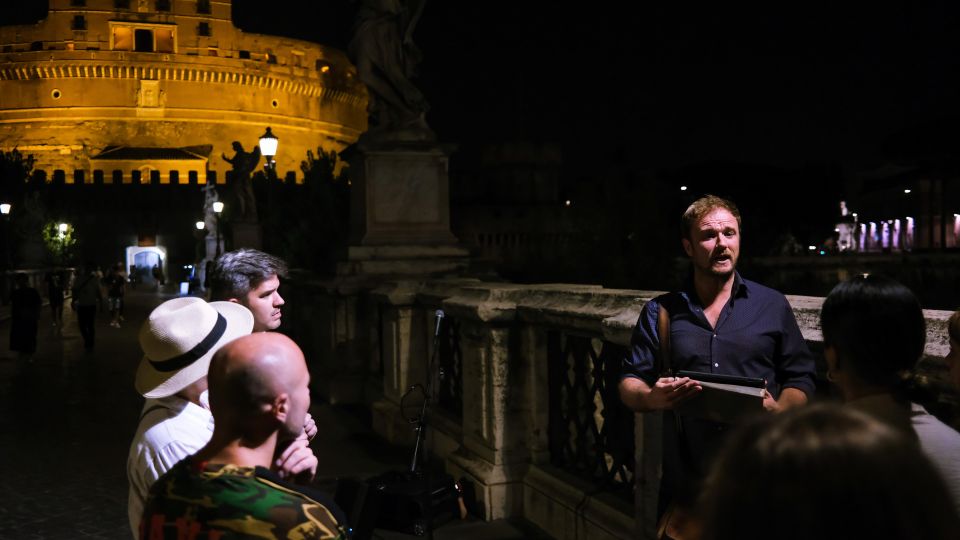
The tour’s meeting point is simple: find the statue in the middle of Campo de’ Fiori, and look for your guide holding a sign that reads Rome’s Dark Side. I like how clear that is. It means you can get started fast, without hunting through a half-dozen side streets while the group forms.
Campo de’ Fiori sets the tone immediately, because one of the first big stories the tour leans on is the fiery demise of heretic philosopher Giordano Bruno. Even if you know little about him, the way the guide frames the events makes it feel like you’re hearing a case file, not a textbook summary. Expect your guide to set up the theme of forbidden ideas, dangerous power, and the kind of secrets that spread in a city that never really sleeps.
You’ll be walking outdoors right after the meet, so wear shoes you trust. This is a two-hour format, meaning the guide has less time to pause later, and early momentum matters. If you’re prone to slipping on uneven pavement, take that seriously here.
One practical point: you’re in a square right at the start, so be ready for normal city noise and people-flow. That also helps with the tour’s energy, especially if it’s your first evening in Rome and you want to orient yourself quickly.
You can also read our reviews of more historical tours in Rome



Piazza Farnese, Ponte Sisto, and Via Giulia: the route that keeps the stories moving
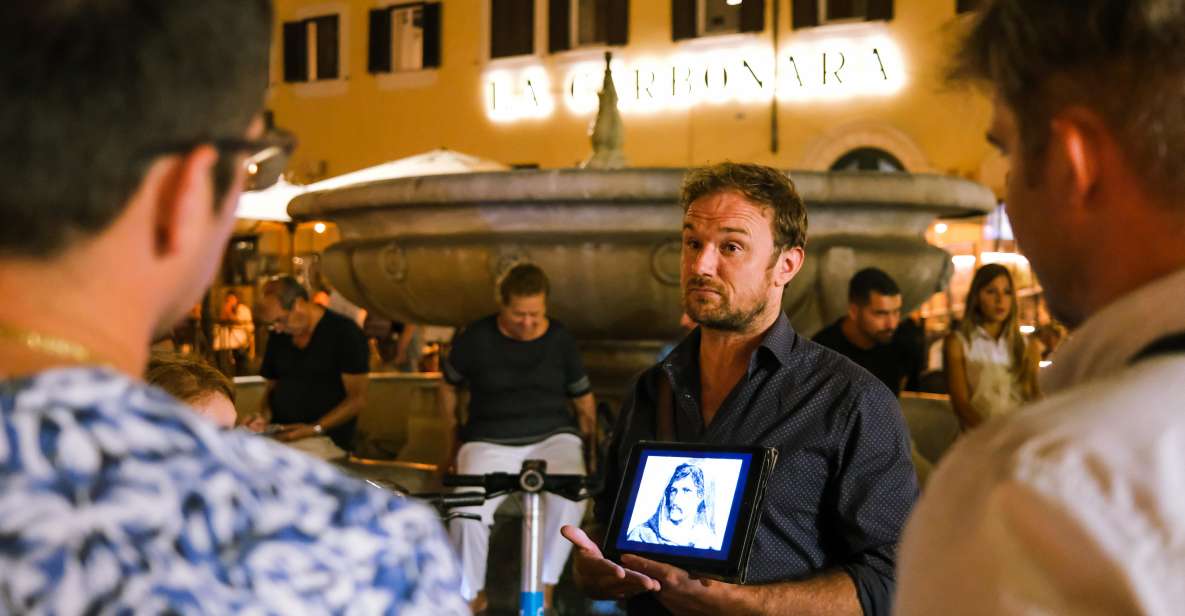
After Campo de’ Fiori, the itinerary strings you through a sequence of notable stops: Piazza Farnese, Ponte Sisto, and Via Giulia. What matters isn’t just where you stand, but how your guide uses those locations as chapter breaks. You’re not doing a hop-on hop-off route; it’s a guided walk with a narrative shape.
These are the stretches where you’ll likely notice the tour’s biggest strength: the guide’s ability to keep a group engaged without turning it into a lecture. People in the past have specifically praised how the pace stays good and how the guide manages the mood from story to story. That’s important because “true crime meets history” can go two ways: either it feels heavy and chaotic, or it feels like a well-edited mystery. This tour aims for well-edited.
Ponte Sisto and Via Giulia are also where you get the backstreet feeling more strongly—narrower, more winding, and slower than the main drag. That’s part of the value: you see Rome at walking speed instead of only in quick photo bursts. If you like getting your bearings through streets, not only landmarks, this route is a real plus.
There’s also a social benefit to this layout. Because the tour is small (max 15), you can actually hear the guide and keep up without constantly doing a sideways shuffle to see around taller people. If you’ve ever tried to listen in a crowded group in Rome, you already know why that matters.
The local bar break: a needed reset mid-story
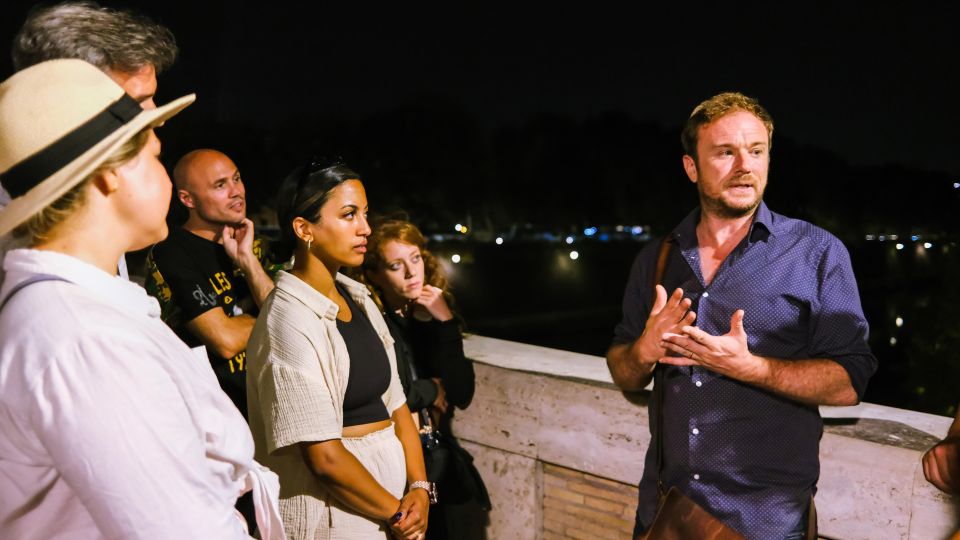
About halfway through, there’s a quick break at a local bar for roughly 10 minutes. This is the moment I’d plan around if you need a restroom or just want to cool your brain for a minute. Past guests have pointed out that the break works for toilets and/or drinks if you want them.
Important: food and drinks are not included, so treat this as a recharge stop, not a included refreshment. If you’re sensitive to long outdoor walking and you’re prone to getting hungry, you may want to grab a snack before the tour starts or be ready to buy something small at the bar.
This is also where I’d put practical strategy to work. If your phone battery is low, consider taking care of any maps or photos before you hit the listening portions again. Once the guide resets the narrative, you’ll want full attention.
The characters of forbidden Rome: Bruno, Cagliostro, Maidalchini, Tofana, the Borgias, Beatrice Cenci
This is not a tour that only mentions famous names in passing. It builds a cast of characters tied together by scandal, intrigue, and danger. As you move through the route, you’ll hear stories connected to:
- Giordano Bruno, including his fiery demise in Campo de’ Fiori
- Cagliostro, described through clandestine activities
- Donna Olimpia Maidalchini, a major power player in 17th-century Rome
- Giulia Tofana, known here as a notorious poisoner
- The Borgias, with tales of treachery, cunning, and Machiavellian plotting
- Beatrice Cenci, framed as a tragic figure marked by betrayal and tragedy
What I like about this mix is that it covers different kinds of “crime.” Some of it is public spectacle, some is behind-the-scenes power, and some is personal horror. The result feels like a set of interconnected cases, not a single topic repeating for two hours.
Now for the balanced part: this tour can feel gruesome, because the stories are built around murder and poisoning. Past guests have described it as fun, informative, and gruesome in equal measure, which tells me the guide aims to lighten the mood with humor without turning the subject into a joke. If you’re squeamish, you’ll still probably be okay, but you should know the theme does stay dark.
Also, the tour is labeled historical true crime. That means the “crime” you hear about isn’t modern policing. It’s the kind of intrigue that grew out of courts, beliefs, reputations, and power structures. If you came hoping for more recent true-crime cases or a strong paranormal angle, you may find the content doesn’t match that expectation.
The quiet stop between the big ones: the tour’s “hidden” corner strategy
Your itinerary includes a guided stop described as a hidden gem. The key thing to understand is the purpose of that stop, not the name. It’s there to slow you down and get you into a smaller space, where the guide can keep the story intimate and detailed.
This is often the moment when a storytelling tour separates itself from a standard sightseeing walk. In a famous square, you can point and talk. In a quieter corner, you can connect the atmosphere to the narrative. The guide’s job here is to make you feel like you’re getting access to the Rome that doesn’t show up on postcard routes.
In practice, this means you’ll probably spend a few minutes listening closely, then moving again as the tour builds toward the finish. If you tend to zone out during long narration, that’s also when you’ll want to stay present, because it’s a switch from “big setting” to “personal story.”






Castel Sant’Angelo finale: why the walk lands here
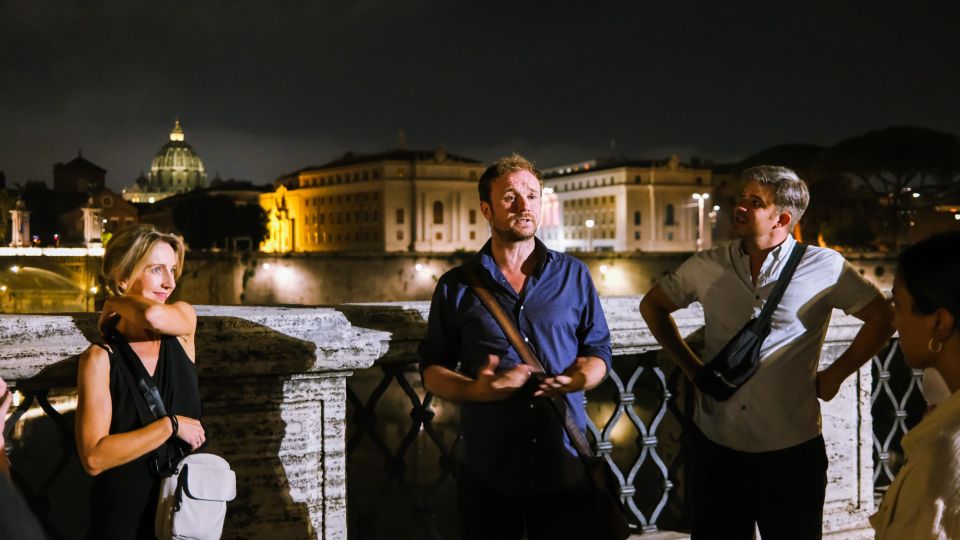
The tour finishes at Castel Sant’Angelo. Even without getting into extra museum-style detail, ending here makes sense for a true crime theme because it gives the story somewhere substantial to close. It also works well for logistics: it’s an easy anchor point for continuing your evening afterward.
A good storytelling walk knows when to stop talking and let you absorb what you just heard. Ending at a major landmark helps you do exactly that. You get a clear end point, so you’re not left wondering if you’re still “in the middle” of the route.
If it’s your first night in Rome, this ending spot can also be helpful for your next move. You’ll likely have enough energy to continue wandering, grab gelato, or line up a longer evening plan, because the tour itself is only two hours.
Price and value: what $29 buys you in Rome time
At $29 per person for 2 hours, you’re paying for a guide who can turn history into an engaging walk—and the real value is how you’re delivered it. This isn’t a self-guided audio tour, and it isn’t a big-group bus situation either.
Small group size matters here. With a max of 15 people, the guide can keep eye contact, call out the group’s attention, and still allow questions without losing control. That’s what you’re really buying at this price point: access to a live storyteller.
You also get structure. The route starts at Campo de’ Fiori, uses a handful of guided stops, includes a brief break, and ends at Castel Sant’Angelo. That’s worth it if you want a plan for your evening rather than guessing which streets to walk on your own.
Downside on value is only about expectations. Because the focus is historical true crime, you won’t get museum entry tickets or included meals. Food and drinks are out of pocket, so budget a little extra if you want to order something during the bar stop.
Who should book this (and who might skip it)
I think this tour is a great fit if you like stories that are specific, dark, and grounded in real places. It also suits you if you enjoy Rome at night, want a route through backstreets, and like learning from a guide who can hold a group’s attention.
It’s also a smart first-evening activity. Multiple guides have been described as friendly and fun, and the format is short enough that you can still do other sightseeing after. If you like asking questions, a small group helps.
If your top priority is classic sightseeing—colonnades, major basilicas, and art stops—this may not replace those. This walk is aimed at the forbidden side of Rome, and the tour stays focused on murders and scandals rather than general art history.
If you’re specifically chasing modern true-crime stories, or you want strong ghost-and-haunting content, you may feel the historical tone leans more “human horror” than supernatural.
Tips to get the most out of your two hours
First, show up on time at the statue in Campo de’ Fiori. The meeting point is precise, and the tour’s energy depends on starting together. Wear comfortable shoes, because this is a walking tour built on short listening stops.
Second, bring an umbrella or rain coat. The tour is rain or shine, and it’s all outdoors. If weather is bad, the guide will still run the route, so don’t count on an indoor detour.
Third, plan your break like an adult. The bar stop is short, and food and drinks aren’t included. If you want a drink, you’ll need to buy it.
Finally, don’t be afraid to ask questions. Guests have praised guides for being responsive and for adding helpful recommendations after the tour. A great guide can turn a story walk into a practical Rome orientation.
Should you book Secrets of Rome: Historical True Crime Small Group Tour?
If you want something different from the standard Rome checklist, I’d say yes. For $29 and two hours, you get a focused small-group walk from Campo de’ Fiori to Castel Sant’Angelo, with an expert storyteller guiding you through a dark cast of characters like Bruno, Cagliostro, Donna Olimpia Maidalchini, Giulia Tofana, the Borgias, and Beatrice Cenci.
Book it if you enjoy dark history, good pacing, and backstreet wandering. Skip it if you need modern true crime, strong paranormal content, or a classic sightseeing-heavy itinerary.
FAQ
How long is the Secrets of Rome historical true crime tour?
The tour lasts 2 hours.
Where do I meet the guide?
Meet in Campo de’ Fiori at the statue in the middle of the square. Your guide will be holding a sign that says Rome’s Dark Side.
Is the tour indoors or outdoors?
It is all outdoors and runs rain or shine.
How big is the group?
The group is small, with a maximum of 15 people.
What language is the tour offered in?
The tour is in English.
What’s included in the price?
The tour includes an expert storytelling guide. Food and drinks are not included.