REVIEW · ROME
Highlights of Rome: Historical Center Walking Tour
Book on GetYourGuide →Operated by Tour in the City - Travel Agency Rome - · Bookable on GetYourGuide
Three hours, and Rome feels different. This private walk threads iconic sights with lesser-seen corners of the historic center, all told by a live guide. You’ll move between major Baroque and Renaissance squares and fountains, with a pace that works for families too.
I like the way this tour mixes headline stops with story-driven context. You’ll get clear guidance at places like the Spanish Steps, Trevi Fountain, the Pantheon, and Piazza Navona, plus you’ll be pointed toward sites such as the Area Sacra di Largo di Torre Argentina (linked with Julius Caesar). I also like the practical add-ons: entrance fees are included, and the tour provides headsets for groups larger than 8, so you don’t have to strain to hear your guide.
One thing to think about: this is not a full “every door inside” visit. The dome and the Necropolis/Treasury Museum aren’t included, and skip-the-line entry isn’t part of the package, so your time is mainly focused on sights you see along the route.
In This Review
- Key Things You’ll Notice on This Walk
- The Big Idea: A Focused Rome Center Circuit in 3 Hours
- Meeting at Piazza della Trinità dei Monti (And Getting Started Smoothly)
- Spanish Steps to Trevi Fountain: Baroque Drama You Can See in Real Time
- Piazza Colonna and Temple of Hadrian: Small Stops That Keep the Route Coherent
- Pantheon: The Dome Stop Everyone Talks About
- Piazza Navona and the Fountain of the Four Rivers: Baroque Rome at Full Volume
- Campo de’ Fiori and Largo di Torre Argentina: Daily Life Meets Ancient Tragedy
- Ponte Sant’Angelo and Castel Sant’Angelo: The Scenic Bridge-and-Castle Stretch
- Vittoriano and St. Peter’s Basilica: The Endgame of the Route
- What’s Included (And How That Changes Your Planning)
- Pace, Comfort, and Family-Friendliness (Without Sugarcoating It)
- Languages and the Hearing Setup That Saves You From Guessing
- Price: Why $141.61 Can Feel Fair (If This Is Your Style of Tour)
- Who This Tour Suits Best
- Should You Book This Historical Center Walking Tour?
- FAQ
- How long is the Highlights of Rome Historical Center Walking Tour?
- Where do I meet for the tour?
- What are the major stops on the route?
- What’s included in the price?
- Is food or drinks included?
- Are skip-the-line tickets included?
- Do I get an audio guide at St. Peter’s Basilica?
- Is the tour wheelchair accessible?
- What’s the cancellation window?
Key Things You’ll Notice on This Walk
- Private, story-led pacing that’s friendly for families without rushing
- Headsets included for bigger groups, so you hear every explanation
- Iconic Rome stops in one circuit: Spanish Steps, Trevi Fountain, Pantheon, Piazza Navona
- Market and ancient-history stops: Campo de’ Fiori and Area Sacra di Largo di Torre Argentina
- A strong ending stretch through Ponte Sant’Angelo, Castel Sant’Angelo, and St. Peter’s Basilica area
- Built-in audio support for St. Peter’s Basilica in multiple languages
The Big Idea: A Focused Rome Center Circuit in 3 Hours
This tour is designed for people who want the classic Rome views without spending your whole day figuring out routes. In about three hours, you cover a high-density slice of the historical center—squares, fountains, and major landmarks—while a professional guide keeps the flow and the explanations straight.
The private setup matters. You’re not stuck following a huge pack, and your guide can keep the pace manageable. The info is also aimed at helping you understand what you’re looking at, not just where to stand for photos.
And yes, this tour is strongly “Baroque and Renaissance squares and fountains.” You’ll spend meaningful time around the Spanish Steps area, Trevi Fountain, and Piazza Navona, where architecture and sculpture are the main characters.
You can also read our reviews of more walking tours in Rome

Meeting at Piazza della Trinità dei Monti (And Getting Started Smoothly)
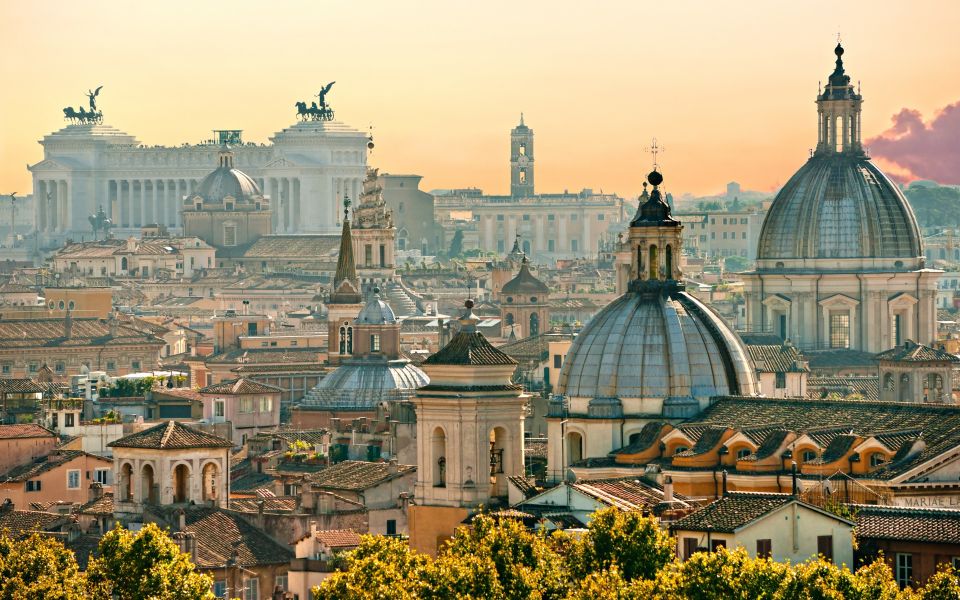
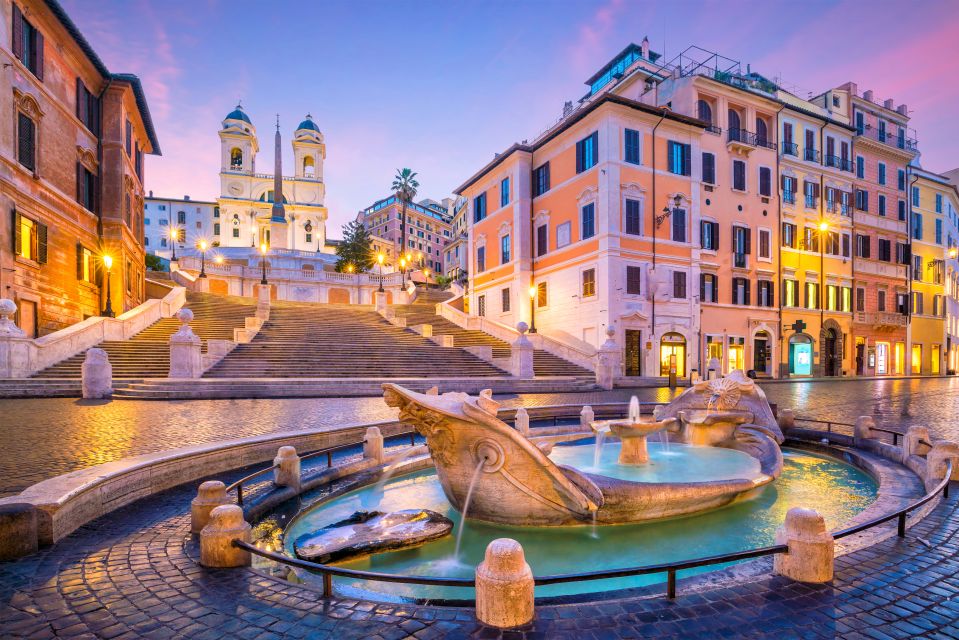
You meet at Piazza della Trinità dei Monti, next to the obelisk in the middle of the square. Your guide holds a signboard reading Tour in the City, and the walk ends back at this same meeting point.
Why this matters: you start in a central zone that’s easy to reach, and you avoid the stressful start-stop logistics of tours that scatter you across Rome. Also, the meeting point makes a lot of sense for the opening sights, because you quickly move into the Spanish Steps area.
The guide’s style is part of the value here. In the experience’s standout feedback, the guide is praised for being punctual, very specific in explanations, and clear in storytelling. That combination matters when you’re walking past famous landmarks where it’s easy to miss the point.
Spanish Steps to Trevi Fountain: Baroque Drama You Can See in Real Time
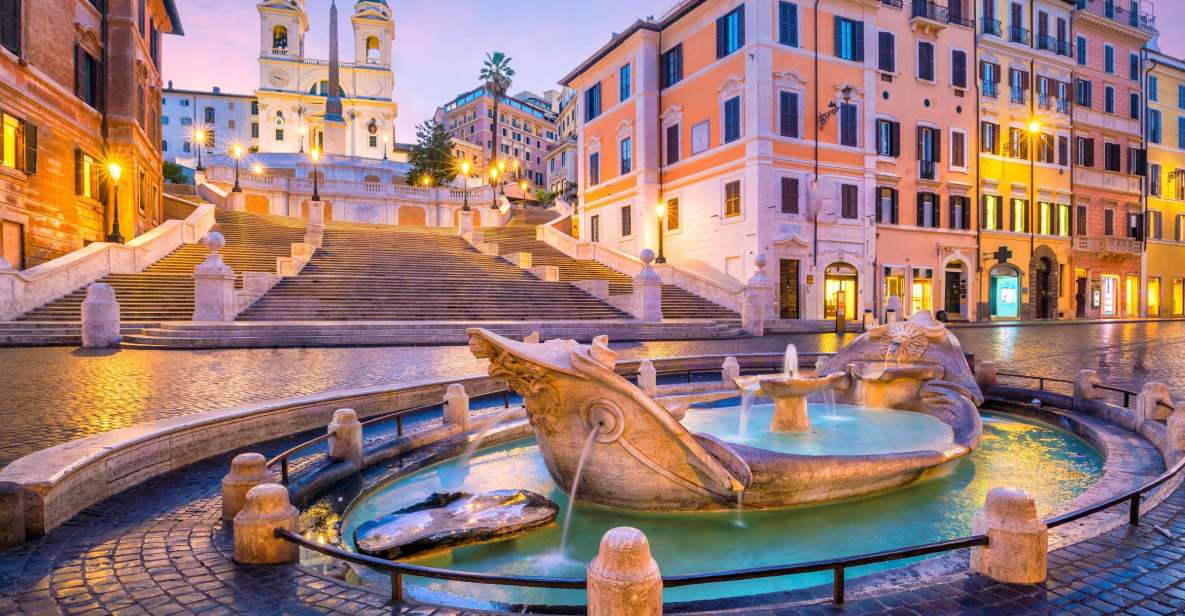
The tour begins with a photo stop and guided orientation around Santissima Trinità dei Monti, then moves directly into the Spanish Steps. This area is one of those places where Rome looks like a postcard, but your guide’s job is to make it more than scenery.
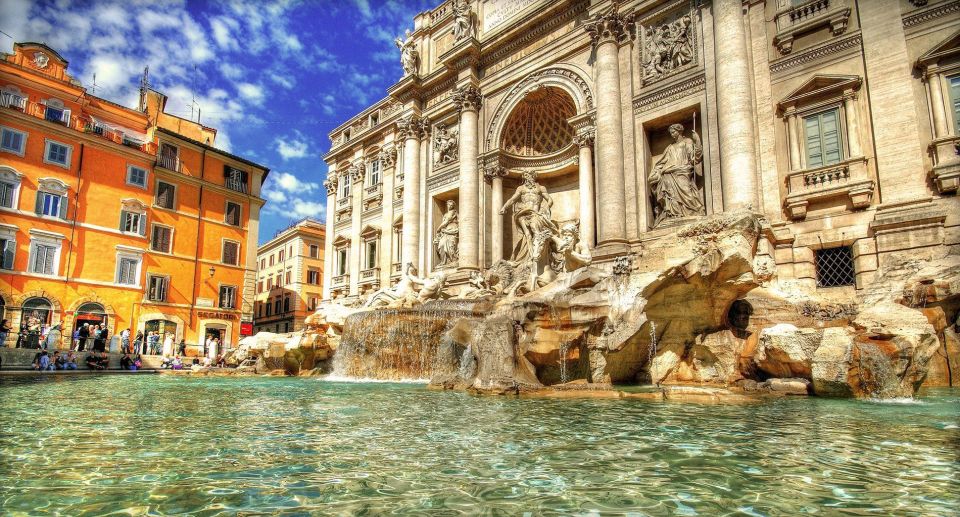
After the Spanish Steps, you head to Trevi Fountain, which the tour highlights as one of the most stunning fountains in the world. You won’t just get “look how pretty it is” commentary. Your guide shares the details behind the fountain so you understand what makes it famous and what to notice while you’re there.
Practical tip: bring comfortable shoes and be ready to pause more than once. These stops are built around seeing and learning, not speed-walking. If you’re traveling with kids, this is also where the “family pace” design helps—you can stop for photos without feeling like you’re sprinting.
Piazza Colonna and Temple of Hadrian: Small Stops That Keep the Route Coherent
Between the headline fountain moments, the tour includes Piazza Colonna and the Temple of Hadrian. These aren’t the only big names on the list, but they help connect the dots across central Rome.
This is one of the benefits of a guided circuit: you’re not just seeing famous stops in isolation. You’re getting a route that makes sense, so the city feels less like separate photo locations and more like one connected walk.
Pantheon: The Dome Stop Everyone Talks About
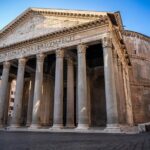
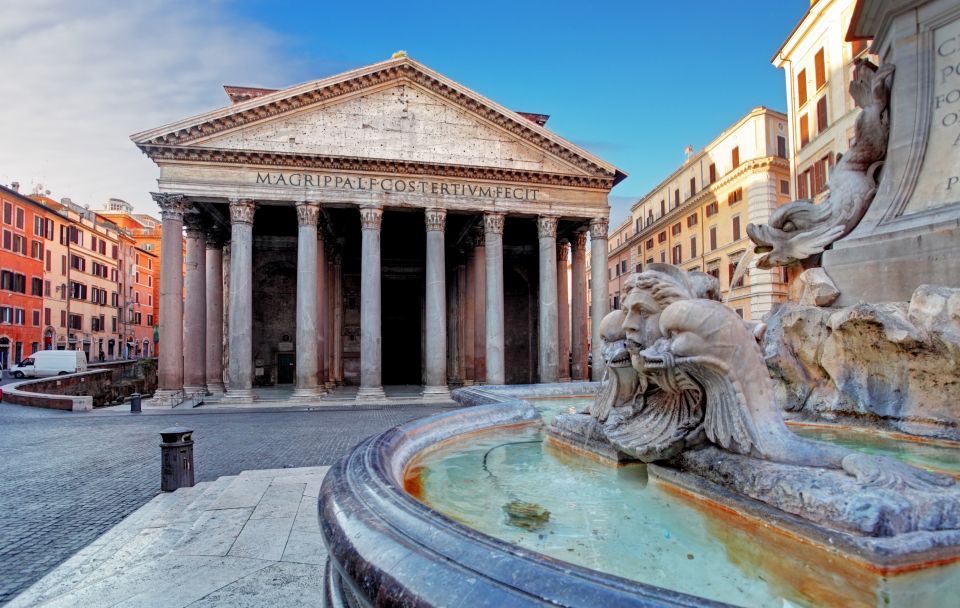
Next up is the Pantheon, described as a temple to all the gods of Olympus. The highlight here is the dome, built in ancient times and noted as the largest dome in the world (as the tour explains it).
For me, this kind of stop is where a guide earns their fee. Without context, the Pantheon can turn into another “amazing building” photo moment. With context, you’ll know what you should pay attention to—especially with the dome as the center of the story.
This is also a good moment in the tour for a reset. You’ve covered fountains and busy squares; then you shift to one monumental structure with a clear focal point.
You can also read our reviews of more historical tours in Rome




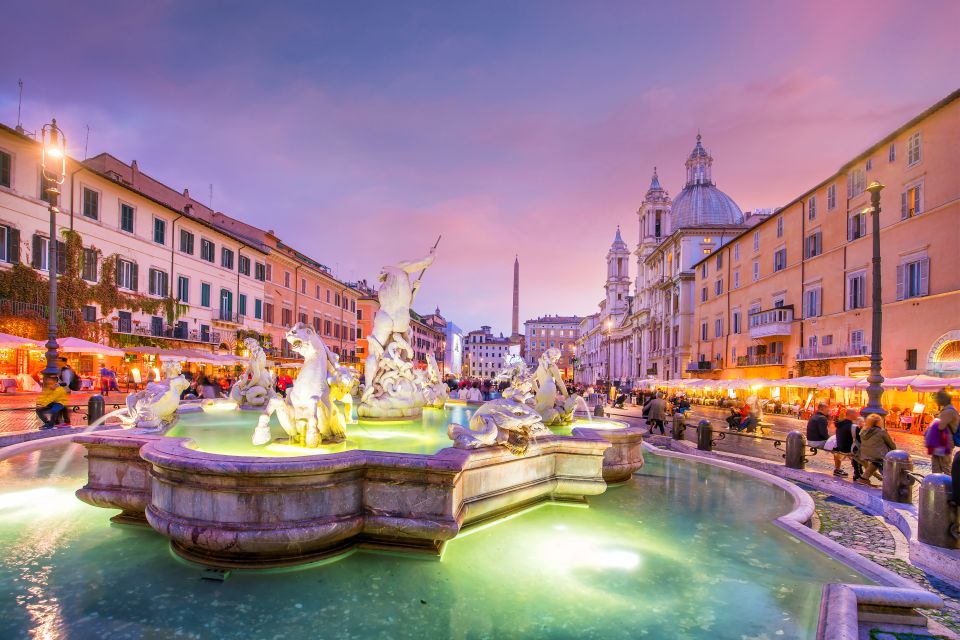
Piazza Navona and the Fountain of the Four Rivers: Baroque Rome at Full Volume
If Trevi is the grand classic, Piazza Navona is the “Baroque Rome” showpiece. Your guide takes you there after the Pantheon, and you’ll see architectural elements and sculptures connected to Bernini, Borromini, Rainaldi, and da Cortona.
One of the standout pieces you’ll spend time with is the Fountain of the Four Rivers, associated with Bernini in the tour’s route. Your guide’s explanations help you see how the figures and design fit into the bigger Baroque mood—dramatic, theatrical, and meant to impress from close range.
Real-world tip: Piazza Navona is a popular area. Even with a guided plan, you’ll want to keep your expectations flexible on timing and crowd flow. The value is in your guide helping you stay focused on what matters while you’re there.
Campo de’ Fiori and Largo di Torre Argentina: Daily Life Meets Ancient Tragedy
After Piazza Navona, you reach Campo de’ Fiori, a square that has housed a colorful local market since 1869. This stop is a nice change of pace because it brings in everyday Rome energy, not only monuments and formal squares.
Then you head to Area Sacra di Largo di Torre Argentina, described on the tour as the place of Julius Caesar’s assassination. This is one of those moments where the tour shifts from Baroque visuals to ancient narrative.
It’s a smart pairing: market life on one side, a heavy historical reference on the other. Walking between them with a guide helps you process Rome as something alive, not just a museum you walk through.
Ponte Sant’Angelo and Castel Sant’Angelo: The Scenic Bridge-and-Castle Stretch
Your route continues to Ponte Sant’Angelo, with a guided stop that includes scenic viewpoints as you move. From there, you’ll see Castel Sant’Angelo, again with photo stops and guided explanations.
This stretch is useful if you want variety within the same walk. Earlier stops are squares and fountains; here you get a more linear “look outward” feel, with the river/bridge views and a big landmark presence.
Vittoriano and St. Peter’s Basilica: The Endgame of the Route
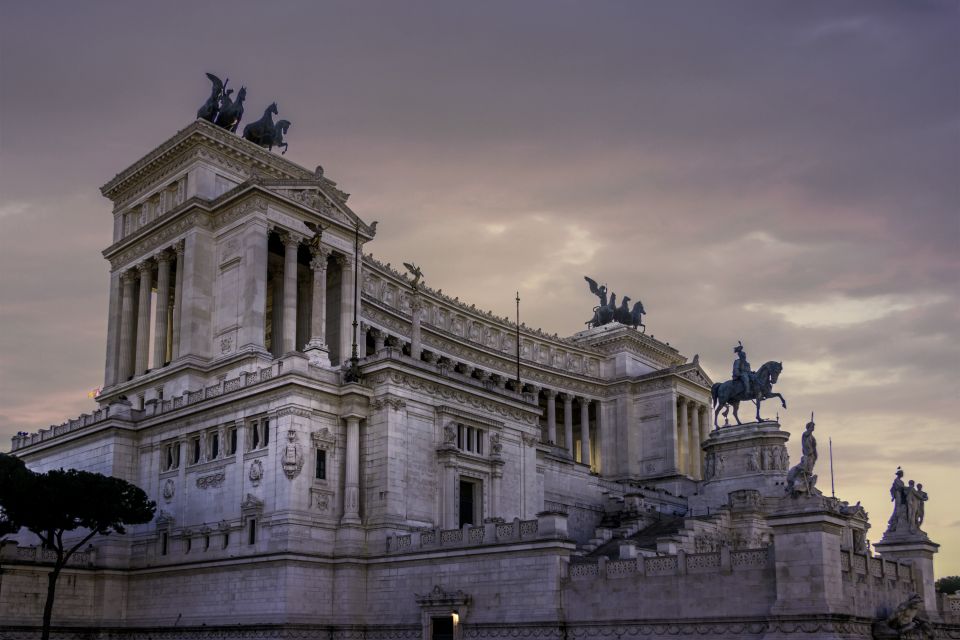
The tour includes a stop at the Vittoriano, a monument commemorating the unification of Italy. Work began in 1885, and it was inaugurated in 1911 in honor of Victor Emmanuel II of Savoy, the first king of Italy (according to the tour).
From there, the walk brings you to St. Peter’s Basilica. You get an audio guide for St. Peter’s Basilica in Italian, English, Spanish, and French, plus a paper map of St. Peter’s Basilica.
Important note: while St. Peter’s Basilica is part of the experience, the tour does not include entrance to the dome. So if you’re dreaming of climbing up for bigger views, you’ll want to plan that separately.
What’s Included (And How That Changes Your Planning)
Here’s how the inclusions affect the day:
- Private walking tour with a professional guide
- Entrance fees included (for what the route covers)
- Headsets included for groups larger than 8, which helps with hearing and comfort
- St. Peter’s Basilica audio guide in multiple languages, plus a paper map
And what’s not included:
- Food and drinks
- Transportation to/from attractions
- Hotel pickup/drop-off
- Skip-the-line entrance
- Entrance to the dome
- Entrance to the Necropolis and the Treasury Museum
That “not included” list is not a deal-breaker, but it changes how you budget your time. Since skip-the-line isn’t part of the plan, you shouldn’t assume you’ll move instantly at big sites. Your best strategy is to treat this as a guided viewing and learning walk, not a “maximum interiors” itinerary.
Pace, Comfort, and Family-Friendliness (Without Sugarcoating It)
The tour is described as involving a moderate amount of walking and being suitable for youngsters in the family. That’s a good fit if you want to spend time seeing Rome without turning the day into a hike.
Still, you’ll be on your feet for about three hours, so your biggest prep item is simple: comfortable shoes. This isn’t the kind of tour where you can wear your least-practical footwear and hope for the best.
Also, it’s wheelchair accessible, which is a real plus for travelers planning around mobility needs. Pets are not allowed, and walking frames aren’t allowed—so you’ll want to plan accordingly.
Languages and the Hearing Setup That Saves You From Guessing
The live guide is available in English, Spanish, Italian, French, and Russian. Headsets are included for groups larger than 8, which is exactly when hearing becomes an issue in Rome’s crowded public spaces.
If you care about understanding details—especially at the Pantheon, Piazza Navona, and Trevi—this kind of setup is worth it. The goal isn’t to “hear something once.” It’s to follow the guide’s explanation without constantly turning your head and losing the group.
Price: Why $141.61 Can Feel Fair (If This Is Your Style of Tour)
At $141.61 per person, this isn’t a low-cost bargain tour. You’re paying for a private format, a professional guide, entrance fees, and a set of “hearing and learning” tools (headsets for larger groups, plus the St. Peter’s audio guide and map).
So the real question is: does your trip call for guided, story-based walking through top Roman sights?
- If you want to move fast and DIY Rome with a phone map only, you might find cheaper options.
- If you want someone to connect the dots between Baroque squares, Renaissance-era landmarks, and major Roman narratives (including Julius Caesar’s assassination site), this price can feel reasonable because you’re buying time and clarity.
Also, the private design helps. For couples, families, and small groups, paying more often buys less stress.
Who This Tour Suits Best
This tour is a strong match if:
- You want a private guided walk through the historic center rather than a group bus day
- You care about understanding what you’re seeing at places like Trevi Fountain, the Pantheon, and Piazza Navona
- You’re okay with moderate walking and want a pace that can work for kids
It’s also a decent fit if you want St. Peter’s Basilica included with an audio guide and map, but you’re not trying to add the dome or the Necropolis/Treasury Museum in the same outing.
Should You Book This Historical Center Walking Tour?
Book it if you want a guided, balanced “greatest hits plus meaningful stops” walk that respects your time and keeps you oriented. The main selling point is the combination of iconic squares and fountains with explanations that help you look smarter at every stop—especially around Trevi Fountain, the Pantheon, and Piazza Navona.
Skip it (or pair it with other plans) if your top priority is extra interior access like the dome, the Necropolis, or Treasury Museum, because those aren’t included. Also, if you’re trying to minimize walking as much as possible, you’ll want to consider whether three hours of moderate strolling fits your energy level.
FAQ
How long is the Highlights of Rome Historical Center Walking Tour?
The tour duration is 3 hours.
Where do I meet for the tour?
You meet at Piazza della Trinità dei Monti, next to the obelisk in the middle of the square. Your guide will have a signboard reporting Tour in the City.
What are the major stops on the route?
The tour includes stops at the Spanish Steps, Trevi Fountain, the Pantheon, Piazza Navona, Campo de’ Fiori, Area Sacra di Largo di Torre Argentina, Ponte Sant’Angelo, Castel Sant’Angelo, Vittoriano, and St. Peter’s Basilica, among others.
What’s included in the price?
Included features are the private walking tour, professional guide, entrance fees, headsets (for groups larger than 8), and an audio guide in multiple languages plus a paper map for St. Peter’s Basilica.
Is food or drinks included?
No. Food and drinks are not included.
Are skip-the-line tickets included?
No. Skip the line entrance is not included.
Do I get an audio guide at St. Peter’s Basilica?
Yes. An audio guide for St. Peter’s Basilica is included in Italian, English, Spanish, and French, along with a paper map.
Is the tour wheelchair accessible?
Yes, it is wheelchair accessible.
What’s the cancellation window?
Free cancellation is available up to 24 hours in advance for a full refund.