REVIEW · ROME
Rome: San Clemente Underground and Basilica Guided Tour
Book on GetYourGuide →Operated by EcoArt Travel · Bookable on GetYourGuide
Rome stacks centuries like a puzzle. In the San Clemente Underground and Basilica Guided Tour, you walk through one church that contains multiple lost worlds—up top medieval mosaics, then down into Roman and pagan layers. I love how the site turns Rome into something you can see and follow, not just read about, and it’s a strong break from the usual big-ticket crowds.
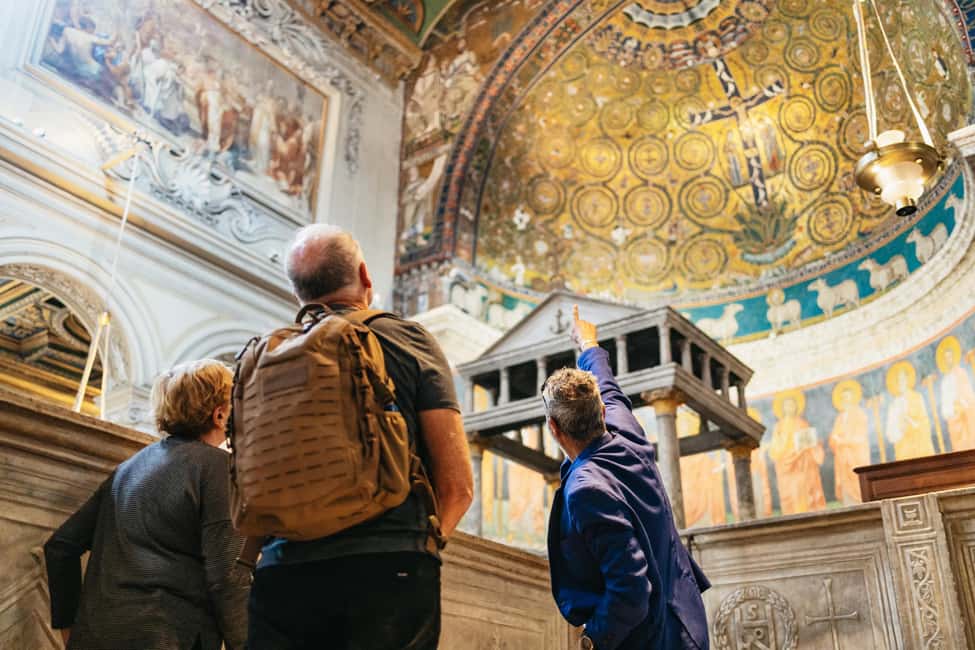
What I especially like: the gold mosaics inside the 12th-century Basilica di San Clemente al Laterano, and the way the guide keeps the layers clear as you move downward. A second standout is the deepest stop—the remains of an ancient Mithraic temple with an altar—because it changes the story from Christian to Roman religious life without feeling random.
One heads-up: this is a stair-heavy tour on uneven, underground surfaces, and it’s not suitable for wheelchair users or people with mobility impairments. Also, cameras are not allowed inside, so plan to enjoy the details in person rather than trying to document everything.
In This Review
- Key things to know before you go
- A 2,000-year Rome lesson under one church
- Via di S. Giovanni in Laterano: meeting point, timing, and the “upstairs first” feel
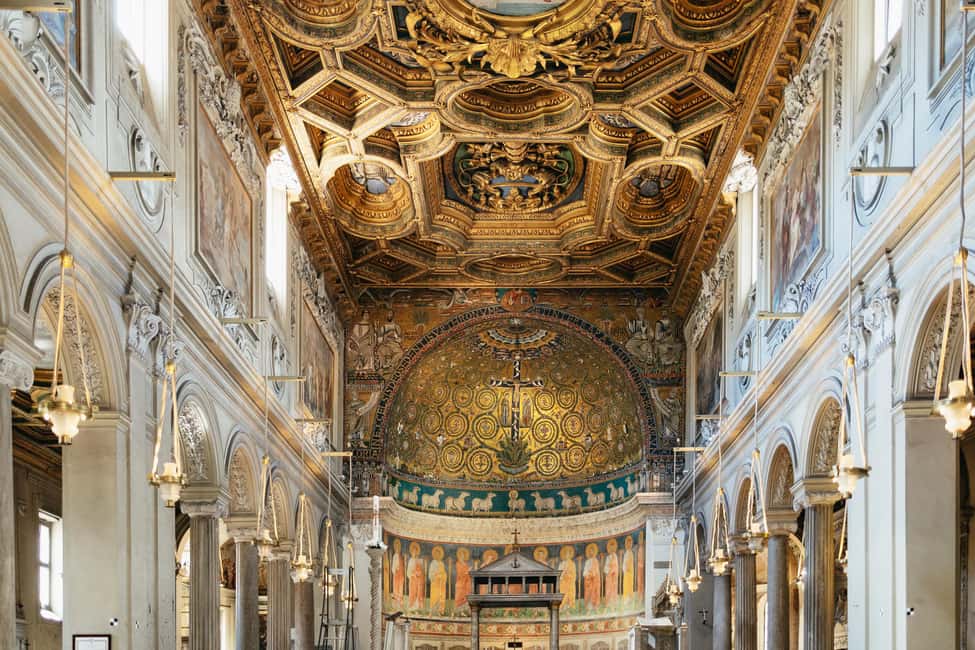
- The 12th-century basilica and gold mosaics: why the start is more than decoration
- Walking down the three levels: the 4th-century basilica, Roman homes, and the feel of the past
- The Mithraic temple and altar: a surprising turn in Rome’s story
- The 1860 flood and the underground spring: how the site was found
- Practicalities that affect your comfort (and your photos)
- Guides make the difference: the small-group advantage
- Price and value: $70 for 1.5 hours of serious underground storytelling
- Who should book this tour (and who might skip it)
- Should you book the Rome San Clemente Underground tour?
- FAQ
- How long is the Rome San Clemente Underground and Basilica tour?
- How much does it cost?
- Where do I meet the guide?
- Is the tour in English?
- What will I see during the tour?
- Are cameras or video allowed inside?
- What should I wear?
- Can I bring luggage or large bags?
- Is the tour suitable for wheelchair users or people with mobility impairments?
- What’s the nearest metro stop?
Key things to know before you go
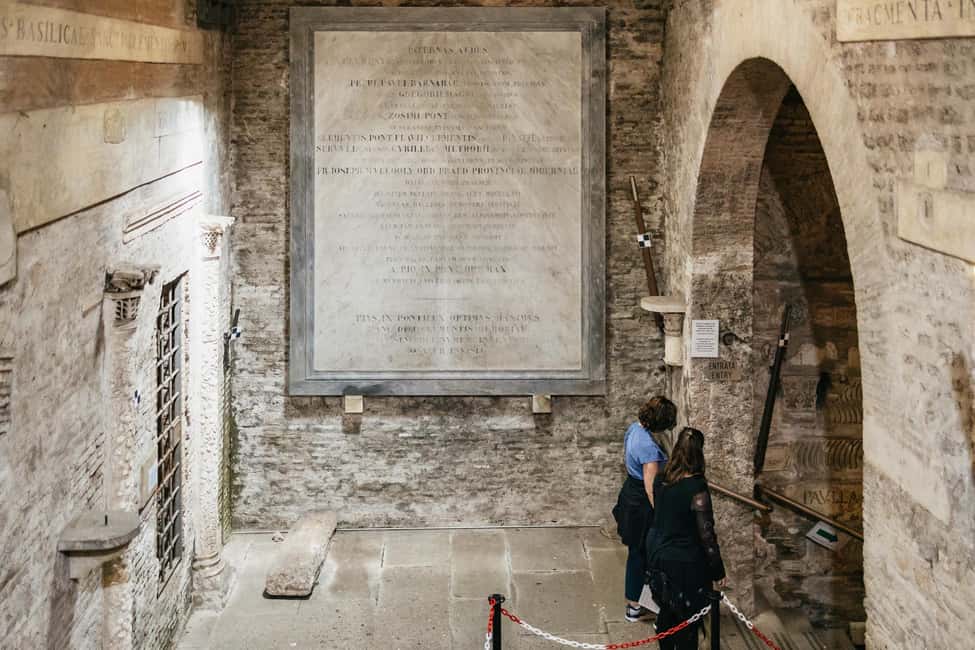
- Three underground levels under one church, showing Rome built on top of Rome
- Gold mosaics and medieval art in the 12th-century basilica
- Mithraic temple and altar at the deepest level
- 1860 discovery story sparked by a flood and the levels below
- English live guides who can keep the timeline straight (Luca, Gina, Eddy, Ricardo are just a few names you may see)
- No cameras inside and a lot of stair climbing/descending
A 2,000-year Rome lesson under one church
San Clemente in Rome is built like a vertical city map. From street level you see a 12th-century basilica, but the building sits on top of older structures that were forgotten as new construction took over. That is what makes this tour so satisfying: you get the full logic of how a neighborhood evolves, instead of bouncing between separate landmarks.
I also like the pacing. You start with the basilica itself—where the gold mosaics give you a sense of medieval ambition and craft—then you go down to earlier chapters: a 4th-century basilica and then much older spaces. The story becomes physical. You’re not just hearing that people lived here across centuries; you’re walking through the remains of that layering.
The site is especially useful if you’re new to Rome. Many visitors focus on a few headline ruins. Here, you see the urban process—how a place changes when power, religion, and daily life shift.
You can also read our reviews of more guided tours in Rome



Via di S. Giovanni in Laterano: meeting point, timing, and the “upstairs first” feel
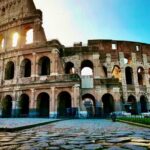
You’ll meet outdoors near Via di S. Giovanni in Laterano, 126, by the corner at the church. The nearest metro stop is Line B: Colosseo. This start matters because you’ll want to be punctual—underground visits involve stair routes and crowd control.
Expect a total duration of about 1.5 hours. The schedule is straightforward: you get a guided visit of roughly an hour in the Basilica di San Clemente al Laterano, plus additional time for photo stops after. Those photo stops are handy because photography inside the church is not allowed, so you’ll want to use permitted moments for your pictures.
Practical tip: bring comfortable shoes and plan for stairs on your own. The tour doesn’t use a flat, walk-in-the-park route. It’s more like a controlled visit through preserved layers, with enough movement to feel like you’re really going somewhere.
The 12th-century basilica and gold mosaics: why the start is more than decoration
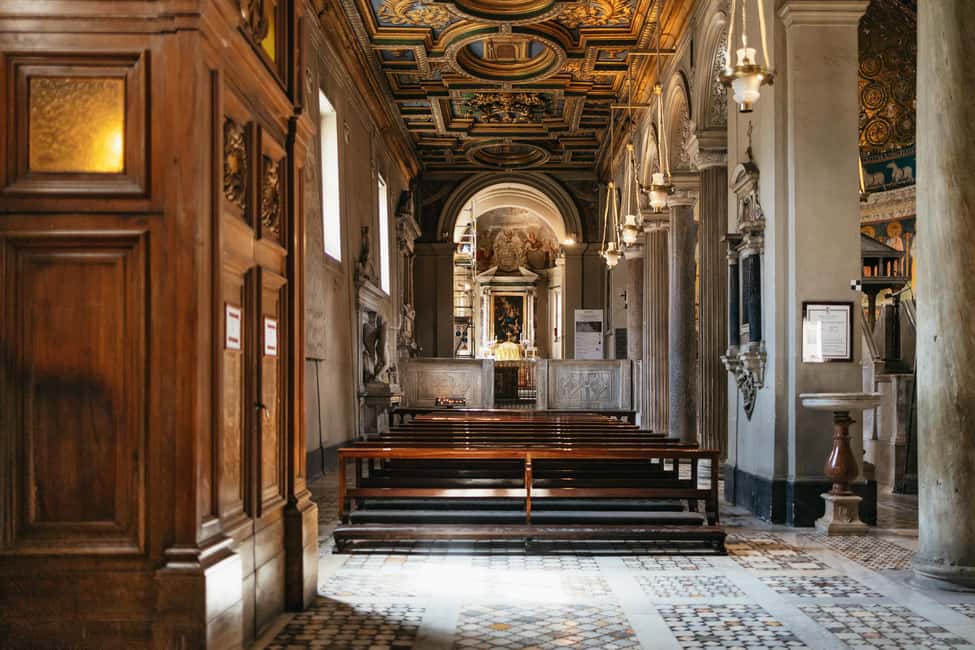
The tour begins where most visitors stop—inside the 12th-century Basilica di San Clemente—but you’re not stuck with just the surface highlights. The medieval church sets the tone. It’s the part still functioning as a church space, and it’s where the gold mosaics make the artistry immediately noticeable even if you’re not a specialist in church art.
You’ll also need to follow the church dress code: shoulders and knees covered. If you’re visiting in hot weather, it’s worth packing something light that still covers—Rome can be warm above ground, and you might also appreciate layers for what comes next underground.
There’s a second reason to start up top: it anchors the timeline. Once you’ve seen the basilica and understood its role, descending makes more sense. Downstairs isn’t just “older stuff.” It’s the foundation story of this exact building, continuing beneath your feet.
Walking down the three levels: the 4th-century basilica, Roman homes, and the feel of the past
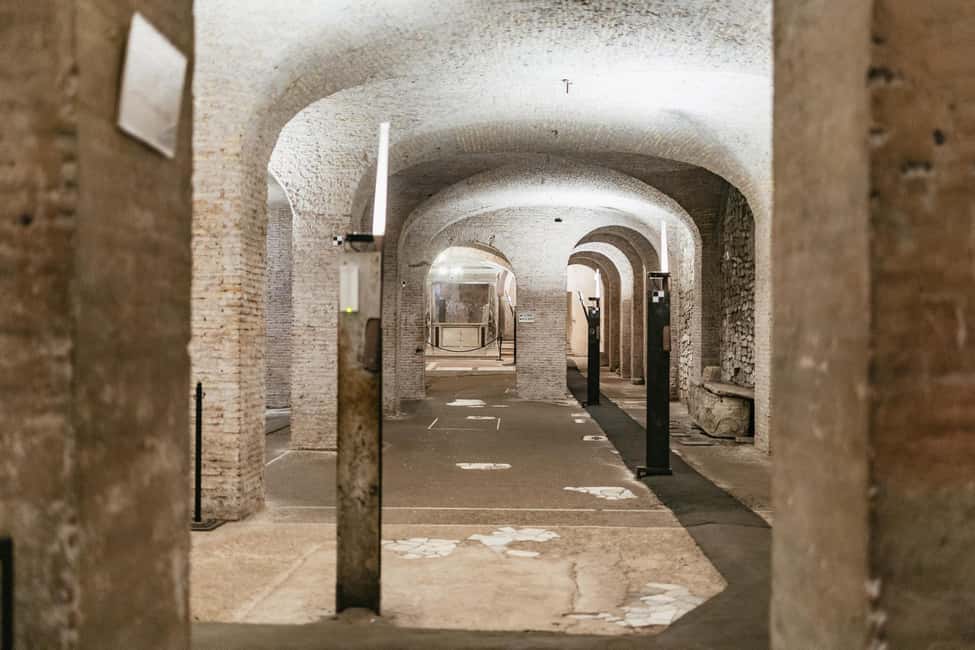
Once you start descending, the tour becomes all about layers—Rome built, rebuilt, and occasionally abandoned, with new structures absorbing the old. One of the coolest elements is the path through multiple underground levels, including:
- A first underground level where you’ll explore the remains of a 4th-century basilica that was long forgotten after the 12th-century basilica was built above it
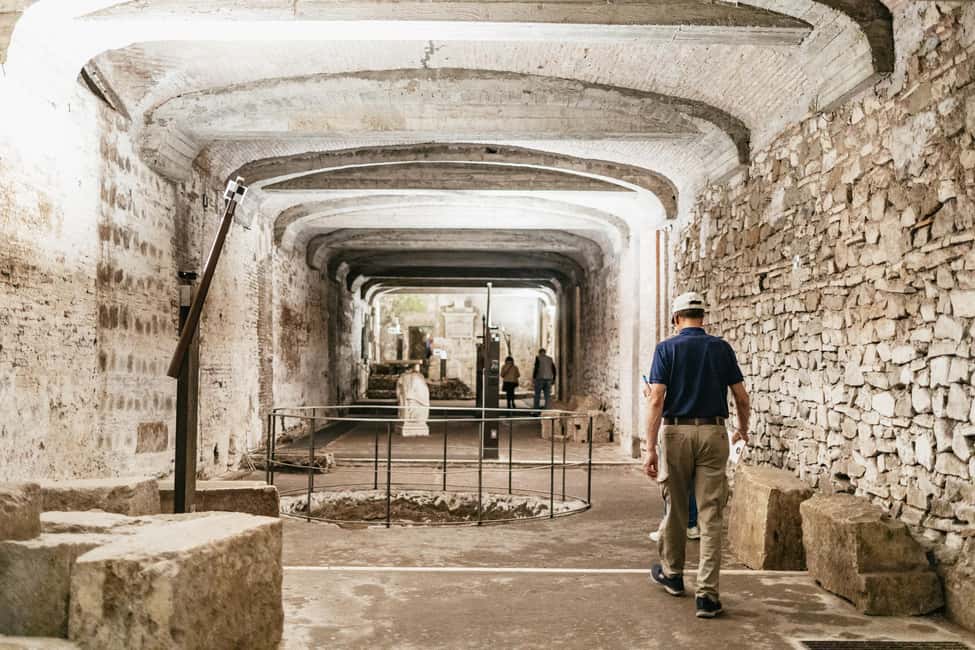
- Deeper levels where you’ll see what remains of Roman homes, excavated and preserved with care
- The sense of how daily life and religion overlapped in the same area across different eras
As you go down, the temperature can shift—so the advice to wear layers is genuinely practical. It also helps to accept that these spaces can feel tighter and uneven. That’s part of the experience. You’re not walking through a museum floor; you’re moving through archaeological layers that were uncovered and stabilized.
A small but real value of a guided visit here: timelines at places like this can blur. The guide’s job is to connect what you’re seeing—each layer, each structure—to a clear narrative so your brain doesn’t treat the site as a pile of ruins.
The Mithraic temple and altar: a surprising turn in Rome’s story
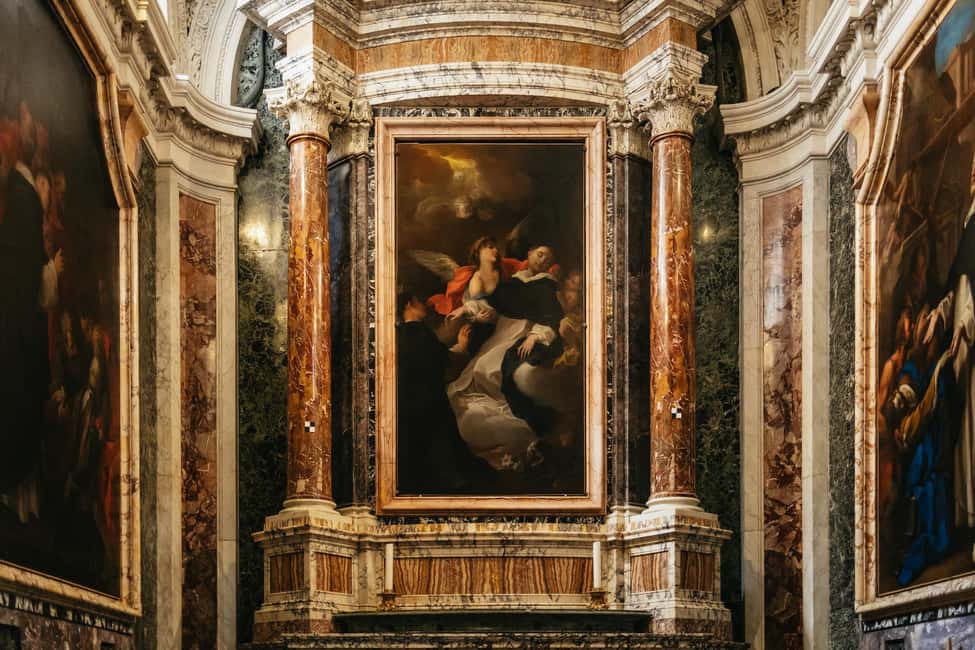
At the deepest levels, the tour shifts beyond Christian history. You’ll discover the remains of an ancient Mithraic temple, including an altar. Mithraism is one of those topics that feels hidden in Rome unless a guide points it out clearly, and that’s exactly what makes this stop memorable.
It also reframes the entire “why here?” question. This wasn’t only a Christian site for most of its life. Long before the 12th-century church shaped the ground above, people used spaces for their own religious practices. Seeing the Mithraic remains under the later basilica gives you a direct view of religious change in the same location, not just at a distance.
If you like archaeology that answers real questions—what was where, and who used it—this part is the payoff. It’s also one of the reasons the tour tends to get high marks: people often come expecting a church visit, then realize they’re getting a full underground religious timeline.



The 1860 flood and the underground spring: how the site was found
This tour doesn’t treat discovery as a footnote. You’ll learn how the different levels were uncovered in 1860, when a flood helped reveal what lay beneath. The story includes the idea of chaos caused by an underground spring at the lowest level, leading to the levels being discovered.
Why that detail matters: it explains why you can still walk through layers today. A flood isn’t something you’d plan, but it’s exactly the kind of accident that changes what archaeologists can find. It also gives you a sense of how fragile these timelines can be. A hidden layer can disappear behind new construction, and another layer can appear because water did something unexpected.
This is the moment where a good guide shines. The best guides don’t just say dates. They connect the discovery story to the physical layout you’re seeing—so you don’t lose the plot halfway down the stairs.
Practicalities that affect your comfort (and your photos)
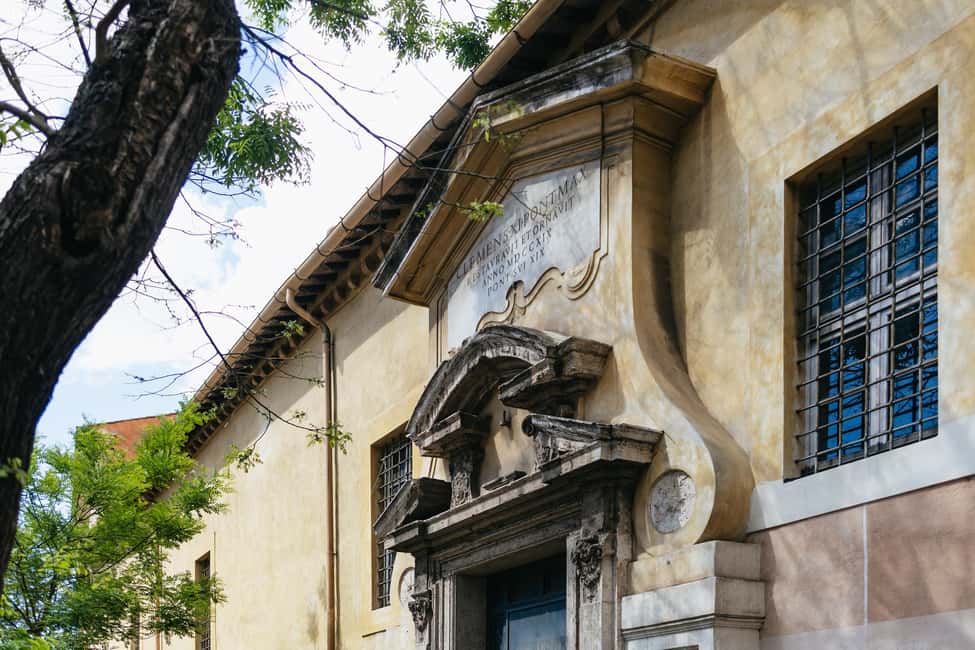
A few rules shape how the experience feels:
- Cameras are not allowed inside, and video recording isn’t allowed
- You also shouldn’t bring luggage or large bags
- You must be able to climb and descend stairs on your own
- The tour is not suitable for wheelchair users or people with mobility impairments
So I’d treat this as a “hands and eyes” experience, not a content-creation stop. Yes, the itinerary includes a photo stop, but that’s your window for pictures. Inside, focus on what your guide points out—the mosaics, the layout of levels, the Mithraic remains, and the excavated Roman homes.
Temperature is another practical note. Underground spaces can be cooler than the outside, so layers help. And because you’re walking on uneven surfaces, comfortable shoes really are the main prep item.
Guides make the difference: the small-group advantage
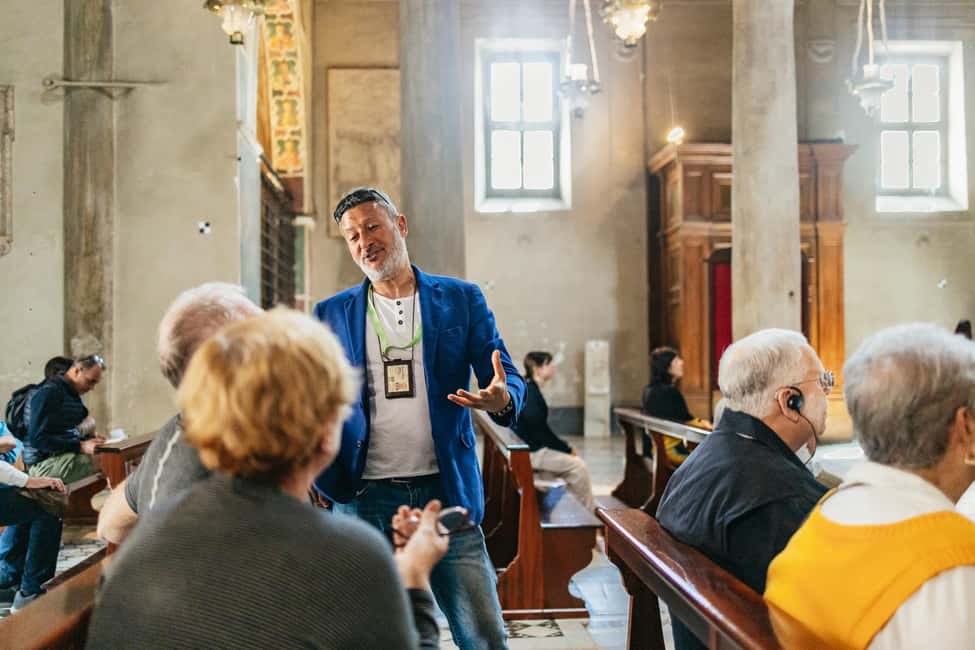
The most frequent pattern in the feedback is guide quality. Names you may encounter include Luca, Gina, Eddy, Ricardo, Sara, Patricia, Alberto, and Ursus. People often describe them as able to explain complicated layers in plain, step-by-step ways—plus they adjust pacing so you’re not stuck rushing.
Small-group time matters here because the site is tight and vertical. If you’re moving with a group of a manageable size, you can actually hear the guide and ask questions. One caution: a couple of experiences mention difficulty hearing when technical audio equipment didn’t work as expected. If you notice that, flag it right away so the guide can help you get back on track.
Bottom line: this is the kind of tour where the guide isn’t optional. They’re what turns scattered ruins into one coherent story.
Price and value: $70 for 1.5 hours of serious underground storytelling
At $70 per person for about 1.5 hours, the price is in the premium range for Rome. Is it worth it? For the right traveler, yes—because you’re paying for three things that most self-guided visits can’t replicate:
- A guided explanation of multiple archaeological levels in sequence (with the why behind the layers)
- Access experience that’s focused and controlled, including skipping the ticket line
- A rare combination: 12th-century basilica mosaics + Roman homes + Mithraic temple
If your Rome plan already includes the big-name sites, this offers a different angle: the evolution of one place over time. That’s also why it tends to score well among people who do several tours. You’re not repeating a lesson you already heard elsewhere.
If you’re on a tight budget and only have a few hours, you might choose another museum-ticket experience. But if you want to understand Rome as a layered city rather than a list of monuments, this is one of the most focused options.
Who should book this tour (and who might skip it)
This tour is a great fit for you if you:
- Want Rome’s layers explained in a step-by-step way
- Care about archaeology and religion in the same location across centuries
- Prefer a less “stand and stare” experience
- Enjoy guided history with a human voice and a clear timeline
You might skip it if you:
- Can’t manage stair climbing and descending
- Need a wheelchair-friendly route
- Rely on filming/photos inside for your trip memories (because cameras and video aren’t allowed inside)
Also consider your footwear and clothing. It’s not just comfort—it’s the difference between enjoying the layers and feeling rushed.
Should you book the Rome San Clemente Underground tour?
Book it if you want one of Rome’s most direct ways to understand how the city grew: mosaics up top, older basilica remains below, Roman homes in between, and a Mithraic temple at the bottom of the story. The guided format is the key, and the site rewards people who like structure and explanation.
If you’re short on time and your priorities are purely famous monuments, this might feel less “instant impressive.” But if your goal is to see Rome as a living palimpsest—church over basilica over homes over pagan spaces—then this tour is a smart use of your afternoon.
FAQ
How long is the Rome San Clemente Underground and Basilica tour?
The tour lasts about 1.5 hours.
How much does it cost?
The price is $70 per person.
Where do I meet the guide?
Meet near San Clemente Basilica at the corner of Via di S. Giovanni in Laterano, 126. It’s an outdoor meeting point, not an office.
Is the tour in English?
Yes, the live tour guide provides the tour in English.
What will I see during the tour?
You’ll visit the Basilica di San Clemente al Laterano and explore underground levels, including a 4th-century basilica, remains of Roman homes, and the remains of an ancient Mithraic temple with an altar.
Are cameras or video allowed inside?
No. Cameras are not allowed inside, and video recording is also not allowed.
What should I wear?
Wear comfortable shoes, bring layers (underground levels may be cooler), and follow the church dress code requiring shoulders and knees covered.
Can I bring luggage or large bags?
No. Luggage or large bags are not allowed.
Is the tour suitable for wheelchair users or people with mobility impairments?
No. The tour is not suitable for wheelchair users or people with mobility impairments because you must be able to climb and descend stairs on your own.
What’s the nearest metro stop?
The nearest metro stop is Line B Colosseo.