REVIEW · ROME
Rome on Wheels: Experience the City with a Vespa Tour
Book on Viator →Operated by MY VESPA TOURS · Bookable on Viator
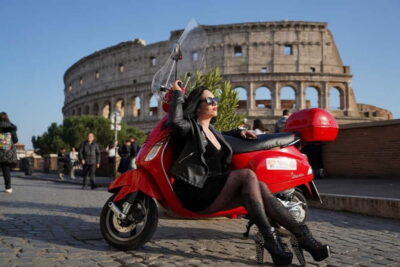
Vespa time turns Rome into a moving postcard. This Rome on Wheels tour lets you cover major sights quickly, guided by a built-in audio narration and a host who keeps the group moving. I like the way the ride connects places you’d normally reach by hopping between taxis and long walks—and the main drawback is real: Rome traffic means you should take scooter safety seriously, especially if you plan to self-drive.
My favorite part is the audio guide that adds context as you roll past landmarks, so the sights don’t feel like random photo backdrops. You also get complimentary souvenir photos afterward, which is a nice practical touch when you’re busy holding a helmet strap and not a camera.
In This Review
- Key highlights to look for
- Why a Vespa route makes sense for Rome’s top sights
- Meeting at Via Cavour 80 and what starts your ride
- Safety and self-driving rules in Rome traffic
- Palatine Hill: where the city story starts
- St. Peter’s Basilica plus the Keyhole View at Piazza dei Cavalieri di Malta
- Colosseum: classic icon, quick and efficient
- Circus Maximus and the scale of ancient Rome
- Gianicolo Hill panoramas: the view stop that feels worth it
- What’s included, what costs extra, and how to plan
- Value check on the $235.92 per person
- Who this Vespa tour suits best (and who should skip)
- Guides and vibe: why the experience often feels personal
- Should you book Rome on Wheels by Vespa?
- FAQ
- How long is the Rome on Wheels Vespa tour?
- What does the tour price include?
- Where do we meet, and where does the tour end?
- Can I drive the Vespa myself?
- How big is the group?
- Does the tour run in bad weather?
Key highlights to look for
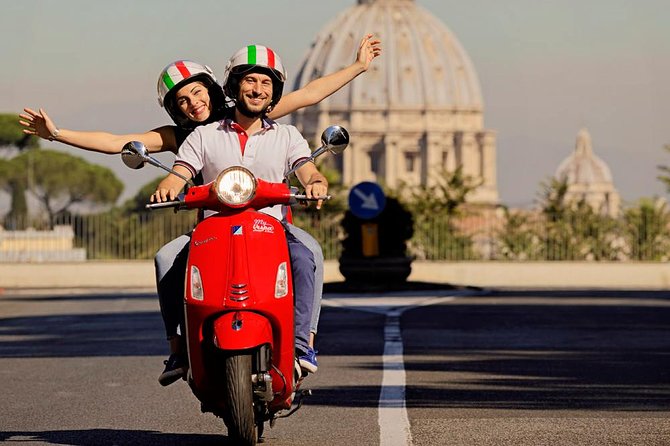
- A fast, local-feeling route that hits major sights in about 3–4 hours
- Audio guide built into the experience so you’re not guessing what you’re seeing
- Complimentary souvenir photos included for an easy win
- Small group size (max 15) which usually makes it easier to manage and hear the guide
- Safety-forward approach, but you need the right driving confidence if you’re riding the scooter yourself
Why a Vespa route makes sense for Rome’s top sights
Rome is big, and time is usually the real villain. In a few hours, you can’t really “do” the city the classic way. This tour leans into the smart alternative: cover distance fast while still stopping for viewpoints and key landmarks.
What makes it work is the mix of famous icons and perspective stops. You get the main heavy hitters—think Colosseum and St. Peter’s Basilica—plus scenic breaks like Gianicolo Hill. That combo helps you leave with a mental map of Rome, not just a camera roll of arches.
The price may look steep at first glance. But you’re paying for more than a ride: you’re getting a live tour escort/host, fuel and local taxes, a mobile ticket, bottled water, and souvenir photos. It’s closer to an all-in guided experience than a cheap “sit on a scooter and go” deal.
You can also read our reviews of more city tours in Rome


Meeting at Via Cavour 80 and what starts your ride
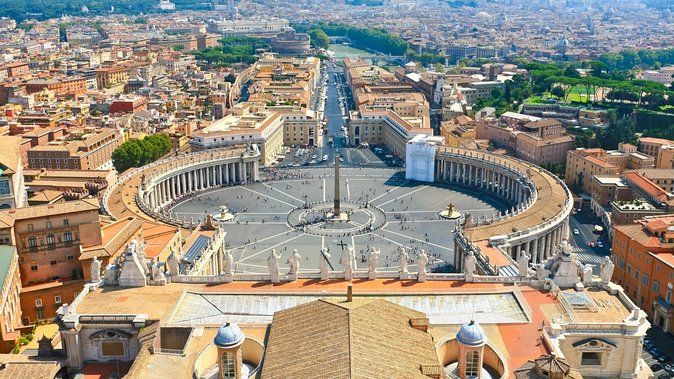
You meet at Via Cavour 80, 00184 Roma RM, and the tour ends back at the same point. The meeting spot is close to Santa Maria Maggiore, so you’re already in a lively central area while you wait for your group to form.
This tour is listed in English, and it includes a tour escort/host. That matters because you’re not just moving through Rome on your own—you’re following a plan, with someone coordinating where to stop and when to roll onward.
You’ll also get a detailed audio guide as part of the experience. The practical benefit: you don’t have to keep stopping to read plaques, and you can understand what you’re seeing while your hands are on the handlebars (or safely on your passenger hold).
Safety and self-driving rules in Rome traffic
Let’s be blunt: Rome on a scooter can be intimidating. Even if you’ve driven before, the tour’s own guidance makes it clear that “a few times” isn’t enough for the self-driven option.
If you’re planning to drive, you’ll need:
- Good scooter/motorcycle driving experience (not just a beginner try-out)
- A valid license with category A (motorcycles/scooters) or category B (cars)
Minimum age is 18. The tour also runs in all weather, so you should dress for rain or shine.
Here’s the reality I’d plan around: if you’re not comfortable, you’ll be happier as a passenger. Some people in past groups chose to ride with the guide first, then felt better afterward. One rider’s summary was basically this: the tour isn’t the place to learn, but the guides can be accommodating and cautious.
Also, helmets are provided (and at least one group noted they were new). Still, wear clothes you don’t mind getting dusty or wind-tossed. Rome moves fast, even when you’re stopped for a photo.
Palatine Hill: where the city story starts
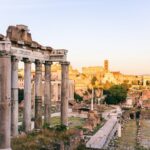
One of the tour stops is Palatine Hill, one of Rome’s Seven Hills and closely tied to the idea of Rome’s earliest beginnings. Beyond the “birthplace” legend, Palatine Hill gives you something practical: a sense of how high and strategic parts of the ancient city were.
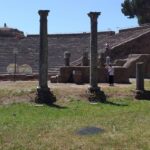
As you look around, you’ll spot the archaeological landscape and the remnants of major structures tied to Rome’s imperial era. The stop is short, so you won’t have time to wander forever—but it’s enough time to connect the area to what you’ve already seen in museums or guidebooks.
A drawback to know up front: this isn’t a deep, slow archaeology session. You’re in and out, then back on the Vespa for the next landmark. If you want a long, photo-by-photo study of every ruin, you may crave extra time elsewhere in Rome.
St. Peter’s Basilica plus the Keyhole View at Piazza dei Cavalieri di Malta
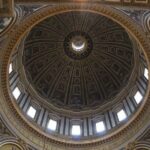
The tour includes a stop at St. Peter’s Basilica, described as the giant Renaissance masterpiece in Vatican City. You’ll also get the dome connection—Michelangelo’s famous dome—and the fact that this basilica is a major Catholic spiritual center.
But the smart part is what comes with it: the tour also makes time for Buco della Serratura, the keyhole view at Piazza dei Cavalieri di Malta. This is the fun “wait, that’s a real framing trick” moment—where you can see St. Peter’s Basilica through a decorative keyhole.
What I like about pairing these two stops is that one is grand and obvious, and the other is playful and secret-feeling. It’s the kind of contrast that makes a short visit feel like more than just checking a box.
One consideration: you’ll be outdoors and moving between viewpoints. If crowds or weather stress you out, keep your expectations simple—this is about the big sights plus one clever perspective moment, not a slow, quiet devotional visit.
You can also read our reviews of more tours and experiences in Rome

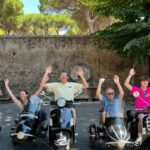
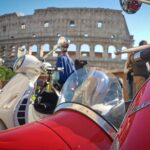
Colosseum: classic icon, quick and efficient
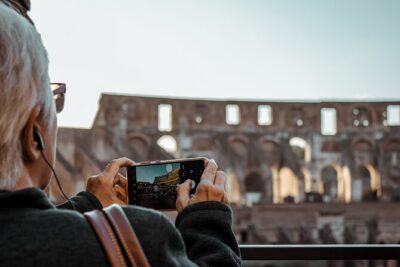
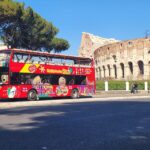
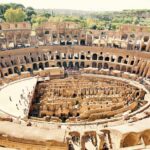
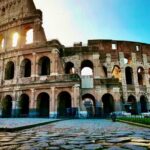
You’ll stop at the Colosseum, one of the most recognizable symbols of ancient Rome. It’s huge historically—up to about 80,000 spectators—and it was the stage for gladiatorial contests and public spectacles.
The tour notes that the Colosseum admission ticket is free for this stop. That’s a real value point, because it reduces what you’d otherwise need to budget and plan separately.
Even if you know the Colosseum story, I still think it’s worth visiting with structure. On this kind of Vespa-and-stop format, you don’t lose time figuring out where to stand for the best “big picture” shots. You get enough context to make the arches and scale feel understandable rather than just impressive.
The tradeoff: it’s not the same as spending an entire afternoon inside and around the ruins. If you want more time inside (or you’re a serious history nerd who wants every corner), plan to add extra time on another day.
Circus Maximus and the scale of ancient Rome
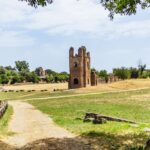
Another stop is Circo Massimo, the large ancient chariot racing stadium. The tour frames it with scale: it once held over 150,000 people, and today the area functions as a historic site and public park.
This is a great “aha” stop because it broadens your understanding of ancient entertainment beyond just the Colosseum. You’re reminded that Rome’s public culture wasn’t only about fighting—it was also about speed, spectacle, and crowds.
A small practical drawback: because it’s outdoors and open, it can feel breezy or exposed depending on weather. It’s still worth it for the sense of space, especially if you’re used to seeing ancient sites from museum-like walkways.
Gianicolo Hill panoramas: the view stop that feels worth it
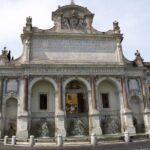
You’ll also ride to Colle del Gianicolo, also known as Janiculum Hill. This area is famous for panoramic views of Rome, with history, parks, monuments, and the Fontana dell’Acqua Paola (a standout baroque fountain).
This stop is the kind of moment you use to reset your brain. After looking at architecture up close (and/or standing near big-ticket landmarks), you get to step back and see the city’s layers. It helps you understand Rome as a spread-out place, not just a tight cluster of ruins.
The time here is listed as about 15 minutes, which is short—but for a viewpoint stop, that can be perfect. You get the view and then move on while you still have energy.
What’s included, what costs extra, and how to plan
Here’s what you’re getting:
- Souvenir photos included
- Bottled water
- Fuel surcharge and local taxes
- Tour escort/host
- All taxes, fees, and handling charges
- A mobile ticket
- Audio guide in English
What’s not included:
- Food and drinks
- Hotel pickup and drop-off (you’ll get to the meeting point yourself)
Also, the tour runs in all weather, so bring a light layer or rain protection. And since you’re out moving around for 3–4 hours, try not to schedule this as the first thing after a late night.
Value check on the $235.92 per person
At $235.92, you’re not just buying transportation. You’re buying:
- guidance (escort plus audio),
- a tightly planned “see-a-lot” route,
- photo souvenirs,
- and at least one included ticket stop (the Colosseum admission ticket is noted as free).
If you’re visiting Rome for a short window, this kind of organized Vespa time can save you from spending your limited hours stuck in logistics. If you have plenty of time and you love wandering, you might decide to go slower and DIY a few landmarks instead. But for a fast, structured orientation to the city, the price can make sense.
Who this Vespa tour suits best (and who should skip)
This works well if you:
- want a quick orientation to Rome’s biggest hits
- like scenic photo stops (especially the keyhole framing and Gianicolo viewpoints)
- are comfortable being outdoors for a few hours
- want a guided audio experience rather than reading alone
You might skip it if:
- you’re not comfortable with traffic exposure and you’d feel stressed sitting on the scooter
- you’re hoping for long museum-style time inside major sites
- you’re sensitive to weather and don’t want to adjust your clothing
If you do choose the self-driven option, take the driving requirements seriously. Guides can be cautious with new-ish riders, but the tour’s guidance is clear: you should not treat this as beginner training.
Guides and vibe: why the experience often feels personal
Even with a fixed route, the experience can feel different based on the guide. Names like David, Alessandro, Virgilio, Vittorio, Valerio, Frederick, Erico, Enrico, and Matthew show up in strong feedback for being friendly, safe-minded, and engaging.
One of the most consistent themes in positive feedback is safety pacing. For example, a rider who hadn’t been on a Vespa in years described how the guide took it slow and built confidence. That’s exactly what you want if you’re uneasy.
One downside worth acknowledging: there’s also been at least one harsh report about refunds in a medical emergency situation. In the provider’s response, they pointed out that they hire drivers for the tour and those costs may still apply even if a tour can’t run, and that partial refunds may not be supported through the booking platform. If you’re booking close to a health-risk event, you should consider travel insurance and don’t assume a partial refund.
Should you book Rome on Wheels by Vespa?
Book it if you want a fast, local-feeling way to see top landmarks plus smart viewpoint stops like Janiculum and the Keyhole framing of St. Peter’s Basilica. The included audio guide and souvenir photos are practical perks, and the small group size (max 15) helps keep the ride from feeling chaotic.
Don’t book it if your main goal is slow, detailed sightseeing inside major sites. Also think twice if you’re hoping to self-drive while still building scooter confidence. This is a great way to see Rome—just not the place to learn the scooter from scratch.
If you’re still deciding, choose the version that matches your comfort level: passenger if you’re new to scooters, self-driven only if you genuinely meet the driving expectations.
FAQ
How long is the Rome on Wheels Vespa tour?
It runs for about 3 to 4 hours.
What does the tour price include?
The price includes the tour escort/host, fuel and local taxes, a mobile ticket, bottled water, and souvenir photos. The tour is in English and includes an audio guide.
Where do we meet, and where does the tour end?
You meet at Via Cavour, 80, 00184 Roma RM, Italy and the tour ends back at the same meeting point.
Can I drive the Vespa myself?
You can only use the self-driven option if you have good scooter or motorcycle experience and the correct license category (A for motorcycles/scooters or B for cars). Minimum age is 18.
How big is the group?
The tour has a maximum of 15 travelers.
Does the tour run in bad weather?
Yes. It operates in all weather conditions, so dress appropriately.