REVIEW · ROME
Rome Highlights Bike tour
Book on Viator →Operated by Roma STARBIKE · Bookable on Viator
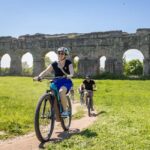
Rome’s ancient streets move at e-bike speed. In a single morning you glide past major landmarks and get 3D virtual reconstructions that help you picture what you’re standing on. Guides like Alex and Sara are big on clear storytelling, so the route feels less like sightseeing and more like understanding Rome’s build-up and power shifts.
What I like most is the mix of “fast transport” and “can’t-miss moments.” You get high-quality e-bikes plus helmets and phone/handlebar mounts, so your hands and focus stay where they should. Second, the route is packed with big names—Constantine, Trajan, the Pantheon, Navona—without it turning into a sweaty endurance day.
One caution: this is not a casual bike ride. You must know how to ride a bike well, and traffic in central Rome means you’ll want confidence before you roll out.
In This Review
- Key Things to Know Before You Go
- Rome Highlights on a 3-Hour E-Bike Loop
- Meeting Point on Via dei SS. Quattro: The Morning Setup
- E-Bikes and Safety Gear: What You Actually Get
- Arch of Constantine: Power on the Mile Between Colosseum and Palatine
- Fori Imperiali Ride: When the Forums Feel Like a Main Street
- Piazza Venezia: Monumental Rome at the Foot of Capitoline Hill
- Trajan’s Forum: The Column and Its 2,500 Carved Figures
- Pantheon: That Dome You’ve Seen on Postcards, Up Close
- Piazza Navona and Campo de’ Fiori: Baroque Geometry to Market Noise
- Trastevere Alley Feel and Circo Massimo Open Space
- Piazza del Campidoglio: Michelangelo’s Genius Viewpoint
- Why the 3D Viewers Actually Help (When You Use Them Right)
- Timing, Traffic, and Group Size: Staying Comfortable
- Family Notes: Child Seats, Trailer Rules, and Kid Expectations
- Value for Money: Is $78.64 a Good Deal?
- Who Should Book This Tour (and Who Should Think Twice)
- Should You Book This Rome Highlights E-Bike Tour?
- FAQ
- FAQ
- How long is the Rome Highlights Bike tour?
- What is the price per person?
- What time does the tour start, and where does it meet?
- What language is the tour offered in?
- What’s included in the tour price?
- Are child seats available, and are there height or age rules?
- Do I need to know how to ride a bike?
- What are the cancellation terms?
Key Things to Know Before You Go
- E-bike first, pedaling second: easy assist makes hills and pace manageable for a 3-hour highlights loop.
- 3D viewers included: use them to see how ruins looked before modern Rome took over.
- Short stops, strong payoff: each landmark gets about 15 minutes so you keep moving and still learn a lot.
- Small group size (max 12): you’re not fighting a crowd on a bike.
- Family-ready gear: child seats are included for kids up to 25 kg, plus kid-height rules for child trailers.
- Route timing matters: the 10:00 am start helps with getting around before the city gets much louder.
Rome Highlights on a 3-Hour E-Bike Loop
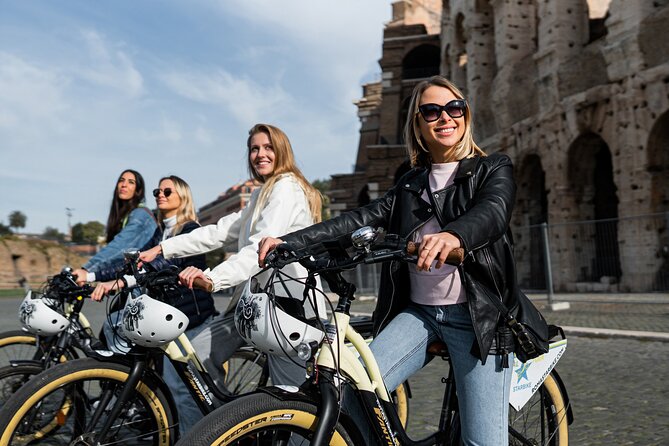
This tour is built for people who want the big Rome hits without spending the entire day glued to a line of tour buses. You cover a lot of ground in a short window, and the e-bike makes the difference between seeing Rome and just surviving Rome.
For me, the sweet spot is the pacing. Stops are long enough to connect the visuals in front of you with the stories behind them, then you’re back on the bike almost immediately. That balance is also why this works well for families and first-timers.
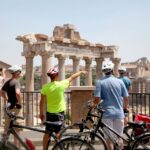
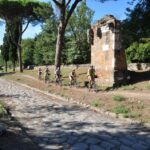
You can also read our reviews of more cycling tours in Rome
Meeting Point on Via dei SS. Quattro: The Morning Setup
You meet at Via dei SS. Quattro, 58, 00184 Roma RM, and the ride ends back at the same place. The start time is 10:00 am, and there’s a mobile ticket involved, which helps keep things simple once you’re there.
Plan to arrive a few minutes early. Even on smooth mornings, the process of outfitting bikes, helmets, and headsets takes real time, and at least one departure ran later because everyone needed proper setup. If you want the least-stress start, show up early and bring your patience for Rome logistics.
E-Bikes and Safety Gear: What You Actually Get
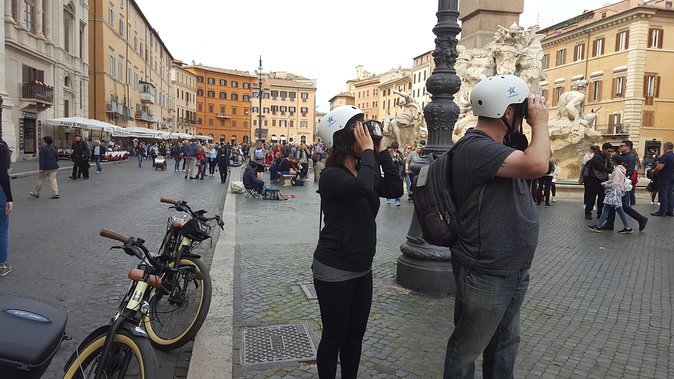
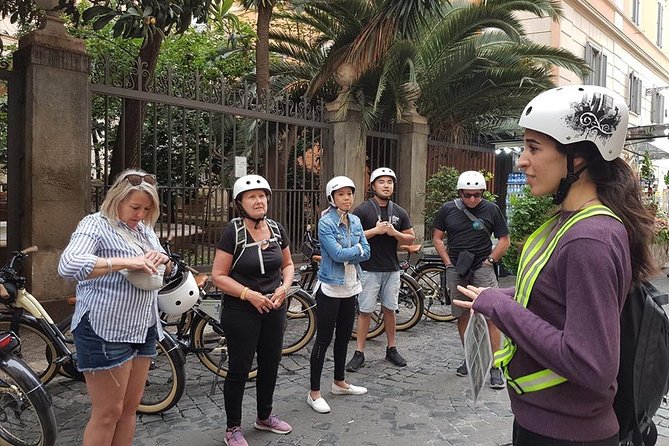
The tour includes a high-quality e-bike, plus a helmet and mounts for your phone and handlebars. You don’t need to play mechanic with gears; the assist is the point, which makes the ride feel more like cruising than training.
The tour also includes 3D viewers (used as part of the interpretation at key sites). You’ll get the most out of them if you keep an open mind about switching from real-time street views to reconstructed ancient cityscapes.
The big “read this twice” requirement: you must know how to ride a bike well. The e-bike helps, but it doesn’t erase balance. If you’re wobbly, this won’t be the best place to learn.
Arch of Constantine: Power on the Mile Between Colosseum and Palatine
Your first major stop is the Arco di Costantino, located between the Colosseum and the Palatine Hill. This triumphal arch dates to the 4th century AD and was commissioned by the Roman Senate to mark Constantine’s victory over Maxentius at the Battle of the Milvian Bridge.
I like this opening stop because it sets the tone right away. You see a monument that’s basically political messaging in stone, then you roll onward into the roads where emperors and ideas literally shaped movement through the city.
Fori Imperiali Ride: When the Forums Feel Like a Main Street
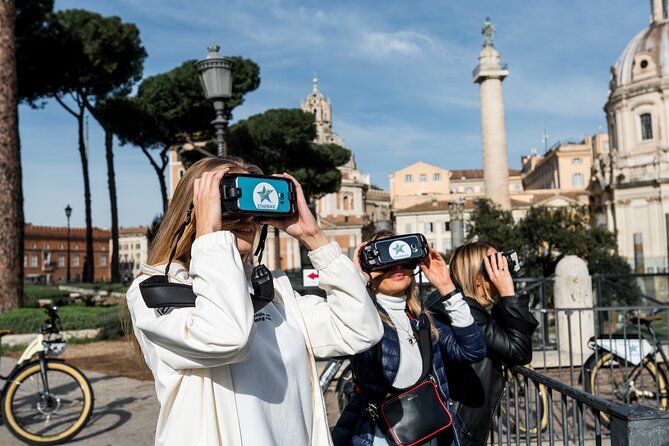
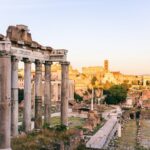
Next you ride through Fori Imperiali, one of those rare stretches that makes Rome’s history feel present instead of distant. The route lines up with ruins tied to Trajan, Augustus, Nerva, and Julius Caesar’s forums, so your bike becomes the connector between different eras.
The best part here is the flow. You’re not shuffling between separate areas in a grid; you’re moving through a corridor of monuments, and the bike keeps your energy steady.
A consideration: this is still central Rome, so you’ll want to stay aware of traffic patterns and keep your line tight. The tour’s staff generally handles safety and group control well, but your confidence matters.






Piazza Venezia: Monumental Rome at the Foot of Capitoline Hill
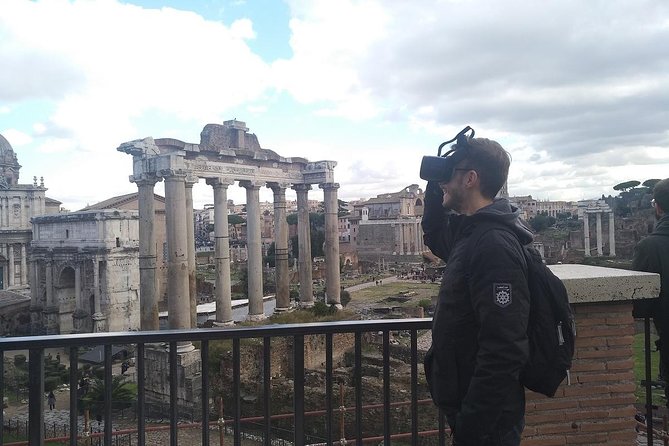
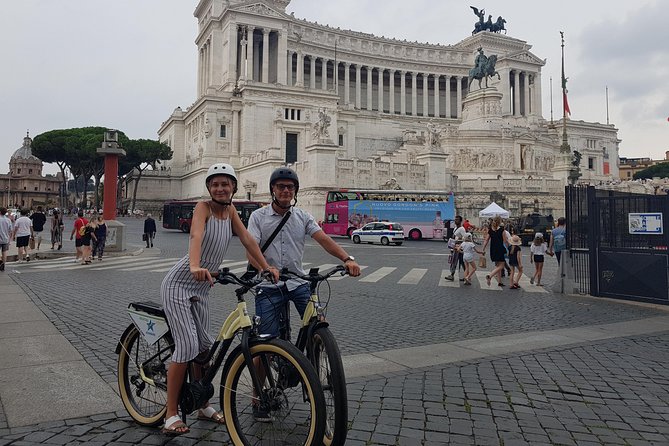
Then you reach Piazza Venezia, dominated by the Vittoriano—a monument tied to Italy’s unification and dedicated to King Vittorio Emanuele II. The square sits at the foot of the Capitoline Hill, so it’s a natural crossroads: grand views, big symbolism, and easy orientation for your brain.
I like this stop because it helps you understand how Rome’s identity layers over time. You start with ancient authority, then you’re quickly confronted with how later Italy wanted to frame its own story.
Trajan’s Forum: The Column and Its 2,500 Carved Figures
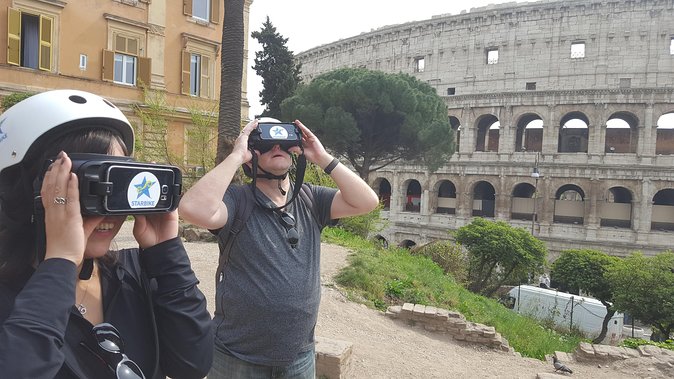
At Foro di Traiano (Trajan’s Forum), you focus on one of the most striking pieces of Roman storytelling: the Column of Trajan with carved scenes showing the details of the Dacian wars. You’re looking at 2,500 carved figures, which turns “art” into a historical record you can literally read if you slow down.
This is a stop where the guide’s explanations matter. The VR/3D component can also help, because it’s hard to fully grasp scale and layout when you’re seeing ruins in isolation.
Timing note: the stop is about 15 minutes, so come ready to listen and scan. If you drift into “I’ll take everything in later,” you’ll miss the best clues your guide points out.
Pantheon: That Dome You’ve Seen on Postcards, Up Close
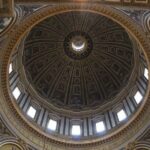
Next is the Pantheon, built in the 1st century BC and associated with Agrippa. It’s dedicated to gods and to the living sovereign, and its dome is famous for being the world’s largest unreinforced concrete dome.
What I like about this stop on a bike tour is the contrast. You’re not just standing in a tourist funnel. You’re arriving with momentum, then quickly settling into one of Rome’s most mind-bending engineering achievements.
One practical consideration: because this is a major site, expect crowds. Even with a guided rhythm, you’ll want to be comfortable standing close for short explanations.
Piazza Navona and Campo de’ Fiori: Baroque Geometry to Market Noise
From the Pantheon you roll to Piazza Navona, one of Baroque Rome’s signature squares. It sits on the remains of the Stadium of Domitian, and the area is known for major artists associated with the space (Bernini, Borromini, and others connected with the era’s sculptural style).
After Navona, you shift to Campo dei Fiori, a lively square tied to a daily fresh market of fruits and flowers, with bars and terraces especially lively in the evening. Even if you’re visiting earlier in the day, it’s a nice reminder that Rome isn’t frozen in ancient time—you’re riding through it as a living city.
Small but real drawback: if you’re traveling with kids, marketplaces can pull attention away from the headset moments. That doesn’t make the tour worse, but it changes how much kids engage with the 3D reconstructions.
Trastevere Alley Feel and Circo Massimo Open Space
Then you cross into Trastevere, “beyond the Tiber” in Latin. This is the neighborhood you’d pick when you want medieval-ish lanes and a more intimate Rome vibe. It’s also a great mental reset from big squares and monumental facades.
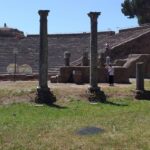
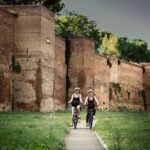
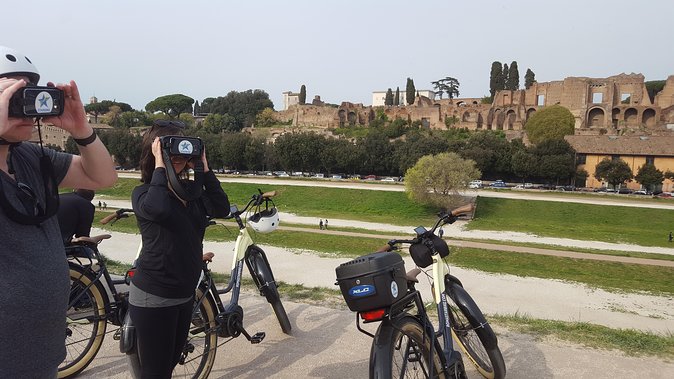
After Trastevere, you ride toward Circo Massimo—the enormous stadium area built between the Aventine and Palatine Hill. It once held an estimated 250,000 spectators, with a chariot racetrack dating to the 6th century BCE. Today it’s a huge public park, so you get open air and room for your legs to un-knot after denser streets.
The value here is variety. One minute you’re in tight-feeling back alleys; the next you’re in a wide space that helps you picture what ancient mass gatherings looked like.
Piazza del Campidoglio: Michelangelo’s Genius Viewpoint
Your last stop is Piazza del Campidoglio. This is one of Rome’s seven hills and a place tied to legends, but the real win for many people is the viewpoint. From here you get a sweeping look over the Roman Forum, plus a sense of how political and symbolic power is staged through urban design.
If you’ve ever wondered why artists and architects became so important in shaping the city’s “how you see it” effect, this stop gives you the answer in one look. You’re standing where Michelangelo’s influence on planning becomes visually obvious.
Why the 3D Viewers Actually Help (When You Use Them Right)
The headsets/3D viewers are included, and this is the feature that turns the ride from “I saw stuff” into “I understood what I was seeing.” When you look at ruins through the reconstruction, you start recognizing shapes and street-level layouts that would otherwise feel like scattered stones.
That said, I’d also respect the mixed reaction you might have with kids. If the sun is hot and you’re already moving on the bike, some people prefer to keep their eyes on the street rather than stopping to look through VR.
My practical approach: use the headset as a short picture-in-your-brain tool. Look, listen, then take it back to real-world sightlines quickly.
Timing, Traffic, and Group Size: Staying Comfortable
This tour runs for about 3 hours and keeps groups small (maximum 12 travelers). Small groups are a big deal in Rome. It reduces the “traffic bottleneck” feeling and makes it easier for staff to keep everyone together.
It also helps with safety. Several guides on different departures are known for actively navigating through heavier traffic conditions and keeping riders calm and coordinated. Still, if you’re nervous around cars or tight streets, you’ll feel better if you already ride confidently.
If you care about timing, know that departures can run a bit late due to outfitting. The bikes, helmets, and 3D viewers all need setup time, so arrive early so you aren’t rushed at the end.
Family Notes: Child Seats, Trailer Rules, and Kid Expectations
This tour is family-friendly. Child seats are included up to 25 kg, and there are specific rules for children aged 6–10: the child must be under 4/7 feet (143 cm) because they ride via a trailer bike rather than a bike alone.
One more point to plan around: the tour includes multiple interpretation moments. If your kids are high-energy and only want to move, keep expectations realistic about how long they’ll tolerate a headset stop.
When it works for families, it works because the e-bike reduces friction. You’re not making kids pedal up hills or cover huge distances on foot.
Value for Money: Is $78.64 a Good Deal?
At $78.64 per person for about 3 hours, you’re paying for three things at once:
- an e-bike rental you don’t need to arrange yourself,
- a guided route that strings together major landmarks in a smart order,
- and included 3D viewing plus safety gear like helmets.
If you try to replicate this on your own—bike rental, navigation, and paying for entry-style guided interpretation—you’ll usually spend more in time and money. The best value is for first-time Rome visitors who want a confident overview fast.
The one “value mismatch” situation is if you already love DIY sightseeing and hate any “stop and listen” rhythm. In that case, you may prefer a self-guided bike loop. Otherwise, this tour is priced like a practical shortcut.
Who Should Book This Tour (and Who Should Think Twice)
This tour fits best if you want:
- a quick highlights pass of Rome’s top ancient and Baroque landmarks,
- a guided framework so you don’t miss the important details,
- and an e-bike that keeps energy for later in the day.
You should think twice if:
- you don’t feel steady on a bike,
- you dislike headsets or VR components,
- or you’re traveling with very small kids who may need more flexible pacing than a structured stops-and-stories format.
Should You Book This Rome Highlights E-Bike Tour?
I’d book it if you’re arriving in Rome and want to get your bearings fast while still learning why each site matters. The route is efficient, the included gear saves hassle, and the combination of e-bike movement with 3D reconstructions can turn iconic stops into something more memorable than photos.
If you’re highly sensitive to traffic or you want a fully hands-off sightseeing day, then look at other options. But for most people—especially first-timers and families who want a fun, manageable Rome hit—this is a strong choice.
FAQ
FAQ
How long is the Rome Highlights Bike tour?
It runs for about 3 hours.
What is the price per person?
The price is $78.64 per person.
What time does the tour start, and where does it meet?
The start time is 10:00 am, and the meeting point is Via dei SS. Quattro, 58, 00184 Roma RM, Italy. The tour ends back at the meeting point.
What language is the tour offered in?
The tour is offered in English.
What’s included in the tour price?
Included items are a high-quality e-bike, 3D viewers, helmet, a mobile phone holder, and a handlebar holder. Child seats are included up to 25 kg.
Are child seats available, and are there height or age rules?
Yes. Child seats are included up to 25 kg. A child age 6–10 is valid only if they are less than 4/7 feet tall (143 cm), because they ride using a trailer bike.
Do I need to know how to ride a bike?
Yes. You must know how to ride a bike well.
What are the cancellation terms?
You can cancel up to 24 hours in advance for a full refund. If you cancel less than 24 hours before the start time, the amount paid is not refunded.