REVIEW · ROME
Walking tour in the Heart of Rome and a Cooking Class in a Very Small Group
Book on Viator →Operated by Sublime Tours · Bookable on Viator
Four hours, two Roman cravings: monuments and pasta. I love the tight small-group size, and I also like that the guide connects what you see to how Romans lived, before you roll dough with your own hands.
The second half is the payoff. In the kitchen, Chef Paula runs the lesson, and the experience comes with recipes so you can actually cook what you learned later. If you get Nina as your walking guide, expect lively pacing and clear explanations while you move through big-name landmarks like the Spanish Steps and the Pantheon.
One thing to keep in mind: some stops are brief, including a short look at the Trevi Fountain, so don’t plan to linger there for an hour of photos unless you add extra time later on your own.
In This Review
- Key highlights you’ll feel fast
- The best kind of Rome day: walking for context, cooking for memory
- Piazza Barberini: starting point with real momentum
- Spanish Steps: the classic viewpoint, with the story attached
- Trevi Fountain: time for coins, plus context for the aqueduct ruins
- Piazza di Pietra and Santa Maria sopra Minerva: quick hits that matter
- The Pantheon: the anchor stop of the whole day
- Piazza Navona area: the walk ends, the food starts
- The pasta class with Chef Paula: what you actually learn
- Recipes you can cook again at home
- How much time you really spend at each sight
- Price and value: $142.98 for sights plus a real meal
- Logistics that matter on your Rome afternoon
- Who this tour is best for
- Should you book the Heart of Rome walk plus pasta class?
- FAQ
- How long is the walking tour and cooking class?
- How big is the group?
- Is the tour in English?
- What does the cooking class include?
- Where does the tour start and end?
- Do I get admission tickets included?
- Is there a cancellation option if plans change?
Key highlights you’ll feel fast
- Max 8 travelers means you can ask questions without shouting over a crowd
- Classic sights in logical order: Barberini → Spanish Steps → Trevi → Pantheon → Navona area
- Hands-on pasta making at the end, not just watching from the sidelines
- You’ll eat what you make, with an appetizer, pasta dish, and dessert included
- Recipes provided so the class doesn’t end when you walk back outside
- English-language guide with strong focus on both Rome and Roman food
The best kind of Rome day: walking for context, cooking for memory
Rome can overwhelm you fast. Big monuments, tangled streets, and everyone telling you what to care about. This tour splits the day into two useful modes: a guided walk that helps you understand the historic center as you go, then a cooking class that turns food into a hands-on memory.
I like that it’s designed as a single afternoon arc. You start in the heart of the city, hit the major “how did they build this” stops, and then you end close to the Pantheon area where you continue the experience at a local restaurant. It’s a smart way to avoid the common problem of doing one tour in the morning and another in the evening—when you’re tired, you remember less.
The group size matters here. With a maximum of 8 people, the guide can actually keep your attention and adjust the pace if you have questions. That’s not a small detail in Rome, where it’s easy to get stuck behind slow photo lines.
You can also read our reviews of more walking tours in Rome
Piazza Barberini: starting point with real momentum
You begin at Piazza Barberini, a handy central location to anchor the afternoon. The first stage is short—about 15 minutes for an intro and orientation—so you get your bearings without losing time.
This is a good place to start for two reasons. First, it helps you set the tone: the guide doesn’t just list landmarks; they give you context for what you’re about to see next. Second, it makes the rest of the walk feel smoother because you’re not trying to figure out the route while everyone else is already moving.
If you’re traveling with family, this opening cadence tends to work well. Short segments plus clear explanations beat the “wander for an hour and hope it clicks” approach.
Spanish Steps: the classic viewpoint, with the story attached
From the meeting point, you head toward the Spanish Steps. Expect around 15 minutes here for history and curiosities—how the place developed and what to notice as you look around.
This stop can go two ways on tours: either you get a quick photo line, or you get real reasons to pay attention. The best part of this format is that it’s not only about the steps themselves. The guide frames what you see in the surrounding area, so you understand why this spot became such an icon in the first place.
Practical tip: plan to stand for your photos, but don’t fight your way into every angle. In Rome, the best photos are often the ones you take without blocking someone else.
Trevi Fountain: time for coins, plus context for the aqueduct ruins
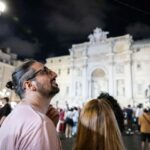
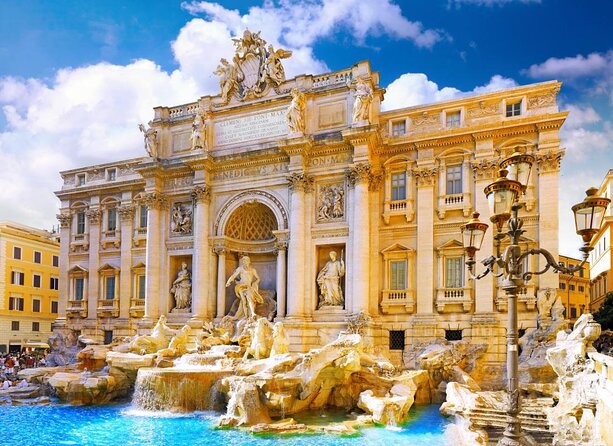
Trevi Fountain is famous for a reason. You’ll reach it after passing ruins of an ancient aqueduct and then walk into the full fountain view.
Here’s what I think makes this stop worthwhile: it’s not only “throw a coin.” You also get an explanation of what you’re seeing and why the aqueduct story matters. Even if you’ve heard bits and pieces before, hearing how it connects to the fountain setting makes the whole scene feel less like a postcard.
You’ll have time to wander and take photos, but the slot is short (about 5 minutes). So treat Trevi as a quick hit. If you want a slow, crowd-resistant stroll, build that into a separate time window later.
One smart strategy: take your coin photo first, then use the remaining minutes to look up and around—watch how the fountain sits in its urban setting rather than staring straight ahead.
Piazza di Pietra and Santa Maria sopra Minerva: quick hits that matter
After Trevi, you continue to Piazza Di Pietra (about 5 minutes) and then to Chiesa di Santa Maria sopra Minerva (also about 5 minutes). These are compact stops, but they’re chosen for a reason: they break up the big-scene landmarks with details that reward attention.
At Piazza di Pietra, the guide explains the square and Hadrian’s temple. That’s a big name, but you don’t get long there—so the explanation is the main value. You’re not meant to tour every stone; you’re meant to understand what you’re looking at before moving on.
Then comes the church and its famous elephant sculpture (Bernini’s elephant). The trick with Rome churches is that without a guide, you can walk past visual jokes and symbol-filled art. With a short stop plus a clear explanation, you get the punchline and the meaning.
If you like architectural details, this part of the walk is the most “worth your attention per minute” segment.
You can also read our reviews of more cooking classes in Rome



The Pantheon: the anchor stop of the whole day
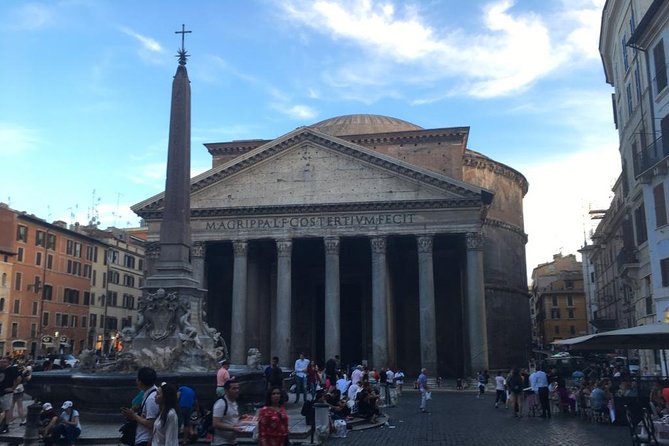
Next up is the Pantheon, about 15 minutes for historical facts and why it influenced Renaissance artists. This is the moment where the day’s structure really pays off: after the earlier landmark context, you’re ready to understand why this building carried that kind of long-term impact.
Fifteen minutes isn’t a “slow architecture seminar,” but it’s enough time to learn what to notice, then look. I also like that the walk keeps moving with purpose—Rome is too big to get stuck waiting for motivation.
If you’re sensitive to crowds, expect a busy area here. The guide’s timing and route help, but you’ll still feel the energy around one of the city’s most visited sites.
Piazza Navona area: the walk ends, the food starts
The walking portion ends close to Piazza Navona. Then the experience continues in a local restaurant for the cooking class portion.
This transition matters. If the restaurant were far away, the day would lose momentum and you’d arrive hungry and scattered. Ending near the Pantheon/Nevona zone keeps things compact. You can shift from walking mode to eating mode without a long commute.
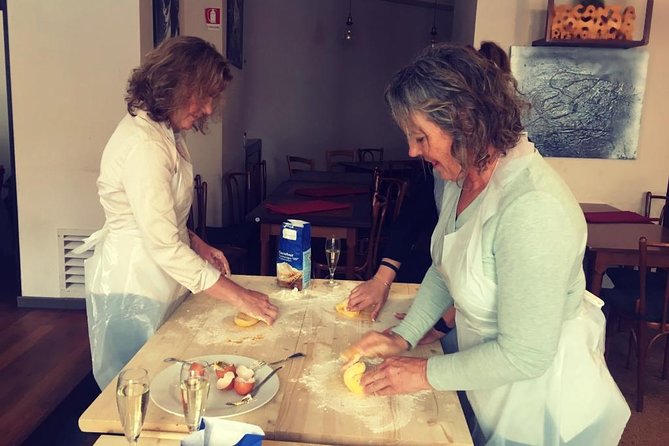
Plan to be focused when you get to the restaurant. You’ll want to listen during the hands-on instruction because the steps build on each other. Also, since this is a “very small group” experience, you’re not just standing around—you’re doing.
The pasta class with Chef Paula: what you actually learn
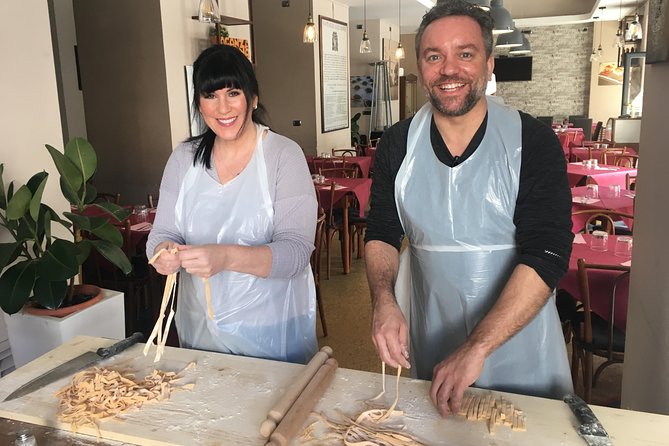
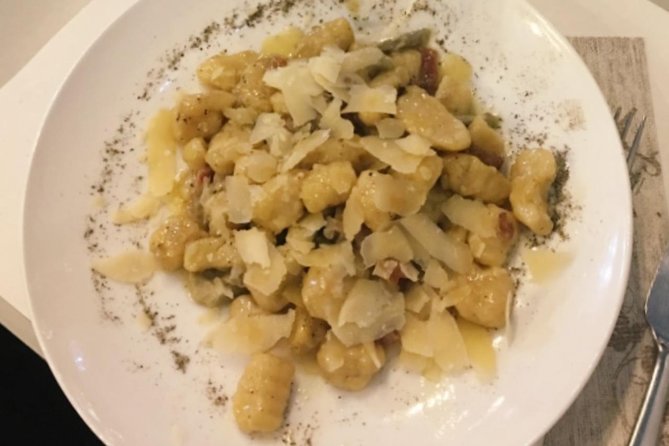
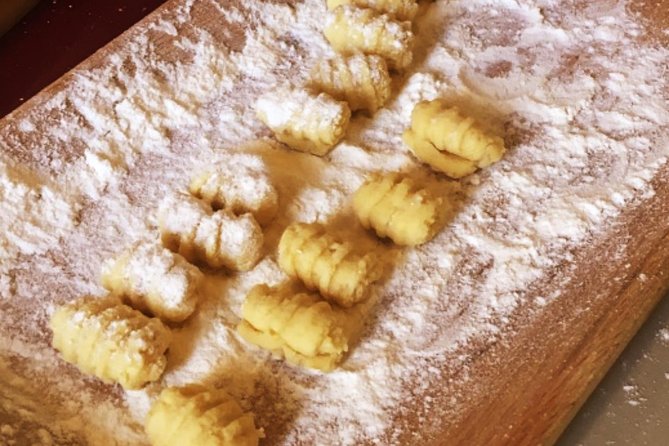
In the kitchen, Chef Paula leads the lesson. One recent highlight from a review described how the session included tasks like preparing artichokes, mixing and rolling gnocchi, and making ciabelline, a crunchy licorice-flavored cookie.
That mix is ideal because it teaches more than one skill set. Pasta dough work is the obvious star, but the artichoke prep adds a practical “how Italians build a plate” element. And having a dessert that’s memorable (like ciabelline) makes the class feel complete, not just training for a single dish.
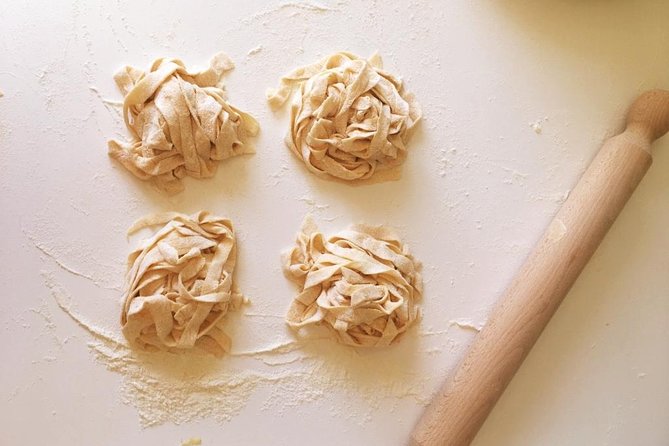
The lesson includes an appetizer, a pasta dish, and dessert. The big point: you don’t just sample. You make it.
If you’re traveling with family, this is also a strong choice. The work is hands-on, but not so technical that it becomes frustrating. And with a group of up to 8, the instructor can help course-correct quickly.
Recipes you can cook again at home
You get recipes for all the dishes you prepared. I love that detail because Rome is good at creating memories, but bad at creating dinner plans for next week.
Having written recipes is what turns the class into something you can repeat after you get home. Even if you don’t recreate everything perfectly, you’ll understand the core steps—especially how you approach dough, shaping, and timing.
Practical tip: if you want to cook soon after your trip, take a few minutes right before you leave the restaurant to compare the recipe list to what you remember making. It makes the next grocery run much easier.
How much time you really spend at each sight
The overall duration is about 4 hours. The itinerary is broken into compact timed sections, with the longest stretch at the Pantheon and a few stops getting around 5 to 15 minutes each.
That’s a real tradeoff. You’ll see a lot, but it won’t feel like a deep museum day. Trevi and the smaller stops are short—perfect for getting the essentials, not perfect if you want to linger.
For me, this is a plus because it fits an afternoon when you want big-name highlights. You also get the balance of culture and cooking without turning your trip into a full-day endurance test.
If you’re the type who needs long quiet time at monuments, you might want to add a second visit later. For the “one afternoon in Rome, make it count” crowd, this schedule is a smart match.
Price and value: $142.98 for sights plus a real meal
At $142.98 per person, you’re paying for two things at once:
- a guided walk through major historic center sights, and
- a hands-on cooking class in a local restaurant that includes the meal components
This pricing starts to make sense once you think about the full package. Many Rome “food experiences” are either a tasting-only walk or a class without a broad guided sightseeing layer. Here, you get both—so you’re not paying for half the day.
Also, you get recipes. That’s not always included with food classes, and it increases the long-term value.
Small note on planning: this is commonly booked ahead (on average, about 41 days). If your dates are fixed, I’d secure a spot earlier rather than later.
And one more practical thing: this tour is listed as free cancellation if you cancel at least 24 hours before start time, and you may need to be flexible only if a minimum group size isn’t met. Keep that in mind if you’re traveling over peak periods.
Logistics that matter on your Rome afternoon
You’ll find the meeting point is Piazza Barberini. The tour ends close to Piazza della Rotonda and near the Pantheon area, which is convenient if you want to continue exploring on your own afterward.
Language is English, and the tour uses a mobile ticket. It’s also near public transportation, which helps if your day depends on trains or buses.
Most people can participate, which makes it a good option when you’re building a Rome itinerary that includes both walking and an indoor activity. Just remember: you are walking through the historic center, so comfortable shoes are still a must.
Who this tour is best for
I’d point you toward this experience if you want:
- major Rome sights in one guided afternoon, and
- a cooking class where you make food from scratch (not just taste), and
- a small-group pace that keeps the day from feeling chaotic
It’s especially appealing if you have limited time. Two key moments—Pantheon plus the end-of-tour cooking lesson—cover both the “why Rome matters” and the “what you do with that experience later.”
If you already know you want to focus only on museums and art, this may feel too fast-paced. But if your travel style is “see it, then do something with it,” this format fits nicely.
Should you book the Heart of Rome walk plus pasta class?
Yes, if you want a compact, high-value Rome day that mixes landmarks with hands-on food. The standout strength is the combination: you get context on the streets, then you get a real cooking session with Chef Paula and clear, step-by-step instruction. The small group size (max 8) adds a level of comfort you don’t always get in busy Rome.
I’d hesitate only if you hate short stop times, especially around the Trevi Fountain area. In that case, plan extra solo time later for lingering.
If your dates are flexible, consider booking earlier since it’s often reserved about a month in advance. If you can line this up for an afternoon when you still have energy, you’ll finish the day with both photos and dinner skills—an unusually satisfying combo for Rome.
FAQ
How long is the walking tour and cooking class?
It’s about 4 hours (approximately), with a guided walk through several central Rome landmarks and then time at a local restaurant for the cooking class.
How big is the group?
The tour has a maximum of 8 travelers, so it stays a very small group experience.
Is the tour in English?
Yes, it’s offered in English.
What does the cooking class include?
The class is hands-on and includes making your own food from scratch, with an appetizer, a pasta dish, and dessert. Recipes for everything you prepare are included.
Where does the tour start and end?
It starts at Piazza Barberini and ends close to Piazza della Rotonda, near the Pantheon.
Do I get admission tickets included?
The tour lists free admission for the stops, and the experience includes the cooking class and guide services.
Is there a cancellation option if plans change?
You can cancel for a full refund up to 24 hours in advance of the experience’s start time.