REVIEW · ROME
Rome: Ostia Antica Private Walking Tour with Skip-the-Line
Book on GetYourGuide →Operated by Askos Tours · Bookable on GetYourGuide
Ostia Antica is Rome’s ancient river-port world, and this private walking tour lets you see the key parts without getting stuck in ticket lines. I like the way a guide turns scattered ruins into a real place: you’ll hear how this city grew from an early military outpost into a major supply hub for Rome.
Two things I especially like are (1) the focus on “what you’re looking at” in places like Neptune’s Thermal Baths—including its mosaics—and (2) the smart mix of monuments that show daily life, not just big buildings. The main thing to consider is that this is an outdoor walk with a medium activity level, so it may not feel great for anyone with mobility issues.
In This Review
- Key highlights you’ll care about
- Ostia Antica: Rome’s river-port city, built for control and commerce
- Meet at the Parco entrance and start with skip-the-line tickets
- Neptune’s Thermal Baths: mosaics that make gods feel specific
- Theatre and forum: seeing how power looked in public space
- House of Diana, Thermopolium, and Forica: daily life beyond the big monuments
- Domus of Amor and Psyche: the house reveal and the story behind it
- Private guide value: languages, pacing, and what you miss on your own
- Price and logistics: is $314.37 per person worth it?
- Who should book this Ostia Antica private walking tour
- Should you book? My straightforward take
- FAQ
- What is the tour duration?
- Where do you meet the guide?
- Does the tour include skip-the-line tickets?
- Is this a private tour?
- Which languages are available?
- What stops are included in the route?
- How much does it cost?
- Is it suitable for wheelchair users or limited mobility?
Key highlights you’ll care about
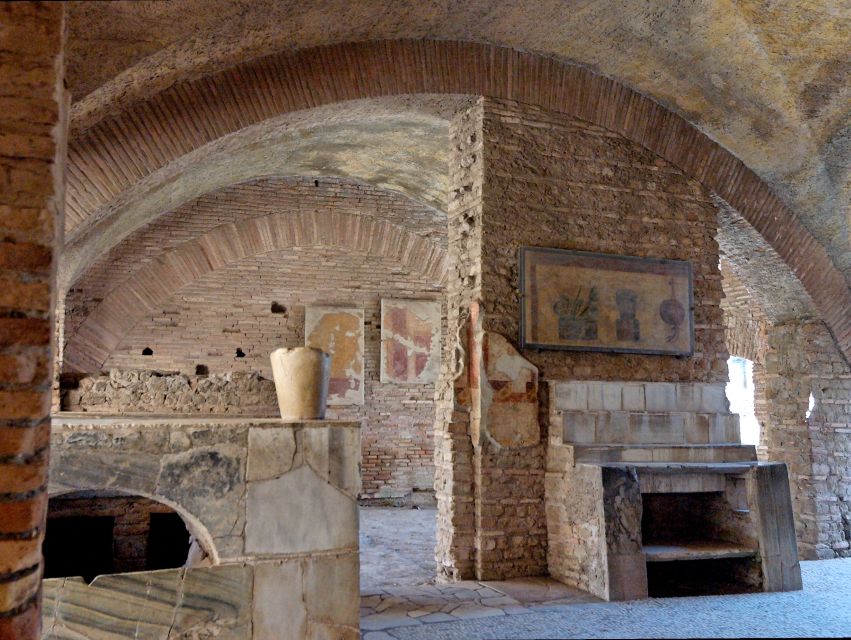
- Skip-the-line tickets so you start exploring faster
- Neptune’s Thermal Baths and mosaic details connected to Neptune and Amphitrite
- A guided route through the theatre and forum, where public life happened
- Stops that spotlight everyday spots like Thermopolium and Forica
- A closer look at domestic art at the Domus of Amor and Psyche excavations
Ostia Antica: Rome’s river-port city, built for control and commerce
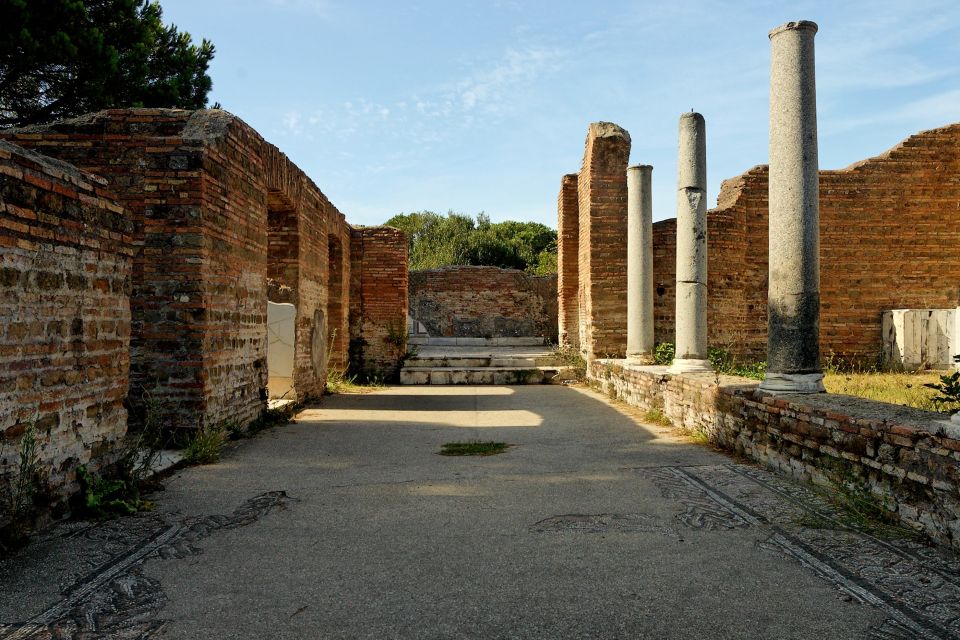
If Rome is the political headline, Ostia Antica is the place that helped make it possible. You’re walking in an archaeological park that traces back to the beginning of the 4th century B.C., when this settlement functioned as a military outpost. The point was practical: controlling access to the Tiber, including its lower course and nearby areas, to help defend Rome.
Over time, the military role didn’t disappear, but the city gained a commercial identity. As the port became more important, Ostia helped supply Rome with foodstuffs—especially wheat—so the city’s ruins tell a story of logistics and empire, not just battles and emperors. That’s why you’ll get more out of this tour if you keep asking a simple question: what job did each building serve for life by the river?
Later, the city was surrounded by a new circle of walls, enclosing roughly 50 hectares. The guide’s narration ties that layout to how the urban space was divided into five regions or neighborhoods. Even if you’re not an archaeology expert, you can start to “read” the city as a system.
You can also read our reviews of more walking tours in Rome



Meet at the Parco entrance and start with skip-the-line tickets
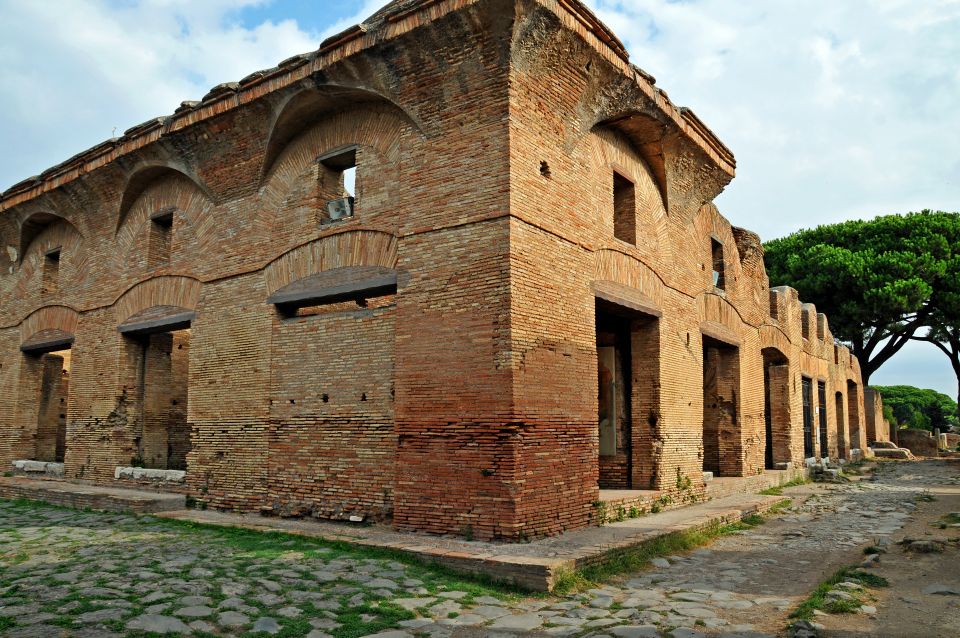
You meet your guide at the ticket office of Parco Archeologico di Ostia Antica. The guide holds a sign with your name, which helps you find the right group quickly. From there, the tour moves into the ruins with skip-the-line tickets included, which matters here because entrance lines can be the difference between a smooth start and an annoying delay.
Because it’s a private group, you’re not competing with a stream of people for attention at the main points. You’ll spend your energy looking at what’s in front of you—mosaics, architectural traces, and the layout of public areas—rather than counting the minutes until you can get inside.
The tour ends back at the meeting point, so you don’t need to figure out a second transit plan. For many visitors, that simple loop is a big part of the value of a short, focused tour.
Neptune’s Thermal Baths: mosaics that make gods feel specific
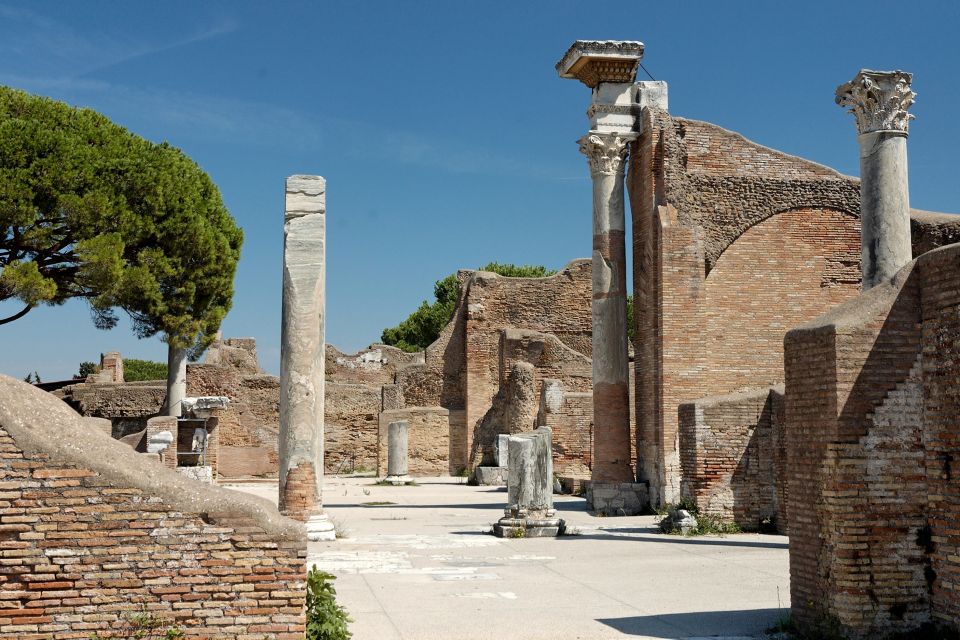
One of the best reasons to pick a guided Ostia Antica walk is how easily mosaics can become background. Here, the highlight is Neptune’s Thermal Baths, including mosaics representing Neptune and Amphitrite. Instead of seeing them as decorative floor fragments, you’ll get a guided explanation of what they signal in the context of the baths.
This matters because bathing wasn’t only about hygiene. In Roman life, baths and surrounding spaces were social. They connected people, routines, and status—all wrapped in a public setting where art and symbolism played a role.
If you’re the type who wants to understand the meaning behind the details, this is where the tour earns its keep. Guides like Paolo Gardelli (named in one review for his infectious enthusiasm and deep, specific explanations) are the kind of person who can make those mosaics click as you walk past them.
Theatre and forum: seeing how power looked in public space
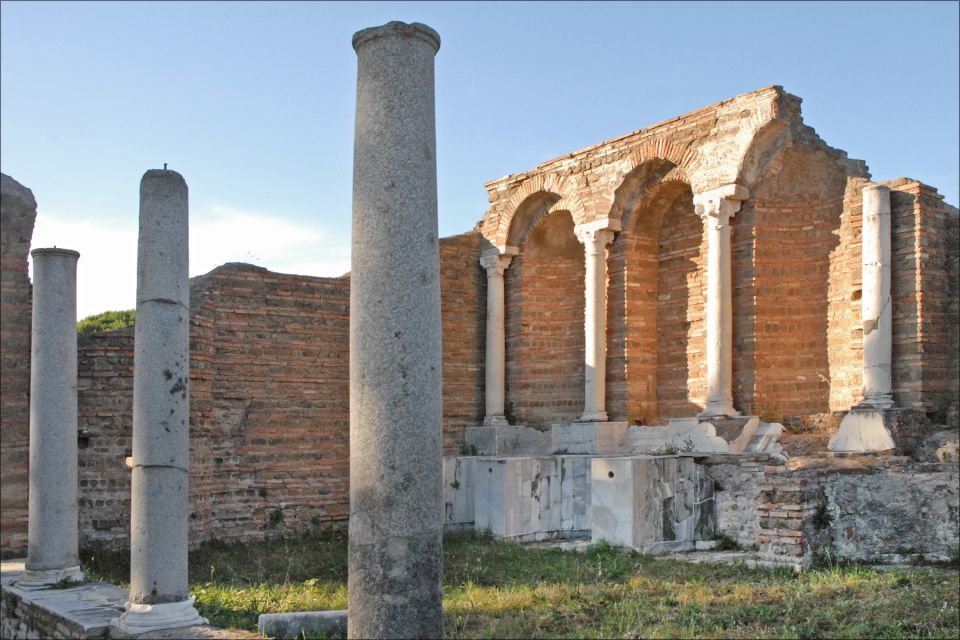
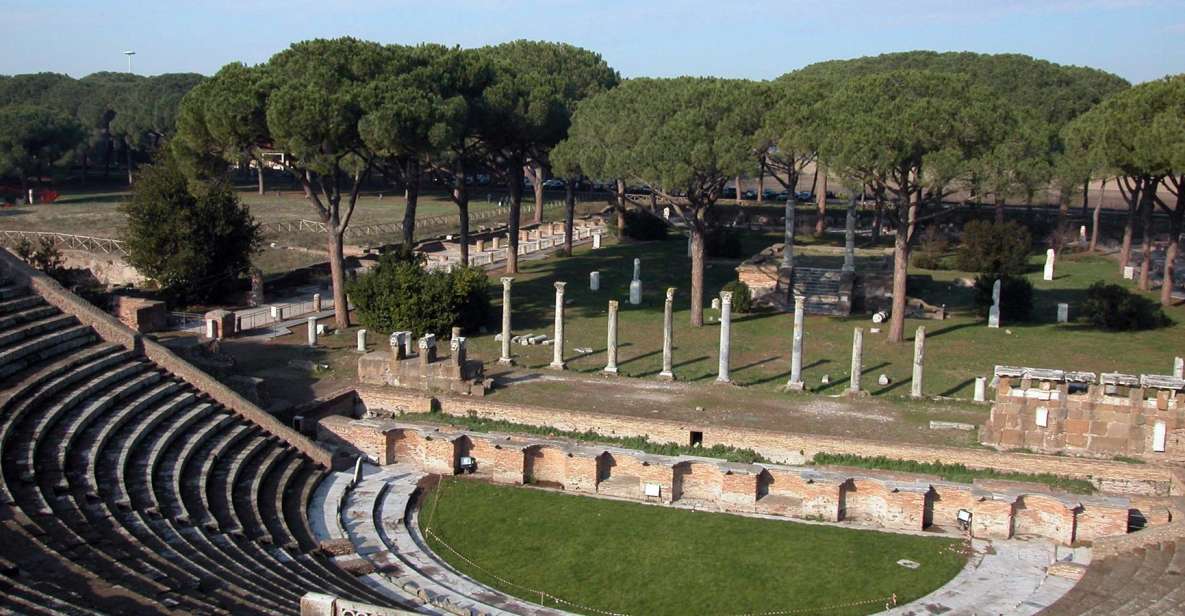
Ostia Antica is full of ruins, but the theatre and forum areas help you understand the city’s rhythm. You’ll visit the Teatro di Ostia with guided time set aside (about 30 minutes), which is helpful because a theatre is one of those structures where your brain needs cues. With a guide pointing out what to notice, you start to understand how performances and gatherings worked in a Roman urban setting.
From there, the tour covers the forum, a central concept in Roman cities. The forum wasn’t one single-purpose building—it was where civic life and authority met daily routines. When you hear how the city’s early military purpose evolved and how commerce grew, the forum becomes more than a “nice ruin.” It becomes the stage for a society that was organizing trade, law, and public life in a place tied to the river.
Along the walk through the old town, you’ll also hear about walls, neighborhoods, and the idea that Ostia was planned and divided. The point isn’t memorizing measurements. It’s learning why the city looked the way it did and how different sections could support different roles.
House of Diana, Thermopolium, and Forica: daily life beyond the big monuments
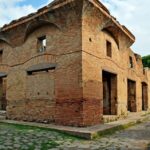
Roman ruins can feel heavy on temples and public buildings, so I appreciate when a tour makes time for the in-between life. This one does. You’ll see the House of Diana, plus areas connected to everyday commerce and services, including the Thermopolium and Forica.
Here’s the practical value: these stops help you picture what visitors and residents might have done on a normal day. A Thermopolium is essentially a food-and-drink spot—fast, functional, and built into city life. A Forica relates to washing and laundry functions, so it connects to the literal work behind daily routines.
This is also where the guide’s talent for explanation really matters. In the best moments, you’re not just walking through rooms or doorways. You’re learning what activity happened there and why it was positioned where it was. That kind of interpretation is exactly what makes a guided tour feel worth the cost, especially when you’re only in the area for a short time.
You can also read our reviews of more private tours in Rome






Domus of Amor and Psyche: the house reveal and the story behind it
The tour includes a focused stop at the Domus of Amor and Psyche excavations of Old Ostia. This is scheduled as a shorter visit (about 20 minutes), but it’s a smart addition because domestic spaces tell a different part of the city story than forums and baths.
You’ll also get a sense of how archaeologists reconstruct life through partial remains. Excavations can look like outlines until someone connects them to what people used to do inside—how homes worked, what art and symbolism meant, and how the city’s “old” layers fit into the broader timeline.
This is another point where the guide quality stands out. If you’re lucky enough to get a guide like Alessandro (recognized for keeping the explanations interesting throughout), you’ll likely leave this stop with a clearer idea of how houses expressed identity and status in a port city full of visitors and traders.
Private guide value: languages, pacing, and what you miss on your own
This is a private group tour, which affects your experience in two big ways. First, you can move at a pace that supports questions. Second, the guide can keep attention on whatever part of Ostia Antica is most relevant to you.
A big plus is the language options: the tour is offered in Spanish, English, French, German, and Italian. That’s useful in Rome, where many sites still feel like a guessing game if you’re not fluent in Italian. Having a guide who can explain history clearly in your language can turn a “pretty set of ruins” into a coherent story.
The pace is also worth noting. The activity level is medium, and the tour is about 2 hours total. That’s long enough to cover major highlights—baths, theatre, forum-area context, and the domus-related stop—without dragging you through the entire park.
If you’re planning a packed day in Rome, this timing is also realistic. Ostia Antica is not far in terms of geography, but it still deserves time. A tight guided format helps you use the time well.
Price and logistics: is $314.37 per person worth it?
At $314.37 per person for a 2-hour private tour, this is not a budget option. The value comes from three places: skip-the-line entry, a private guide, and a curated route through the most interpretive parts of Ostia Antica.
If you’re traveling with someone and you can split the cost of a private experience, it starts to look more reasonable. If you’re solo, you’re paying mainly for the guide attention and the convenience factor. Either way, the question isn’t whether the ruins are free. They aren’t always free from friction, and the guide experience is what turns them from “I saw buildings” into “I understood the city.”
For me, the best way to judge value is to imagine doing it without a guide. You could likely walk between monuments, but the meaning of mosaics like the Neptune imagery, and the city-wide story connecting military outpost, port commerce, walls, and neighborhoods, is exactly what most self-guided visits don’t deliver in a short window.
Who should book this Ostia Antica private walking tour
I’d put this tour at the top of your list if you:
- Want a guided explanation of multiple sites in a short visit
- Like when a guide points out details and connects them to daily life (not just dates)
- Prefer private pacing over matching your questions to a group schedule
- Are interested in a Roman port city story—food supply, river control, and urban planning
You might reconsider if:
- You have limited mobility, since the activity level is medium and the information provided indicates it may not be suitable for wheelchair users and people with mobility impairments (even though the tour notes wheelchair accessibility). If accessibility matters for you, contact the provider before booking so you’re not guessing.
Should you book? My straightforward take
If you want Ostia Antica to feel like a living city instead of a scatter of stones, this is an easy yes. The combination of skip-the-line access, a private guide, and a route that hits both public spaces (theatre and forum context) and daily-life elements (Thermopolium and Forica, plus the domus excavations) is a strong use of a 2-hour window.
Don’t book it if you’re only looking for a slow wander and you don’t care about explanations. In that case, a self-guided entry might satisfy you. But if you want the “what am I looking at and why does it matter” part—especially around the Neptune mosaics and the house excavations—then this tour is built for exactly that.
FAQ
What is the tour duration?
The private walking tour lasts about 2 hours.
Where do you meet the guide?
You meet the guide at the ticket office of the Ostia Antica ruins. The guide will hold a sign with your name.
Does the tour include skip-the-line tickets?
Yes. Skip-the-line tickets are included.
Is this a private tour?
Yes. It’s a private group.
Which languages are available?
The live tour guide is offered in Spanish, English, French, German, and Italian.
What stops are included in the route?
The tour includes stops at Ostia Antica (guided), Teatro di Ostia (guided), and the Domus of Amor and Psyche excavations of Old Ostia (guided), with the tour beginning and ending back at Parco Archeologico di Ostia Antica.
How much does it cost?
The price is listed as $314.37 per person.
Is it suitable for wheelchair users or limited mobility?
The information provided lists conflicting notes: it says wheelchair accessible, but it also states it is not suitable for wheelchair users and people with mobility impairments. If mobility is a factor, check with the provider before booking.