REVIEW · ROME
Vespa Sidecar Tour: Highlights of Rome
Book on GetYourGuide →Operated by Luxurbe · Bookable on GetYourGuide
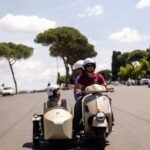
Rome feels different when you ride in motion. This Vespa-Sidecar tour turns major sights into a street-level loop, with small-group energy and stories you can actually hear through the provided earphones. I love the way the ride keeps you close to the neighborhoods between the landmarks, and I especially liked reading about Matteo’s style of sharing facts with real humor and extra stops. One possible drawback: the schedule and stop time can shift with traffic, weather, or special events, so you’ll want to show up ready to roll.
You start in Largo Carlo Goldoni, gear up with helmets, and then glide from piazza to piazza, with photo stops built in. In three hours, you’ll cover the kind of highlights most people try to cram into an entire day on foot or by bus. The ride is the point here—this is not a long museum tour—so if you’re hoping for lots of time inside monuments, you’ll need to plan a separate visit.
This tour fits best when you want first-contact Rome: viewpoints, iconic squares, and the main postcard stops without the stress of navigating nonstop. It’s also a good option for people who like photos but don’t want to turn every landmark into a long trek. Just keep in mind the stated age limits—not suitable for children under 2 and people over 95—and be prepared for an active ride through Rome’s streets.
In This Review
- Key highlights worth your attention
- Why a Vespa-Sidecar beats trying to do Rome “the hard way”
- Meet at Largo Carlo Goldoni (and how to start smoothly)
- Safety and comfort: helmets, earphones, and what you can relax about
- Stop-by-stop: Popolo, Trevi, Pantheon, and Piazza Navona
- Piazza del Popolo (quick pass, big entrance vibes)
- Trevi Fountain (brief guided stop)
- Pantheon (ancient Rome, still standing)
- Piazza Navona (Bernini’s Four Rivers and street energy)
- Piazzo Venezia, the Jewish Ghetto, and Janiculum Hill viewpoints
- Piazza Venezia (Altar of the Fatherland area)
- Jewish Ghetto (guided walk-through time)
- Janiculum Hill (one of Rome’s best rooftop views)
- Vatican City, then Trastevere lanes, and onward to the Colosseum
- Vatican City and St. Peter’s Square
- Trastevere (short guided taste)
- Final stop: the Colosseum guided moment
- The practical value of $113.27 per person
- Who should book this Vespa Sidecar Highlights of Rome tour
- Should you book this tour?
- FAQ
- FAQ
- How long is the Vespa Sidecar tour?
- Where do I meet the driver?
- Is there a pickup option from my hotel?
- What landmarks and areas are included on the route?
- What is included in the price?
- What languages are the guide available in?
- How big is the group?
- What age limits apply?
Key highlights worth your attention

- Small group (limited to 10): easier conversation with the guide and a less chaotic pace.
- Earphones included: you can hear stories clearly while the Vespa is moving.
- Certified helmets + passenger insurance: safety gear and insurance are part of the package.
- Photo stops at major landmarks: you get set moments for pictures at the right places.
- Janiculum Hill viewpoints: this is one of the best “wide-angle Rome” moments on the route.
- Expert guidance from the driver + local guide: you’re not just sightseeing; you’re learning what you’re seeing.
Why a Vespa-Sidecar beats trying to do Rome “the hard way”
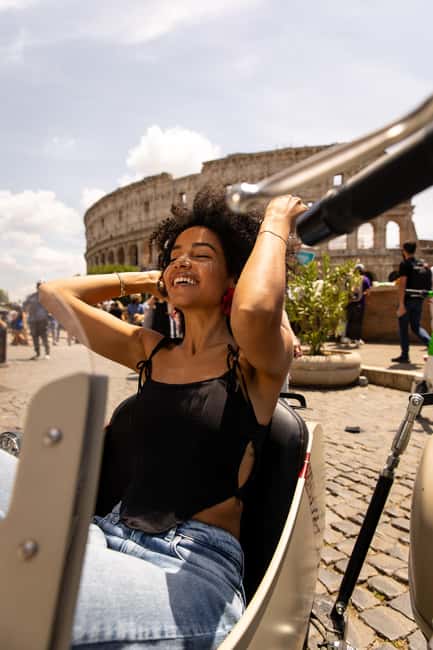
Rome can be overwhelming fast. This tour is built for sanity: you sit back in the sidecar, and the city moves around you. You still hit the biggest icons, but you see the connections between them—the way neighborhoods and piazzas stitch together—without spending hours figuring out buses or routes.
I also like the pacing. The stops are short enough to keep momentum, yet timed so you can actually look—not just pass by. Plus, since the group is limited to 10, the guide can nudge the experience toward what you care about. One standout review called out that the guide adjusted to guests’ needs, which is exactly the kind of flexibility you want on a limited-time tour.
You can also read our reviews of more tours and experiences in Rome


Meet at Largo Carlo Goldoni (and how to start smoothly)
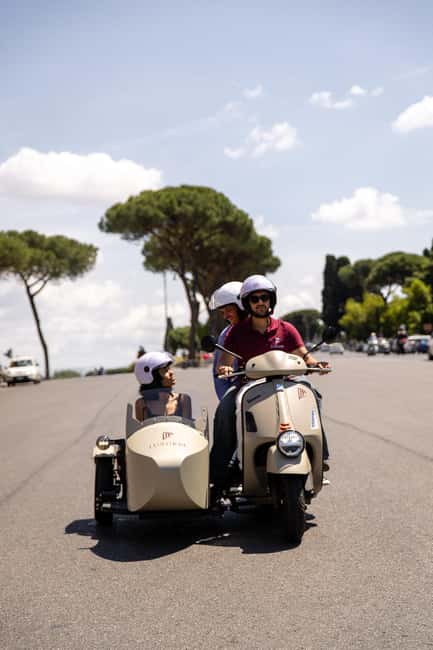
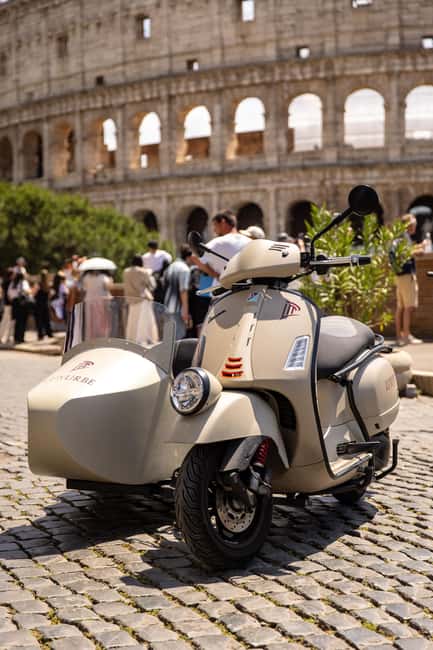
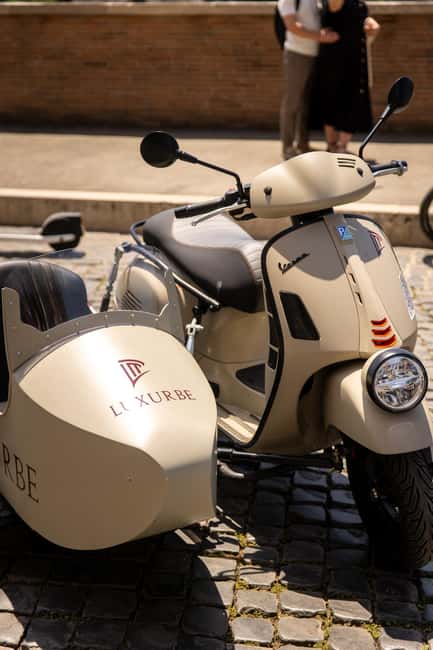
You meet at Largo Carlo Goldoni, where the driver waits outside the meeting area with the signature LUXURBE Vespa-sidecar. There’s an optional pickup option where the driver can wait outside your hotel, but due to Rome traffic, there may be waiting time (up to 20 minutes mentioned when pickup is selected).
If you want the least-stress start, do two things:
- arrive a bit early at Largo Carlo Goldoni
- keep an eye out for the LUXURBE Vespa-sidecar so you don’t waste time matching up
One review mentioned trouble meeting up during the joining process, which is a helpful warning. Sidecar tours run on a tight rhythm, so give yourself buffer time and make it easy for staff to spot you.
Once you’re ready, you’ll get certified helmets and earphones. Earphones matter more than people expect—Rome streets have constant motion and noise, and being able to hear the guide’s stories clearly makes the “drive-through” part feel like a real guided experience.
Safety and comfort: helmets, earphones, and what you can relax about
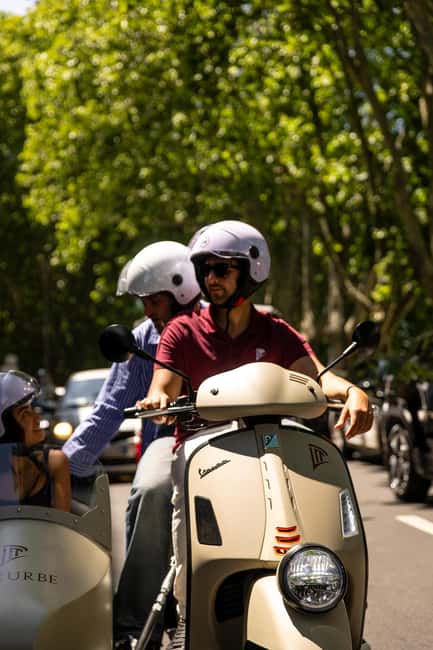
This isn’t a “wing it” experience. Helmets are provided, and passenger insurance is included. That combination helps you feel more confident when you’re riding through busy streets and tight turns.
You also have earphones so the guide and driver’s commentary comes through clearly. For many big sights, the value isn’t just seeing the landmark—it’s understanding why it matters. With earphones, you’re not forced to choose between listening and watching.
The comfort angle is also real: you’re traveling in a covered sidecar setup, so you’re not standing in traffic or walking mile after mile. You’ll still feel the wind, but you won’t be drained by the logistics of getting across town.
Stop-by-stop: Popolo, Trevi, Pantheon, and Piazza Navona
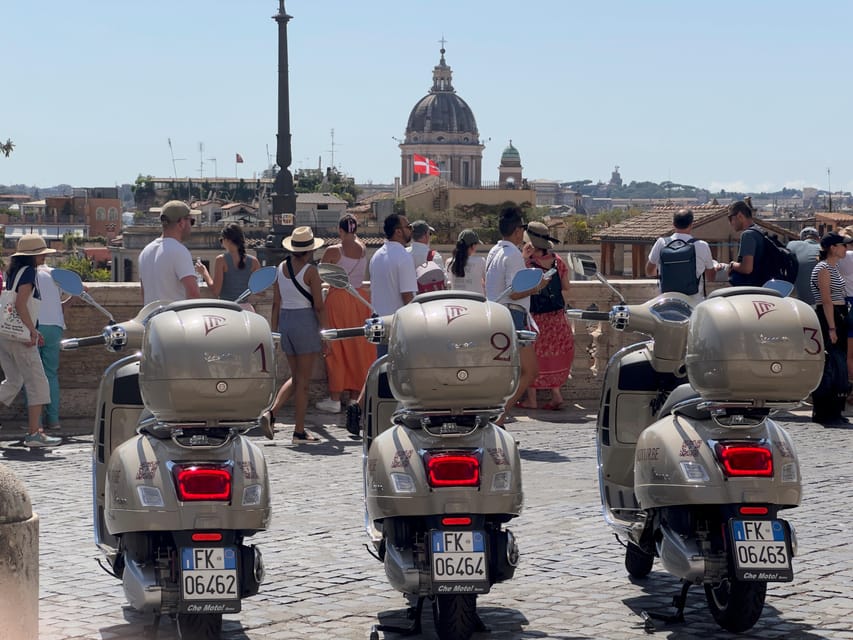
Piazza del Popolo (quick pass, big entrance vibes)
You begin by riding from Largo Carlo Goldoni toward Piazza del Popolo, described as a grand entrance to Rome. You get about a 10-minute pass-by here, which means this is more about soaking in scale and getting oriented than lingering for long photos.
This first segment helps you lock in geography. After you see the piazza and its main features, the rest of the route feels easier to follow.
You can also read our reviews of more tours and experiences in Rome


Trevi Fountain (brief guided stop)
Next up is Trevi Fountain, with a guided tour around 10 minutes. This is a classic Rome moment, and the tour includes time for the age-old tradition of tossing a coin and making a wish.
Quick reality check: the fountain area can be crowded. The short stop is by design—so you can see Trevi without turning your whole day into a queue. If you want a second, slower look, save it for later on your own.
Pantheon (ancient Rome, still standing)
You then reach the Pantheon, with about a 15-minute pass-by time window. The Pantheon is one of those places where you feel the scale immediately, even when you’re not inside.
What you’ll appreciate on this tour is context. With a local guide explaining what you’re seeing, the building stops being just a famous photo and becomes something you can recognize and understand on your next trip through the area.
Piazza Navona (Bernini’s Four Rivers and street energy)
From there, you arrive at Piazza Navona for a guided tour of about 15 minutes. The centerpiece called out here is Bernini’s Fountain of the Four Rivers, plus the lively atmosphere around the square.
This stop is a good example of why a sidecar loop works. You get the “main square” experience without walking from one end of the city to the other. You see the big stuff, then you’re moving again before you get bored or stuck.
Piazzo Venezia, the Jewish Ghetto, and Janiculum Hill viewpoints
Piazza Venezia (Altar of the Fatherland area)
You ride toward Piazza Venezia, with a guided component of about 10 minutes. Here you’ll be looking at the imposing Altar of the Fatherland area.
Even if you’re not a monument-nerd, this stop helps anchor modern Rome against the ancient stops you’ll have already seen. It’s a good “bridge” moment.
Jewish Ghetto (guided walk-through time)
The route includes the Jewish Ghetto with about a 15-minute guided tour. This stop is important because it turns your Rome sightseeing into something more human-scale. You’re not just collecting landmarks; you’re seeing a neighborhood layer of the city.
Time is short, so go with a mindset of noticing streets, texture, and what the guide points out rather than trying to read every plaque yourself.
Janiculum Hill (one of Rome’s best rooftop views)
Then comes Janiculum Hill (Gianicolo) for about 10 minutes. This is repeatedly highlighted as a standout moment because it offers one of Rome’s best panoramas over the rooftops.
One review specifically called out the view from Janiculum and mentioned the 12:00 cannon moment. That’s not something you can count on without the timing lining up, but if your tour window intersects with that routine, it can add an extra layer of drama to the view.
Either way, this is a “pause and look” moment. If you like skyline photos, plan to keep your phone/camera handy and ready before you arrive—this is the kind of viewpoint you don’t want to miss.
Vatican City, then Trastevere lanes, and onward to the Colosseum
Vatican City and St. Peter’s Square
You’ll reach Vatican City for a guided stop of about 15 minutes, including St. Peter’s Square, where the Basilica stands in all its grandeur. Even with a short visit, the scale lands fast, and the guide’s stories help you understand what you’re looking at.
Important practical note: the itinerary can vary due to traffic, weather, or special events. So don’t assume you’ll always get the exact same timing at Vatican during peak periods. Still, you’re getting a real guided chunk rather than a quick drive-by.
Trastevere (short guided taste)
The itinerary also includes Trastevere for about 10 minutes with a guided visit. Even in a short stop, Trastevere gives you that “Rome after the monuments” feeling—different streets, different mood, and a break from just big-ticket sights.
This part of the route is a nice counterbalance. If you’ve spent days in museums, Trastevere can feel like the city exhaling.
Final stop: the Colosseum guided moment
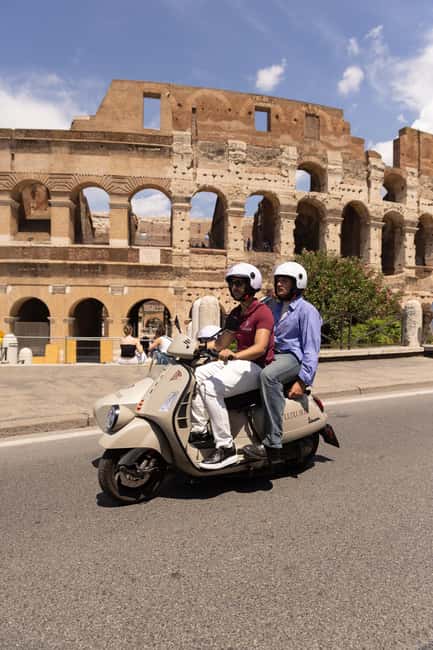
The tour concludes back near the Colosseum, with a guided stop of about 15 minutes. The Colosseum is the kind of sight where just seeing it from the right angle tells you why people keep coming back. The guide’s storytelling helps connect what you see now with what happened there in the Imperial era.
One consideration: 15 minutes is not “full experience time.” If you want to go inside, you’ll likely need another plan. But as a first, unforgettable introduction—especially after seeing the route’s other highlights—the Colosseum ending works well.
The practical value of $113.27 per person
At $113.27 per person for a 3-hour small-group tour, you’re not just paying for transport. You’re paying for:
- a driver + local guide working as one team
- earphones so the guidance is audible
- certified helmets and passenger insurance
- guided time at multiple iconic areas
- photo stops built into the flow
If you’ve ever tried to hire a private guide plus handle transit yourself, the “bundle” becomes the point. Here, the sidecar does the heavy lifting: you cover a lot of ground with less fatigue, and the guide gives meaning to each stop.
Also, the small group (limited to 10) supports real value. It reduces the chance you’re stuck in a crowd listening through the back of someone’s hat. That’s not guaranteed anywhere, but this setup is designed for it.
Who should book this Vespa Sidecar Highlights of Rome tour
Book it if you want:
- a fun way to see major Rome sights in one morning/afternoon block
- a guided explanation that makes famous places feel clearer
- a photo-friendly route without turning into an all-day walking plan
- first-time Rome orientation, with viewpoints like Janiculum
Consider alternatives if you:
- need long stays at each monument (this tour’s stop times are short by design)
- get overwhelmed by traffic and changing schedules (the itinerary can vary)
And if age or physical needs are a factor, take the stated limits seriously: it’s not suitable for children under 2 and not for people over 95.
Should you book this tour?
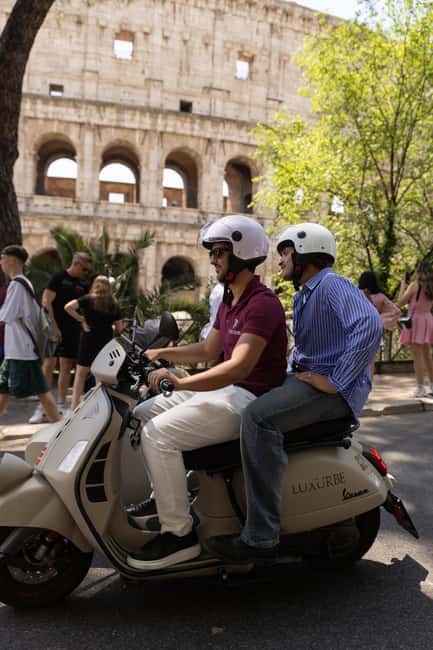
Yes—if your goal is seeing the highlights with a guide and keeping the day light. The combination of sidecar transport, earphones, safety gear, and a tight set of landmark stops makes this a smart value for most people who want Rome without the stress.
My deciding factor would be your appetite for motion. If you like the idea of gliding through Rome’s streets, then this is a great way to start your trip and get the city “mapped” in your head. If you prefer slow, stand-still sightseeing and long time inside monuments, you’ll probably want to pair this with separate, deeper visits.
FAQ
FAQ
How long is the Vespa Sidecar tour?
It runs for about 3 hours. Starting times depend on availability, so you’ll need to check the schedule when you book.
Where do I meet the driver?
You meet at Largo Carlo Goldoni. The driver waits outside with the signature LUXURBE Vespa-sidecar, and the tour ends back at the meeting point.
Is there a pickup option from my hotel?
Pickup is optional. If you choose it, the driver will wait outside your hotel, but Rome traffic may cause a waiting time of up to 20 minutes.
What landmarks and areas are included on the route?
You’ll pass by or visit major sights and areas such as Piazza del Popolo, Trevi Fountain, the Pantheon, Piazza Navona, Piazza Venezia, the Jewish Ghetto, Janiculum Hill, Vatican City (St. Peter’s Square), Trastevere, and the Colosseum.
What is included in the price?
The tour includes the Vespa Sidecar tour with an expert driver, a local guide sharing stories and curiosities, earphones, certified helmets, photo stops at iconic landmarks, and passenger insurance.
What languages are the guide available in?
The live tour guide is available in Italian, English, and Spanish.
How big is the group?
The group is limited to 10 participants, making it a small-group experience.
What age limits apply?
It’s not suitable for children under 2 years old and not suitable for people over 95 years old.