REVIEW · ROME
Rome: Early Bird Vatican Museums Small Group Tour (MAX 6 People)
Book on Viator →Operated by Eyes of Rome · Bookable on Viator
One morning, you walk into Rome’s art history fast. This early-bird Vatican tour is built around first access and a tight small group so you spend less time herding yourself through crowds and more time seeing the good stuff.
I love how the guide’s pacing turns a huge place into something you can actually follow, from the Vatican Museums’ standout galleries to St. Peter’s Basilica. You’ll also get a guided look at the Sistine Chapel and key basilica moments like Michelangelo’s Pietà and the tomb of John Paul II (Karol Wojtyla).
One thing to keep in mind: early entry is still busy, and dress code rules are enforced (no shorts, no sleeveless tops, and knees and shoulders covered). Also, special events during the Jubilee can affect access at St. Peter’s, so stay alert for any updates.
In This Review
- Key Highlights to Know Before You Go
- The 7:30 AM Meeting That Changes the Whole Vatican Day
- First-Access Entry and Skip-the-Line Reality
- Vatican Museums: From the Pigna Courtyard to Pomodoro’s Sphere
- Gallery of Maps (120 meters of Italy as it used to be)
- Gallery of Tapestries: Renaissance storytelling you can see and feel
- Gallery of Candelabri: Ancient sculpture in a museum designed for spectacle
- Sistine Chapel: How 30 Minutes Works When You Have a Plan
- St. Peter’s Basilica Highlights: Pietà, John Paul II, and Bernini
- What if special events affect access?
- St. Peter’s Square: Bernini’s Ellipse in 15 Minutes
- Price and Value: Is $179.81 Worth It?
- Practical Stuff That Will Save Your Morning
- Dress code rules are not optional
- Bring the basics for comfort
- You can still hit crowds
- Expect a guide-led flow, not a checklist
- Should You Book This Early-Bird Vatican Tour?
- FAQ
- What time does the tour start?
- How large is the group?
- Does this include skip-the-line access?
- What will I see at the Vatican Museums?
- Is the Sistine Chapel included?
- Do I need a separate ticket for St. Peter’s Basilica?
- What’s the dress code?
Key Highlights to Know Before You Go
- First access at 8:00 AM to avoid the worst lines and crowd waves
- Max 6 people for a calmer pace and more room to ask questions
- Guided Vatican Museums route through major rooms like the Gallery of Maps and Tapestries
- Sistine Chapel visit with focused timing so you can actually look, not just stand
- St. Peter’s Basilica stops centered on the Pietà, John Paul II’s tomb, and Bernini’s Baldachin
- Ends in St. Peter’s Square, which is a great place to continue exploring
The 7:30 AM Meeting That Changes the Whole Vatican Day
This tour kicks off early, meeting at 7:30 AM at Giuly’s Café on Via Santamaura, 3, near the Vatican area. The goal is simple: get you moving while the crowds are still forming, not when they’re already in full swing.
You’ll also notice something right away. A guided plan matters here because the Vatican is massive, confusing, and full of surprises that can slow you down if you’re wandering without a route.
Moderate walking is part of the deal, so comfortable shoes help a lot. If you’re sensitive to heat, plan for long stretches with limited air and bring water when you can.
You can also read our reviews of more museum experiences in Rome


First-Access Entry and Skip-the-Line Reality
The big selling point is first access to the Vatican Museums, paired with skip-the-line entry tickets. Even with early timing, you should still expect people, but this format is designed to keep you from getting stuck in the longest queues.
The max group size makes a difference. On larger tours, you often lose time waiting for late arrivals or herding people through bottlenecks. Here, guides can keep the group together and adjust on the fly if something changes.
One practical upside: you’re not trying to figure out what matters most while you’re surrounded by thousands of other first-timers. Your guide is steering you toward the rooms with the biggest payoff.
Vatican Museums: From the Pigna Courtyard to Pomodoro’s Sphere
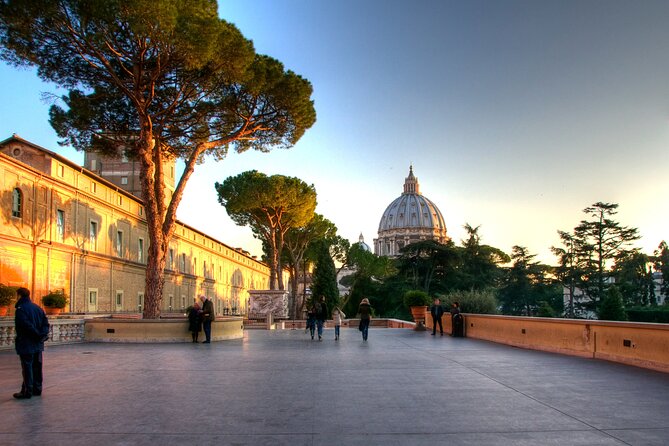
Your Vatican Museums time starts with first access, and the route moves you through places that most self-guided visits miss or misunderstand.
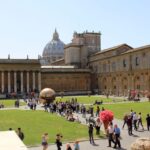
One early stop is the Courtyard of the Pigna, created from a 16th-century area of the Belvedere. It’s a classic example of how Vatican spaces were shaped not just for display, but for effect, with dramatic scale and sightlines.
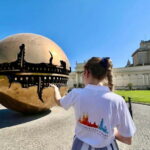
Then you hit a standout sculpture moment: Sphere within a Sphere by Arnaldo Pomodoro. This bronze sculpture has that fractured, textured look where light seems to punch through the surface. It’s one of those works that feels modern even inside all the ancient and Renaissance weight.
After that, you move into galleries where the Vatican flexes different types of art—maps for accuracy and worldview, tapestries for storytelling, and statuary for ancient drama.
Gallery of Maps (120 meters of Italy as it used to be)
The Galleria delle Carte Geografiche is the Gallery of Maps, with topographical views of Italy painted in the 16th century under Pope Gregory XIII. The length matters: it’s about 120 meters, which means you’re walking a “time machine” of geography.
Even if you’re not a map person, you’ll likely enjoy this stop because it shows what Europe thought it knew at the time. It’s history you can walk through.
Gallery of Tapestries: Renaissance storytelling you can see and feel
Next comes the Gallery of Tapestries, featuring 15th- and 16th-century woven works built from designs linked to Raphael’s school. The scenes use biblical and historical narratives, so you’re not just looking at decoration—you’re reading stories through fabric.
A short visit here works because your guide can focus you on what to notice: style, characters, and how Renaissance artists translated emotion into thread and dye.




Gallery of Candelabri: Ancient sculpture in a museum designed for spectacle
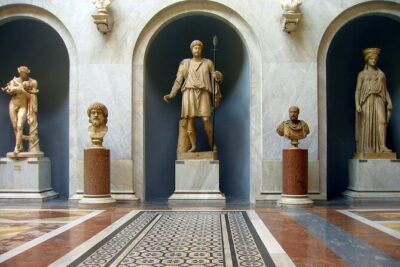
The Gallery of the Candelabri mixes Greek and Roman statues, sarcophagi, and reliefs. It gets its name from the grand marble candelabra that organize the room into thematic sections.
This is where timing helps. If you try to do this museum alone, you can lose the thread and end up seeing only whatever is directly in front of you. Guided structure keeps you from missing these “connector” rooms that help the Vatican Museum experience make sense.
Sistine Chapel: How 30 Minutes Works When You Have a Plan
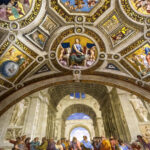
You’ll spend about 30 minutes in the Sistine Chapel, guided. The chapel’s name comes from Pope Sixtus IV della Rovere, and it’s famous for the fresco cycle by Michelangelo.
Here’s what I’d count on: it can feel overwhelming. You’re surrounded by people, and the chapel has rules about photography and noise. A guide can change how it lands by setting expectations before you step in.
You’ll likely hear context that connects what you’re looking at to the setting itself, which helps you see beyond the headline images. One of the most helpful moments is when your guide points out what to look for in the ceiling areas so your eyes know where to go.
Also, based on real-world feedback, early timing helps but doesn’t erase the crowd. Even on a 7:30 slot, the chapel can still feel packed, so bring patience and plan to focus on looking rather than trying to capture a perfect photo.
St. Peter’s Basilica Highlights: Pietà, John Paul II, and Bernini
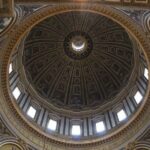
After the Museums, the tour shifts to St. Peter’s Basilica for about 45 minutes. This portion is where the tour feels like Rome in full-scale mode: the building is so big and so detailed that having someone point out the top moments is time well spent.
Your guided stops include Michelangelo’s Pietà and a stop for the tomb of Saint John Paul II (Karol Wojtyla). The Pietà is housed in the first chapel on the right as you enter, and it’s known as a Renaissance sculpture by Michelangelo made in Carrara marble. One reason it hits so hard is that it feels both monumental and intimate at the same time.
Then you move toward another must-see: the Papal Baldachin (the Baldachin) by Gian Lorenzo Bernini. It’s a bronze canopy over the high altar, towering at over 90 feet. The height is part of the experience—you look up and the whole church geometry makes more sense.
What if special events affect access?
During the Jubilee year, changes can happen. Some access at St. Peter’s can be limited due to celebrations, and updates may be sent. I’d keep your phone charged and check any messages from the tour provider the day before (and the morning of) so you know what to expect.
St. Peter’s Square: Bernini’s Ellipse in 15 Minutes
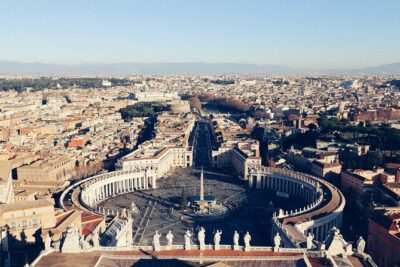
Your tour ends with St. Peter’s Square for about 15 minutes. This is not just a pretty finish. The square is designed as an architectural “stage,” enclosed by 284 Doric columns set in four rows.
It’s 196 meters wide and 148 meters long, and Bernini’s layout creates that embracing, sweeping effect. Even in a short visit, you can usually get a good sense of the whole space from where you’re standing.
If you’re continuing on foot afterward, this ending spot is convenient. You’re set up to wander the Vatican neighborhood at your own pace, grab a drink, or move toward Castel Sant’Angelo or the Tiber depending on where you’re headed next.
Price and Value: Is $179.81 Worth It?
At $179.81 per person, this isn’t a budget tour. But it has two major value drivers.
First, you’re paying for time protection. First access plus skip-the-line entry is the difference between spending your morning in queues versus spending it inside the Museums and chapel.
Second, you’re paying for guided selection. The Vatican Museums include hundreds of rooms. A max-6 guided route focuses on the places with the strongest visual payoff for your limited time window, so you don’t waste half your visit deciding where to go next.
In plain terms, this tour is worth it if:
- you want the biggest highlights without turning your trip into a scavenger hunt
- you hate long standing lines
- you appreciate explanations that make the art and layout easier to understand
If you’re the type who enjoys museum drift and you don’t mind crowds, you might prefer going solo. But if you want the Vatican to feel manageable in a half-day, this format is designed for you.
Practical Stuff That Will Save Your Morning
Dress code rules are not optional
Plan for strict entry rules for places of worship and selected museums. No shorts. No sleeveless tops. Knees and shoulders must be covered for both men and women. If you show up off-code, you can be refused entry.
Bring the basics for comfort
Wear comfortable shoes for the walking. Also consider water, since some indoor spaces can feel warm and air circulation can be limited.
You can still hit crowds
Early entry helps, and the small group format helps a lot. Still, you’ll share space with many people because Vatican access is managed in time windows. Treat the morning as “less bad,” not empty.
Expect a guide-led flow, not a checklist
The tour is built around a guided sequence: Museums galleries, Sistine Chapel, then Basilica highlights, then the square. Your best experience comes from staying with the group and letting your guide handle the timing decisions.
Should You Book This Early-Bird Vatican Tour?
Book it if you want a structured, high-impact Vatican visit that respects your time and keeps the day calm. The max-6 format, first access entry, and focused stops at the Sistine Chapel and St. Peter’s Basilica are exactly the combination that turns the Vatican from chaos into something you can actually enjoy.
Skip it if you’re traveling very light on time constraints and you truly enjoy wandering large sites without a plan. Also consider this option less strongly if you’re expecting total emptiness, because even early, the Vatican still attracts huge crowds.
If you decide to go, your best move is simple: arrive prepared for the dress code, wear comfortable shoes, and keep your phone ready for any Jubilee-related update.
FAQ
What time does the tour start?
The meeting time is 7:30 AM, at Giuly’s Café, Via Santamaura, 3, 00192 Rome.
How large is the group?
This is a small-group tour with a maximum of 6 people.
Does this include skip-the-line access?
Yes. The tour includes first access at the Vatican Museums and skip-the-line entry tickets.
What will I see at the Vatican Museums?
You’ll visit major highlights including the Courtyard of the Pigna, the Sphere within a Sphere by Arnaldo Pomodoro, the Gallery of Maps (about 120 meters), the Gallery of Tapestries, and the Gallery of the Candelabri.
Is the Sistine Chapel included?
Yes. You’ll visit the Sistine Chapel with an included admission ticket.
Do I need a separate ticket for St. Peter’s Basilica?
No. The tour includes the visit to St. Peter’s Basilica and the stated admission is free as part of the experience.
What’s the dress code?
You need shoulders and knees covered. Avoid shorts and sleeveless tops, or you risk being refused entry.