REVIEW · ROME
Rome Walking Tour of Holy Sites: Basilica of the Holy Cross in Jerusalem, San Giovanni in Laterano and Scala Santa
Book on Viator →Operated by Raphael Tours & Events · Bookable on Viator
Rome’s holiest stairs are right here. This private walking tour threads together Scala Santa, Basilica di Santa Croce in Gerusalemme, and San Giovanni in Laterano in about two hours, so you hit major sacred sites without cross-town zigzags. I love the devotional focus at the Holy Stairs and the close look at Holy Cross relics, including the nails and thorns. The one thing to watch is the dress code and the kneel-and-climb vibe at Scala Santa, so plan for covered knees/shoulders and comfy shoes.
You meet near Piazza di S. Giovanni in Laterano, and you can pick a start time that fits your day. You’ll also get a mobile ticket, plus a private guide who keeps the pace human—long enough to read, look, and ask.
In This Review
- Key highlights I’d plan around
- Why this Holy-Sites route works so well in Rome
- Scala Santa: the Holy Stairs and how to handle the kneeling devotion
- What can slow you down at Scala Santa
- Basilica di Santa Croce in Gerusalemme: Holy Cross relics, nails, and thorns
- A realistic expectation for this stop
- San Giovanni in Laterano: Rome’s official cathedral and an art-and-relic powerhouse
- The best way to enjoy this last stop
- Dress code, knee pads, and church rules you’ll thank yourself for
- My small prep checklist
- The private tour feel: guide pacing and a more personal visit
- Price and value: what $346.87 per person buys you
- Who should book this tour (and who might want to skip it)
- Should you book this Rome holy-sites walking tour?
- FAQ
- How long is the walking tour?
- Where do I meet the guide, and where does the tour end?
- Do I get a ticket, and is it mobile?
- What’s included in the price, and what’s not?
- What dress code do I need for the churches?
- Is there free cancellation?
Key highlights I’d plan around
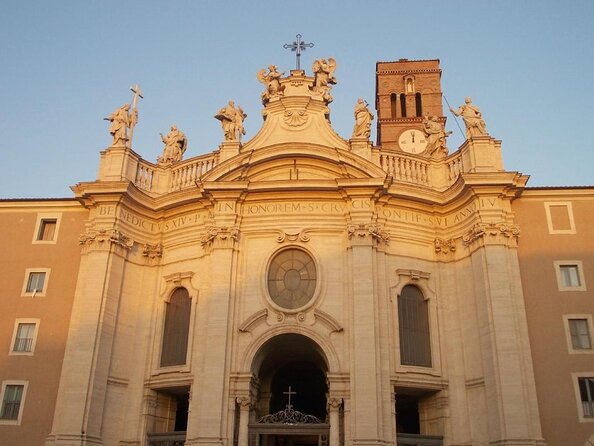
- Scala Santa links the marble steps to the tradition of Jesus’ trial before Pontius Pilate, plus the St. Helena story.
- Holy Stairs time is built in: you’re given about 40 minutes at the Scala Santa, so it’s not a drive-by photo stop.
- Santa Croce in Gerusalemme focuses on Holy Cross relics, including the nails and thorns, set among other revered objects.
- San Giovanni in Laterano is a big deal on purpose: it’s Rome’s official cathedral and the oldest and most important Western basilica, and the first of the four major papal basilicas.
- Admission is listed as free at all three stops, which means you’re paying mainly for the guide and the streamlined route.
- Dress code is not optional: knees and shoulders must be covered, and shorts or sleeveless tops can get you refused entry.
Why this Holy-Sites route works so well in Rome
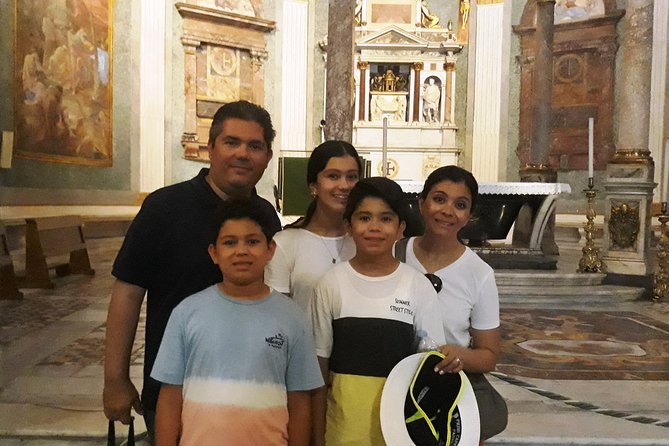
Rome has no shortage of impressive churches, but most days you end up doing two things: walking a lot and rushing even more. This tour is built to solve that. You’re walking between three top religious sites tied to the story of Christ and the Holy Cross, and you do it in roughly two hours total.
What I like about this kind of route is the rhythm. You get one powerful focus at each stop instead of the classic Rome problem of standing in a line, checking off a name, and moving on before you really absorb what you’re seeing. It’s also a private tour, which tends to mean fewer awkward pauses and more flexibility if you want a moment to pray or ask a question.
The price looks high at first glance—$346.87 per person—but it’s also a private, guide-led experience with three major sites packed into a short window. If you’re traveling with someone who cares about sacred art and relics (or you just want your time to feel meaningful), that “extra” often makes sense.
You can also read our reviews of more walking tours in Rome

Scala Santa: the Holy Stairs and how to handle the kneeling devotion
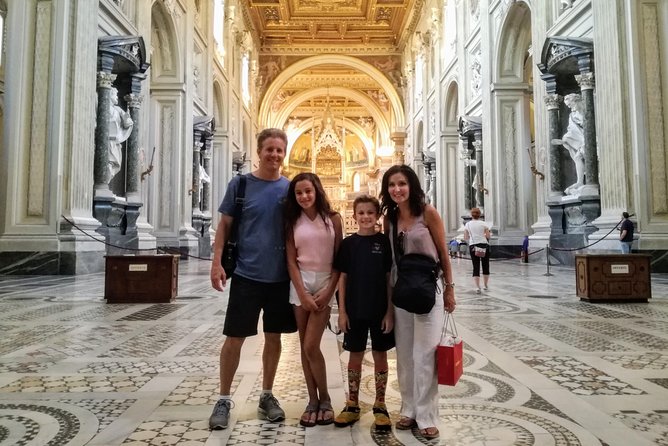
Scala Santa is the kind of place where your body gets involved, not just your eyes. You enter a chapel setting to find the sacred marble staircase. The tradition connects these steps to the ladder Jesus used to reach the classroom where he faced interrogation by Pontius Pilate before the crucifixion. Then the story shifts to how the steps ended up in Italy: the belief is that St. Helena brought them from the Holy Land.
Practically, Scala Santa is also about pace. You’re given about 40 minutes here, which is crucial because most visitors don’t just look from the floor. Many people choose to climb on their knees as part of the devotion. Some even show up with knee pads. If you have any kneeling stiffness, I’d plan for it ahead of time. A simple knee pad can turn an intense experience into a manageable one.
Also note the tone: this is not a place that feels like a museum first. You’ll want to keep your voice low, follow cues from staff, and remember that this is an active devotion space for many people.
What can slow you down at Scala Santa
- Kneeling and waiting for access flow. Even if you’re ready, the space can move at a steady human pace.
- Time to focus. Scala Santa is the kind of place you’ll either rush through and regret, or you slow down and feel it.
If you want the Holy Stairs to land well, don’t schedule this right after a long travel day when you’re exhausted. Build in a little buffer.
Basilica di Santa Croce in Gerusalemme: Holy Cross relics, nails, and thorns
From Scala Santa you head to Basilica di Santa Croce in Gerusalemme, a church with origins stretching back to the fourth century. The key connection here is the tradition tied to Sant’Elena (Saint Helena) and Emperor Constantine. The story goes that the basilica was built starting from the fourth century in the place associated with buildings from her time.
Once inside, the focus becomes much more tangible. This is where you see revered remnants connected to the Holy Cross tradition—specifically the nails and thorns, among other relics. That detail matters because it changes how you experience the church. Instead of abstract religious art only, you’re looking at objects treated as instruments of the Passion story.
You’ll also notice the church’s art environment. The big takeaway from this stop isn’t just to look at pretty surfaces—it’s to listen to your guide’s connections between what you see and why it matters. The guide’s job here is to help the relics and surrounding artwork make sense as one unified devotional message.
A realistic expectation for this stop
This is about reflection as much as it is about sightseeing. You’re given about 40 minutes, which is usually enough time to:
- spot major areas for veneration,
- understand what you’re looking at,
- and take a quiet moment without feeling like you’re stealing time.
If you’re the type who likes to know what you’re praying at, this stop is a strong match.






San Giovanni in Laterano: Rome’s official cathedral and an art-and-relic powerhouse
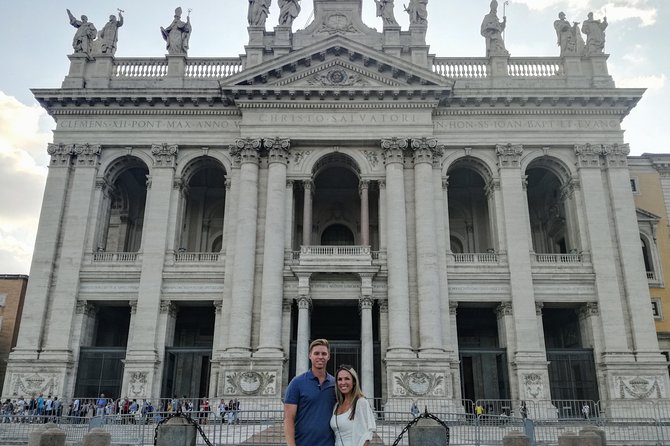
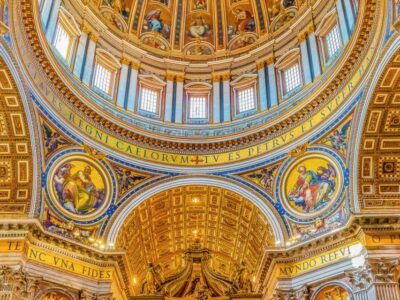
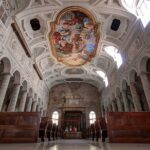
Your final major stop centers on San Giovanni in Laterano—Rome’s official cathedral. It’s also one of the oldest places of worship in the city, and it holds a top spot among Western basilicas. The church is described as the first of the four major papal basilicas, which is a helpful way to frame its importance.
This is also where the experience broadens. San Giovanni in Laterano isn’t just about one relic theme. It’s a cathedral environment with major art and treasured objects, and your guide’s storytelling helps you connect the architecture and artwork to the bigger religious role the cathedral played over time.
One thing I’d keep in mind here: cathedral interiors can feel big in both space and meaning. If you’re short on attention span, you might miss the point. If you’re willing to slow down and let a guide make connections, it becomes more than a quick stop. It turns into a structured, guided way to appreciate why this building matters in the Christian world.
The best way to enjoy this last stop
Bring your questions. If a guide pauses for explanation, treat it as part of the visit, not a detour. This is where you’ll get the most out of the walking pace because the space encourages standing still.
Dress code, knee pads, and church rules you’ll thank yourself for
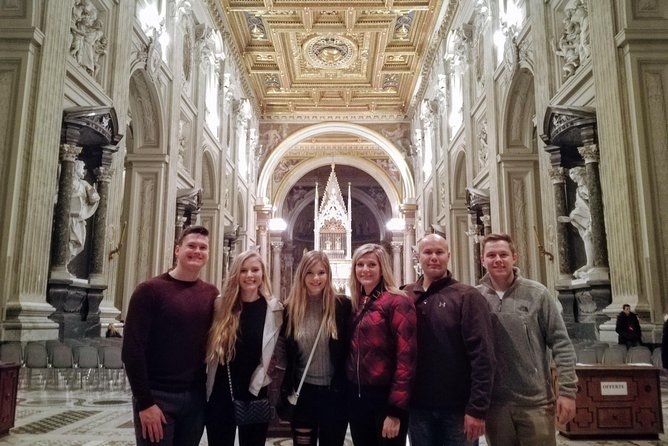
If you only remember one practical thing, make it this: dress code is required. You need to keep knees and shoulders covered for both men and women. That means no shorts and no sleeveless tops. If you ignore this, you risk refused entry.
You’ll also want to think about footwear. Comfortable shoes are recommended because you’re walking between three sites on foot. Even when the time per stop is set, your legs will still do their part.
Food and drinks are also restricted inside churches. The rule is: food and drinks aren’t allowed in the churches, except water. So don’t plan on carrying snacks in and eating casually between stops. If you need something before the tour, eat before you arrive, then keep it simple once you’re inside.
My small prep checklist
- Wear layers so you can adjust inside and outside.
- Bring something for kneeling if you’re planning to climb on your knees at Scala Santa (knee pads are a common approach).
- Bring water, not snacks, and plan to keep it with the rules.
This is one of those tours where good prep doesn’t just make you comfortable. It makes the whole experience smoother and more respectful.
The private tour feel: guide pacing and a more personal visit
“Private” here isn’t a marketing word. It changes how the visit feels. Instead of being shoved along by a large crowd, you get a guide who can set a steadier rhythm. That matters most at the places where you’re meant to reflect—Scala Santa and the veneration areas at Santa Croce.
Guides can shape the emotional tone of the whole outing. In the feedback attached to this experience, names like Tomasso, Francesco, Bruno, and Giorgio come up as guides who tend to take their time and answer questions without rushing people. That’s the kind of service you want for holy sites. You’re not just collecting facts; you’re trying to make sense of symbols, relics, and sacred spaces.
You also have flexibility in timing. Start times are offered, and you can choose what fits. That’s underrated in Rome. When you’re visiting churches and chapels, the best day is the one where you’re not stressed about your next reservation.
Price and value: what $346.87 per person buys you
Let’s talk money like adults.
At $346.87 per person for a private walking tour, this isn’t a budget add-on. You’re paying for:
- a local guide,
- a private group format,
- a short, efficient route to three major holy sites,
- and the promise that admission is listed as free at the stops.
Because the route is only about two hours, this can also be time-efficient. That’s a value on its own in Rome. If you were trying to do Scala Santa, Santa Croce in Gerusalemme, and San Giovanni in Laterano independently, you’d spend time figuring out logistics, entry flow, and how to understand what you’re seeing once you’re there.
Where the price feels most fair is when:
- you care about relics and the stories behind them,
- you want to visit all three without spending your day zigzagging,
- and you’ll actually use the guide time rather than treating it like background noise.
Where it may not feel fair is if you’re only chasing photos and would rather move on your own quickly. For that style of trip, you might not get enough “guided value” to justify the cost.
Who should book this tour (and who might want to skip it)
I’d point this tour at two types of travelers.
First, if you’re a faith-minded visitor, or you just appreciate religious devotion and Christian sacred art, the Holy Stairs and Holy Cross relic focus fit perfectly. The pacing and the chance to slow down at veneration points matter here.
Second, if you’re short on time in Rome but want more than the usual tourist circuit, this gives you three high-impact stops without turning your day into a sprint.
You might think twice if:
- you’re uncomfortable with kneeling or long quiet time,
- you don’t plan to follow dress code rules closely,
- or you prefer self-paced sightseeing with minimal guidance.
Should you book this Rome holy-sites walking tour?
If you want a focused, meaningful visit to three of Rome’s most sacred sites, this is an easy yes. The standout reason is the combination: Scala Santa for devotion, Santa Croce in Gerusalemme for Holy Cross relics like the nails and thorns, and San Giovanni in Laterano as a major cathedral centerpiece. You also get real time at each stop rather than a rushed line-walk.
Book it if you’re willing to dress appropriately, wear comfortable shoes, and slow down when it counts. Skip it if you’re trying to do everything fast and you’d rather not deal with kneeling devotion or church entry rules.
FAQ
How long is the walking tour?
The tour is about 2 hours. Each of the three stops is allotted around 40 minutes.
Where do I meet the guide, and where does the tour end?
You meet at Piazza di S. Giovanni in Laterano (P.za di S. Giovanni in Laterano, Roma). The tour end point is listed as Basilica di Santa Croce in Gerusalemme (Piazza di S. Croce in Gerusalemme, 10, 00185 Roma).
Do I get a ticket, and is it mobile?
Yes. The tour includes a mobile ticket.
What’s included in the price, and what’s not?
Included: a local guide and a private tour. Not included: food and drinks, and hotel pickup and drop-off.
What dress code do I need for the churches?
You must cover knees and shoulders. No shorts or sleeveless tops are allowed for both men and women, and you may be refused entry if you don’t comply.
Is there free cancellation?
Yes. Free cancellation is available up to 24 hours in advance for a full refund.