REVIEW · ROME
Private Walking Tour of the Squares and Fountains in Rome
Book on Viator →Operated by Italy Rome Tour · Bookable on Viator
Rome’s big-name sights feel less overwhelming when someone times your walk and explains what you’re seeing. This private stroll hits Piazza del Popolo, the Spanish Steps, Trevi, Piazza Navona, and the Pantheon area at a pace that feels manageable, and I especially like the undivided guide attention you get with a small group. You also get a smart run of Roman highlights without spending half the day figuring out transit.
The only real drawback: this tour is built around quick, high-impact stops—so if you want to linger for long photo sessions or deep museum-style time, you might feel a bit rushed in places (especially around the most famous corners).
In This Review
- What You’ll Take With You After
- Key Things That Make This Tour Work
- A 3-4 Hour Rome Walk Built Around the Squares
- Private Guide + Small Group (Max 8) for Real Attention
- Starting Point Near the Historic Core
- Piazza del Popolo: The People’s Square at the North Gate
- Via del Corso: Rome’s Trident in a Single Walk
- Spanish Steps: 135 Steps with Political and Artistic Connections
- Trevi Fountain: The Icon You’ve Seen Before (Now With Context)
- Fontana del Pantheon: A Pause Before You Hit the Big Ancient Star
- Piazza Navona and Quattro Fiumi: Baroque Drama in an Urban Stage
- Piazza della Minerva: Where the Corner Changes the Tone
- Ending at the Pantheon: Your Finish Line in Rome’s Center
- Price and Value: What $229.78 Buys You (and What It Doesn’t)
- Who Should Book This Private Squares and Fountains Tour
- Should You Book It?
- FAQ
- How long is the Private Walking Tour of the Squares and Fountains in Rome?
- What does the tour cost?
- Is this tour private, and how many people are in a booking?
- What language is the tour offered in?
- What’s included in the price?
- Are tickets included for all the stops?
- Where does the tour start and end?
- Do I need food or transportation included?
What You’ll Take With You After
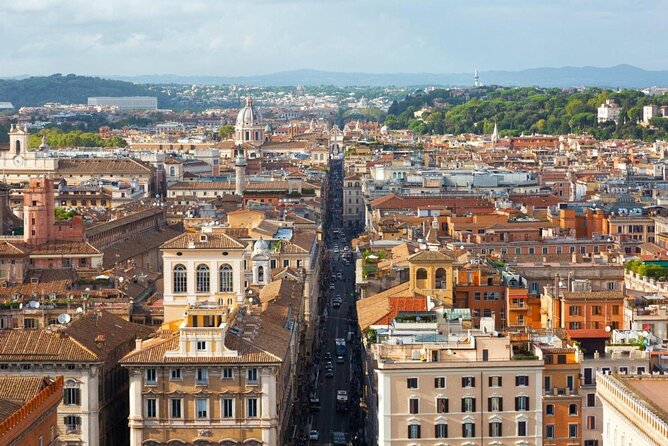
You start near the historic core, then walk through the city’s postcard moments like they’re part of one connected neighborhood story. Stops like Piazza del Popolo and Via del Corso help you understand Rome’s street-and-square layout, not just the monuments. And when you finish at the Pantheon area, you end at the right moment—after you’ve already gotten your bearings.
Key Things That Make This Tour Work
- Private by design: You’re capped at a maximum of 8 people per booking, so it stays personal rather than herded.
- A tight, efficient route: You see major squares and fountains in about 3 to 4 hours without wasting time between stops.
- Well-chosen “transit” moments: Via del Corso and the Trident corridor help you connect one highlight to the next.
- Iconic art and architecture details: From Piazza Navona’s Baroque planning to the Quattro Fiumi fountain’s Aqua Virgo water story.
- A guide who engages: Past guides named Paulo and Gaia earned top marks for passion, knowledge, and keeping even teenagers interested.
- Free admission for most stops: Many sights on the route don’t require tickets, but the Pantheon itself is not included.
You can also read our reviews of more walking tours in Rome



A 3-4 Hour Rome Walk Built Around the Squares
This is a short, focused tour: plan on roughly 3 to 4 hours, walking through central Rome’s most recognizable squares and fountain scenes. The value here is simple. Instead of seeing a handful of famous places scattered across the city, you get a single route that makes sense in your head—like Rome’s center is one big, walkable “highlight loop.”
And because it’s private, the guide can adjust the rhythm around your group. If you’re photo-happy, the guide can steer you to the best viewing angles first. If you’re a “tell me what I’m looking at” person, you’ll get explanations tied to what’s directly in front of you.
Private Guide + Small Group (Max 8) for Real Attention
The tour is private, with professional guidance and hotel pickup included. That combination matters more than you might think. In a city where landmarks cluster closely, time is lost fast if you’re trying to coordinate your own path or figure out what matters most.
You’ll also have a mobile ticket involved, which helps keep things smooth on the day. Most travelers can participate, and children must be accompanied by an adult. If you’re traveling as a family, this format can be a win because a guide can redirect attention when kids’ energy shifts.
One more practical point: the group size is capped at 8. That usually keeps the experience from turning into a “line up and follow” situation. It also makes it easier for your guide to work at your pace.
Starting Point Near the Historic Core
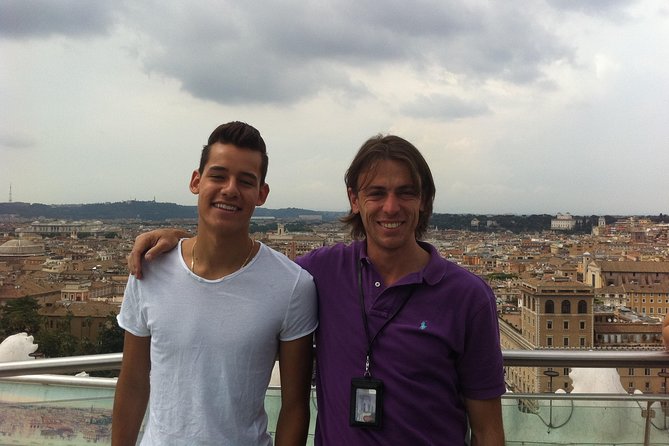
The tour starts at Fontane dei Leoni Egizi on Via del Teatro di Marcello, and it ends at the Pantheon area. Having pickup included is helpful, since central Rome can be awkward for timing—especially if you’re coordinating taxis or rideshare.
If you’re the type who likes to arrive early to soak in the surroundings, you’ll appreciate that the meeting point is already tied to the Roman street layout. You’re not starting in some far-flung zone where you then have to “earn your landmarks” with a long transfer.
Piazza del Popolo: The People’s Square at the North Gate
You begin at Piazza del Popolo, a classic Rome welcome. In Italian it’s known as People’s Square, but the name is actually tied to poplars that used to surround the oval space. The square itself was designed between 1811 and 1822, and it originally served as a ceremonial entry point for visitors arriving from the north via Via Flaminia.
What I like about this start: it gives you context before the flashy stuff. You’re not just jumping into crowds—you’re learning why this spot functions like a doorway into the city center.
A practical note: this is a popular junction, so expect activity. Still, it’s a good first stop because it’s open and readable. You can orient yourself early, then walk into tighter street scenes with a clearer mental map.
You can also read our reviews of more private tours in Rome





Via del Corso: Rome’s Trident in a Single Walk
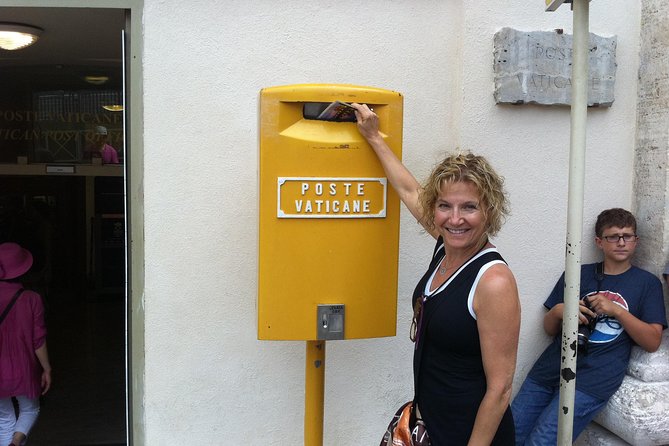
Next comes Via del Corso, a major historical street about 1.6 kilometers long. It connects Piazza Venezia and Piazza del Popolo and forms the central artery of the Trident layout—the road complex that structures access through this part of Rome.
This stop is important because it links two squares that you might otherwise think of as separate “destinations.” When you walk this corridor, you start understanding Rome as a designed system: streets funnel you to viewpoints, and squares act like stages at the end of the roads.
Since admission isn’t required here, this is a low-friction part of the route—time you can spend absorbing the city’s street life rather than ticket lines.
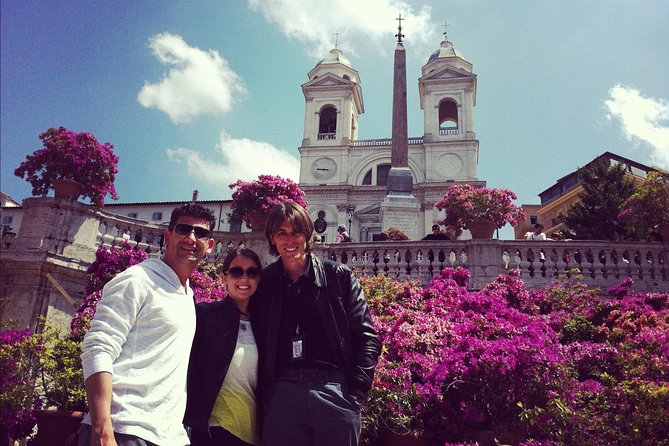
Spanish Steps: 135 Steps with Political and Artistic Connections
The Spanish Steps connect Piazza di Spagna at the base with Piazza Trinità dei Monti at the top. The staircase runs 135 steps, and it’s dominated at the top by the Trinità dei Monti church. Built with funds bequeathed by French diplomat Étienne Gueffier between 1723 and 1725, the steps link the church and the Spanish Embassy to the Holy See in the Palazzo Monaldeschi.
Here’s what makes this stop feel more meaningful than a simple photo moment: the staircase isn’t just about height and views. It reflects how diplomacy and religion shaped urban design. It’s a monument to the relationships of its era, expressed through a dramatic public space.
A heads-up for your planning: it’s a hot spot for crowds and busy foot traffic. The upside is that a guide can help you time your pauses so you don’t lose the whole stop stuck behind a wall of people.
Trevi Fountain: The Icon You’ve Seen Before (Now With Context)
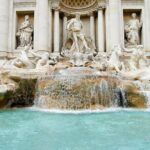
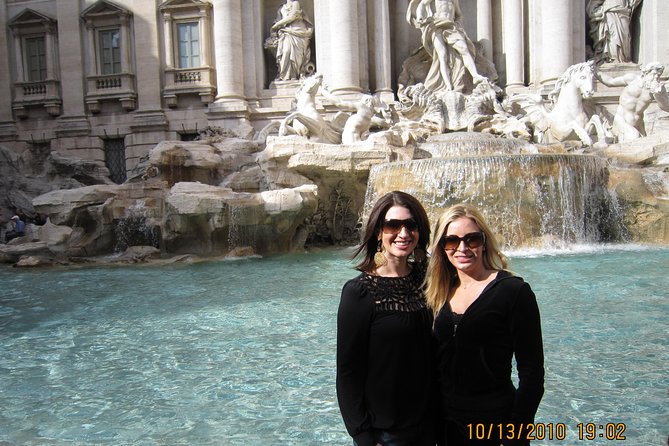
Then you hit Trevi Fountain, Rome’s most famous fountain scene. It’s an 18th-century fountain in the Trevi district, designed by Italian architect Nicola Salvi.
Even if you’ve studied pictures for years, standing there in person changes your sense of scale and detail. What’s helpful on a guided walk is the explanation behind the placement and design—because Trevi doesn’t sit alone. It’s part of a dense street-and-square pattern where you can feel Rome’s “public art” approach.
This is also one of those moments where you’ll want to manage expectations. Trevi is busy. You’ll likely feel the rhythm of crowd movement more than you’ll feel solitude. But that’s exactly where a guide’s route logic matters: you can still get a satisfying look without turning it into a long wait.
Fontana del Pantheon: A Pause Before You Hit the Big Ancient Star
After Trevi, the tour keeps you in motion toward the Pantheon area. You stop for the Fontana del Pantheon. The Pantheon itself is ancient Rome’s famous building in the Pigna district, but this middle stop gives you a breather and a visual setup.
If you’ve never visited, the Pantheon can feel like stepping into a different era—Roman engineering meeting later monument culture. Getting a quick reference point in advance helps you enjoy the moment more when you reach the main building.
The key practical idea: use this portion to reset. Feet get tired on a Roman walking loop, and having a short pause helps you keep energy for the final stretch.
Piazza Navona and Quattro Fiumi: Baroque Drama in an Urban Stage
Piazza Navona is one of Rome’s most famous monumental squares. It was built in monumental style by the Pamphili family at the behest of Pope Innocent X. If Trevi is about iconic fantasy, Piazza Navona is about theatrical geometry—an outdoor set where architecture and public space work together.
You also stop at Fontana dei Quattro Fiumi, the fountain commissioned by Pope Innocent X. In 1647, the pope had Francesco Borromini design a pipeline to bring water from the Aqua Virgo to Piazza Navona. A competition followed for the fountain design, and the pope also wanted to recover an obelisk later known as Agonale, which lay in ruins in the circus of Maxentius on the Appia Antica.
This is a stop I’d call “brain food,” in a good way. Instead of just admiring the fountain’s look, you learn how it’s tied to engineering, politics, and art procurement. It’s a reminder that Baroque Rome didn’t just decorate—it organized resources to make public space feel grand.
Expect crowds here too. But the square is spacious enough to keep moving. A guide can help you pick viewpoints that show you the whole layout without spending your whole time inching forward.
Piazza della Minerva: Where the Corner Changes the Tone
Next is Piazza della Minerva, a square named for an ancient temple dedicated to Minerva. That’s the point: this area carries a layered identity, with religious and archaeological roots.
At the center of the square you’ll see Santa Maria sopra Minerva. It was mentioned in the 8th century by the Anonymous of Einsiedeln as ecclesia S. Mariae in Minervio. Even without going deep into any one building, this stop helps you see how Rome repeatedly repurposes sacred space—new structures rising on older foundations.
Admission isn’t flagged here, and the time is short, so think of it as a calm pivot. You go from major open-square spectacle (Navona) to a slightly more intimate, “slow down and notice” vibe near Minerva.
Ending at the Pantheon: Your Finish Line in Rome’s Center
The tour ends with a drop-off at the Pantheon. The Pantheon is ancient Rome’s temple building dedicated to all past, present, and future divinities, founded in 27 BC by Marcus Agrippa. That ancient origin is exactly why the Pantheon feels so different even from other Roman landmarks.
Important detail: the Pantheon admission is not included in this experience. The tour’s timing includes about 20 minutes at the end, so if you want to go inside, you’ll likely need to plan for your own ticket.
Still, ending here is smart. By the time you reach the Pantheon area, you’ve already visited the major square scenes that define the city center. You’re not arriving cold—you’re arriving after the route has helped you build a mental map.
Price and Value: What $229.78 Buys You (and What It Doesn’t)
At $229.78 per person, you’re paying for a private guided route, with hotel pickup included and a professional guide for the 3 to 4 hour window. For Rome’s top sights, that price can actually be fair—because you’re not just buying “access to spots.” You’re buying time saved, context provided, and the ability to pace the experience.
Also, most stops are free of admission tickets on the route, which helps your total day cost. The Pantheon itself is not included, so you should budget for that if you plan to enter.
What’s not included: food and drinks, plus transportation between sights and transfers by taxi or private transport. Since this is positioned as a walking tour through central Rome, you probably won’t need taxis day-of—but it’s still good to know you’d pay separately if you decide to change your plan.
If you’re traveling in a smaller group and you hate wasting time, this is the kind of tour that makes sense. If you’re solo and you’re comfortable building your own route, the value depends on how much you care about having an expert guide do the connecting-story part for you.
Who Should Book This Private Squares and Fountains Tour
I’d especially recommend it if:
- It’s your first time in Rome and you want the big center hits without chaos.
- You’re short on time and want a route that connects squares and fountain scenes into one coherent walk.
- Your group includes mixed ages, since guides can adjust how the stop stories land (and the guide performances I’ve seen here have kept teenagers engaged).
- You prefer private attention over crowded group logistics.
It might be less ideal if:
- You want long, quiet time at fewer sights. This route is designed for efficient viewing at many stops.
- You’re counting on lots of indoor time beyond the Pantheon area (the stops are timed for outdoor scenes and short pauses).
Should You Book It?
If you want a smart, doable Rome highlights walk that feels guided rather than rushed, I’d say yes. The route hits the exact kind of central squares and fountains that help you understand Rome fast—Piazza del Popolo to Via del Corso to the Spanish Steps to Trevi, then on to Piazza Navona and the Pantheon area.
The clincher for me is the combination of private attention and a guide who’s proven effective with real groups, not just scripted monuments. Add hotel pickup and mostly free stops, and you’ve got a solid “value with context” option.
If you book, do it early. This one is commonly booked about 107 days in advance, which usually means limited availability for prime windows.
FAQ
How long is the Private Walking Tour of the Squares and Fountains in Rome?
It lasts about 3 to 4 hours.
What does the tour cost?
The price is $229.78 per person.
Is this tour private, and how many people are in a booking?
It’s a private tour/activity, with a maximum of 8 people per booking.
What language is the tour offered in?
The tour is offered in English.
What’s included in the price?
Hotel pickup, a private tour, and a professional guide are included.
Are tickets included for all the stops?
Most stops list admission tickets as free, but Pantheon admission is not included.
Where does the tour start and end?
It starts at Fontane dei Leoni Egizi on Via del Teatro di Marcello and ends at the Pantheon area (Rome).
Do I need food or transportation included?
Food and drinks are not included, and transportation between sights is not included.