REVIEW · ROME
Rome: Villa Borghese E-Bike Tour
Book on GetYourGuide →Operated by Bicycle Roma · Bookable on GetYourGuide
You pedal straight into calm. I love how the e-bike makes 80 hectares of Villa Borghese feel effortless, and I love the way the guide builds in real photo-and-view breaks at key stops like the Terrazza del Pincio and the Water Clock. The one watch-out: you’ll need a basic comfort level on the bike, because the guide reserves the right not to admit riders who don’t seem suitable.
This is a smart way to escape Rome’s noise without giving up the sights. About 90% of the ride happens in the Villa Borghese Park and along the Tiber cycle path, with no car traffic. The route is designed for quiet roads and easy flow, so you can focus on Roman monuments, garden details, and calm breathing instead of traffic stress.
In This Review
- Key takeaways before you pedal
- Villa Borghese by E-Bike: the fast route to a real break
- Price and time: is $67.74 for 2.5 hours good value?
- Where you ride: quiet roads, real park paths, and Tiber-cycle calm
- Stop-by-stop: what you’ll see and why each stop matters
- Piazza del Popolo: start with a grand Rome moment
- Pincio Terrace: viewpoint time without the scramble
- Water Clock (Rome): an engineering stop that feels human
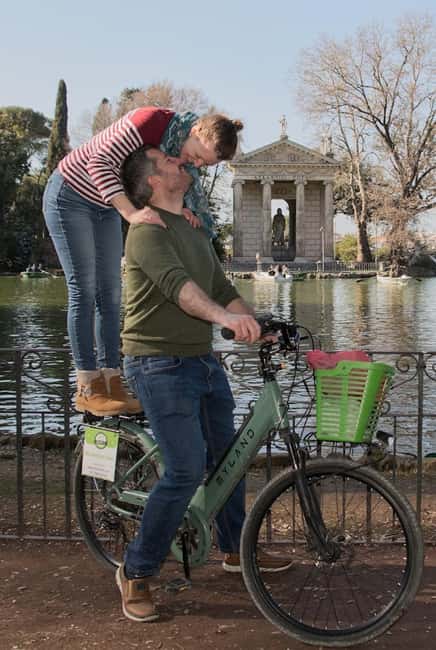
- Temple of Aesculapius: Roman stone in garden calm
- Temple of Diana: another viewpoint of Roman symbolism
- Fountain of the Seahorses: the detail stop that makes photos better
- Piazza di Siena: finishing with a park-center vibe
- The guides: how the best parts happen in the pacing and stories
- What to bring, and what could trip you up
- Is this tour for you? Best matches (and who should skip it)
- Should you book Rome: Villa Borghese E-Bike Tour?
- FAQ
- How long is the Rome: Villa Borghese E-Bike Tour?
- What does the price include?
- Are car roads involved during the ride?
- What languages are the live guides available in?
- Is it okay to bring a pet?
- What group size should I expect?
Key takeaways before you pedal
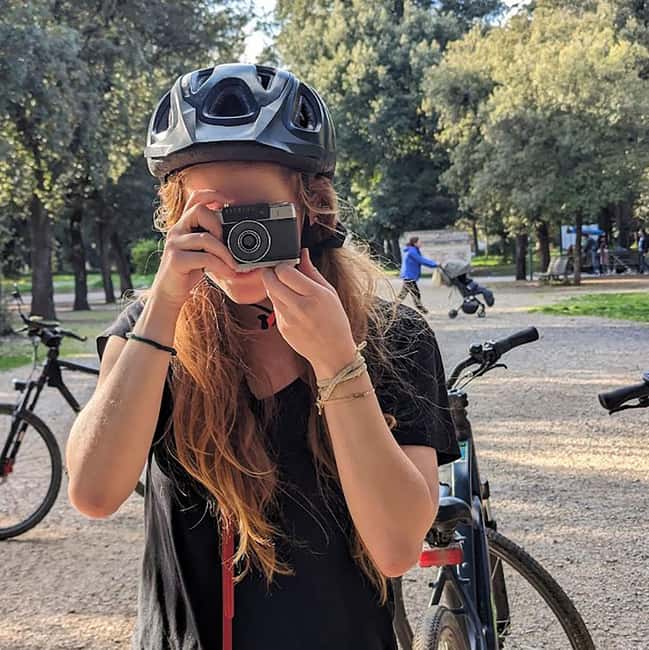
- Mostly car-free cycling: about 90% in the park and on the Tiber cycle path, with no car traffic.
- E-bike help for real distance: you cover a lot of Villa Borghese without feeling wrecked.
- Timed stops that make sense: Piazza del Popolo, Pincio Terrace, Water Clock, and several temples.
- Guides who manage pace and photos: I saw multiple mentions of calm guidance and good picture time (including one guide who’s a professional photographer).
- Small groups or private options: group tours run up to 10, with private available if you want more control.
Villa Borghese by E-Bike: the fast route to a real break
Rome can feel like it’s standing on your toes. Cars buzz, people press in, and the “just one more block” plan turns into a grind. This tour flips that script by moving you from the historic center into a green pocket where the pace naturally slows.
Villa Borghese covers around 80 hectares, and it’s not just a lawn with statues. It’s gardens, grand buildings, terraces, and old Roman landmarks tucked into park paths. Riding an e-bike through it changes how you experience the place. Instead of fighting hills or arriving tired, you glide between sections and actually have the energy to notice details—stonework on monuments, garden geometry, and the viewpoints that open up over Rome.
And the point isn’t only to see big sights. You get stories and curiosities along the way, so stops feel connected rather than random. When the guide slows down near a landmark, it’s usually because there’s something worth looking for.
You can also read our reviews of more cycling tours in Rome
Price and time: is $67.74 for 2.5 hours good value?
At $67.74 per person for about 2.5 hours, the deal is mostly about how efficiently you can cover Villa Borghese without doing logistical work yourself. In a place this spread out, walking can mean either missing sections or spending the whole afternoon moving between “must-sees.”
You’re not just buying a bike. You’re buying:
- a local guide to connect the dots
- an e-bike or regular bike
- helmet cover and a lock
- and a Roma ’n Bike Card tied to an exclusive cycling discount circuit
Here’s the practical value equation: if you’re short on time (or you want to avoid the physical tax of a full park day), this is a smart use of your sightseeing hours. If you love roaming slowly and you already know the park well, you might feel less urgency to book. But for most first-time or busy visitors, 2.5 hours is a comfortable sweet spot: enough time to hit multiple highlights, not so long that you lose the rest of your day.
Where you ride: quiet roads, real park paths, and Tiber-cycle calm
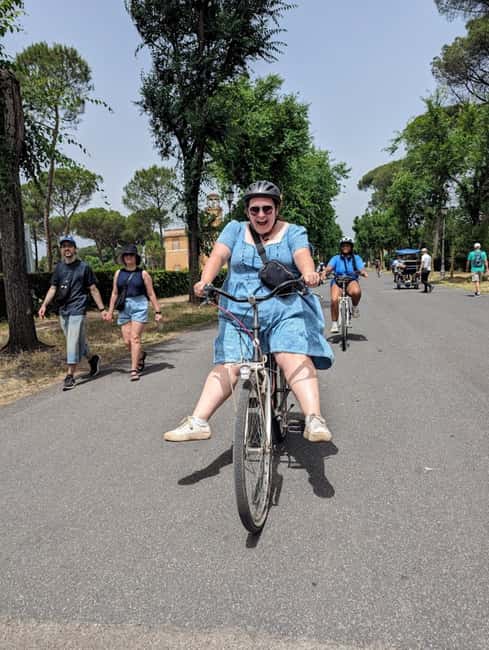
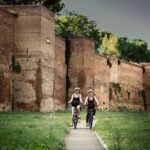
This route is set up to minimize the “Rome bike anxiety.” The operator specifies that the itinerary favors quiet roads with little traffic. It also states that about 90% of the tour takes place in the Villa Borghese Park and on the Tiber cycle path, with no car traffic.
That matters. In Rome, a bike ride can go sideways fast when you’re forced into unpredictable intersections. Here, you’re mostly in controlled, bike-friendly areas. It’s still cycling—turns, narrow paths, and occasional crowds happen—but you’re not constantly negotiating traffic.
One more practical note: there’s a minimum amount of experience required with the vehicle. Also, after a briefing, the guide can decide not to admit participants who don’t seem suitable based on skills or body/mind health. Translation: if you’re brand new to riding (or you’re nervous about balancing), I’d treat this as a “try carefully” tour. Not because it’s unsafe, but because the group format needs everyone to move smoothly.
Stop-by-stop: what you’ll see and why each stop matters
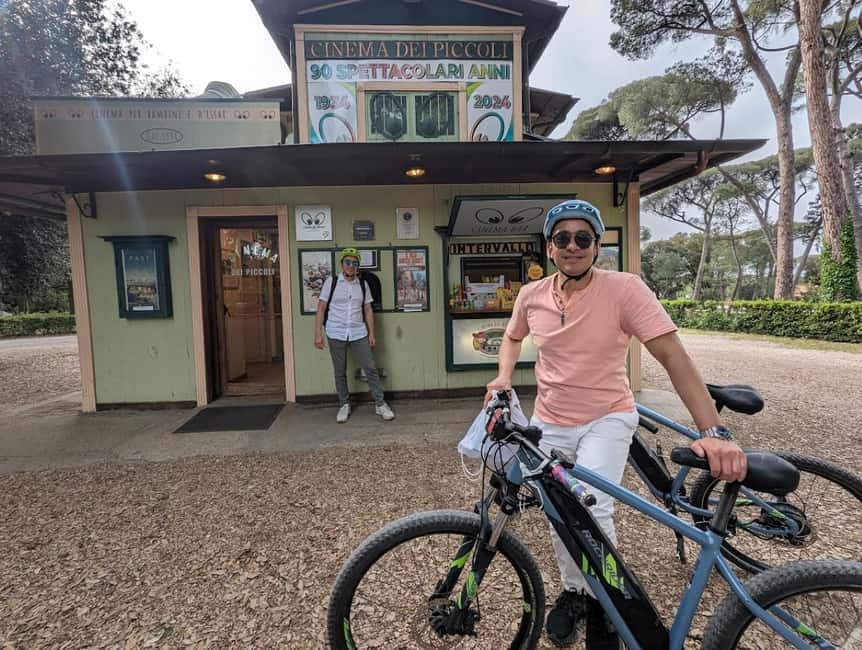
Piazza del Popolo: start with a grand Rome moment
You begin with a guided segment from Piazza del Popolo. This is a good choice because it acts like a gateway—city grandeur at the start, then transition into park calm.
Practical feel: this early area can be busy simply because it’s central. The upside is you’re not wandering around trying to figure out where the park starts. You’re guided straight into the flow of the experience.
A small drawback to keep in mind: when you start near iconic central squares, the crowd energy can make the first few minutes feel hectic. The tour’s advantage is that the guide can manage pacing so you’re not stuck.
You can also read our reviews of more tours and experiences in Rome
Pincio Terrace: viewpoint time without the scramble
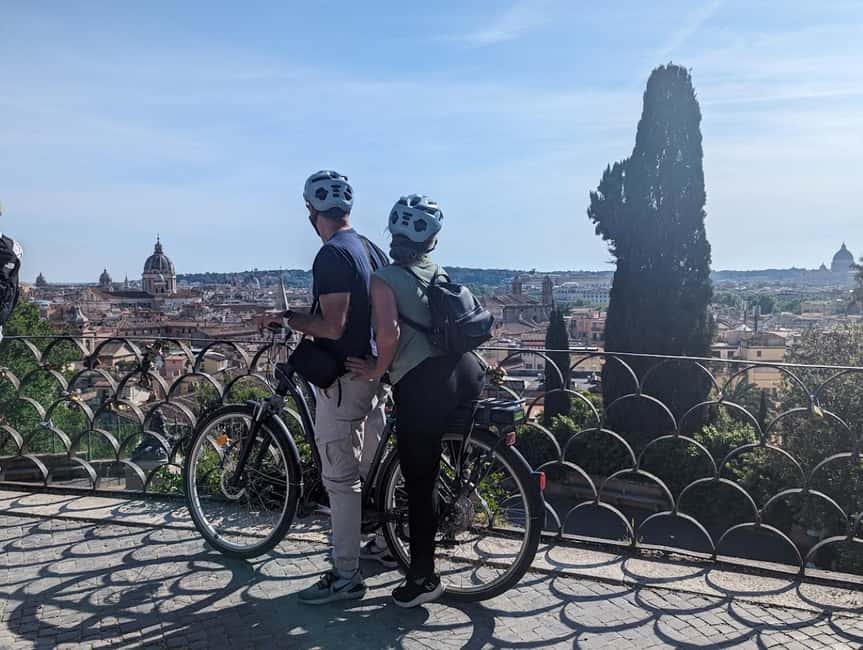
Next comes the Pincio Terrace, guided for about 20 minutes, with bike riding between moments.
This is where you get one of those Rome views where your brain goes quiet for a second. The terrace gives you perspective over the city, and it’s a natural place for photos because the angle is strong and the vantage is built for looking.
What I like about this stop: it’s timed. You’re not rushing from one sight to the next without a proper pause. The guide also provides enough structure that you can spend your time composing shots instead of figuring out where everyone is going.
Water Clock (Rome): an engineering stop that feels human
Then you move to the Water Clock, with a guided stop of about 10 minutes.
This isn’t just another statue photo-op. A water clock is a Roman-era way of measuring time using flowing water, and that’s exactly the kind of detail that makes a park visit feel like more than scenery. If you like “how did they do that?” moments, you’ll probably enjoy this stop.
Practical note: since it’s a shorter stop, it works best if you listen to the guide’s explanation rather than expecting a long self-guided museum-style experience.
Temple of Aesculapius: Roman stone in garden calm
Your itinerary continues to the Temple of Aesculapius, again with about 10 minutes of bike time to reach the spot and a guided look.
This is one of the ancient highlights in the Villa Borghese area: a tangible reminder of how Roman spaces mixed sacred function with public life. In a park setting, it also becomes a contrast piece. You’re watching modern greenery frame an older monument, and the contrast is the point.
If you’re the type who likes context, this is the kind of stop where a guide helps you read the landmark correctly instead of just pointing and moving on.
Temple of Diana: another viewpoint of Roman symbolism
Next is the Temple of Diana, Rome, with about 10 minutes of bike travel and a guided stop.
Like Aesculapius, the Temple of Diana gives you more of that layered feeling: the Villa Borghese area isn’t a single era. It’s a mix of carefully preserved, repurposed, and showcased pieces—set inside a place designed for walking, pausing, and enjoying views.
This stop also helps balance the “garden first” experience. You don’t just pass through green space. You get anchors—ancient structures that keep the tour grounded.
Fountain of the Seahorses: the detail stop that makes photos better
Then you hit the Fountain of the Seahorses.
This is a classic kind of sightseeing moment: not the biggest monument, but more fun in real life because fountains are where you can see texture, motion, and decorative imagination up close. It’s also a strong photography target because the shapes give you something specific to frame.
If you’re traveling with someone who likes small details as much as big views, this is where the tour can feel extra satisfying.
Piazza di Siena: finishing with a park-center vibe
Finally, you end at Piazza di Siena, with about 10 minutes of bike time between prior sights.
Piazza di Siena works as a clean closing note because it’s a recognizable park hub. By now you’ve cycled through multiple highlights—terraces, temples, a time-measurement curiosity, and a decorative fountain—so the final stop feels like you’ve returned to the park’s heart.
The tour ends back at the starting meeting area, which is handy if you want to keep the rest of your day organized. No late “where do we go now?” scramble.
The guides: how the best parts happen in the pacing and stories
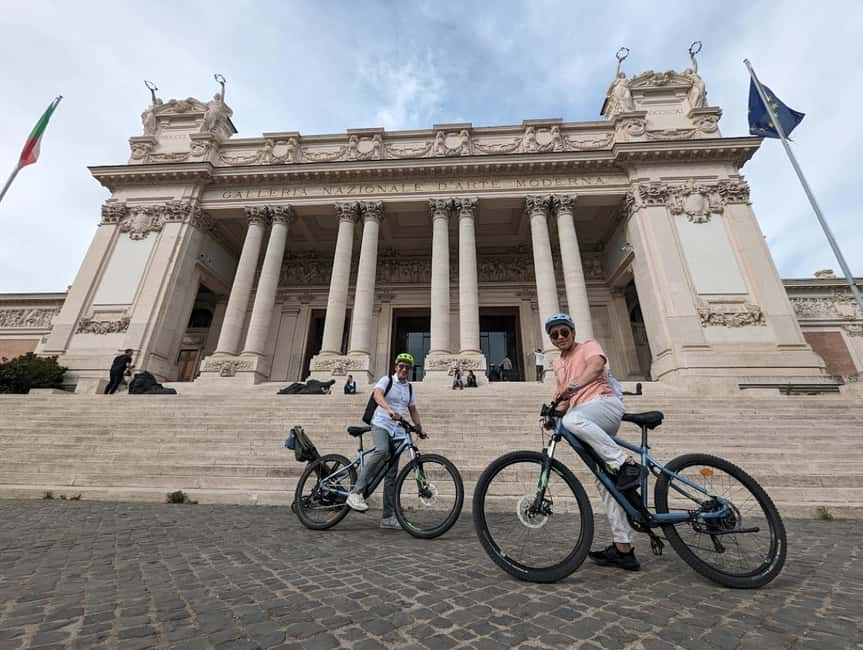
The guide is where this tour can feel truly different from a self-guided bike ride. In the feedback I saw, guides were repeatedly praised for calm pacing, smart picture breaks, and making sure the group stays comfortable even when Rome is crowded.
I also noticed a few recurring strengths tied to specific guide styles:
- Alessio got special mentions, including help with pacing at rider comfort and taking photos, with one note that he’s a professional photographer.
- Noam was praised for being both fun and educational while keeping the group moving smoothly through the Borghese gardens.
- Alberto was described as giving local advice beyond just cycling, including ideas for where to go next and what to do.
- Massimo and Alessandro were both noted for taking time and tailoring the ride to interests.
You can’t guarantee which guide you’ll get, but you can look for what you care about: relaxed pace, solid storytelling, and time for photos. If that’s your priority, this tour format is built to deliver.
One more practical detail: the tour notes that the operator selects quieter roads with little traffic, and the guide stays with you the whole time. That combination is what makes the experience feel safe and not like a solo bike adventure.
What to bring, and what could trip you up
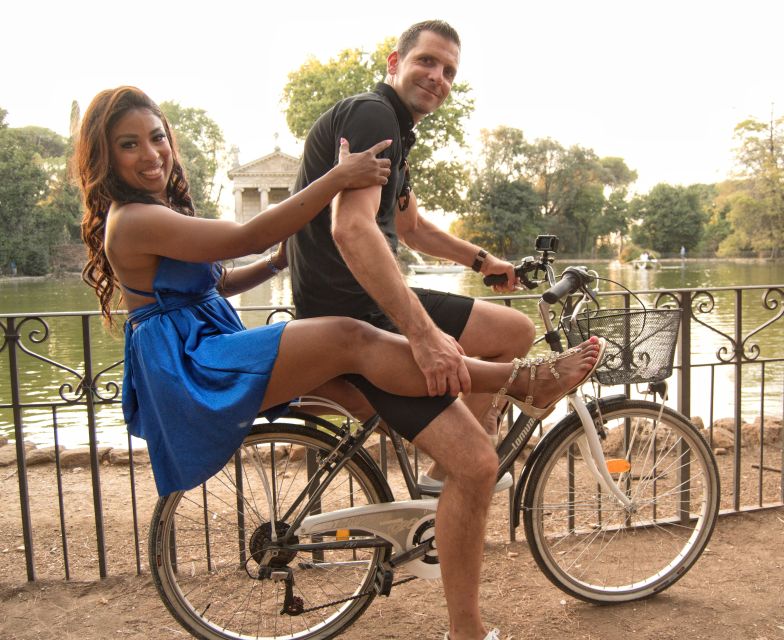
You’ll want to show up ready to ride, not just ready to look around.
Bring:
- Passport or ID card
- Comfortable shoes (you might hop off for brief guided moments)
- Comfortable clothes suited for a park ride and short stops
Avoid surprises:
- Pets aren’t allowed.
- It’s not suitable for pregnant women.
- There’s a height guideline: not suitable under 4 ft 6 in (140 cm).
- Children can ride an e-bike from age 12.
- The tour is described as requiring a minimum amount of experience with the vehicle.
If you’re on the edge—say you’ve never ridden an e-bike—your best move is to consider the regular bike only if you feel confident. Otherwise, go with e-bike and ask questions at the briefing about how the assist works and what the pace will feel like.
Is this tour for you? Best matches (and who should skip it)
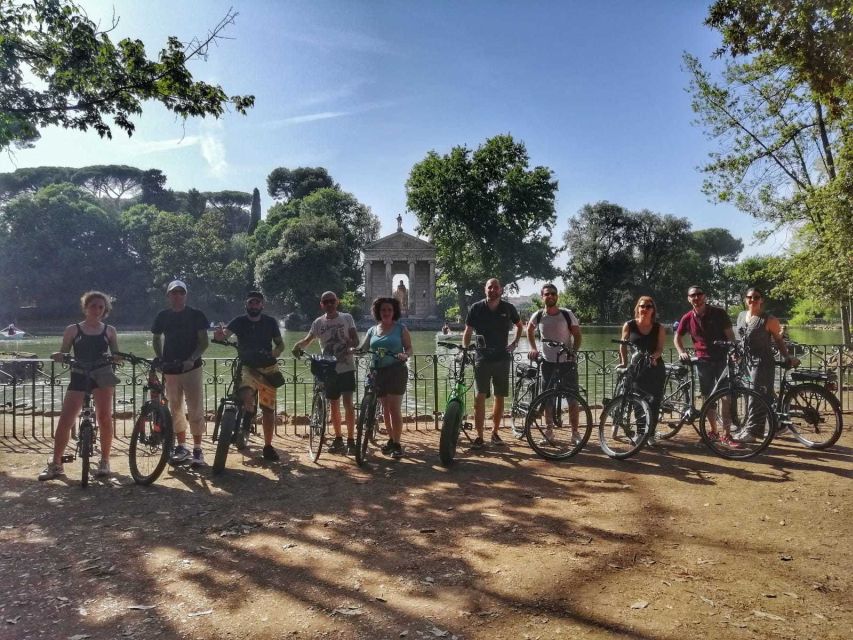
This is a great match if:
- you want to see several Villa Borghese highlights in one outing
- you’d rather spend energy enjoying the sights than powering through hills
- you like guided context, especially for landmarks like the Water Clock and Roman temples
- you want a photo-friendly route with planned pauses
It might not be your best fit if:
- you don’t feel comfortable riding a bike with a group pace
- you’re looking for a long, unstructured wander where you can go at your own rhythm all day
- you fall into the stated unsuitability categories (including pregnancy and height limits)
Should you book Rome: Villa Borghese E-Bike Tour?
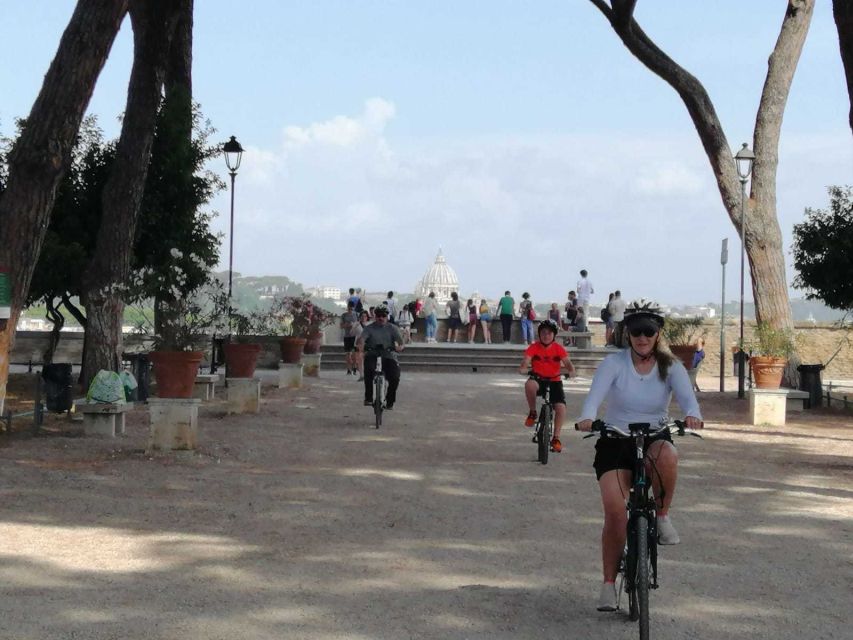
If your goal is a high-impact, low-stress Villa Borghese visit, I’d book this. The e-bike option plus the mostly car-free route makes it one of the more practical ways to cover the park and hit the key monuments without burning your whole afternoon.
Choose it especially if you want:
- a guided route that handles the “where do we go next?” problem
- time for photos at viewpoints like the Pincio Terrace
- Roman-era stops beyond the gardens, like the Temple of Aesculapius and Temple of Diana
If you’re experienced and prefer independence, you can DIY this too—but you’ll likely spend more time figuring out logistics and less time learning how each stop fits into the larger park story. For many people, that trade is exactly what this tour solves.
FAQ
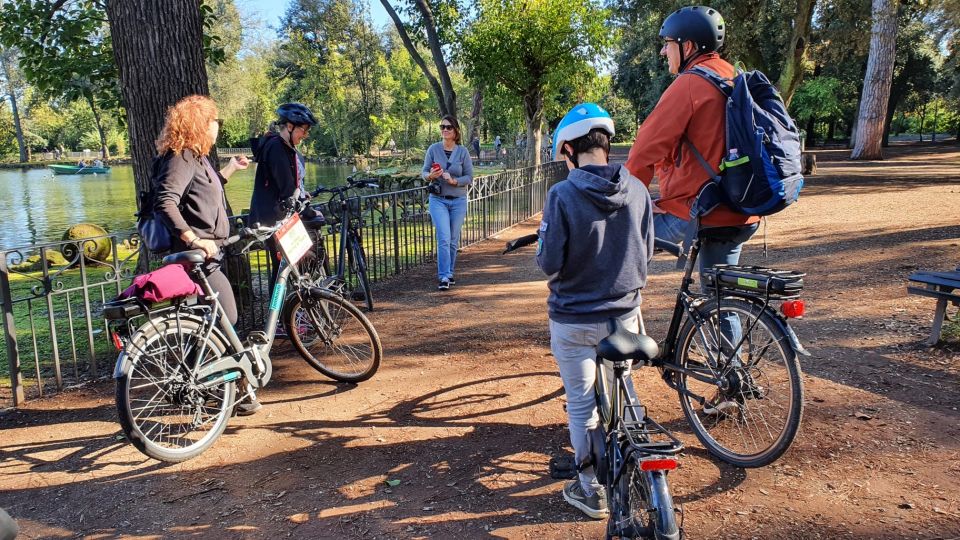
How long is the Rome: Villa Borghese E-Bike Tour?
The tour lasts about 2.5 hours.
What does the price include?
You get a local guide, an e-bike (or regular bike), a helmet cover, a lock, and the Roma ’n Bike Card with an exclusive discount circuit for cycle tourists.
Are car roads involved during the ride?
About 90% of the tour takes place in the Villa Borghese Park and on the Tiber cycle path, with no car traffic. The itinerary favors quiet roads with little traffic.
What languages are the live guides available in?
The live guide is available in English, Italian, French, and Spanish.
Is it okay to bring a pet?
No. Pets are not allowed.
What group size should I expect?
The group tour starts with a minimum of 4 participants and goes up to 10 people. Private and small group options are also available.