REVIEW · ROME
Colosseum and Ancient Rome Private Tour
Book on Viator →Operated by RomaExperience Tours · Bookable on Viator
Colosseum day, minus the chaos. This private route ties together Roman Forum drama and skip-the-line Colosseum entry with an expert guide so you’re not just staring at stones. I like the way you get an intimate feel because it’s your party only, and I like the story-to-place connections that make stops like Via Sacra and the Arch of Constantine click. One real consideration: there’s no scheduled break, plus the grounds include steep stairs and uneven surfaces.
If you want top Ancient Rome sights in one morning or afternoon, this is built for that. You’ll move through the Forum in about an hour, take in Palatine Hill in roughly 20 minutes, then spend an hour at the Colosseum, with additional exterior and religious stops that help the whole area make sense. You also get mobile tickets and a reservation handled for you, which cuts down on time-wasting at the entrance.
The price—$407.48 per person—sounds steep until you see what’s included. Beyond the guide, the Colosseum entrance ticket (€18) and reservation fee (€2) are covered, and you’re also getting the guidance, setup, and time-saving skip-the-line plan that matters most in Rome. For the smoothest visit, bring a valid passport/ID that matches the name on your booking, wear comfortable shoes, and plan for security screening with luggage limits.
In This Review
- Key things you’ll notice on this tour
- The private route: seeing Forum to Colosseum without the wasted time
- Foro Romano: Julius Caesar, temples, and victory arches in about an hour
- Palatine Hill: views and the emperor’s world in roughly 20 minutes
- Entering the Colosseum: skip-the-line plus the arena-floor story
- Around the outside: Arch of Constantine and the copy-cats trail
- Via Sacra and the Temple of Vesta: when Rome’s rituals come into focus
- Price and logistics: why $407.48 per person can be worth it
- Practical tips that make the day easier
- Guides: the human factor is the whole point
- Should you book this Colosseum and Ancient Rome private tour?
- FAQ
- How long is the Colosseum and Ancient Rome private tour?
- What’s included in the price?
- What’s the biggest ticket-related benefit?
- Where do I meet for the tour, and where does it end?
- Do I need to bring ID, and does the name have to match?
- Is there a break during the tour?
- What happens if weather affects the visit?
Key things you’ll notice on this tour
- Private, your party only means you can move at your pace without a herd
- Skip-the-line access for the Colosseum with tickets and reservation included
- Headsets for groups of 6+ so you can actually hear the guide
- Forum + Palatine + Colosseum in one flow rather than piecing it together yourself
- Exterior stops add meaning (Arch of Constantine, victory arch, Via Sacra, Temple of Vesta)
- Built around real logistics like steep steps, uneven ground, and security rules
The private route: seeing Forum to Colosseum without the wasted time
Rome’s ancient sights are close on a map, but in real life it’s easy to lose time to lines, directions, and staring at the same view from the wrong angle. This tour fixes that by stacking three UNESCO World Heritage zones into one organized walk, roughly 2 hours 45 minutes. You’re not chasing scattered landmarks on your own.
Starting at Via Labicana, 125, 00184 Roma RM, Italy, you end at Largo della Salara Vecchia, 00186 Roma RM. That end point is handy because it keeps you in the archaeological core, where you can keep wandering afterward if you have the energy.
The biggest value of a private setup isn’t just exclusivity. It’s that the guide can pace the route, handle little interruptions, and point out what matters at each stop—so you walk away with a mental timeline, not just photos.
You can also read our reviews of more private tours in Rome



Foro Romano: Julius Caesar, temples, and victory arches in about an hour
Your first stop is the Foro Romano (Roman Forum) for about an hour. This is the kind of place where you can stand still for an hour and still not know what you’re looking at. With a guide, the ruins become a map of power, politics, and public life.
You’ll see major anchors of the Forum, including the area tied to Julius Caesar’s assassination, plus temple remnants and Victory Arches. The point isn’t to memorize names. It’s to understand what public space meant in Rome—how leaders staged authority in stone, and how crowds moved through the city’s most symbolic ground.
One practical perk: the Forum stop is long enough to take in the big ideas, yet short enough to keep momentum before the Colosseum. If you tend to get museum-fatigue fast, this pacing is friendly. If you want maximum detail, you’ll probably wish you had another half hour—just like everyone does in Rome.
Palatine Hill: views and the emperor’s world in roughly 20 minutes
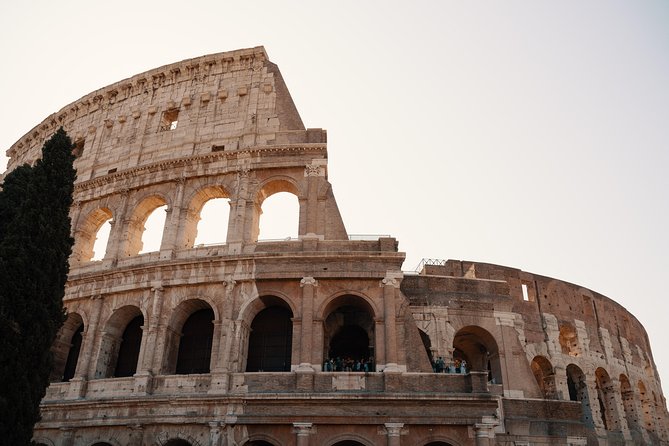
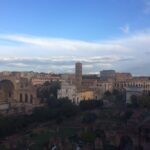
Next comes Palatine Hill, about 20 minutes. This is a fast stop, but it’s the kind of time limit that can work in your favor. Palatine is where you go to get the “I get it now” perspective: ancient Rome elevated above modern Rome.
From the hilltop, you’ll understand why emperors chose this area, and you’ll see how the space connected to elite life. You’ll also learn what lived here and why it was so valued, turning the viewpoint into more than a postcard angle.
Drawback? If you’re the type who wants a slow, photo-heavy hill walk, 20 minutes may feel short. The trade-off is that the rest of the tour stays focused on the Forum and Colosseum, where you’ll likely spend most of your time anyway.
Entering the Colosseum: skip-the-line plus the arena-floor story
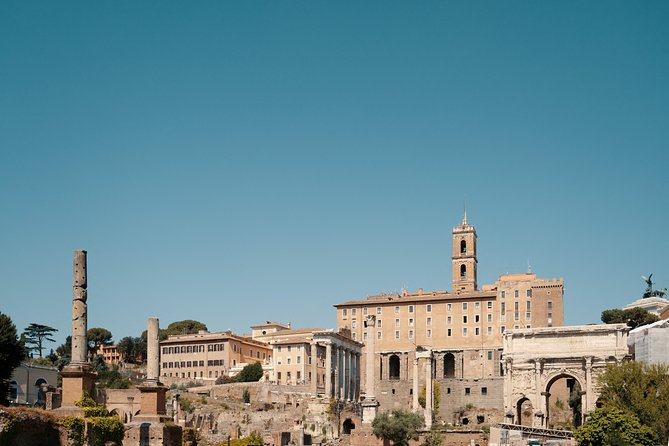
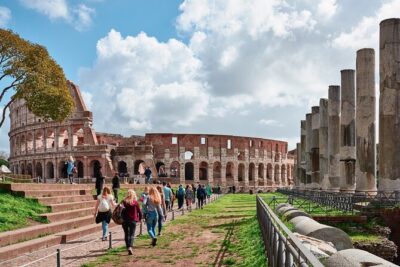
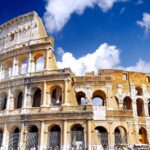
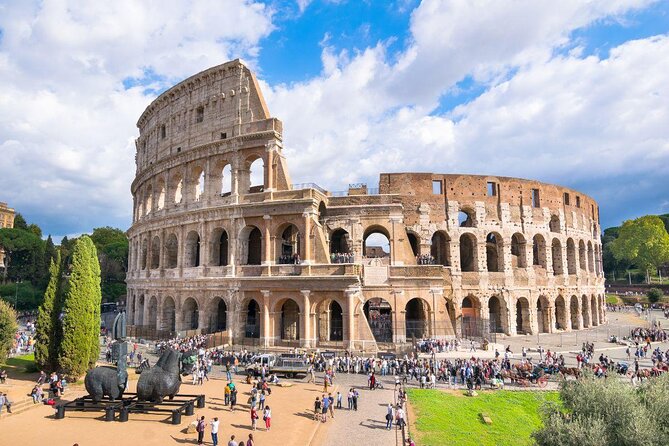
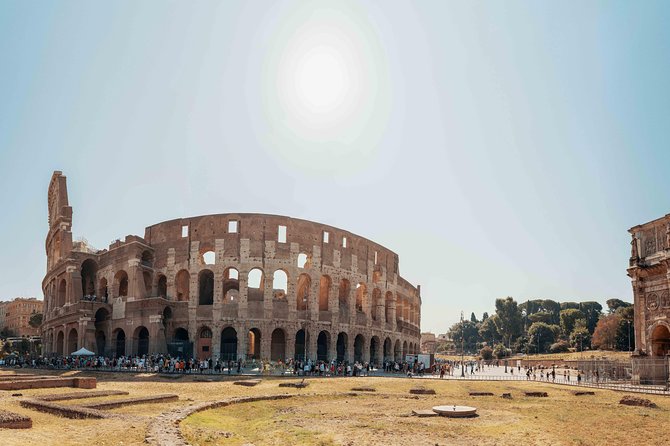
Then it’s the star: the Colosseum, about one hour on site. The plan includes admission ticket and reservation fee, and the skip-the-line timing is the real advantage. At this site, saved time isn’t a luxury; it’s how you keep your visit enjoyable instead of grinding through queues.
Inside the amphitheater, you’ll hear the big numbers that make the Colosseum feel unreal: up to 80,000 spectators in action, a 400-year stretch of use, and figures like 400,000 deaths and 1,000,000 animals associated with events over time. Whether you take every figure literally or as a snapshot of the scale, the takeaway is clear—this wasn’t entertainment that sat quietly in the background.
Security is something you should plan for even before you arrive. The tour info includes screening for all visitors and luggage, with mobile phones and other items needing to go through X-ray trays. You’ll want to travel light: large backpacks, camping bags, bulky bags, and luggage/trolleys aren’t allowed, and medium/small backpacks can be checked and opened for inspection.
Also note the site rules: no sprays of any sort inside the Colosseum. Simple, but it catches people off guard.
Around the outside: Arch of Constantine and the copy-cats trail
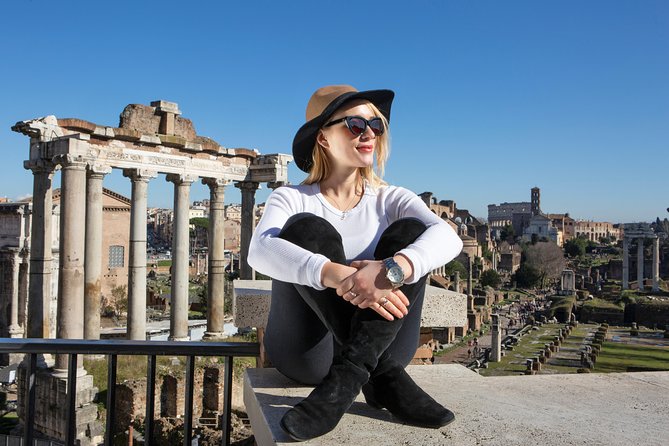
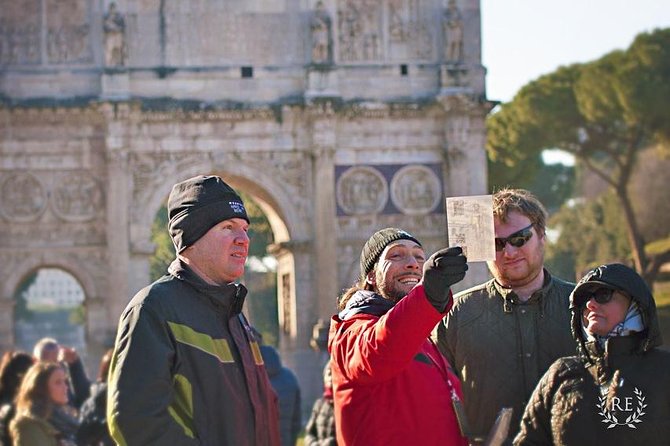
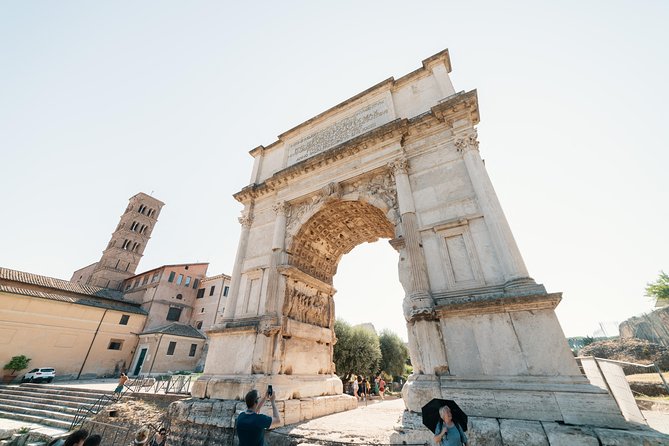
A nice touch here is that you don’t rush straight from entrance to exit. As you walk the exterior, you pause at the Arch of Constantine, tied to the first Christian Emperor. This stop matters because it shows how Rome’s symbols kept being re-used and re-designed long after the original world changed.
You’ll also see one of the best-preserved Roman Victory Arches, plus a connection that explains why later triumphal architecture borrowed Roman shapes. The tour links the design inspiration all the way to the Arc de Triomphe in Paris, so your brain gets a useful “then and now” thread across Europe.
This exterior portion is a good way to keep your bearings. Even if your feet are starting to feel it, the arches give you reference points for the wider site and for where you’ll be standing next.






Via Sacra and the Temple of Vesta: when Rome’s rituals come into focus
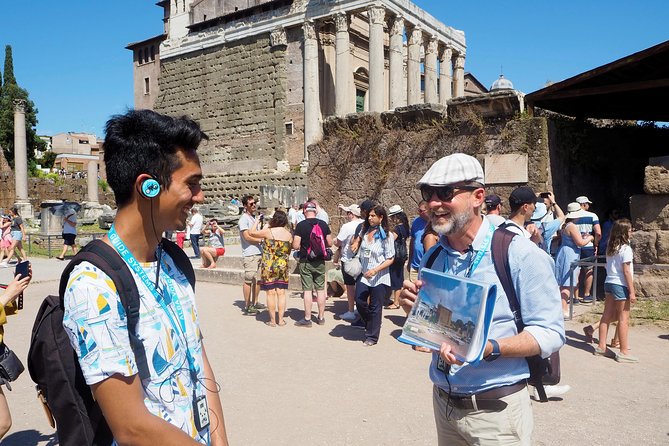
After the big monument moment, the tour shifts to the city’s older heartbeat. You’ll walk by Via Sacra, described as Ancient Rome’s main street running from the Roman Forum to the Colosseum. It’s the kind of route name that means nothing until you connect it to processions and public movement. With a guide, it becomes a visual path.
Then you stop at the Temple of Vesta. This is tied to the Vestal Virgins, who protected the sacred fire of Rome with their lives. It’s a sharp contrast to the arena next door—public spectacle versus sacred ritual—and it gives your visit balance.
If you like religion, politics, and civic life as one blended system, this is one of the most satisfying parts of the route. If you’re only chasing the arena photos, this may feel like a quick detour—but it’s short and helps the whole area feel like a functioning city, not a theme park of ruins.
Price and logistics: why $407.48 per person can be worth it
Let’s talk value without pretending this is cheap. At $407.48 per person, you’re paying for three things Rome can charge you for indirectly: time, interpretation, and organization.
Here’s what the price covers, based on the included items:
- Expert guide
- Colosseum entrance ticket (€18) and reservation fee (€2)
- Mobile ticket
- Headsets for groups of 6 or more
- The rest goes toward the guide and services that make the day smoother
Even if the ticket amounts seem small compared to the total, the real money is the difference between wandering and being guided. The skip-the-line piece can save you an unpleasant chunk of waiting, and the story work helps you get more out of what you’re already paying to see.
Another value signal: this tour is often booked around 62 days in advance on average. That doesn’t guarantee everything, but it fits what you’ll feel on the ground—prime sightseeing here fills up.
Who this fits best:
- Couples and families who want fewer stress points and more meaning per step
- People who care about context—politics, religion, architecture—rather than just photos
- Groups that want private pacing, especially if you’re dealing with mobility limits or unpredictable energy levels
Practical tips that make the day easier
This tour takes place outdoors with steep stairs and uneven ground. Strollers are allowed, but they’re explicitly not recommended because of those conditions. If you travel with kids, plan on carrying them if they can’t walk for most of the tour.
Bring:
- Comfortable shoes (non-negotiable)
- A hat and sunscreen
- Any essentials you might need because there’s no scheduled break, though restrooms can be found along the path as needed
- A passport or ID that matches your booking name exactly
On-site you can use water fountains, which is a quiet lifesaver during warm weather. Food is allowed in the archaeological area, so you’re not forced into a rigid meal plan mid-ruins.
One more logistics reality: large bags aren’t your friend at security. If you’re the kind of traveler who packs deep, consider a smaller day bag to reduce screening delays.
Guides: the human factor is the whole point
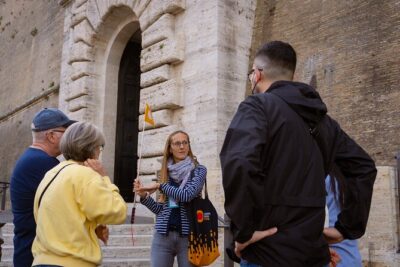
In a private tour, the guide isn’t a bonus. They’re the product. This experience is offered in English and also lists multiple languages available (French, Spanish, Arabic, Russian, Italian, German, Japanese, Chinese, Portuguese), so you can match your comfort level.
Names you might see associated with this tour include Marle Robinson, Francesca, Vincenzo, and Chris. The consistent thread across these examples is a strong ability to connect details to what you’re actually standing in front of. One person described an art history background making the Forum and Palatine click. Another highlighted how the guide managed with changes during the visit and kept the experience enjoyable and informative even when weather wasn’t ideal.
If you’re planning an early start to beat the heat, you can build your strategy around it. One account praised an early AM tour specifically for managing temperature. If you prefer a calmer atmosphere and you don’t mind starting earlier, that’s a smart move in Rome.
Should you book this Colosseum and Ancient Rome private tour?
Book it if you want the most famous sights in Ancient Rome, but you also want them explained in plain language with an expert guide and a plan that respects your time. This is a strong choice when you’re traveling as a small group, want skip-the-line entry, and care about turning ruins into stories—from Caesar and palace life on Palatine to the sacred fire at Temple of Vesta.
Skip it (or consider another format) if your travel style is mostly “show me the view and let me wander.” This tour is built for guided pacing and interpretation. If you’re not interested in the context part, the money won’t feel as tight.
If you want my practical rule: if you’re only doing a day or two in Rome and you’re serious about the Colosseum, Roman Forum, and Palatine Hill, this private setup is one of the more sensible ways to make that time count.
FAQ
How long is the Colosseum and Ancient Rome private tour?
It lasts about 2 hours 45 minutes.
What’s included in the price?
The tour includes an expert guide, Colosseum entrance ticket, Colosseum reservation fee, and a mobile ticket. Headsets are provided for groups of 6 or more. Food and drink and hotel pickup are not included.
What’s the biggest ticket-related benefit?
You get a Colosseum entrance ticket and reservation, which helps with faster entry and scheduling. The tour is described as a skip-the-line private experience.
Where do I meet for the tour, and where does it end?
Meet at Via Labicana, 125, 00184 Roma RM, Italy and end at Largo della Salara Vecchia (L.go della Salara Vecchia), 00186 Roma RM, Italy.
Do I need to bring ID, and does the name have to match?
Yes. Each traveler must present a valid passport or ID document that matches the name provided at booking for entry to the Colosseum and Roman Forum. You also need to provide full names when booking.
Is there a break during the tour?
There is no scheduled break, but it will be possible to stop for restrooms along the path as needed.
What happens if weather affects the visit?
The experience requires good weather. If it’s canceled due to poor weather, you’ll be offered a different date or a full refund. The Colosseum Administration can also close parts of the site for events, strikes, heavy rain, or other reasons, and the tour offers an alternative itinerary or a partial refund.