REVIEW · ROME
Rome: Lesser Known Ancient Rome Walking Tour
Book on GetYourGuide →Operated by City Stories Tours · Bookable on GetYourGuide
Ancient Rome hides in plain sight. This 2 to 2.5-hour walk strings together lesser-known ruins and big-name myths like Bocca della Verità, without making you fight the main crowd.
What I like most is the focus on everyday Roman life, not just emperors and battles, plus the guide-led storytelling that keeps stone fragments from feeling like dead weight.
One watch-out: it runs rain or shine and is a real walking tour, so wear comfy shoes and plan for weather and uneven historic ground.
In This Review
- Key things to know before you go
- Why this lesser-known Ancient Rome walk feels different
- Price and group size: what $28 really buys
- Choosing your start point: Torre Argentina or Piazza Venezia
- Largo di Torre Argentina: temples hidden under modern life
- Down Via delle Botteghe Oscure: buried ruins and the city’s layers
- Capitoline Hill: the symbolic heart of ancient Rome
- Insula dell’Ara Coeli: see Roman apartment life
- Theatre of Marcellus and preserved temple remains
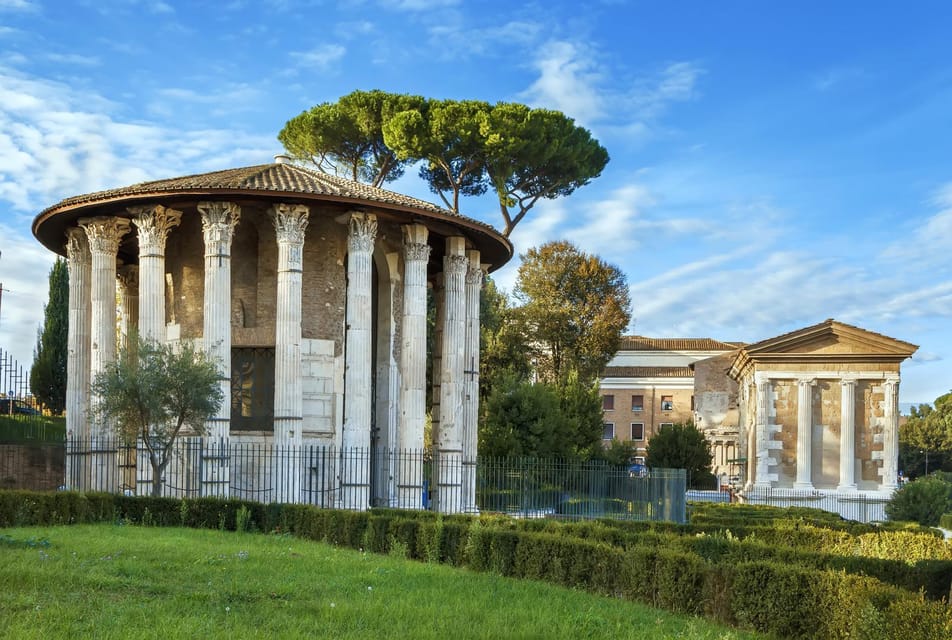
- Forum Boarium: markets, ritual, and daily movement
- Mouth of Truth: myth you can experience in real time
- Old sewers, an ancient archway, and Roman engineering that still works
- Palatine Hill and the Circus Maximus scale check
- Weather, shoes, and simple tips that matter
- Optional break: food and drinks you can plan around
- What type of traveler should book this
- Should you book the Rome: Lesser Known Ancient Rome Walking Tour?
- FAQ
- How long is the Rome Lesser Known Ancient Rome Walking Tour?
- What does the tour cost?
- Where does the tour start?
- How big are the groups?
- Is the tour guided in English?
- Does the tour run in bad weather?
- Is the tour wheelchair accessible?
- What should I bring?
- Is food included?
- Can I cancel and get a refund?
Key things to know before you go
- Max 15 people keeps the pace human and the Q&A actually useful
- Expert historian guide turns ruins into daily life, myths, and practical Roman engineering
- Two start options (Torre Argentina or Piazza Venezia) help you match your day’s plan
- A tight route of major leftovers in a short time, about 10 minutes per site
- Iconic-but-not-overused stops like the Mouth of Truth and Circus Maximus, plus quieter temples and theatre ruins
Why this lesser-known Ancient Rome walk feels different
Ancient Rome gets famous for a reason, but the usual route can start to blur after a few hours of big crowds and big signs. This tour takes a smarter tack: you still see legendary places, yet the route leans toward lesser-visited corners where the city’s story feels more intimate.
The biggest win is how the guide links buildings to people. You’ll move past the obvious landmarks and spend time on the kind of sites most visitors skip: hidden temple remains, apartment life, and the infrastructure Romans built to make city life work. It’s also a small-group tour (up to 15), which matters because the guide can actually slow down for questions instead of rushing everyone through like a stampede.
If you’re only in Rome for a quick taste of the classics, or you already did the Colosseum-and-Forum circuit and want something that doesn’t feel like repetition, this is a strong match. The whole thing is about value per hour: for $28, you’re paying for a guide’s interpretation plus a route that saves you from wandering around blindly.
You can also read our reviews of more walking tours in Rome

Price and group size: what $28 really buys
At $28 per person for a 2 to 2.5-hour guided walk, you’re not just paying for entry to big sights. You’re paying for guided context—why each site matters, what it looked like in its day, and how Romans lived around these spaces.
Small groups also change the experience. With a max of 15 people, you’ll get a more conversational pace. If you opt for the private tour option, the group can be up to 25, which is ideal for families and friends who want the same route without fitting into a larger crowd.
A practical note: there’s no hotel pickup or drop-off. You’ll meet at the start point and then finish back at the meeting area, so build in a little time to get there on foot or by transit.
Choosing your start point: Torre Argentina or Piazza Venezia
This tour offers two starting-location options:
- Largo di Torre Argentina
- Piazza Venezia
If you’re closer to Piazza Venezia when you start your day, the convenience is obvious. If you want your first stop to set the tone with major ancient drama immediately, Largo di Torre Argentina is a great choice because it launches you right into a sacred area with temple remains—plus the story of Julius Caesar’s assassination is part of what you’ll hear there.
Either way, once you begin, the route is built for a brisk, guided walk. Expect short guided stops—about 10 minutes each—so you cover many highlights without turning the afternoon into a long slog.
Largo di Torre Argentina: temples hidden under modern life
Your first big moment lands at Largo di Torre Argentina, where remains of four ancient temples sit in a space that feels tucked away from everyday traffic. It’s the kind of location that can look almost ordinary at first glance, until your guide explains what this area meant and how it functioned within ancient religious life.
You’ll also connect the stones to one of Rome’s most famous political shockwaves. The site is tied to the aftermath of Julius Caesar’s assassination, which gives the temple complex a sharper emotional edge than a generic “ruins stop” would.
Why I think this works: Caesar’s story is a headline in Rome. Here, the guide anchors it in place, so it doesn’t float above the city like a trivia fact. You start the tour with drama that feels geographically real.
Down Via delle Botteghe Oscure: buried ruins and the city’s layers
From Torre Argentina, you’ll walk along Via delle Botteghe Oscure and reach a rare view of an ancient Roman structure connected to a larger complex that sits under later layers of Rome. The theme here is continuity—and the fact that the modern city is built on top of itself.
This stop is especially satisfying if you like the “how did they build and what got covered?” side of history. Rome wasn’t static. The guide helps you understand how parts of the city can disappear from street level, then reappear centuries later when excavations reveal what the ground had swallowed.
A practical consideration: because you’re moving through older areas of town, you’ll likely encounter uneven surfaces and narrow sidewalks at points. The tour is listed as wheelchair accessible, but that doesn’t remove the reality of old-street terrain—so if you need extra stability, plan accordingly.






Capitoline Hill: the symbolic heart of ancient Rome
Next comes Capitoline Hill, known as the heart of ancient Rome and the most revered of its seven hills. This isn’t just a “nice view” kind of hill stop. Your guide explains how the hill shaped Rome’s sense of power and religion.
You’ll get the feeling that you’re walking through something like an old political map—where sacred space and state authority overlap. That’s the difference between seeing a hill and understanding why Romans treated it like the center of the universe.
If you’ve ever wondered why Rome’s stories feel so interconnected—temples, myths, politics—this is one of the stops that clarifies it.
Insula dell’Ara Coeli: see Roman apartment life
One of the most memorable parts of this walk is the chance to visit Insula dell’Ara Coeli, an ancient Roman apartment site. It’s rare to get a close look at surviving everyday residential life in Rome, and the guide’s focus here is exactly what makes the tour feel worthwhile.
Instead of only towering structures or ceremonial sites, you’ll see where ordinary people lived—how space worked, what everyday building life looked like, and how apartments fit into the wider city.
This is also where the guide’s storytelling really matters. In the tour feedback, one of the guides, Ben, is specifically praised for putting fragments of the ancient past into context with both knowledge and a flair for story. That kind of interpretation is what turns a building remnant into a believable neighborhood.
Theatre of Marcellus and preserved temple remains
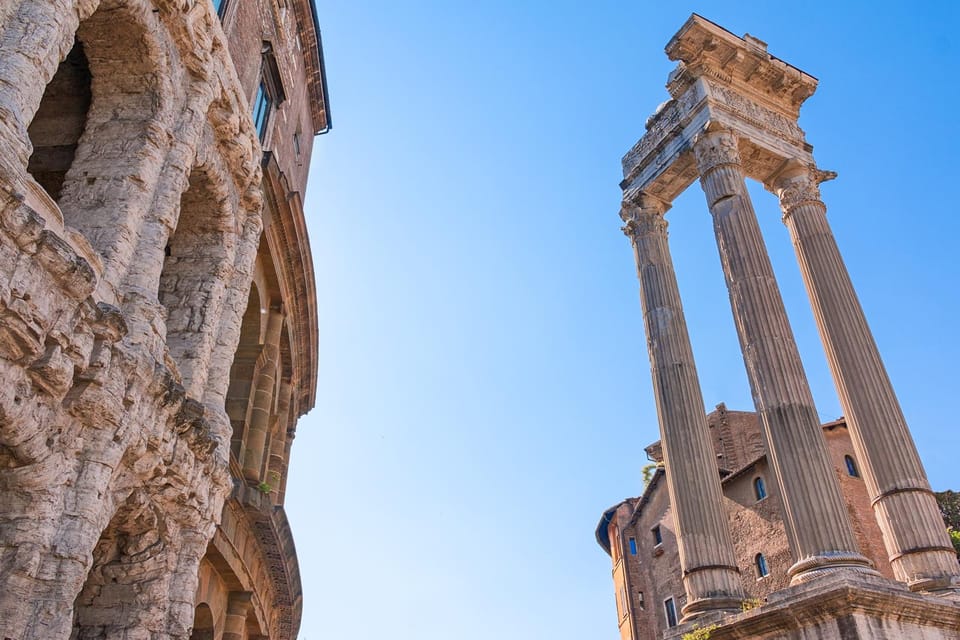
From Capitoline Hill you shift into cultural and religious space. You’ll visit the Theatre of Marcellus, one of Rome’s impressive ancient theatres where performances once drew crowds.
You don’t just hear what the theatre was for. You also learn how it fit into Roman life—public entertainment as a social glue. The guide’s pacing makes these stops feel like chapters, not disconnected points on a walk.
The route also includes some well-preserved temple remains (the exact focus varies by the guide’s storytelling and the stop layout). Either way, the tone stays consistent: architecture as lived belief and civic identity.
Forum Boarium: markets, ritual, and daily movement
Next is Forum Boarium, a place that connects Rome’s grand stories to practical routines. The forum area is known for daily commerce and movement, and your guide ties the physical remains to what people did there.
This is a good stop if you want the tour to feel grounded. The theatre gives you spectacle; the forum gives you the rhythm of everyday city life.
And because this area is less packed than the biggest “must-see” circuit, you get room to listen. It’s not silent—Rome never is—but you can actually follow along.
Mouth of Truth: myth you can experience in real time
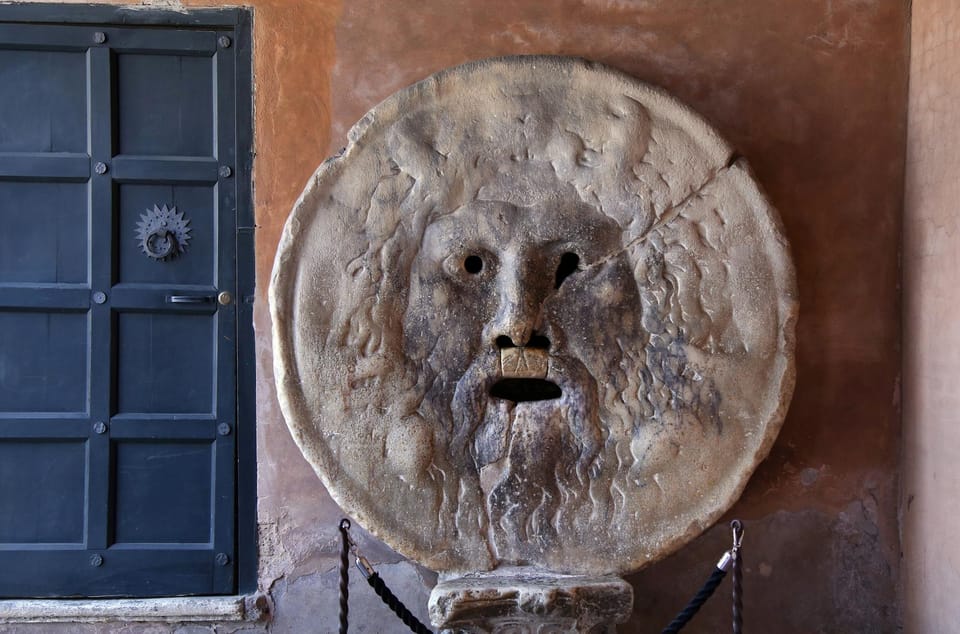
No Rome list is complete without Bocca della Verità, the Mouth of Truth. Here, you’ll learn the stone mask’s enduring legend—rumoured to bite off the hands of people who lie.
Is it historically documented the way modern people wish legends were? That’s not really the point on this tour. The point is that you’re seeing a famous story grounded in a real physical object, with a guide who helps you understand why myths like this survive in Rome’s public spaces.
This is also one of the most fun moments on the route because it turns listening into participation. You’ll get a short moment of play right in the middle of an otherwise thoughtful walk.
Old sewers, an ancient archway, and Roman engineering that still works
A standout segment comes from the tour’s attention to infrastructure. You’ll encounter a unique archway and outdoor remains tied to the world’s oldest sewers—a powerful reminder that Rome didn’t just build monuments. It built systems.
This is where the tour earns its value if you like engineering or you’re the kind of person who thinks architecture is cool when it solves real problems. Roman sewer infrastructure wasn’t only about cleanliness. It was about making a city function.
The guide ties this to the bigger theme of the walk: Rome’s “hidden side” isn’t only hidden in location. It’s hidden in what many visitors overlook—daily logistics, not just daily spectacle.
Palatine Hill and the Circus Maximus scale check
As you reach Palatine Hill, the tour connects the area to the birthplace of Rome itself, or at least to the legends and meaning people attached to Rome’s origins. Even if you’re not an expert in Roman myth, the guide makes the connections clear enough that you feel why locals cared.
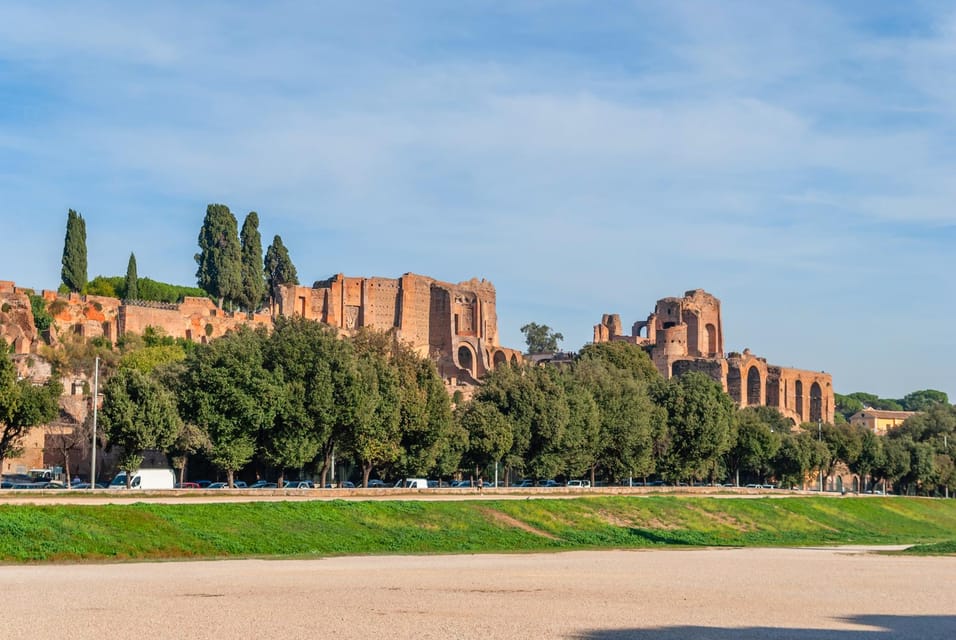
Then you finish with Circus Maximus, the sprawling remains of what was once the largest stadium ever built. The guide paints the scale with chariot-race energy—so standing there doesn’t feel like just looking at grass and stone.
The final effect is a strong “big-to-bigger” arc. You start with temples and political drama. You move through living spaces and public entertainment. You end in a place built for mass gatherings and high-volume excitement. In about 2 to 2.5 hours, the tour gives you range.
Weather, shoes, and simple tips that matter
This tour runs rain or shine, so don’t count on perfect weather. Bring a light rain layer even if the forecast looks calm. The guide and route are designed to keep moving, but your comfort is still your job.
In summer, it can get warm. The tour suggests bringing water, and it’s good news that fountains are available for refills. I’d rather you carry a bottle and not rely on luck.
And yes—comfortable shoes are essential. You’re walking between ancient sites in central Rome, and cobblestones and uneven ground are part of the package.
If you’re taking photos, bring your camera (or phone with a charged battery). Even on cloudy days, Rome’s textures read well: stone, brick, patchwork ruins, and the contrast of ancient forms against modern streets.
Optional break: food and drinks you can plan around
Food and drinks aren’t included. The tour notes an optional break stop is offered. That’s practical because you can decide based on your energy level and the weather.
If you need a caffeine hit before the last stretch, this is your chance to grab something close to the route. If you don’t want to pause, you can simply keep going with the group.
What type of traveler should book this
This tour is a great fit if you:
- Want less-crowded Ancient Rome without giving up iconic stories
- Like the “how did people live?” angle as much as the “who ruled?” stories
- Have limited time and want a guided route that covers multiple key themes in one walk
- Prefer small groups over big tour buses
It might be less ideal if you:
- Only care about the Colosseum/Forum complex and don’t want a different focus
- Need hotel pickup or a fully seated experience (this is a walking tour)
- Have limited mobility and need long flat stretches without uneven ground, even though the tour is listed as wheelchair accessible
Should you book the Rome: Lesser Known Ancient Rome Walking Tour?
If you want Rome’s ancient side without spending your whole day fighting crowds, I think this one deserves a serious spot on your itinerary. For $28 and 2 to 2.5 hours, you get a guided walkthrough of major-but-not-overdone sites, plus the kind of context that makes ruins feel like places where humans once did real things.
The small-group size and expert historian guide really matter here. The tour has a reputation for strong storytelling, and Ben’s knowledge is specifically called out in feedback as both accurate and fun to follow—even when the weather turns ugly.
If your goal is to collect only the biggest headlines, you might skip it. But if you want Rome to feel like a living city layered over time, this walk is an efficient and enjoyable way to get there.
FAQ
How long is the Rome Lesser Known Ancient Rome Walking Tour?
It lasts about 2 to 2.5 hours.
What does the tour cost?
The price is $28 per person.
Where does the tour start?
You can choose between Largo di Torre Argentina and Piazza Venezia, depending on the option booked.
How big are the groups?
The standard group tour has a maximum of 15 people. A private tour option is available for up to 25 people.
Is the tour guided in English?
Yes, it’s a live tour guide in English.
Does the tour run in bad weather?
Yes, it runs rain or shine.
Is the tour wheelchair accessible?
It is listed as wheelchair accessible.
What should I bring?
Bring comfortable shoes, a camera, sunscreen, and water.
Is food included?
Food and drinks are not included, though an optional break stop may be offered.
Can I cancel and get a refund?
Yes. Free cancellation is available up to 24 hours in advance for a full refund.