REVIEW · ROME
Rome Tour with Drive Guide
Book on Viator →Operated by Carratonitours · Bookable on Viator
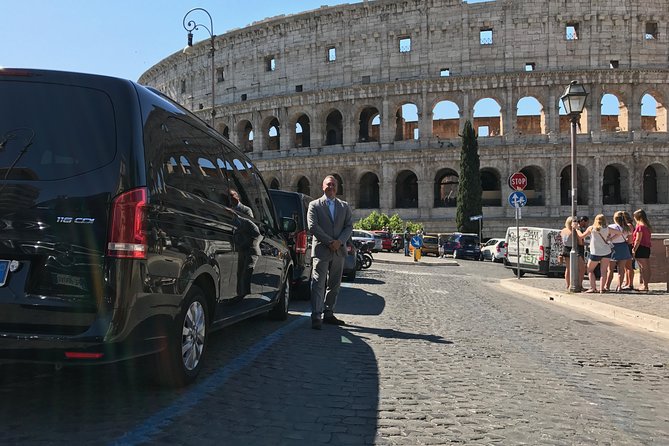
Rome is a city you feel in motion. This tour gets you there the easy way. You’ll hop from one iconic stop to the next in an air-conditioned minivan, with a licensed drive guide who can explain what you’re seeing and answer questions as you go. I especially like the door-to-door comfort idea from the port side, and the fact that the listed highlights are packed into one efficient day. One thing to consider: this is a fast day of seeing a lot, so you’ll need comfortable shoes and you won’t have time to linger like you might on a slower, walking-only route.
The pacing works because you’re not fighting buses, transfers, and timing headaches. Instead, you’ll get round-trip transport from Civitavecchia and a private setup where only your group participates. That means fewer delays from mixing into other groups and less standing around while everyone figures out where to go.
Before you book, check the dress code for churches and selected museums. Knees and shoulders must be covered for men and women, and you could be refused entry if you show up in shorts or sleeveless tops.
In This Review
- Key highlights to know before you go
- Price and logistics: what you’re really paying for
- The drive-guide advantage in Rome (and why it matters)
- How the 8-hour route flows from ancient Rome to Vatican views
- Stop 1: Circus Maximus for Rome’s chariot-racing roots
- Stop 2: Vittoriano (Altare della Patria) and the unified Italy story
- Stop 3: Foro di Traiano and the emperor’s built-in statement
- Stop 4: Trevi Fountain for the grandest kind of photo moment
- Stop 5: Piazza di Spagna and the Spanish Steps atmosphere
- Stop 6: Piazza Navona for a stadium-shaped plaza
- Stop 7: Pantheon for one of the best-preserved Roman buildings
- Stop 8: St. Peter’s Square and the Vatican’s major open-air moment
- What’s included (and what you’ll need to plan yourself)
- Who this tour suits best
- Practical tips to make the day smoother
- Should you book Rome with a drive guide from Civitavecchia?
- FAQ
- Is the tour in English?
- What is the duration of the tour?
- Does the tour include pickup?
- Will I travel in an air-conditioned vehicle?
- Is this a private tour?
- Are there tickets or entry fees included?
- Is lunch included?
- Do I need to follow a dress code?
- Is a mobile ticket included?
- What is the cancellation policy?
Key highlights to know before you go
- AC minivan transport keeps the day comfortable, especially on hot afternoons
- Pickup from the port in Civitavecchia reduces stress on departure day
- Private group experience means less waiting and more flexibility with your guide
- Drive guide with cultural notes helps you understand what you’re looking at in real time
- Free-entry stops on the route keep costs from piling up
- A tight itinerary gets you the big sights of Rome without public-transport friction
Price and logistics: what you’re really paying for
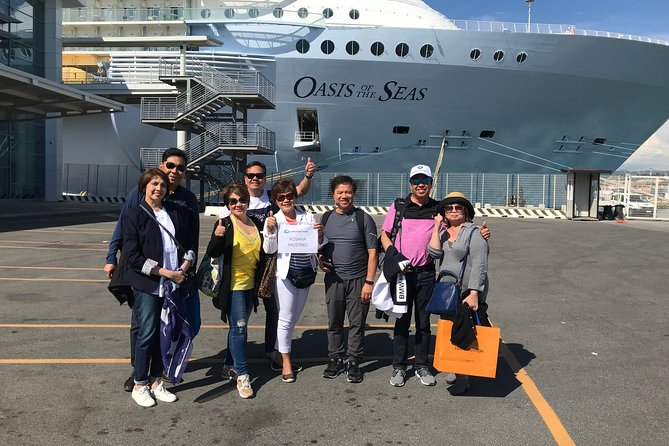
At $473.17 per person for about 8 hours, you’re not just buying entry tickets. You’re buying time, comfort, and a licensed driver who can give historical and cultural context while you’re moving through Rome.
For many people, the value here is the combination:
- Round-trip transport from the port area (Civitavecchia)
- Air-conditioned minivan (big deal in summer heat)
- Private tour format, meaning your group stays together
- Free admission at the listed stops, so you’re not adding ticket costs mid-day
If you’re used to navigating buses and hoping you guessed the right stop, this is the simpler path. If you love long, slow wandering and want to spend an hour photographing one building, you might find this day too structured. But if you’re trying to get the core Rome hits into a single day with minimal hassle, it can be a strong fit.
You can also read our reviews of more guided tours in Rome



The drive-guide advantage in Rome (and why it matters)
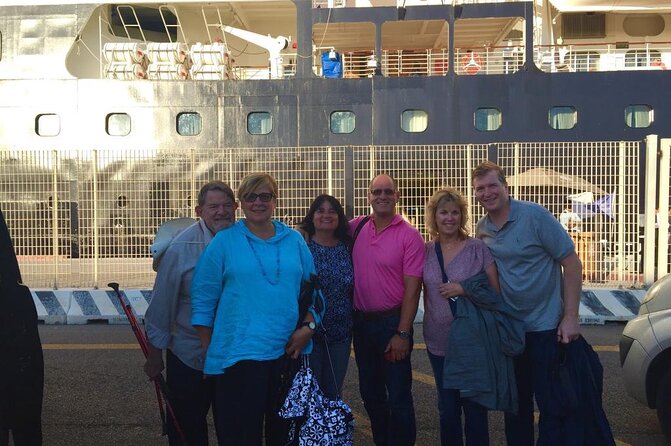
Rome’s big sights are spread out, and the city can be chaotic if you’re trying to coordinate it yourself. This experience leans into the practical side of sightseeing: you’re transported in comfort, and your licensed guide gives explanations as you visit.
The operator notes their drivers have authorization to provide historical and cultural notions of the Eternal City and can listen, explain, and answer questions. That matters because a lot of Rome’s best moments aren’t just the view, they’re the story behind the stones.
You’ll also notice this kind of guide-style changes how you experience the day. In the past, drivers like Michelangelo and Mauricio were praised for being personable, making the ride feel fun, and helping with on-the-ground choices like where to eat. That’s not guaranteed in the same exact way for every group, but it does line up with what the experience promises: a human guide, not just a drop-off.
How the 8-hour route flows from ancient Rome to Vatican views
Expect a “see it, know it, move on” rhythm. Each stop is short—typically 20 to 30 minutes—with the main time used for quick orientation, key photos, and a focused look at what makes each site important.
Here’s how the day is structured and what to watch for at every stop.
Stop 1: Circus Maximus for Rome’s chariot-racing roots
You’ll start at Circo Massimo, the Circus Maximus—Rome’s famous chariot racetrack. Construction began in the 6th century BCE, and the site wasn’t only for races. It hosted other major public events, including the Roman Games and gladiator fights, and it was last used for chariot races in the 6th century CE.
Why this stop is worth your time:
- It’s a powerful reminder that Rome wasn’t just monuments. It was also entertainment on a massive scale.
- Even without a ton of standing ruins, the site helps you picture how crowds once gathered here.
Time on site is about 20 minutes, and since the area can look more like open space than a classic “ruins postcard,” go in with one goal: locate the general racing oval shape in your mind. Your guide’s context helps a lot here.
Stop 2: Vittoriano (Altare della Patria) and the unified Italy story
Next up is the Complesso del Vittoriano, officially the Monument to Vittorio Emanuele II, also called Altare della Patria, in Piazza Venezia. This monument was built between 1895 and 1927 to honor Victor Emmanuel II, the first king of a unified Italy.
This stop works best if you’re ready for Rome in a different time period. You’ll get a closer look at how Rome celebrates national identity in the modern era, not just ancient power.
The listed time is 30 minutes, and since the location is in a major piazza, you’ll likely do quick sightlines and photos more than extended wandering.
One consideration: monuments like this can feel visually “busy” because there’s a lot going on around them. Give it a focused look, then enjoy the transition to the next ancient stop.




Stop 3: Foro di Traiano and the emperor’s built-in statement
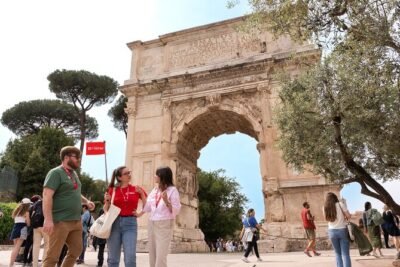
Your third stop is Foro di Traiano (the Forum of Trajan). This forum was built on Trajan’s orders using the spoils of war from the conquest of Dacia, which ended in 106. It’s tied to a timeline that includes inauguration around 112 and the later erection and inauguration of Trajan’s Column around 113.
Even in a short visit, the value is understanding what a Roman forum actually was: political theater. This wasn’t just a marketplace. It was a stage for power, monuments, and imperial messaging.
You’ll have about 30 minutes. If you’re the kind of visitor who likes to spot symbols and architectural intent, this stop can be especially satisfying—because Rome’s “message” is baked into the layout and the scale.
Stop 4: Trevi Fountain for the grandest kind of photo moment
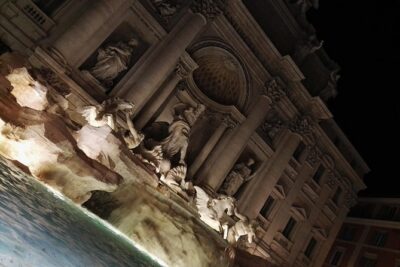
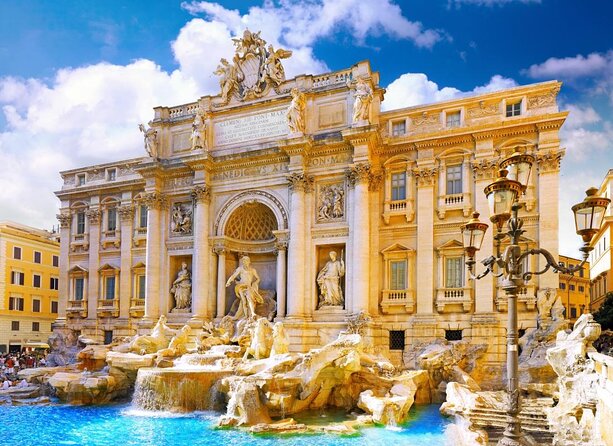
Then you head to Fontana di Trevi, the Trevi Fountain—one of the most famous fountains in the world. It was designed by Nicola Salvi and completed by Giuseppe Pannini and others. Standing 26.3 meters tall and 49.15 meters wide, it’s the largest Baroque fountain in Rome.
You get about 30 minutes here, and that’s a realistic amount of time for Trevi because:
- The fountain is the main event, so you don’t need to spend hours navigating.
- You’ll likely want a few angles and time to step back for the bigger view.
One practical note: since this is one of the most photographed spots in Rome, plan your expectations. You’re going for the moment itself and the scale—then move on with the day’s momentum.
Stop 5: Piazza di Spagna and the Spanish Steps atmosphere
Next is Piazza di Spagna, at the bottom of the Spanish Steps. The square takes its name from the Palazzo di Spagna, the seat of the Spanish embassy to the Holy See. Nearby is the Column of the Immaculate Conception of the Blessed Virgin Maria.
Time here is 25 minutes. This stop is less about one single structure and more about getting your bearings in a classic Rome area. You’ll likely do:
- quick orientation photos
- a short look around the square’s geometry
- a moment to understand why this area became a symbolic meeting point
If you love people-watching, this is one of the best “energy” stops on the list.
Stop 6: Piazza Navona for a stadium-shaped plaza
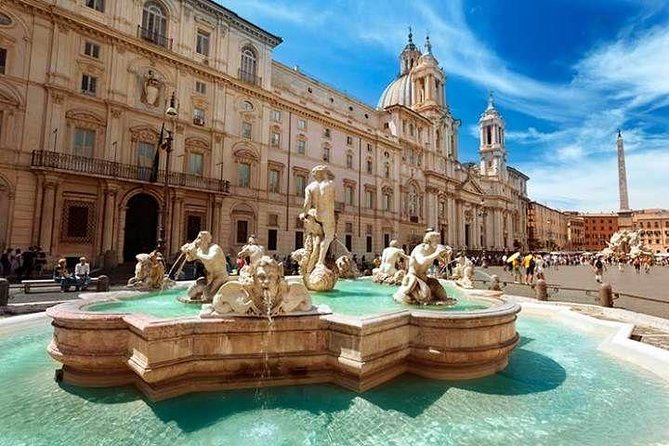
Then you go to Piazza Navona, built on the site of the Stadium of Domitian from the 1st century AD. The plaza follows the open-space form of that stadium. The area was once known as Circus Agonalis, a place for the agones—games—and the name evolved over time into Navona.
This is one of those Rome experiences where the setting does half the teaching. In a short 20-minute visit, you’ll see how ancient design becomes modern life. The plaza feels like a square, but it’s literally sitting on a different kind of space.
To make the most of the time: don’t rush only for photos. Look at the shape of the plaza and imagine how spectators would have watched events here.
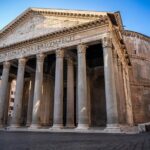
Stop 7: Pantheon for one of the best-preserved Roman buildings
Next is the Pantheon, meaning Temple of all the gods. It began as a temple to Roman deities and was rebuilt about 126 AD during Hadrian’s reign. Today, it’s considered the best preserved of Roman buildings.
You’ll have 20 minutes. For the Pantheon, that’s actually enough time if you’re intentional:
- spend a moment taking in the structure from the entrance area
- notice the overall scale and interior feel
- if you can, pause long enough to let it sink in rather than taking one quick shot and sprinting away
This is the stop I’d prioritize mentally in your day. It’s a strong “Rome at its best” moment, and a good drive guide can point out what to notice so your visit feels more than a quick checkmark.
Stop 8: St. Peter’s Square and the Vatican’s major open-air moment
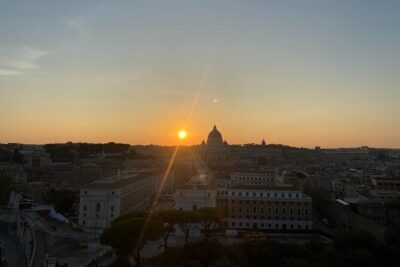
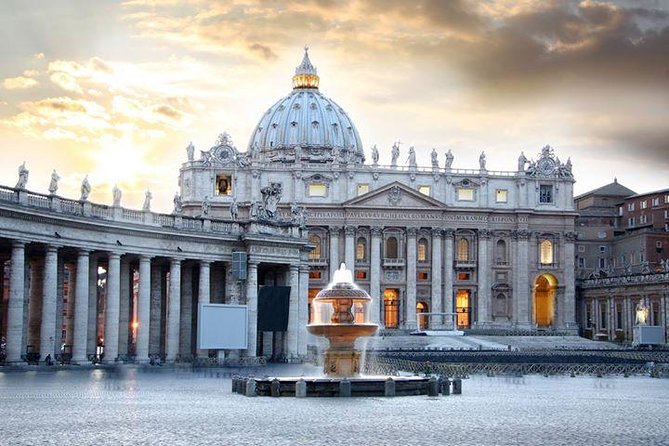
Your final stop is St. Peter’s Square, the public heart of Vatican City. Saint Peter’s Basilica is described as the world’s largest church and the center of Christianity. The basilica was built over more than one hundred years by major Italian architects.
This stop is scheduled for 30 minutes. Expect wide-open views, big geometry, and an atmosphere that feels different from the Roman city streets.
If you’re going to photograph, do it with a plan. One wide shot, then a few angles that capture the square’s scale from different positions. With only half an hour, you’ll be glad you didn’t get stuck in the first crowd you saw.
What’s included (and what you’ll need to plan yourself)
The included items are straightforward:
- Transport by air-conditioned minivan
- All taxes, fees and handling charges
- Mobile ticket
- Pickup offered (including port pickup in Civitavecchia)
Not included:
- Drinks and alcoholic drinks (available to purchase)
- Food (no lunch is included)
That means you should plan a lunch strategy before you’re hungry and stuck deciding in the moment. In past experiences with the same kind of guide, drivers like Mauricio have been noted for recommending lunch and even having seating reserved at a good spot. You can’t count on every detail being identical, but the driver guidance angle is real.
Who this tour suits best
This is a good match if you:
- want to see major Rome sights without dealing with public transport
- prefer the comfort of an AC minivan
- like getting short, focused visits rather than half-day wandering
- are traveling from a cruise and need an efficient day plan
It may feel less ideal if you:
- want long museum time or extended church visits
- dislike structured itineraries
- need lots of downtime between stops
Practical tips to make the day smoother
A few small choices can make this kind of packed route feel easy instead of stressful.
- Wear shoes you can walk in for repeated short bursts.
- Bring something to cover shoulders and knees when required for places of worship and selected museums.
- If you’re sensitive to crowds, keep your expectations for Trevi Fountain and the Vatican area realistic, and focus on scale and views rather than trying to get solitude.
- Hydrate. The tour includes transport comfort, but it doesn’t include drinks.
Should you book Rome with a drive guide from Civitavecchia?
I’d book this if your goal is clear: see the headline Rome sites in one day with minimal friction and a licensed drive guide who can explain what you’re seeing. The value comes from the full-day transport plan, the AC comfort, and the fact that the scheduled highlights are free-entry stops.
Skip it if you want a slow, deep Rome day or if you don’t handle short time windows well. With a route like this, you’ll do best when you’re ready to move, look, and learn fast.
If you’re on a cruise, this kind of port-to-city-to-port plan is often the difference between a fun shore day and a stressful one. And if you can follow the dress code and bring comfortable shoes, you’ll be set up for a genuinely rewarding day across Rome’s major eras—from Circus Maximus to the Pantheon and finally St. Peter’s Square.
FAQ
Is the tour in English?
Yes, the tour is offered in English.
What is the duration of the tour?
The experience runs for about 8 hours.
Does the tour include pickup?
Pickup is offered, including transportation tied to your starting point around Civitavecchia.
Will I travel in an air-conditioned vehicle?
Yes. The tour includes transport by air-conditioned minivan.
Is this a private tour?
Yes. This is a private tour/activity, and only your group participates.
Are there tickets or entry fees included?
The tour lists the stops with free admission tickets, and it includes all taxes, fees, and handling charges.
Is lunch included?
No. Food and drinks (including lunch) are not included.
Do I need to follow a dress code?
Yes. A dress code is required for places of worship and selected museums: no shorts or sleeveless tops, and knees and shoulders must be covered.
Is a mobile ticket included?
Yes. A mobile ticket is included.
What is the cancellation policy?
You can cancel for a full refund up to 24 hours in advance of the start time.