REVIEW · ROME
Appian Way Aqueducts Bike Tour (Catacombs & Lunch Option)
Book on Viator →Operated by Roma STARBIKE · Bookable on Viator
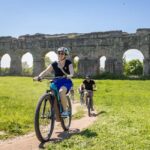
Trade traffic for ancient roads and aqueducts. This Appian Way aqueducts e-bike tour lets you see Via Appia Antica from the seat of an electric bike, then unwind in major green spaces outside the historic center. I like that it combines big sights with breathing room, and the Parco degli Acquedotti route really feels like a different Rome than the usual streets.
Here’s the one drawback to plan for: you have to ride a bike well, and parts of the route include cobblestones and dirt paths. If you’re rusty, the first few minutes in city traffic can feel a bit tense even with the guide managing the group.
In This Review
- Key things I’d remember before booking
- Why the Appian Way feels different from central Rome
- Price and what your money actually buys
- Meeting at Roma STARBIKE: helmets, bikes, and quick route prep
- Porta San Sebastiano: the city wall gateway that sets the tone
- Catacombs of San Callisto (5-hour version): the macabre detour
- Pedaling the Via Appia Antica: Regina Viarum in motion
- Parco della Caffarella: green breaks between big monuments
- Ninfeo di Egeria: a small stop with story power
- Mausoleo di Cecilia Metella and Castrum Caetani: tomb, house, and church remnants
- Parco degli Acquedotti: aqueduct ruins, lunch, and water still in the story
- Circus of Maxentius and Baths of Caracalla: ending with two major ruins
- How hard is it, really? The mixed surfaces matter
- The guides are the difference-maker: who you might ride with
- Tips to make your ride smoother (and more enjoyable)
- Who should book this e-bike tour?
- Should you book this Appian Way Aqueducts Bike Tour?
- FAQ
- What is the meeting point for the tour?
- How long is the Appian Way Aqueducts bike tour?
- What’s the difference between the 4-hour and 5-hour versions?
- Are helmets included?
- Can children ride on this tour?
- Do I need to be an experienced cyclist?
- Is the tour affected by weather?
Key things I’d remember before booking
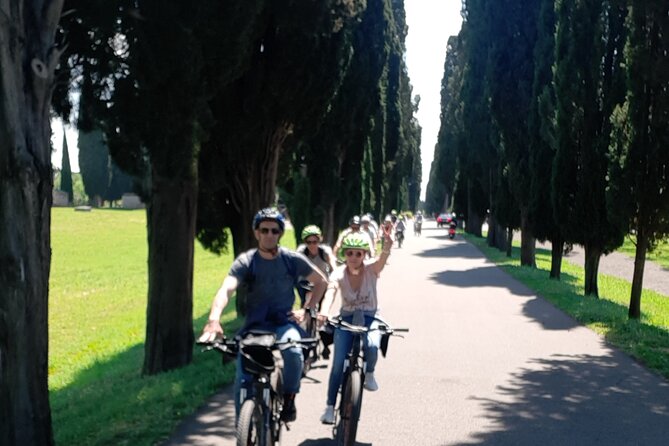
- Small-group pace (max 12) means you get real guidance, not a stampede.
- E-bikes with built-in assistance keep the hills and longer ride from feeling like punishment.
- Appian Way highlights without the tourist crush: aqueduct ruins, villas, mausoleums, and park paths.
- 5-hour option adds Catacombs of San Callisto plus lunch and an afternoon aperitif.
- Helmets and phone/handlebar holders reduce the logistics stress.
- Terrain is mixed (pavement, cobbles, dirt), so comfort on a bike matters.
Why the Appian Way feels different from central Rome
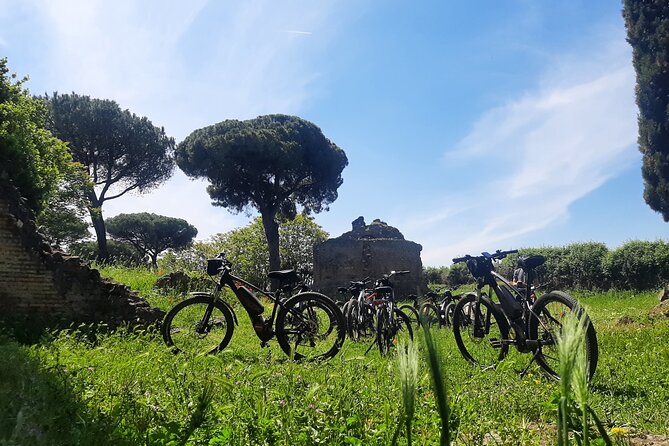
Rome has a way of stacking crowds on top of crowds. This tour breaks that pattern fast. You start near the Colosseum area, then head out toward the ancient walls and into the Appian Way region, where the air feels less boxed in and the route opens up.
The big win is how the sites connect. You’re not hopping bus-to-bus between “must-sees.” You pedal through the landscape where Rome built its systems: roads for troops, water for cities, and monumental tombs for elite families. It’s a hands-on way to understand how the city worked.
You can also read our reviews of more cycling tours in Rome
Price and what your money actually buys
At $78.60 per person for roughly 4 to 5 hours, this isn’t a budget “tour bus with stops” deal. But you do get a lot packed into the fee.
What’s included:
- A high-quality e-bike (plus helmet, phone/handlebar holders)
- Child seat up to 25 kg (with extra height rules for kids who ride in a trailer setup)
- The guided experience portion (including the main route and planned stops)
- In the 5-hour version only: a guided visit to the Catacombs of San Callisto, plus a lunch stop and an afternoon aperitif
So the value depends on which version you pick. If you want catacombs and food built in, the 5-hour option is the clear bargain. If you’d rather keep it lighter and skip the crypt, the 4-hour ride still gives you aqueduct parks and major Appian Way monuments.
Also, the tour is explicitly small-group (maximum 12). For this kind of route—traffic early on, mixed surfaces later—that matters more than you’d think. It makes it easier for the guide to keep everyone together and safe.
Meeting at Roma STARBIKE: helmets, bikes, and quick route prep
You meet at Roma STARBIKE – Rome eBike Tours & Experiences, Via dei SS. Quattro, 58, 00184. The meeting point is set up for easy access, and the tour ends back at the same location.
Once you arrive, you strap on your helmet and get fitted for your e-bike. You’ll also want to take a minute to learn the bike controls before rolling out, especially if you’re new to e-bikes. In the reviews, a common theme is that the ride is manageable once you get over that first learning moment.
One practical note: the tour requires that you know how to ride a bike well. That doesn’t mean you need to be an athlete. It does mean you should be comfortable balancing, braking, and steering without panicking.
Porta San Sebastiano: the city wall gateway that sets the tone
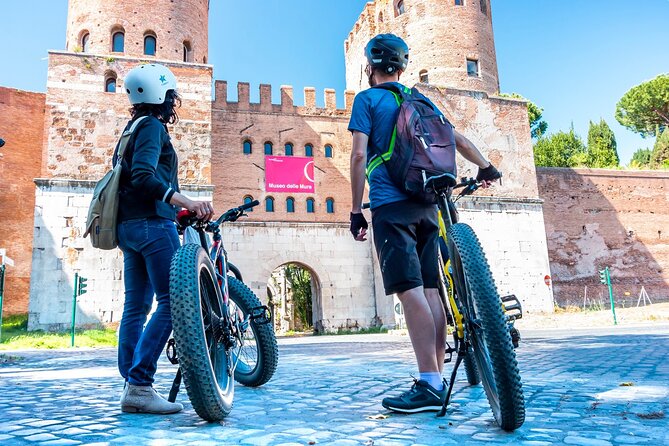
Your ride begins at Porta San Sebastiano, a dramatic southern gateway tied to the Aurelian Walls (built around 275 AD). This stop also marks the beginning of Via Appia Antica, so it’s a perfect “switch from modern Rome to ancient Rome” moment.
What I like about starting here is the perspective shift. You see the kind of stonework that made Rome defend itself, and then you transition toward the road that later became the main artery for movement south. Plus, you’ll notice medieval graffiti—proof that pilgrims and everyday people have been passing through this area for centuries.
Admission here is listed as free, so you’re not burning time or money just to get oriented. The guide uses this early stretch to set safety rules and keep the group moving smoothly.
Catacombs of San Callisto (5-hour version): the macabre detour
If you book the 5-hour tour, you’ll add Catacombe di San Callisto (Catacombs of St. Callixtus), one of Rome’s biggest underground funerary complexes. This is the kind of stop that turns the day from “scenic history ride” into “scenic history ride with a haunting edge.”
This stop is timed at about 50 minutes, and the tour includes a guided visit. The catacombs are described as a large underground cemetery network with corridors that stretch roughly 20 km, including burials of many martyrs and popes. Whether you’re into early Christian history or you just like eerie places, this is the add-on that most people remember.
One balancing factor: if you prefer more fresh air and fewer enclosed spaces, you might be happier with the 4-hour version. The data is clear that catacombs are included only in the longer itinerary.
You can also read our reviews of more tours and experiences in Rome


Pedaling the Via Appia Antica: Regina Viarum in motion
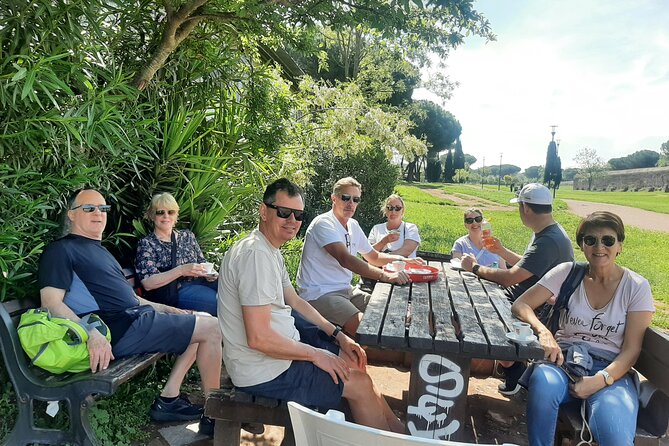
The heart of the experience is the Via Appia Antica, which the Romans called Regina Viarum—queen of roads. You’ll ride along an ancient stretch that connects to centuries of Roman expansion, troop movement, and engineering.
The route’s significance is hard to grasp from photos alone. On the bike, you can feel the road’s direction and the way it slices through the area. You also get repeated sightlines to ruins and stone structures that would otherwise be missed when you’re walking quickly or stuck in traffic.
You’ll have a set stop time here (around 50 minutes). In practice, that means you get enough time to absorb the setting, take photos, and still keep the day moving. This is not a “stand in one place and listen for an hour” stop.
Admission is free for this stop, which helps keep the pacing from turning into an endless ticket line situation.
Parco della Caffarella: green breaks between big monuments
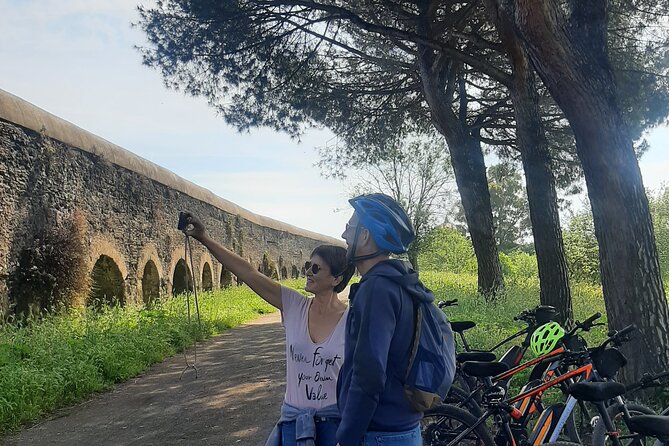
After riding the ancient road, you transition into Parco della Caffarella, a major green space within the larger Appia Antica Regional Park. This is one of the most restorative parts of the itinerary because it mixes nature with archaeological remains.
You’re given about 50 minutes here. That’s long enough to slow down, take a breather, and notice how the ruins sit inside a working countryside landscape instead of feeling like museum objects.
If you’re someone who gets overwhelmed by Rome’s intensity, these park segments are the pressure release valve. They also make the e-bike feel extra smart: you’re not working hard uphill just to see another crowded plaza.
Ninfeo di Egeria: a small stop with story power
Next up is the Ninfeo di Egeria, a sacred spot tied to the legend of Egeria, the nymph associated with King Numa Pompilius. You’ll be there for a shorter stop (about 20 minutes).
Even if you don’t know the story beforehand, it adds texture to the day. Rome isn’t only stone buildings and emperors. It’s also myth, water, and places where people explained life through symbols and springs.
It’s also an easy moment to stretch your legs while the group regroups. On a ride like this, those small pauses matter as much as the major monuments.
Mausoleo di Cecilia Metella and Castrum Caetani: tomb, house, and church remnants
You then reach Mausoleo di Cecilia Metella e Castrum Caetani, linked to the Via Appia Antica’s monumental tomb tradition. This mausoleum is tied to Cecilia Metella, dating to the 1st century BC, and it’s described as one of the best-preserved on the route.
At about 20 minutes, this is a compact stop, but it packs in layers:
- A pagan tomb (the original landmark)
- The incorporation into Castrum Caetani
- Remains connected to the medieval house of the Caetani family
- Perimeter walls remaining from the church of San Nicola
This stop works well because it shows how the same place can keep getting reused. Rome has a long habit of turning old structures into new meanings. You feel that continuity here.
Parco degli Acquedotti: aqueduct ruins, lunch, and water still in the story
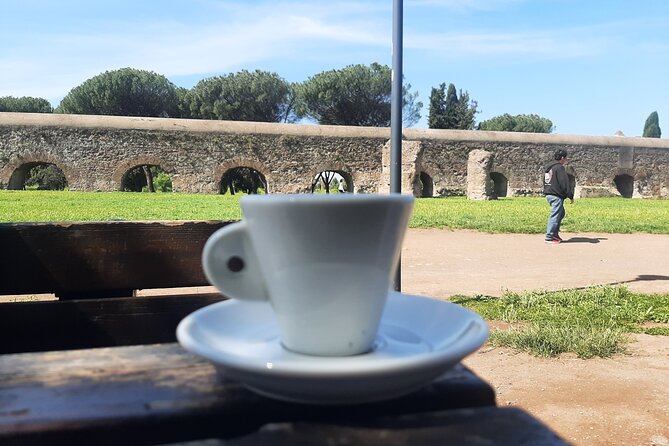
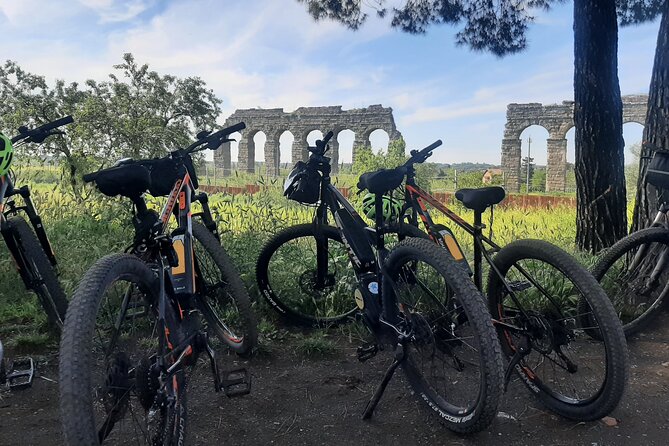
If you pick the 5-hour tour, you’ll stop for lunch in the Parco degli Acquedotti area, under the shadow of the Claudio aqueduct. You’ll taste Italian specialties at a planned restaurant stop, and you’re also told there’s an afternoon aperitif afterward.
Even in the ride-only version, you still visit the aqueduct park area, including a return along the immense green corridor crossed by Rome’s water network. This is where the engineering details become real. You see remains of aqueducts in places that are described as well preserved, and there’s also mention that some water works still operate.
That detail is important. It keeps the day from turning into a pure “look at old stones” exercise. You’re watching how Roman systems helped shape a city that still matters.
In terms of pacing, the itinerary gives you short, well-timed segments here, including about 20 minutes to resume biking and keep the story moving.
Circus of Maxentius and Baths of Caracalla: ending with two major ruins
As you ride back toward the city, you hit two big ancient anchors.
First is the Circus of Maxentius, described as the best surviving example of a Roman circus. It sits on the Via Appia Antica. You can see the spina, and the itinerary notes that the Agonale obelisk was moved during the Renaissance to the Fountain of the Four Rivers in Piazza Navona. That cross-link is a good mental trick: it helps you see how Rome recycles its artifacts across time.
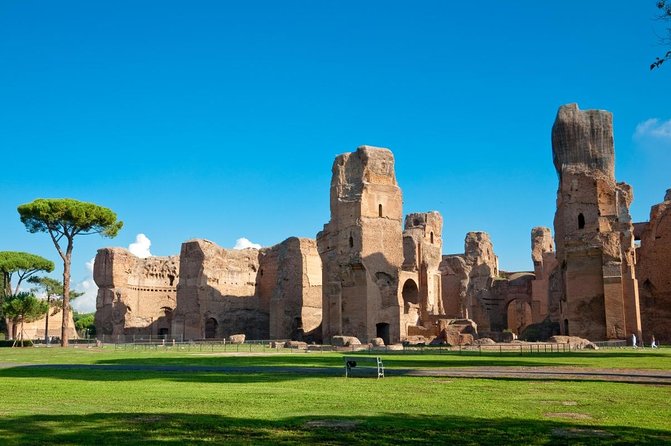
Then comes Terme di Caracalla (Baths of Caracalla). These were built by Emperor Caracalla and were for about a century among the largest public baths ever built. Most of the structure remains, which is a rare case where you can still picture daily life at scale.
Water delivery is part of the story too. The route notes that a branch of the Aqua Marcia brought water to the baths via the Antoninian aqueduct. Even if you’re not chasing engineering facts, it helps explain why those baths were positioned where they were.
You end back at the meeting point to drop off the e-bike and helmet.
How hard is it, really? The mixed surfaces matter
The reviews and the tour details both point to the same reality: this is not a flat, stroll-in-the-park bike ride.
Yes, the e-bike helps a lot. It’s designed to take the edge off hills so you can enjoy the route instead of grinding your legs. But you still cover several hours on a bike, and you still have to steer and brake on Rome-style surfaces.
You should be ready for:
- City streets at the start while you settle in and learn the group rhythm
- Cobblestones with uneven texture
- Dirt or rougher segments in parts of the route (even if the guide manages the safest lines available)
In the reviews, one person described the Appian stones as big and deeply grooved, and another pointed out that it can feel rugged. That matches the tour description’s mix of pavement and off-road feel.
So if your biking experience is limited, treat this tour as a “get through it with patience” day, not a casual ride. Also, if you know you get sore easily, consider bringing padded shorts or wearing biking-friendly clothing.
The guides are the difference-maker: who you might ride with
A big part of the appeal here is how the guides manage safety and story. Different guides show up in the reviews—Lorenzo, Alex, Ava, Chris, Iman, Ricardo, and Paolo—and the common threads are clear: they explain what’s coming next, keep the group comfortable, and handle traffic so riders don’t feel abandoned.
In particular, I like the feedback about photo time and frequent check-ins. On a tour like this, you want stops that feel like breathing pauses, not interruptions.
If you’re the type who likes to ask questions, these guides seem comfortable answering them without rushing people along.
Tips to make your ride smoother (and more enjoyable)
Here are a few practical moves that fit the itinerary and the typical rider experience.
- Practice braking and steering before you leave the shop. The e-bike is easy to ride, but you’ll feel better once you know exactly how it responds.
- Bring water and small snacks even if a lunch stop exists in the 5-hour version. The ride includes long stretches where you’re not eating until later.
- Wear comfort over style. Several reviews mention discomfort from bike seats. Shorts that reduce friction help.
- Plan for a sore backside. Even with help from the e-bike, you’re still sitting and moving for hours.
- If you feel anxious at the start, tell yourself it’s temporary. The first tricky moments are mostly about merging and getting used to the group pace.
Who should book this e-bike tour?
This tour is a great match if you want Rome beyond the classic crowd zones. It’s especially strong for people who like a mix of:
- Major ancient sites (aqueduct area, catacombs in the longer version, Baths of Caracalla)
- Real outdoors time in large parks
- A small-group experience where a guide can manage both the route and your energy level
It’s also a good family option if kids can ride and you’re comfortable with a longer day on mixed surfaces. The tour includes child seating up to 25 kg, and there’s a specific rule about kids 6–10 needing to be under 4/7 feet (143 cm) because they use a trailer setup.
Should you book this Appian Way Aqueducts Bike Tour?
If you’re choosing between a standard walking tour and something more active, I’d lean this way. The day’s structure makes sense: start with a city gateway, head into Appian Way history, add catacombs if you want extra intensity, then finish with two of Rome’s most impressive ruins. The e-bike makes it doable for more people than traditional cycling.
But don’t book it thinking it’s effortless. This is still real biking for several hours on surfaces that won’t feel like a smooth bike path. If you ride confidently and you’re okay with a tougher-than-expected road surface day, it’s a high-value way to see a part of Rome that many people skip.
FAQ
What is the meeting point for the tour?
You meet at Roma STARBIKE – Rome eBike Tours & Experiences, Via dei SS. Quattro, 58, 00184 Roma RM, Italy, and the tour ends back at the same location.
How long is the Appian Way Aqueducts bike tour?
The tour runs about 4 to 5 hours, depending on whether you choose the shorter or longer option that includes the Catacombs and lunch/aperitif.
What’s the difference between the 4-hour and 5-hour versions?
The 5-hour tour includes a guided visit to the Catacombs of San Callisto and also includes lunch plus an afternoon aperitif. The 4-hour version does not include the catacombs or the lunch/aperitif.
Are helmets included?
Yes. Helmets are included, along with phone and handlebar holders to make using your device easier during the ride.
Can children ride on this tour?
The tour includes a child seat up to 25 kg. There is also a child size rule: the reduction for children age 6–10 applies only if they are less than 4/7 feet (143 cm), because they use a trailer bike setup rather than riding alone.
Do I need to be an experienced cyclist?
The tour requires that you know how to ride a bike well. It’s also described as best for travelers with moderate physical fitness.
Is the tour affected by weather?
Yes. The experience requires good weather. If it’s canceled due to poor weather, you’ll be offered a different date or a full refund.