REVIEW · ROME
Villa Farnesina in Trastevere PRIVATE Walking Tour
Book on Viator →Operated by Joy of Rome · Bookable on Viator
Trastevere feels like Rome’s side door. This private walking tour pairs an art historian guide with everyday neighborhood streets and then finishes at Villa Farnesina for Raphael frescoes and famous Renaissance interiors. I especially love the way the guide turns cobbled lanes, palaces, and churches into a story you can actually follow, and I like that you get a real Trastevere feel before stepping into Chigi’s Renaissance world at the villa. One thing to consider: entrance fees are not included, so you’ll want to budget a bit extra for the Villa Farnesina visit.
You start near the Tiber area at via dei Banchi Vecchi, then head through the heart of Trastevere toward the Piazza Santa Maria area where locals slow down and watch the day unfold. If you like art that comes with context—and you don’t mind walking on uneven surfaces—this is a good match. Wear comfy shoes, and plan for a short but full outing from start at 10am to an end near Piazza Trilussa.
In This Review
- Key Things to Know Before You Go
- Trastevere and Villa Farnesina: the best kind of contrast
- Meeting at Via dei Banchi Vecchi and setting the tone
- Piazza Santa Maria: watching locals slow down
- Palaces, towers, churches, and hidden workshops along the way
- Villa Farnesina: Raphael, Peruzzi, and the Chigi story
- Gardens and pacing: how to get the most from the villa time
- Price and value: what you’re paying for at $286.60 per person
- What to wear, what to bring, and how to plan the day
- Who this private Trastevere + Villa Farnesina tour suits best
- Should you book it?
- FAQ
- Where do we meet for the tour?
- How long does the tour take?
- Is this tour private?
- What’s included in the price?
- Are entrance fees included for Villa Farnesina?
- Are food and drinks included?
- Is the tour suitable for kids?
- Is there a lot of walking?
- What’s the cancellation policy?
Key Things to Know Before You Go
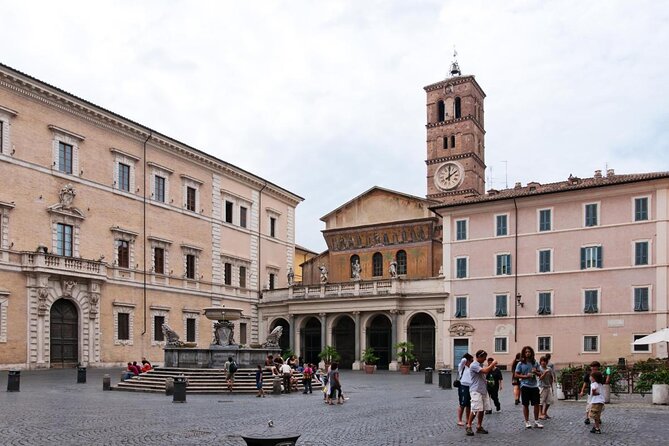
- An art historian guides the whole walk, so you’re not just sightseeing—you’re learning how to look.
- Trastevere streets and squares before the villa means you get a calmer, more local Rome first.
- Villa Farnesina is the main art payoff, with frescoes tied to Raphael and Sebastiano del Piombo.
- Peruzzi’s fresco details and the villa’s gardens add variety beyond one star artwork.
- The tour is private and tailored to your group, not a big mixed crowd shove-through.
- You pay entrance fees separately, so your total cost depends on what tickets you’ll need.
Trastevere and Villa Farnesina: the best kind of contrast
This experience works because it doesn’t force you to choose between “neighborhood Rome” and “masterpiece art.” You get both, in the order that makes sense. First comes Trastevere’s everyday rhythm—narrow lanes, church façades, aristocratic palaces, and corners where locals actually spend time. Then you step into Villa Farnesina, where Renaissance wealth and art patronage take over.
What I like most is the guide’s angle. An art historian can help you connect what you’re seeing to why it mattered in its own moment. That turns a building into a clue and a fresco into a piece of a larger puzzle, especially once you reach the villa interiors and gardens.
The other big plus is how the tour avoids the “hit the highlights and sprint” feel. Trastevere is old and layered, and walking through it slowly is the point.
You can also read our reviews of more walking tours in Rome



Meeting at Via dei Banchi Vecchi and setting the tone
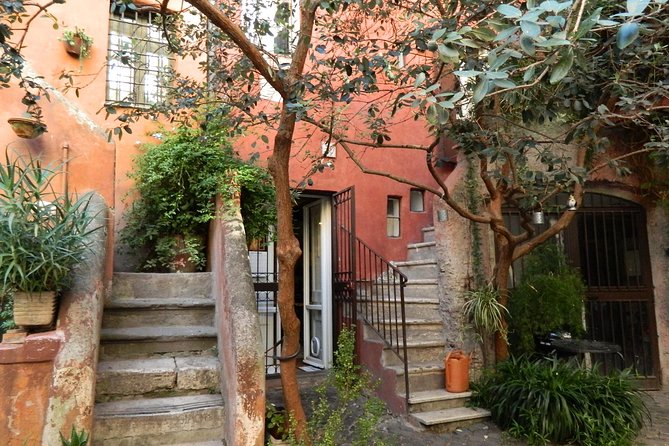
You begin at via dei Banchi Vecchi, 12 at 10:00am, a meeting point that’s close enough to the Tiber area that the day feels grounded. This matters more than it sounds. When you start in the right neighborhood, the tour doesn’t feel like a commute followed by sightseeing. It feels like you’re already inside Rome’s daily life.
From here, the walk is guided by Roman custom and tradition. The idea is to step away from the crush of the usual tourist routes and into a quarter locals see as authentic. Your guide sets the tone with neighborhood context first, so the palaces and churches you pass later land with more meaning.
One practical note: this is a walking tour with a significant amount of time on your feet. The streets are not “museum smooth,” so comfy shoes are not optional.
Piazza Santa Maria: watching locals slow down
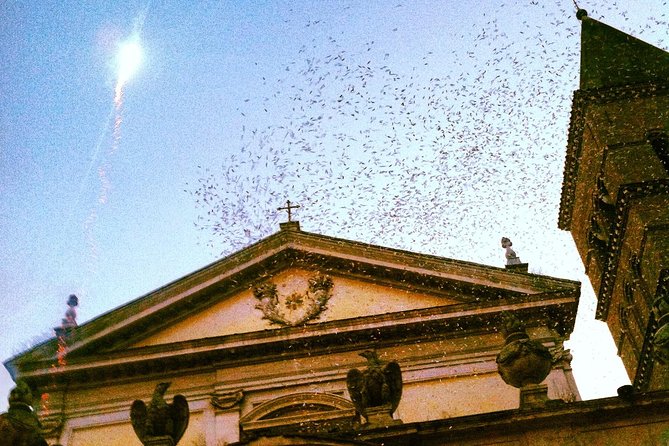
A key moment comes as you reach the heart of Trastevere, with time focused around the area of Piazza Santa Maria. This is where the tour becomes more than a list of sights. It’s the kind of stop where you can actually see how people use public space—standing and chatting, drifting around, pausing in the square rather than treating it like a quick photo backdrop.
Even the mention of aperitivi fits the mood. Trastevere is where an adult Roman day can look simple: people gather, they talk, they linger. If you like travel that lets you observe instead of only “collect,” you’ll appreciate this part.
Potential drawback: if you’re hoping for non-stop movement with zero downtime, this kind of local-life stop may feel like a breather. I’d call it a feature, not a flaw—but know what kind of pacing you like.
Palaces, towers, churches, and hidden workshops along the way
The middle of the walk is where Trastevere’s layers show up. You’ll pass aristocratic palaces, ornate churches, and street corners that feel tucked away rather than staged. The route includes reminders of medieval Rome too, including the sense of older towers and long-lived neighborhoods.
Your guide also points out things that are easy to miss if you’re just scanning façades from the sidewalk. That includes hints of Renaissance and even papal memories woven into the built environment. You’re not just seeing decorations; you’re learning how power, religion, and wealth shaped what survived—and what got hidden behind later changes.
There’s also a focus on the working side of the neighborhood: hidden workshops show up as small signals that Trastevere is not only about monuments. It’s still a real place where people live and do daily business.
Villa Farnesina: Raphael, Peruzzi, and the Chigi story
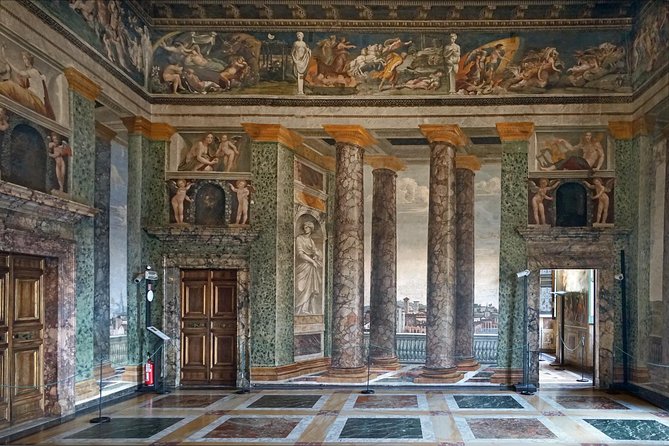
Then comes the shift in atmosphere: Villa Farnesina is the “art room” of the day, and it’s hard not to feel the difference once you step inside. This is a Renaissance mansion built and used by the banker Agostino Chigi, and the villa is famous for interiors covered in frescoes and for gardens that make the whole visit feel like an experience, not just a stop.
Here’s what you’ll focus on once you enter:
- Raphael’s Galatea, one of the standout fresco works tied to the villa’s artistic prestige.
- Frescoes connected to Raphael and Sebastiano del Piombo, which helps you see the villa as a hub of Renaissance painting rather than a single-artist destination.
- A Peruzzi horoscope, a detail that can quickly become a favorite if you enjoy learning how artists shaped myth and meaning into visual design.
- The villa’s gardens, which add a change of pace after the more concentrated interior time.
If you have even a casual interest in myths and symbolism, this stop can be especially rewarding. One review note that the visit encouraged people to read up on the myths before arriving. That makes sense. When a fresco includes mythological material, a little prep can turn “pretty painting” into “oh, that’s what they’re referencing.”
A practical consideration: entrance fees are at your own expense. The tour price includes the guide, but the site ticket is separate. That means the final cost depends on what you pay at the villa entrance.
You can also read our reviews of more private tours in Rome






Gardens and pacing: how to get the most from the villa time

Villa Farnesina isn’t a huge time sink like some mega-museums, but it can still reward a steady pace. The gardens help break things up. They also give you a better sense of why Renaissance patrons loved these spaces—art wasn’t only meant to be stared at. It was meant to live in a setting.
Because this is part of a private walking tour, the guide can slow down where your group wants it. If your group cares most about Raphael, you’ll spend more time lingering on the relevant images and themes. If your group cares about the broader Renaissance context, you’ll get that too through explanations of patronage and artistic choices.
If your group is short on patience for guided explanations, tell the guide early. Private format is your advantage here: you’re not stuck with one rigid pace.
Price and value: what you’re paying for at $286.60 per person
At $286.60 per person, this isn’t a budget tour. The value comes from three things:
- Private format, meaning your group gets a focused art historian guide rather than a crowded head-bob along a route.
- Specialized art framing, since Villa Farnesina is best appreciated with context, especially for fresco cycles and symbolism.
- Two-part itinerary, where you get Trastevere atmosphere first and then a top-tier Renaissance interior experience second.
If you’re comparing options, consider what you’d pay for a standard guided tour plus what you’d spend on time figuring out the right places to look. Here, the guide does the linking work—turning architecture and fresco details into a coherent story—so you’re not wasting your mental energy guessing.
One extra note: group discounts may apply, which can make the per-person cost easier to swallow if you can travel with at least one other person.
What to wear, what to bring, and how to plan the day
You should plan for a significant amount of walking, with cobbled lanes and uneven surfaces. That’s not a minor detail in Rome. The difference between comfortable and miserable is often one good pair of shoes.
Beyond shoes:
- Bring a light layer. Rome afternoons can shift fast.
- If you like art, consider doing a bit of myth reading before you go. Even a short skim helps you recognize names and themes once you’re standing in front of the frescoes.
- Keep some flexibility for the Villa Farnesina entrance ticket since it’s not included.
Also, you’re starting and ending at neighborhood points—via dei Banchi Vecchi and finishing near Piazza Trilussa. That’s helpful for connecting to the rest of your day in Trastevere without making Rome feel like a series of taxis.
Who this private Trastevere + Villa Farnesina tour suits best
This is a strong fit if you:
- Want Trastevere atmosphere without feeling like you’re wandering blind.
- Care about Raphael frescoes and want context while you’re looking at them.
- Prefer private pacing, where your group can slow down and ask questions.
- Like tours led by people who connect art to the real world—patrons, power, symbolism, and the daily setting where art lives.
It may feel like less of a match if you:
- Only want quick photo stops with minimal explanation.
- Are hoping everything is fully ticketed into one price (since entrance fees are separate).
- Have very limited walking tolerance due to the nature of Rome streets.
Should you book it?
Book it if your ideal Rome day sounds like this: Trastevere first, real streets and local life, then a focused Renaissance art visit at Villa Farnesina with an art historian guiding your eyes. The combination is efficient and genuinely satisfying, because you’re not stuck choosing between “neighborhood” and “museum.”
Skip or reconsider if you want a fully pre-paid all-inclusive price with no separate ticket line, or if you’re not interested in explanations while you’re looking at fresco details. In that case, you might do better with a self-guided approach and only pay for the villa entrance.
FAQ
Where do we meet for the tour?
You meet at via dei Banchi Vecchi, 12, 00186 Roma RM, Italy. The tour starts at 10:00am.
How long does the tour take?
The duration is listed as about 1 to 2 hours.
Is this tour private?
Yes. It’s a private tour/activity, and only your group participates.
What’s included in the price?
The tour includes a professional art historian guide.
Are entrance fees included for Villa Farnesina?
No. Entrance fees are not included and are at your own expense.
Are food and drinks included?
No. Food and drinks are not included.
Is the tour suitable for kids?
The minimum age is 12 years.
Is there a lot of walking?
Yes. There is a significant amount of walking, so wear comfortable shoes.
What’s the cancellation policy?
You can cancel for free up to 24 hours before the experience start time for a full refund.