REVIEW · ROME
Rome in A Day Tour: Vatican, Sistine, Colosseum, Trevi & Pantheon
Book on Viator →Operated by Rome City Tours · Bookable on Viator
One day in Rome can feel like a sprint. This private Rome in A Day tour is built for efficiency, with a guide that gets you moving through the Colosseum first, then into the Vatican for major art stops like the Sistine Chapel. If you love history you can see, not just read about, this format helps you connect architecture, politics, and religion without doing the heavy route-planning yourself.
I especially like two things: you start with a reserved, guided visit that gets you inside early, and an art-focused guide keeps the Vatican from feeling like a museum maze. One thing to keep in mind: this is a walking-heavy day with strict dress rules, and the Vatican can change last minute (Sistine Chapel and/or St. Peter’s Basilica may be affected).
In This Review
- Key things to know before you go
- The logic of a 6-hour Rome hit list
- Entering the Colosseum: straight inside, with a guide in charge
- Roman Forum and Capitoline Hill: the politics you can still trace
- Trevi Fountain: the movie-famous stop with a built-in legend
- Pantheon and Raphael’s burial: short time, serious payoff
- Piazza Navona and Bernini’s Four Rivers Fountain
- Vatican Museums and Sistine Chapel: the art stop that needs structure
- St. Peter’s Basilica and St. Peter’s Square: big art, clear explanations
- Meeting your guide: different names, same goal
- Practicalities that affect how much you enjoy the day
- Value for $668.05: what you’re actually paying for
- Who this tour is best for
- Should you book Rome in a Day?
- FAQ
- How long is the Rome in a Day tour?
- Where does the tour start and what time?
- Where does the tour end?
- Is this tour private?
- What admissions are included?
- Do I need to follow a dress code?
- What documents do I need for entry?
- What if the Sistine Chapel or St. Peter’s Basilica closes last minute?
Key things to know before you go
- Reserved Colosseum entry starts you inside the amphitheatre, not outside it.
- Roman Forum highlights are specific, including the Arch of Constantine and the Arch of Titus.
- You pair classic Rome with Renaissance powerhouses, moving from Trevi and Pantheon to the Vatican.
- Piazza Navona fits in naturally with Bernini’s Fountain of the Four Rivers.
- Vatican time is guided, not free-for-all, including the Sistine Chapel and St. Peter’s Basilica.
- Your guide plans alternatives if spaces close, focusing more on the Vatican Museums when needed.
The logic of a 6-hour Rome hit list
This tour works because it’s not trying to be everything. It’s trying to hit Rome’s most recognizable masterpieces in one coherent loop, guided from the Colosseum area through central sights and then across the river to the Vatican. The timing is tight enough to feel like progress, but long enough to ask questions and actually understand what you’re looking at.
You should expect a moderate physical fitness level and be ready for lots of walking. Even with a guide, Rome is Rome: you’ll spend time on foot between stops, and line management is partly handled by reservations and timing, not by teleportation.
The tour is also private, meaning it’s only your group. That can feel like a small luxury in a city where most sightseeing is crowded and loud.
You can also read our reviews of more tours and experiences in Rome.



Entering the Colosseum: straight inside, with a guide in charge
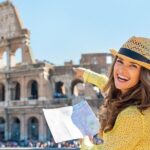
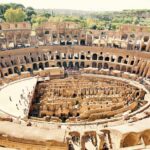
Your day starts at Piazza del Colosseo, 3 at 9:00 am. The big payoff here is that the tour begins with Colosseum entry, so you’re not just standing around explaining why it matters. You get Colosseum admission included plus a reservation fee.
Once inside, your guide helps you connect the Colosseum to the broader story of Rome—how public space worked, how power was displayed, and why this building still dominates the skyline. The guide format matters: you’ll spend your limited time understanding what you’re seeing, instead of trying to “figure it out” with vague museum signage.
Practical tip: start the day with a water plan. The tour is time-boxed, but you’ll still want to stay comfortable while moving between major sites.
Roman Forum and Capitoline Hill: the politics you can still trace
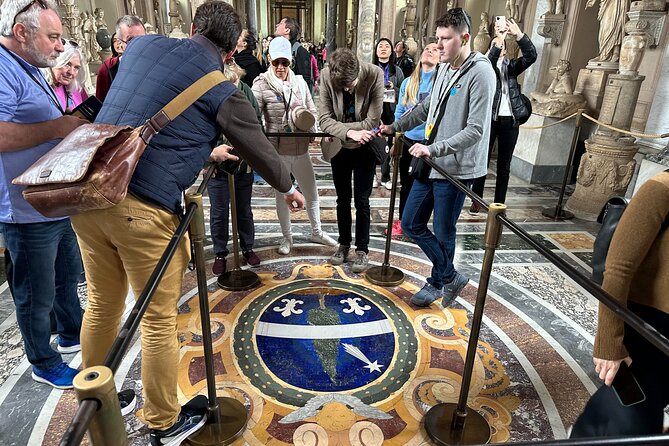
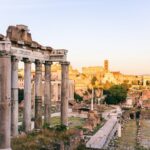
After the Colosseum, you head outside for the Roman Forum. The stop is about an hour, and you’ll see named monuments that anchor what this area meant in daily life: political decisions, religious activity, and social power all clustered here.
You’ll be shown highlights like:
- Arch of Constantine
- Arch of Titus
- House of the Vestal Virgins
- Temple of Saturn
- Senate House
- Arch of Septimius Severus
This is one of the best parts of the day because it turns ruins into a map of influence. Instead of “cool rocks,” you get structure: buildings grouped around the main square that once shaped public life.
Then there’s a walk up the Sacred Way to Capitoline Hill and Il Vittoriano, a more modern monument that helps you see how later Italy chose to frame Rome’s legacy. The timing is short, so listen closely and use your guide as your interpreter.
Trevi Fountain: the movie-famous stop with a built-in legend
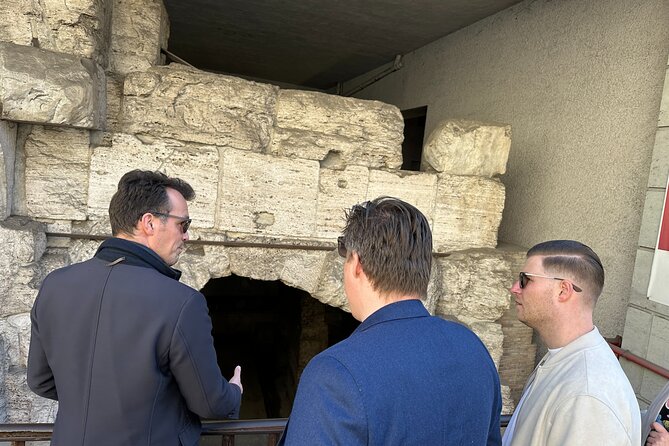
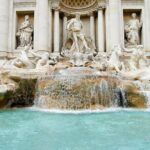
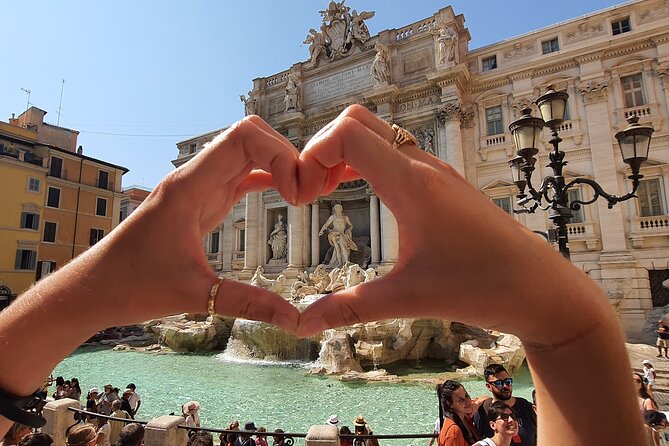
Next comes Trevi Fountain, scheduled for about 30 minutes. This is the kind of stop where you can burn time fast if you’re not intentional, but your guide keeps it moving. You’ll also connect it to film culture—Trevi’s been used as a backdrop for scenes like La Dolce Vita.
If you want the classic ritual, legend says to toss a coin to return to Rome. You’re already in the right place for the moment—just don’t expect a calm, quiet viewing experience in peak hours.
My practical advice: treat Trevi as a quick photo-and-meaning stop. Enjoy it, but don’t let it become your whole day. The tour has bigger art moments ahead.
Pantheon and Raphael’s burial: short time, serious payoff
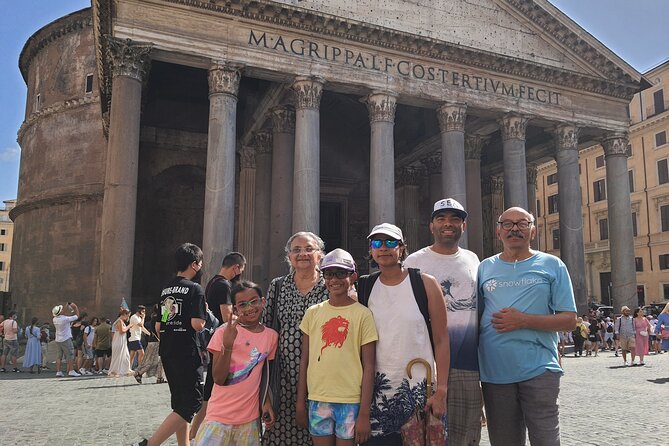
After lunch, the route heads into the government district area, with a look at places like the Parliament Building and the Palace of the Council of Ministers. You also see the Column of Marcus Aurelius and then Temple of Hadrian, constructed in his honor by Antoninus Pius.
Then you get the payoff: a walk through Rome’s little alleyways to reach the Pantheon. It’s scheduled for about 30 minutes, and this short window is enough to grasp why people still treat it like a reference point for Western architecture.
One detail I love about this stop is the human connection: Raphael is buried there. Your guide ties the building to the artist’s legacy, so you’re not just looking at a famous dome—you’re also standing in the shadow of a major Renaissance figure.



Piazza Navona and Bernini’s Four Rivers Fountain
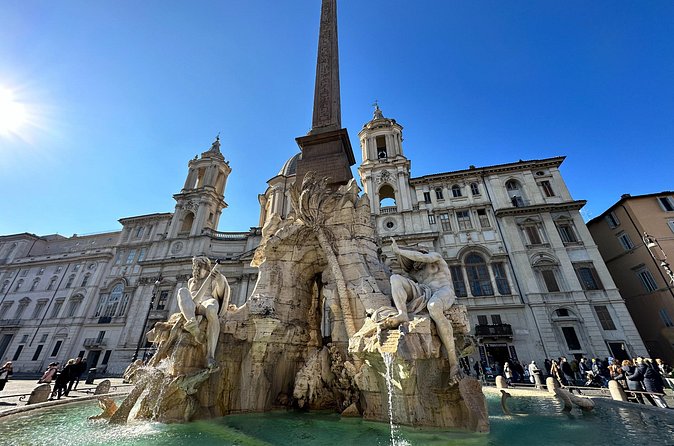
From there, you move to Piazza Navona for about 30 minutes. You’ll also pass by the Ancient Baths of Nero on the way, which helps you notice how layered Rome really is: ancient, medieval, and modern city life stacked on top of each other.
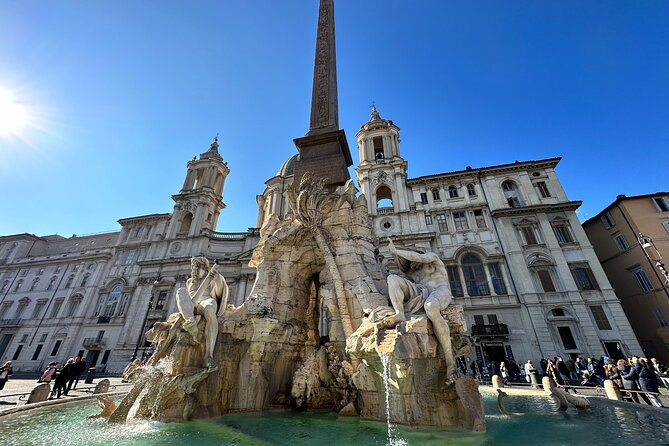
Piazza Navona is known for Bernini’s Fountain of the Four Rivers. This is a good “breather” stop because it’s outside, open, and visually strong. The guide helps you read what you’re seeing so it doesn’t turn into another quick stop where you only grab a picture.
Vatican Museums and Sistine Chapel: the art stop that needs structure
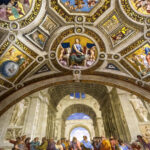
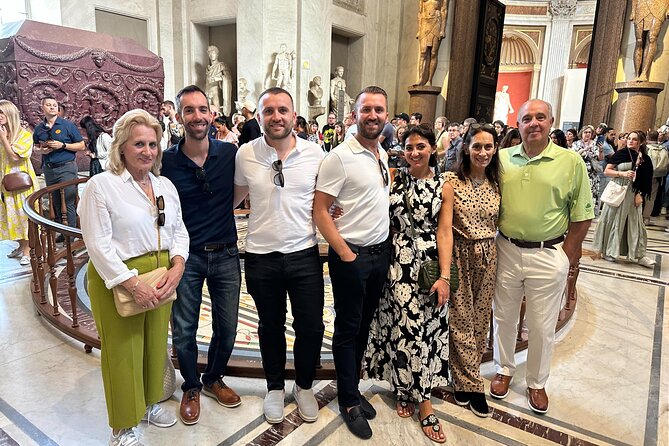
You’ll cross the Tiber to the Vatican for the final major segment of the day. The tour goes through Vatican Museums and then focuses on the Sistine Chapel.
The Vatican portion is where a guided format pays off the most. The Museums alone can feel like a maze, and time disappears fast if you’re wandering. Here, your guide keeps the experience pointed at the big visual moments, which is exactly what you want in a day tour.
Your Sistine Chapel visit is scheduled at about 1 hour with admission included. This is also where schedules can change. Because of current pope activity and possible mass events, some areas might close last minute, and the Sistine Chapel and/or St. Peter’s Basilica might not be accessible. If that happens, your guide is set up to provide a valuable alternative focusing on the Vatican Museums.
That flexibility is important for your expectations. You’re not paying for a guarantee of open doors no matter what Rome decides to do that day. You’re paying for a guide who can reroute your attention when the Vatican shifts.
St. Peter’s Basilica and St. Peter’s Square: big art, clear explanations
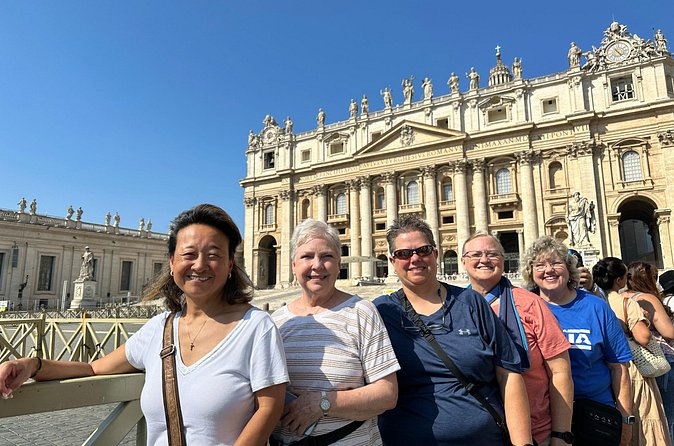
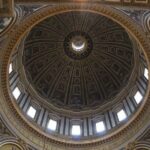
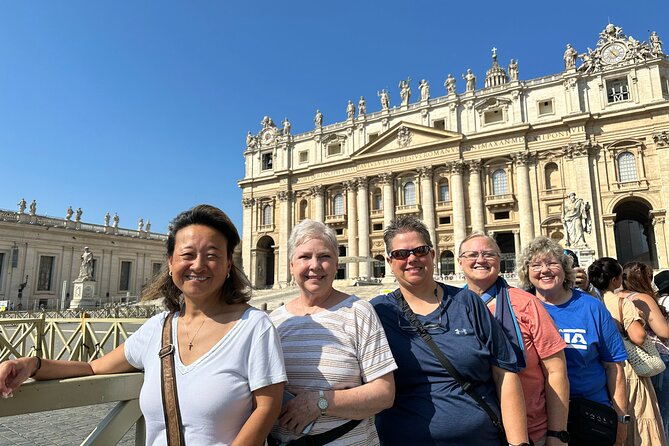
After the Sistine Chapel, you move to St. Peter’s Basilica for about 30 minutes. The guide leads you through side chapels and you’ll even see hidden crypts. You’ll also see Michelangelo’s Pietà, with an explanation of why it’s the only work he signed.
This is where guides earn their keep. The tour includes guidance on Bernini’s altarpiece and how Michelangelo triumphed over his contemporaries for the honor to paint St. Peter’s magnificent dome. You’ll also end at St. Peter’s Square.
One more thing to know: the Basilica might be affected due to the Jubilee and the timing is unfortunately not fully under your control. If it can’t be included, the information you receive indicates you can still visit after the tour with normal queuing.
Meeting your guide: different names, same goal
In the real world, guides matter. This tour has multiple guides mentioned by name, including Tommas, Fransesco, Sara, Claudia, Max, and Massimiliano. What ties them together is a consistent theme in the feedback: people feel guided with real structure, not just someone pointing out landmarks.
If you’re the type who enjoys context, this is the kind of day where the guide can connect details fast. For example, at the Colosseum and Forum, you’ll hear the “why” behind the ruins. At the Vatican, you’ll hear the “how” behind the art and the “who” behind the artists.
Practicalities that affect how much you enjoy the day
Before you go, lock in the details below so nothing surprises you.
Dress code: This one is strict. You need no shorts and no sleeveless tops, and knees and shoulders must be covered for both men and women. If you don’t comply, you risk being refused entry.
Names and ID: For entry to the Colosseum and Roman Forum, you must provide the full names of all travelers at booking time. At the ticket office, you’ll need a voucher with those full names matching your valid passport or ID document.
Timing and pacing: The tour begins at 9:00 am and runs for about 6 hours. The “value” of the day is that it stacks the top sites with guided context. The tradeoff is you won’t have lazy, long stays at each stop.
Transportation: Transportation to and from attractions is not included, and there’s no hotel pickup/drop-off. You’ll want a clear plan for how to get yourself to Piazza del Colosseo and how to reach your ending area near the Vatican.
Value for $668.05: what you’re actually paying for
At $668.05 per person, this isn’t a bargain-bin sightseeing deal. But value here isn’t just about paying for “access.” You’re paying for a tight, guided, private format that includes admissions and reservation fees where it matters most.
Colosseum entry is explicitly included, along with reservation fees valued at a couple of euros per person. The rest of the cost covers services such as the local guide experience and professional art historian support, plus the guided flow that gets you through multiple major sites in one day.
So who benefits most? People with limited time who still want the top-tier sites handled efficiently. If you only have one day in Rome, this kind of structure can make your trip feel complete without spending precious hours researching routes, dealing with ticket logistics, and guessing which ruins you should prioritize.
Who this tour is best for
This works especially well if:
- You have limited time in Rome and want a major-sites checklist completed in one day.
- You prefer guided context over wandering and guessing.
- You want a private group experience with less hassle than big group buses.
- You care about architecture and art, especially how artists and patrons shaped what you see.
It may be less ideal if you want slow travel, lots of museum-staying-in-place time, or you’re likely to get derailed by strict dress rules.
Should you book Rome in a Day?
If your goal is to see Rome’s headline attractions in one managed day, I think this is a smart booking. The day is built around reserved early Colosseum entry, guided stops at the Roman Forum, major icons at Trevi and Pantheon, and then a structured Vatican route that’s designed to make the Sistine and St. Peter’s meaningful, not just crowded.
But book with eyes open: it’s a long walk day, dress code rules are real, and Vatican access can shift last minute. If you’re flexible and you want someone else handling the order and explanations, you’ll likely feel like you made the most of every hour.
FAQ
How long is the Rome in a Day tour?
It runs for about 6 hours.
Where does the tour start and what time?
It starts at Piazza del Colosseo, 3, 00184 Roma RM, Italy with a start time of 9:00 am.
Where does the tour end?
It ends near the Vatican Museums area (Vatican Museums 00120, Vatican City) and the tour finishes in St. Peter’s Square.
Is this tour private?
Yes. It’s a private tour/activity, and only your group participates.
What admissions are included?
Colosseum admission is included (plus a reservation fee). The tour also lists admission/tickets for Trevi Fountain, the Pantheon, Vatican Museums and Sistine Chapel, and St. Peter’s Basilica, while St. Peter’s Square is listed as free.
Do I need to follow a dress code?
Yes. Knees and shoulders must be covered. No shorts or sleeveless tops, and you may risk refused entry if you don’t comply.
What documents do I need for entry?
You must present a valid passport or ID document that matches the full names provided at booking time for successful entry to the Colosseum and Roman Forum.
What if the Sistine Chapel or St. Peter’s Basilica closes last minute?
The tour information warns that these areas might not be accessible due to pope activity or events. If that happens, your guide provides a valuable alternative focusing on the Vatican Museums.