REVIEW · ROME
Rome: Trastevere Jewish Quarter Private Walking Tour
Book on GetYourGuide →Operated by LivTours - We craft tours, you live them · Bookable on GetYourGuide
Trastevere has whispers, and the Ghetto has answers. This private 2-hour walk connects street scenes in Trastevere with the Jewish Quarter’s most important landmarks, using stories that range from ancient Rome to modern life. I like how the tour begins in Piazza Trilussa (a real hangout for locals) and keeps moving on foot through the tight lanes where you feel Rome rather than just see it.
I also love the architecture stops: Santa Maria in Trastevere with its golden mosaics, then the river crossing to Isola Tiberina. One thing to keep in mind: the Great Synagogue is viewed from the outside only, and for some people the price may feel steep if you were hoping for more inside access and more long-form Jewish history.
In This Review
- Key Highlights You’ll Feel Immediately
- Trastevere to the Jewish Quarter in 2 Hours: Is It Enough Time?
- Piazza Trilussa: The Right Place to Start
- Santa Maria in Trastevere: Golden Mosaics That Anchor the Walk
- Ponte Sisto and Tiber Island: Rome’s Origins, Across the Water
- Teatro Marcello and Portico d’Ottavia: Ancient Walls You Can Still Trace
- The Jewish Ghetto: Modest Streets, Heavy History
- Great Synagogue of Rome: Outside Views Now, Inside Later If You Want
- Coffee or Gelato on Us: A Smart Way to End
- Price and Value for a Private Group (And What Might Feel Off)
- Language, Dress Code, and Guide Style: Small Things That Matter
- Should You Book This Rome Trastevere and Jewish Quarter Tour?
- FAQ
- FAQ
- How long is the Rome Trastevere Jewish Quarter Private Walking Tour?
- Where does the tour start?
- Does the tour include the Great Synagogue of Rome?
- What sights are included in the tour?
- What’s the dress code for the tour?
- Is this tour wheelchair accessible?
- What languages are available for the guide?
- Is the tour private?
- What is included with the coffee or gelato?
Key Highlights You’ll Feel Immediately
- Private-group pace that works well when you want time to ask questions on the street
- Santa Maria in Trastevere and its golden mosaic work, a real “stop and look” moment
- Ponte Sisto to Isola Tiberina, a classic Rome crossing with origin-story context
- Teatro Marcello and Portico d’Ottavia remains, Roman ruins you can actually place on a map
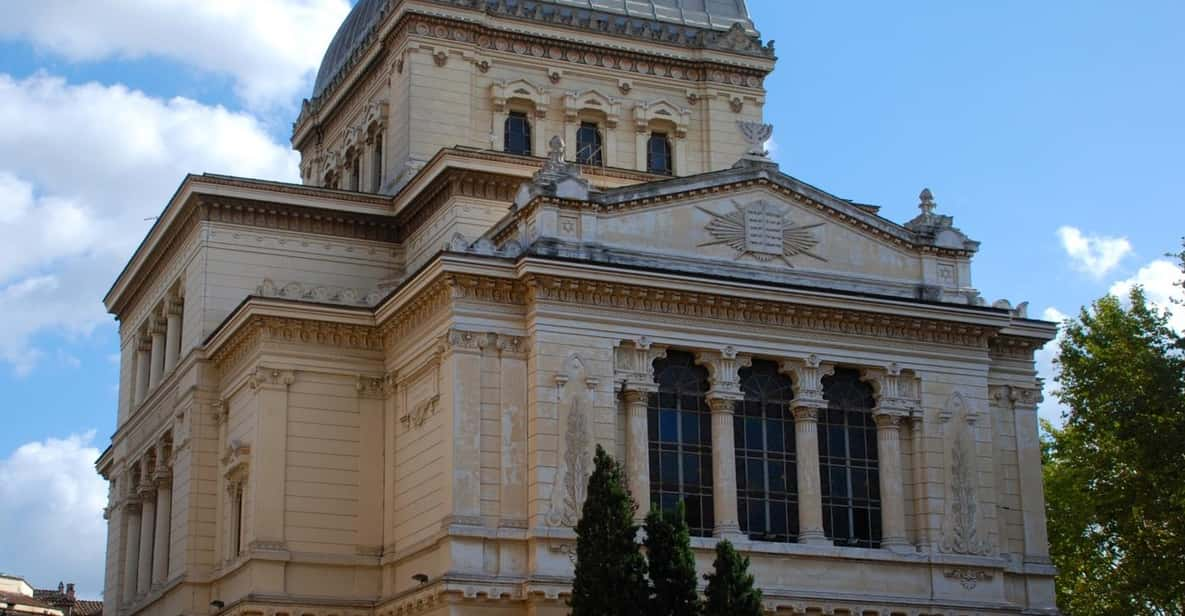
- Jewish Ghetto streets and the Great Synagogue exterior, focused on what you can see from the outside
- Coffee or gelato on us to close the tour without dragging you to dinner plans
Trastevere to the Jewish Quarter in 2 Hours: Is It Enough Time?
This is the kind of tour that works because it’s short. Two hours sounds quick, but the route is packed with the exact kinds of Rome stops you can only appreciate when they’re linked: a lively neighborhood street start, major churches and viewpoints, then the shift to the fenced-in, constrained streets of the old Ghetto area.
The “value” question is simple: you’re paying for a guided storyline and a tightly planned route, not for a long checklist day. If your goal is a quick, human-scale introduction to Jewish-Roman culture and the geography around it, this fits. If your goal is deep, century-by-century detail at many sites, you may wish the tour added more stops or more extensive history at each stop.
It’s also private, which matters here. In narrow streets, you don’t want to be squeezed into a crowd. Private group also helps when dress-code rules come into play at places of worship.
You can also read our reviews of more walking tours in Rome



Piazza Trilussa: The Right Place to Start
You begin at Piazza Trilussa, in front of the stairs. I like this start because it’s not a “tour bus” beginning. It’s a square where young locals often gather, so you get a feel for daily Rome right away. From there, you’re set up to understand Trastevere as something living, not frozen.
Your guide then helps you move from that open square energy into the maze of narrow cobblestone streets. That shift is important. Trastevere streets are about angles, sightlines, and the way buildings press close. When you’re on foot (and not just driving through), you start picking up the neighborhood’s rhythms—where people linger, where you turn, and what view appears around the corner.
Santa Maria in Trastevere: Golden Mosaics That Anchor the Walk
One of the best things about this tour is that it doesn’t treat the church as a quick photo stop. Santa Maria in Trastevere is a guided visit, and the big draw is the golden mosaics. You’re not just learning a location—you’re learning how Roman religious art and public life historically intersected.
Why this matters for a Jewish Quarter tour: this church is a reference point for how Rome layers identities. Jewish life in Rome developed in the same city where Christian institutions became powerful over time. Seeing a major church early helps you recognize that you’re moving through overlapping eras, not separate worlds stacked neatly in time.
Practical note: because this includes places of worship, you need to plan your clothing. Shoulders and knees covered are required. Skip tank tops and short dresses so you don’t get blocked at the door.
Ponte Sisto and Tiber Island: Rome’s Origins, Across the Water
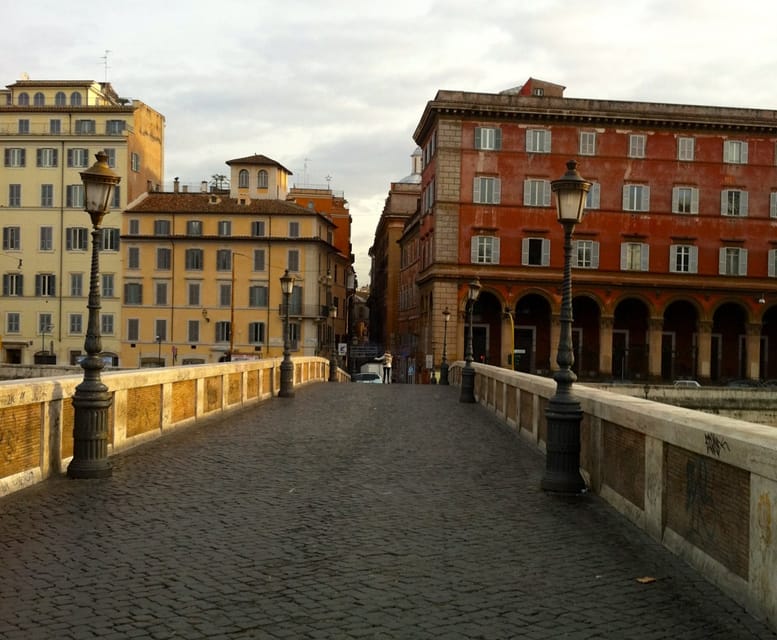
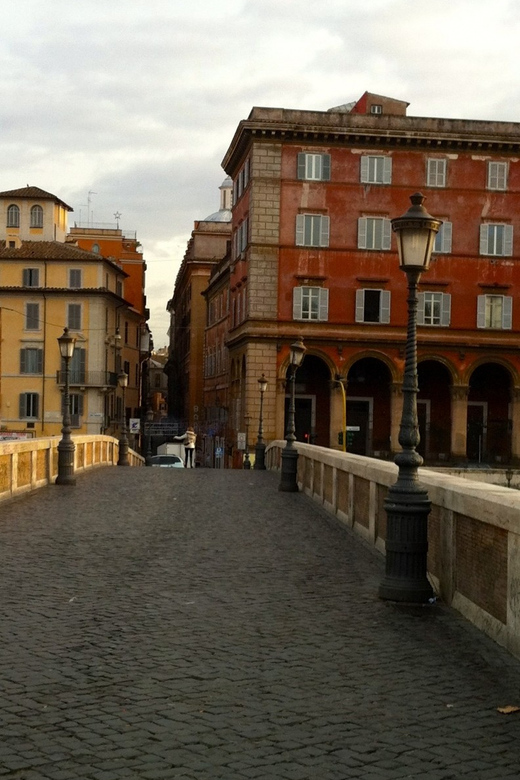
After Trastevere, you’ll cross toward the river stops, with Ponte Sisto on the way and then Isola Tiberina (Tiber Island) as a guided walk. This section gives you a change of pace: you go from street lanes into river views and the feeling of crossing into Rome’s older layers.
Tiber Island is especially useful in a tour like this because your guide can tie in secrets of Rome’s origins—exactly the kind of context that helps the rest of the walk make sense. Even if you already know the city’s basics, standing by the river helps you understand why this area mattered long before the modern neighborhood shape existed.
If you like “location-based storytelling,” this is the part where it clicks. The river isn’t just a backdrop; it’s the geographic logic behind how Rome developed.
Teatro Marcello and Portico d’Ottavia: Ancient Walls You Can Still Trace
Next comes a classic Rome ruin moment: a short detour to the Teatro Marcello open-air theater area. It’s one of those places where you can see how Romans built for crowds and spectacle. Even from the outside, it helps you picture how ancient public space worked.
Then you move to the Portico d’Ottavia area, where you’ll see the remains of the temples or structures in that complex—taught through the lens of place and presence. This stop is valuable because it connects ancient Rome’s physical environment to the later Jewish Quarter geography. In other words, you’re not just learning “facts.” You’re learning how the city’s stone survived and how people built new lives around old foundations.
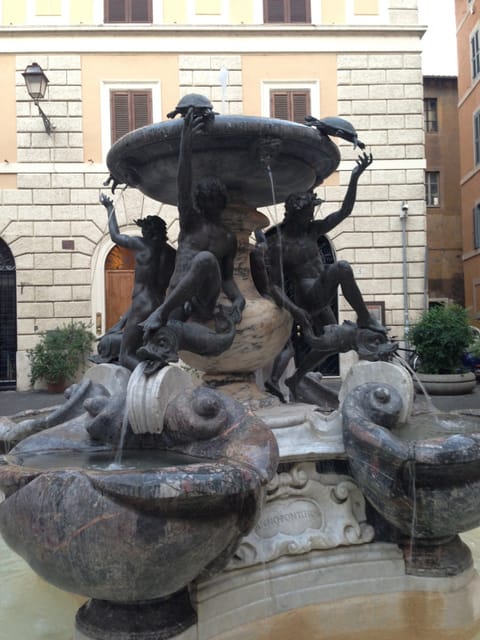
You’ll also spot the turtle fountain as part of the included experience. It’s the kind of small sight that makes a walking tour feel grounded, not like a lecture on sidewalks.
You can also read our reviews of more private tours in Rome






The Jewish Ghetto: Modest Streets, Heavy History
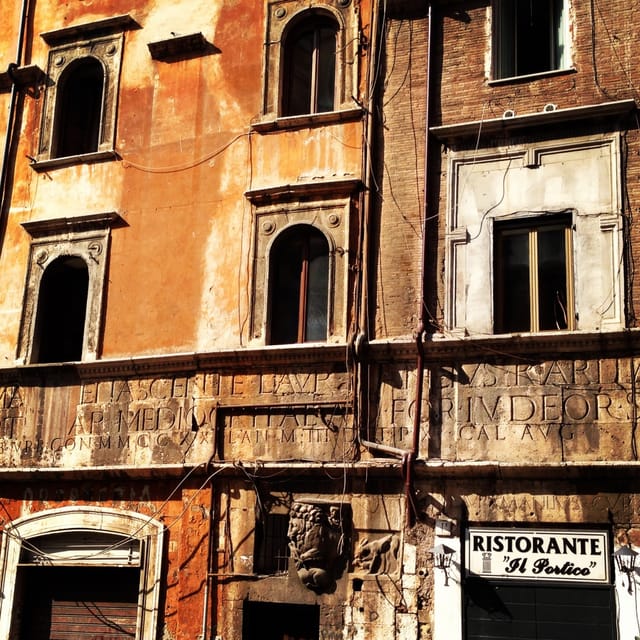
Once you’re in the Jewish Ghetto area, your guide focuses on the modest squares and small alleyways that define it. That’s the right approach. The Ghetto is not about one big monument dominating the view. It’s about the way the streets compress and the way the urban layout shapes daily life.
You’ll get explanations for what it meant when the community lived within a walled area under unjust conditions and tremendous poverty. That’s heavy material, and the tour’s pacing matters here. In a short 2-hour window, the goal should be clarity: what the space was, what life looked like, and how the neighborhood ties into the larger story of Jewish-Roman culture.
One more nuance: the tour says the guide may not be of Jewish heritage. That’s worth knowing. In practice, it still can be a great experience if the guide is careful, informed, and respectful. Just don’t assume that this is a personal, lived insider perspective; it’s a guided historical and cultural interpretation.
Great Synagogue of Rome: Outside Views Now, Inside Later If You Want
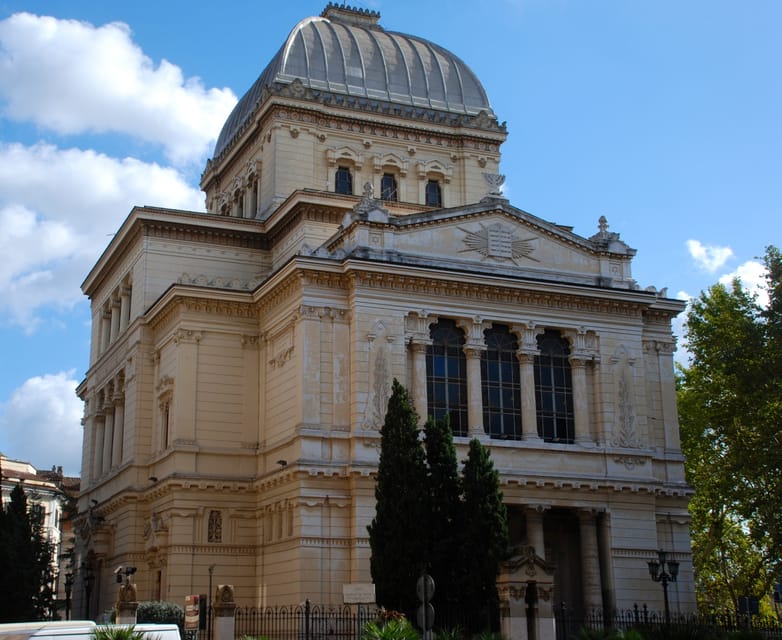
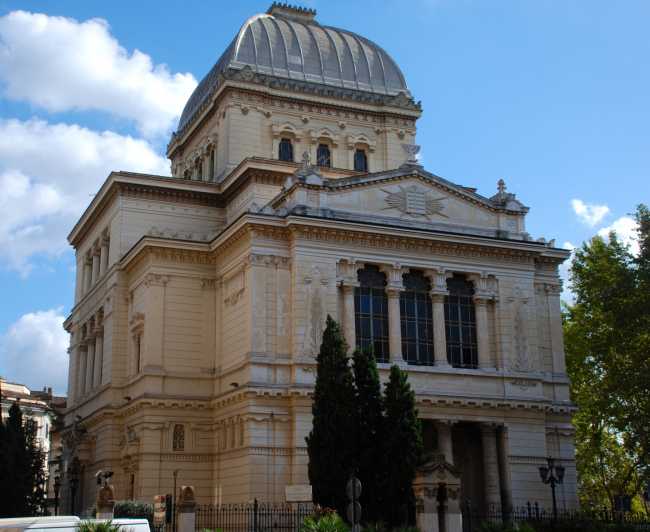
The walk brings you to the Great Synagogue of Rome at the heart of the Ghetto. Important detail: the tour visits it from the outside only. The synagogue building is described as magnificent from outside, and that’s true for many visitors—it’s the kind of façade you remember.
If you’re hoping for interior access, plan ahead. The tour is easily accessible if you’d like to go inside after the walk, but you’d likely need separate arrangements or another guiding option. One note from recent feedback: not being able to enter during the tour can feel disappointing, especially for people expecting a fuller landmark visit.
So here’s how I’d think about it before you book:
- If the exterior viewpoint plus the surrounding Ghetto streets are what you want, this tour delivers.
- If interior access is a must, you may need to treat this as an introduction and add time later for the synagogue itself.
Coffee or Gelato on Us: A Smart Way to End
Before the tour ends, you get coffee or gelato on us. I like this kind of inclusion because it gives you a low-pressure landing. When a tour is short, ending with a snack also helps you keep energy for the rest of your day—maybe you’ll explore more of Trastevere, or maybe you’ll head back toward the river.
Also, the timing is practical. You finish after the Portico d’Ottavia area and the route’s final landmarks, so you’re not hunting for food right after a concentrated walking stretch.
Price and Value for a Private Group (And What Might Feel Off)
At $169.93 per person, you’re paying for a private guide and a guided route through several high-demand areas. Whether that’s “worth it” comes down to what you expect from a 2-hour experience.
Here’s what you likely get for your money:
- Private pacing that feels comfortable in tight neighborhoods
- Guided interpretation across multiple landmarks (church, river island, ancient theater area, Ghetto streets)
- A finish that includes coffee or gelato
Where value can feel less convincing:
- If you expected the synagogue as an inside visit during the tour
- If you were hoping for more densely packed Jewish presence across many centuries, with more specific historical traces at more locations
One piece of real-world feedback also highlighted that the guide was friendly and attentive (a guide named Jade was specifically mentioned as smiling and attentive). That kind of on-the-ground warmth helps, but it doesn’t fix every mismatch between what you want and what the tour includes.
Language, Dress Code, and Guide Style: Small Things That Matter
The tour runs with live guides in multiple languages: English, Italian, Spanish, French, and Portuguese. If you want a language other than English, you’ll need to specify it in additional notes.
Dress code is the key “don’t get surprised” item. Because places of worship are included, you need shoulders and knees covered. Plan for it even if you’re used to sightseeing in shorts. If you show up too exposed, you can be turned away.
Lastly, because private tours depend on the guide’s approach, you’ll get the most out of this when you like conversation and place-based storytelling. If you want a strict lecture style or many more stops, you might prefer a longer format.
Should You Book This Rome Trastevere and Jewish Quarter Tour?
I’d recommend booking if you want:
- A 2-hour introduction to Trastevere’s streets and the Jewish Ghetto’s geography
- Guided stops at major anchors like Santa Maria in Trastevere, Isola Tiberina, and the Great Synagogue exterior
- A private-group feel with manageable walking and a built-in coffee or gelato finish
I’d think twice if:
- You specifically want inside access to the Great Synagogue as part of the tour
- You’re looking for much more detailed, site-by-site Jewish historical coverage over many centuries than fits into a 2-hour route
If you want a balanced experience, this tour works best as your starting chapter. Then, if you’re moved by what you see, plan extra time afterward to go inside the synagogue (if you can) or to continue exploring the Ghetto streets on your own.
FAQ
FAQ
How long is the Rome Trastevere Jewish Quarter Private Walking Tour?
The tour lasts 2 hours.
Where does the tour start?
It starts at Piazza Trilussa, in front of the stairs.
Does the tour include the Great Synagogue of Rome?
You’ll see the Great Synagogue from the outside during the tour, and it’s described as easily accessible if you wish to go inside afterward.
What sights are included in the tour?
The tour includes stops covering Trastevere, Santa Maria in Trastevere, Tiber Island (Isola Tiberina), Teatro Marcello, the Jewish Ghetto, the Great Synagogue exterior, and the Portico d’Ottavia area, plus the turtle fountain.
What’s the dress code for the tour?
For places of worship, you need shoulders and knees covered.
Is this tour wheelchair accessible?
Yes, it is wheelchair accessible.
What languages are available for the guide?
The tour is offered in English, Italian, Spanish, French, and Portuguese.
Is the tour private?
Yes, this is a private group tour.
What is included with the coffee or gelato?
The tour includes a coffee or gelato on us before it finishes.