REVIEW · ROME
Subterranean Rome: Catacombs and Appian Way Discovery Tour
Book on Viator →Operated by Eternal City Private and Guided Tours · Bookable on Viator
Roman tunnels are a different kind of Rome.
This tour mixes Via Appia Antica walking with a guided visit to major Christian catacombs, plus stops tied to early Christian legend. I like that you get both the visible sites on the road and the underground spaces where early Rome stored memory in stone and art. The big win is entry to either San Sebastiano or San Callisto Catacombs bundled with transport, so you’re not piecing together tickets and logistics on the fly.
Two things I especially like: you’re shown early Christian artwork and burial spaces tied to the period before about 400 AD, and you also get the Appian Way context above ground, where the story of Rome’s roads makes the underground feel less random. One thing to consider is timing—there can be occasional hiccups, so I’d plan a little buffer on the rest of your day if you’re on a tight schedule.
In This Review
- Key highlights worth knowing before you go
- Why the Appian Way still feels like Roman Rome
- San Callixtus catacombs (or San Sebastiano): early Christian art underground
- Domine quo vadis: a small church with a big legend
- Villa of Maxentius: imperial power beside the road
- Transport, timing, and why the guides matter
- Price and value: what $215.26 buys you
- Who this tour is best for
- Should you book Subterranean Rome?
- FAQ
- How do I arrange pickup?
- Is this tour private?
- How long is the tour?
- Which catacombs will I visit?
- Are catacomb entry tickets included?
- Is the tour in English?
- Do you provide a mobile ticket?
- What stops are included along the Appian Way?
- Is transportation included?
- What if I need to cancel?
Key highlights worth knowing before you go
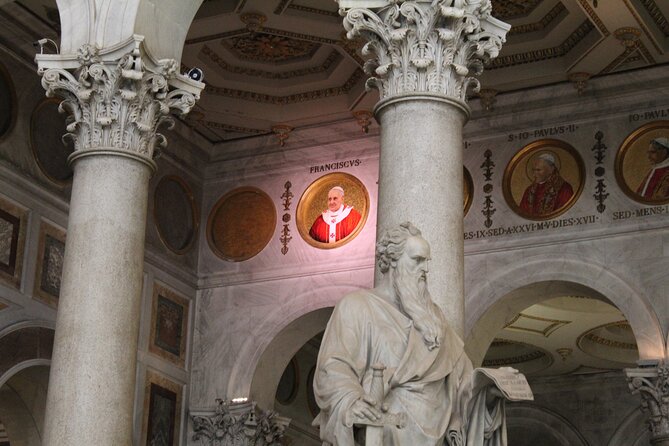
- Round-trip hotel pickup to the Appian Way catacombs, with private transportation built into the experience.
- San Sebastiano or San Callisto entry included, plus a guided group tour inside the catacombs.
- Early Christian art details you can’t get from photos—fresco and sculpture from before about 400 AD, plus notes about how gold glass medallions are handled today.
- Appian Way walking time to connect the “why here?” of Rome’s early road network to what you’ll see underground.
- Domine quo vadis stop with a simple landmark and the legend of Saint Peter and Jesus, plus a marble footprint slab you can view.
- Villa of Maxentius (Valerius Romulus, imperial circus, mausoleum fragments) for a strong “Rome above ground” counterpoint.
Why the Appian Way still feels like Roman Rome
The Appian Way, or Via Appia Antica, is one of the earliest major roads of the Roman republic. It originally connected Rome to Brindisi in southeast Italy, and it still carries that sense of a working route, not just a museum street.
On this tour, you get about 15 minutes on the Appian Way as a setup. That short window matters because it frames the rest of the visit: the catacombs weren’t stuck in a vacuum. They sat along important travel and trade routes where communities lived, buried their dead, and marked the road with meaning.
If you like history that feels practical—roads, movement, trade—this part is a quick hit. It also keeps the day from feeling like all darkness and no context.
You can also read our reviews of more tours and experiences in Rome.



San Callixtus catacombs (or San Sebastiano): early Christian art underground
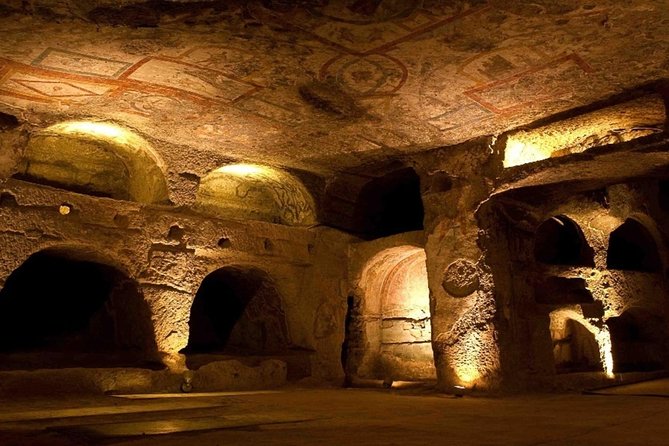
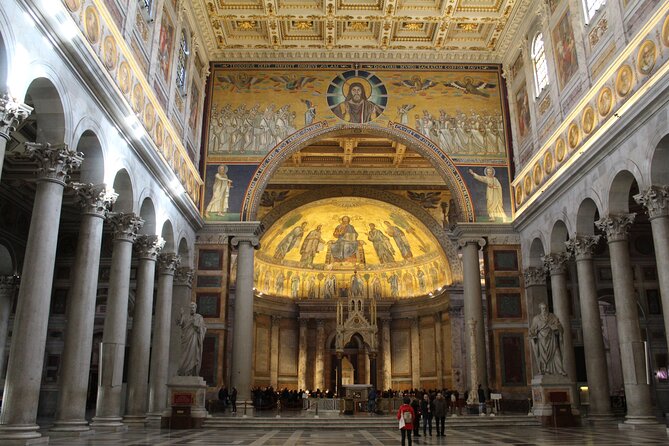
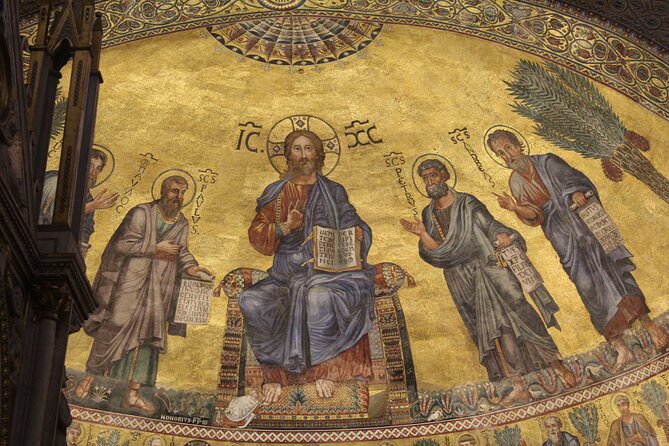
The underground portion is the main event, and it’s where the tour earns its name. The catacombs are extremely important for early Christian art, especially because many examples come from before about 400 AD in fresco and sculpture.
Inside, you’re not just looking at “tombs.” You’re looking at spaces where belief was communicated through decoration, symbols, and the way people used burial chambers and tunnels. The tour also addresses that some elements you might read about are not always physically present the way they were originally. For instance, gold glass medallions exist historically, but bodies have been removed over time.
You’ll spend about one hour in the catacombs, and the entry ticket and guidance are included. The format is practical: a dedicated guide handles the catacomb portion so you’re not left trying to interpret everything alone while trying to keep up in the darker corridors.
From a value standpoint, this is one of those experiences where the guide makes the visuals click. Catacombs can feel like a maze on your own, even when you know what you’re seeing. A good guide helps you understand what you’re looking at and why that matters.
Domine quo vadis: a small church with a big legend

After the catacombs, the route returns you to the Appian Way for a stop at Chiesa del Domine Quo Vadis (also called the Church of St. Mary in Palmis). It’s not a large site, but it’s historically significant and very easy to connect to the early Christian tradition tied to Saint Peter.
The name comes from a legend: Saint Peter asks Jesus, in the tradition associated with the phrase Domine quo vadis, about where he’s going as Peter flees Rome to escape persecution. Jesus’ reply—again, in the tradition—pushes Peter to turn back and face martyrdom.
Inside, there’s a marble slab with footprint impressions believed to represent the footprints of Christ. The stop is short—about 15 minutes—but it gives the day emotional contrast. You go from burial art and architecture to a place built around a moment of decision and faith.
This stop is also a nice pacing reset. If you’re not into purely underground touring, this is your leg of the day that breathes.
Villa of Maxentius: imperial power beside the road

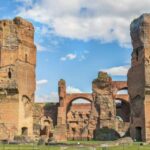
The last stop is where the tour broadens from early Christian Rome to a later imperial layer along the Appian Way: the Villa di Massenzio, also known as the Villa of Maxentius. This was part of an imperial complex built in the early 4th century AD under Maxentius, a rival of Constantine the Great.
What makes this stop worth your attention is the mix of structure and scale. You can see the best-preserved Roman circus after Circus Maximus, a massive arena for chariot racing that could hold up to 10,000 spectators. Next to that spectacle space sits a mausoleum area connected to Maxentius’ son, Valerius Romulus, with a circular form typical of imperial burial design.
Even though only fragments remain, the tour frames the site as a window into elite life—less about what a single tourist photo captures, more about how Roman power liked to build and stage public performance and private legacy side by side.
On a day dominated by catacombs, this stop helps you understand Rome as a city that changes its tone over centuries. You’re seeing that shift in materials, purposes, and the people who used each space.
Transport, timing, and why the guides matter
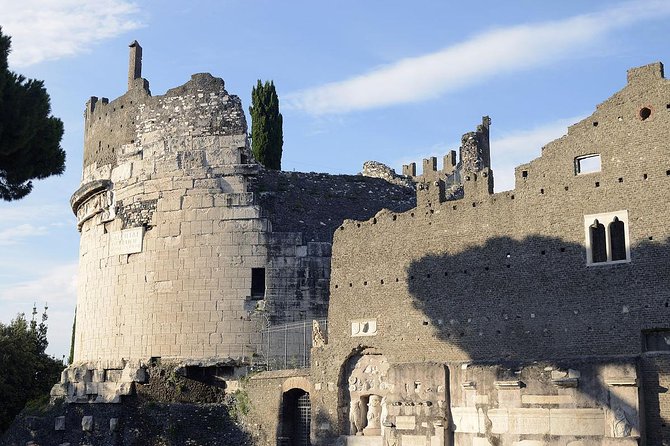
This is built around round-trip transportation from your hotel to the Appian Way catacombs, so you avoid the headache of lining up multiple pieces of travel. The tour is also private, meaning only your group participates, which usually makes it easier to ask questions and move at a comfortable pace.
The experience can run around 2 hours 30 minutes total, so it’s not a half-day crawl. That timing works well if you want a meaningful “Rome outside the center” outing without losing the whole afternoon.
One practical detail you’ll likely feel on the day: the guidance can split. In at least one instance, there were two guides—one focused on the catacombs and another who handled the driving portion while explaining sites along the route. That structure keeps you from hearing the same talking points twice and usually leads to clearer explanations.
Still, the timing matters. There has been at least one reported mix-up with scheduling from the company side. It’s not something you can control, but I’d treat this as a main planned activity and avoid stacking it right against another booking with zero flexibility.






Price and value: what $215.26 buys you
At $215.26 per person for about 2.5 hours, you’re paying for more than a driver. You’re getting:
- Round-trip pickup and private transportation
- Entry tickets to San Sebastiano or San Callisto Catacombs
- A guided group tour in the catacombs
- Time on the Appian Way plus stops including Domine Quo Vadis and the Villa of Maxentius
If you tried to recreate this yourself, the costs would likely spread out across transportation, separate entry fees, and paying for a guided visit you can understand in real time. Here, those pieces are packaged so you spend your energy on the sites rather than the planning.
Is it the cheapest Rome option? No. But it’s also not a high-cost “luxury” tour. It sits in the sweet spot for travelers who want a real guide-led experience at specific, ticketed sites—especially catacombs, where a little interpretation goes a long way.
Who this tour is best for
This is a strong match if you like Roman places that feel real and lived-in—roads with purpose, burial spaces with art, and imperial sites that explain Rome’s long timeline. It’s also ideal if you want a guided experience without committing to an all-day outing.
It’s especially good for:
- People who enjoy early Christian art and symbolic spaces
- Travelers who want the Appian Way context, not just underground stops
- Anyone who prefers hotel pickup and a clean, single plan
You might consider skipping or swapping if you want lots of free time to wander independently. The structure is tight: catacombs take about an hour, the Appian Way and church stops are short, and the Villa stop is part of the timed route.
Should you book Subterranean Rome?
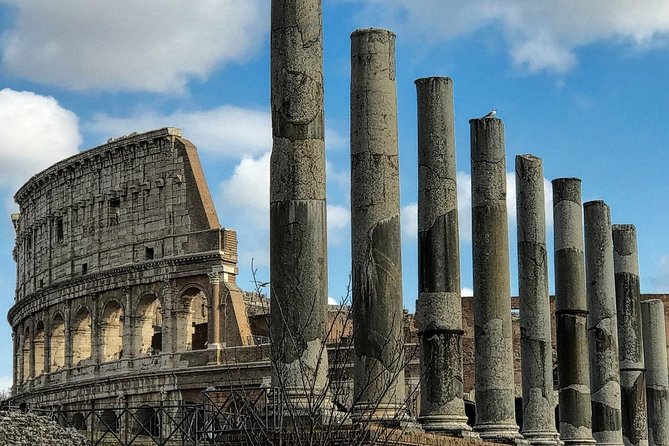
I’d book it if you want a focused, guide-led day that connects the Appian Way to what’s underground beneath it—early Christian art first, then the Saint Peter legend, and finally a later imperial counterpart in the Villa of Maxentius complex. The value is best for travelers who want included catacomb entry and transport, plus explanations that help the sites make sense quickly.
If your schedule is extremely fragile, give yourself a little buffer. And if catacombs aren’t your thing, this probably won’t convert you—because the underground portion is the core of the trip.
FAQ
How do I arrange pickup?
Pickup is offered from your hotel or place of stay. You’ll need to provide your Rome pickup address when booking.
Is this tour private?
Yes. It’s a private tour/activity, and only your group will participate.
How long is the tour?
It lasts about 2 hours 30 minutes.
Which catacombs will I visit?
You’ll visit entry to San Sebastiano or San Callisto Catacombs.
Are catacomb entry tickets included?
Yes. Entry tickets to San Sebastiano or San Callisto are included, along with a guided tour in the catacombs.
Is the tour in English?
Yes. The tour is offered in English.
Do you provide a mobile ticket?
Yes. A mobile ticket is included.
What stops are included along the Appian Way?
You’ll stop on the Appian Way (Via Appia Antica), visit Chiesa del Domine Quo Vadis, and see an ancient imperial complex on the Appian Way (Villa di Massenzio / Villa of Maxentius).
Is transportation included?
Yes. Round-trip transport is included, along with private transportation.
What if I need to cancel?
You can cancel for a full refund if you cancel up to 24 hours in advance of the experience start time.