REVIEW · ROME
Rome: Caracalla, Colosseum, Circus Maximus Private Tour
Book on GetYourGuide →Operated by Tour in the City - Travel Agency Rome - · Bookable on GetYourGuide
Three Roman giants, one smooth private route. I love the private guided format that keeps the pace calm and the focus on what you see, plus skip-the-ticket-line access that saves time at peak hours. The best part is getting a clear story thread across the Colosseum, the chariot-racing heart of Rome, and the Baths of Caracalla. One thing to consider: you’ll do a moderate amount of walking and you must plan for airport-style security checks, which can add time during high season.
The tour also stands out for its professional art historian guide and practical audio setup (headsets for larger private groups). You’ll hear the how-and-why behind the ruins, not just dates, while moving through three of Rome’s most recognizable ancient spaces.
In This Review
- Key Highlights You’ll Feel During This 3-Site Route
- Rome’s Colosseum + Circus Maximus + Caracalla Baths in One Private 3-Hour Sweep
- Meeting Point, Getting In Through Security, and What to Bring
- Where you meet
- What you should bring
- What not to bring
- Stop 1: Via delle Terme di Tito 72 to the Colosseum Arrival Flow
- Stop 2: Entering The Colosseum With a Guide Who Explains How It Worked
- What makes this approach valuable
- The main drawback to plan for
- Stop 3: Circus Maximus, Where Rome’s Chariot Shows Ran at Stadium Scale
- Why this stop feels different from the Colosseum
- What you might notice
- Stop 4: Baths of Caracalla, the Roman Public Bath Experience
- What makes this the payoff stop
- The walking consideration
- The Route End: Returning After Terme di Caracalla
- Languages, Headsets, and the Private Group Advantage
- Price and Value: Is $215.23 Per Person Worth It?
- Who This Tour Suits Best (and Who Might Want Something Different)
- Should You Book This Private Rome Classics Tour?
- FAQ
- FAQ
- How long is the Rome: Caracalla, Colosseum, Circus Maximus Private Tour?
- Where does the tour meet and when should I arrive?
- What languages are available for the live guide?
- Does the tour include entrance tickets?
- What are the major rules or restrictions at the Colosseum?
- Is the tour wheelchair accessible?
Key Highlights You’ll Feel During This 3-Site Route
- Colosseum inside access with an expert guide focused on construction methods and gladiator-era entertainments
- Circus Maximus scale explained through the facts of ancient Rome’s massive chariot-stadium capacity (over 250,000 spectators)
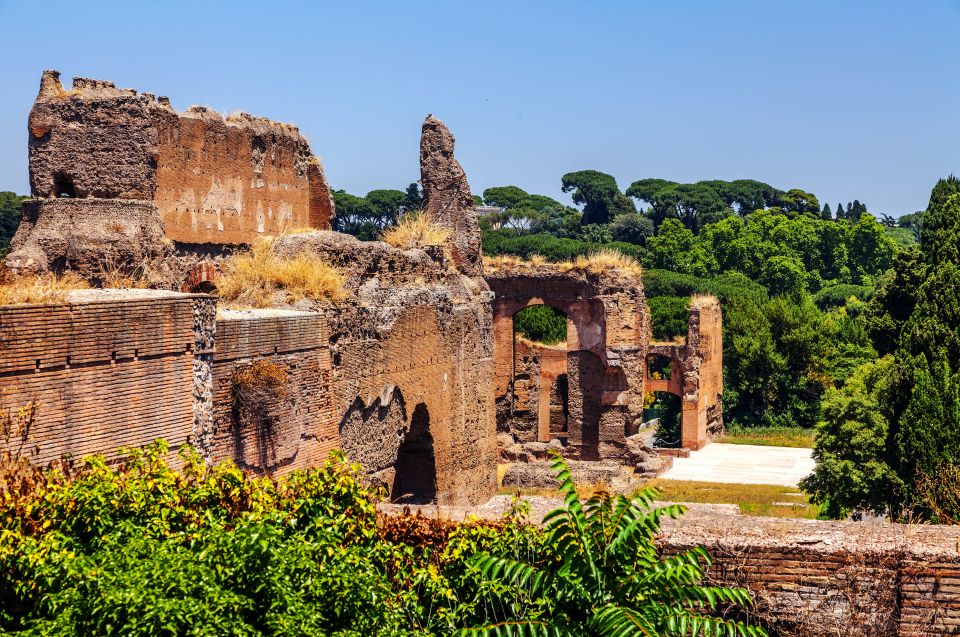
- Caracalla Baths, AD 212–217 with clear architectural context and why these baths are among the best preserved in Rome
- Headset audio so you don’t strain to hear the guide, especially if your private group is larger than 8
- Live guide in multiple languages (Spanish, English, French, German, Italian, Portuguese, Russian) so you can follow comfortably
Rome’s Colosseum + Circus Maximus + Caracalla Baths in One Private 3-Hour Sweep
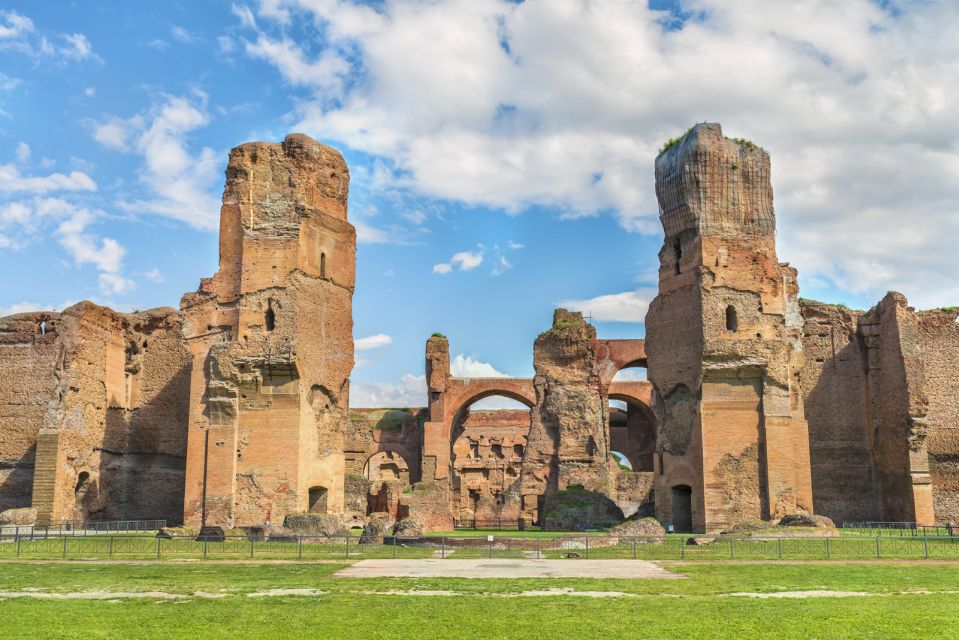
If your Rome “must-sees” list has the Colosseum, Circus Maximus, and the Baths of Caracalla, this is the efficient way to do it. The reason I like this tour format is simple: you get a guided narrative across three different parts of Roman public life—spectacle, racing politics-by-way-of-sport, and daily ritual in the baths—without having to stitch together three separate self-guided visits.
This is also a good pick for people who want more meaning per step. You’re not just looking at stones; you’re learning why those stones were built the way they were and what role they played in the Roman Empire’s day-to-day rhythm. The tour is private, so you’re not trapped in the “everyone follow the same pace” experience.
Price-wise, it’s $215.23 per person for about 3 hours (starting times vary). For many travelers, that number looks steep until you translate it into what you’re actually buying: a professional guide, entrance fees (listed as included, but double-check during booking since the details also state entrance fees as not included), and guided access across multiple sites in one stretch of time. For families or groups of friends, it can become noticeably better value than three separate ticket-and-guide purchases.
You can also read our reviews of more private tours in Rome



Meeting Point, Getting In Through Security, and What to Bring
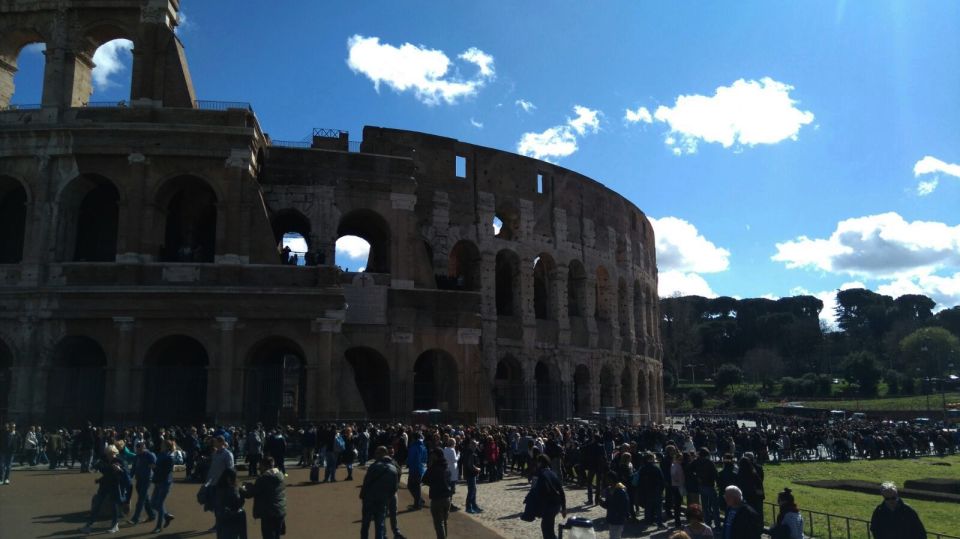
Before you do anything else, plan your timing around the Colosseum security process. The tour uses airport-style security, and in high season the wait can be up to 30 minutes. The good news is that the tour is designed to help you move efficiently once you’re in the flow, including skip-the-ticket-line access.
Where you meet
Start at the tour supplier’s office at Via della Polveriera 11, located above and behind the Colosseum Metro Station. You’ll cross a small pedestrian bridge just up from and to the side of the 2nd level of the Colosseum Metro. From there, the meeting point is about 100 meters (around 300 feet) straight ahead.
Do yourself a favor: arrive at least 30 minutes early. In Rome, that buffer turns a stressful minute into a relaxed one.
What you should bring
- Passport or ID card
- Comfortable shoes (you’ll want them)
What not to bring
The list is strict enough that it’s worth scanning twice before you leave your hotel. You can’t bring large bags/backpacks/suitcases into the Colosseum (and there’s no cloakroom service for large items). Also avoid selfie sticks inside the Colosseum (security reasons), and don’t plan on smoking, weapons or sharp objects, or luggage or large bags.
If you’re the kind of traveler who likes to bring everything “just in case,” this is your reminder to pack light.



Stop 1: Via delle Terme di Tito 72 to the Colosseum Arrival Flow
The itinerary lists the starting point at Via delle Terme di Tito, 72 and also gives a separate official meeting point at the office on Via della Polveriera 11. That can happen with Rome tour providers (different internal check-in points vs. the walk start), so treat the office meeting point as your key anchor and confirm exact directions when you book.
Either way, the tour’s first job is to get you from street level to ancient spectacle quickly and clearly. You’ll want your feet ready, because the early moments are about security and then finding your way inside without wasting time.
One practical point: the tour is a private group, and you’ll have a headset if your group is over 8 people. That matters here, because inside the Colosseum you’ll have wind, echo, and crowd noise. Hearing the guide clearly is half the experience.
Stop 2: Entering The Colosseum With a Guide Who Explains How It Worked
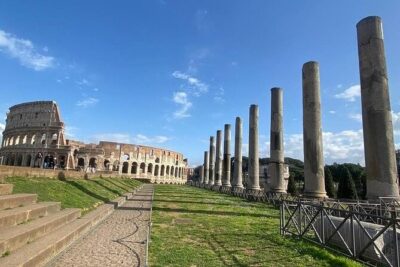
The Colosseum is the headline, but what you want from a good tour is more than the photo spot. This tour is built around understanding the site as a functioning machine for Roman entertainment.
You’ll start with a guided tour inside one of the largest and most famous monuments in the world. Inside, the guide focuses on:
- Construction methods (how it was built, not just what it looks like)
- Stories about gladiators and spectacular entertainments organized there
That combination is powerful because it changes how you see the architecture. Once you understand how the space was designed for crowds and performance, the Colosseum stops being a ruin and starts feeling like a venue.
What makes this approach valuable
A lot of Colosseum visits go like this: big building, dramatic arena, quick facts, then off. This tour’s value is the pacing and the explanation. You get time to connect what you’re looking at—structure, scale, and purpose—to what Roman audiences came to experience.
The main drawback to plan for
Even with skip-the-line, you’re still dealing with the Colosseum security process and a moderate walk. If you’re sensitive to crowds or you hate waiting, you’ll want to pick a start time that avoids the worst peak flow. Also remember: you can’t use selfie sticks inside.
Stop 3: Circus Maximus, Where Rome’s Chariot Shows Ran at Stadium Scale
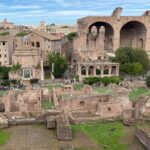
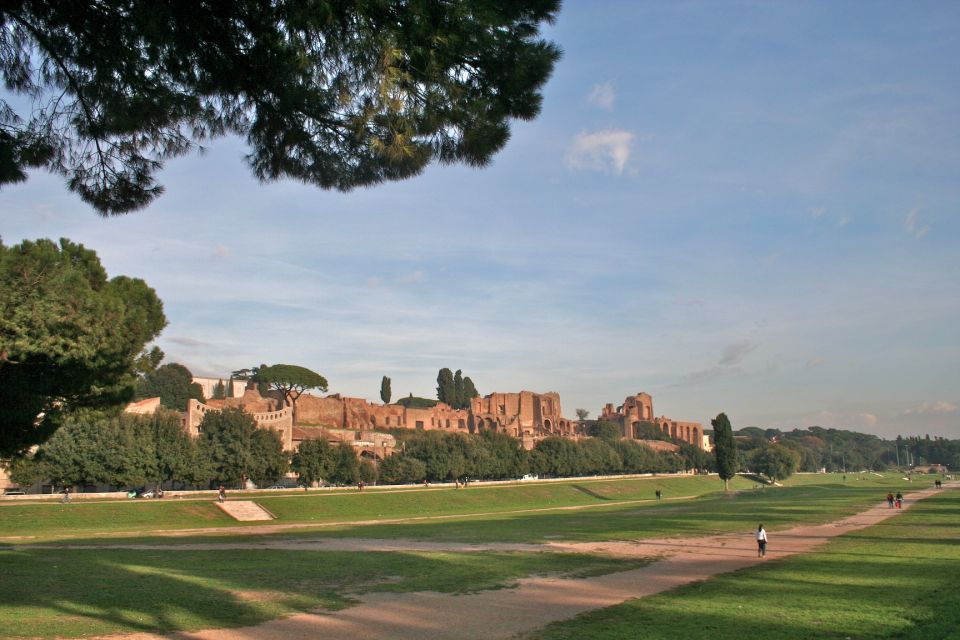
After the Colosseum, the tour shifts from stone amphitheater to open-scale spectacle. Circus Maximus was the first and largest stadium in ancient Rome, built for chariot racing, and it’s famously enormous.
The guide takes you through what made Circus Maximus a political and cultural force, not just a racetrack. Key fact: it held more than 250,000 spectators, which is hard to picture until someone gives you a sense of just how huge that is.
Why this stop feels different from the Colosseum
The Colosseum is about contained, vertical crowd energy. Circus Maximus is about long lines, speed, and the spectacle of repeated racing. When you visit back-to-back, it helps you see how Romans created public entertainment at different scales and in different formats.
What you might notice
Because Circus Maximus isn’t as intact in the same way as the Colosseum, you may find it helps to rely on the guide’s directions and explanations rather than expecting a fully preserved interior. If you’re a “read the stones” traveler, you’ll still get plenty out of it—but listening matters more here.
Stop 4: Baths of Caracalla, the Roman Public Bath Experience
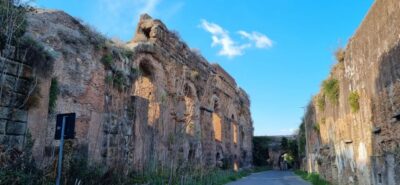
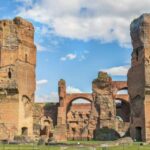
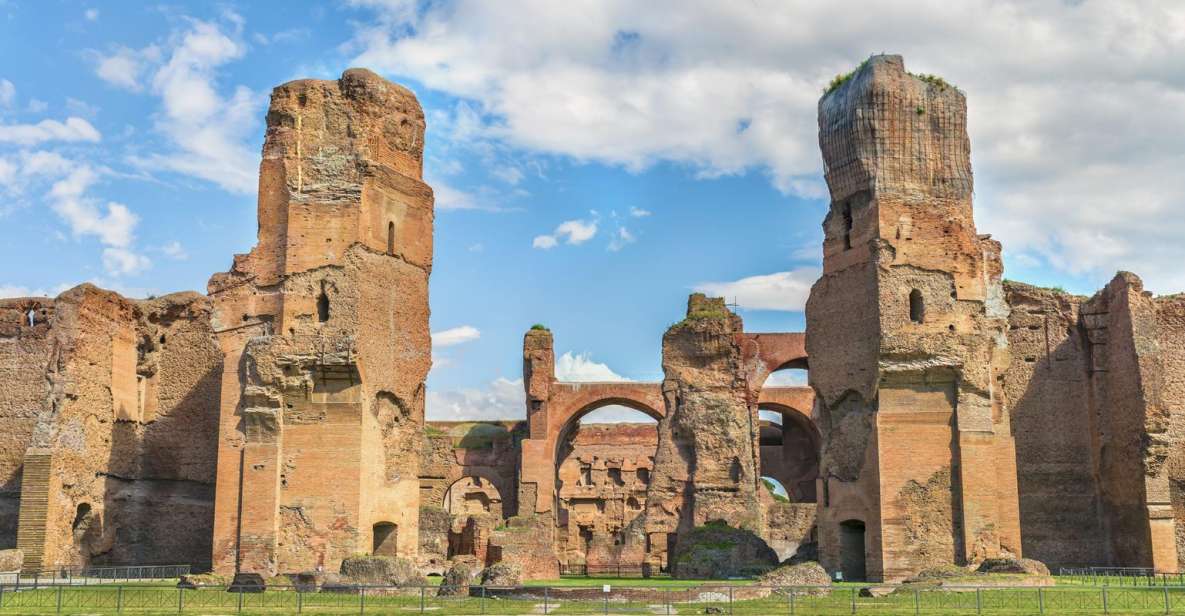
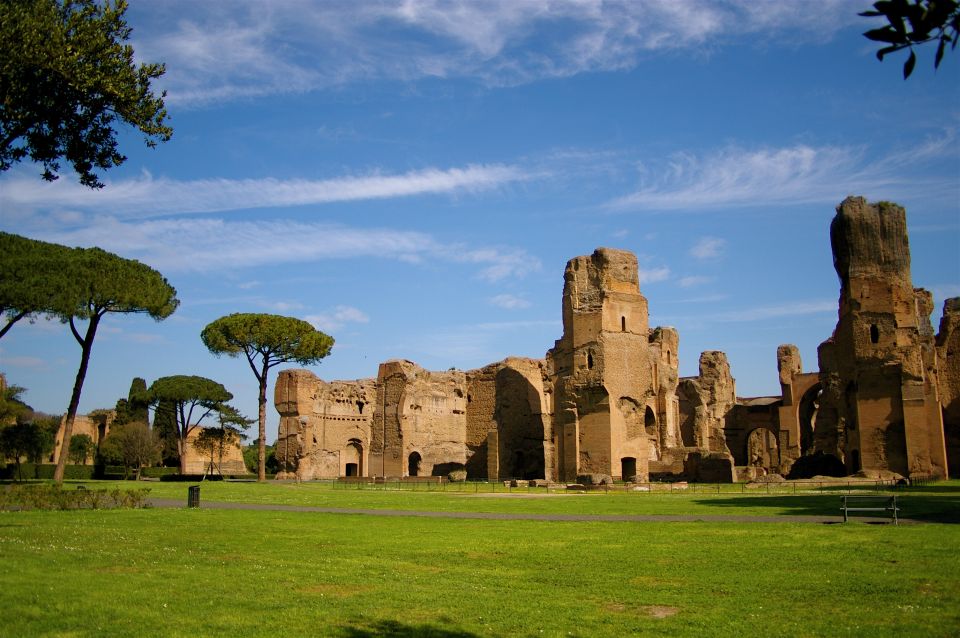
Then you get to the stop that many people skip unless they’re history nerds—in the best way. The Baths of Caracalla are the second-largest Roman public baths, built between AD 212 and 217, during the reigns of Septimius Severus and Caracalla. And the capacity claim is the kind of detail that turns ruins into reality: they could host more than 1,500 bathers.
This is the moment where the tour can surprise you. Baths in Rome weren’t just about cleanliness; they were a social center, a place to talk and relax, and a daily ritual space for large numbers of people.
The tour highlights why these baths are so meaningful:
- They’re among the best preserved baths in Rome
- They’re described as a masterpiece of Roman architecture
What makes this the payoff stop
If the Colosseum and Circus Maximus show you how Romans staged public entertainment, the Baths of Caracalla show you how they staged everyday life for the masses. It’s a different kind of Roman genius—practical engineering, architecture designed for human flow, and a social infrastructure built into stone.
The walking consideration
This portion is part of the same 3-hour schedule, so your energy matters. Wear your most comfortable shoes and treat this like a legs-and-lungs stop, not a sit-and-look moment.
The Route End: Returning After Terme di Caracalla
The itinerary lists the final stop as Terme di Caracalla, which makes sense for where the tour physically ends. Separately, the meeting point section states that the activity ends back at the meeting point.
Because those details don’t perfectly match on paper, the best move is to confirm the end location when you book. In practice, you’ll almost certainly finish near the Baths area and then either return toward the meeting point or end close enough for you to continue exploring on foot or by metro.
Languages, Headsets, and the Private Group Advantage
This tour gives you a live guide in Spanish, English, French, German, Italian, Portuguese, Russian. That matters because the sites are complex, and you’ll get more out of them when you’re hearing the explanations in your language.
For audio, you get a headset to hear the guide better for groups of over 8 people. Even if you aren’t in a big group, clear listening turns the experience from “I saw it” into “I understood it.”
The private group angle also means you can move at a pace that fits your group. If you have questions, you can usually ask in context rather than waiting for a regroup point.
Price and Value: Is $215.23 Per Person Worth It?
Let’s talk value in a practical way.
At $215.23 per person for about 3 hours, you’re paying for four things at once:
- A professional art historian guide (not just a “walk and point” approach)
- Private tour time (so you’re not sharing attention with a big crowd)
- Entrance fees are listed as included (but also listed as not included in the details, so double-check)
- Skip-the-ticket-line for easier access at the Colosseum
If you were to do this on your own, you’d still spend time coordinating tickets, finding meeting points, and reading enough background to connect what you see. The tour is mostly buying you time and clarity. For many people, that’s exactly what Rome is expensive for in the first place: tickets and time.
When it’s best value:
- If you want the explanations during the visit (instead of after the fact)
- If you dislike lines and want a smoother entrance process
- If your group is strong on learning and wants context across sites
When it’s less value:
- If you’re a solo traveler content with audio guides and you don’t mind stitching the stops together
- If your schedule is super tight and you’d rather prioritize a longer stay at just one site
Who This Tour Suits Best (and Who Might Want Something Different)
This tour fits best if you fall into one of these buckets:
- You want three core Rome sites in one guided session without turning your day into ticket-queue math.
- You enjoy getting the “how and why” behind ruins—especially the Colosseum’s construction methods and the baths’ architecture.
- You want the comfort of a private group and clear listening via headsets.
It may be a tougher match if:
- You have mobility limitations that make moderate walking hard (the tour is noted as not wheelchair accessible in the important info).
- You’re very strict about keeping your bag minimal and dealing with security rules. The Colosseum bag restrictions are real, and there’s no cloakroom service for large items.
Should You Book This Private Rome Classics Tour?
I’d book this if you want a smart, guided route through the Colosseum, Circus Maximus, and the Baths of Caracalla with a guide who can connect the dots between spectacle and daily life in ancient Rome. The pacing is ideal for a first-timer who doesn’t want to pick just one site and call it a day.
I’d think twice if your ideal Rome day is slow and mostly self-directed, or if you’re worried about security queues and walking. In that case, you might prefer a single-site experience where you control the tempo.
FAQ
FAQ
How long is the Rome: Caracalla, Colosseum, Circus Maximus Private Tour?
The tour duration is listed as 3 hours. Starting times vary, so you’ll want to check availability for the time that fits your schedule.
Where does the tour meet and when should I arrive?
The meeting point is at the tour supplier’s office at Via della Polveriera 11, above and behind the Colosseum Metro Station. Plan to be there at least 30 minutes before your departure time.
What languages are available for the live guide?
The live guide is available in Spanish, English, French, German, Italian, Portuguese, and Russian.
Does the tour include entrance tickets?
Entrance fees are listed as included, but the details also list entrance fees under not included. I recommend confirming with the provider during booking so you know exactly what’s covered.
What are the major rules or restrictions at the Colosseum?
You’ll go through airport-style security, and you must pass with photographic ID. Large bags/backpacks/suitcases aren’t allowed, there’s no cloakroom for large items, and selfie sticks can’t be used inside the Colosseum.
Is the tour wheelchair accessible?
The important info states the tour is not wheelchair accessible. If accessibility is a priority, you should confirm options directly with the provider before booking.