REVIEW · ROME
Night at the Colosseum Guided Walking Tour of Ancient Rome
Book on Viator →Operated by Rome Tours by Tommaso · Bookable on Viator
Rome at night hits different. I love the all-outside route and how an art historian guide turns stones into stories you can actually picture. The trade-off is simple: you’ll be walking, so wear comfy shoes and plan around cool evenings and good weather.
This is the kind of tour where you don’t spend your energy hunting for the next viewpoint. You get a private feel with only your group, plus a mobile ticket so you’re not stuck with paperwork when you meet up. If you want ancient Rome without the stress of crowds and confusion, this fits well.
It runs about 2 hours 30 minutes and ends by the Colosseum, where you can grab the Metro or a taxi. It’s priced at $289.73 per person, so the real question is whether you’ll value guided interpretation versus a do-it-yourself wander.
In This Review
- Key things that make this night walk work
- Night at the Colosseum: a practical route that keeps you moving
- Start at Chiesa di Santa Maria in Portico in Campitelli and get your bearings
- Teatro di Marcello: the “best preserved” ancient theatre effect
- Piazza del Campidoglio: Michelangelo’s layout and a Forum view
- Mercati di Traiano (Museo dei Fori Imperiali): Trajan’s big statement
- Colonna Traiana: war carved into a comic-strip style relief
- Foro Romano: the center of Rome’s courts, trade, and temples
- Colosseum outside: how to see it without getting stuck in the crowd
- Arch of Constantine: the preserved arch that became a model
- The guides: what makes the experience feel worth it
- Price and value: paying for interpretation, not just photos
- What to wear, how to pace yourself, and what night means here
- Who this tour suits best
- Final call: should you book Night at the Colosseum?
- FAQ
- How long is the Night at the Colosseum guided walking tour?
- What does the tour cost?
- Is this a private tour?
- Is it all outside, or do you enter monuments?
- Are admission tickets included?
- What are the start and end points?
- Will I need a paper ticket?
- Is it near public transportation?
- Is the tour suitable for most people?
- What if the weather is bad?
- Are service animals allowed?
Key things that make this night walk work
- A historian’s narration, not just photos: you’ll get context at every stop, not random facts.
- Ancient icons you can read visually: Teatro di Marcello, Colonna Traiana, and the Forum area make more sense with a guide.
- Outside-only simplicity: no monument entry is included, and admission tickets aren’t part of the price.
- Built-in crowd management: your guide helps you move and orient so you don’t get stuck.
- Ends at the Colosseum: convenient for post-tour plans right where most people want to be.
Night at the Colosseum: a practical route that keeps you moving
The appeal here is flow. You’re led through a sequence of major ancient landmarks around Rome’s historic core, designed so you’re not bouncing randomly across the city. For many visitors, the hardest part of seeing Rome’s classics is figuring out where to stand for the best views—this tour helps you do that step-by-step.
And because it’s all outside, you won’t be waiting on indoor lines or switching between different entry procedures. That makes the whole thing feel smoother and easier to predict.
You can also read our reviews of more walking tours in Rome

Start at Chiesa di Santa Maria in Portico in Campitelli and get your bearings
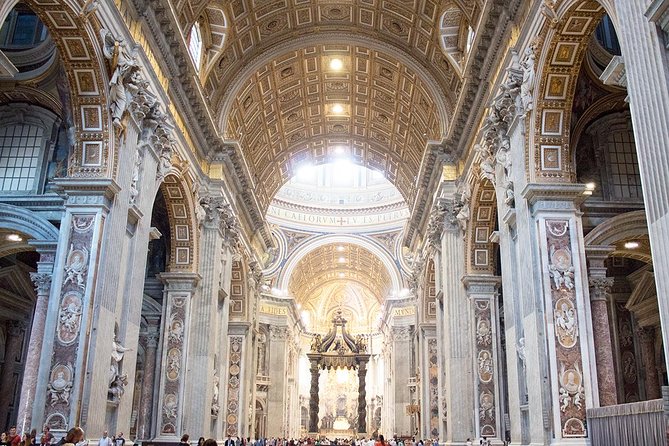
The meeting point is Chiesa di Santa Maria in Portico in Campitelli, at Piazza di Campitelli, 9. This is a good starting location if you want to walk into the ancient landscape right away, rather than starting from a far-flung hotel and fighting transit first.
You’ll also get a clear end point: the tour finishes at Piazza del Colosseo. That matters at night, when you want a simple way home without rerouting your plans.
If you’re the type who likes to arrive early, I’d do it here. Rome mornings and afternoons can teach you patience; evenings can move faster than you expect, and you’ll enjoy the tour more if you’re not rushing at the start.
Teatro di Marcello: the “best preserved” ancient theatre effect
Stop one is Teatro di Marcello, about 15 minutes. Even from the outside, you can get a sense of how monumental Roman performance spaces were. A theatre wasn’t just entertainment—it was architecture wrapped around public life.
The guide’s job at this stop is to help you see what you’re looking at. You’ll learn about Roman shows, which gives the building meaning beyond its “old rocks” appearance.
Time note: 15 minutes is short, so you’ll want to pay attention to the explanation, because the building alone won’t do all the talking.
Piazza del Campidoglio: Michelangelo’s layout and a Forum view
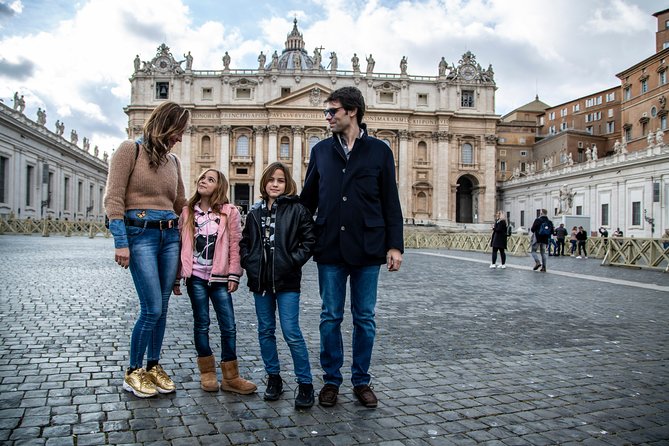
Next is Piazza del Campidoglio for about 30 minutes. This stop isn’t only about a historic square; it’s about vantage. The layout—designed by Michelangelo—organizes the view so you can understand where power and public life sat in relation to the Forum area.
You’ll also see the town hall and the statue of Marcus Aurelius, plus get a great outlook over the forums. This is one of those moments where the guide’s commentary helps you connect the dots fast.
Practical tip: bring your eyes and a little patience. Squares and staircases are busy at night, and it can be tempting to look down at your phone. Better to save that for after you’ve seen the view once properly.
Mercati di Traiano (Museo dei Fori Imperiali): Trajan’s big statement
Stop three is Mercati di Traiano – Museo dei Fori Imperiali, around 15 minutes. This is tied to Trajan’s grand forum complex, and the idea is to show you how Romans mixed commerce, civic space, and monumentality into one system.
If you’ve ever seen photos of “the Forum” without knowing what came where, this is the kind of stop that clears up the geography. The markets and the forum structures help you understand the scale of the project and why Trajan’s era feels like a turning point.
Time note: 15 minutes can feel quick, but it’s enough to understand the big picture if you listen for how the guide frames it.
You can also read our reviews of more guided tours in Rome
Colonna Traiana: war carved into a comic-strip style relief
Stop four is Colonna Traiana, about 10 minutes. This is the standout for people who like visual storytelling. You’ll learn how the column’s reliefs depict Trajan’s campaign of war, and the guidance highlights how the images read almost like a sequential narrative.
That’s the key: the column becomes easier to “decode” when someone shows you what to look for. Without that, you can stare at carved scenes and still leave wondering what you just saw.
If you’re short on patience, this stop is still worth it. Ten minutes is enough time for the guide to teach you the reading method, and then you’ll get more from the visuals even if you move on quickly.
Foro Romano: the center of Rome’s courts, trade, and temples
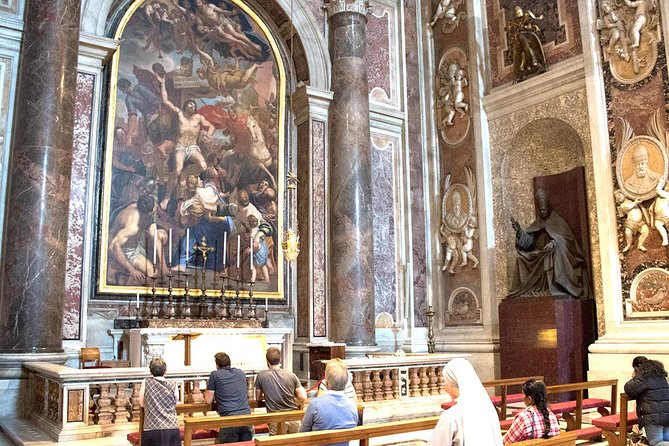
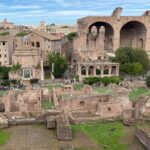
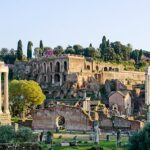
Stop five is Foro Romano, about 30 minutes. This is where ancient Rome shifts from “pretty ruins” to the machinery of an empire.
You’ll learn that the Forum was the center of public life: the location of important judicial courts, trade, and temples. With a guide, that’s not abstract. You start understanding why people cared about these spaces and how they structured daily and political life.
This is also a good time to ask questions, because the guide can point out what you should look for next without you needing to memorize everything on the spot.
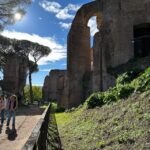
Weariness check: 30 minutes in the Forum area can include uneven ground and lots of turning. If you’re sensitive to long walking, pace yourself and don’t try to outrun the explanation.
Colosseum outside: how to see it without getting stuck in the crowd
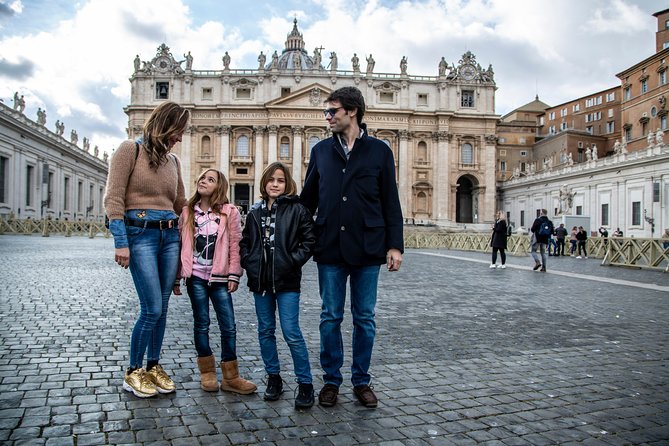
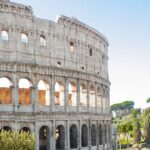
Stop six is the Colosseum, about 30 minutes, and you’ll see it from outside. That means you’re not touring the interior on this particular outing, but you still get the payoff: understanding gladiators and Roman shows in relation to the monument itself.
This is one of the smartest formats for people who don’t want a museum-style visit. You get the big icon, the historical framing, and the chance to orient yourself for a future visit—if you decide you want to go inside another day.
The evening angle helps too. At night, the Colosseum often feels more cinematic from certain viewpoints, and a guide can steer you toward the spots that make the perspective click.
Arch of Constantine: the preserved arch that became a model
Stop seven is Arch of Constantine, about 20 minutes. You’ll learn that it’s considered the best preserved ancient arch in Rome, and you’ll also hear why it influenced later monument design.
The guide connects it to the idea of political messaging through architecture, noting how it served as a model for other triumphal arches, including examples in Paris and London. Even if you’re only seeing it from outside, you’ll understand the symbolism behind the design choices.
This is a good wrap-up stop: by now, the tour has given you enough context to see the arch as part of a larger Roman story about power, spectacle, and memory.
The guides: what makes the experience feel worth it
The strongest praise in the feedback you can find for this style of tour is consistency: guides who can explain without talking over you. Names that show up include Max, Tommaso, and Maria, with comments pointing to thorough explanations and patience when questions pop up.
That matters more than you’d think. Rome sites can be visually overwhelming, and without the right pacing you end up just moving from stop to stop with no clear idea why you’re there. With an art historian leading the discussion, you usually leave with a stronger mental map than you started with.
So when you book, treat the guide as the main feature. If you like learning in a walking format—short stops, clear themes, time to ask questions—this will feel natural.
Price and value: paying for interpretation, not just photos
At $289.73 per person for about 2.5 hours, this is not a budget activity. But it can be good value if you’re paying for three things you can’t easily replicate alone:
- Time saved by not figuring out the route and viewpoints yourself
- Narration that explains what you’re actually seeing
- A private group experience, so you’re not constantly threading through strangers
Also, the tour uses a mobile ticket, and the description mentions group discounts. If you’re traveling with family or friends, that can improve your cost-per-person.
Is it worth it? If you enjoy history but hate feeling lost, it often is. If you’re the type who prefers reading solo and moving at your own pace with no structured stops, you may decide it’s extra spending.
What to wear, how to pace yourself, and what night means here
This is an evening walk, and the tour is all outside. That means your comfort matters more than normal. Wear shoes with real grip, plan for cool air, and keep a small water plan in mind if you tend to get thirsty while walking.
The tour recommends comfortable shoes, and I’ll echo that. The route includes multiple sites with turning and standing, and Rome sidewalks can be uneven.
Good weather matters too. The experience notes it requires good weather, and if it’s canceled due to poor weather, you’ll be offered another date or a full refund. So check forecasts close to departure.
Who this tour suits best
This tour is best for you if:
- you want the big ancient landmarks around the Colosseum area with context
- you like structured stops and short explanations rather than long lectures
- you prefer a private group feel and simpler navigation
- you want time to ask questions
It may feel less ideal if you want a fully indoor museum experience or if you have very limited mobility, because the format is built around walking and outdoor viewing.
If you’re traveling with kids, consider your group’s attention span and comfort level with outdoor pacing. The tour duration is only 2.5 hours, but it’s still a series of stops rather than a seated ride.
Final call: should you book Night at the Colosseum?
If your goal is to see the Colosseum area and understand it without guessing, I’d book it. The outside-only route keeps logistics simple, and the art historian commentary turns the architecture into something you can follow in your head.
I’d skip it if you want to go inside major monuments as part of this same trip, because this experience is designed around viewing from the outside and does not include admission tickets. Also, if walking long distances at night is a struggle for you, you’ll have a better time choosing a route with fewer outdoor segments.
When it matches your travel style—curious, comfortable with walking, and open to learning it’s a very solid use of an evening in Rome.
FAQ
How long is the Night at the Colosseum guided walking tour?
It lasts about 2 hours 30 minutes.
What does the tour cost?
The price is $289.73 per person.
Is this a private tour?
Yes. It’s a private tour/activity, and only your group participates.
Is it all outside, or do you enter monuments?
It’s all outside, and you won’t enter any monument.
Are admission tickets included?
No. Admission tickets are not included because the tour is from outside.
What are the start and end points?
It starts at Chiesa di Santa Maria in Portico in Campitelli, Piazza di Campitelli, 9, and ends at Piazza del Colosseo.
Will I need a paper ticket?
No. You’ll use a mobile ticket.
Is it near public transportation?
Yes, it’s near public transportation, and after the tour ends by the Colosseum you can take the Metro or a taxi.
Is the tour suitable for most people?
Most travelers can participate.
What if the weather is bad?
The experience requires good weather. If it’s canceled due to poor weather, you’ll be offered a different date or a full refund. Cancellation otherwise is non-refundable and cannot be changed.
Are service animals allowed?
Yes, service animals are allowed.