REVIEW · ROME
Rome: Jewish Ghetto and the Great Synagogue Private Walking Tour
Book on Viator →Operated by Askos Tours · Bookable on Viator
A living history lesson starts on a busy street. This private, archaeologist-guided walk connects Rome’s Jewish past to visible stone around Il Portico di Ottavia. I especially like how the tour pairs street-level exploring with paid entry to the Jewish Museum and synagogue spaces. One thing to consider: it’s about 3 hours on foot, and you’ll want comfortable shoes even if the activity level is listed as minimal.
I like the clarity of the schedule: a short stop by Piazza delle Cinque Scole, then time inside the museum and Great Synagogue, and finally the Tempio Maggiore with an inside guide. The guides named in recent experiences, like Claudia, Manuela, and Paolo, get praised for making the story feel concrete, not like a lecture. You’ll also get an efficient, private-group pace, with guidance built in rather than just handed-off tickets.
The main drawback for some people is pacing and time awareness. You’ll have a stretch where you explore the Jewish Museum and Great Synagogue area on your own with provided tickets, so if you prefer constant interpretation at every second, plan to ask your guide questions early. Also, don’t forget that meals and transport aren’t included, so you’ll need to build your day around your appetite and your next stop.
In This Review
- Key things to know before you go
- Rome’s Jewish Ghetto tour: a private story you can actually follow
- Meeting point, timing, and how the walking really feels
- Stop 1: Il Portico di Ottavia and Piazza delle Cinque Scole
- Stop 2: Jewish Museum of Rome and the Great Synagogue area
- Stop 3: Teatro di Marcello ruins and the Portico di Ottavia link
- Stop 4: Tempio Maggiore di Roma with an inside guide
- Who the guides are like, and why it matters
- Price and value: what $321.78 per person really buys you
- Practical tips for a smoother day (so you don’t feel rushed)
- Should you book this Rome Jewish Ghetto walking tour?
- FAQ
- How long is the Rome Jewish Ghetto and Great Synagogue private walking tour?
- Is this a private tour?
- What language is the tour offered in?
- What’s included in the price?
- What is not included?
- Where does the tour start and end?
Key things to know before you go
- Archaeologist guide with private-group attention, so you’re not trying to hear over a crowd
- Il Portico di Ottavia + Piazza delle Cinque Scole gives you the physical layout behind the liturgical schools
- Jewish Museum and Great Synagogue tickets are included, which saves time and hassle
- Teatro di Marcello ruins adds contrast: ancient Rome nearby, Jewish community history in the same neighborhood
- Tempio Maggiore di Roma includes a focused inside visit with an internal guide
- English-only experience with minimal effort required, but expect steady walking
Rome’s Jewish Ghetto tour: a private story you can actually follow
Rome has a way of layering eras so close together that you forget you’re moving through time. This experience is built for that. You start in the Trastevere-adjacent area tied to the 16th-century Jewish ghetto story, then you keep walking toward the places where Jewish life, learning, and worship are tied to specific buildings and spaces.
The big win is structure. You don’t just get dropped into one attraction with a ticket. You get a guided approach that helps you understand what you’re seeing—especially around the Portico di Ottavia area, where liturgical schools were once clustered in Piazza delle Cinque Scole. That context matters. Without it, the streets are pretty, but you miss the point.
This is also a good value style of tour for the kind of access you’re getting. You’re paying for a guide plus included admission to the Jewish Museum, and you’re not sorting tickets yourself in a busy city. It’s priced at $321.78 per person, which is not “cheap Rome” territory, but it’s the kind of private, ticket-included package that usually makes sense for small groups who want better pacing and more direct questions.
You can also read our reviews of more walking tours in Rome

Meeting point, timing, and how the walking really feels
The tour starts at Lungotevere de’ Cenci, 00186 Roma RM, Italy, and it ends back at the meeting point. It runs about 3 hours. That loop is handy: you’re not trying to figure out a new meeting location after your last synagogue stop.
The activity level is listed as minimal, but don’t treat that as “sit-still comfortable.” Your stops are short, and you’re moving between them, including time outdoors around the ruins area. One practical takeaway from the pacing: plan for steady walking, and bring shoes you’re happy to wear for a few hours. The tour is not described as physically demanding, but it is described as a walk-through experience.
What you’ll likely feel most is time management. The schedule includes short guided portions, plus a longer self-paced interval inside museum/synagogue spaces with tickets. If you go into that expecting a full lecture the entire time, you may feel slightly “on your own” during the ticketed visit. If you go in expecting a mix of guided context and then guided-to-self exploration, it works smoothly.
Stop 1: Il Portico di Ottavia and Piazza delle Cinque Scole
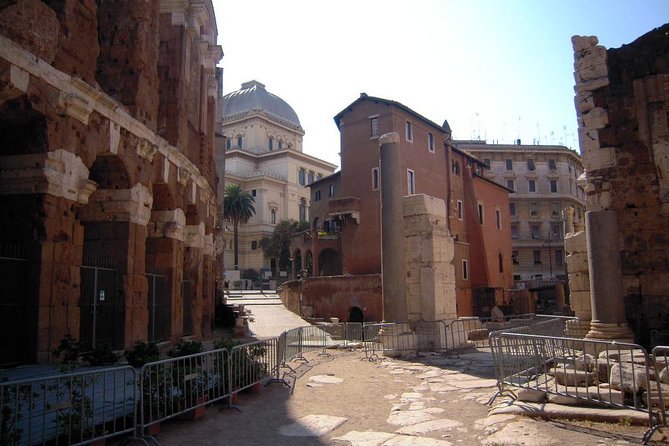
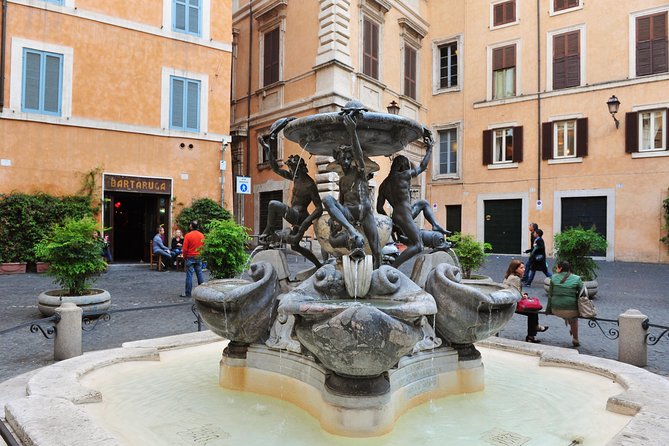
This opening segment is short—about 15 minutes—but it sets the tone. You’ll walk through Via del Portico di Ottavia and reach Piazza delle Cinque Scole. This is where the story becomes spatial: the tour points you toward the idea that specific liturgical Jewish schools were associated with this area.
Why this stop matters: it turns later visits into something you can place in your mind. When you understand that these weren’t generic religious sites but a community built around study and worship, the Jewish Museum and synagogue entries later feel less like separate attractions and more like connected pieces.
There’s also a contrast built in. The exterior streets look like Rome streets, but you’re reading them with a Jewish ghetto lens. That makes the walk more than just movement. It’s a quick orientation to the neighborhood’s meaning.
Included here is an admission ticket for this stop. That means you don’t arrive, then realize entry is another line item later. It’s a small detail, but it adds up when you’re trying to plan a smooth day.
Stop 2: Jewish Museum of Rome and the Great Synagogue area
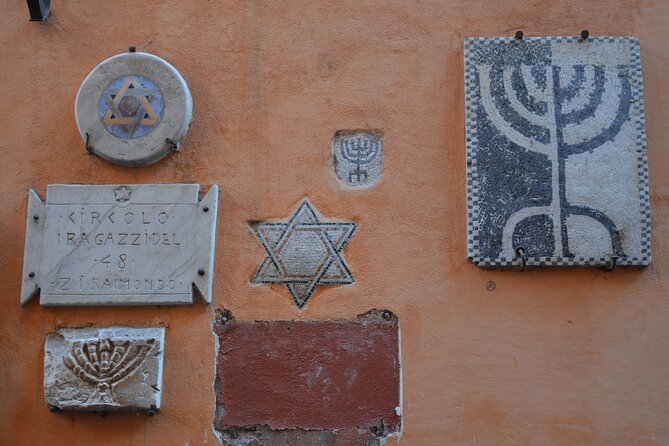
Next you move into a bigger block of time: about 1 hour. This stop includes visiting the Great Synagogue of Rome and the Jewish Museum. Here, the experience shifts style. You’ll visit these spaces on your own using provided tickets.
That can be a plus. You’ll have time to read, look slowly, and move at a pace that works for your group. It’s also a realistic option in a museum setting—some visitors want to linger; others want to move through and come back later.
The key value is that your guided introduction earlier helps you know what to look for when you’re on your own. It’s far easier to spot what’s meaningful when someone has already helped you frame it. This is also where the tour’s overall theme lands: Rome’s Jewish community over centuries—its struggles and successes—becomes the backbone for everything you’re seeing.
The operator provides tickets for this portion, so you’re not spending your limited time in Rome sorting out entry. If you’re the type who likes to ask questions, ask them before you enter this self-guided hour. You’ll get more out of the museum reading when you know what your guide thinks is the most important.
Stop 3: Teatro di Marcello ruins and the Portico di Ottavia link
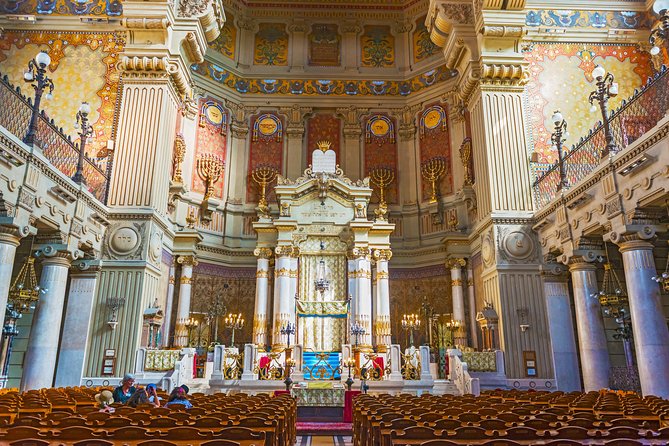
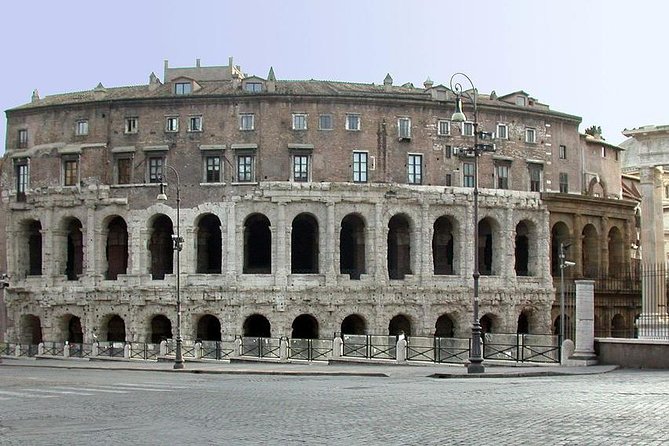
After the museum block, you shift gears to the exterior again with a short 15-minute segment. You’ll visit the ruins of the Theater of Marcello and also see the Portico of Ottavia again in the context of this Roman landscape.
This stop is about contrast. It’s not a detour; it’s a reminder that you’re in a city where different stories occupy the same physical space. Watching the ancient structure sit in proximity to later community history can hit harder than a purely indoor narrative.
Practically, this is also where you get a quick breather. You’re not locked into an exhibit hall, and the walking pace adjusts. But it’s still part of the story: the tour keeps Rome’s layers in view so you don’t feel like the Jewish ghetto topic is isolated from the rest of the city.
You can also read our reviews of more private tours in Rome






Stop 4: Tempio Maggiore di Roma with an inside guide
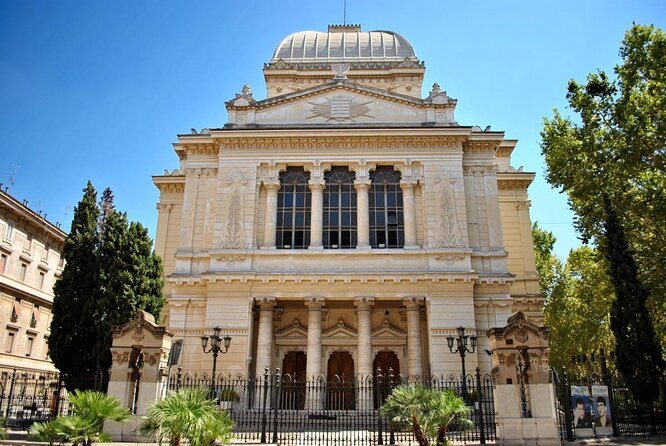
The final major stop is the Tempio Maggiore di Roma, with about 30 minutes of time. This is where you’ll visit the Great Synagogue with an internal guide (and the tour notes this part as free for admission).
This section is valuable because it’s more interpretive on the spot. Instead of relying only on your own reading, you get guidance inside the synagogue space. That helps you understand what you’re seeing without needing to become your own guide in real time.
One more practical note: religious buildings can have rules about behavior, movement, and how you view different areas. Since the tour includes a guide here, you’re less likely to feel lost when you hit those boundaries. It also helps with respect and timing, which matters for places of worship.
In the bigger picture, ending with the inside guide is a strong design choice. After museum context and street-level orientation, you finish with a focused experience where the architecture and worship space do the work.
Who the guides are like, and why it matters
Private tours live or die by the guide. This one is run by Askos Tours, and the experiences tied to named guides show a consistent pattern: people come away saying the interpretation is clear, engaging, and detailed in a way that makes the material feel human.
The names that show up in praised experiences—Claudia, Manuela, and Paolo—are tied to comments about how the guide explains the area and its history, keeps the group oriented, and makes the experience interactive. That matters because synagogue and ghetto history can get abstract fast. A good guide turns it into something you can follow step by step.
Even better for many groups: the tour is private, so your questions don’t vanish into the back of a big group. That’s a real quality-of-life difference when the topic is emotional and complex.
Price and value: what $321.78 per person really buys you
Let’s talk money plainly. At $321.78 per person, this is a premium-priced tour. Rome is full of cheaper options, but those usually skip at least one of these: an expert guide with archaeological framing, included admissions, or a private-group pace.
Here’s what you’re actually paying for:
- Guidance and assistance by an Archaeologist guide
- Jewish Museum ticket included (plus tickets for the early exterior stop)
- A private tour, meaning only your group participates
- Multiple sites bundled into one flow, so you’re not piecing together tickets and directions
There’s also mention of group discounts, which can make a difference if you’re traveling as a family or small group and can split the cost across people.
Is it worth it? If you care about context and you want smoother access through ticketed spaces, yes. If you only want the basics and you’re happy to wander independently at your own pace, the cost can feel steep. But the structure here is clearly aimed at helping you understand what you’re seeing—especially the ghetto story anchored to concrete places.
One last practical value point: it’s commonly booked about 51 days in advance. That’s a sign of popularity, and it’s wise to book early if you have dates in mind.
Practical tips for a smoother day (so you don’t feel rushed)
If you want this tour to feel satisfying rather than hurried, a few simple moves help:
- Wear shoes you trust. The tour includes multiple exterior segments and a self-paced museum hour, so you’ll be on your feet for much of the 3 hours.
- Plan food time before or after. One practical hint from experiences is to leave room to eat in the kosher strip nearby. If you cram your day with back-to-back plans, you’ll lose the chance to make the experience feel full.
- Save questions for strategic moments. Since you spend time inside the museum/synagogue area with tickets and on your own, it helps to ask your guide about what to focus on before you go in.
- Don’t expect constant narration inside every room. The tour does a mix: guided context outside, then guided-to-self in the museum area, then another guided component at the synagogue interior.
If you’re traveling with kids, the activity level is listed as minimal and it’s described as child friendly with parental supervision. Still, museum reading can take patience, so bring water and decide in advance what’s most important for your group to see.
Should you book this Rome Jewish Ghetto walking tour?
Book it if you want a structured, private experience that ties Jewish history to specific places you can point to—starting at Il Portico di Ottavia, then moving into the Jewish Museum and Great Synagogue context, and finishing with Tempio Maggiore di Roma guided inside.
Skip it if you’re mainly looking for a cheap overview and you don’t want to pay for expert guidance plus included tickets. Also, if you hate any self-paced museum time and you want a strict guide-led narration at every second, the mixed format may feel like too much freedom.
FAQ
How long is the Rome Jewish Ghetto and Great Synagogue private walking tour?
It’s about 3 hours (approx.).
Is this a private tour?
Yes. This is a private tour/activity, and only your group will participate.
What language is the tour offered in?
The tour is offered in English.
What’s included in the price?
Included are guidance and assistance by an Archaeologist guide, the Jewish Museum ticket, and the private tour. Tickets for the listed stops are included as part of the experience.
What is not included?
Meals and drinks, and transportation are not included.
Where does the tour start and end?
It starts at Lungotevere de’ Cenci, 00186 Roma RM, Italy, and ends back at the meeting point.