REVIEW · ROME
Rome: City walking tour. the beauty.
Book on GetYourGuide →Operated by Happy walks · Bookable on GetYourGuide
Four hours, seven icons, and a great guide. This Rome city walk strings together Vatican City, Piazza Navona, the Pantheon, the Spanish Steps, Trevi Fountain, and ends at the Colosseum, with stops timed so you can actually see things. It’s guided by Felice, and the small-group size keeps the whole experience human.
I especially love the clear, hit-the-spot coverage. You move between the big names without turning the day into a mad dash bus tour, and you get the kind of context that helps the landmarks make sense.
One possible drawback is the pace. With about 15–30 minutes per stop, it’s built for seeing a lot, not for sitting in one place for a long, slow soak—so plan on comfy shoes and quick photo bursts.
In This Review
- Key things I’d focus on
- Starting at St. Peter’s Square and getting oriented fast
- Vatican City stops: St. Peter’s Square in real life
- Optional extra: Vatican Museums and Sistine Chapel
- Piazza Navona and Bernini’s Fountain of the Four Rivers
- The Pantheon dome: how to look like you mean it
- Spanish Steps: the famous viewpoint moment
- Trevi Fountain: coin-toss magic with Baroque details
- The long payoff: finishing at the Colosseum
- Why this tour feels special: Felice’s guide style
- Languages and group size: easier conversations, better photos
- Pace, comfort, and who this is best for
- Value for your money: what you get in four hours
- Should you book this Rome city walking tour?
- FAQ
- How long is the Rome city walking tour?
- Where does the tour start and where does it end?
- Where is the meeting point for the tour?
- Is the tour wheelchair accessible?
- What group size is this tour?
- What languages are available for the live guide?
- What major sights are included?
- Is there an option to visit the Vatican Museums and Sistine Chapel?
- Is free cancellation available?
- Can I reserve now and pay later?
Key things I’d focus on
- Small group of up to 10 means more time for questions and better photo flow
- Felice leads the tour, with a candid, local-feeling approach and practical tips
- St. Peter’s Square to the Colosseum finish gives you a clean end-of-day payoff
- Piazza Navona + Bernini’s Fountain of the Four Rivers is a highlight worth slowing down for
- Trevi Fountain coin moment plus Baroque details you’ll actually notice
- Optional Vatican Museums and Sistine Chapel if you want more art time
Starting at St. Peter’s Square and getting oriented fast
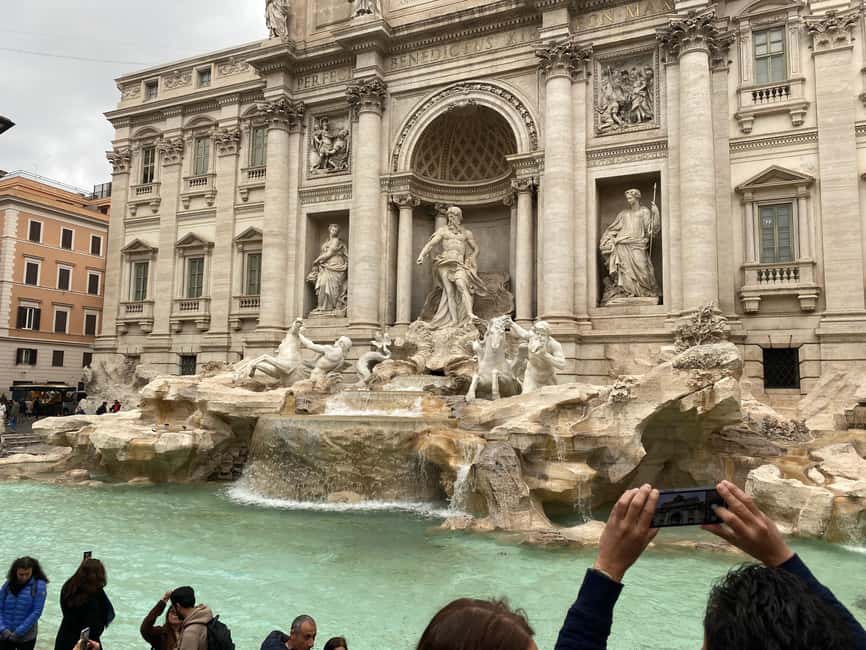
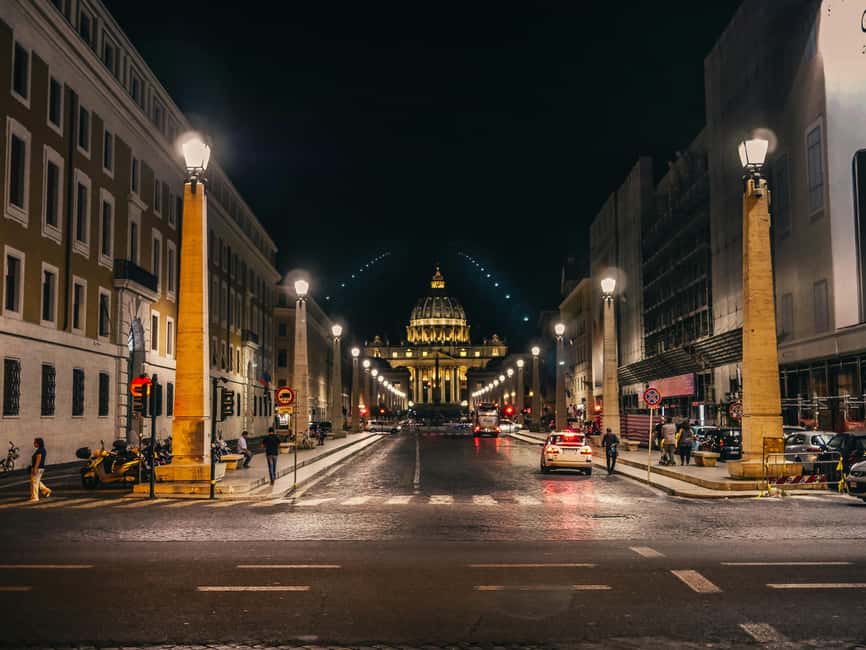
Rome can feel like a maze until someone gives you the bearings. This tour starts near St. Peter’s Square (meeting point is by Piazza Papa Pio XII, 1, at the beginning of the square), so you begin with one of the clearest “anchors” in the city.
From there, the walk turns into a lesson in how Rome layers power and design. You’ll see how the city’s religious center, grand public spaces, and ancient monuments sit close enough that one walk can connect them all.
You can also read our reviews of more walking tours in Rome

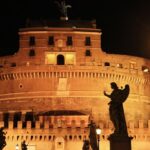
Vatican City stops: St. Peter’s Square in real life
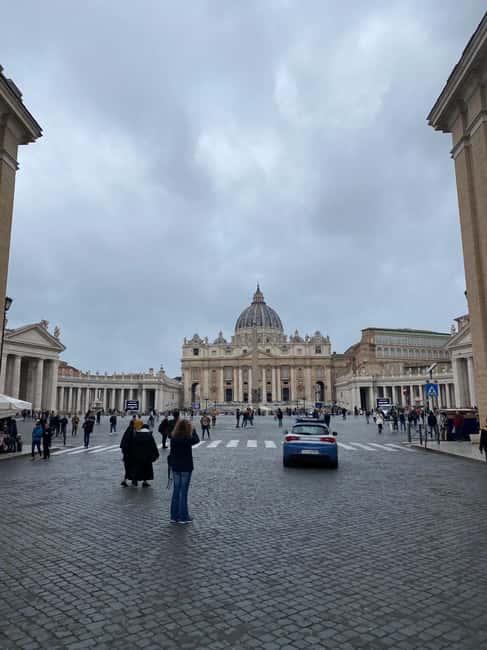
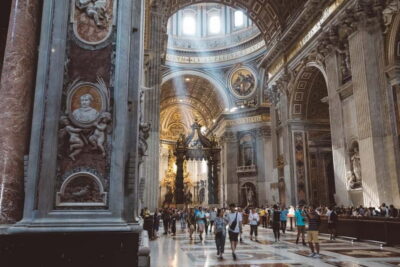
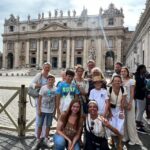
You get a photo stop plus guided time for Vatican City, including St. Peter’s Square (about 30 minutes). If you’ve only seen it in books or phone screens, you’ll be surprised by the scale of the space and the feeling of symmetry when you’re standing in it.
This is also a good first stop because it helps you adjust to Rome’s “big to small” rhythm. Big shapes first, then you spend the rest of the tour switching gears—baroque fountains, a massive ancient dome, and then the Colosseum.
Optional extra: Vatican Museums and Sistine Chapel
You can also add Vatican Museums and the Sistine Chapel as an option. The key thing to know is that this choice can shift your day, because it’s a major add-on even before you factor in crowds and time needed to move through the galleries.
Piazza Navona and Bernini’s Fountain of the Four Rivers
Piazza Navona is one of Rome’s most satisfying squares because it doesn’t just look impressive—it feels like it’s in use all the time. You’ll spend around 20 minutes here with photo time and guided context, and you’ll get to see Bernini’s Fountain of the Four Rivers.
What makes this stop work is that it gives you an anchor for understanding Baroque theater. The fountain isn’t a random pretty object; it’s staged to catch attention and tell stories, and your guide’s explanations help you spot the details you would otherwise miss.
Also, this is a spot where you’ll likely hear and see street performers and artists. Since you’re on foot, you naturally get that Rome-by-the-sidewalk feel without needing to chase it.
The Pantheon dome: how to look like you mean it
Next up is the Pantheon, with about 15 minutes for a photo stop and guided visit. The standout is the dome—simple in shape, but huge in impact—and you’ll learn how ancient Roman engineering created a space that still feels modern.
In a short visit, your best move is to focus on one thing: the dome and the way light changes inside. Even without extra time, you can get that wow effect by watching how the opening above pulls your attention upward.
This is also a good stop for short questions. When you only have minutes, you get more value from asking about what you’re actually seeing right in front of you rather than history facts you can’t connect to the building.
You can also read our reviews of more city tours in Rome



Spanish Steps: the famous viewpoint moment
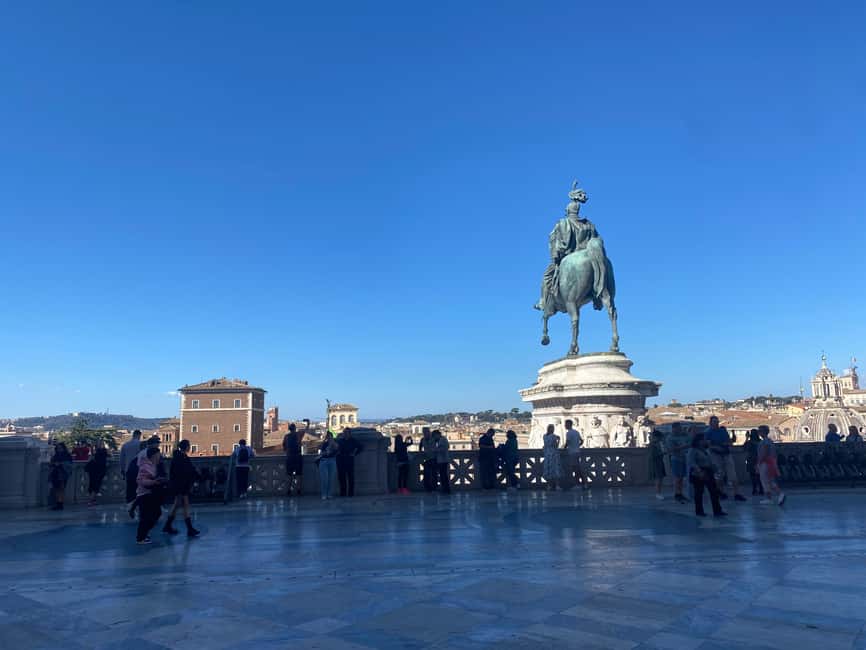
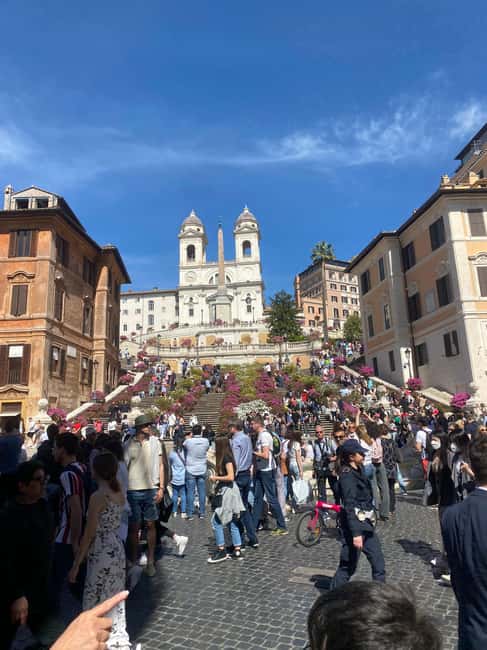
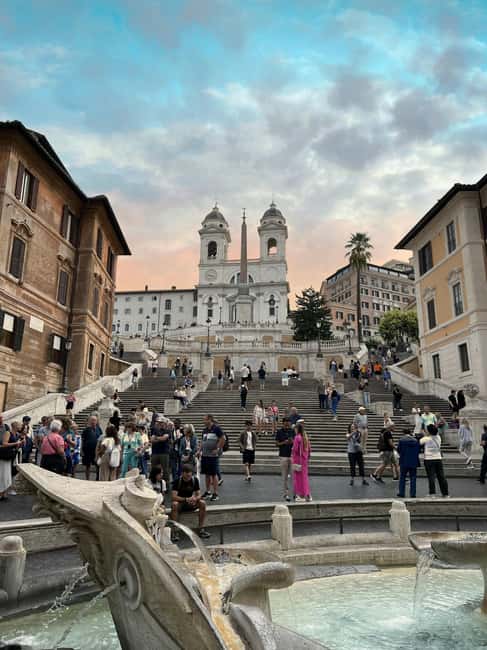
You’ll reach the Spanish Steps with about 20 minutes for photo time and a guided visit. This is a meeting point as much as it is a landmark, and that’s why it feels different from monuments that sit quietly in the background.
The steps are great for two kinds of photos: the classic front view and the city-looking-down perspective. If you want the view without losing time to back-and-forth, you’ll want to pay attention to where your group stops first, then let the rest of the time be for photos and quick questions.
This stop is also a helpful palate cleanser. After the Pantheon’s architectural clarity, the Spanish Steps bring back the street scene—people, fashion, and the sense that Rome is lived in, not just toured.
Trevi Fountain: coin-toss magic with Baroque details
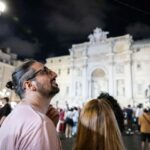
Trevi Fountain gets the big crowds for a reason, but a guided stop helps you see more than the photo. You’ll spend about 20 minutes here, including guided visit and photo time, and you’ll toss a coin into the water for good luck.
What I like about treating Trevi as a guided moment is that it gives you a checklist for noticing. Look at the sculptural drama and how the fountain fits into its surrounding façade rather than treating it like a standalone postcard.
It’s also a moment where you can decide how you want to experience the space. Some people want to watch the action and find a clean angle; others want to stand still for a few minutes and let the details land. The time window is short enough that you can do either without feeling trapped.
The long payoff: finishing at the Colosseum
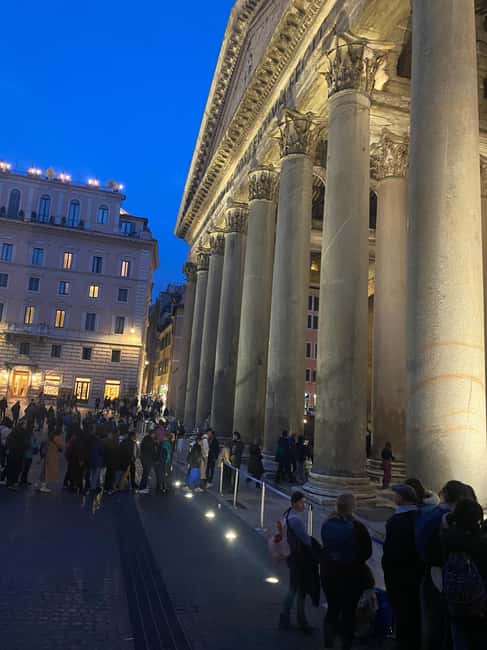
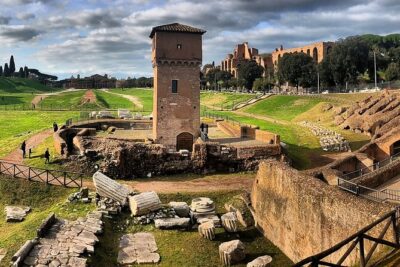
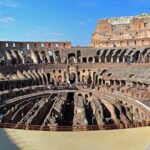
Your final big moment is the Colosseum, where you’ll spend about 30 minutes for a photo stop and guided visit. Ending here matters. By the time you reach it, you’ve seen Vatican City’s grand authority, baroque design at Piazza Navona and Trevi, and ancient engineering at the Pantheon—so the Colosseum lands with more meaning.
This is the stop where you’ll want to slow your internal pace. The Colosseum is easy to look at but hard to fully understand in a quick walk unless you know what to notice. With a guide explaining what you’re seeing, you’ll likely spot the layout logic and appreciate why this building became such a symbol of ancient Rome.
And because it’s the finish, you can also plan your next move afterward. Once you’re done, you’re not starting another massive commute inside the tour bubble—you’re free to keep exploring at your own pace.
Why this tour feels special: Felice’s guide style
The guide is a huge part of why this tour earns a top rating. Felice is described as on time, patient, and ready to answer questions without making you feel rushed. That matters in Rome, where timing and crowd control are real.
I also like that Felice doesn’t only talk about monuments. He’s known for sharing practical recommendations—like suggestions for the best places to eat and restaurant ideas that feel more local than tourist-center copies.
In a short day, a guide who gives you both landmark context and next-day help is a better value than a tour that only recites facts.
Languages and group size: easier conversations, better photos
This tour runs with live guides in English, Italian, Arabic, and French. That’s not just a nice-to-have. Shared language changes how quickly you understand what you’re looking at and how comfortable it is to ask questions on the spot.
It’s also a small group capped at 10 participants. In practical terms, this helps with pacing and photo management. You’re less likely to get stuck behind a wall of people, and you’ll have more breathing room at stops that are famous for crowding.
Pace, comfort, and who this is best for
This is a 4-hour walking tour, so it’s best for people who want a focused Rome circuit. You’ll see a lot of major landmarks without turning the day into a full-on museum marathon.
You’ll likely enjoy this if you:
- want a guided route that connects Vatican City, baroque squares, and ancient Rome in one day
- like hearing explanations while you’re standing at the exact spot
- prefer a small group over large coach-style tours
You might want to think twice if you’re someone who plans your trip around long, slow stays at a single site. With about 15–30 minutes per stop, you’ll get “see it, understand it, move on.” That’s great for momentum, but not for deep lingering.
On the comfort side, the tour is wheelchair accessible. If mobility is a concern, it’s still smart to wear shoes that work well for uneven sidewalks, and to bring a light layer for weather changes since you’re outdoors for hours.
Value for your money: what you get in four hours
Even without pricing listed here, value is clear from the structure. You’re getting a live guide, multiple iconic landmarks, and a route that ends at the Colosseum for a strong finish, all within a half-day timeframe.
That time efficiency matters in Rome. You can spend hours chasing transit or trying to make sense of the city on your own, or you can spend a handful of hours with a guide that helps you prioritize and interpret what you’re seeing.
Also, the option to add Vatican Museums and the Sistine Chapel gives you flexibility. If you only need the big square overview, you can keep the day tight. If you want more art, you can choose that direction.
Should you book this Rome city walking tour?
Yes, if your goal is to get the big Rome hits with a guide who helps you see past the postcard version. The small group, the Felice-led experience, and the mix of Vatican City, Piazza Navona, Pantheon, Spanish Steps, Trevi, and the Colosseum make this a strong choice for a first-time visitor or a short-stay trip.
I’d book it especially if you want both structure and breathing room: enough time at each stop to look closely, photo, and ask questions, without spending your whole day inside one ticket line.
If you know you want long, deep museum time, you can still consider adding the optional Vatican Museums, but plan for the day to run in that direction.
FAQ
How long is the Rome city walking tour?
The tour duration is 4 hours.
Where does the tour start and where does it end?
It starts at Piazza Papa Pio XII, 1 (meeting near the beginning of St. Peter’s Square) and it finishes at the Colosseum.
Where is the meeting point for the tour?
The meeting point is at the beginning of St. Peter’s Square, with coordinates 41.90250015258789, 12.458390235900879.
Is the tour wheelchair accessible?
Yes, the tour is wheelchair accessible.
What group size is this tour?
It is a small group limited to 10 participants.
What languages are available for the live guide?
The tour offers live guiding in English, Italian, Arabic, and French.
What major sights are included?
You’ll visit major landmarks including Vatican City (St. Peter’s Square), Piazza Navona (with Bernini’s Fountain of the Four Rivers), the Pantheon, the Spanish Steps, Trevi Fountain, and the Colosseum.
Is there an option to visit the Vatican Museums and Sistine Chapel?
Yes. Visiting the Vatican Museums and Sistine Chapel is optional.
Is free cancellation available?
Yes. You can cancel up to 24 hours in advance for a full refund.
Can I reserve now and pay later?
Yes. The tour offers reserve now & pay later, meaning you can book your spot and pay nothing today.