REVIEW · ROME
National Roman Museum and Diocletian Thermal Baths Walking Tour
Book on Viator →Operated by Raphael Tours & Events · Bookable on Viator
Ancient art, minus the crowd crush. This National Roman Museum–Palazzo Massimo tour uses fast-track entry and smart narration to help you see Roman art as more than pretty statues. You can also upgrade to include the Diocletian Baths, one of ancient Rome’s biggest flexes of luxury, later repurposed by Michelangelo.
I like the museum’s focus and payoff. You get standout sculpture moments like Boxer at Rest, the Discus Thrower, and the Sleeping Hermaphrodite, plus mosaics, coins, jewels, and frescoes that make Roman life feel concrete, not abstract. I also really appreciate that the guides who lead this tour tend to be the kind who bring objects to life, with names such as Matteo/Mattia, Serena, Damiano, and Georgio showing up often in feedback.
One thing to plan around: the tour runs about 2 to 3 hours, and that’s just enough time for a curated hit-list, not every single room. If you’re hoping for a long, slow museum wander—or if your guide timing slips—you may feel the pace is tight, especially for the baths add-on.
In This Review
- Key Highlights You’ll Actually Care About
- Getting In Fast at Palazzo Massimo: Republic Square Without the Stress
- Palazzo Massimo’s Four Floors: The Roman Art Story in One Visit
- The Sculpture Checklist: Boxer at Rest and Friends
- The Secret Sauce: Why Mosaics, Coins, and Jewels Feel Different With Context
- Upgrading to Diocletian Baths: From 298 AD Luxury to a 1561 Church
- What It Feels Like to Be in the Baths Portion
- Timing and Pace: Private Tour, But Not Unlimited Time
- Price and Value: Is $323.21 Worth It?
- Who This Tour Suits Best (and Who Should Pass)
- Should You Book This National Roman Museum and Diocletian Baths Tour?
- FAQ
- Where does the tour start?
- How long is the experience?
- Is skip-the-line entry included?
- Is the Diocletian Baths visit included by default?
- Is this tour private, and is it in English?
- What if I need to cancel?
Key Highlights You’ll Actually Care About
- Skip-the-line entry starts right at the Palazzo Massimo ticket office near Republic Square, so you waste less time in front of doors.
- Palazzo Massimo’s collection spans centuries across four floors, from the 2nd century BC through the 5th century AD.
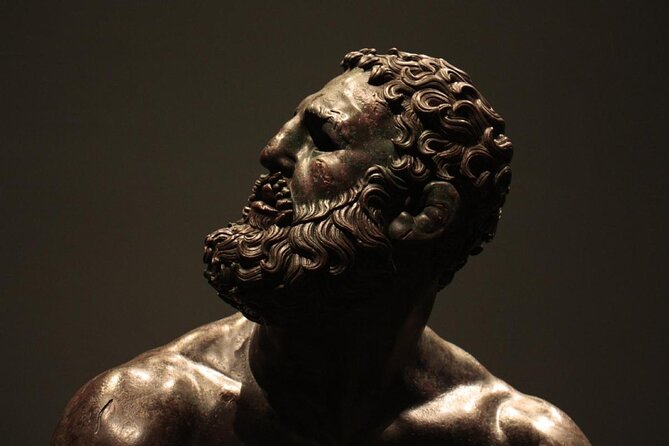
- Sculpture set pieces are part of the route: Boxer at Rest, Discus Thrower, and the Sleeping Hermaphrodite.
- Upgrade option turns it into Diocletian Baths (built in 298 AD) and ties in the bath-to-church story.
- Michelangelo’s church inside the baths: Basilica of St. Mary of the Angels (Santa Maria degli Angeli) incorporated in 1561.
- Private tour style means it’s only your group, and you should get more room for questions.
Getting In Fast at Palazzo Massimo: Republic Square Without the Stress
This tour starts at the National Roman Museum–Palazzo Massimo ticket office at Largo di Villa Peretti, 2 (00185). It’s close to Republic Square, which matters because you’re not committing yourself to an entire morning of “where is it?” guesswork.
The big practical win is skip-the-line entry. You’ll meet your guide, collect your skip-the-line ticket, and bypass the entrance line that usually grows as people funnel toward the museum. That alone can change the whole vibe of the first hour: you arrive ready to look, not already annoyed.
Two other small logistics points that help:
- There’s no hotel pickup, so you’ll want to get yourself to the meeting point on time.
- It’s near public transportation, so you can pick what’s easiest that day instead of planning around a car or taxi.
You can also read our reviews of more walking tours in Rome

Palazzo Massimo’s Four Floors: The Roman Art Story in One Visit
Palazzo Massimo is one of those museums that rewards you for having a guide. The museum is spread across four floors, and it’s designed to show how Roman artistic culture evolved over a long stretch of time—roughly from the 2nd century BC into the 5th century AD.
What makes this stop valuable for you is the mix of categories. You’re not stuck looking at one type of art. You’ll see:
- Sculptures (including the showstoppers most people travel for)
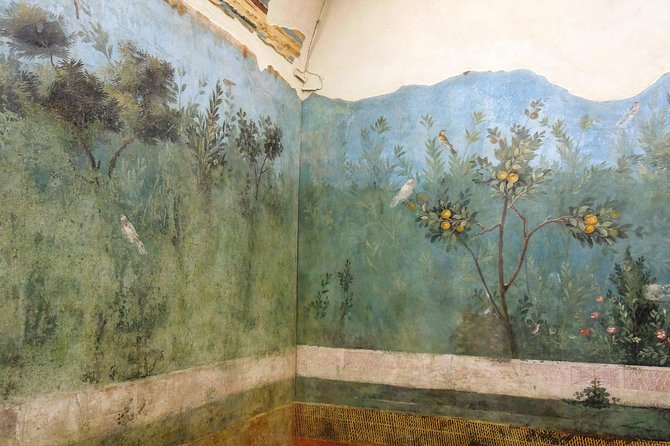
- Frescoes and mosaics (often the most “how did they do that?” moments)
- Coins and jewels, which add texture to the story of wealth, trade, and power
- Goldsmith works and decorative pieces that help you imagine how elite Romans dressed and lived
This is also where you get the rooms tied to Empress Livia’s world—high-status interiors that help you connect objects to people, not just dates. If you’re planning to see Roman ruins after this, the museum gives you visual context so the outdoors doesn’t feel like random stone blocks.
A bonus (and it shows up in feedback a lot): the museum experience can feel calmer than the big Roman headline venues. That means you can actually look closely instead of trying to read captions with elbows.
The Sculpture Checklist: Boxer at Rest and Friends
This tour is built around a handful of sculpture highlights that are famous for a reason, and the route gives you time to take them in properly.
Here are the big names you’ll see:
- Boxer at Rest
The name tells you what to notice: posture, tension, and the moment after effort. You’re looking at how Roman artists captured human form—muscles, balance, and the quiet drama of a body resting.
- Discus Thrower
This one puts focus on technique and motion. Even when the figure is frozen, you can feel the mechanics of throwing—an art form that’s part anatomy, part athletic ideal.
- Sleeping Hermaphrodite
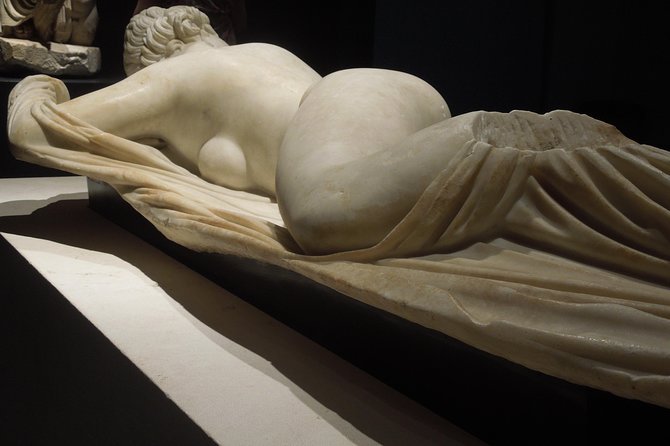
This is the one that often draws a double-take. Look for the softness of the pose and the way the sculpture handles curves and expression. It’s also a good object for learning how Roman art treated myth and form.
What I like about having these on the agenda is that you’re not wandering until you happen on the big pieces. The guide helps you see patterns: how ideal bodies are presented, how realism mixes with stylization, and how Roman tastes shaped what got commissioned and preserved.
Also, pacing matters here. In feedback, guides like Matteo/Mattia and Damiano stand out for their ability to set a comfortable rhythm—even if you pause for pictures. You’re not rushed into the next room like a museum conveyor belt.
The Secret Sauce: Why Mosaics, Coins, and Jewels Feel Different With Context
It’s easy to treat museums as a checklist: see item, move on. This tour nudges you away from that.
Palazzo Massimo includes objects that are small enough to miss if you’re not looking with intention—coins, jewels, and decorative works. With a good guide, these stop being background detail. They become evidence of how Rome worked:
- Coins and luxury items point to the economy and social ranks behind the art.
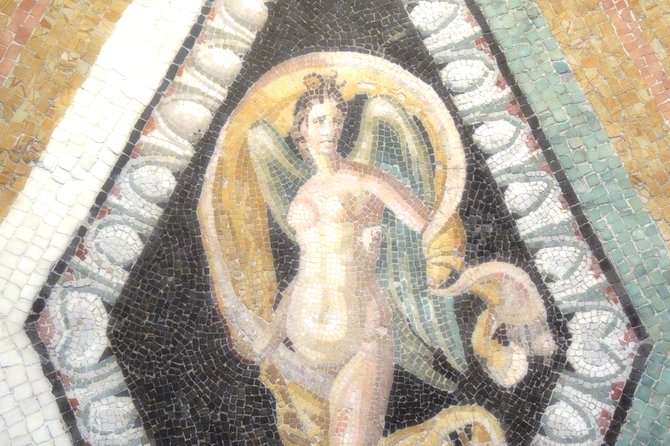
- Frescoes and mosaics show how Romans filled space—floors and walls weren’t blank, they were statement pieces.
- Sculptures connect those rooms to values: strength, mythology, ideal beauty, and sometimes propaganda-like messages about who mattered.
A practical tip: if you care about mosaics, slow down a bit when you get the chance. Mosaics are the kind of art where a minute of close looking reveals design choices you’d never notice in passing. The tour’s guided structure helps you find those moments instead of spending the whole time “working up to it.”
Upgrading to Diocletian Baths: From 298 AD Luxury to a 1561 Church
If you choose the upgrade, the tour shifts gears in a great way: you go from museum art objects to an actual Roman building with layers of use.
The Baths of Diocletian date to 298 AD, and they were built on an enormous scale. The site included features like gyms, libraries, and a swimming pool, and it could accommodate up to 3,000 people at the same time. That number is the kind that makes you sit up—this wasn’t a small private soak. It was a major social and wellness machine.
The story gets even better because Michelangelo transformed part of the bath complex into the Basilica of St. Mary of the Angels in 1561 (often referenced in connection with Santa Maria degli Angeli). You’re essentially learning how the Romans built a bathing world, then later generations reused that architectural shell for a sacred space.
In other words: you’re not just looking at a ruin. You’re walking through a place that kept changing jobs while still keeping its bones.
You can also read our reviews of more museum experiences in Rome



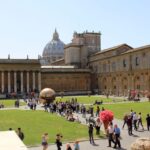

What It Feels Like to Be in the Baths Portion
The baths stop is where your tour turns more atmospheric. Roman baths were social spaces with routines—people met, exercised, relaxed, and moved through sequences. The guide’s narration helps you understand that layout rather than treating it like a set of walls.
If you’re expecting a long, quiet self-guided explore, you might find the time feels tighter. That’s not a flaw so much as the reality of pairing two major sites into one walking experience. Still, it’s a smart trade if you want the big picture: museum art first, then the built environment that shaped daily life.
One practical note from feedback: there was at least one instance where a guide arrived late and the tour ran short. That’s a reminder to be flexible. If you’re booking the upgrade, build your day so you aren’t depending on the schedule to be perfect.
Timing and Pace: Private Tour, But Not Unlimited Time
This is a private tour/activity, meaning only your group participates. That’s a quality-of-life improvement in Rome, where crowds and fixed group sizes can turn even good plans into stress.
Duration is listed as about 2 to 3 hours. The base museum portion is about an hour, and the upgrade that includes the Diocletian Baths adds another roughly hour, with the overall experience often described as around three hours when both areas are included.
So what should you expect?
- In the museum, you’ll move room to room at a guide-set tempo.
- You’ll likely see the major sculptural highlights plus mosaics/frescoes and key decorative areas.
- In the baths, you’ll get the main architectural and social story points without losing the day to slow drifting.
If you’re the type who loves details, you’ll still enjoy it, but you may want to return later for a longer solo stroll if the museum really grabs you. That’s one of the main reasons people want a second visit to Palazzo Massimo.
Price and Value: Is $323.21 Worth It?
At $323.21 per person, this isn’t a cheap add-on. The question isn’t whether it costs more than DIY. It’s whether what you’re buying actually saves time and improves understanding.
Here’s what you get for that price:
- Skip-the-line entry (guaranteed)
- A local guide
- Private tour style (only your group)
- Admission for Palazzo Massimo as part of the experience
- An upgrade option for the Diocletian Baths and their guided portion
The value is strongest if you hate standing in lines and you want the art explained in a way that helps you connect it to Rome outside the museum. In Rome, context is the difference between seeing a statue and learning why it mattered.
Where the cost may feel less justified is if you already know a lot and you mainly want to wander at your own pace. You might be paying for interpretation you don’t need. Also, because the time is capped, you’re paying for a curated highlight route rather than an everything-only visit.
And one small demand clue: this tour is often booked around 48 days in advance on average. That suggests it’s popular, which usually means slots can fill.
Who This Tour Suits Best (and Who Should Pass)
This tour fits best if you:
- Love Roman art—especially sculpture, mosaics, and frescoes
- Want to understand what you’re seeing instead of just taking photos
- Like the idea of pairing museum masterpieces with an important Roman site (the Baths)
- Appreciate private-guide attention in English
It may not be the best fit if you:
- Want a long, unhurried browse through every room
- Prefer purely outdoor ruins with minimal museum time
- Don’t care much about sculpture and museum objects (there’s at least one style preference signal in feedback)
Should You Book This National Roman Museum and Diocletian Baths Tour?
My take: book it if you want the fastest path to meaningful Roman art and a real-feeling bath setting afterward.
You’ll especially like it if you:
- Want skip-the-line entry from the start
- Care about major sculpture highlights such as Boxer at Rest and Sleeping Hermaphrodite
- Choose the upgrade to get Michelangelo’s 16th-century church story inside the Baths of Diocletian
Do it later than planned if you’re short on time. But if your goal is a high-impact art-and-architecture day with a guide, this is one of the more efficient combinations in central Rome.
FAQ
Where does the tour start?
The tour starts at the Palazzo Massimo alle Terme ticket office at Largo di Villa Peretti, 2, 00185 Roma RM, Italy. The activity ends back at the meeting point.
How long is the experience?
It’s listed as about 2 to 3 hours.
Is skip-the-line entry included?
Yes. You get guaranteed skip-the-line entry for the National Roman Museum–Palazzo Massimo alle Terme.
Is the Diocletian Baths visit included by default?
No. You can upgrade to include a visit to the Diocletian Thermal Baths.
Is this tour private, and is it in English?
It’s a private tour/activity, meaning only your group participates, and it’s offered in English.
What if I need to cancel?
You can cancel for a full refund up to 24 hours in advance of the experience start time. Cancellation changes made less than 24 hours before start time aren’t accepted, and the amount paid isn’t refunded.