REVIEW · ROME
Pantheon and the Best of Rome City Private Tour
Book on Viator →Operated by Europe Odyssey Tours di Rahul Raghavan & C.sas · Bookable on Viator
Rome’s highlights, paced for real life. This private 3-hour walk pulls together Trevi Fountain and the Pantheon, plus viewpoint stops that give you context fast, not just photos. I especially like the way guides such as Eugene are praised for routing around heavy cruise-ship crowds, and I like how Rahul-style personalization can shift the focus toward what your group actually wants.
One thing to keep in mind: this route is outdoors and involves steady walking between several big sites, so good weather matters. Also, snacks and bottled water are not included, so you’ll want to plan for breaks before you start running low on energy.
In This Review
- Key things to know before you go
- Piazza Venezia gives you Rome in one glance
- Largo Argentina: Caesar’s story, minus the museum vibe
- Trevi Fountain with time to actually enjoy it
- Hadrian’s Temple and Sant’Agnese: faith, art, and real place texture
- The Pantheon: the dome that still refuses to feel real
- St. Louis of the French: where Caravaggio comes into the plan
- Piazza Navona: architecture and fountains with staying power
- Capitoline Hill: Rome’s “smallest” hill with big influence
- Guide-driven flexibility is the real luxury
- Price, time, and what you’re really paying for
- Should you book the Pantheon and the Best of Rome City Private Tour?
- FAQ
- How long is the tour?
- Is this tour private?
- What language is the tour offered in?
- Is the Pantheon ticket included?
- Do I get a choice between morning and afternoon?
- Where does the tour start and end?
- Is a mobile ticket used?
- Are snacks or bottled water included?
- Does the tour require good weather?
- Is the tour suitable for most travelers?
Key things to know before you go
- Pantheon ticket included while most other stops are free to enter
- Capitol Hill viewpoints plus historic anchors like the Theatre of Marcellus and Mamertine prison
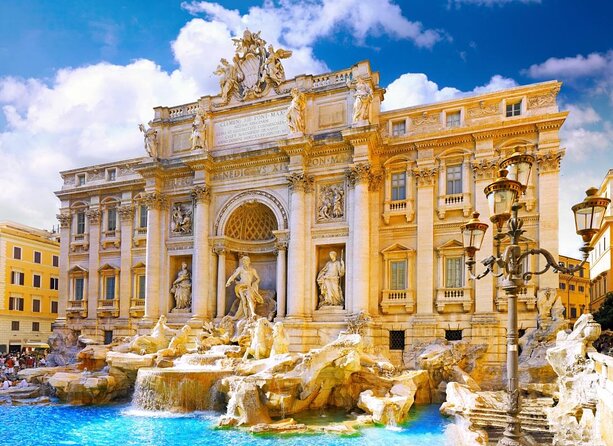
- Trevi Fountain coin tradition with time built in for photos and the swirl of Baroque detail
- Church stop with Caravaggio paintings at St. Louis of the French
- Private group only so your guide can adjust the order and emphasis
- Morning or afternoon start for flexibility with your Rome schedule
Piazza Venezia gives you Rome in one glance
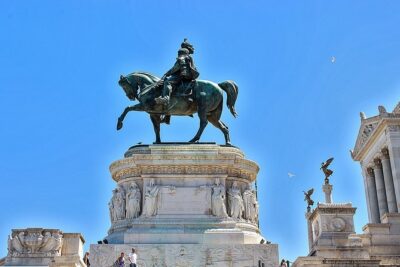
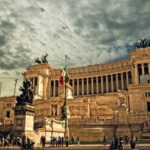
The tour starts with a payoff: a high viewpoint where Rome suddenly makes sense. From the area near Piazza Venezia, you can take in a wide sweep that helps you understand where ancient monuments sit in relation to modern streets.
Here’s why this opening stop works. You’ll see landmarks that connect to Rome’s political and cultural center—like the Theatre of Marcellus—and you’ll also get the kind of orientation that makes later stops easier to follow. If you’ve felt overwhelmed by Rome’s “everything is everywhere,” this first climb-and-look is the antidote.
What you’ll like: the viewpoint sets the tone, and the guide can point out how places you thought were separate are actually part of the same old urban logic. It’s also a good moment to ask questions early, because you’re standing where the big picture is visible.
A small consideration: since it’s a viewpoint and the route is outdoors, your timing and your shoes matter. If you’re prone to getting stiff, plan for slow starts and short water breaks.
You can also read our reviews of more city tours in Rome


Largo Argentina: Caesar’s story, minus the museum vibe
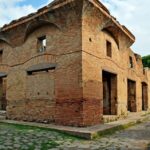
Next you head down toward Area Sacra di Largo Argentina, a place that feels alive in a different way than grand theaters or forums. It’s tied to Julius Caesar’s assassination, but you won’t experience it like a lecture hall. Instead, you get a guided introduction, with attention to how the ground and structures relate to the surrounding ancient center.
You’ll also see the Forum of Julius Caesar area cues and understand how the Market and the Column of Trajan fit into the larger pattern of Rome as a machine for power, trade, and spectacle. This stop is short, but it’s the kind of short that lands well—you get bearings without losing time before the famous crowd zones.
Practical tip: if the day is busy, this is still worth it because you’re moving before you get bogged down. The guide’s goal here is clarity, not lingering in one spot.
Trevi Fountain with time to actually enjoy it
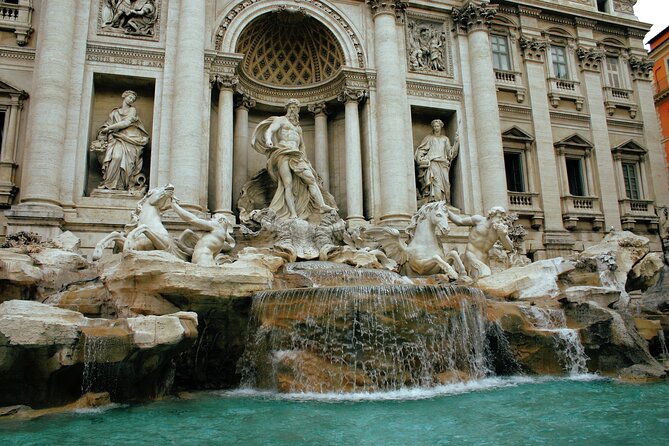
Then comes the Trevi Fountain. Yes, it’s famous. No, that doesn’t make it boring—if you’re here with a plan. The key is that your tour doesn’t treat Trevi like a five-second drive-by. You’ll have time to stand back, notice the Baroque drama, and take photos without feeling rushed into the crush.
You’ll also get the tradition reminder about tossing in a coin. That’s not the main point, though. The real value is understanding how this fountain became a symbol—Rome loves to turn water, marble, and myth into public storytelling.
What’s great for first-timers: Trevi is one of those places where you can look at it for a long time and still miss details. Having a guide steer your attention helps you see more than the postcard angle.
What to watch: crowd levels can spike around peak times. Since the tour runs as a private experience, you have more flexibility than joining a giant group, but you’ll still want patience and good photo angles.
Hadrian’s Temple and Sant’Agnese: faith, art, and real place texture
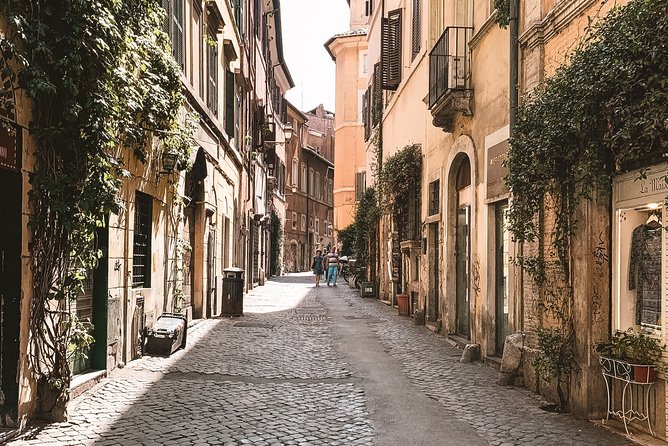
After Trevi, the route shifts to calmer, more “you’re walking through a neighborhood” Rome. You pass by the area around Hadrian’s Temple on the Campus Martius. It’s described as a temple for the deified Hadrian, built in the 2nd century by Antoninus Pius, and later incorporated into another building. That alone is a useful reminder: Rome didn’t just get preserved. It got reused, remodeled, and layered.
From there you move to Chiesa di Sant’Agnese in Agone, connected with the Basilica of St. Agnes Outside the Walls. This church is known for mosaics, a shrine for St. Agnes, and its ties to catacombs. It’s the kind of stop where religion, art, and the city’s underground past overlap.
Why this part matters: the Pantheon and Trevi are big-ticket icons. These church and temple stops help you understand Rome as a living city where ancient elements and later traditions keep sharing space.
Possible drawback: if you’re only interested in the most Instagrammable highlights, you might want to keep your expectations focused. These stops reward curiosity more than speed.
The Pantheon: the dome that still refuses to feel real
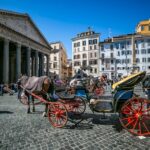
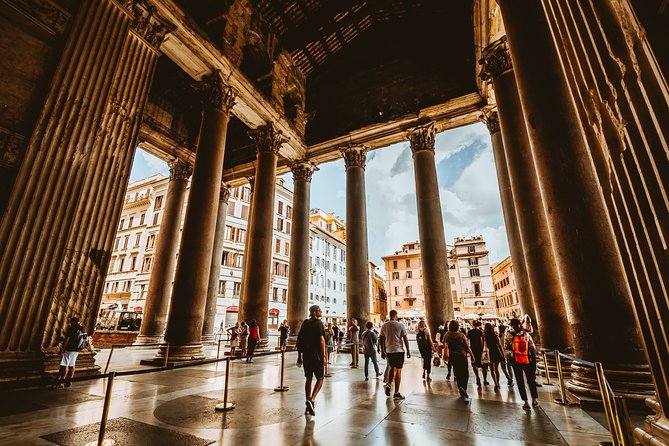
Then you reach the Pantheon, and it earns the hype. You’ll walk in from the street and see the 2,000-year-old temple with its free-standing concrete dome and no support system. That design detail is the kind of thing you can read about quickly and still not fully grasp—until you stand there and realize how the space holds together.
This is also the point in the tour where the guide’s role really shows. The Pantheon isn’t just a building. It’s architecture that influenced people for centuries. When your guide connects the dome, the sense of scale, and why the space works, the site stops being a checklist item and becomes a physical lesson.
Value note: Pantheon admission is included, so you’re not juggling tickets or timing at the last second. That matters on a short, 3-hour route.
What to do in your time there: give yourself room to look up, then look around. The dome and the surrounding structure reward attention in stages. If you’re the type who likes to take notes or sketch, this is a great stop.
You can also read our reviews of more private tours in Rome





St. Louis of the French: where Caravaggio comes into the plan
Between the Pantheon and Piazza Navona, you’ll stop at the Church of St. Louis of the French. The big draw here is art: it’s renowned for three Caravaggio paintings—The Calling of Saint Matthew, The Inspiration of Saint Matthew, and The Martyrdom of Saint Matthew.
Even if you’re not an art fanatic, this is a smart Roman detour because it adds depth to the day. Trevi and the Pantheon tell you Rome’s public face. This church gives you the emotional intensity and drama that made Baroque art so effective—especially when the art is tied to a religious story.
Why it’s a good use of time: it’s scheduled as a 20-minute stop, which is just long enough to see why it matters without draining your energy before the final stretch.
Small consideration: if you’re not into religious art, you may want to ask the guide to focus on what makes these paintings connected to the wider Caravaggio story—so your time feels targeted.
Piazza Navona: architecture and fountains with staying power
Now you roll into Piazza Navona. This piazza is famous for its Baroque architecture and for the Fountain of the Four Rivers. It’s one of those places where you’ll feel the shift from “ancient monument” to “Rome as a stage,” with the city pressing in around the square.
If you’ve only seen Navona from photos, you might be surprised by how much the setting shapes the vibe. The buildings around the square frame your view and make the fountain feel like the center of a performance.
Practical advantage: your tour gives you time here (about 30 minutes). That’s long enough to grab a calm look, take pictures from more than one angle, and just absorb the atmosphere without rushing.
Watch-out: this area can be lively. If you’re visiting during a busy season or a high-crowd week, your guide’s route timing helps keep the feeling manageable.
Capitoline Hill: Rome’s “smallest” hill with big influence
Capitoline Hill is the tour’s finish point, and it’s a strong way to close. It’s the smallest of Rome’s seven hills, yet it carried major religious and political importance. You’ll learn about the Temple of Jupiter Optimus Maximus, the most important sanctuary in ancient Rome.
This stop works because it turns the tour from sightseeing into understanding. You started with viewpoints and major icons; you end with the place that anchored worship at the center of ancient civic life. Even if your feet are tired, it’s the kind of final stop that gives you a mental map you can keep.
What you’ll like: it’s a quieter kind of satisfaction than Trevi or the Pantheon—less “look at me,” more “now I understand why this place mattered.”
Guide-driven flexibility is the real luxury
The tour’s headline is Rome’s best-known sites, but the real advantage is that your guide can adjust based on your interests. That kind of flexibility is especially helpful when you have a mixed group—parents and teens, history fans plus casual walkers, art lovers who want extra context.
In particular, guides like Eugene are praised for smart routing that helps you avoid some of the worst crowd patterns. And Rahul is noted for calling in advance and personalizing the tour, with suggestions that help you plan the rest of your Rome days. That matters because a great guide doesn’t just move you between landmarks. They help you leave with a sense of how to spend your limited time after the tour ends.
If you want a calmer, more thoughtful pace: this kind of private guide setup is your best bet. You can slow down at the parts you care about and skip the parts you don’t.
Price, time, and what you’re really paying for
At $204.26 per person for a 3-hour private tour, you’re paying for three things: time saved, interpretation, and a guide who can manage the flow.
Most stops along the route are free to enter, which helps keep value strong. The major exception is that Pantheon admission is included, and that’s the kind of ticket that can be the difference between smooth and stressful in Rome. So your money is largely going toward the guide and making the route feel efficient.
Who this is best for:
- You want Rome’s top sights without turning your day into a self-guided maze
- You care about context, not just taking photos
- You’re traveling with a group that benefits from flexible pacing
- You like having an English-speaking guide with the option to shift focus
Who might find it less ideal: if you already have a deep plan for monuments and you hate walking, you may decide to do individual sites with more time buffer. This tour is built for a short, efficient route, not for long museum-style wandering.
Should you book the Pantheon and the Best of Rome City Private Tour?
I’d book it if you want a tight 3-hour path through Rome’s most meaningful classics, with a guide who helps you see more than what’s obvious at first glance. The included Pantheon admission and the strong mix—views, political Rome cues, Trevi, a major art church, Piazza Navona, and Capitoline Hill—make it a practical way to get a well-rounded first impression.
Skip it if your group wants long, slow stops, or if you’re sensitive to crowd pressure and walking between multiple major areas. Also, plan for snacks and water because they’re not part of the package.
If you’re aiming for the best value in the shortest window, this private setup is a smart bet.
FAQ
How long is the tour?
The tour lasts about 3 hours.
Is this tour private?
Yes. It’s private, and only your group participates.
What language is the tour offered in?
The tour is offered in English.
Is the Pantheon ticket included?
Yes. Pantheon admission is included, while other stops list free admission tickets.
Do I get a choice between morning and afternoon?
Yes. You can choose a morning or afternoon tour.
Where does the tour start and end?
It starts at the Embassy of Brazil, Piazza Navona 14, 00186 Rome, and it ends at Largo di Torre Argentina, 00186 Rome.
Is a mobile ticket used?
Yes, a mobile ticket is included.
Are snacks or bottled water included?
No. Snacks and bottled water are not included.
Does the tour require good weather?
Yes. The experience requires good weather. If it’s canceled due to poor weather, you’ll be offered a different date or a full refund.
Is the tour suitable for most travelers?
Most travelers can participate, and service animals are allowed. The meeting area is also near public transportation.
If you tell me your travel month and whether you prefer history, art, or photos, I can suggest which start time (morning vs afternoon) tends to work best for that vibe.