REVIEW · ROME
Fascist Rome Guided Tour: The Rise and Fall of Mussolini
Book on Viator →Operated by Raphael Tours & Events · Bookable on Viator
Fascism left buildings in plain sight. This guided Rome history experience tracks the rise and fall of Mussolini through the modern monuments he pushed into the city’s skyline—so you don’t just read about it, you see it. The focus stays on how the regime used architecture and planning to sell power from the 1920s through World War II.
I love that the tour teaches how Fascist messaging worked, using architecture as your clue—not vague history talk. I also like the route’s pull toward the EUR and Foro Italico areas, which usually get skipped when people stick to the ancient circuit.
One thing to think about: getting between stops uses a taxi (not included), and that can affect your total cost and schedule if you’re traveling solo or on a tight plan.
Key things I’d plan around before you go
- Piazza Venezia as the starting point, tied to Mussolini’s Rome headquarters
- A guided walk through the EUR district and modern planning ideas from the Fascist era
- A dedicated stop at the Obelisco del Foro Italico, still carrying Mussolini’s name
- A history-and-architecture approach that helps the ideology make visual sense
- A smaller, private group feel that tends to keep things calmer than the usual sightseeing routes
In This Review
- Piazza Venezia Sets the Tone for Mussolini’s Rome
- The Fascist Plan: Renovate Rome, Build a Third Rome
- EUR and Rationalist Modernism: Why It Looks the Way It Does
- Foro Italico’s Obelisk: Mussolini’s Name on Stone
- What Makes This Tour Worth Your Time (and Not Just Another City Walk)
- Price and Logistics: When $318 Is Good Value
- Who Should Book This Mussolini-Themed Tour
- Should You Book the Fascist Rome Guided Tour?
- FAQ
- How long is the Fascist Rome guided tour?
- What time does the tour start?
- Where does the tour meet, and where does it end?
- What language is the tour offered in?
- Is this a private tour?
- Is admission included?
- What isn’t included in the price?
- Do I need to use public transportation?
- How much does the tour cost?
- What’s the cancellation policy?
- FAQ
- Is the tour confirmed right away after booking?
- Can children join?
Piazza Venezia Sets the Tone for Mussolini’s Rome
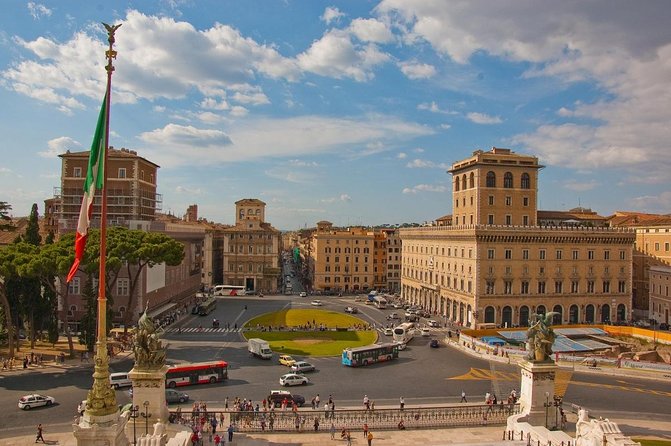
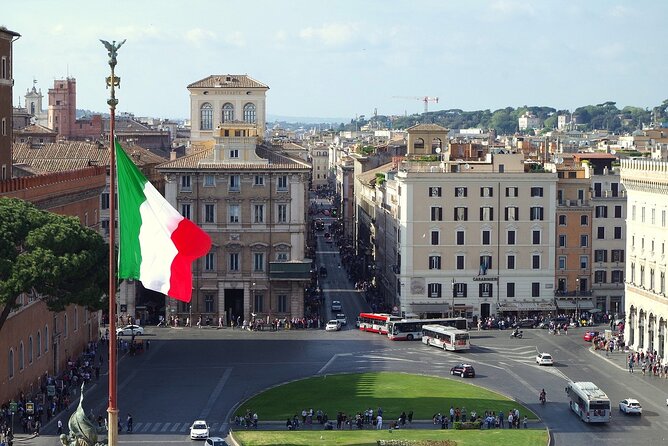
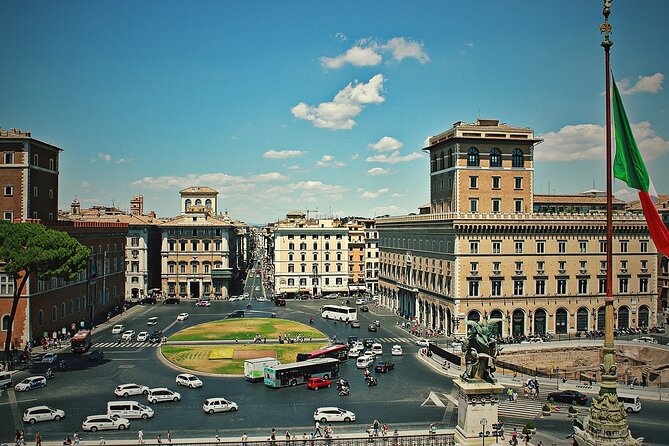
If you want a Rome tour that’s different from the usual marble-and-mosaics loop, this one starts with a blunt reminder: modern political power has always wanted monuments. Your first meeting is at Viale del Foro Italico (00135 Roma RM), and from there you head toward Piazza Venezia, a place still wrapped in the physical language of the Fascist era.
This stop matters because Piazza Venezia is not just a random landmark. It’s tied to Mussolini’s headquarters, which is exactly the point of the day: you’re learning the story of the regime while standing in front of the spaces it used to stage itself. The guide frames how Fascist leaders aimed to renovate Rome’s image—new infrastructure, new buildings, new symbols—so the capital would look like a new political chapter had truly begun.
What I like about this approach is that it gives you a way to read what you see. You start connecting dots: the regime didn’t only govern. It tried to brand itself into the city, like a giant public advertisement made of stone. That lens is what makes the rest of the tour click.
Practical note: the itinerary is designed for a group, and you’re on a tight timeline (about 3 hours). You’ll get explanations, but this isn’t a slow, sit-down museum day.
The Fascist Plan: Renovate Rome, Build a Third Rome
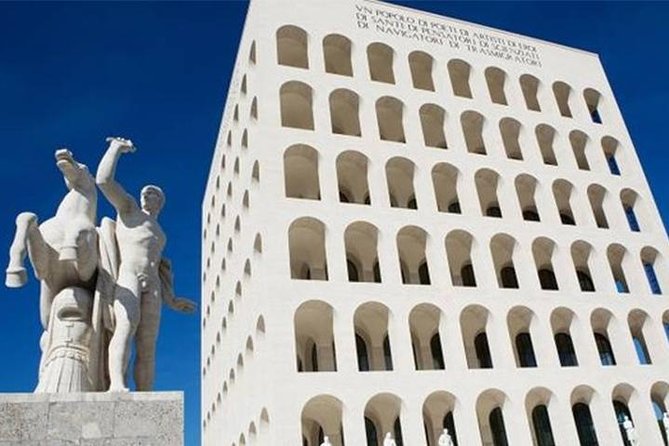
After Piazza Venezia, the tour shifts from a single site to a bigger idea—Fascism’s attempt to reshape the city. Mussolini’s goal is described as creating a Third Rome, meant to rival the Rome of emperors and the Rome of the popes. That’s a massive claim, and it shows up in the physical choices behind the skyline: bold structures, planning schemes, and monumental symbolism meant to look permanent.
This is where the tour becomes more than a history recap. When you’re guided through the newer districts—especially the EUR area—you can see the logic of the Fascist mindset. The regime treated architecture as propaganda. Not in a subtle way. In an overt way. The buildings and the urban planning weren’t simply functional; they were meant to communicate legitimacy, modernity, and inevitability.
A guide can make this kind of material go either way: dry timeline or clear interpretation. The strong feedback you’ll find here points to guides who explain clearly and connect the dots for you. One review highlights Francesco for being highly informed and able to explain the rise and fall of Fascism through architecture. Another mentions Bruno for making the subject feel nuanced, not just blunt.
You’ll likely also hear how the Fascist period shaped parts of modern Italy, including the questions people still ask today about responsibility, aesthetics, and legacy. The tour’s value is that it encourages you to hold tension in your head: these buildings are part of Rome’s fabric now, yet they were built to serve an ideology.
You can also read our reviews of more guided tours in Rome



EUR and Rationalist Modernism: Why It Looks the Way It Does
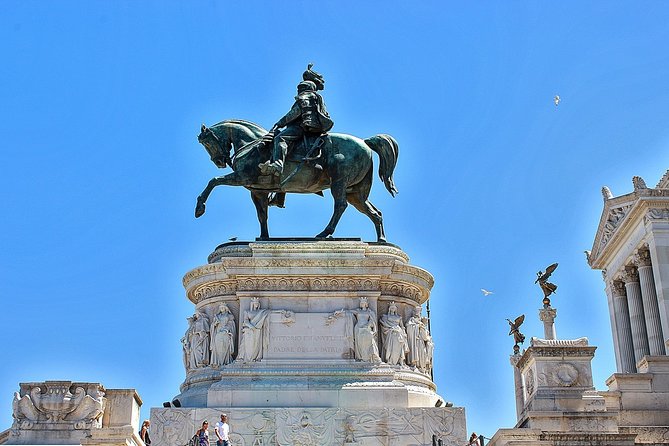
One of the most interesting things you’ll get out of this tour is a sense of why the 20th-century “new Rome” look feels so different from the older Rome you’ve probably seen in guidebooks. The route highlights the EUR district, often linked with rationalist architecture. That style typically emphasizes clean lines, geometry, and a kind of controlled modern order. It fits the Fascist taste for discipline and spectacle.
Even if you don’t care about architectural terms, the guide’s job is to translate form into meaning: you learn what these design choices signaled to the public. The tour also leans into the bigger question—who Mussolini was and what his followers did—without turning it into a chant for or against. The result is the more useful middle: you understand the historical function of the places you’re standing in.
Another key benefit: the tour is positioned as “modern Rome history” and seems to avoid the crowds that cling to the classic ancient routes. In practice, that means you can focus on details instead of fighting foot traffic.
Still, keep expectations realistic. This isn’t a deep architecture studio session with measurements and blueprints. It’s a guided walk-and-stop experience, designed to get you oriented fast and help you see the Fascist era as a physical system, not just dates.
Foro Italico’s Obelisk: Mussolini’s Name on Stone
The tour’s second major stop centers on the Obelisco del Foro Italico, an obelisk that bears Mussolini’s name. This is the kind of object that can feel almost surreal when you first notice it. An obelisk is ancient in shape, but this one is tied to a modern dictator. That tension—old visual language used for new political messaging—is exactly why it’s such a strong teaching moment.
This stop is more than a photo opportunity. The guide uses it to answer the questions people usually come with: who Mussolini was, who his followers were, what he did for Italy, and why he remains controversial. It’s also a good reminder that the Fascist regime didn’t only build administrative power. It also used public space to shape everyday life and cultural identity, including through sports and civic imagery.
You’re likely to come away thinking about how regimes try to control memory. A monument with a name can act like a fixed narrative. Even when the political system collapses, the built environment can keep the story stubbornly visible.
One consideration: the tour is time-structured (about 3 hours), so you won’t get unlimited lingering time at each stop. But the trade-off is that you’ll get the bigger “rise to fall” arc in one sitting.
What Makes This Tour Worth Your Time (and Not Just Another City Walk)
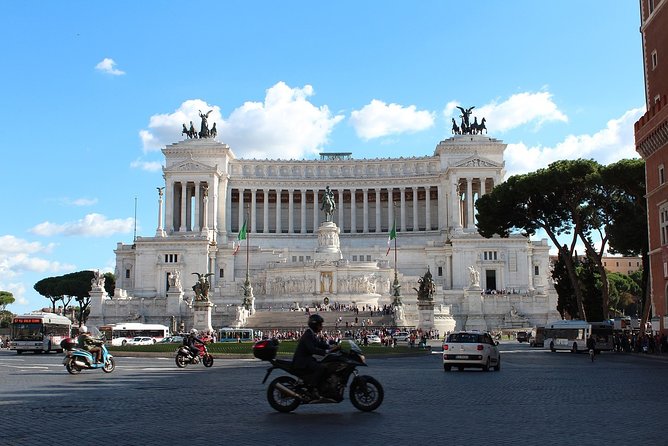
A big reason I’d recommend this kind of tour to the right person is that it handles history in a way that feels spatial. Instead of treating Fascism as a distant chapter, you see how it behaved like an urban planning project. You start noticing how power wants to leave fingerprints—on street layouts, institutional buildings, and monumental forms.
That’s the practical takeaway: if you’ve ever felt Rome’s 20th-century side is hard to understand because it’s not arranged like a museum, this tour gives you a route that makes it coherent. Piazza Venezia anchors the story in headquarters power. EUR shows the “Third Rome” ambition through modern planning. Foro Italico’s obelisk acts like a blunt label that refuses to disappear.
The best feedback emphasizes explanation through architecture and clarity of presentation. One review describes the tour as an off-the-beaten-path modern Rome history route with rationalist architecture, plus a calmer feel—no huge crowd crush during the walk. Another calls it a different Rome beyond usual tourist attractions, crediting Francesco and Bruno for making Mussolini’s story feel understandable and thoughtfully framed.
If you’re the type who likes history but also wants a living, walkable guide to it, this tour hits a sweet spot. You get context without turning it into a lecture that forgets you’re in Rome.
Price and Logistics: When $318 Is Good Value
At $318.21 per person for a tour that runs about 3 hours, the biggest question is value. On paper, it’s not “cheap,” but it can be fair for what you’re getting: a professional guide, a private experience for your group, and a focused route tied to sites connected to Mussolini’s legacy.
Here’s how I’d judge it practically:
- If you’re traveling as a couple or small group, a private guide and transport planning often feel more reasonable because you’re splitting the cost.
- The fact that the tour includes free admission ticket stops (as noted for the itinerary points) helps protect your budget from surprise entry fees.
- The trade-off is transport: a taxi is required to move between sites, and that cost is not included. That means your total day spend isn’t just the tour price.
Also note: the tour offers a mobile ticket and confirmation within 48 hours (subject to availability). You’ll want to keep your phone charged and plan to arrive ready for a start time of 9:00 am.
One more logistics point: the meeting location is at Viale del Foro Italico, and it ends back at the meeting point. That’s convenient for wrapping up, but it also means you should plan your morning meal and any other activities around a defined window.
If you like structure and you value a guide who can explain what you’re seeing—not just lead you past it—this price can make sense.





Who Should Book This Mussolini-Themed Tour
This tour is best for you if you:
- Like history with a visual angle, especially 20th-century Europe
- Get a kick out of architecture and how buildings carry political messages
- Want Rome beyond the ancient classics, focusing on the interwar period through WWII
- Prefer a less crowded route, with time to hear explanations clearly
It’s also a good match if you’re a history buff who finds standard museum descriptions too abstract. Here, the story is anchored in places you can point to.
It might be less ideal if you:
- Want mostly outdoor walking with no modern history focus
- Hate the idea of budgeting for taxi rides between stops
- Are looking for a long sit-down museum experience rather than a route-based guided tour
The tour is in English, and most travelers can participate. If you’re bringing kids, they must be accompanied by an adult.
Should You Book the Fascist Rome Guided Tour?
I’d book this tour if you want to understand Mussolini’s Rome through the city’s own physical reminders. Piazza Venezia sets the stage, the EUR district shows the regime’s modern ambition, and the Obelisco del Foro Italico makes the controversy impossible to ignore. The strongest part is how the guide links ideology to architecture—so you leave with more than photos. You leave with a way to interpret what you saw.
If you’re on a tight budget or you dislike taxi-dependent routes, factor that in before you commit. But if you’re willing to plan your morning and you care about Rome’s less-covered 20th-century story, this is a sharply focused way to do it.
FAQ
How long is the Fascist Rome guided tour?
It runs about 3 hours.
What time does the tour start?
The start time is 9:00 am.
Where does the tour meet, and where does it end?
It starts at Viale del Foro Italico, 00135 Roma RM, Italy, and it ends back at the same meeting point.
What language is the tour offered in?
The tour is offered in English.
Is this a private tour?
Yes. It’s private for your group only.
Is admission included?
The tour notes admission tickets as free for the stops listed.
What isn’t included in the price?
Food and drinks, hotel pickup, private transportation, and taxi costs between attractions are not included.
Do I need to use public transportation?
The meeting area is near public transportation, but a taxi is required to move between the sites.
How much does the tour cost?
The price is $318.21 per person.
What’s the cancellation policy?
You can cancel for a full refund up to 24 hours before the experience starts. Free cancellation is allowed up to that window.
FAQ
Is the tour confirmed right away after booking?
You should receive confirmation within 48 hours of booking, subject to availability.
Can children join?
Yes, but children must be accompanied by an adult.
If you tell me your group size and which neighborhood you’re staying in, I can help you sanity-check whether the taxi add-ons will make this a great deal for your specific plan.