REVIEW · ROME
Micromosaic Jewelry Workshop in Rome, Italy
Book on Viator →Operated by Studio Cassio - Arte del Mosaico · Bookable on Viator
Rome has a way of turning small crafts into big memories. This micromosaic jewelry workshop is a hands-on break from the usual sight-seeing grind, done in the hip Monti neighborhood. I especially like the tiny group size (max seven) and the fact that you leave with wearable art, not just photos.
You start with a guided intro to Roman mosaic technique and history, then get to cut and place the micro glass pieces into a pendant you choose. The pace feels manageable at about 2.5 hours, but the work is detailed—so a realistic consideration is that it’s fiddly and can test your patience.
If you’re coming to Rome with a couple hours to spare and you want something truly personal (and not another postcard), this is one of those experiences you’ll still be glad you booked later—especially if you’re planning a Vatican visit soon and want something art-focused beforehand.
In This Review
- Key points at a glance
- Micromosaic in Rome’s Monti: the workshop vibe you’ll remember
- What you make: your silver pendant, chain, and take-home box
- The 2.5-hour flow: history first, then precise micro-glass work
- Small-group teaching: what it feels like with max seven people
- Price and value: why $142.97 can be fair (and when it’s a splurge)
- Difficulty level: it’s easier if you bring glasses and patience
- Best for families, couples, and art-minded travelers
- Logistics that matter: meeting point, timing, and getting there
- Should you book Studio Cassio’s micromosaic jewelry workshop?
- FAQ
- FAQ
- How long is the micromosaic jewelry workshop in Rome?
- What does the class cost per person?
- Is the workshop offered in English?
- What do I get to take home?
- Where do I meet for the workshop?
- What is the minimum age to participate?
- Can I cancel for a full refund?
Key points at a glance
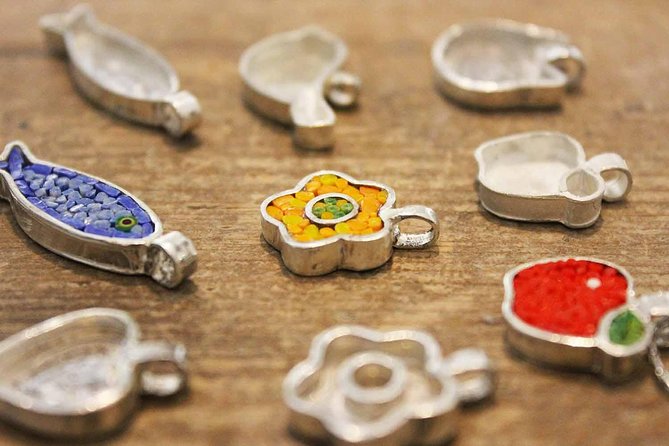
- Small group of seven: more attention while you’re working on the tiny glass pieces
- A real micromosaic process: start with history, then learn the method, not just the outcome
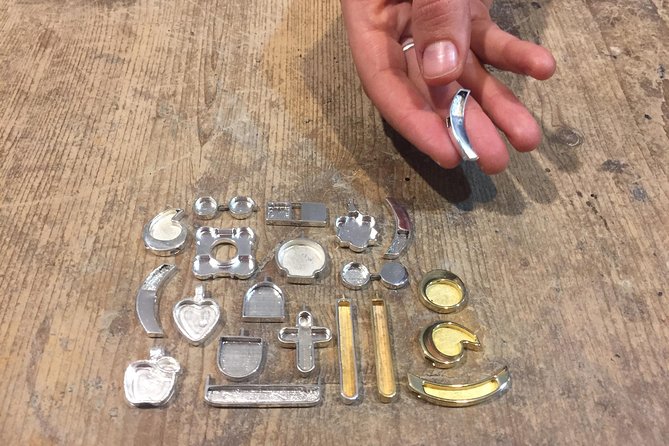
- Choose your pendant frame and chain: you’re making a wearable souvenir, not a generic trinket
- Materials and tools included: premium micromosaic glass and what you need to assemble it
- Refreshments included: bottled water plus coffee or tea as you create
- Finish comes boxed: sturdy jewelry box included for easy travel home
Micromosaic in Rome’s Monti: the workshop vibe you’ll remember
Monti is one of my favorite parts of Rome for this kind of experience. It’s lively enough to feel local, but it’s not as frantic as the center near major monuments. The studio start point is at Studio Cassio – Arte del Mosaico on Via Urbana, and the whole setup is built for work at close range—tables, tools, and people focused on the same small task.
The big difference here is that micromosaic is not a “watch and move on” activity. You’ll be doing the careful glass-cutting and placement that makes this craft so distinctive. And because the studio keeps groups very small, you get more of that artisan attention that makes learning feel possible instead of stressful.
One more thing I appreciate: the experience leans into craft and technique. You’re not just handed a “Rome souvenir” template. You get context on Roman mosaics first, so when you’re working with micro pieces later, it feels connected to something bigger than the jewelry in your hands.
You can also read our reviews of more tours and experiences in Rome



What you make: your silver pendant, chain, and take-home box
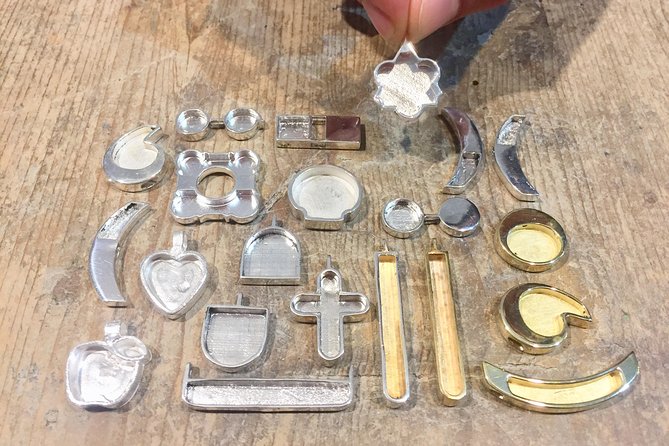
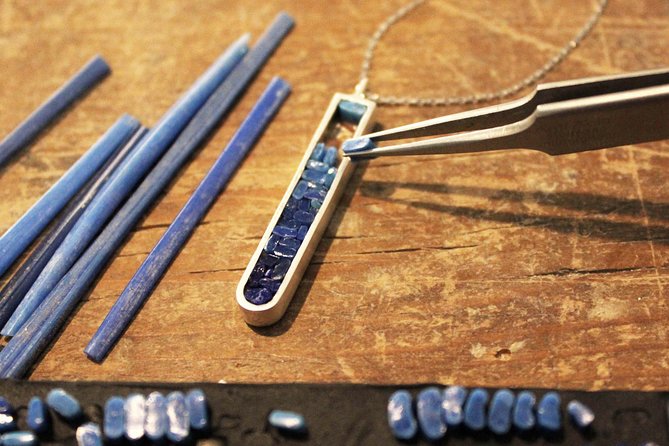
The workshop outcome is a high-quality silver pendant frame with a chain—and it’s one of the most valuable parts of the deal. Souvenir jewelry in Rome can vary wildly in quality and “finish.” Here, the included setting and chain are part of the craft, so you’re not just assembling a decoration; you’re creating a wearable pendant that matches the time and effort you put into it.
You’ll also get access to premium micromosaic glass materials and the tools needed to build your design. The end result is your own finished work of wearable art, informed by historical luxury practices. That matters because it’s not framed as a modern craft that ignores tradition. You’re learning the method the Cassios family worked on and refined over generations.
And yes, you get a sturdy jewelry box to store it. That might sound minor, but it’s huge if you’re juggling Rome logistics—packing, transfers, and the one thing you don’t want is your new pendant getting scratched or tossed around.
The 2.5-hour flow: history first, then precise micro-glass work
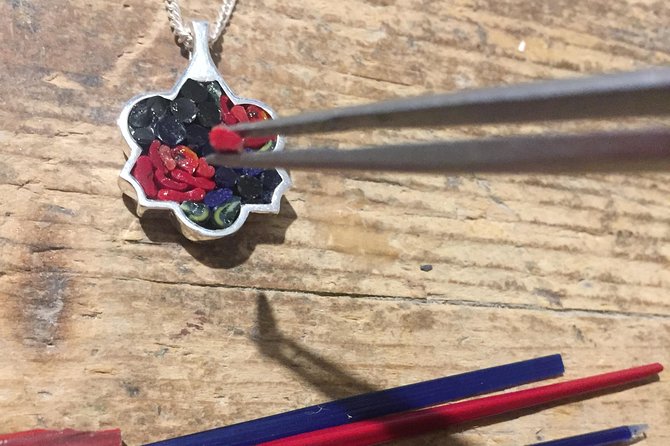
The class starts at 10:00 am and runs about 2 hours 30 minutes. You meet at the studio, and from there the session is designed to move from understanding to doing—without rushing you into the difficult part.
1) Introduction to Roman mosaic technique and history
You begin with context on mosaics and how micromosaics evolved. The Cassios family connection is part of the story too: their studio practice was established in the historic Trajan’s Market area in the 19th century. Hearing that background helps you understand why the micro pieces matter and why this craft has such staying power.
2) Hands-on micromosaic glass-cutting and placement
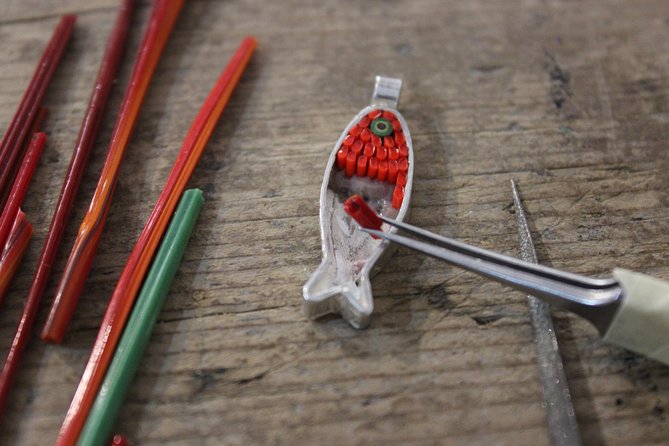
After that, you work with micromosaic glass-cutting methods. This is the heart of the experience. Your job is to create a small but detailed image or arrangement using tiny pieces—then fit them into the pendant frame.
3) Finishing and taking it home
You end back at the meeting point. The workshop includes the tools, materials, and setup needed so your final piece is complete enough to bring home as a souvenir right away.
The practical tip here: micromosaic is detailed work. Plan to focus. If you’re the kind of traveler who wants a scenic walk every 20 minutes, you might feel the contrast. But if you want a concentrated creative morning, this format is excellent.
Small-group teaching: what it feels like with max seven people
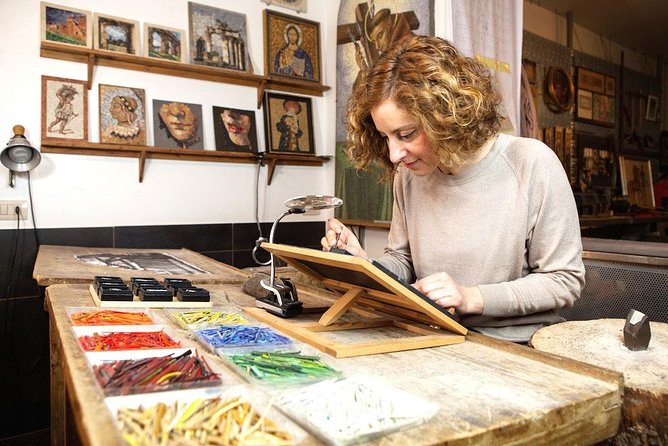
The workshop caps at seven travelers, which is a real quality lever. In a class this technical, “group size” isn’t just about comfort—it affects whether you get timely help when something feels confusing.
In the experience, you’ll likely work with instructors and assistants. Names that come up frequently in participants’ stories include Juliana and Sara, with emphasis on patience and step-by-step coaching. Some classes also include interns working alongside the teaching team, which can mean more pairs of hands checking your progress.
That said, craft lessons have a tension: guidance versus control. Most of the feedback celebrates how the staff walks around, advises, and supports you while you keep ownership of your design. One caution from a less favorable account: if you’re extremely particular about doing every adjustment yourself, you should set expectations early. In very technical assembly, the team may need to intervene to ensure everything stays tight and secure.
Price and value: why $142.97 can be fair (and when it’s a splurge)
At $142.97 per person for roughly 2.5 hours, this isn’t a bargain workshop. But for what you get, it’s easier to justify than many “craft with a souvenir” tours.
Here’s the value math in plain terms:
- You get a silver pendant frame and chain (included, not an extra add-on)
- You get premium micromosaic glass materials and tools (also included)
- You get a finished wearable product and a sturdy jewelry box
- Refreshments are included, including bottled water plus coffee and/or tea
Also, the format is small and instruction-heavy. That usually costs more than larger, faster “make-your-own” workshops. If you’re comparing to buying micromosaic jewelry outright in a shop, the savings comes from doing it yourself—and often from avoiding the markup that happens when you’re paying purely for the finished object.
If you’re budgeting tight, consider whether you’ll actually enjoy precise handwork. If you do, it can be a high-impact use of time. If you don’t, it may feel expensive for how much concentration it requires.






Difficulty level: it’s easier if you bring glasses and patience
Micromosaic is beautiful partly because it’s hard. The tiny cutting and placement can feel fiddly at first, and that’s normal. Many positive notes point to the same idea: the staff is patient, encouraging, and helpful when the work gets tricky.
A very practical suggestion showed up clearly in feedback: bring your best pair of glasses. Even if you don’t normally wear glasses, doing precision work with tiny pieces is different from reading a menu.
How you can make this work better for yourself:
- Start calm. Don’t treat this like a quick activity between big-ticket attractions.
- Expect a learning curve—your first placements might be less perfect.
- If you’re someone who needs to control every step, say so early. Ask how much freedom you have in design and assembly so you’re aligned on what the staff will adjust versus what you’ll finalize.
Bottom line: if you enjoy crafting and you’re okay slowing down for detail, this class delivers a strong sense of pride in what you make.
Best for families, couples, and art-minded travelers
This is a great option if you want an off-the-beaten-path art experience that still feels doable. The workshop is offered in English, and most travelers can participate.
A couple specific fit notes:
- Kids: the minimum age is 12, and children must be accompanied by an adult. Families have enjoyed doing it together, including with teenagers.
- Couples and solo travelers: small-group teaching works well for both. Solo travelers can also get steady attention without feeling lost in a big crowd.
- Art fans who want context: the intro to Roman mosaics adds meaning, especially if your next stops include museums or major art sites.
One more “Rome advantage”: you can pair it with a morning of art. People often schedule it earlier in the day or before a big Vatican-related visit because the history portion makes the later art feel more personal and understandable.
Logistics that matter: meeting point, timing, and getting there
You meet at Studio Cassio – Arte del Mosaico, Via Urbana 98, 00184 Roma RM, Italy. The workshop starts at 10:00 am and ends back at the same place.
Transportation isn’t included, but the studio is near public transportation, which helps. Also, the activity ends where it starts, so you don’t have to plan a complicated second transfer.
A small planning note: your ticket is mobile, and confirmations come at booking. If you like having everything ready on your phone, this is convenient.
Should you book Studio Cassio’s micromosaic jewelry workshop?
I think you should book it if you want a hands-on, tiny-group craft experience that leads to a real wearable souvenir. The combination of Roman mosaic context, detailed micromosaic technique, and included materials (silver pendant frame, chain, and a box) makes it feel like more than a quick tourist workshop.
Don’t book it if you strongly dislike precision work or you’re expecting a casual, hands-off class. Micromosaic asks for focus, and the process is genuinely fiddly.
If you’re on the fence, decide based on this simple question: do you want to spend a couple hours learning a craft with your hands? If yes, this is a smart, memorable use of time in Rome. If no, you’ll probably prefer a museum morning instead.
FAQ
FAQ
How long is the micromosaic jewelry workshop in Rome?
It runs about 2 hours 30 minutes.
What does the class cost per person?
The price is $142.97 per person.
Is the workshop offered in English?
Yes, it is offered in English.
What do I get to take home?
You’ll create a micromosaic jewelry piece using included materials and tools, and you receive a silver pendant frame with a chain plus a sturdy jewelry box for storing your artwork.
Where do I meet for the workshop?
The meeting point is Studio Cassio – Arte del Mosaico, Via Urbana, 98, 00184 Roma RM, Italy.
What is the minimum age to participate?
The minimum age is 12, and children must be accompanied by an adult.
Can I cancel for a full refund?
Yes. You can cancel for a full refund up to 24 hours in advance.