REVIEW · ROME
Discover Rome Highlights by Golf Cart Tour private tour
Book on Viator →Operated by Rome golf cart tours · Bookable on Viator
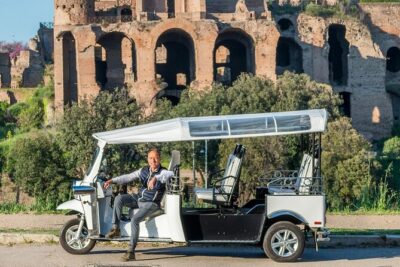
Rome feels faster when you ride. This private golf cart tour is a smart way to hit Rome’s big landmarks with a guide, and it keeps the plan flexible so you can steer toward what you care about most.
I especially like the big-sights coverage without grinding through crowds and long stretches on foot. I also like the human touch: when guides like Jack, Eduardo, Antonio, Angelo, or Gabriele are at the wheel, the history comes with local shortcuts and practical tips—not just a script.
One thing to factor in: you’re mostly doing quick stop-and-see moments. Entrance fees are generally extra, including the Colosseum (€18 per person), so build that into your budget if you want to go inside.
In This Review
- Key things to know before you go
- Why this golf cart format works for Rome
- Price and what you really get for $169.38
- Where the tour starts (and how the end location helps)
- The Colosseum stop: quick views, clear next steps
- Pantheon: the engineering moment you can’t miss
- The postcard-steps viewpoint and the coin-toss tradition
- Piazza Navona: fountains, baroque drama, and time to breathe
- How the flexible itinerary plays out in real life
- Guides: why names keep showing up in the best reviews
- Getting around fast without losing the story
- Best use of your time: who should book this
- Timing tips: daylight, dusk, and photo expectations
- My quick take: should you book this golf cart tour?
- FAQ
- FAQ
- How long is the Discover Rome Highlights by Golf Cart Tour?
- What is included in the price?
- Is the Colosseum admission ticket included?
- Is the tour private?
- Where do you meet and where does the tour end?
- What happens if weather is poor?
Key things to know before you go
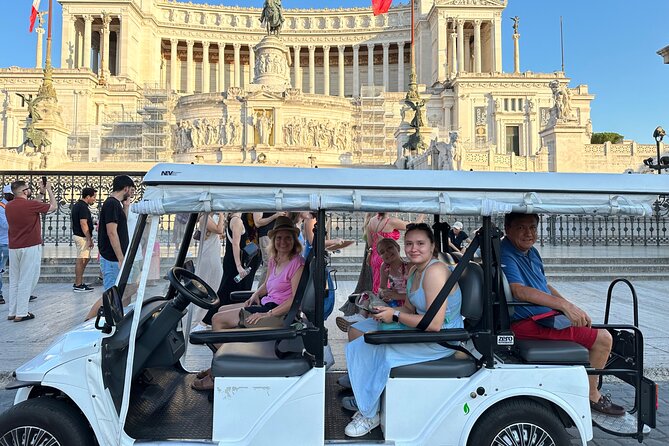
- Cart comfort, crowd control: You move around the city without being stuck in foot traffic.
- Route can change: Your guide can adjust stops to match your interests and energy level.
- Colosseum ticket is extra: Plan on buying the Colosseum admission separately.
- Photo-friendly pacing: Short viewing times work well for photos and quick orientation.
- Pickup near the Villa Borghese area: Meeting is set by Piazzale delle Canestre with pickup nearby.
- Guides make it fun: Names like Jack, Eduardo, Angelo, and Gabriele show up again and again in top ratings.
Why this golf cart format works for Rome
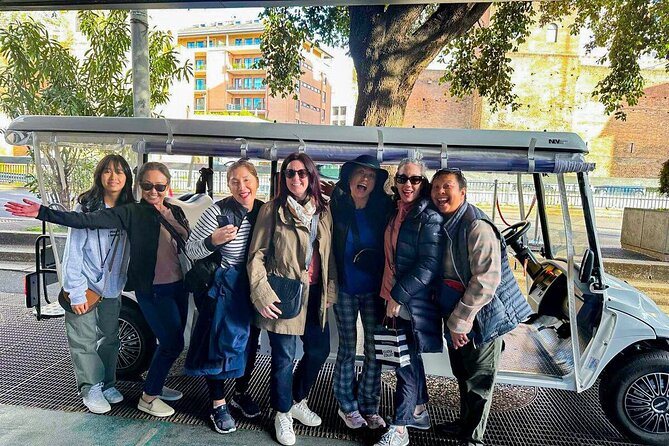
Rome is one of those cities where the photos look easy but the walking can feel endless. This tour’s whole idea is simple: use a golf cart to cover the highlights efficiently, then let your guide call out what you’re seeing and why it matters. It’s the fastest way to get your bearings during a short stay, and it’s also a nice reset if you’ve been on your feet already.
The best part is that you’re not locked into a rigid checklist. You’ll hit major stops like the Colosseum, the Pantheon area, and Piazza Navona, but your guide can shift the flow so it fits your group. If you want a longer photo break, a quick viewpoint detour, or a break for something like gelato, the tour style makes that easier than a walking-only route.
And yes, it’s plain fun. Zooming through narrow streets turns the city into something you can actually digest in a single outing, without turning your day into a leg-day contest.
You can also read our reviews of more private tours in Rome



Price and what you really get for $169.38
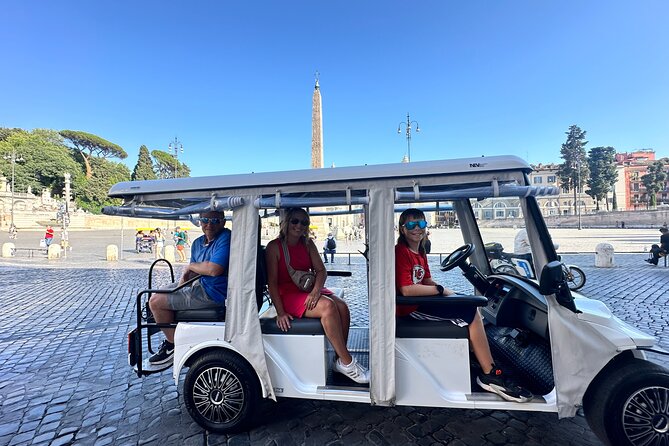
At $169.38 per person for about 2 hours 30 minutes, you’re paying for three main things: a private guide, a golf cart, and a tight route designed to cover Rome’s headline sights. What’s not included is the cost of admission for attractions—most importantly, the Colosseum, which is €18 per person.
So here’s the value math. If you want to see the monuments outside and use the tour for orientation plus photo stops, you can keep costs predictable. If you plan to go inside multiple sites, your total will grow, but at least you’ll know which places are worth a second visit.
In practice, I think this is priced like a “smart convenience” choice. You’re not buying luxury for luxury’s sake. You’re buying time, easier movement, and a guide who helps you connect the dots fast.
Where the tour starts (and how the end location helps)
You start near Piazzale delle Canestre in Rome (00197). Pickup is listed at that same area, and the note points you to being by the Bar Villa Borghese Park area.
You end in central Rome at Mammina Roma – Barberini, Piazza Barberini 13 (00187). That’s a helpful finish because it drops you close to a lot of restaurant options and the kind of central streets where you can keep exploring without a long commute.
One practical perk: the start area is described as near public transportation. That matters in Rome, where timing can get weird fast if you’re relying only on taxis.
The Colosseum stop: quick views, clear next steps
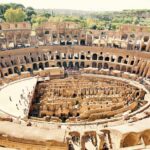
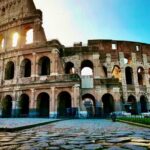
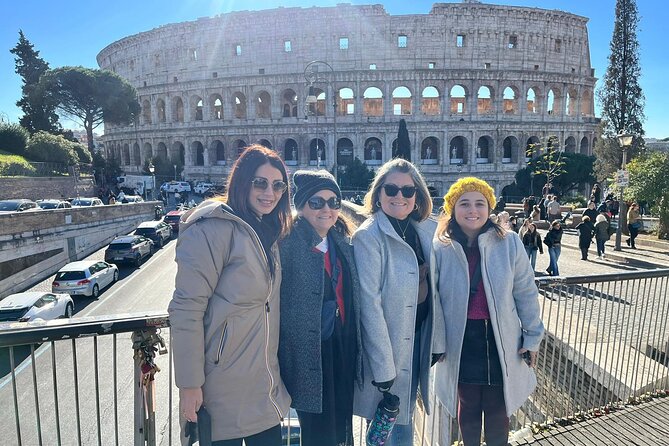
The tour includes a stop at the Colosseum, with time set for about 10 minutes. The Colosseum is the ultimate Rome flex: stepped design, massive scale, and a structure that still feels oddly modern in how it organizes space.
Two things to know up front:
- Admission is not included. The tour lists the Colosseum ticket cost as €18 per person.
- You’ll need proper ID for entry to the Colosseum and Roman Forum. Each traveler must present a valid ID card or document that matches the name used at booking.
If you’re trying to decide whether to buy Colosseum tickets, this stop is still useful. Even without a long entry, you’ll get oriented—where the entrances are, where your future self should aim, and what you want to photograph. For many people, the tour works as a pre-game so your full visit later feels more intentional.
Pantheon: the engineering moment you can’t miss
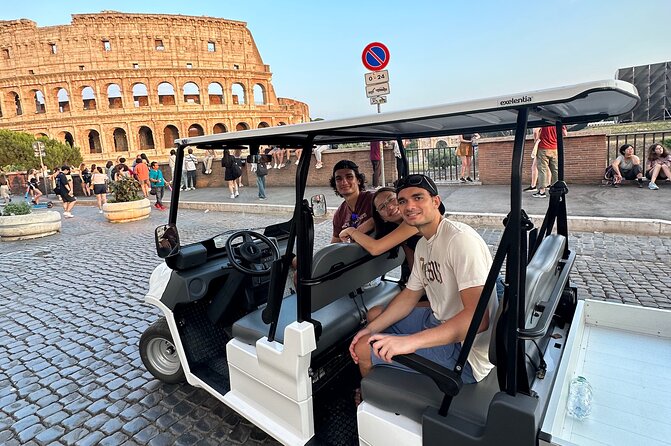
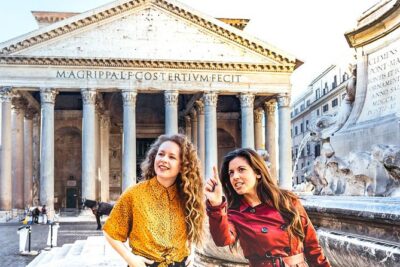
Next up is the Pantheon, with a short time window (about 5 minutes). This stop is all about that wow factor. The Pantheon is famous for ancient Roman engineering that still holds up—and the stop is designed to get you close enough to appreciate scale and details, even if you’re not spending half a day inside.
Admission is listed as not included, but the tour notes that optional entrance to attractions is at your own expense. So you’ll have the choice: keep it as a quick hit for photos and orientation, or add entry if you want to slow down.
My advice: if you’ve never been, consider at least one indoor moment during your Rome trip. Rome rewards attention to craftsmanship, and the Pantheon is one of those places where walking around outside can’t fully replace standing under the dome.


The postcard-steps viewpoint and the coin-toss tradition
Your route includes stops described in a more poetic way: one is a staircase viewpoint with the feeling of postcard steps, and another features marble statues and the tradition of tossing a coin. The tour doesn’t name these in the schedule text you provided, but the descriptions match Rome’s best-known “pause and photograph” spots.
Here’s how to use these moments:
- If you want the iconic photo, treat this stop like a mini photo mission. Get your shots quickly, then shift your brain back to the story the guide is telling.
- If you’d rather enjoy the atmosphere, use the short time to look at surrounding details—the stonework, the angles people naturally gather at, the small lines and niches that make Rome feel like it’s been built for wandering.
Either way, these are the kind of stops that work especially well on a golf cart tour because you don’t lose the day to long walks between sights.
Piazza Navona: fountains, baroque drama, and time to breathe
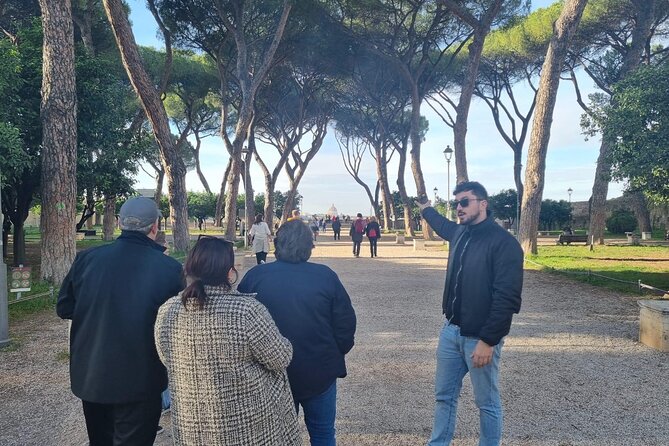
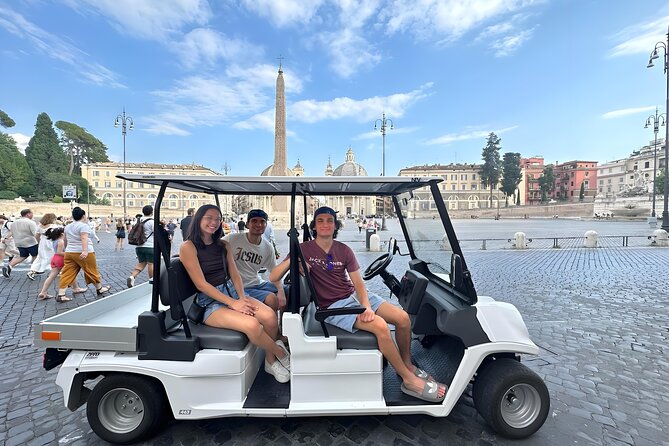
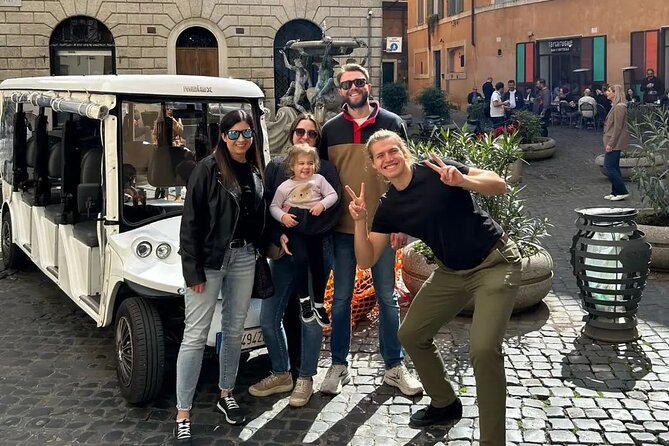
The tour ends with Piazza Navona, and this one is explicitly marked as a short stop (about 5 minutes) with admission free. Piazza Navona is baroque energy in a square: fountains as the center of gravity, lots of street-life energy, and plenty of photo angles.
What I like about including Navona here is that it balances the tour. You get the monumental ancient stuff first, then you land in a lively square where you can just take it in. Even if your time inside the square is short, the setting helps Rome feel like more than ruins and museums.
If you want one practical move: after the cart drops you off, keep your eyes open for street snacks and simple places to sit. Navona is one of those spots where a five-minute walk turns into a good ten-minute break.
How the flexible itinerary plays out in real life
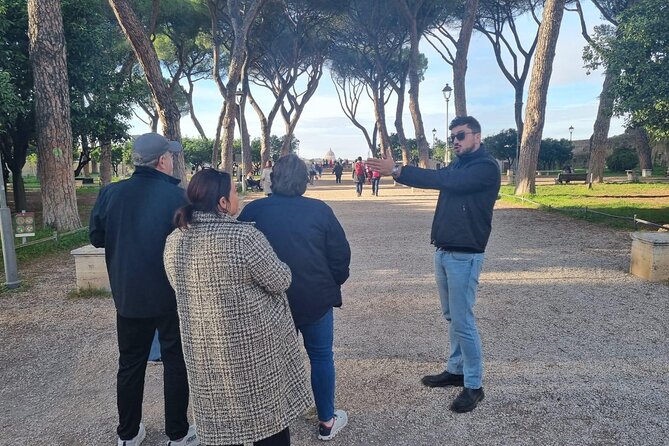
A big selling point is flexibility. The tour description says the itinerary is flexible and can be changed to suit your needs. That matters because Rome isn’t a city you experience once; it’s a city you edit. Your guide can help you edit the day.
In the reviews, guides are repeatedly praised for tailoring the route: stops for gelato, extra time for photo ops, and steering away from the worst crowd pockets. People also mention experiences that go beyond the core highlights—like viewpoints from Villa Borghese at sunset, time around Campo de’ Fiori, and even detours toward areas such as the Jewish Ghetto.
You can think of this tour as a framework. The major anchors are there (Colosseum area, Pantheon, Piazza Navona), and the guide handles the rest with local timing and route choices.
Guides: why names keep showing up in the best reviews
One standout pattern across high ratings is that the guide doesn’t just recite facts—they adjust the pace and tone to the group. Names like Jack, Eduardo, Antonio, Angelo, Gabriele, Chiara, and Flaminia come up often, and the feedback is consistent: fun delivery, solid history connection, and practical advice.
A few themes I’d pay attention to:
- Guides manage mixed ages well. Parents with young kids and older travelers both describe this cart format as a win.
- The guide helps you understand what to do next. Many people walk away with a clearer sense of where to return or what to prioritize later.
- The route is often adjusted based on real-time conditions like crowd density and pacing.
If you’re choosing between this and a more traditional walking tour, this is a key difference. Golf cart tours can feel like a shortcut, but with the right guide it becomes a smart way to learn the city’s structure quickly.
Getting around fast without losing the story
Rome by cart has an unexpected benefit: you can actually hear the guide. On a walking tour, you often spend half your time dodging crowds and half your time trying not to get steamrolled by your own group’s pace. On a cart, the movement is smoother, and the guide can point out details while you’re traveling between stops.
You also get short “get off and look” moments. Reviews mention ample time for photos and the idea that you can step out for quick visits. Just understand the trade: you’re not getting a full inside-the-museum day for every attraction. Optional entrances are at your own expense.
So if you want a slow, immersive day inside churches and galleries, you’ll still need additional time later. If you want the headline highlights plus a guide-led orientation in one smooth chunk, this is built for that.
Best use of your time: who should book this
This works especially well if you:
- Are on your first day in Rome and want a fast overview
- Have mixed ages in your group, including older relatives
- Want to conserve energy while still seeing major landmarks
- Prefer photos and big moments over long, detail-heavy museum time
It also makes sense if your Rome schedule is tight. Two hours 30 minutes is enough to cover key areas and leave you with ideas for a more focused second visit.
Who might not love it? If you’re the type who wants to stand in one place and study architecture for hours, the short stop timing may feel too quick. Also, since entry fees are extra and the tour centers on viewing, budget travelers who only want paid entries may need to add separate attraction tickets.
Timing tips: daylight, dusk, and photo expectations
Your experience length is short, so timing matters. Some reviews mention evening departures and standout views from Villa Borghese around sunset—those kinds of moments can make the whole route feel more magical, especially when you’re moving through the city as the light softens.
Since the tour is flexible, your guide can often choose where to spend the best light within the time available. For photos, arrive with a simple plan:
- Identify the two or three “must-have” pictures per stop.
- Don’t waste time fighting for perfect angles when you’ll only have a few minutes.
- Use the guide’s advice about where to position yourselves.
My quick take: should you book this golf cart tour?
If you’re asking whether this is worth it, here’s the simplest decision rule: book it if you want a guided highlights route with an easier pace and less walking. The cart helps you cover more Rome in less time, and the guides consistently earn praise for making the experience fun and practical.
Skip it—or pair it differently—if you want lots of paid entry time at multiple attractions in one outing. This tour gives you fast viewing and orientation. It doesn’t replace the deeper days you’ll want later.
FAQ
FAQ
How long is the Discover Rome Highlights by Golf Cart Tour?
It runs for about 2 hours 30 minutes.
What is included in the price?
The tour includes a tour leader/driver and the golf cart. Admission fees are not included.
Is the Colosseum admission ticket included?
No. The tour lists an admission fee for the Colosseum of €18.00 per person, and it notes that entrance tickets are not offered as part of the tour price.
Is the tour private?
Yes. It’s a private tour/activity, and only your group participates.
Where do you meet and where does the tour end?
Pickup is at Piazzale delle Canestre, 00197 Roma RM, Italy (near the Bar Villa Borghese Park area). The tour ends at Mammina Roma – Barberini, Piazza Barberini 13, 00187 Roma RM, Italy.
What happens if weather is poor?
The experience requires good weather. If it’s canceled due to poor weather, you’ll be offered a different date or a full refund.