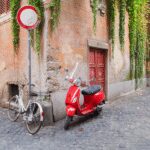
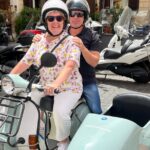
Rome at night feels like a movie. This Vespa sidecar tour is a fast, fun way to see major sights with a guide’s live narration delivered through headsets, so you get the story without straining to hear. I like how the stops are planned for close looks and quick photos, rather than just passing by.
Two things really sell me on this experience: the monuments look even better after dark, and the included dinner-style gourmet pizza tasting gives you a real Roman food moment instead of a rushed snack. One consideration: the Pantheon will be closed during the tour, so you will not enter the monument even though it’s part of the route.
In This Review
- Key highlights
- Why the 7:00 pm timing changes everything in Rome
- Where you meet (Piazza della Repubblica) and what you get before rolling out
- Piazza della Repubblica: the fountain roundabout and the city’s makeover story
- Quirinale Palace on Monte Cavallo: official power on a hill
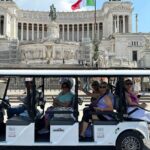
- Piazza Venezia and Altare della Patria: the unknown soldier and eternal flame
- Pantheon stop without entry: what you should expect at this famous oculus
- Trevi Fountain and the Spanish Steps: quick looks, better timing
- Piazza del Popolo to St. Peter’s Square: the shift from city gate to Vatican scale
- Gianicolo Terrace panoramas and the bohemian alley drive
- Santa Maria Maggiore: stepping into one of Rome’s major basilicas
- Vico Pizza&Wine: the dinner-style pizza tasting that finishes strong
- Price and value: how $181.41 stacks up for a 3-hour night ride
- Who should book this Vespa sidecar tour (and who should skip it)
- FAQ
- How long is the Rome 3-hour evening Vespa sidecar tour?
- Where do we meet for the tour?
- Is pizza included, and where do you eat?
- Do you provide headsets and helmets?
- Will you enter the Pantheon during the tour?
- Are gluten-free options available for celiac disease?
- What are the child and seating rules?
- What if the weather is bad or I need to cancel?
- Should you book this Vespa sidecar tour at night?
Key highlights
- Headsets + interactive commentary so you hear the guide clearly while moving through busy streets
- Professional drivers handle navigation; you sit back and enjoy the ride
- Designed stop-and-look timing for photos and closer landmark viewing
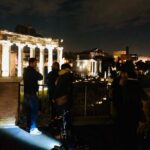
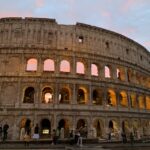
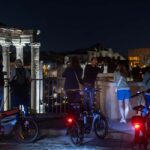
- Nighttime Rome hits different with major sights lit up and calmer streets
- Included pizza and wine-style dining at Vico Pizza&Wine
- Small group size (max 12) for a more personal, smooth experience
Why the 7:00 pm timing changes everything in Rome
Rome can feel chaotic at midday. After 7:00 pm, the pace cools down, and famous sights take on softer lighting that makes details easier to spot and photos more flattering.
You also get a smart balance: enough time to cover big names like Trevi and St. Peter’s, but not so long that you’re fighting hunger. By the time you reach the pizza tasting stop, you’re ready for food instead of just trying to stay awake through a long day.
You can also read our reviews of more food & drink experiences in Rome
Where you meet (Piazza della Repubblica) and what you get before rolling out
You’ll start at Piazza della Repubblica, 41 at 7:00 pm, and the tour ends back at the same meeting point. For me, that matters because it reduces stress: you don’t end your evening somewhere inconvenient and you can plan dinner afterward if you want to.
Safety and comfort are handled with a homologated CE helmet plus sterilized disposable head covers. You also get headsets so the guide’s voice stays clear even when you’re surrounded by street noise.
Piazza della Repubblica: the fountain roundabout and the city’s makeover story
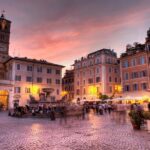
The first big stop is Piazza della Repubblica, a central square shaped by Rome’s urban redevelopment after the city became the capital of Italy. You’ll see the roundabout layout and the Fontana delle Naiadi, a standout fountain set amid imposing buildings.
The square is worth your attention because it’s not just postcard Rome. It’s Rome doing what capitals do—remaking spaces to fit politics, ceremonies, and crowds—while still keeping a distinctly Roman feel.
Quirinale Palace on Monte Cavallo: official power on a hill
Next up is Palazzo del Quirinale, the Quirinal Palace on Quirinal Hill, in the area known as Monte Cavallo. This is one of the official residences of the President of the Italian Republic, and it’s a reminder that Rome isn’t only ruins and fountains—there’s active government life here too.
The way this stop works on a moving tour is simple: you get a quick, focused look and an explanation that helps you connect the building to the wider story of Rome’s modern era. It’s a good place to reset your brain before the heavier symbolic monuments later on.
Piazza Venezia and Altare della Patria: the unknown soldier and eternal flame
From there, you’ll head to Piazza Venezia for the Monumento Nazionale a Vittorio Emanuele II, also called Altare della Patria. It was inaugurated in 1911 as a tribute to Victor Emmanuel II after Italy’s unification, and it carries that big, national-ceremony energy.
This stop is especially meaningful because of what’s inside. You’ll hear about the institute and museum dedicated to the Italian Risorgimento, and you’ll also learn about the tomb of the unknown soldier with the eternal flame, guarded by two soldiers.
Even if you only have a few minutes, this is one of those monuments where an on-the-spot explanation turns a photo into understanding. The views help too, since the monument sits in a prime spot for seeing how Rome spreads out.
You can also read our reviews of more evening experiences in Rome
Pantheon stop without entry: what you should expect at this famous oculus
The route includes the Pantheon, one of the best-preserved ancient buildings in Rome and famous for its oculus, which brings natural light into the interior. It’s completed in 126 AD, and that date alone helps you grasp the scale of time you’re standing in.
But here’s the key: the Pantheon will be closed during the tour, so you won’t enter. Plan your expectations accordingly. You can still enjoy the quick stop for the outside setting, but this is not the evening for that classic interior experience.
If you want to see the Pantheon inside, you’ll likely need a separate daytime or independently timed visit. For this tour, the big win is getting to other landmarks without losing momentum.
Trevi Fountain and the Spanish Steps: quick looks, better timing
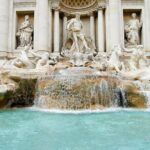
Trevi Fountain is a must in Rome, and the tour uses it smartly. Trevi’s story goes far back: the fountain area ties to the Aqua Virgo aqueduct (dating to 19 BC), with later Renaissance work under Pope Nicholas V and the final look finalized in 1762 under the direction of Giuseppe Pannini.
You’ll also get the practical detail behind the name: Trevi comes from Tre Vie, the three streets that once met at the spot. That kind of context makes your visit feel grounded, not just like you’re waiting for a photo moment.
Then comes the Spanish Steps (Scalinata di Trinità dei Monti), built in the early 1700s to connect Piazza di Spagna and the church of Trinità dei Monti. On a night ride, this is often more comfortable than daytime browsing, since you’re arriving after the peak rush and you can actually use the space for a pause and a view.
Piazza del Popolo to St. Peter’s Square: the shift from city gate to Vatican scale
Piazza del Popolo is located by the northern gate area once known as Porta Flaminia, and it served as a main entrance route in Roman times. It’s also a street-junction moment: multiple major streets branch from here, with Via del Corso running through the center.
This stop gives your brain a reference point. After seeing the monuments, you start to notice Rome as a network of routes, not random stops. That helps if you plan to explore more on your own afterward.
From there, the tour reaches St. Peter’s Square (Piazza San Pietro) in Vatican City. It was designed by Bernini in the 17th century and can hold over 300,000 people, which is hard to picture until you stand in the space and see the scale.
A quick photo stop here feels almost unfair, because the square invites lingering. Still, the payoff is that you see the grandeur at night, when the lighting makes the space look even cleaner and more dramatic.
Gianicolo Terrace panoramas and the bohemian alley drive
After the big-name sights, the ride turns quieter with Terrazza del Gianicolo on Janiculum Hill. Janiculum is often described as the eighth hill of Rome, just outside the ancient city, and it’s a known escape from the center’s motion.
The views from the top are the main event, and you’ll also hear the historic layer. Janiculum played a role in defending the city, including the battle where Garibaldi repelled an attack from French troops. The hill paths include sculptures of heroes, including Giuseppe Garibaldi.
Then you’ll move through neighborhood-style Rome: alley drives, typical trattorias, and a pass near the Jewish Ghetto area. For me, this is where the tour stops feeling like a checklist and starts feeling like real street travel—narrow lanes, local atmosphere, and that sense that Rome is still living, not frozen.
Santa Maria Maggiore: stepping into one of Rome’s major basilicas
The final landmark stop is Basilica di Santa Maria Maggiore, described as one of the largest churches dedicated to the Virgin Mary in Rome. It’s also one of the four major basilicas, which is worth knowing because it explains why this building shows up again and again in Rome’s religious geography.
This isn’t an all-day church visit on this tour. It’s a focused stop where the guide’s context helps you understand why it matters among Rome’s big spiritual landmarks.
If you want more time inside, you can always treat this as the prelude and schedule a longer visit later.
Vico Pizza&Wine: the dinner-style pizza tasting that finishes strong
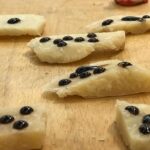
The included food is a Dinner Gourmet Pizza Tasting at Vico Pizza&Wine. This is a big deal for value, because the tour isn’t just sightseeing—it’s also built to feed you.
I like that the meal isn’t an afterthought. After hours on the ride, your schedule is already moving, and having pizza waiting means you’re not stuck deciding where to eat at the busiest time of night.
Special notes matter if you have dietary needs. You can indicate special dietary requirements in the booking form, but for celiac disease, gluten-free pizza is not available. If gluten-free is a priority, you’ll want to plan accordingly before you book.
Price and value: how $181.41 stacks up for a 3-hour night ride
At $181.41 per person, this isn’t the cheapest way to see Rome. But you are paying for several things that add real cost in practice: licensed guiding with live narration, professional drivers, safety gear, headsets, and the included dinner-style pizza tasting.
You also get small-group momentum (max 12). In a city like Rome, that’s not just comfort—it’s time saved from sorting logistics, finding parking, and negotiating crowded viewpoints.
So when does it make sense? If you want an evening experience that combines major landmarks, street-level navigation by locals, and a real meal without extra planning, the price starts to feel fair. If you’re on a tight budget and prefer to DIY with a walking route, this may feel pricey for only three hours.
Who should book this Vespa sidecar tour (and who should skip it)
This works best for people who want motion plus context. If you like history but don’t want museums to dominate your trip, this is a smart way to get stories while still seeing Rome in motion.
It also suits couples and small groups. Each Vespa can accommodate two passengers—one in the sidecar and one behind the driver—with the possibility of seat swapping during stops. If you book a single seat, you’ll share the vehicle with another guest.
Some practical limits are worth checking early:
- The maximum weight for the back saddle is 118 kg / 260 lb, and the sidecar supports up to 110 kg / 242 lb.
- The sidecar maximum height is 1.90 m.
- Children must be at least 5 years old and seated with an adult.
- Kids can sit behind the driver only if they’re taller than 150 cm; otherwise they ride in the sidecar.
- Pregnant travelers are not permitted.
Service animals are allowed, and most travelers can participate, but still: it’s a scooter ride. If you dislike riding on cobblestones or being in close proximity with others, you might prefer a walking-focused tour.
FAQ
How long is the Rome 3-hour evening Vespa sidecar tour?
It runs for about 3 hours total, including travel time.
Where do we meet for the tour?
The meeting point is Piazza della Repubblica, 41, 00185 Roma RM, Italy. The tour ends back at the same meeting point.
Is pizza included, and where do you eat?
Yes. You get a Dinner Gourmet Pizza Tasting at Vico Pizza&Wine.
Do you provide headsets and helmets?
Yes. You’ll receive headsets to hear the guide clearly and homologated CE helmets with sterilized disposable head covers.
Will you enter the Pantheon during the tour?
No. The Pantheon will be closed during the tour, so you won’t enter the monument.
Are gluten-free options available for celiac disease?
Gluten-free pizza is not available for guests with celiac disease. You can also note dietary requirements during booking.
What are the child and seating rules?
Children must be at least 5 years old and accompanied by an adult. Kids can sit behind the driver only if they are taller than 150 cm; otherwise they must sit in the sidecar.
What if the weather is bad or I need to cancel?
The tour requires good weather. If it’s canceled due to poor weather, you’ll be offered a different date or a full refund. You can cancel for a full refund up to 24 hours in advance.
Should you book this Vespa sidecar tour at night?
If you want Rome with motion, clear storytelling, and an included meal, I think this is a smart booking. The headset narration, professional drivers, and the combination of big-lit landmarks with neighborhood-style street travel make it feel like an efficient evening that doesn’t turn into a scavenger hunt.
Book it if you’re comfortable with scooter-style riding and you understand the Pantheon stop won’t include entry. If you’re chasing the Pantheon interior as a top priority or you need gluten-free pizza, then plan differently. Otherwise, this is a fun, well-structured way to see Rome after dark without overplanning every stop.