REVIEW · ROME
Castel Sant’Angelo: Fast Access Ticket and Optional Audio Guide
Book on Viator →Operated by Doooing Experience · Bookable on Viator
Lineups at Castel Sant’Angelo are no fun. This fast-access ticket helps you get moving quickly, and the email voucher gives you confirmation soon after you book.
I love that you’re set up to explore the Museo Nazionale di Castel Sant’Angelo on your own time, not trapped in a rigid schedule. And if you upgrade, the audio tour guides you through key moments connected to Emperor Hadrian as you go.
One drawback to consider: the audio relies on a phone download, and entry may be picky about format—someone reported QR codes didn’t work at the ticket moment.
In This Review
- Quick take
- Castel Sant’Angelo fast access: what it means for your time in Rome
- Tickets, vouchers, and the exact redemption point
- Museo Nazionale di Castel Sant’Angelo: what you’ll actually see inside
- One “pace” tip I’d use
- The optional audio guide on Hadrian: rules, tech needs, and real-world reliability
- My advice if you want the audio
- Views near the top level: why people keep coming back
- Jubilee restorations and changing access routes
- Price and value: is $40.55 worth it?
- Who this fast-access ticket is best for
- Should you book this Castel Sant’Angelo fast-access ticket?
- FAQ
- Where do I redeem my fast-access ticket?
- How long should I plan for the visit?
- Do I need the audio guide, and what phone is required?
- How much free space does my phone need for the audio?
- When will I receive the official ticket?
- Does entry work with QR codes?
- Is there free cancellation?
Quick take

- Fast-access entry with an online voucher you redeem at Lungotevere Castello, 50
- Optional audio tour focused on Hadrian, tied to points of interest
- Phone requirements for audio: Android 5.0+ or iOS, plus 100–150 MB free space
- Plan for Jubilee changes: restoration can alter access routes
- Museum content centers on artwork and archaeological finds, plus iconic city views
Castel Sant’Angelo fast access: what it means for your time in Rome

Castel Sant’Angelo is one of those Roman stops that can eat up more time than you expect if you arrive unprepared. This ticket is built for speed: you book online, get a voucher, then redeem it at the on-site ticket office so you can head inside sooner rather than waiting in the longest lines.
The practical win here is simple. You’re not trying to solve logistics in the middle of a busy day. You already have a confirmed ticket format in hand (or in your phone/email). When Rome is busy, that matters.
You’ll also get a ticket duration that’s set up for a self-paced visit of about 2 hours. That’s long enough to see the highlights without feeling rushed, especially if you use the audio upgrade selectively rather than trying to listen to every single stop.
You can also read our reviews of more tours and experiences in Rome



Tickets, vouchers, and the exact redemption point
Your voucher needs a real-world meeting with a ticket office, and that’s where this becomes more than just a click.
Redeem your voucher at Lungotevere Castello, 50, 00186 Roma RM, Italy. It’s near public transportation, so you can build this into an efficient walking loop (or hop on transit if you’re coming from farther out).
A couple other details make the experience smoother:
- Confirmation comes at booking time.
- The official ticket is sent to your WhatsApp/email about 24 hours before the activity.
Also note the money angle. The official admission price for Castel Sant’Angelo is listed as €16.00 for basic entry. The rest of what you pay covers the faster-entry product and extras like the audio option and operational costs (including platform commissions, distribution fees, and customer support). If you’re mainly here for the museum walls and city views, you can decide whether the add-on is worth your money—or save your budget and skip the upgrade.
Museo Nazionale di Castel Sant’Angelo: what you’ll actually see inside

Once you’re in, Castel Sant’Angelo isn’t just a “big building with a nice top.” It’s a national museum with collections that mix artwork and archaeological finds, which is a good match for people who like their Rome both visual and tangible.
The building itself also helps you understand its story as you move through rooms. The experience tends to feel like a guided flow even without a group. If you’re the kind of visitor who likes to pause, look closely, and then move on when you’ve gotten your fill, this format fits well.
If you choose the audio upgrade, the listening doesn’t replace looking—it adds context. You’re not just scanning artifacts; you’re getting a reason for why certain spaces matter. That’s especially helpful in a site like this, where the layers of use across centuries can blur together in your head if you’re only reading random plaques.
One “pace” tip I’d use
Plan to listen for key moments rather than treating the audio like a must-hear movie. The audio is designed around points of interest, so you can stop where it matters most and keep your eyes on the room rather than always staring at your screen.
The optional audio guide on Hadrian: rules, tech needs, and real-world reliability

The audio tour upgrade is the part of this experience that can turn a standard visit into a more meaningful one—especially if Hadrian is your kind of rabbit hole. The audio is described as learning-focused as you go, and it’s tied to the site’s points of interest.
But there are real tech requirements you should take seriously:
- Android needs version 5.0+
- iOS is supported as well
- You’ll need 100 to 150 MB free space for the download
The big practical issue: don’t wait until you’re standing at the ticket office to test your audio. If your phone’s storage is tight or your download fails, you can end up with your visit feeling incomplete even though the building itself is still great.
And there’s a warning worth listening to. One account says the audio guide didn’t load after selecting a language, even with Wi‑Fi and mobile data. In that case, the person still got into the castle and enjoyed the views, but the audio experience didn’t happen. That’s your cue to treat the audio as optional backup-dependent tech, not guaranteed magic.
You can also read our reviews of more guided tours in Rome






My advice if you want the audio
- Download ahead of time when you have a stable connection.
- Keep your language selection simple—don’t expect the app to forgive slow networks.
- If the audio doesn’t work immediately, switch your plan: enjoy the rooms first, then troubleshoot later rather than freezing in place.
Views near the top level: why people keep coming back

A big reason Castel Sant’Angelo stays on Rome itineraries is the payoff at the top levels: you get standout city views, and the route feels worth it. One detailed note specifically called out the fabulous views and even mentioned refreshments near the top level, which is exactly what you want if you’re combining this with a day of walking.
Even without the audio, the building’s height and setting make it an easy win for photos and wide-angle sightseeing. If you’re pairing this with other landmarks, this is a good anchor stop because it naturally gives you a “before and after” feeling—Rome looks different once you’ve seen it from up there.
Jubilee restorations and changing access routes
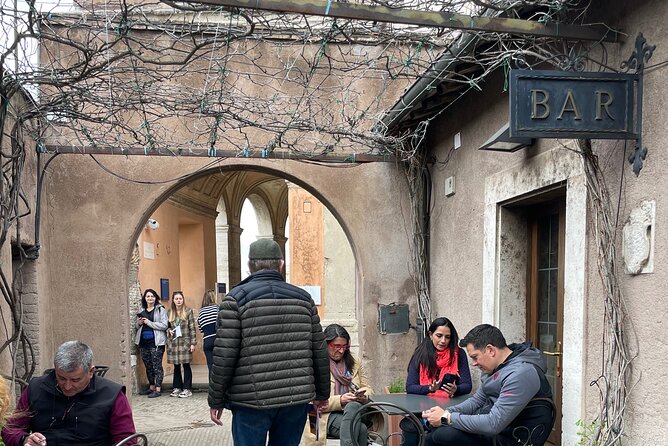
Rome likes to renovate. And right now, the info you should keep in mind is the Jubilee impact: some monuments may be under restoration, and access routes could change.
That doesn’t mean you can’t have a great visit. It does mean you should treat this like a live environment, not a guaranteed path. Check your messages for updates before you go, and be ready for minor rerouting once you arrive.
If you’re the kind of visitor who plans every step with military precision, you’ll have to loosen that grip slightly. The building may still be spectacular, but your exact walking path could shift.
Price and value: is $40.55 worth it?

Let’s talk value without the marketing spin.
- Basic official admission is listed as €16.00
- You’re paying $40.55 per person for the fast-access product, plus the option that’s driving much of the difference: audio and operational/support costs
So when does this value make sense?
- If you hate waiting and want the “book it and go” advantage, the fast-access approach can be worth it on a busy day.
- If you’ll actually use the audio upgrade, you’re not just buying entry—you’re buying a guided-style explanation of what you’re seeing, with a Hadrian angle.
When might you reconsider?
- If you don’t want audio at all, you might feel like you’re paying for features you won’t use.
- If you’re worried about phone downloads, or you prefer offline guides on paper, you might be better off considering whether the audio add-on is essential for your style.
A good way to decide: ask yourself what you want from Castel Sant’Angelo—quiet museum time, or story-based context while you walk through the rooms. If you want story, the audio upgrade price jump tends to feel more reasonable. If you just want the views and rooms, you may find the base cost the better fit.
Who this fast-access ticket is best for

This ticket is a strong fit if you:
- Want to save time at a high-demand Rome site
- Prefer a self-paced visit but still want structure (audio on points of interest)
- Like museum rooms that mix artwork and archaeological finds
- Appreciate a planned entry so your day stays on track near public transportation
It may be less ideal if:
- You rely on QR-code scanning but haven’t yet confirmed your ticket format works smoothly at the ticket office
- You’re traveling with a phone that has inconsistent downloads or limited storage
- You want a guaranteed audio experience with zero tech friction
That’s not a reason to skip Castel Sant’Angelo. It’s just a reminder to treat the audio as “app-guided” rather than “press play and it always works.”
Should you book this Castel Sant’Angelo fast-access ticket?
Book it if your priorities are time-saving entry and an easy, low-stress museum visit. The price is higher than the basic official admission, but a chunk of that difference is tied to the audio option and operational costs, and you’re also paying for the convenience of fast access.
I’d especially recommend it if you’re interested in Hadrian-related context while you explore the rooms, and if you’re willing to do the simple prep for the audio download (100–150 MB free, Android 5.0+/iOS supported).
Skip the upgrade or reconsider if you know you won’t use audio, or if you tend to have phone problems with downloads and don’t want that risk to affect your visit rhythm.
If you do book, do one smart thing: verify your audio plan before you arrive so you can focus on the museum and then earn those top-level views.
FAQ
Where do I redeem my fast-access ticket?
You redeem your voucher at Lungotevere Castello, 50, 00186 Roma RM, Italy.
How long should I plan for the visit?
The experience duration is listed as approximately 2 hours.
Do I need the audio guide, and what phone is required?
The audio tour upgrade requires an Android smartphone (at least version 5.0) or an iOS smartphone.
How much free space does my phone need for the audio?
You’ll need between 100 and 150 MB of free space for the audio download.
When will I receive the official ticket?
The official tickets are sent to your WhatsApp/email about 24 hours before the activity.
Does entry work with QR codes?
One provided note indicates they did not accept QR codes at admission. To be safe, rely on the voucher/ticket format you receive.
Is there free cancellation?
Yes. You can cancel up to 24 hours in advance for a full refund.