REVIEW · ROME
Welcome to the Eternal City: Rome Orientation Walking Tour
Book on Viator →Operated by Crazy4Rome Private Tours · Bookable on Viator
First steps in Rome can feel chaotic. This private Rome orientation walking tour helps you get your bearings fast with a licensed local guide and a tight route through several of the city’s biggest sights. You start at Piazza di Spagna and end near Via del Governo Vecchio, with the pacing built around smart orientation rather than checklist fatigue.
I like the 3-hour format for first-timers: enough time to understand how central Rome is laid out, without turning your day into a slog. I also like the private setup—your guide can keep things personal and adjust the pace, and you’re not stuck watching from the back of a big group.
One consideration: the stops are short (often 15–20 minutes), so you’ll see plenty, but you won’t linger long at each photo spot. Rome is famous for lines and crowds, and with a walking schedule, you’ll want to stay focused on what the guide is pointing out.
In This Review
- Key Things I’d Note Before You Go
- A 3-Hour Rome Orientation That Starts at Piazza di Spagna
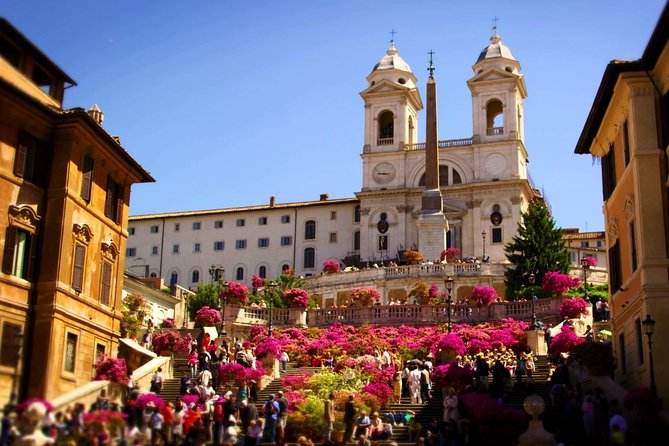
- Spanish Steps: Why This Start Works So Well
- Piazza di Spagna Square and the Barcaccia Fountain: The Film-Set Side of Rome
- Trevi Fountain: More Than a Photo Stop
- Temple of Hadrian Near Piazza di Pietra: A Quick Ancient Interlude
- The Pantheon: The Most Satisfying 30 Minutes You’ll Spend
- Piazza Navona and the Four Rivers Fountain: The Baroque Finale
- Price Per Group: Is This Good Value?
- What You’re Really Buying With a Licensed Local Guide
- Logistics That Matter: Walking Pace, Water, and Tickets
- So Should You Book This Rome Orientation Walk?
- FAQ
- How long is the Rome Orientation Walking Tour?
- Is this a private tour?
- What language is the tour offered in?
- What are the main stops on the itinerary?
- Are admission tickets included?
- Where do we meet and where does the tour end?
- Can I see the Pantheon inside?
- What happens if the weather is poor?
Key Things I’d Note Before You Go
- Licensed local guide: You get real context for what you’re seeing, not just names on a sign.
- Short, purposeful stops: Spanish Steps to Piazza Navona in about three hours.
- Top central sights included: Trevi Fountain and the Pantheon are part of the route.
- Admission tickets are included for the listed stops.
- Private group experience: Only your group participates, up to 10 people.
- Good weather matters: If conditions are poor, the tour may shift dates or refund.
A 3-Hour Rome Orientation That Starts at Piazza di Spagna
This is the kind of tour I recommend for your first full day—or really any day when you want to stop guessing and start understanding. You’ll be with a licensed local guide for about three hours, and the route is designed to show you how the central city connects.
You meet at Piazza di Spagna, 23 (00187 Roma) and finish at Via del Governo Vecchio, 80 (00186 Roma). That end point matters because it puts you in a practical area for continuing on your own afterward, instead of dropping you somewhere inconvenient.
The tour uses a mobile ticket, and it’s offered in English. It’s also explicitly private, meaning it’s only your group—up to 10 people—which can make the pacing feel more relaxed, even though it’s a walking tour.
You can also read our reviews of more walking tours in Rome


Spanish Steps: Why This Start Works So Well
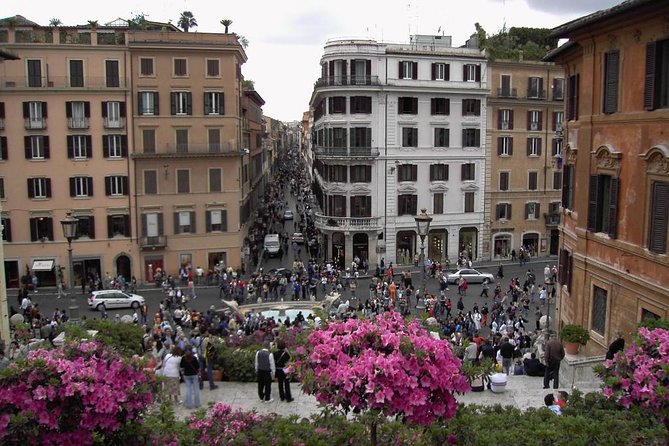
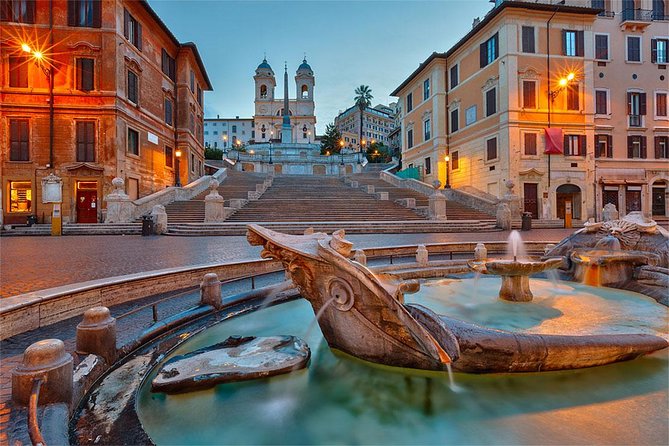
The Spanish Steps (dating from 1723) are a perfect warm-up because they force you to understand Rome’s geography quickly. You’ll walk the area between the lower Piazza di Spagna and the upper Piazza Trinita dei Monti, with the church dominating the top.
What I like here is the “story in motion” effect. You see the climb, you learn what anchors the steps, and you get your first big reference point for navigating central Rome. Rome isn’t laid out like a grid, so visual landmarks help a lot.
Time on the steps is about 15 minutes. That’s short, but it’s enough for photos and context. If you want a slow stroll, this tour may feel brisk. If you want to orient yourself and move on, it’s a strong opener.
Piazza di Spagna Square and the Barcaccia Fountain: The Film-Set Side of Rome
Right after the steps, you step into Spanish Square, the famous plaza at the bottom. It’s known for its relationship to the Palazzo di Spagna, the seat of Spain’s embassy to the Holy See. There’s also the Column of the Immaculate Conception of the Blessed Virgin Mary, which gives the square extra depth beyond the usual “pretty views” reputation.
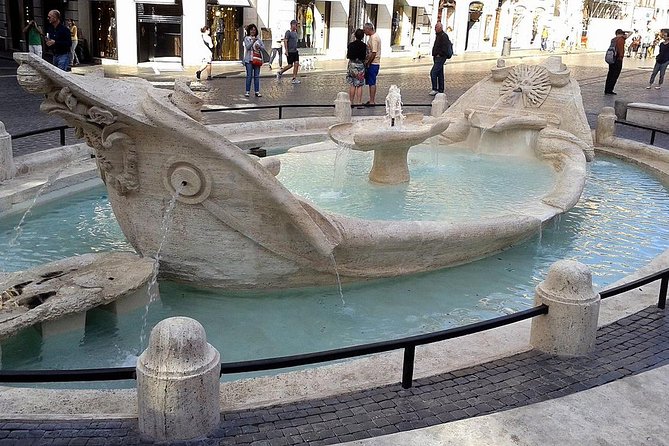
Then comes one of the best “Roman details” stops: the Fontana della Barcaccia. This Baroque fountain is shaped like a half-sunken ship, with water overflowing into a basin. It’s the kind of sculpture you appreciate more with a guide, because the shape and symbolism feel random until you know the reason it’s there.
You’ll spend about 20 minutes around the fountain area. That should be enough to get your bearings, understand what you’re looking at, and enjoy the surroundings without feeling rushed off the sidewalk.
Trevi Fountain: More Than a Photo Stop
From the Barcaccia area, you move to the Trevi Fountain, the city’s most famous (and largest) fountain. It’s described as about 20 meters wide and 30 meters tall, and that scale alone is worth seeing. But the best part is learning what it represents in the Roman water system.
The Trevi Fountain marks the endpoint of the roads tied to Acqua Vergine (formerly known as Aqua Virgo), one of the ancient aqueducts that once supplied water to Ancient Rome. This is where a good guide changes the experience. Instead of just photographing stone and water, you start connecting the fountain to the practical engineering that kept the city alive.
You get about 20 minutes here. That’s a workable window, because Trevi is usually busy. If you’re the kind of person who wants to sit and watch for 45 minutes, you may feel a little “on the move” today. But you’ll leave knowing what you’re looking at, not just having a photo.
Temple of Hadrian Near Piazza di Pietra: A Quick Ancient Interlude
Next up is Piazza di Pietra and the Temple of Hadrian. This temple is described as rectangular, designed in a peripteral style with columns wrapping the longer sides (fifteen columns) and the shorter sides (eight columns).
What makes this stop interesting is that the columns have reliefs personifying the provinces of the empire. Some of those relief elements are housed in the Capitoline Museums, which gives you a clue for where to look if you later visit museums in Rome.
You’ll spend around 20 minutes at this stop. It’s long enough to notice the architectural layout and learn what to look for, but short enough that it doesn’t steal time from the bigger icons later.
You can also read our reviews of more city tours in Rome





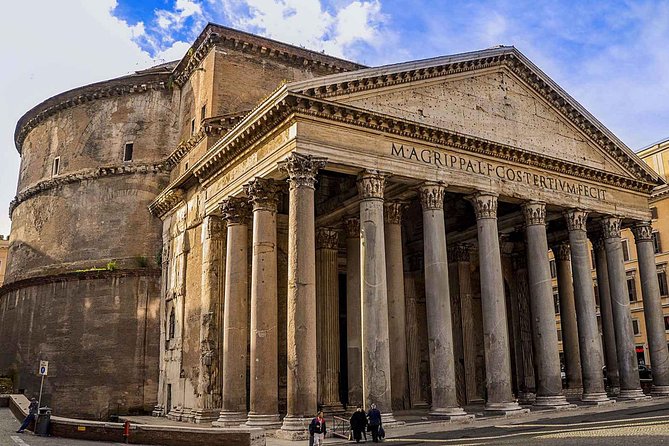
The Pantheon: The Most Satisfying 30 Minutes You’ll Spend
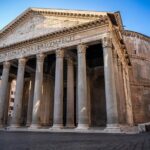
If you want one monument in Rome that rewards attention, it’s the Pantheon. It’s a Roman temple—traditionally associated with many gods—and the name comes from ancient Greek roots tied to the idea of the temple of all the gods.
Time here is about 30 minutes, and that’s a gift. The Pantheon tends to draw constant attention, and with only a short visit it can feel like sensory overload. A guide helps you focus on the key features instead of wandering and hoping for the best.
One practical note: the tour info says it can be customized if you want to see it from the inside. So if interior time matters to you, plan to ask about that in advance. Some groups have had guides who knew how to get inside quickly, which is the kind of “small” advantage that makes a short tour feel long.
This is also the point in the day where you’ll start noticing Rome’s layers—how ancient spaces still define the city’s layout and mood.
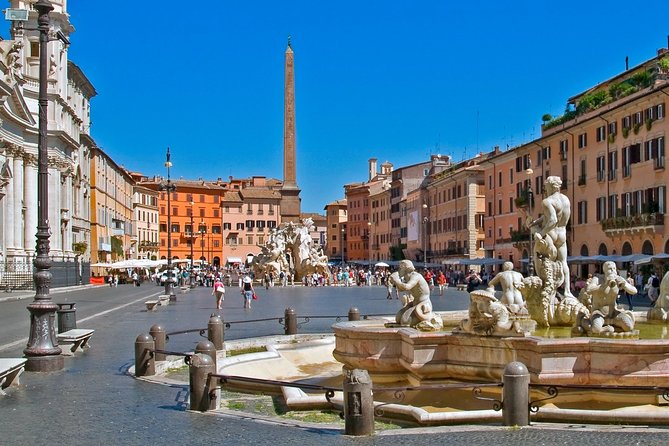
Piazza Navona and the Four Rivers Fountain: The Baroque Finale
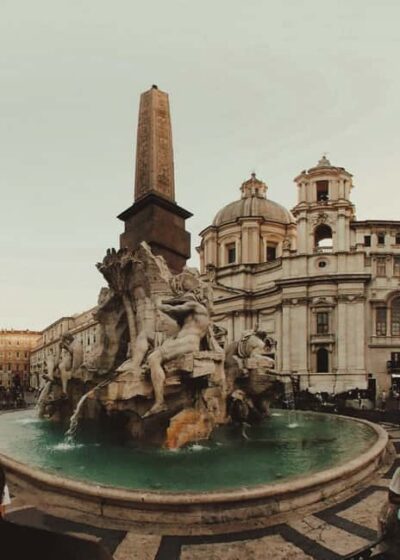
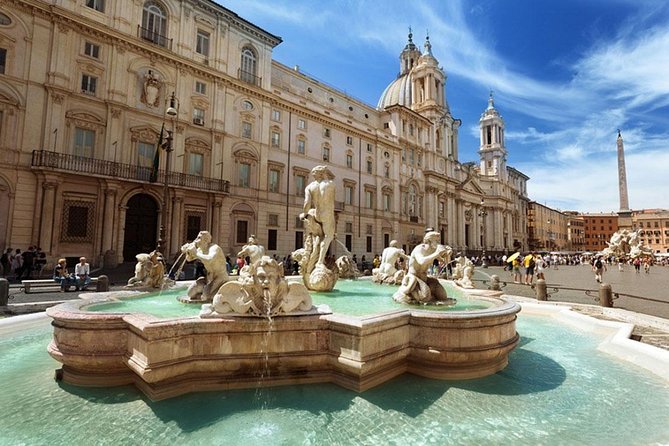
The tour ends at Piazza Navona, widely considered one of the most spectacular squares of Baroque Rome. The square’s shape comes from the remains of the ancient Stadium of Domitian, built in 86 AD for athletics and horse racing. That means you’re walking a footprint that’s been used for public spectacle for nearly two millennia.
You’ll spend about 15 minutes at Piazza Navona, and the plan includes finishing with a “gossip” about the Fountain of the Four Rivers. That’s a fun way to frame it—less museum lecture, more street-level story time.
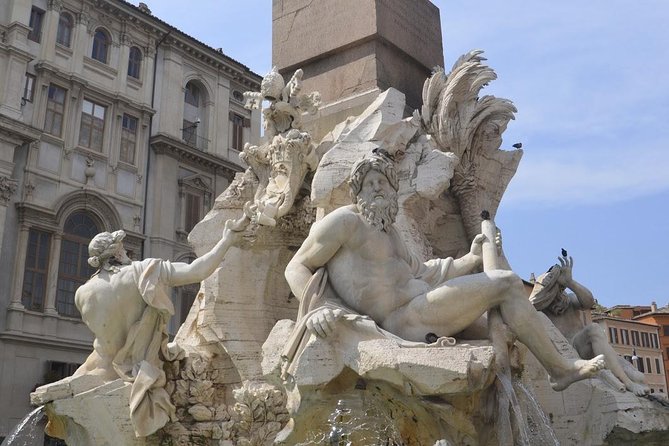
The Fountain of the Four Rivers is described as designed in 1651 by Gian Lorenzo Bernini for Pope Innocent X, with Innocent’s family palace nearby. You’ll also spend about 20 minutes at the fountain. This stop is a strong closer because you leave Rome’s antiques behind just long enough to enjoy the drama of Baroque design—then you can decide where to go next on your own.
Price Per Group: Is This Good Value?
At $440.82 per group (up to 10 people) for roughly three hours, the value depends on how many of you are going. If you fill the group limit, the per-person cost drops dramatically—about $44 per person at 10 people. If it’s just two people, you’re closer to $220 each, which is a very different feel.
Here’s how I judge whether it’s “worth it” in Rome. This tour isn’t trying to squeeze in everything. It chooses a smart orientation route with a licensed guide and includes admission tickets for the listed stops. You’re buying guidance plus time efficiency—less time figuring out what matters, more time actually seeing and understanding.
If your budget allows a private guide for the day, this is a solid use of money because it helps you navigate future plans. You’ll walk away with the key landmarks that make self-guided wandering easier later.
What You’re Really Buying With a Licensed Local Guide
The monuments on this route are famous. What you’re paying for is the explanation that turns them from “pretty things” into “I get why this is here.”
A few examples from the guide style you’ll likely experience: groups have been guided by people like Rafaela, Sara, and Yevgen, and the common thread in feedback is how friendly, funny, and focused the guidance can be. Guides also tend to point out not only the obvious stops but also calmer, more charming streets when the moment allows—useful if you want your orientation to include a little breathing room.
Even when you keep the route fixed, the private format usually means you’re more likely to ask questions and get straight answers. In Rome, that matters. There’s a lot to know, and a good guide helps you pick the right facts for your first hours in town.
Logistics That Matter: Walking Pace, Water, and Tickets
The tour is structured with short blocks of time: roughly 15–20 minutes at several exterior stops, with a longer 30 minutes at the Pantheon. That schedule works if you like momentum. If you hate feeling rushed, you’ll want to bring your “photo mindset” under control and follow the guide’s rhythm.
Bottled water is not included, so I’d plan for that. Comfortable shoes also make sense on any walking day in Rome—especially when your route includes steps.
Admission tickets are listed as included for the stops. That helps prevent small delays from ticket lines or confusion about what you’re allowed to enter. Still, lines can happen in Rome. The tour’s biggest advantage is having someone manage priorities so you don’t waste your time guessing.
So Should You Book This Rome Orientation Walk?
Book it if:
- You’re visiting Rome for the first time and want a fast orientation through the most important central landmarks.
- You’d rather pay for a guide than spend your first day reading maps and trying to connect the dots.
- You want a private experience for a small group (up to 10) at a price that can work very well when split.
Skip it or consider something else if:
- You want long, unstructured time at each monument. This route is short per stop by design.
- Your group expects lots of indoor time beyond the Pantheon. The tour can be customized for inside viewing, but the schedule is still tight.
- You dislike walking and steps. This is a walking tour and includes the Spanish Steps area.
If you’re planning a Rome trip that includes later museum visits or a few self-guided days, this orientation walk is the kind of start that pays off. By the end, you’ll know where the city’s “anchors” are—and you’ll spend the rest of your time walking with confidence, not just following crowds.
FAQ
How long is the Rome Orientation Walking Tour?
It lasts about 3 hours (approx.).
Is this a private tour?
Yes. It’s a private tour/activity, and only your group participates.
What language is the tour offered in?
The tour is offered in English.
What are the main stops on the itinerary?
You’ll visit the Spanish Steps and Spanish Square, Fontana della Barcaccia, Trevi Fountain, the Temple of Hadrian (Piazza di Pietra), the Pantheon, Piazza Navona, and the Fountain of the Four Rivers.
Are admission tickets included?
Yes. Admission tickets are listed as included for the stops on the itinerary.
Where do we meet and where does the tour end?
You start at Piazza di Spagna, 23, 00187 Roma RM, Italy, and you end at V. del Governo Vecchio, 80, 00186 Roma RM, Italy.
Can I see the Pantheon inside?
The tour note says it can be customized if you want to see it from the inside.
What happens if the weather is poor?
This experience requires good weather. If it’s canceled due to poor weather, you’ll be offered a different date or a full refund.