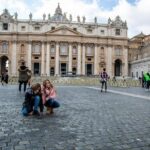
REVIEW · ROME
Expert Photographer of Rome with Guide
Book on GetYourGuide →Operated by picrider · Bookable on GetYourGuide
Rome looks better when someone directs your pose. This 1.5-hour Rome photo walk is built around natural sunlight and realistic posing, so you get images that look like you were meant to be standing there. I also love the tight mix of quick orientation around the big sights and practical restaurant ideas that help you skip the obvious tourist traps. The main thing to consider is the pace: with so much ground covered, you need to be okay with moving between stops.
You’ll meet near Colosseo metro and keep the group small (up to 6 people), which makes the photographer able to work with you instead of shouting over a crowd. You get professional results in RAW or JPEG formats, delivered at the end of the day, so it feels like a real service, not just a quick camera session. Based on past bookings, guides like Leonardo and Elmir/Leon bring a calm, detail-focused approach that’s clearly meant for first-timers too.
If you want Rome photos that don’t look forced, and you also want the city explained in a way that actually helps you plan the rest of your trip, this is a strong match.
In This Review
- Key takeaways before you go
- Price and what $71 gets you in real terms
- Meet at Via del Colosseo 31 and start without stress
- Colosseum: the 20-minute photo stop that sets the tone
- Roman Forum: guided context in short bursts
- Capitoline Hill: 10 minutes of visiting, 20 minutes of portraits
- Piazza Venezia to the Pantheon: quick orientation, smart angles
- Trevi Fountain and the Spanish Steps: portraits with crowds handled
- Castel Sant’Angelo: a classic finish with strong photo potential
- How the posing works so you look natural
- Beyond photos: mini-guided history and local restaurant ideas
- Who this tour fits best (and who might want something else)
- Should you book Expert Photographer of Rome with Guide by picrider?
- FAQ
- How long is the Rome photo experience?
- What is the price per person?
- How many people are in the group?
- Where do I meet the guide?
- Which languages are offered for the live guide?
- What photos do I receive and in what format?
- When will I get the photos?
- Will the photographer help with posing?
- Can I request the style of photos in advance?
- Is it refundable if I cancel?
Key takeaways before you go
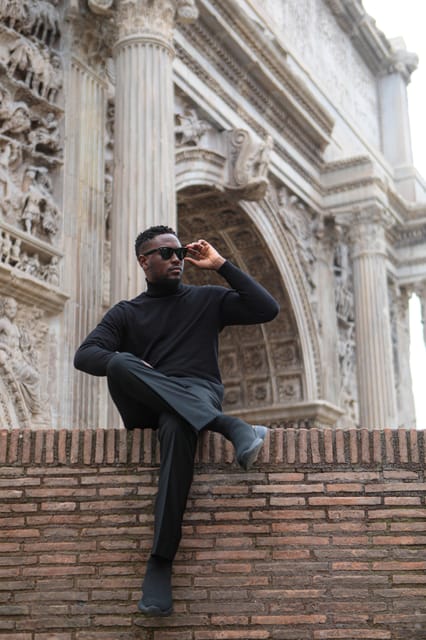
- Natural-light portraits: You’ll shoot with real sun conditions instead of flat, over-processed lighting.
- Small group attention: Up to 6 participants means more guidance on where to stand and how to pose.
- Fast city orientation: You’ll get the “first explorer” version of Rome across major landmarks.
- Food recommendations you can trust: You’ll get local suggestions meant to avoid tourist traps.
- Pro-level delivery: You receive all photos as RAW or JPEG files suited to your device.
- Guided stops, not a history marathon: Think practical context with a photo-first focus.
Price and what $71 gets you in real terms
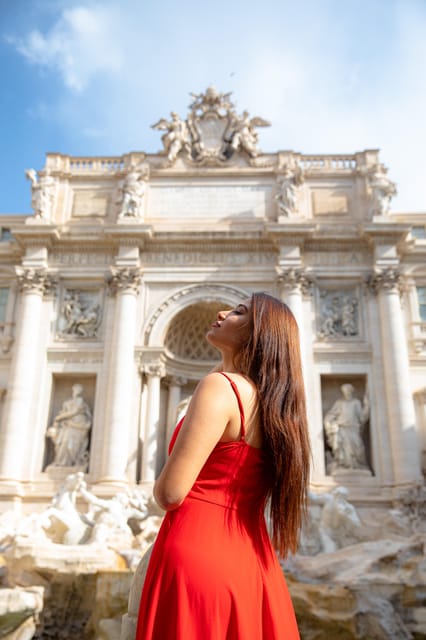
At $71 per person for 1.5 hours, you’re paying for three things at once: a professional photographer, short guided context as you walk, and a photo deliverable you can actually use after the trip.
In Rome, that combination matters. If you only book a walking tour, you often get facts but not portraits that look good. If you only book a photo session, you might get pretty pictures but miss the city context that makes you understand where you are and why the angles work.
The value is also in the handoff. You receive all pictures at the end of the day, and the photographer provides direction on posing so your photos don’t end up looking like someone grabbed you mid-walk. This is the kind of experience that’s also useful for couples, families, and anyone who wants memorable images without spending extra days hunting for the perfect photographer.
You can also read our reviews of more guided tours in Rome



Meet at Via del Colosseo 31 and start without stress
The meeting point is Via del Colosseo, 31, about 30 meters from Colosseo metro. That’s a big deal in Rome, where “meet by the famous landmark” can sometimes turn into a scavenger hunt.
Plan to arrive a few minutes early. Since you’ll be moving quickly between classic stops, being on time helps you get the most from each photo window.
You can also share what kind of pictures you want before or after booking. That lets the photographer manage the route and the posing plan for what you care about—portraits, couples, proposals, or simply natural travel-style photos.
Colosseum: the 20-minute photo stop that sets the tone
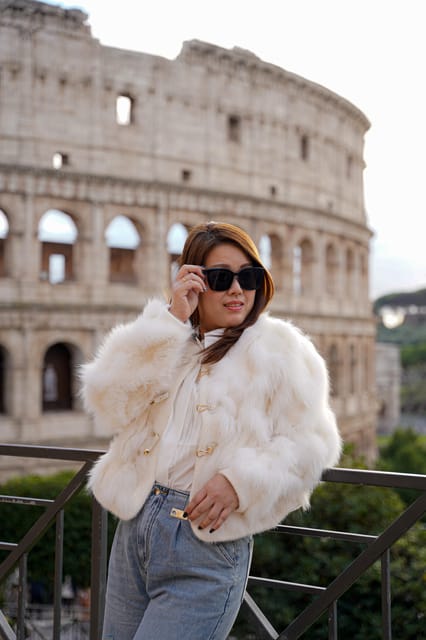
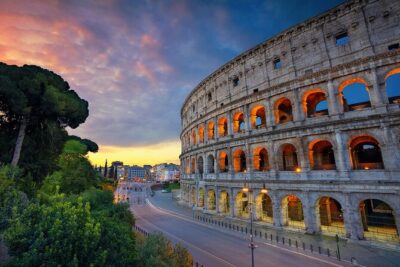
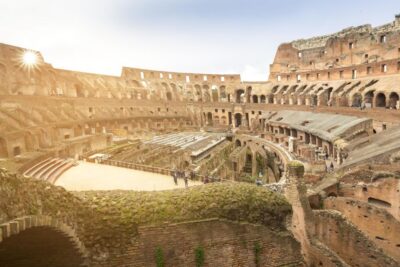
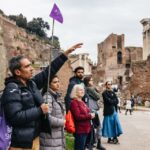
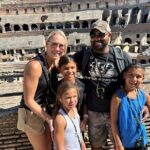
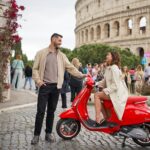
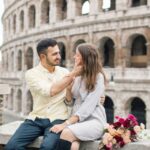
You’ll start with a photo stop at the Colosseum for about 20 minutes. This is not just “stand here and smile.” The point is to use the Roman architecture and the sun angle to create images that feel like real travel portraits.
A practical tip: come ready to adjust. You might be asked to change your stance, shift your weight, or slightly turn your body to avoid flat-looking photos. The goal is natural posture, not stiff reenactment.
If you’re used to photographing landmarks from the outside, this stop teaches you a different skill: using the building as a backdrop while still keeping you (the subject) looking real. Past participants have specifically praised how the guide gives clear pose direction, and you can feel that approach here.
Roman Forum: guided context in short bursts
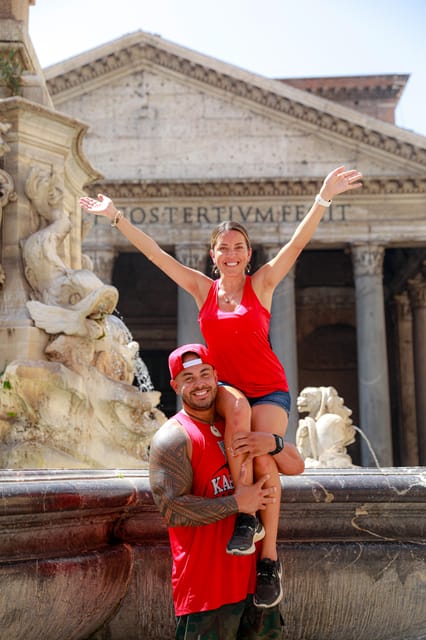
Next comes the Roman Forum with a short guided tour segment (about 10 minutes), followed by a photo stop (about 15 minutes). This is a clever structure for a first visit because you’re not stuck listening for a long time.
The Forum can feel like a pile of ruins if no one frames it. Here, the guide-style context is meant to help you read what you’re seeing fast—enough to add meaning to your photos without turning the outing into a full academic lecture.
During the photo stop, you’ll likely get prompts aimed at keeping your face and body positioned so the background looks intentional rather than messy. If you’ve ever looked at your travel photos and thought, Why do I look like I’m waiting for the bus?—this is where the photographer’s posing guidance helps.
Capitoline Hill: 10 minutes of visiting, 20 minutes of portraits
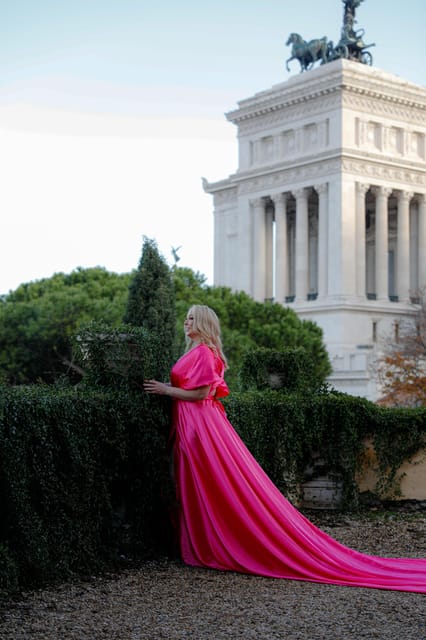
Capitoline Hill gets split into a visit (about 10 minutes) and a dedicated longer photo stop (about 20 minutes). That longer portrait window matters because it gives time for composition tweaks.
Capitoline Hill is one of those areas where you can get strong views and clean lines, which is why it works well for photography. You’re also in a spot that helps you look like you belong in Rome rather than just visiting it.
One consideration: since this portion is longer, you’ll want to be comfortable standing and moving for directions. If you dislike being told where to stand, you might feel a bit out of control at first. But the photos should reflect the benefit of extra time spent getting it right.
You can also read our reviews of more photography tours in Rome
Piazza Venezia to the Pantheon: quick orientation, smart angles
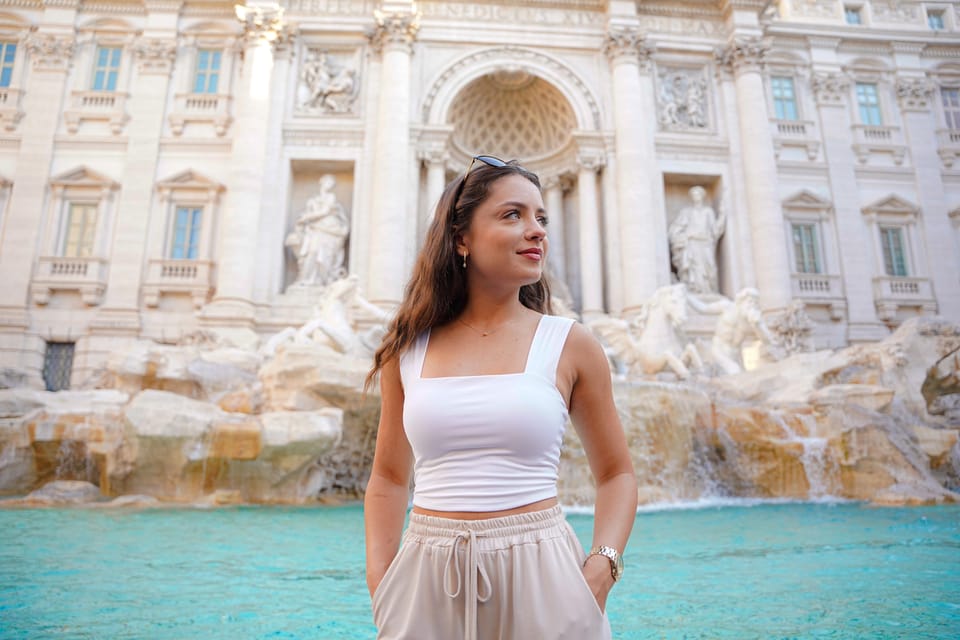
Piazza Venezia is next with a guided segment of about 10 minutes. Think of it as a viewpoint and navigation moment—helping you understand how the sights connect.
Then you head to the Pantheon for another guided portion (about 10 minutes), followed by a photo stop (about 15 minutes). The Pantheon is all about structure, light, and symmetry cues. Even without a deep lecture, the photographer’s job is to help you use those features for real portraits.
Here’s what you should expect: you’ll likely be guided on where to position yourself relative to the building’s lines. The aim is to make the architecture look like it’s framing you, not cutting you off in weird ways.
The Pantheon stop also gives you a break from the constant moving vibe. Fifteen minutes can feel like a lot compared with the quick windows earlier, and it helps you settle into being photographed.
Trevi Fountain and the Spanish Steps: portraits with crowds handled
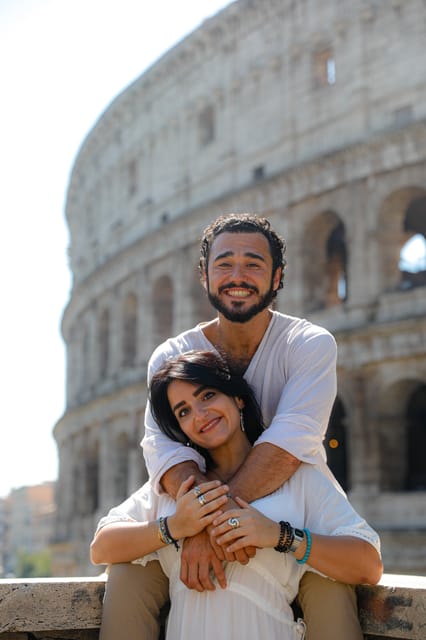
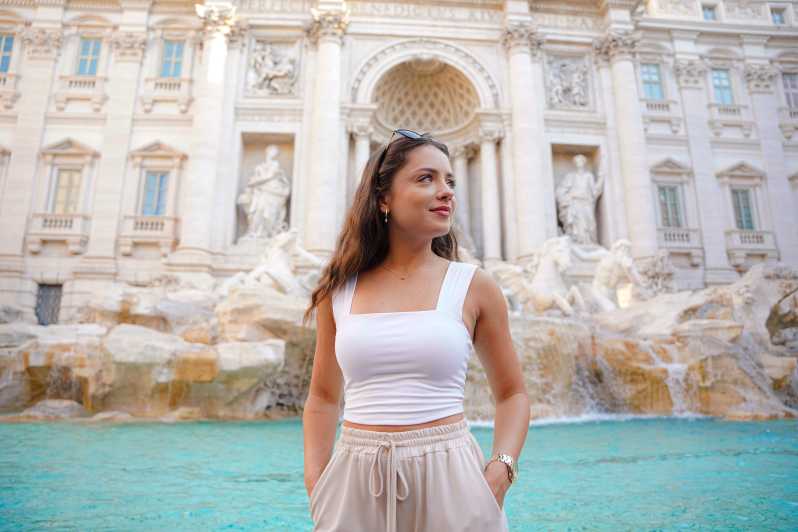
Trevi Fountain gets a guided visit (about 10 minutes) and then a photo stop (about 15 minutes). The Spanish Steps follow with a guided visit (about 10 minutes) and another photo stop (about 15 minutes).
These are two of the most photographed places in Rome, which means your biggest challenge is not the scenery—it’s crowd management and positioning. That’s exactly where having a photographer-led plan helps. You’re not just waiting for an opening; you’re getting directions on how to stand so you still get clear, usable photos.
A practical mindset: expect to move a bit, and don’t try to outsmart the timing by rushing ahead. The photographer’s direction is part of the value. People have praised how the guides work with posing so results look natural rather than staged, and this is where that technique shows up.
If you’re traveling with friends who hate photos, this can still work because the session is group-paced but not chaotic. You get your turn, the guide keeps things moving, and you’re not stuck posing for an hour straight.
Castel Sant’Angelo: a classic finish with strong photo potential
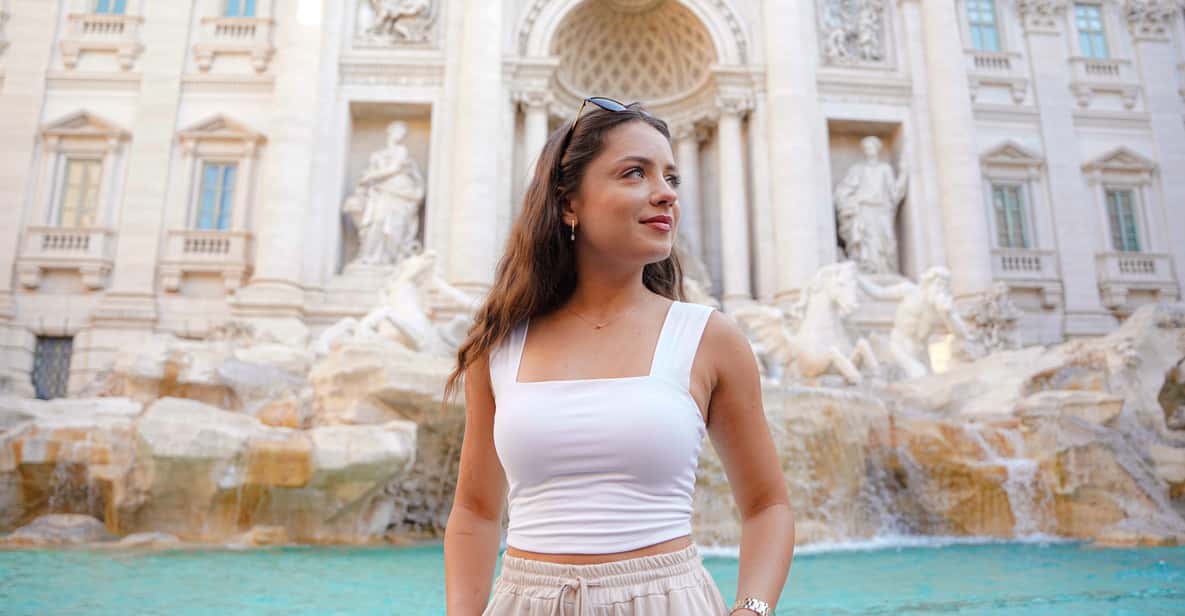
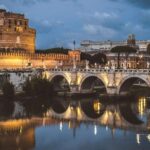
You’ll end with Castel Sant’Angelo: a guided segment (about 10 minutes) and a photo stop (about 15 minutes). Ending here gives you a chance to round out the walk with a different kind of visual story than pure street-level landmarks.
Castel Sant’Angelo tends to photograph well because of its recognizable silhouette and the way the structure reads from different angles. It’s also a good closing stop because it helps your trip feel complete: you’ve covered Rome’s most famous architectural icons in one concentrated session.
Keep in mind the pacing. By the final stop, you’ll be getting photos quickly, so if you want a specific style—romantic couple shots, more candid-style walking portraits, or a more formal pose—this is when you should communicate it clearly if you haven’t already.
How the posing works so you look natural
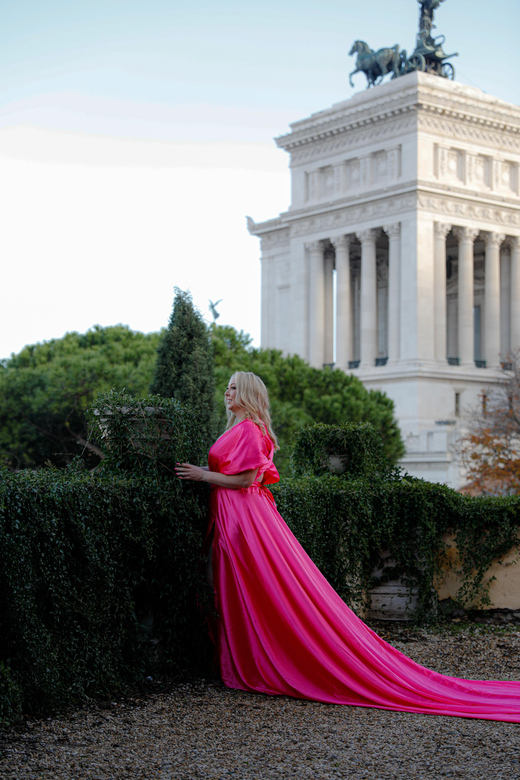
The biggest difference between an okay photo session and a great one is direction. This tour is built around it.
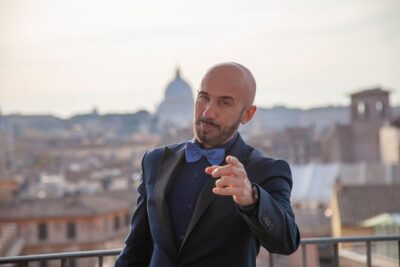
You’ll get specific posing guidance meant to avoid that stiff, fake look. The photographer doesn’t just point and shoot; they guide body position and facial expression so you still look like yourself. That’s why many participants talk about feeling comfortable and positive during the experience.
Here are a few practical ways to get better results quickly:
- Wear clothes that photograph well in daylight (not too many tiny patterns if you want clean focus on you).
- Be ready to adjust your stance when asked—small changes can fix big composition issues.
- Keep your pace natural. If you walk too stiffly, photos will look like you were coached, even if you were.
Also, this is a small group experience, so you’ll usually have time to settle into the photographer’s rhythm. The goal is relaxed energy. You’re meant to leave excited about Rome, not exhausted from fighting a camera.
Beyond photos: mini-guided history and local restaurant ideas
Even though the photo session is the headline, you also get guided tour moments—short enough to be useful, long enough to give context. The experience balances “what you’re looking at” with “what it means for your trip,” so you can connect sights instead of collecting them.
Just as important, you get best food recommendations to help you avoid tourist traps. Rome is full of places that look good from the outside but don’t deliver. Having someone guide you toward better options can save you money and time, and it can turn the rest of your trip from sightseeing into actually enjoying meals where locals would go.
Think of it like this: the photos capture the moment, and the recommendations help you extend the experience afterward.
Who this tour fits best (and who might want something else)
This works best if you:
- Want professional portraits with Roman architecture as your backdrop
- Are visiting for the first time and want orientation without a long history lecture
- Travel as a couple, family, or small group and want memories that look polished
- Enjoy having direction on posing rather than figuring it out yourself
It may not be ideal if you:
- Want a slow, in-depth exploration of each site
- Dislike being guided and corrected during photos
- Need long sit-down breaks between landmarks
Because the tour is only 1.5 hours and hits major stops (Colosseum, Forum, Capitoline Hill, Piazza Venezia, Pantheon, Trevi Fountain, Spanish Steps, Castel Sant’Angelo), it’s designed for efficiency. In exchange, you get strong photo output and practical city context.
Should you book Expert Photographer of Rome with Guide by picrider?
I’d book this if you want Rome memories that look like you hired a professional—and you don’t want to spend hours learning posing angles or hunting for a separate photographer session.
Your money also goes toward a real experience style: small group pacing, clear guidance, and delivery of photos in RAW or JPEG at the end of the day. The route is packed, but that’s the point. You leave with both images and a better mental map of the city.
Before you book, ask yourself one question: do you want guided help to get natural portraits quickly? If the answer is yes, this is a smart way to spend 1.5 hours in Rome.
FAQ
How long is the Rome photo experience?
It lasts 1.5 hours.
What is the price per person?
The price is $71 per person.
How many people are in the group?
The group is small, limited to 6 participants.
Where do I meet the guide?
You meet at Via del Colosseo, 31, about 30 meters from Colosseo metro.
Which languages are offered for the live guide?
The live tour guide is available in English, Italian, Spanish, Turkish, Russian, and French.
What photos do I receive and in what format?
You receive all pictures as RAW or JPEG files that suit your device.
When will I get the photos?
You will receive the pictures at the end of the day.
Will the photographer help with posing?
Yes. The photographer provides specific details so your photos look natural rather than fake.
Can I request the style of photos in advance?
Yes. You can share your wish for certain types of pictures before or after booking so the guide can manage the tour in the available time.
Is it refundable if I cancel?
Free cancellation is available up to 24 hours in advance for a full refund.