REVIEW · ROME
Small-Group Tour of Roman Catacombs & St. Clement’s Undergrounds
Book on Viator →Operated by TOURIKS · Bookable on Viator
Rome feels different underground. This small-group tour slips you below street level to experience San Clemente’s three underground levels and St. Domitilla’s painted burial labyrinth, plus a quick ride along the Via Appia Antica. I love how the sites show Christianity growing out of older Roman beliefs right under your feet, and I love the chance to stand close to early Christian art in places few people ever see. The main drawback is clear: it’s not recommended for claustrophobia, because you go down and walk in enclosed underground spaces.
The value is strong for the price: entrance fees, transport, and sterile headsets are included, so you spend your time reading the walls instead of squinting at a guide’s voice. You’ll also get practical help on-site, with luggage storage handled so you aren’t juggling a bag in the dark. Guides like Daniel, Samuele, Francesca, and Chiara come up often for running tight, clear tours, and the headset setup helps most people hear without straining.
In This Review
- Quick hits you’ll care about
- What makes these underground sites special
- San Clemente’s three levels: the city built over itself
- Mithraic temple and the pagan-to-Christian shift you can actually see
- The 4th-century basilica walls and fresco scenes
- The Appian Way transfer: short ride, big mood shift
- Catacombe di Domitilla: 16 meters down into painted chambers
- Why the small-group format changes everything
- What to bring and how to dress
- Timing, pacing, and what 3 hours really feels like
- Price and value: why $143.37 can make sense
- Best guide fit: who will enjoy this most
- So, should you book?
- FAQ
- How long is the Small-Group Tour of Roman Catacombs & St. Clement’s Undergrounds?
- How many people are in the group?
- Is the tour offered in English?
- Do I need to cover my knees and shoulders?
- Is the tour appropriate if I have claustrophobia?
- Are entrance tickets included?
- Is food included?
- Is hotel pickup and drop-off included?
- Where do I meet the guide?
Quick hits you’ll care about
- San Clemente’s layered underground walk shows multiple centuries stacked like a human archaeology lesson.
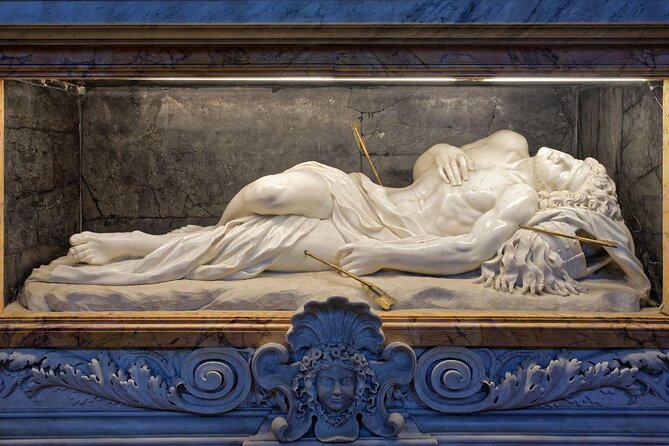
- Early Christian frescoes and burial art at Domitilla give context you won’t get from quick exterior photos.
- A small group capped at 10 keeps questions flowing and walking paced.
- Air-conditioned minivan covers the short transfer to the Via Appia catacombs area.
- Sterilised headsets help on-site audio stay clear, even when everyone is facing different directions.
What makes these underground sites special
Rome is famous for grand monuments above ground. This tour focuses on something more personal and slightly eerie: the places people used when the city felt dangerous, private, and deeply spiritual.
At both San Clemente and Domitilla, you’re not just seeing old stones. You’re watching history become architecture. Builders reused space, cut new passages, painted new scenes, and covered earlier layers as beliefs changed and communities shifted.
And that is the real hook: you get the slow, physical experience of time passing. You start high enough to feel oriented, then you keep going down until the world turns quiet and cool.
You can also read our reviews of more tours and experiences in Rome.



San Clemente’s three levels: the city built over itself
San Clemente is the star stop, and it’s special in a very specific way. You enter the basilica and then go below its foundations into the stacked remains of older structures. You’ll reach about 14 meters under ground, walking through multiple phases without the tour turning into a history lecture that runs out of steam.
What I like about San Clemente is the step-by-step feeling. You first see later structures built on top of earlier ones, then you go back down to the deeper point and watch the story reverse. It’s like reading a book from the back to the front, except the ink is stone and the pages are tunnels.
As you move upward, pay attention to the changes in wall style and the surviving features. The guide’s job is to point out what you might otherwise miss: where the martyr’s house sits in relation to later church spaces, and how builders treated earlier rooms as part of the foundation.
Mithraic temple and the pagan-to-Christian shift you can actually see
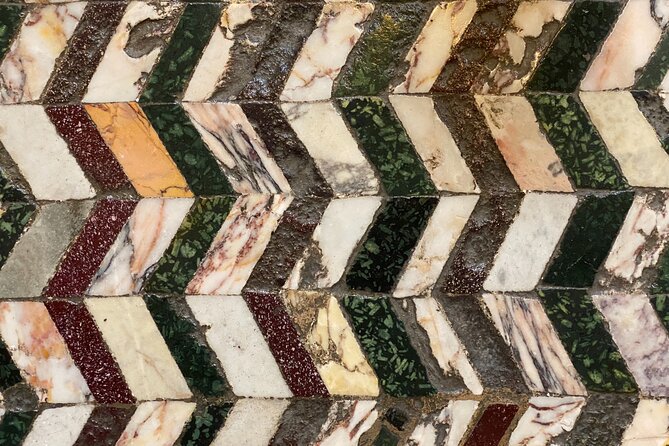
One of the most memorable segments is the deep, older layer where the focus is the Mithraic temple. This is where Roman religious life gets complicated in an honest way: before Christianity became dominant, other cults and mystery religions had dedicated spaces in Rome.
What makes this part work on a tour is contrast. You’re walking through a place that feels purpose-built for ritual, then you’re shown how the next era repurposed and reinterpreted that underground geography. The guide explains the pagan faith context, including its esoteric flavor, and you get a clearer sense of why new faiths spread when they could build over existing sacred space.
You’ll also get moments that feel almost tactile. One described highlight is the chance to touch the waters of an underground river. That kind of small physical connection can make the whole site feel less like a museum and more like a real working space people once depended on.
The 4th-century basilica walls and fresco scenes
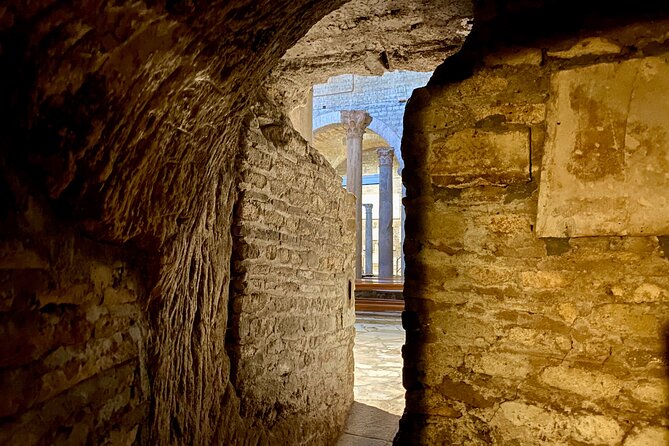
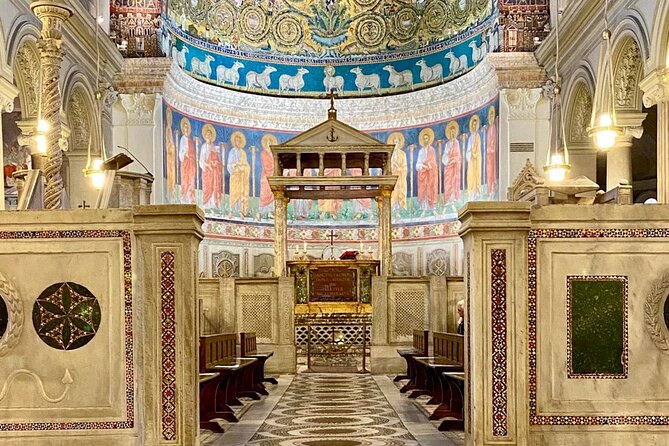
After the older layer, you move into the remains of the 4th-century Basilica that was built on top of the earlier martyr’s house and below the current basilica level. This is where the tour becomes visual.
You’ll walk along imposing walls and look at frescoes with guidance on the scenes and what they tell you about martyrs and persecution narratives. Even if you don’t memorize dates, you can still follow the logic: the art is doing storytelling, identity-building, and teaching.
This is also where dress code matters. Churches require knees and shoulders covered, and you’ll see people adjusting clothing fast. Bring a light layer if you tend to get cold indoors; the underground temperatures can feel cooler than you expect, especially in summer.
The Appian Way transfer: short ride, big mood shift
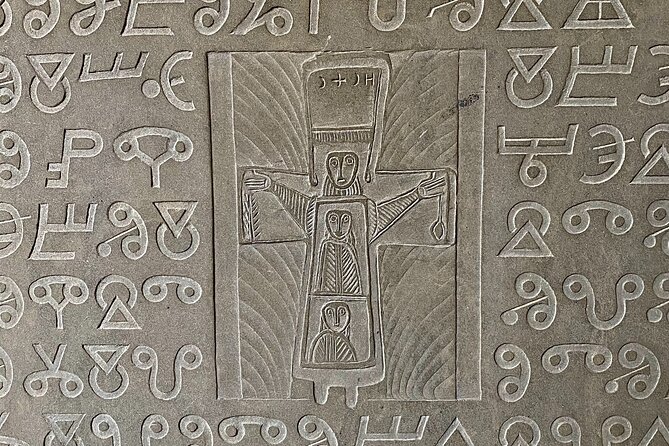
Between San Clemente and Domitilla, you hop into a comfortable air-conditioned minivan. The round trip to the Via Appia area takes about 30 minutes, so it doesn’t eat your time.
I like this pacing because it gives you a reset. After standing in thick stone air under a church, the drive helps you switch gears from vertical history (down into layers) to horizontal history (a road that helped move people and ideas).
This stop also matters for context. The Via Appia Antica isn’t just a pretty street; it was a major route in the Roman world. Even a quick ride helps you remember that catacombs weren’t isolated. They were part of a larger system of movement, settlement, and burial customs.






Catacombe di Domitilla: 16 meters down into painted chambers
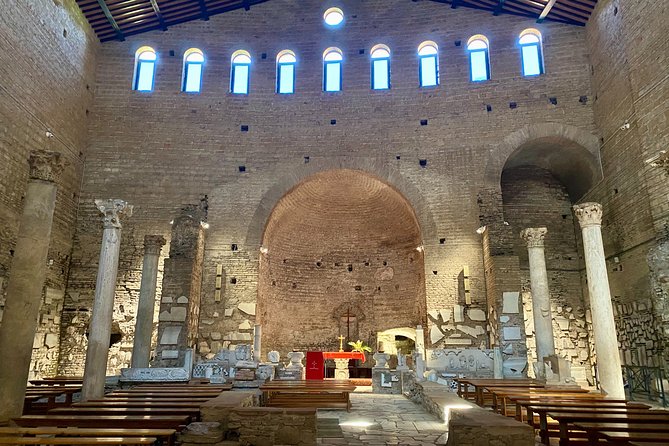
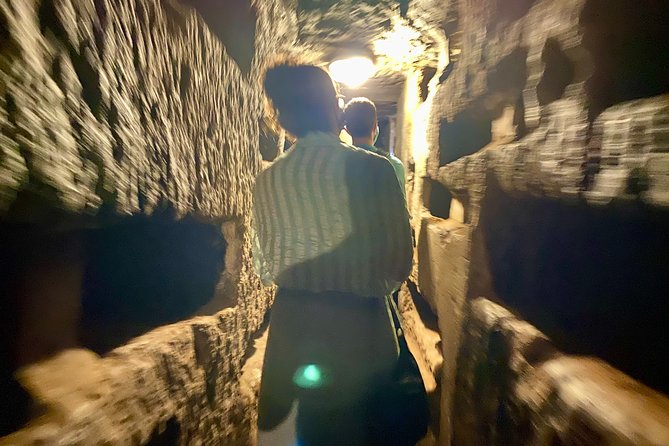
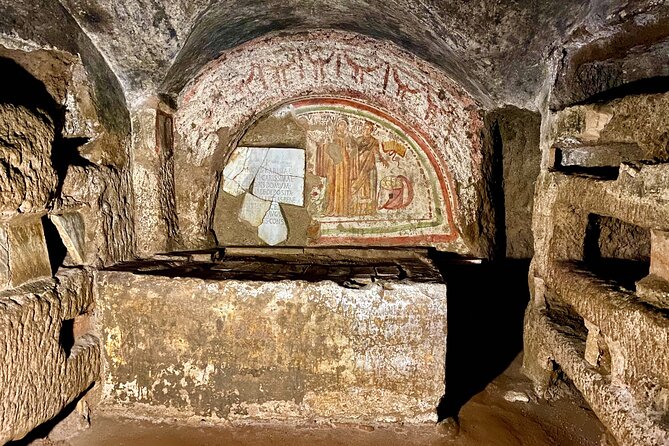
Domitilla is the other underground highlight, and it has a different emotional tone than San Clemente. You descend roughly 16 meters below the surface and enter accessible parts of an extensive labyrinth of burial chambers and galleries.
The scale helps here. You’re not just looking at one hallway with one view. You’re moving through a network, where the walls and painted surfaces become your guideposts.
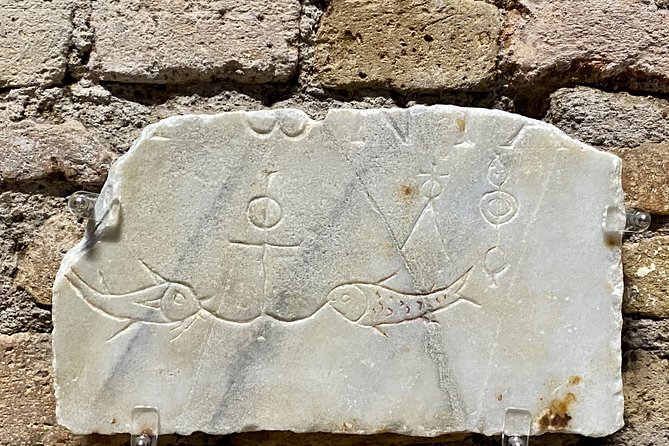
The tour focuses on ancient wall-paintings featuring mythological and biblical figures. That mix matters. It shows the shift in faith you’re likely to hear about in books, but here you see how symbols overlap and change meaning as communities grow and adapt.
You’ll also learn about early martyrs and the pressures around belief. The way this is explained can vary by guide, but the core idea stays the same: underground burial spaces weren’t only about death. They were also about identity, risk, and memory.
The experience wraps up with a 4th-century subterranean basilica space, so you finish with a sense of how early Christian communities organized worship and community life underground.
Why the small-group format changes everything
This tour is capped at 10 participants, and that is a real quality advantage in underground spaces. In tight corridors and at wall-level art, it’s hard for a big group to see what matters, and it’s hard to hear questions get answered.
A smaller group also makes the pace feel human. You get enough time at each stop to look carefully and not rush through the story. In the feedback people shared after their tours, a reliable start and end time and ample time at locations came up more than once, and that fits how these sites demand attention.
The included headsets are part of this too. Underground sound can bounce and muddle voices, so the headset system keeps the narration clear without people craning their necks or competing for attention.
What to bring and how to dress
You don’t need fancy gear, but you do need comfort. Here’s the practical checklist I’d use if I were planning your day:
- Cover knees and shoulders for church entry
- A light jacket can help because catacombs feel cool
- Comfortable walking shoes matter because you’ll be on uneven stone paths and stairs
- If you’re carrying a bag, take advantage of the luggage deposit service offered during the tour so you’re not hauling it through underground areas
Also think about your comfort level. This tour is marked as not recommended for claustrophobia, and that warning is worth taking seriously. Even if you can handle tight spaces for a few minutes, you’ll be underground for extended stretches.
Timing, pacing, and what 3 hours really feels like
The total duration is about 3 hours, and the structure is easy to understand in real time. You spend about 1 hour 15 minutes at San Clemente, then about 1 hour 15 minutes at Domitilla, with a short transfer around the Via Appia area.
That balance is good. You don’t get the feeling of doing ten stops in one day and forgetting half of them. You get two major underground “chapters,” plus a transfer that keeps you oriented.
Because weather can affect access, the tour may change dates if conditions are poor or if there are liturgical calendar events. If you’re planning multiple timed bookings in Rome, it’s smart to keep a bit of flexibility around your underground day.
Price and value: why $143.37 can make sense
At $143.37 per person, this isn’t a budget impulse buy. But it also isn’t a barebones ticket to a site. The included package matters because underground tours live and die by logistics.
You’re paying for:
- Entrance to the sites where admission is required
- Transport between locations via a private minivan
- Sterilised headsets so you can hear clearly underground
- A live professional guide
- On-site assistance and luggage deposit while you tour
That bundle is especially valuable because catacomb sites can be confusing without context. You could try to do this on your own, but you’d lose the thread that connects layers of belief, burial art, and construction phases.
The other value point is time. In three hours, you get to see multiple layers at San Clemente and the extensive burial spaces at Domitilla without spending your whole day hopping across Rome.
If you’re the kind of traveler who enjoys meaning, not just sights, the price is easier to justify.
Best guide fit: who will enjoy this most
This tour is a strong match if you like:
- Early Christianity and how beliefs changed over time
- Roman religious life and how older sacred spaces were reused
- Art in context, especially frescoes and painted iconography
- Small-group pacing and Q&A energy
It’s also a great option for visitors who want to escape peak crowd density. Underground spaces are quieter, and the experience feels more like a guided walkthrough than a rushed line.
On the flip side, skip it if you:
- Have claustrophobia (the warning is direct)
- Need very open, airy environments
- Want a flexible stop-and-stroll format (this tour keeps a structured flow)
So, should you book?
If you want Rome that isn’t only marble and views, I’d book this. The combination of San Clemente’s stacked underground layers plus Domitilla’s painted burial network is exactly the kind of experience that changes how you picture the city.
Book it if you:
- Want a guided thread through pagan and Christian shifts you can see, not just read
- Prefer small groups and clear audio
- Are comfortable walking stairs and staying underground
Think twice if you’re sensitive to tight spaces or you’re hoping for mostly surface-level ruins. In that case, you might feel more stress than wonder.
FAQ
How long is the Small-Group Tour of Roman Catacombs & St. Clement’s Undergrounds?
The tour runs about 3 hours, with roughly 1 hour 15 minutes at San Clemente and about 1 hour 15 minutes at Domitilla, plus a short transfer time between sites.
How many people are in the group?
The group size is capped at a maximum of 10 participants.
Is the tour offered in English?
Yes, the tour is offered in English.
Do I need to cover my knees and shoulders?
Yes. An appropriate dress code is required to enter the churches, meaning your knees and shoulders should be covered.
Is the tour appropriate if I have claustrophobia?
No. It is specifically not recommended for people with claustrophobia.
Are entrance tickets included?
Yes for the Basilica of San Clemente and Catacombe di Domitilla. The Via Appia Antica stop notes admission ticket free.
Is food included?
No. Food and drinks are not included.
Is hotel pickup and drop-off included?
No. Hotel pick-up and drop-off are not included.
Where do I meet the guide?
You meet at Via Francesco Giambullari, 4, 00184 Roma RM, Italy, and the tour ends back at the same meeting point. You should arrive about 5 minutes early.