REVIEW · ROME
Rome Private Walking Tour including Pantheon access
Book on Viator →Operated by Travelling Italy · Bookable on Viator
Pantheon access makes this walk feel complete.
This private 3-hour route strings together Rome’s most famous squares and streets, from Piazza del Popolo to the Spanish Steps and Trevi Fountain, with a guided visit to the Pantheon area.
I like the way you get instant city orientation. You start at the Flaminio Obelisk end of Piazza del Popolo, then follow the long line of Via del Corso toward Via dei Condotti, so Rome’s layout starts to make sense fast. I also like the guide energy: guides such as Valerio or Serena are named for being personable and good at answering questions, and they often help you connect to what you’ll do next.
One possible drawback is cost creep. The Pantheon admission is listed as not included, and a couple of church entries also note not included, so you should plan a little extra in your day’s budget.
In This Review
- Quick hits that make this tour worth your time
- A private 3-hour route built for orientation (not just checkmarks)
- Piazza del Popolo: start with the Flaminio Obelisk and a big-city view
- Two churches with art-and-architecture clues: Santa Maria dei Miracoli and Santa Maria in Montesanto
- Via del Corso and Via dei Condotti: Rome’s straight shot and fashion street
- Spanish Steps: a classic climb with a practical payoff
- Trevi Fountain and the wish-coin moment
- St. Ignatius of Loyola and Piazza Navona: Baroque Rome built on older Roman ground
- Castel Sant’Angelo: from Hadrian’s mausoleum to popes and a museum
- Pantheon access: the part you should plan money for
- What you’ll actually experience on the ground
- Who this tour fits best (and who might prefer something else)
- Should you book this private Rome walking tour with Pantheon access?
- FAQ
- Is the Pantheon ticket included in the tour price?
- How long is the Rome Private Walking Tour?
- Is this tour private or shared with other people?
- What language is the tour offered in?
- What’s the meeting point and where does the tour end?
- Are tickets required for all the stops?
- Do I get a mobile ticket?
- Can I bring a service animal?
- Can I cancel for a full refund?
- Is the tour close to public transportation?
Quick hits that make this tour worth your time
- Private pacing: only your group joins, so you can ask questions without a crowd shuffle
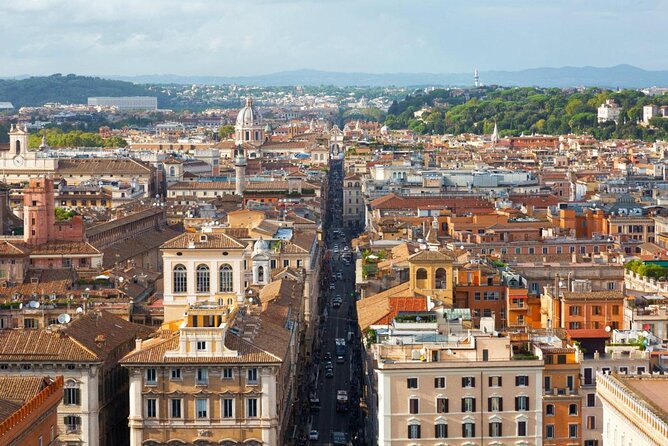
- A high-value Rome lineup: Piazza del Popolo, Spanish Steps, Trevi Fountain, Piazza Navona, Castel Sant’Angelo, and Pantheon
- Easy city legwork: all walking in central Rome, starting near Piazza del Popolo and finishing by Castel Sant’Angelo
- Mobile ticket: you don’t need to juggle paper confirmations
- Great guide moments: guides like Valerio are described as going beyond facts and helping with next-step recommendations
A private 3-hour route built for orientation (not just checkmarks)
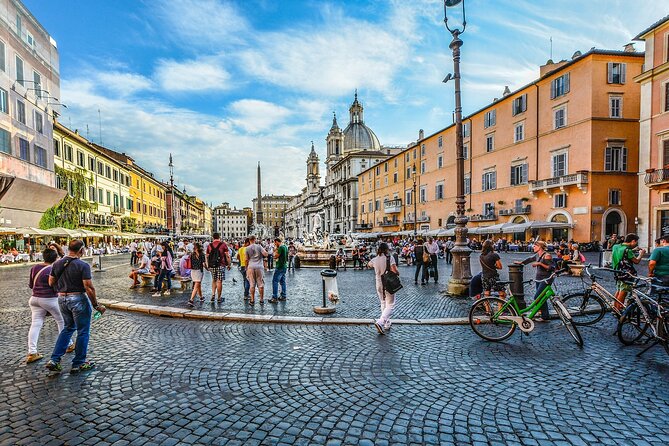
Rome can feel like a maze at first. This tour is designed to help you get your bearings quickly by stringing together big landmarks that also teach you how the city flows.
You’ll be on foot for about 3 hours, with short stops that keep things moving. That pace is ideal if you want the highlights without losing an entire day to transit and long museum queues.
Price-wise, $161.77 per person isn’t a bargain, but it’s also not trying to pretend it’s cheap. You’re paying for a private guide and a tight route that hits multiple top sites, including Pantheon access (with the important note about admission cost below).
Also, this is popular. On average it’s booked about 70 days in advance, so I’d avoid waiting until the last week if you have fixed dates.
You can also read our reviews of more walking tours in Rome

Piazza del Popolo: start with the Flaminio Obelisk and a big-city view
Your walk begins at the Flaminio Obelisk in Piazza del Popolo, one of Rome’s 13 ancient obelisks. It’s 24 meters high (about 67 feet), and once you include the base and cross, it reaches 36.50 meters.
What I like here is the power of starting in a “center.” Piazza del Popolo is broad, open, and easy to navigate compared with Rome’s tight lanes. You get your first landmark photo, then the guide can show you how the streets radiate outward.
There’s also a little historical charm in the name. The name today means People’s Square in modern Italian, but historically it traces to poplars. That kind of detail makes the first stop feel less like a photo-op and more like you’re learning Rome’s logic.
Two churches with art-and-architecture clues: Santa Maria dei Miracoli and Santa Maria in Montesanto
After the obelisk, you’ll head to Chiesa Santa Maria dei Miracoli. The church began in 1675 and finished in 1681, with a circular plan and an elegant 18th-century bell tower by Girolamo Theodoli. It also has an octagonal cupola, which is the sort of feature you’d easily miss without someone pointing it out.
Then comes Santa Maria in Montesanto. This one sits over an older church linked to the start of Via del Babuino and was occupied by Carmelite monks.
These are not “big ticket” stops like the Trevi Fountain crowd magnets, but that’s exactly why they work in a walking tour. They add variety, break up the landmark intensity, and give you a chance to notice how Rome stacks eras on top of each other.
Keep in mind: admission for both of these churches is listed as not included. If you want them inside, plan for that extra cost.
Via del Corso and Via dei Condotti: Rome’s straight shot and fashion street
Next you move into Via del Corso, Rome’s main street in the historic center. It’s straight—rare in Rome’s world of tight, winding alleys—and that straight-line quality matters. It’s a visual guide for how the city’s planned sections contrast with its medieval lanes.
Via del Corso is about 1.5 kilometers long and roughly 10 meters wide. When you walk it with a guide, those numbers become real. You understand why it feels like Rome’s “big hallway.”
From there, you shift to Via Dei Condotti, one of Rome’s fashionable streets. This stop is also where you pass by Caffé Greco, established in 1760 at Via Condotti 86—one of those old Roman names that feels like it has a backstory even if you just glance at the facade.
This segment is valuable even if you don’t shop. It’s a taste of Rome’s layers: baroque churches and ancient obelisks on one side, modern luxury storefront energy on the other.
Spanish Steps: a classic climb with a practical payoff
The Spanish Steps connect the Piazza di Spagna at the base and Piazza Trinità dei Monti at the top. The church at the top dominates the view, and the slope itself is famous for a reason: it forces you to experience Rome in vertical terms.
In a tour like this, you don’t linger for hours. You’ll spend around 15 minutes here, which is enough for photos, quick context, and a short look up and down the stairs.
Practical tip: if you want the best angles, go half a step beyond the obvious photo spot. Rome rewards people who move a little.
You can also read our reviews of more private tours in Rome





Trevi Fountain and the wish-coin moment
Then it’s Trevi Fountain. This 18th-century Baroque fountain, designed by Nicola Salvi and completed with Giuseppe Pannini and others, is enormous: 26.3 meters high and 49.15 meters wide. It’s also the largest Baroque fountain in the city.
The tour highlights include tossing a wish coin into the fountain, so I’d plan to have a small coin ready. Standing close enough to do it without getting jostled is easier with a guide managing the flow.
Time matters here. You’ll have about 20 minutes at Trevi, which is helpful because the area can slow down quickly. If you’re sensitive to crowds, this shorter, guided window is a smart way to see the fountain without losing your entire afternoon to it.
St. Ignatius of Loyola and Piazza Navona: Baroque Rome built on older Roman ground
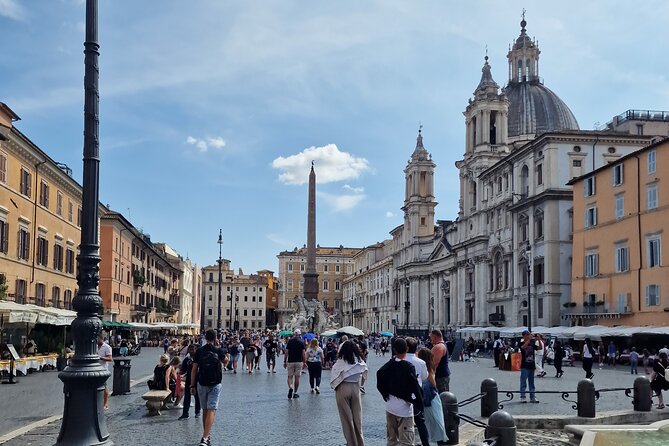
After Trevi, you’ll visit Chiesa di Sant’Ignazio di Loyola, a Latin Catholic titular church at Campus Martius. It’s Baroque, built between 1626 and 1650, and it’s dedicated to Ignatius of Loyola, the founder of the Society of Jesus.
This stop works well because it’s a change of pace from open-air crowds. You get a calmer look at Baroque styling right before heading into one of Rome’s most atmospheric piazzas.
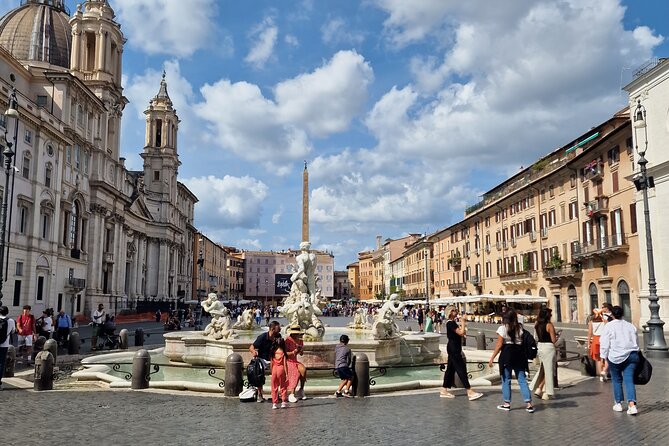
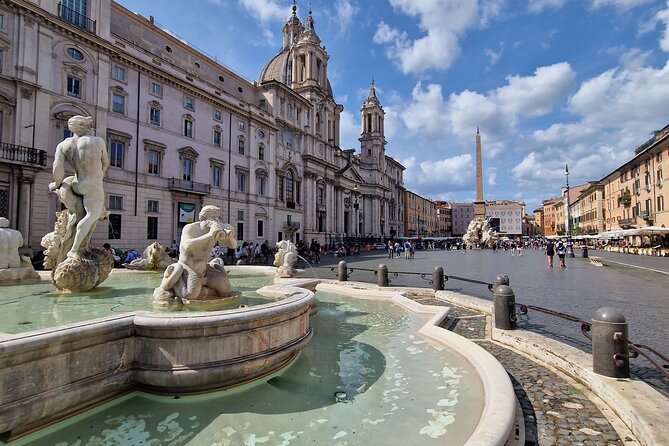
Then comes Piazza Navona. The key context: it’s built on the site of the Stadium of Domitian from the 1st century AD, and the piazza follows the stadium’s shape. That fact turns a “pretty square” into a historical map you can stand inside.
With about 20 minutes here, you can take in the geometry, look around at the surroundings, and understand why Navona feels like it was designed for public life.
Castel Sant’Angelo: from Hadrian’s mausoleum to popes and a museum
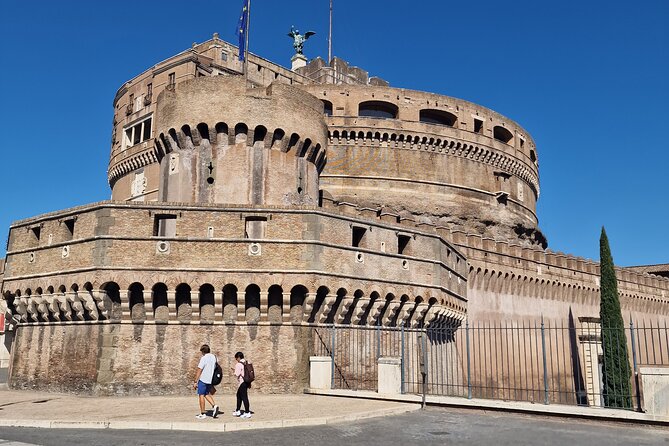
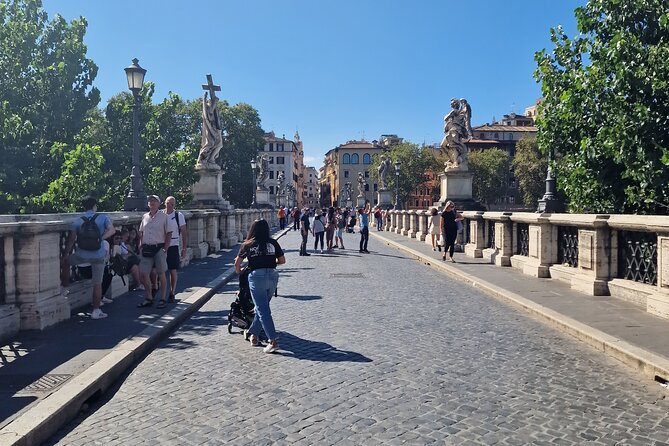
As you continue, you reach Castel Sant’Angelo. It’s a cylindrical building in Parco Adriano that began as Hadrian’s mausoleum commissioned by the emperor and his family. Later, popes used it as a fortress and castle, and today it functions as a museum.
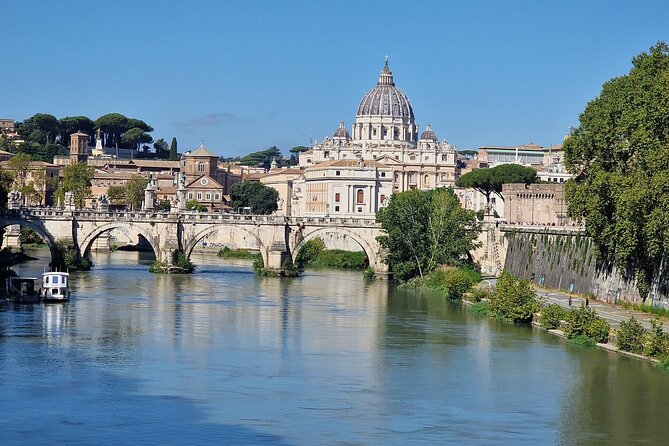
It was once the tallest building in Rome, which gives you a good mental image of how dominant it must have felt on the skyline when it was new. Even if you don’t go into the museum, the structure itself is a strong finish-point landmark.
You’ll spend about 25 minutes here. That’s a nice window for a walk around the immediate area, plus a chance to catch views over the river corridor without turning it into a full museum day.
Pantheon access: the part you should plan money for
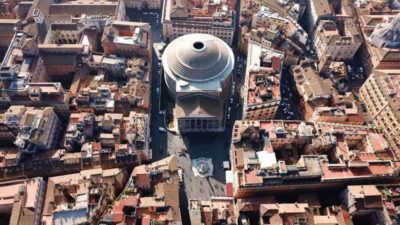
Finally, you’ll get to the Pantheon. It’s a former Roman temple—originally associated with the idea of the temple of all the gods—and since 609 AD it has been a Catholic church (Basilica di Santa Maria ad Martyres / Basilica of St. Mary and the Martyrs).
This is the stop most people care about, and it’s easy to see why. The Pantheon is one of those buildings where the scale feels unreal even after you’ve seen photos.
Here’s the practical part you need for budgeting: the Pantheon admission is listed as not included. So while the tour is designed to take you there as part of your day, you should expect to pay the site entry separately.
If you want to make that painless, I’d make sure you have cash and/or a working card ready and any required details for entry. With a guide, you’ll still get the context that turns the dome and columns into a story, not just a look.
What you’ll actually experience on the ground
This is a classic “big highlights” Rome walk, but the details matter.
You’ll cover open plazas (Piazza del Popolo, Piazza Navona), signature tourist icons (Spanish Steps, Trevi Fountain), and architecture-focused church stops (Santa Maria dei Miracoli, Santa Maria in Montesanto, Sant’Ignazio di Loyola). You’ll also end with a fortress-museum vibe at Castel Sant’Angelo before (or alongside) your Pantheon visit, depending on pacing.
What you should expect from the guide side: the named guides Valerio and Serena are described as being able to answer questions and explain history and the meaning of buildings in a way that sticks. In practice, that means you’re not just hearing dates—you’re learning what you’re looking at and why it mattered.
Who this tour fits best (and who might prefer something else)
This private tour is a strong match if you want:
- a first-day Rome walk to help you navigate later on your own
- a guided route that hits major sights without picking taxis or trains between each stop
- a quieter experience than a bus-group shuffle, since it’s private and only your group participates
It’s also ideal for couples, friends, and small families who can keep a steady walking pace for a short, concentrated day.
If you’re the type who wants long, unhurried museum time, you might find the stop durations feel tight. Churches listed as not included also mean you may choose between speed or extra costs for inside visits.
Should you book this private Rome walking tour with Pantheon access?
Yes, if you want a smart, guided sampler of Rome’s best-known sights in one afternoon. The combination of Piazza del Popolo, Spanish Steps, Trevi Fountain, Piazza Navona, Castel Sant’Angelo, and the Pantheon visit is exactly the kind of route that makes the city click fast.
Book it especially if you care about having context, not just photos, and if you’re okay handling extra site admissions for the Pantheon and a couple of churches. With a guide like Valerio or Serena, you’re also getting the human benefit of question time and practical recommendations to keep your day moving.
If your budget is extremely tight and you only want free or fully included admissions, you may want to compare options that bundle every entry fee. But if you’re paying for a private guide and you’re excited about the Pantheon, this is a solid value play.
FAQ
Is the Pantheon ticket included in the tour price?
No. The Pantheon stop lists admission ticket not included, so you should plan to pay for entry separately.
How long is the Rome Private Walking Tour?
It runs about 3 hours (approx.).
Is this tour private or shared with other people?
It’s private. Only your group will participate.
What language is the tour offered in?
The tour is offered in English.
What’s the meeting point and where does the tour end?
You start at Flaminio Obelisk, Piazza del Popolo, 21, 00187 Roma RM, Italy. The tour ends at Castel Sant’Angelo, Lungotevere Castello, 50, 00193 Roma RM, Italy.
Are tickets required for all the stops?
Not all stops require paid admission. Some listed stops are free, while Santa Maria dei Miracoli, Santa Maria in Montesanto, and the Pantheon note that admission is not included.
Do I get a mobile ticket?
Yes, the tour includes a mobile ticket.
Can I bring a service animal?
Yes, service animals are allowed.
Can I cancel for a full refund?
Yes. Free cancellation is available up to 24 hours in advance of the experience start time for a full refund.
Is the tour close to public transportation?
Yes, it’s near public transportation.