REVIEW · ROME
Rome: Piazza del Popolo and City Sights Free Walking Tour
Book on GetYourGuide →Operated by Romes Ultimate · Bookable on GetYourGuide
Rome starts with a gate and a giant obelisk. This free walking tour is a smart way to get oriented fast, then learn why Piazza del Popolo matters, before you follow your guide toward Castel Sant’Angelo. I especially like the close-up feel of the Ramesses II obelisk and the way the route turns monument spotting into actual stories you can remember.
I also like the guide-led focus on “street history,” like the Aurelian Walls gate area and the mausoleum-to-castle transformation at Castel Sant’Angelo. The only real drawback to plan for is that it’s tip-based, so your final outlay depends on how much you want to reward the guide.
In This Review
- Key things that make this tour worth your time
- Piazza del Popolo meet-up: the Ramesses II obelisk and a fast way to get your bearings
- Porta del Popolo and the Aurelian Walls: why this gate area feels more important than it looks
- The guide’s stories: hidden corners, amusing tales, and facts you can use later
- Castel Sant’Angelo: Hadrian’s mausoleum turned fortress
- Eating and nightlife tips: practical Rome, not just sightseeing
- Timing and walking pace: what 2.5 hours feels like on your feet
- Price and value: why a low entry fee can still cost you properly
- Should you book this Piazza del Popolo to Castel Sant’Angelo walk?
- FAQ
- Where does the tour start?
- How long is the walking tour?
- Is the tour offered in English?
- What sights will I see?
- Is this tour free?
- Is the tour tip-based?
- Can I reserve now and pay later?
- Is there free cancellation?
- Is the tour wheelchair accessible?
- Is there a guide with the group?
Key things that make this tour worth your time
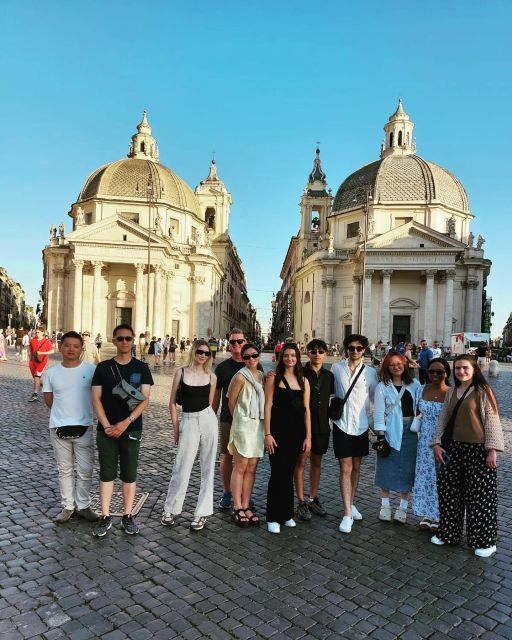
- Ramesses II obelisk at Piazza del Popolo: a big visual anchor that makes the start feel memorable
- Porta del Popolo and the Aurelian Walls: you’re not just looking, you’re learning how the city was structured
- Castel Sant’Angelo’s Hadrian story: mausoleum origins, then a fortress conversion
- Restaurant and nightlife tips: practical suggestions layered on top of the history
- Small moments for photos and breaks: you’re not stuck walking the whole time
Piazza del Popolo meet-up: the Ramesses II obelisk and a fast way to get your bearings
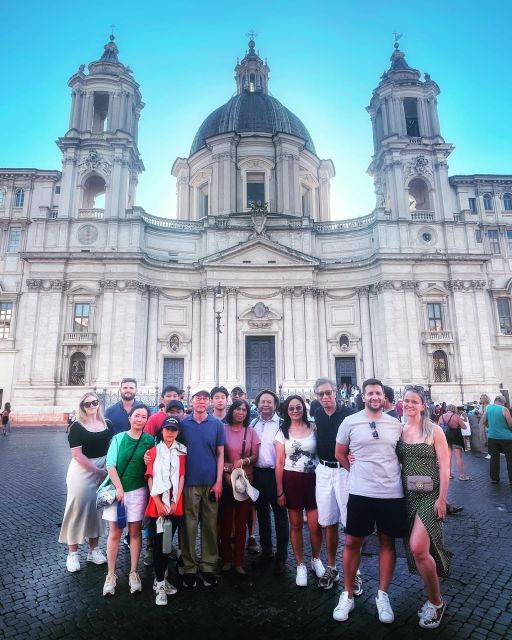
The tour begins outside the arches and entry gates into Piazza del Popolo, so you’re starting right at one of Rome’s best “orientation points.” If you’re the kind of traveler who gets overwhelmed by too many streets too early, this is a nice fix. You get a clear start, then you walk with purpose instead of wandering like a lost cartoon.
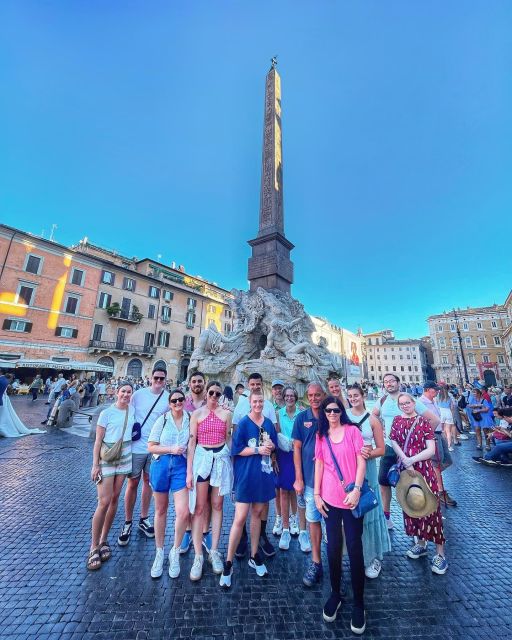
One of the biggest draws is that you immediately run into the Ramesses II obelisk towering over the square. Even if you’ve seen Rome’s monuments in photos, seeing one in person changes how you read the city. It becomes a landmark you can mentally reuse later when you’re trying to navigate back to the center.
And then the guide connects the square to bigger themes—especially the city’s early Christian roots. Rome has layers, and this is a way to understand the layers without needing a textbook open on your phone. It also helps you understand why certain areas get repeated in Rome guidebooks while other nearby corners stay quieter: the guide is teaching you what to notice, not only what to walk past.
You can also read our reviews of more walking tours in Rome



Porta del Popolo and the Aurelian Walls: why this gate area feels more important than it looks
From Piazza del Popolo, the walk moves to the Porta del Popolo area, tied to the Aurelian Walls. This is where the tour becomes more than a highlights stroll. You’re learning the logic of the city’s boundaries—how a gate could function as a transition between two parts of town.
The Porto/Porta del Popolo experience includes admiring the marble columns and statues that decorate the gateway. It’s one of those “yes, it’s pretty” moments, but the tour adds the payoff: you learn to read the gate as infrastructure with symbolism. Instead of treating it like background scenery, you start seeing it as a designed threshold.
There’s also a practical advantage here. If you’re walking Rome independently later, the Porta del Popolo area gives you a reference point. You remember how it sits between Piazza del Popolo and Piazzale Flaminio, and that mental map makes future walks easier.
If you’re not into gates and walls, you might wonder why you’re spending time here. But for most people, this section lands because it explains what the wall meant and how the city was organized around movement. Rome is not just buildings; it’s routes.
The guide’s stories: hidden corners, amusing tales, and facts you can use later
A good free walking tour can either feel like a loose ramble or like a guided “city decoder.” This one leans toward the second option. The guide’s style is built around amusing tales and real context—so even when you’re walking past ordinary streets, you’re still learning something.
I like that the tour is led by live guides in English, and you may get different personalities depending on who’s on duty—names like Lucio, Nick, Joan, and Alessandro come up in the guide pool people mention. The common thread is that the guiding is interactive and responsive. You can ask questions, and the answers help you connect what you’re seeing to what you already know—or think you know.
You’ll also get some “leave Rome smarter” habits. Expect tips on where to eat and what to revisit later. That matters because Rome can be a decision overload. When you leave with a few strong options for dinner and a shortlist of places that deserve a second pass, your trip stops feeling like a checklist.
Castel Sant’Angelo: Hadrian’s mausoleum turned fortress
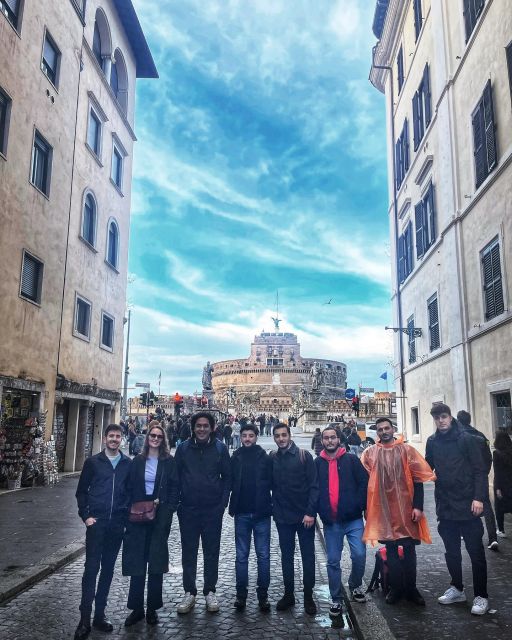
Then comes the big visual and historical payoff: Castel Sant’Angelo. The tour frames it clearly: it was built by Emperor Hadrian as a mausoleum, and later converted into a castle around the 14th century. That timeline is the kind of story that turns a site from “a photo spot” into “a place with a purpose.”
When you approach Castel Sant’Angelo during a walking tour, you’re also doing something smart for your whole trip. You’re learning how to think about Rome’s reuse. Rome’s buildings often change function over centuries, and this fortress is a prime example of the city keeping older bones and repackaging them for new eras.
What makes this stop work on a 2.5-hour walk is that you’re not trying to do everything. You’re getting the landmark moment plus enough context to make independent visiting feel easier afterward. When you return later on your own, you’ll know what you’re looking at and why the story matters.
Eating and nightlife tips: practical Rome, not just sightseeing
One of the most useful parts is that you’re not walking with your head stuck in the past. The guide includes tips on the best restaurants and even nightlife suggestions. For me, that’s the difference between a tour that’s just history trivia and a tour that improves your actual evening plans.
And because the tour is tip-based, the guide has incentive to deliver value you can feel. People mention that the guidance includes easy, real suggestions rather than generic names. You also get local-style thinking about what area to aim for and how to pace your day so you’re not too tired to enjoy dinner.
One small but important detail: there can be a pause for a break—like gelato/coffee and even time to use the restroom—so you’re not stuck doing the “power through everything” thing. That kind of stop sounds minor, but in Rome heat or evening crowds, it can save the rest of your day.
You can also read our reviews of more city tours in Rome



Timing and walking pace: what 2.5 hours feels like on your feet
The tour lasts about 2.5 hours, which is a sweet spot for Rome. It’s long enough to cover meaningful distance and connect the dots between major sights. It’s short enough that you still have time to explore independently afterward without feeling like you lost your whole day.
For planning, remember that it’s a walking experience. That means comfortable shoes matter more than you think. You’ll likely have a few stops for photos and explanations, but the pace is still built around movement between points—especially from Piazza del Popolo toward Castel Sant’Angelo.
Group size can also shape the feel. People describe it as a smaller group, which tends to make Q&A easier and the walk feel more personal. If you prefer a quiet, conversational style to mega-group herding, this format fits that mood.
Price and value: why a low entry fee can still cost you properly
The listed price is $3.54 per person, and the tour is tip-based. That means the “ticket” is not the whole story. The guide’s time is essentially supported by what you choose to add at the end.
This is actually a good value model if you like to pay for quality. If the guide explains clearly, adds context that changes how you see the city, and gives you useful restaurant and nightlife guidance, you can reward that. People also mention that you can choose how much you pay your guide, which helps you feel in control—especially if you don’t stay the full time due to your own plans.
If you’re worried about committing, the reserve-now / pay-later style can help you keep flexibility. But do keep one reality in mind: tip-based tours work best when you’re ready to do the small act of appreciation. Bring cash or plan how you’ll tip.
Should you book this Piazza del Popolo to Castel Sant’Angelo walk?
Book it if you want an efficient introduction to Rome’s center with a guide who explains the “why” behind what you see. This tour works especially well on your first or second day, because it gives you landmarks that act like anchors and it hands you practical food and evening ideas so you can stop guessing.
Skip it if you already have a solid grasp of Rome’s city gates and mausoleum-to-fortress conversions, and you prefer purely self-guided wandering without questions. Also, if you hate walking for 2.5 hours on cobblestones or uneven surfaces, consider whether you’ll enjoy moving more than sitting.
FAQ
Where does the tour start?
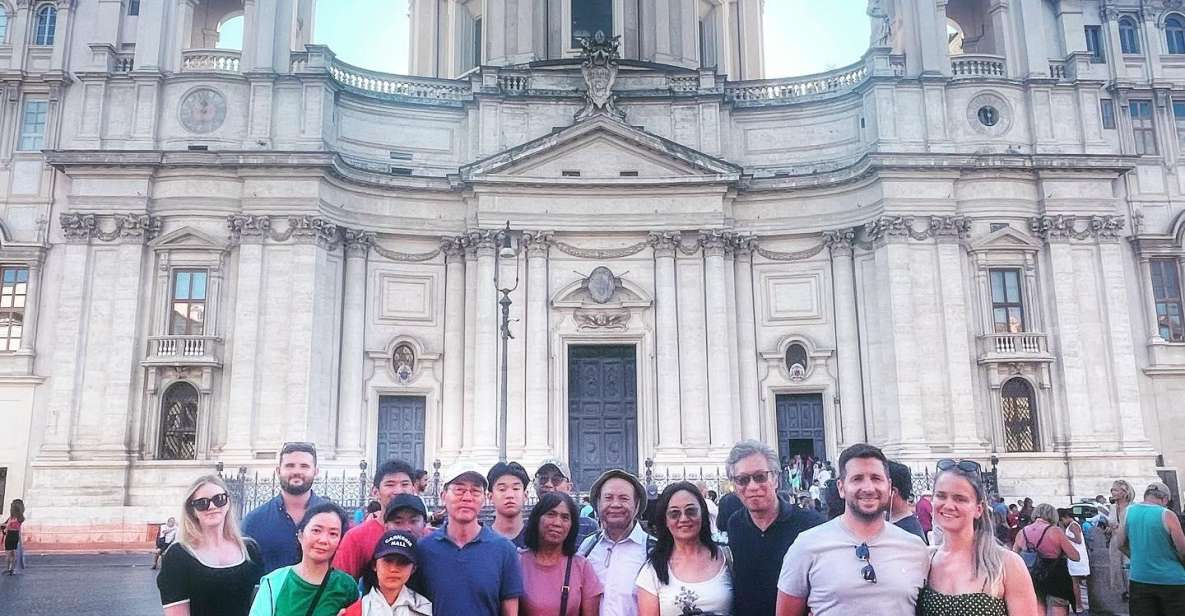
You meet the guide outside the arches and entry gates into Piazza del Popolo.
How long is the walking tour?
The tour duration is 2.5 hours.
Is the tour offered in English?
Yes, the live tour guide leads in English.
What sights will I see?
You’ll see the Piazza del Popolo area (including the Ramesses II obelisk), the Porta/Porto del Popolo gate area, and you’ll walk to Castel Sant’Angelo.
Is this tour free?
The activity is described as a free walking trip, with a listed price of $3.54 per person, and it is tip-based.
Is the tour tip-based?
Yes, this is a tip-based tour.
Can I reserve now and pay later?
Yes, you can reserve now & pay later so you pay nothing today.
Is there free cancellation?
Yes, you can cancel up to 24 hours in advance for a full refund.
Is the tour wheelchair accessible?
Yes, it is listed as wheelchair accessible.
Is there a guide with the group?
Yes, there is a live tour guide.