REVIEW · ROME
Pastamania in Rome
Book on Viator →Operated by Dalle Nostre Mani · Bookable on Viator
Rome tastes better when you roll dough. In a historic palazzo near the Pantheon and Piazza Venezia, this 3-hour pasta-making class lets you shape fresh ravioli, tortelli, and fettuccine from scratch. It starts with a clear intro, then you get right into the flour-and-egg work.
I love the setup: a small group (max 10) and instructors who keep things friendly and guided, so you are not stuck watching from the sidelines. I also love the payoff at the end, when you sit down family-style to eat what you made, plus the sweet finish of chocolate salami.
One consideration: it is not accessible for people with limited mobility (for example, crutches). If accessibility is a concern, plan accordingly before you book.
In This Review
- Key highlights you should care about
- Pasta-making in a historic palazzo near the Pantheon
- Meeting at Palazzo Grazioli and getting started without fuss
- What you make: ravioli, tortelli, and fettuccine (plus sauces)
- Ravioli: your stuffed pasta moment
- Tortelli: filling, folding, and a different sauce
- Fettuccine: the straight-to-sauce payoff
- The pace and teaching style: patient, practical, and fun
- The communal table meal: why the ending feels like Rome
- What’s on your plate (sample menu)
- Dessert is not an afterthought: chocolate salami and the sweet ending
- Value check: is $49.58 worth 3 hours in Rome?
- Where this class fits best in your Rome plan
- Who should book this (and who might want a different option)
- Tips to make your class smooth and genuinely fun
- Should you book Pastamania in Rome?
- FAQ
- What pasta will I make during the class?
- What do I eat at the end?
- How long does the experience last?
- Where do I meet, and does it end nearby?
- Is the class offered in English, and how big is the group?
- Is the class accessible, and are service animals allowed?
Key highlights you should care about
- Max 10 people, hands-on pace: you actually knead, roll, and shape the pasta yourself
- Three pasta types in one lesson: ravioli, tortelli, and fettuccine, plus sauce-making
- Historic palazzo location: the class is inside a historic building in central Rome
- You eat your work: communal table meal with the exact pasta you helped make
- Dessert is part of the experience: chocolate salami, and in practice it often comes with extra treats like wine and limoncello shots
Pasta-making in a historic palazzo near the Pantheon
This is the kind of Rome experience that doesn’t ask you to stand still. You show up in the heart of the city, a few minutes’ walk from the Pantheon and Piazza Venezia, and you leave with pasta skills you can repeat at home.
The setting helps too. The lesson takes place inside a historic palazzo, so it feels like you are stepping into a real Roman space rather than a generic studio. And because the class is small (10 maximum), the vibe stays personal—less waiting, more doing.
You can also read our reviews of more tours and experiences in Rome.



Meeting at Palazzo Grazioli and getting started without fuss
Your meeting point is Palazzo Grazioli, Via della Gatta, 14, 00186 Roma RM, Italy. The tour ends back at the same place, which makes the rest of your evening easier to plan.
What I like about this kind of setup is that you are not scrambling across town after the class. In central Rome, that matters. You can build a simple plan: pre-walk to the Pantheon area, do the class, then wander back toward your next dinner without chaos.
Also, you receive a mobile ticket, and you should get confirmation at booking time. That keeps things straightforward when you are juggling museums, lines, and dinner reservations.
What you make: ravioli, tortelli, and fettuccine (plus sauces)
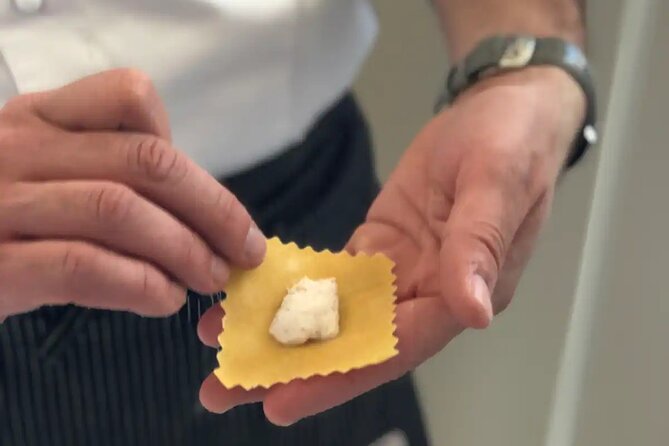
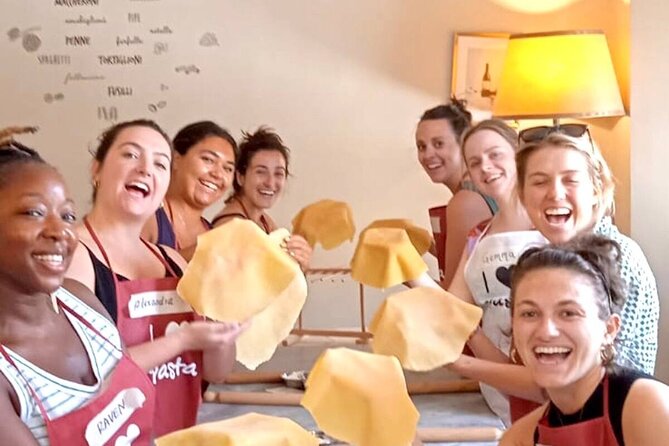
The core of the experience is hands-on fresh pasta. You start with the basics and then move through three pasta preparations—ravioli, tortelli, and fettuccine—so you experience both stuffed and flat-cut pasta.
Ravioli: your stuffed pasta moment
Ravioli is where you get to practice shaping, sealing, and paying attention to the dough. The sample menu lists ravioli with parmigiano & ricotta filling, truffle oil, and a finish of butter & sage.
Why this matters for you: stuffed pasta is where most people get intimidated. In a class like this, you learn the technique step-by-step, then you get to eat your result at the end. That turns it from a cooking demo into something actually useful.
Tortelli: filling, folding, and a different sauce
Next comes tortelli, another stuffed style. The sample menu here is tortelli with parmigiano & ricotta & nutmeg filling, plus butter & sage sauce.
If you like the idea of learning more than one stuffed shape, this part pays off. You are not just repeating the same motion. You pick up how the dough and the fill behave, and how sauce decisions change the experience even when the pasta is similar.



Fettuccine: the straight-to-sauce payoff
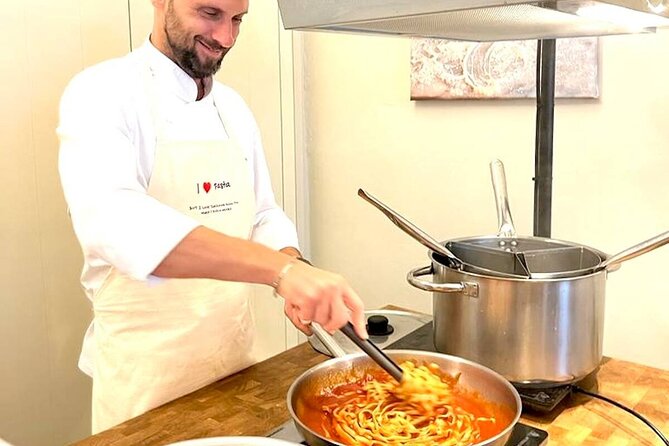
Finally you make fettuccine, with a simpler partner: tomato sauce. This is a great counterbalance to stuffed pasta. You get a feel for rolling/handling and then you see how a classic sauce brings everything together.
I like having one course that is less fussy at the shaping stage. It helps the time feel balanced, and it gives you a clear pasta-and-sauce combo you can recreate later without needing fancy fillings.
The pace and teaching style: patient, practical, and fun
You are guided by a professional instructor, and the teaching style seems to follow a simple rule: make it easy to follow, then make it hard to mess up.
Names you may encounter include Christian, Giorgio, Fabrizio, Luca, Ricardo, Sofia, Arianna, and Martina. The common thread across instructors is that the class stays relaxed and playful, not stiff. People also highlight patience—especially when the group includes a wide range of ages.
For you, that translates into two real benefits:
- You get corrections while you work, not just after you are done.
- You feel comfortable asking questions, even if you have never made pasta before.
The communal table meal: why the ending feels like Rome
Most cooking classes end with a polite plate and a quick goodbye. This one is different in spirit. After the lesson, everyone gathers around a large communal table to eat what you created, sharing stories and laughter in a way that feels like a real Italian family meal.
This format changes how you experience the food. You are not tasting in isolation. You are tasting as part of a group that just spent 3 hours turning flour and eggs into something real. That’s why the meal sticks with you more than a restaurant dinner does.
What’s on your plate (sample menu)
Based on the sample menu, your meal typically includes:
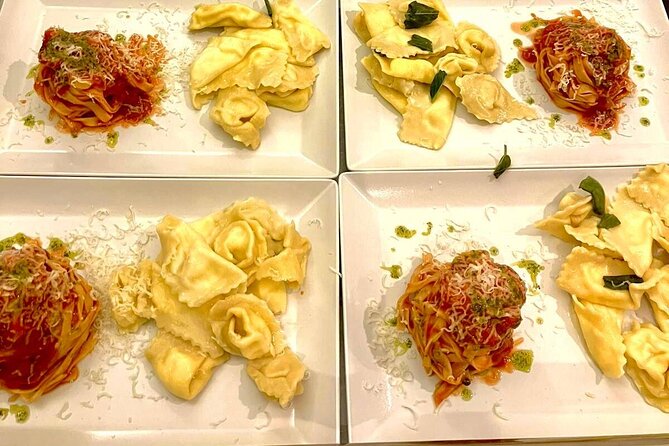
- Ravioli with parmigiano & ricotta filling, truffle oil, and butter & sage
- Tortelli with parmigiano & ricotta & nutmeg filling, plus butter & sage sauce
- Fettuccine with tomato sauce
- Dessert: chocolate salami
In practice, many classes also include extras like wine and limoncello shots alongside the meal, plus small treats like biscuits. If you want a night where food is the main event, this is built for that.
Dessert is not an afterthought: chocolate salami and the sweet ending
Chocolate salami is the kind of dessert that makes you smile because it looks quirky and tastes seriously good. It’s a fun end to a class that is already hands-on, and it gives you something easy to describe to friends later: fresh pasta, then chocolate salami.
One practical tip: do not show up overly full. People consistently recommend coming hungry, because once you start shaping pasta, the meal at the end can be surprisingly satisfying.
Value check: is $49.58 worth 3 hours in Rome?
At $49.58 per person for about 3 hours, this class is not the cheapest thing you can do in Rome. But it is also not trying to be a bargain for the sake of it.
Here is what you are really paying for:
- You produce the food (ravioli, tortelli, fettuccine) instead of watching
- You learn technique you can repeat later
- Small group size keeps the instructor attention high
- You eat everything you make, including dessert
In Rome, money stretches differently. A single meal can be expensive, and many paid activities are mostly viewing. This one gives you a skill and a meal in one block of time, inside a central location near major sights.
If you are trying to choose between another museum ticket and a pasta class, ask yourself this: do you want a memory made of photos, or a memory made of food you made with your hands? For a lot of people, the answer is the pasta class.
Where this class fits best in your Rome plan
This works well on a day when you plan to walk a lot and want a break that still feels like Rome. Because the meeting point is near the Pantheon and Piazza Venezia, you can pair it with sightseeing before or after.
Also, the duration—around 3 hours—fits neatly between morning plans and evening dinner. And because you end back at the same meeting point, you can keep your route simple.
One more planning note: this is often booked ahead (on average about 25 days in advance). If you want a specific day, you will do better reserving early rather than hoping for last-minute availability.
Who should book this (and who might want a different option)
This class is a strong match if you:
- Want hands-on cooking in central Rome
- Like the idea of making stuffed and non-stuffed pasta
- Prefer small groups (max 10) over big-tour chaos
- Travel with a mixed-age group or want a fun, shared activity
It may not be the best fit if:
- Mobility is limited (the class is not accessible for people with limited mobility such as crutches)
- You know you do not want anything with parmigiano/ricotta or truffle oil (the sample menu includes both, and the data provided does not mention substitutions)
Tips to make your class smooth and genuinely fun
Here are a few practical moves that match what the experience seems designed for:
- Come hungry. You are learning and then eating a full meal, plus dessert.
- Wear something you can get flour on. Fresh pasta is tactile. It happens.
- Ask questions early. If you get stuck on dough consistency or shaping, speaking up fast helps.
- Go in curious, not confident. Most people start with zero pasta-making experience, and the class structure supports beginners.
- Expect a lively group table. Communal eating is part of the experience, so plan to enjoy conversation instead of rushing off right after.
If you like souvenirs, this is the kind you can’t buy: you learn a technique and you get to eat it immediately.
Should you book Pastamania in Rome?
If your ideal Rome day includes hands-on learning, good structure, and a meal that is part of the lesson—not just an add-on—then yes, I think you should book it.
It is especially worth it when you want to spend time near the Pantheon/Piazza Venezia area but still do something that feels local and human. With small-group size, three pasta styles, and a communal table ending with chocolate salami, the experience is built for people who like doing more than just looking.
If accessibility is your main concern, take that seriously and look for a different option. Otherwise, this is a fun, practical, food-first way to experience Rome. And once you know how ravioli, tortelli, and fettuccine come together, you will remember the city through taste, not just landmarks.
FAQ
What pasta will I make during the class?
You’ll learn to make fresh pasta including ravioli, tortelli, and fettuccine from scratch, and you’ll also prepare sauces to go with them.
What do I eat at the end?
The experience ends with a communal table meal featuring the pasta you made, plus dessert. The sample menu includes ravioli with parmigiano and ricotta (with truffle oil) and butter & sage, tortelli with parmigiano/ricotta/nutmeg and butter & sage, fettuccine with tomato sauce, and chocolate salami.
How long does the experience last?
It lasts about 3 hours.
Where do I meet, and does it end nearby?
You meet at Palazzo Grazioli, Via della Gatta, 14, 00186 Roma RM, Italy, and the activity ends back at the meeting point.
Is the class offered in English, and how big is the group?
The experience is offered in English and has a maximum group size of 10 travelers.
Is the class accessible, and are service animals allowed?
The experience is not accessible for people with limited mobility (for example, crutches). Service animals are allowed.