REVIEW · ROME
Rome: Hop-On Hop-Off Open-Top Bus City Tour
Book on GetYourGuide →Operated by CS OPEN BUS SRL · Bookable on GetYourGuide
Rome runs on walking, buses, and timing.
This hop-on hop-off open-top Rome tour is a smart way to see big sights fast, with an audio guide on your phone in 8 languages and the freedom to get on and off at your pace. I like how easy it is to board from any stop along the route and how much you get out of the ride itself, since you can stay seated for views of the Colosseum and Circus Maximus. One thing to plan for: the bus typically gets you close, not at every exact doorstep, so you’ll still do some walking and you may not spot every landmark perfectly from the street.
It’s priced at about $34 per person, and the ticket can be valid for 1 to 3 days depending on what you choose at booking. I also like the onboard extras—free Wi‑Fi plus real-time bus tracking—because they help you map your next stop without guessing. The audio guide and the app walking guide make it feel less like a loop and more like guided sightseeing from your seat.
Service is frequent: buses run every 20 minutes from 9:00 AM to 5:50 PM, though traffic and route changes can happen in Rome. I’d treat it as your backbone for the day, not your only plan—then add museum or church time where you want the real in-depth experience.
In This Review
- Key things to know before you ride
- Why this Rome hop-on hop-off bus is useful for first-timers
- Route overview: Termini to the Colosseum, then Vatican and back
- Terminal / Termini area (Starting point)
- Largo di Villa Peretti (listed stop; may be affected by works)
- Santa Maria Maggiore (Saint Mary Major Church)
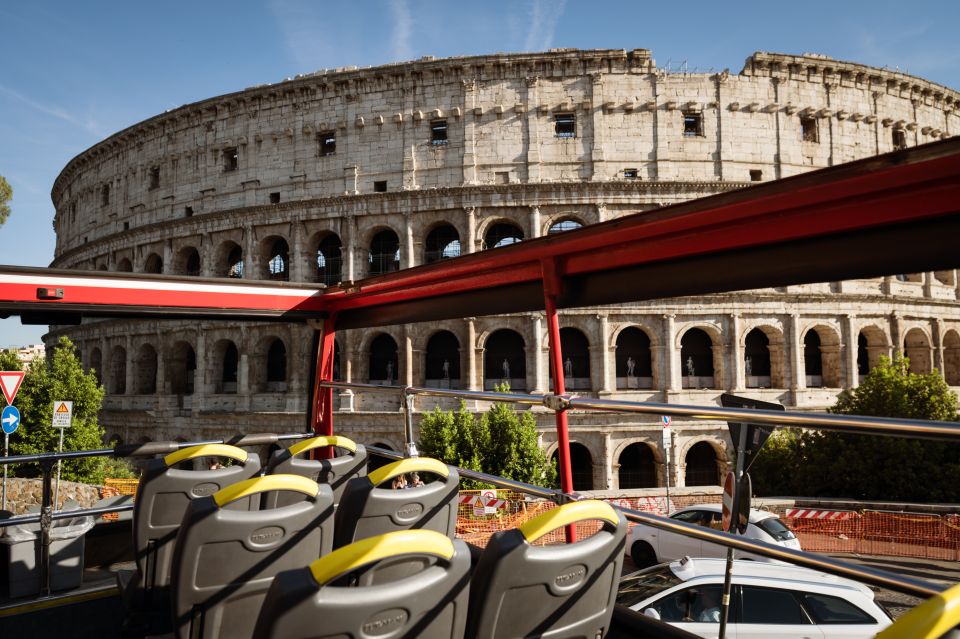
- Colosseum stop: your classic “get off and walk” moment
- Circus Maximus: wide-open views from the bus
- Piazza Venezia / Venice Square: a central pivot point
- Vatican City area: time it with daylight
- Spanish Steps: a walk-friendly classic
- Trevi Fountain / Barberini area: good for proximity, not always perfect sightlines
- Stop-by-stop: what to do at each one (and where you’ll still walk)
- Colosseum stop
- Circus Maximus stop
- Vatican stop
- Spanish Steps stop
- Trevi Fountain / Barberini stop
- Audio guide on your phone: 8 languages that actually add context
- Getting on, finding stops, and staying comfortable on the top deck
- Boarding at any stop
- Frequency matters
- Real-time monitoring helps
- Watch your head on the upper deck
- Views can vary with traffic and seat position
- Free Wi‑Fi plus app walking guides: small perks that save time
- Price and value: when $34 is a good deal in Rome
- Practical tips to make the day smoother
- So, should you book the Rome open-top bus?
- FAQ
- Where can I board the bus in Rome?
- How often do the buses depart?
- What languages are available for the audio guide?
- Is there Wi‑Fi on the bus?
- Do I need entrance tickets for the Colosseum or Vatican?
- How long is the ticket valid?
- Is the tour wheelchair accessible?
Key things to know before you ride
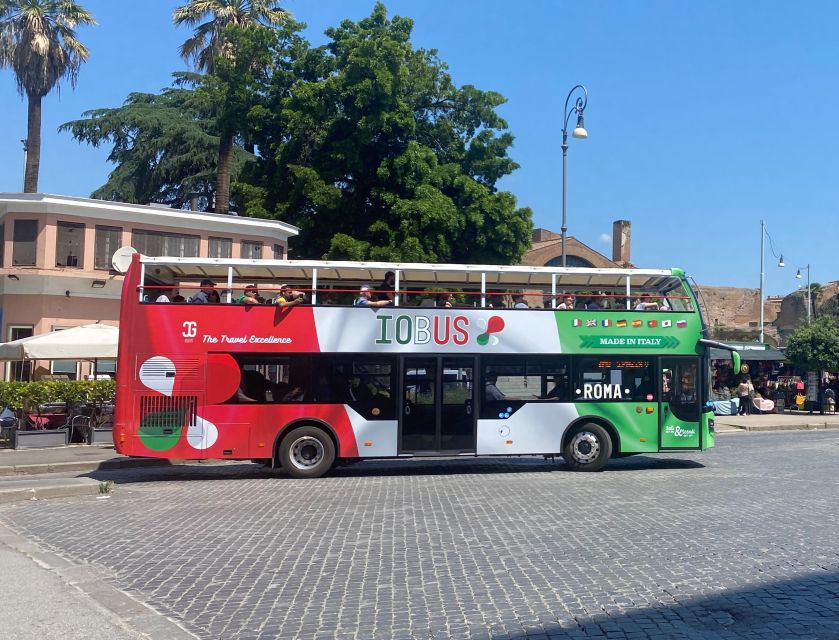
- Get on, get off at any stop for the full ticket validity, so you can build a day that fits your energy.
- Phone audio guide in 8 languages (plus a children’s audio guide) helps you make sense of what you’re seeing.
- Free Wi‑Fi and real-time monitoring reduce stress when you’re hopping between areas.
- Frequent departures every 20 minutes make it easier to wait out crowds or timing issues.
- Top-deck seating is worth it for views, but you should watch your head and plan for sun or wind.
Why this Rome hop-on hop-off bus is useful for first-timers
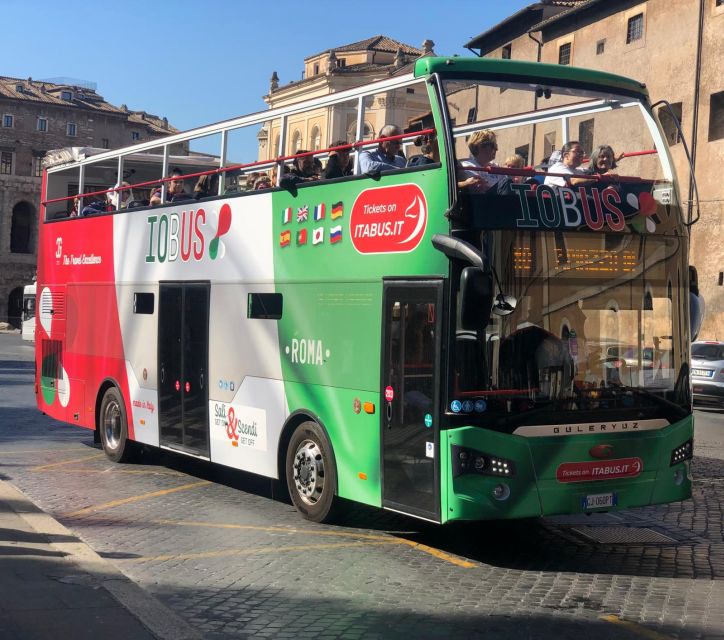
Rome is famous for “one more street and you’ll find the next big thing.” The flip side: hills, traffic, and constant stopping to read street signs. This hop-on hop-off open-top bus is built for that reality. You can ride the loop, listen to the story as you pass through different eras, and step off only when a stop feels like your priority.
I also like that the audio guide keeps the ride from feeling like empty transport. As you go past areas linked to Imperial Rome and Baroque Rome, the commentary gives you context for what you’re seeing—even if you don’t get off at every single stop.
The flexibility is the big win. If you want a slower morning near the Colosseum, you do it. If you decide you’d rather shop and snack around Trevi and the Spanish Steps, you can. No “fixed itinerary” pressure.
You can also read our reviews of more city tours in Rome


Route overview: Termini to the Colosseum, then Vatican and back
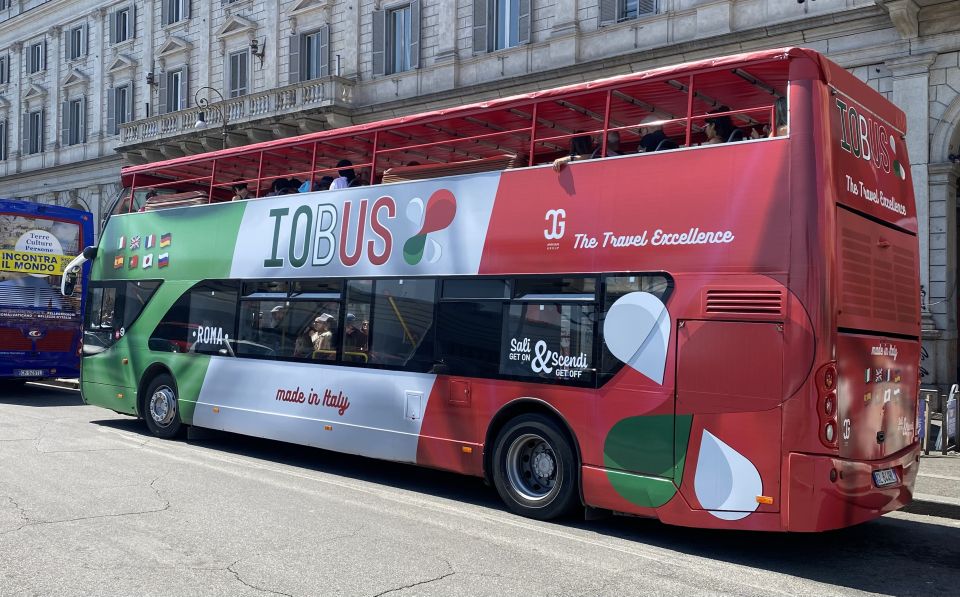
Think of the route as a spine through the highlights. You start at Open Bus Roma – Io Bus, and you can board from any stop along the line by showing your voucher to the hostess.
Here’s the practical order of what you’ll pass and stop for along the way:
Terminal / Termini area (Starting point)
You begin at Terminal via Marsala (Termini station), which is handy if you’re staying near central Rome or arriving by train. This is a good start for a first day because it lets you “spin the wheel” and decide where you want to walk next.
If you’re trying to locate the exact pickup, give yourself extra time. The meeting point can be easy for some maps and confusing for others, especially if you’re arriving with only a quick glance at street directions.
Largo di Villa Peretti (listed stop; may be affected by works)
One listed stop is Via Giolitti 34 – Largo Di Villa Peretti. The information notes it can be cancelled for jubilee work, so if you don’t see it when you arrive, don’t panic—use the real-time monitoring and follow the next available stop on the route.
Santa Maria Maggiore (Saint Mary Major Church)
Next up is Basilica Papale di Santa Maria Maggiore. This is one of those Rome churches that looks great from the bus and feels even better up close. If you want a religious interior break without turning your whole day into a ticket hunt, this stop is a good one to consider.





Colosseum stop: your classic “get off and walk” moment
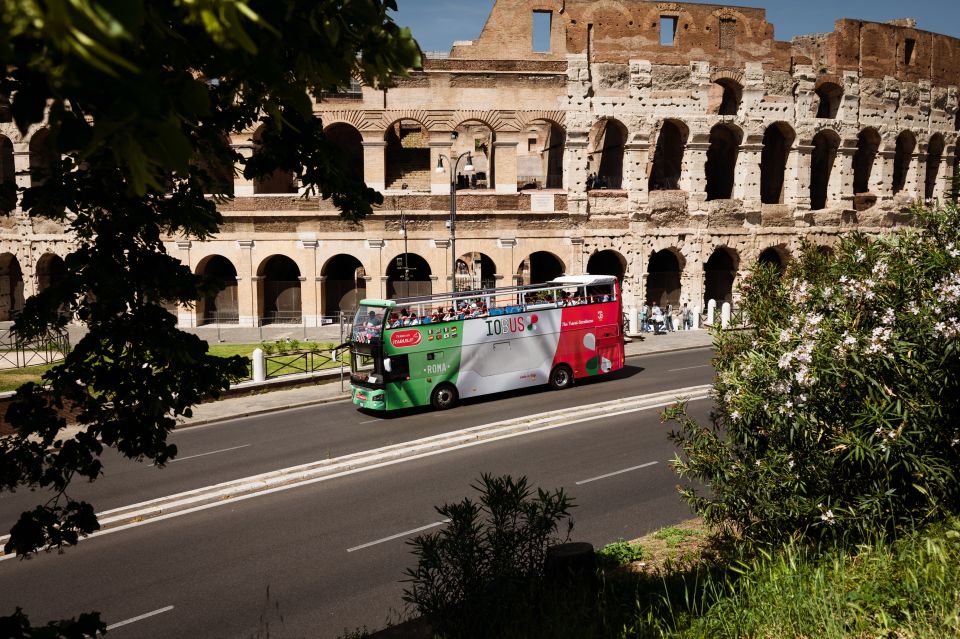
The Colosseum is a key stop on the route. Even if you don’t enter, it’s worth stepping off to orient yourself—because you’ll want to understand the area before you commit to a timed-entry plan later.
Also, if you’re having trouble finding where buses load for the Colosseum segment, look for the numbered stop markers around the back of the Colosseum area. That’s typically where the confusion clears.
Circus Maximus: wide-open views from the bus
The bus passes Circus Maximus, and this one is great from the open-top perspective. From the street, the scale can be hard to picture, but on the bus you get the “this used to be massive” feeling—especially when the audio guide is talking about the events that happened here.
If you’re a “one big ticket site per day” person, this stop gives you a big sight payoff without immediately jumping into long lines for an interior.
Piazza Venezia / Venice Square: a central pivot point
You’ll pass Piazza Venezia (Venice Square). This is a strong place to hop on or off if you’re trying to connect toward central Rome foot routes. It’s also useful as a mental reset: you’re in the middle, and from here it’s easier to plan your next walk.
Vatican City area: time it with daylight
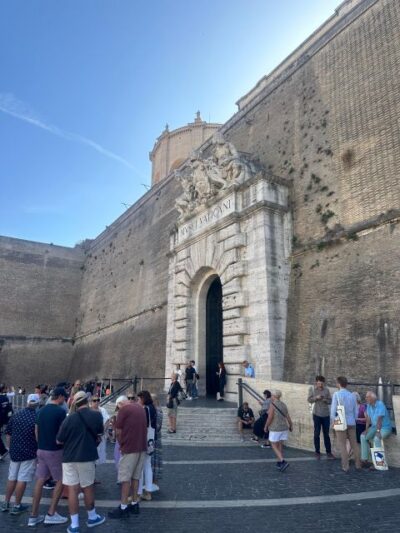
The bus route includes the Vatican. On an open-top bus, the approach can feel dramatic, and the audio guide helps you connect the buildings you see to the larger story of Rome’s power shift.
Practical note: plan your Vatican visit for the time of day you prefer for photos and walking comfort. The bus can help you position yourself, but you still need time for security and entrance timing if you want inside access.
Spanish Steps: a walk-friendly classic
Next are the Spanish Steps. This is one of those areas where stepping off the bus turns into an instant “wandering plan.” You’ll likely want to get off, not just pass—especially if you like atmospheric streets, window-shopping energy, and quick photo stops.
Trevi Fountain / Barberini area: good for proximity, not always perfect sightlines
The route lists Barberini / Trevi Fountain. Here’s the key reality: the bus route can get you close enough to walk, but you might not see Trevi clearly from the top deck from every seat position, depending on road layout and traffic.
If Trevi is your target, treat the bus as a drop-off assistant. You’ll get the best results by getting off and walking the last stretch.
Stop-by-stop: what to do at each one (and where you’ll still walk)
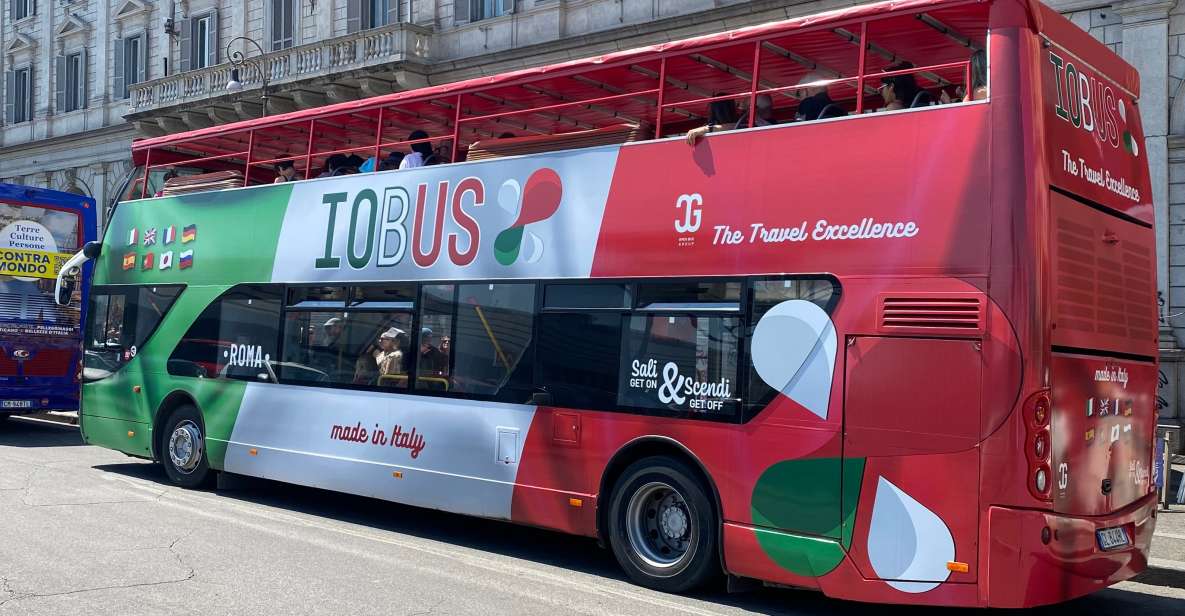
This is a hop-on hop-off style tour, so the best strategy is simple: plan 2–3 stops to explore, then ride through the rest like a moving briefing.
Colosseum stop
If you’re visiting the Colosseum area, this stop is your anchor. I like using the bus to build orientation first, since you’ll understand where things are before you head into lines and ticketing decisions.
Even if you don’t go inside, step off long enough to get your bearings and decide your route on foot.
Circus Maximus stop
If the idea of another indoor ticket line isn’t exciting, Circus Maximus is a strong alternative. It’s expansive, and the bus makes it easier to view the area without constant detours.
Get off if you want open-space photos and a calmer moment. Stay on if you just want the narration and quick glimpses.
Vatican stop
This is best when you’re ready to pair bus sightseeing with a walking plan. The audio helps you connect the Vatican’s significance to the Rome you’ve already seen on the ride.
If you’re short on time, use the bus to get you close, then choose whether inside visiting makes sense for your day.
Spanish Steps stop
This is a great “get off and roam” location. Plan for a slow walk after you step down, because this area tends to reward wandering more than rushing.
Trevi Fountain / Barberini stop
Trevi is usually why people want this route. But because you can’t always read the details from the bus, I suggest treating the stop as your launch point for the last walk.
Audio guide on your phone: 8 languages that actually add context
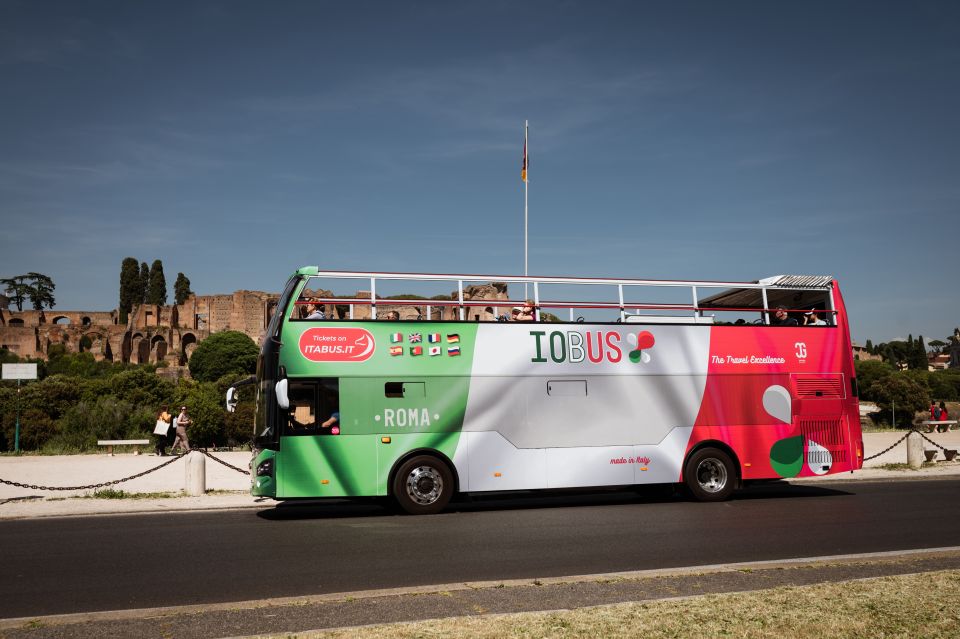
The audio guide is available on your phone in English, French, German, Spanish, Portuguese, Japanese, Russian, and Italian. That’s a big practical plus in Rome, where the city’s layers can feel confusing if you’re only looking at buildings without story.
I also like that the tour includes a children’s audio guide, plus the bus provides earphones. If you’re traveling with kids, this cuts down on the “are we there yet?” factor because they can follow along too.
One important detail: the audio isn’t just about the stops where the bus drops you. It’s designed to explain what you’re passing. So even if you stay on the top deck between major areas, you’re still getting value.
You may also hear references to other sights along the way, like Mouth of Truth and Marcello’s theatre, which helps you connect names you’ll see later when you explore on foot.
Getting on, finding stops, and staying comfortable on the top deck
Boarding at any stop
You can board at any stop across the route by showing your voucher to the hostess. Seats are subject to availability when the bus arrives, so it’s smart to arrive a minute or two early if you’re chasing the best top-deck spots.
Frequency matters
Buses depart every 20 minutes from 9:00 AM to 5:50 PM. That means you’re not stuck waiting all morning. It also helps when you hop off to walk and want to return without turning your day into a scheduling puzzle.
Real-time monitoring helps
The tour includes real-time monitoring of the buses. In practice, this is what keeps the hop-on hop-off loop from feeling like a guessing game.
Watch your head on the upper deck
I take this seriously because Rome buses and bridges don’t always get along. The top deck is where the views are, but you’ll want to watch your head and move carefully when you’re boarding and sitting.
Views can vary with traffic and seat position
Some streets don’t open up to perfect sightlines. If you’re sitting in a spot with lots of street clutter or limited angles, you might feel like the view is cramped. That’s usually not the bus’s fault—just an outcome of Rome’s streets and traffic.
Free Wi‑Fi plus app walking guides: small perks that save time
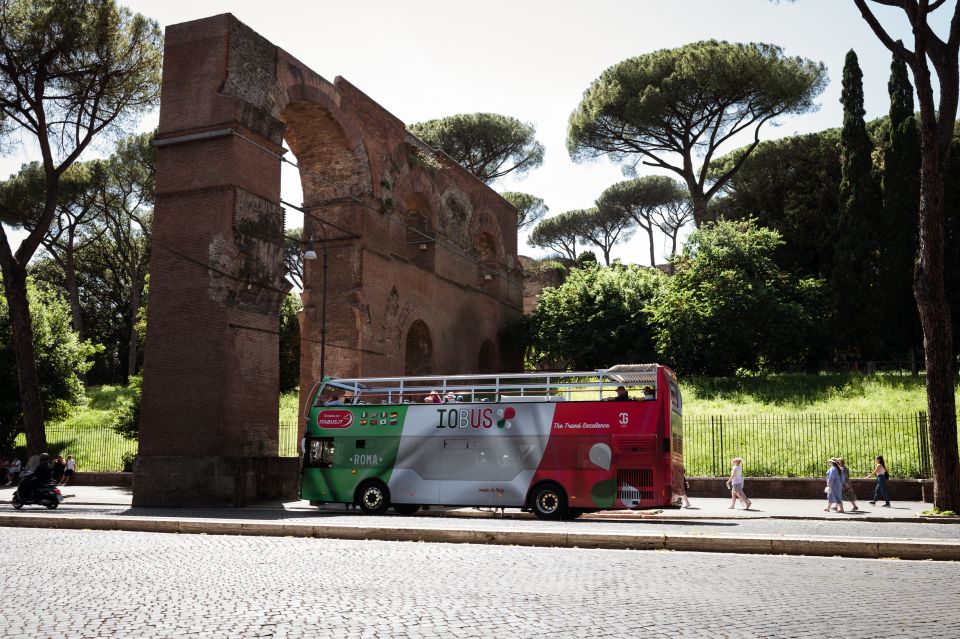
This tour includes free Wi‑Fi on board, which is more useful than it sounds. In Rome, the “what’s nearby?” question changes every hour. Wi‑Fi lets you check your next walk, map the easiest walking route, or search for the exact address of what you decided you want to see.
There’s also a walking guide on the app, with special routes created for you. If you’re pairing bus stops with walking time, this helps you turn a random stop into an actual route with a start and a finish.
And yes, there’s also hand sanitizer on board, which is a small comfort when you’re moving between stops all day.
Price and value: when $34 is a good deal in Rome
At around $34 per person, this hop-on hop-off bus is usually good value when you fit its strengths:
- You’re short on time and want a “big highlights” overview.
- You like flexibility and don’t want to lock into one museum schedule.
- You want narration while you travel between neighborhoods.
- You don’t want to figure out buses and transfers on your own.
Where it can be less worth it is if you already have a tight, walk-heavy plan that only needs one or two areas. In that case, you might not use enough stops to justify the cost.
Also, remember: this includes the bus ride and guide narration, but it does not include entrance tickets. If the Colosseum or Vatican inside is your main goal, you’ll still need to plan separate tickets and time.
Practical tips to make the day smoother
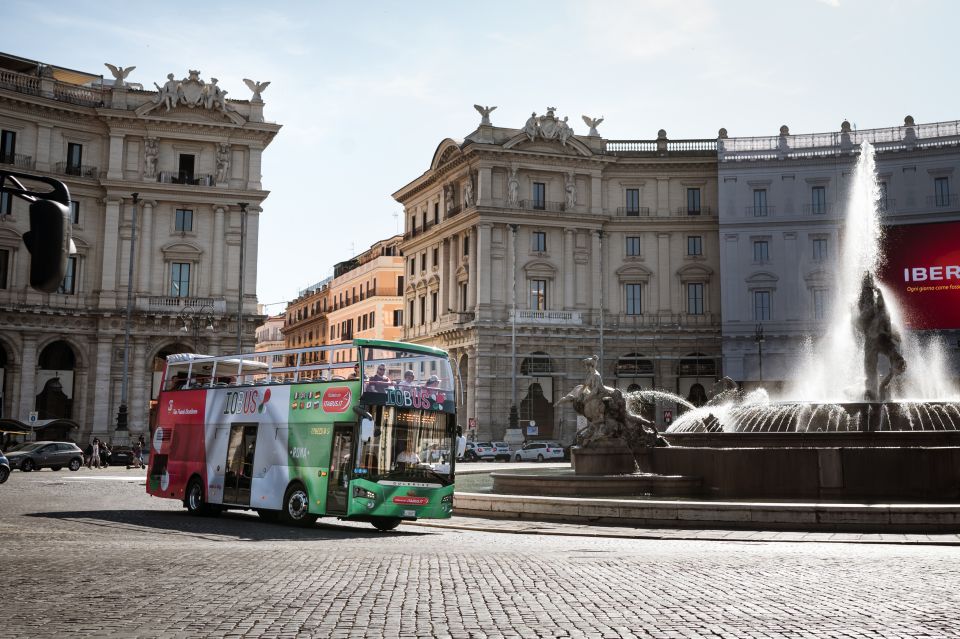
A few things make a noticeable difference:
- Read the stop situation before you pick your first hop-off. Some landmarks are easier to access when you know which direction you’ll walk next.
- Give yourself wiggle room around peak times. Buses run every 20 minutes, but boarding can still be slow when crowds cluster at popular stops.
- Pack for sun and wind. Open-top buses feel great, then quickly remind you you’re outside.
- Bring your medical mask as listed for what to bring.
- Skip food and alcohol on board. Food, alcoholic drinks, and smoking are not allowed on the vehicle.
- Use the bus as your timing tool. If you’re deciding between two neighborhoods, hop off where you feel like walking, then return using real-time monitoring.
So, should you book the Rome open-top bus?
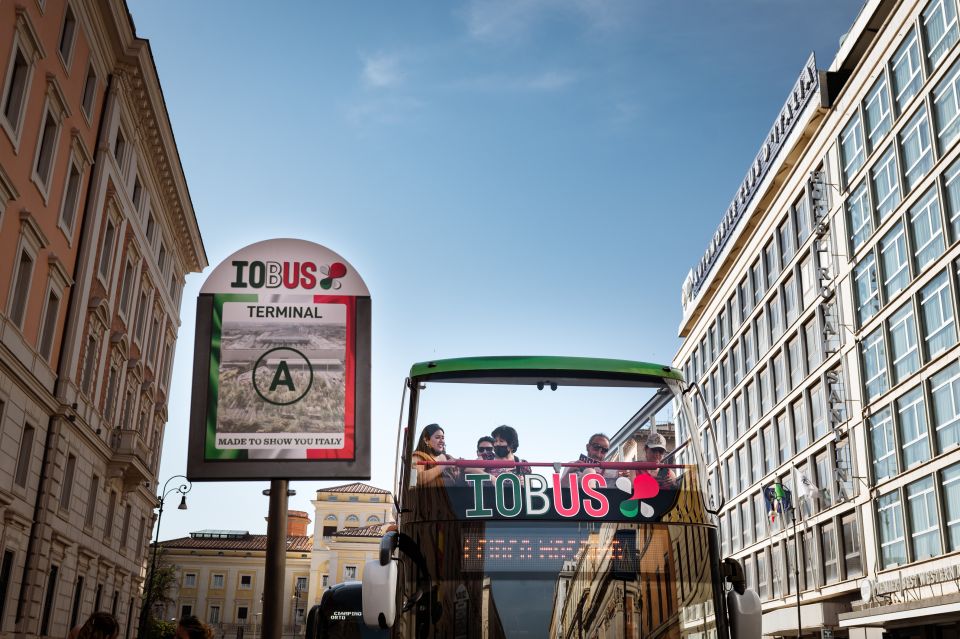
If you’re doing Rome for the first time—or you just want a reliable way to connect the city’s biggest highlights—this is an easy yes. The combination of flexible stops, phone audio in 8 languages, and free Wi‑Fi makes it a practical tool for building your own Rome day.
I’d especially recommend it if:
- you like pairing transit with self-guided walking,
- you want Colosseum-area and Vatican-area coverage without over-planning,
- you’re traveling as a family and want narration that works for kids too.
One caution: the operator lists it as wheelchair accessible, but also says it’s not suitable for people with mobility impairments. If that matters for you, check details carefully before you rely on the bus.
If you want, I can also suggest a simple 1-day and 2-day stop strategy using only the route stops listed (so you’re not guessing where to start).
FAQ
Where can I board the bus in Rome?
You can join the tour from any of the stops along the route by showing your voucher to the hostess. The route includes stops such as Terminal via Marsala (Termini station), Basilica Papale di Santa Maria Maggiore, the Colosseum, Circus Maximus, Piazza Venezia (Venice Square), the Vatican, Spanish Steps, and Barberini/Trevi Fountain, plus Open Bus Roma – Io Bus as the listed starting point.
How often do the buses depart?
Buses depart every 20 minutes from 9:00 AM to 5:50 PM.
What languages are available for the audio guide?
The audio guide is available in 8 languages: English, French, German, Spanish, Portuguese, Japanese, Russian, and Italian. There is also an audioguide for children.
Is there Wi‑Fi on the bus?
Yes. Free Wi‑Fi is included on board.
Do I need entrance tickets for the Colosseum or Vatican?
Entrance tickets are not included. The tour is mainly for riding, sightseeing from the bus, and getting close enough to walk to monuments and sights.
How long is the ticket valid?
Your hop-on hop-off ticket is valid for 1 to 3 days. You’ll need to check availability to see starting times.
Is the tour wheelchair accessible?
The activity is listed as wheelchair accessible, but it also states it is not suitable for people with mobility impairments. If you have specific mobility needs, double-check before booking.