REVIEW · ROME
Skip-the-Line Vatican, Sistine Chapel & St. Peter’s | Small Group
Book on Viator →Operated by What a Life Tours · Bookable on Viator
Three hours, and Rome still feels huge. I love the skip-the-line entry that gets you inside without wasting your morning in queues, and I love the small-group size that keeps the guide’s attention on you. One possible drawback: access to St. Peter’s Basilica can change last-minute for religious events, and if that happens there are no refunds.
This tour is built around a simple goal: get you the big, must-see art with just enough explanation to make it click, without turning your day into a sprint. The added win is the personal audio headsets, so you can move, look up, and still catch the story.
You’ll meet at a real office near the Vatican Museums, not at a street corner, and you need to be there on time. Bring valid ID for everyone (including kids), and plan for the dress code: knees and shoulders covered, or you risk being turned away.
In This Review
- Key things to know before you go
- The big win: skip-the-line timing and a pace that makes sense
- Where you meet (Via Santamaura) and why being early really matters
- A real glimpse of Vatican City before the art
- Vatican Museums in about 90 minutes: where the guide steers your eyes
- Headsets and a 12-person tour: how you actually keep up
- Sistine Chapel: what you’ll notice when someone tells you where to look
- St. Peter’s Basilica in about 40 minutes: the highlights and the rules
- If you cannot enter the Basilica
- When the tour ends in the Sistine Chapel
- St. Peter’s Square finish: then you keep going your way
- Dress code, umbrellas, and ID: the small stuff that can ruin a big day
- Is it worth the price? What you’re really paying for
- Who should book this Vatican small-group tour
- So, should you book it
- FAQ
- FAQ
- Is the tour in English?
- Where do I meet the guide?
- How many people are in the group?
- What is included in the price?
- Do I need to bring ID?
- Is there a dress code?
- Can the tour end inside St. Peter’s Basilica?
- Are umbrellas allowed?
- What happens to Last Judgement during early 2026?
Key things to know before you go
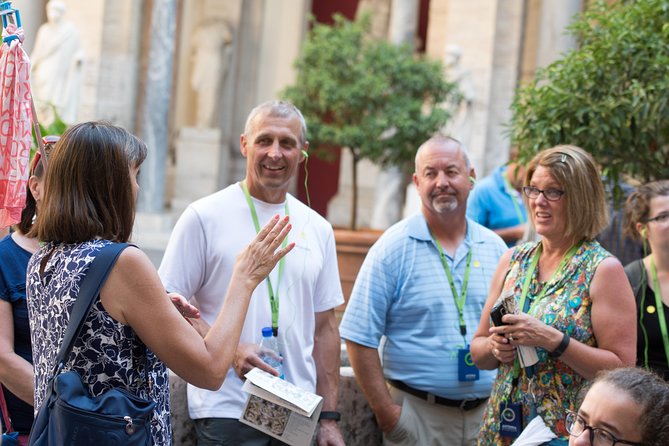
- Timed entry that saves your sanity: prebooked admission to the Vatican Museums so you can bypass the worst of the line.
- Headsets for clear guide audio: you can actually hear instructions in crowded rooms.
- A guided hit list in a short window: Gallery of Maps, major Rooms, then straight to the Sistine Chapel.
- St. Peter’s highlights you can’t miss: Michelangelo’s Pietà and Bernini’s gilded baldachin.
- Your finish can shift: last-minute changes can push the end point to the Sistine Chapel instead.
- Strict rules that affect plans: timed tickets mean late arrivals can lose your entry.
The big win: skip-the-line timing and a pace that makes sense
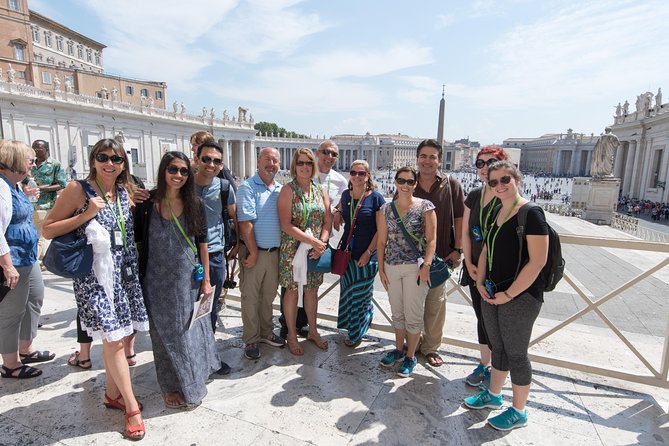
The Vatican is one of those places where “first available” is rarely the best plan. Lines can balloon, the crowd flow can feel random, and you end up playing a game of catch-up instead of actually seeing things. This tour tackles the main issue with prebooked, skip-the-line admission into the Vatican Museums, so your first wow happens sooner.
The pacing is another reason I like this format. In about three hours, you cover the Museums, the Sistine Chapel, and St. Peter’s Basilica highlights with guidance steering your eyes to what matters most. It’s not a slow meander. It’s also not frantic, provided you show up ready to go.
Small-group size is the “glue” that holds it together. With up to 12 people, the guide can keep an eye on the group, manage movement through tight spaces, and answer questions without the tour turning into a lecture you can’t hear.
You can also read our reviews of more tours and experiences in Rome
- Skip-the-Line Group Tour of the Vatican, Sistine Chapel & St. Peter’s Basilica
★ 4.5 · 12,779 reviews

Where you meet (Via Santamaura) and why being early really matters
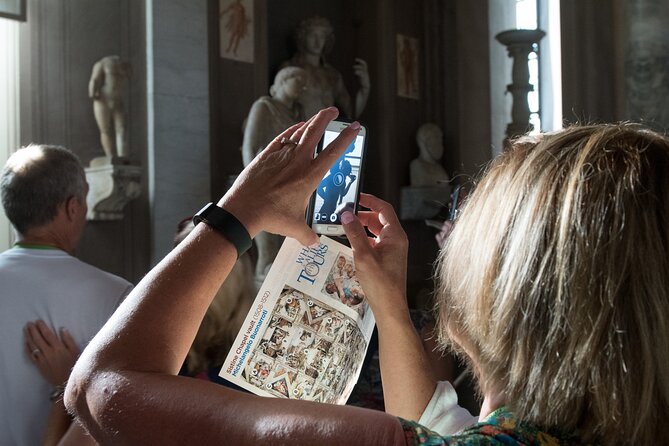
Meeting point matters at the Vatican area because streets can be confusing and signage isn’t always obvious. You’ll meet at What a Life Tours, Via Santamaura 14B, very close to the Museums entrance. The nearest Metro stop is Ottaviano.
Plan to arrive early. The tour asks you to check in 15 minutes before the scheduled start time, and the admission ticket is strictly timed. If you’re late, it can jeopardize your entrance, and missed tours or tickets due to late arrival are non-refundable.
Here’s a practical tip I’d follow: give yourself buffer time for summer traffic (the meeting point instructions explicitly warn about it). If it’s rainy, crowded sidewalks can be slippery and slow. You’ll do better by treating the Vatican visit like an appointment, not a casual walk-in.
A real glimpse of Vatican City before the art
Before you start sprinting mentally from masterpiece to masterpiece, you get a quick orientation inside Vatican City. This matters more than it sounds.
You’ll hear basics like Vatican City being the smallest independent country in the world, governed as an absolute monarchy with the pope at its head. You’ll also learn fun-but-useful facts: the Vatican issues its own passports and stamps, mints its own euros, and operates media outlets. One government function it lacks is taxation, and museum fees and related sales are part of its revenue.
This kind of framing helps you read what you’re seeing. You’re not just looking at “old paintings.” You’re walking through a place where religion, politics, and art history overlap in a way that shaped what got commissioned, preserved, and displayed.
Vatican Museums in about 90 minutes: where the guide steers your eyes
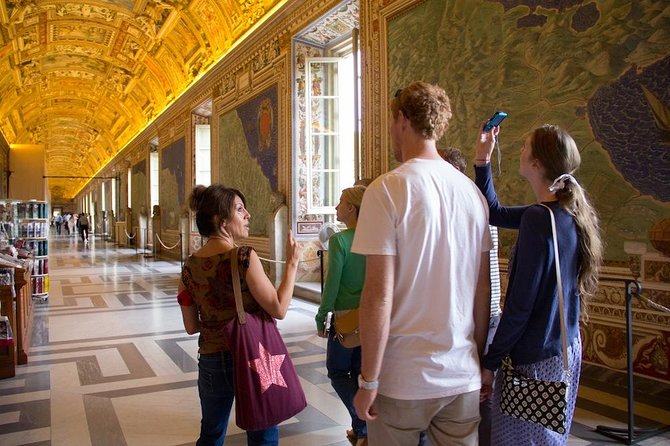
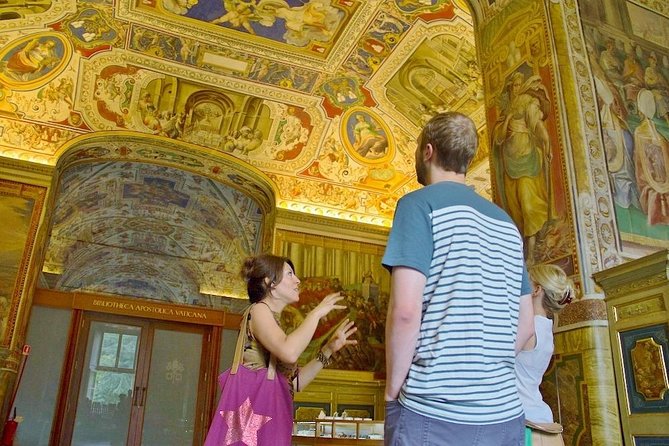
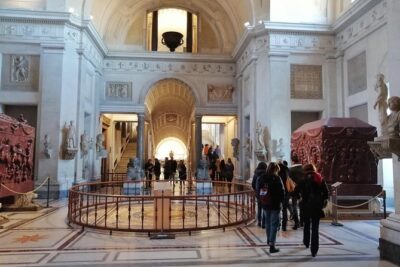
The Vatican Museums are enormous. Without direction, it’s easy to feel like you’re wandering through rooms that blur together. This tour solves that by focusing on core highlights during a visit of about 90 minutes.
You can expect the guide to point you toward main areas and famous collections, including:
- Gallery of Maps
- Greek Cross Room
- Gallery of Tapestries
- Raphael Rooms
…and other major rooms along the route.
You’ll also get the “why” behind the art. The Museums didn’t get built in one era. Over centuries, the collection grew through acquisitions, donations, commissions, confiscations, and even discoveries. Hearing that while you move through the buildings makes the whole place feel less like a warehouse and more like a story.
One practical benefit of having a guide here is crowd control. The Vatican Museum floor can have bottlenecks where you lose time standing still. A guide’s job is to get you to the right corners at the right moments, so you spend time looking instead of waiting.
Headsets and a 12-person tour: how you actually keep up
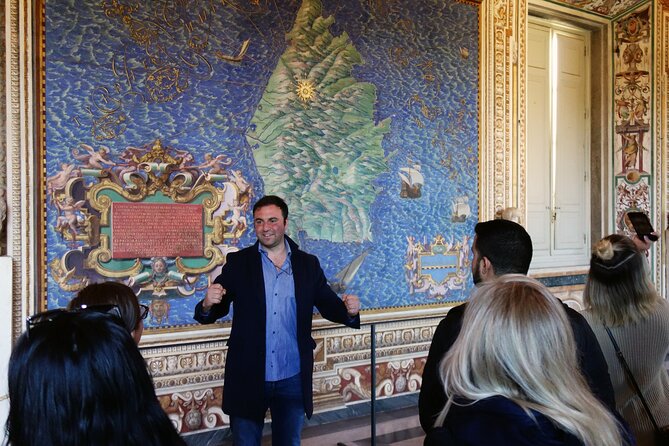
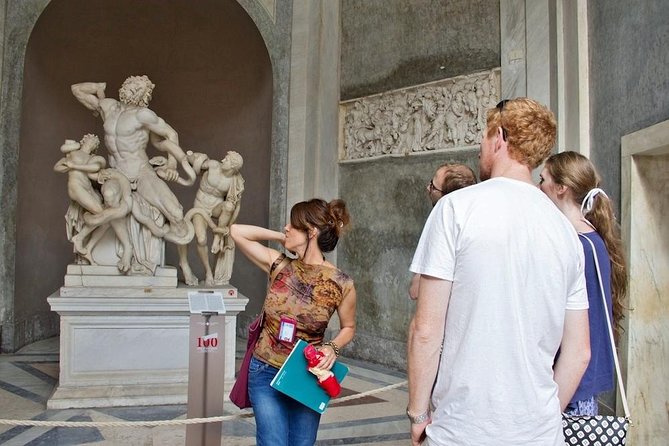
The headsets are a big deal, especially in a space full of echoes and people. You’ll receive personal audio devices so you don’t have to strain your neck, push close to hear, or guess what the guide is saying.
I also appreciate the honest detail about the headsets: the Vatican-provided setup may only include a single earpiece, and they recommend you bring your own headphones if you prefer hearing with both ears. That’s not a minor point. In the Sistine Chapel and key museum rooms, sound can be chaotic, and clearer audio keeps the experience enjoyable instead of stressful.
On top of that, you’re in a group that’s big enough to have energy but small enough that you can follow instructions and move as a unit.
In the feedback for this tour style, guide names like Eugene, Emma, Ennio, Maria, Mario, Valentina, and Elaine come up often. You might be with a different person than you expect, but the common thread is that the guide keeps you engaged and focused on the main highlights rather than letting the group drift.






Sistine Chapel: what you’ll notice when someone tells you where to look
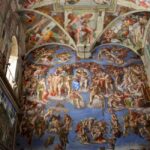
The tour’s Sistine Chapel stop is brief by design, around 25 minutes, which is exactly how you should plan your expectations. You’re not seeing every panel. You’re seeing the chapel in a way that makes the famous scenes legible.
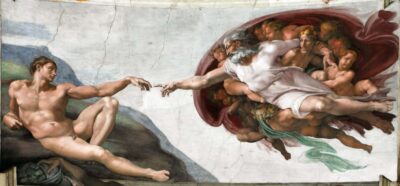
Michelangelo’s ceiling gets the spotlight, including the iconic Creation of Adam area, with neighboring scenes pointed out so you can connect the composition rather than just stare at one figure. Your guide can also explain how not every part was painted by Michelangelo, and where other artists left their marks.
This is the moment where headsets do real work. You’ll likely move within the chapel space to get different views, and having the guide’s narration in your ear means you don’t lose the thread when the crowd shifts.
One important seasonal note: between January 12 and March 31, 2026, the “Last Judgement” fresco area will be covered by scaffolding during an extraordinary maintenance project. The chapel stays open, but that specific wall artwork won’t be visible during that time window.
St. Peter’s Basilica in about 40 minutes: the highlights and the rules
After the Sistine Chapel, you move to St. Peter’s Basilica for about 40 minutes of guided time (when access is available). The goal here is the high-impact interiors: the pieces everyone came for, and a few context clues to understand why they were made.
You’ll see:
- Michelangelo’s La Pietà
- Bernini’s monumental, gilded baldachin (the bronze canopy over the site associated with St. Peter’s tomb)
St. Peter’s is the “wow factor” stop in every sense: the scale hits you before you even process the details. And this tour’s time allocation helps you avoid the common mistake of spending so long in one corner that you miss the main sights.
If you cannot enter the Basilica
Here’s the real-world caution. Because St. Peter’s is an active parish, it can close last-minute due to mass or other religious events. If that happens, the tour will offer an extended Vatican Museums visit instead (including areas normally not part of the tour). The key point: no refunds are issued for unexpected closures.
So if this is the only day you can visit, I’d still book with realistic expectations. The Vatican is powerful and it also runs on strict scheduling and unpredictable events.
When the tour ends in the Sistine Chapel
Most days you end inside St. Peter’s Basilica so you can keep exploring afterward. There’s a stated exception: on Wednesdays for the 9:30 + 10:15 am tours, and on any other times when the Basilica is closed, the tour ends with the Sistine Chapel instead.
St. Peter’s Square finish: then you keep going your way
Even though the guided time focuses on Basilica interior highlights, the experience also points you to the bigger setting: St. Peter’s Square (Piazza San Pietro). It’s where the pope holds general audiences on Wednesdays and special masses on religious holidays.
Once the tour finishes (and assuming you’re inside the Basilica), you’re free to continue exploring on your own. That flexibility is useful. Some people want more time with the Pietà or the baldachin angles. Others want to step outside, reset, and take in the architecture from the square.
Dress code, umbrellas, and ID: the small stuff that can ruin a big day
This tour is practical, but it’s also strict in the way the Vatican is strict. Make a checklist before you head out:
- Bring valid ID. Everyone must have it, including under 18s.
- Cover your knees and shoulders during visits to religious sites and the Vatican Museums.
- Large umbrellas are not allowed, so leave them in your accommodations.
- Your voucher is only valid for the reserved day and time. Late arrival can mean you don’t get in.
One small headphone note also matters: the guide headsets are included, but you may prefer your own earbuds if you want both ears working.
Also remember: the Vatican controls how many visitors can enter the Museums at any moment, and the tour operator isn’t responsible for that number. That’s out of anyone’s control, but it’s another reason skip-the-line plus good timing helps.
Is it worth the price? What you’re really paying for
At $119.72 per person, this tour isn’t the cheapest way to see the Vatican. The value comes from what you’re buying with that money:
- You’re buying time: skip-the-line admission and a timed entry slot reduce wasted waiting.
- You’re buying clarity: the guide directs you to main highlights like the Gallery of Maps and the Rooms you’ll actually want to remember.
- You’re buying comfort and hearing: the audio headsets help you follow the explanation while moving.
- You’re buying group management: small group size means fewer bottlenecks and more manageable pacing.
If you were to do this on your own, you’d still need tickets, you’d still face crowd flow, and you’d still spend part of your day figuring out where to go next. Paying for a guided route lets you spend your energy on art and meaning, not logistics.
Who should book this Vatican small-group tour
This is a strong fit if you:
- Want the big highlights without spending an entire day dragging yourself across endless corridors
- Prefer a guide-led route with enough context to make scenes and symbols feel clearer
- Like the idea of headsets so you can move around while still hearing the story
- Want a group capped at 12 people rather than a huge bus-load crowd
It may not be your best match if you:
- Hate any religious framing or interpretive narration (the Vatican is unapologetically religious)
- Dislike interactive moments with the group
- Need lots of personal, unstructured time in the Museums (this tour is designed to hit key sights, not cover every room equally)
So, should you book it
If you’re visiting Rome once (or you only have one morning or afternoon for the Vatican), I’d book it. The skip-the-line entry plus headsets plus a tight, guided route is exactly what saves your day from turning into a crowd-management exercise.
If you can travel in lower season, you’ll likely enjoy an even calmer version of the same highlights. But even during busy times, this tour is built to keep you oriented and moving toward the sights that matter most.
If St. Peter’s Basilica is your top priority, keep one Plan B in mind: access can change, and the tour may extend the Museums instead. Still, that backup keeps your three-hour slot productive.
FAQ
FAQ
Is the tour in English?
Yes. The tour is offered in English.
Where do I meet the guide?
You meet at the office at Via Santamaura 14B, very close to the Vatican Museums entrance. The closest Metro stop is Ottaviano.
How many people are in the group?
The tour has a maximum of 12 travelers.
What is included in the price?
Skip-the-line entry with tickets to the Vatican Museums, entry to the Sistine Chapel, and guided access to St. Peter’s Basilica (where available). You also get personal audio headsets and an English-speaking licensed tour guide.
Do I need to bring ID?
Yes. All participants, including under 18s, must bring valid ID.
Is there a dress code?
Yes. You must cover your knees and shoulders during visits to religious sites and the Vatican Museums, or you risk being refused entry.
Can the tour end inside St. Peter’s Basilica?
Usually, yes. However, St. Peter’s Basilica can close last-minute due to religious events. In those cases, the tour ends at the Sistine Chapel or includes an extended Vatican Museums visit instead, with no refunds.
Are umbrellas allowed?
Large umbrellas are not allowed.
What happens to Last Judgement during early 2026?
Between January 12 and March 31, 2026, the wall featuring Michelangelo’s Last Judgement will be covered by scaffolding during maintenance, so it will be temporarily out of view. The Sistine Chapel remains open.
More Skip the Line in Rome
- Skip-the-Line Group Tour of the Vatican, Sistine Chapel & St. Peter’s Basilica
★ 4.5 · 12,779 reviews