REVIEW · ROME
Rome: Discover the Eternal City Center Walking Tour
Book on GetYourGuide →Operated by Roman Vacations · Bookable on GetYourGuide
Rome feels personal on foot. This guided loop through the Eternal City is built around a handful of the biggest sights—Trevi, Pantheon, Piazza Navona, and the Spanish Steps—stitched together by a friendly local guide walking you through cobblestone streets and real city squares. I especially liked the way the tour uses the stops to make Rome’s story feel like one connected route, not a random list of landmarks, and I also like that it finishes with the simple joy of a Trevi Fountain coin toss. One thing to consider: it’s not for wheelchair users, and you’ll be walking for 2.5 hours on uneven surfaces.
You’ll start at Foro Traiano and follow the classic center grid. Check-in needs to be on time—arriving late means you can miss parts of the tour because tours can’t be held up—and the tour runs in all weather, so plan for sun, rain, or both. Bring what you need for discomfort control: water, sunscreen, a hat, and even an umbrella, plus comfortable shoes because the pace is steady.
In This Review
- Key things to know before you go
- Rome City Center, Explained in 2.5 Hours
- Finding the Meeting Point at Foro Traiano (and Actually Starting on Time)
- Piazza Venezia and the Vittoriano: Unification Monument Energy
- Largo di Torre Argentina: Julius Caesar’s Assassination Site
- Piazza Navona and the Four Rivers Fountain Moment
- Pantheon: One of the Original Temples to Many Gods
- Narrow Streets to Trevi: The Coin Toss That Ends the Day Right
- Piazza di Spagna and the Spanish Steps: From Keats and Shelley to Fashion
- Price and Value: What $53 Actually Buys You
- Weather, Comfort, and Simple Packing That Saves Your Day
- Who This Tour Suits Best (and Who Might Want to Skip It)
- Should You Book the Rome City Center Walking Tour?
- FAQ
- FAQ
- How long is the Rome City Center Walking Tour?
- What is the meeting point for the tour?
- What time should I check in?
- What language is the tour in?
- What’s included in the price?
- Is transportation to and from the meeting point included?
- Does the tour run in bad weather?
- Is the tour wheelchair accessible?
- Where do you toss the coin during the tour?
- Is gelato or coffee guaranteed?
- Can I reserve and pay later?
Key things to know before you go
- Trevi Fountain coin toss: You’ll get time to toss your coin and take in one of Rome’s most famous landmarks.
- A guide-led route through top city-center icons: Vittoriano, Largo di Torre Argentina, Piazza Navona, the Pantheon, Trevi, and Piazza di Spagna.
- Story stops, not just photo stops: The route links Italy’s unification monument themes with places tied to Julius Caesar.
- Piazza Navona includes Bernini’s Fountain of the Four Rivers: Expect a focused moment at one of the square’s headline sights.
- Pantheon visit with guided context: You’ll step into a temple tied to ancient Roman gods.
- Gelato or coffee is included: A small win after the walking, with an authentic Italian treat included.
Rome City Center, Explained in 2.5 Hours
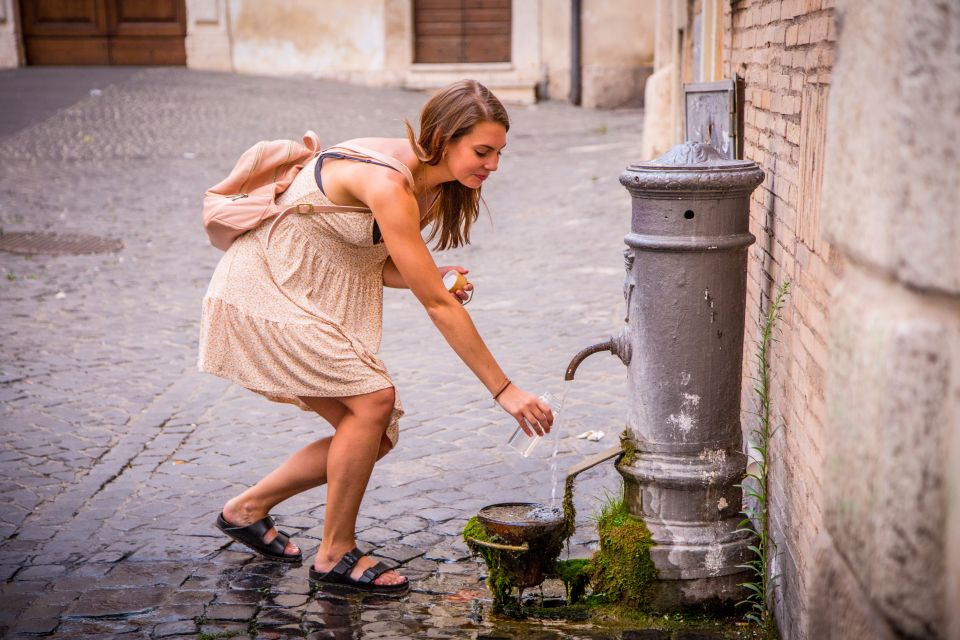
This is the kind of tour I like for a first or second day in Rome: it’s long enough to feel like you’ve done something meaningful, but short enough that you’re not stuck all afternoon in transit mode. At 2.5 hours, the pace stays focused on the center’s best-known sights, and the guide keeps you oriented so you’re not just walking from one postcard to the next.
You’ll move through the classic heart of Rome—squares, monuments, and a couple of stretches of narrow, cobblestoned streets—so the city starts to feel like a place you can navigate. And because the stops are spaced with guided time (often around 15–20 minutes per highlight), you get just enough to understand what you’re seeing without being rushed through everything.
The included gelato or coffee also matters more than it sounds. It turns the tour from pure sightseeing into a real break in the middle of a day of walking. You’re not hunting for a place to sit right when your feet are tired.
You can also read our reviews of more walking tours in Rome



Finding the Meeting Point at Foro Traiano (and Actually Starting on Time)
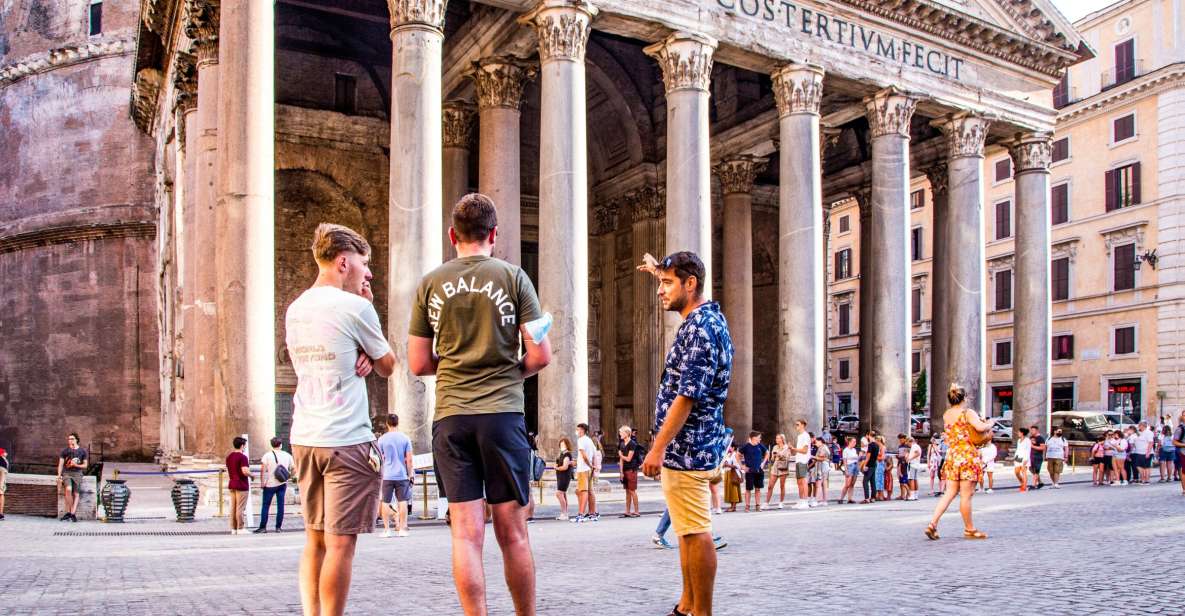
You’ll begin at Foro Traiano, 84. Your greeter is looking for you by the orange Roman Vacations sign with a lion on it, standing next to the fence at the north side of the column in front of the cafe. It’s a small detail, but it’s the difference between “smooth start” and “you’re late, and the tour moves on without you.”
Aim to arrive early. Check in 10 minutes prior to your scheduled start time. Tours can’t be delayed for late arrivals, and there are no refunds for late arrivals or missed tours. If your day is tight, build in buffer time for crossing Rome streets and getting your bearings.
Practical tip: wear comfortable walking shoes. Even if you’re used to travel walking, cobblestones in the historic center can slow you down and wear you out faster than you expect.
Piazza Venezia and the Vittoriano: Unification Monument Energy
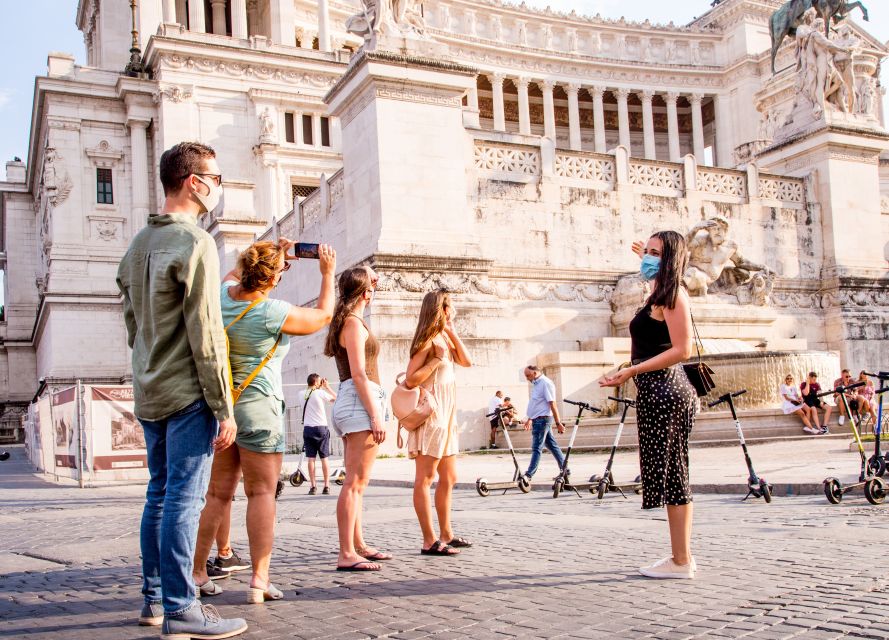
From the center starting point, the tour moves you into Piazza Venezia, then heads to the Vittorio Emmanuel II Monument for a guided stop. This is one of those Rome sights that looks bigger in person, and the guide’s time here matters because you’re not just staring at stone—you’re learning what the monument memorializes: the Unification of Italy.
Why this stop works on a walking tour: it sets a modern Italian context right in the middle of an ancient city. Rome’s identity isn’t only emperors and gods. It’s also national story, and the Vittoriano is the city center place that connects those threads fast.
The guided segment is about 20 minutes, which is long enough to absorb the scale without feeling like you’re trapped in one spot. If you’re the type who likes to take photos from multiple angles, you’ll want to keep moving with the group so you don’t fall behind during transit between landmarks.
Largo di Torre Argentina: Julius Caesar’s Assassination Site
Next up is Largo di Torre Argentina, where the tour focuses on the famous assassination of Julius Caesar. This is a heavy subject, but it’s handled through place-based context: you’re not reading a textbook, you’re standing in a real Roman location tied to a real turning point.
This stop is a good example of why guided time helps. Without guidance, you can see the location and still miss why it matters in the larger story of Rome. With a local guide, the meaning becomes part of what you notice as you look around.
The time here is about 20 minutes, which is just enough to understand the significance and move on without letting the moment swallow the rest of your tour. That matters, because the tour continues into the calmer, more visually playful part of the route.
Piazza Navona and the Four Rivers Fountain Moment
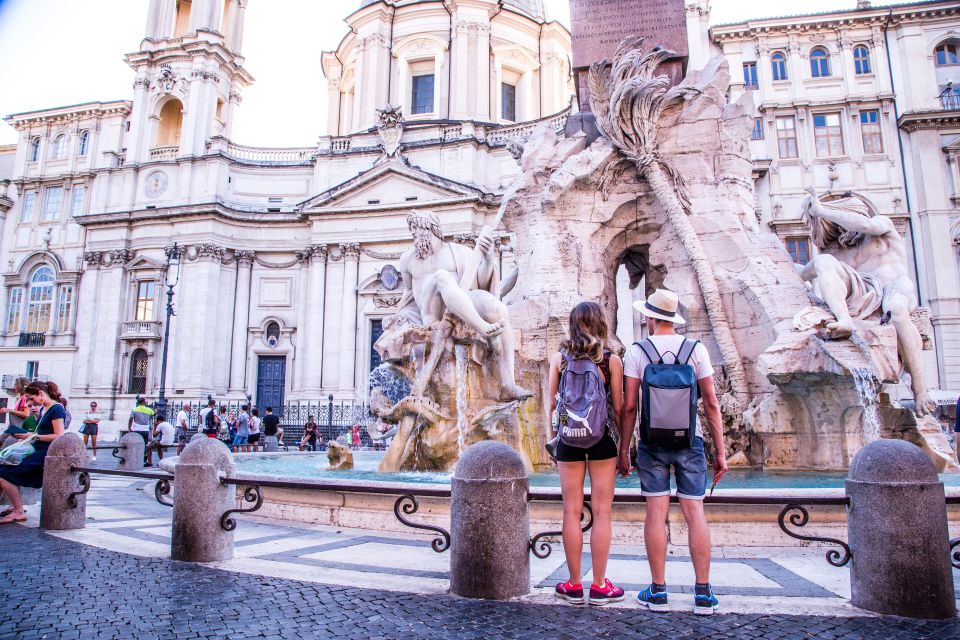
From the Caesar site, you’ll transition through an area described as an ancient stadium and then reach Piazza Navona. This square is now home to a Papal Palace and a stunning church, but the headline for this tour is Bernini’s Fountain of the Four Rivers.
If you like scenes where the architecture feels theatrical, you’ll get that here. The tour also mentions navigating through street artists and locals going for a stroll, which is exactly how Piazza Navona often feels: alive, not museum-quiet. For me, that detail is important. It means your visit won’t feel like you’re watching Rome from behind ropes—you’re moving through a real public square.
The guided time at Piazza Navona is about 20 minutes, and the Fountain of the Four Rivers gets a guided focus too. You’ll want to keep an eye on what the guide points out so you don’t spend the whole moment trying to find the best photo angle. Save a minute for pictures, then pay attention.
A small consideration: because the square includes performers and casual foot traffic, you’ll likely share space. Comfortable shoes and patience make this part easier.
You can also read our reviews of more city tours in Rome





Pantheon: One of the Original Temples to Many Gods
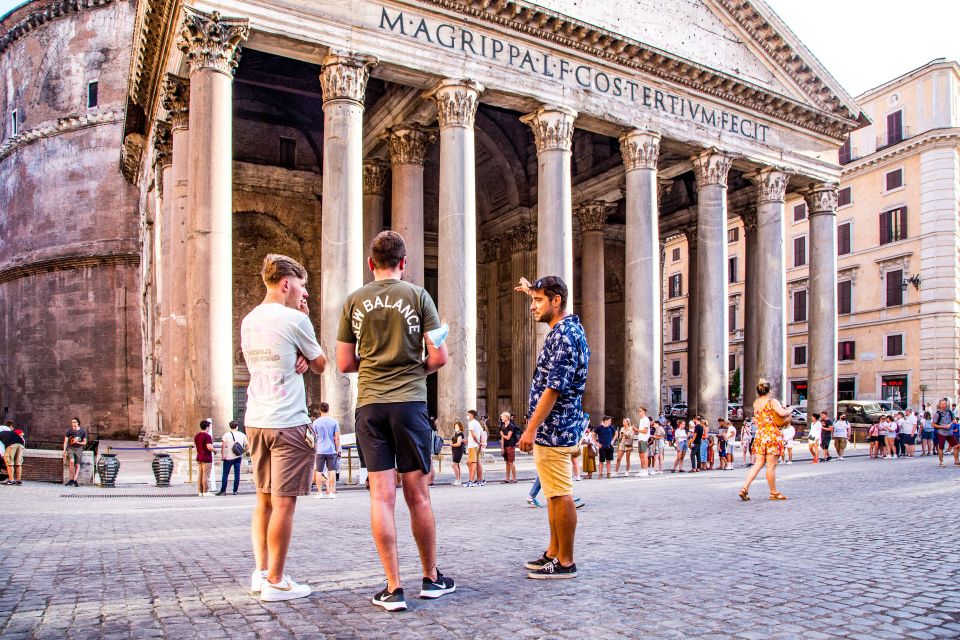
Then comes one of the most meaningful stops on the route: the Pantheon. The tour includes a guided visit of about 20 minutes, focused on it being one of the original temples to ancient Rome’s many gods.
This is a strong choice for a walking tour format because the Pantheon is not only famous—it’s also a place where understanding helps you see more. The guide’s job here is to help you connect the building to what it represented, so you’re not just ticking off a landmark name.
The Pantheon stop also creates a transition point: from here, the tour moves you back into narrow streets and toward the final showstopper fountains. It’s a smart flow. You get a big “anchor” stop, then Rome’s streets start to feel like the connective tissue.
If you’re sensitive to indoor spaces, plan your energy accordingly. The tour runs in all weather, so you might be moving between sun and indoor areas, and that can be a little draining if you’re not dressed for temperature changes.
Narrow Streets to Trevi: The Coin Toss That Ends the Day Right
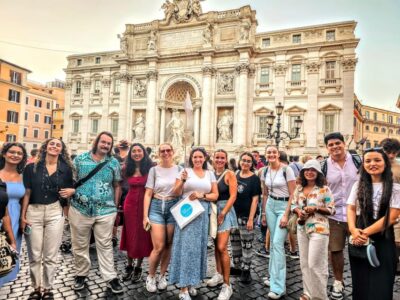
After the Pantheon, you’ll walk through narrow cobblestone streets, pass another ancient temple, and head to Trevi Fountain. The Trevi stop is about 15 minutes, and the highlight is clear: toss a coin into the world famous fountain.
Here’s the practical value of a guided tour at Trevi: you don’t have to figure out when to arrive for the best flow of the crowd. You’re guided through the moment so you can actually do the thing (coin toss) and still keep moving on schedule. Fifteen minutes isn’t long, but on a structured route it’s enough time to take in the fountain and then transition without losing your whole afternoon.
Want to make the Trevi part smoother? Keep your phone accessible for quick photos, but listen when the guide speaks. Treat it like a guided introduction, not a museum lecture.
Also, plan for lingering needs. If you’re the type who likes longer stands at major sights, you may wish you had 30 minutes instead of 15. But as part of a 2.5-hour tour that hits multiple icons, the time is balanced.
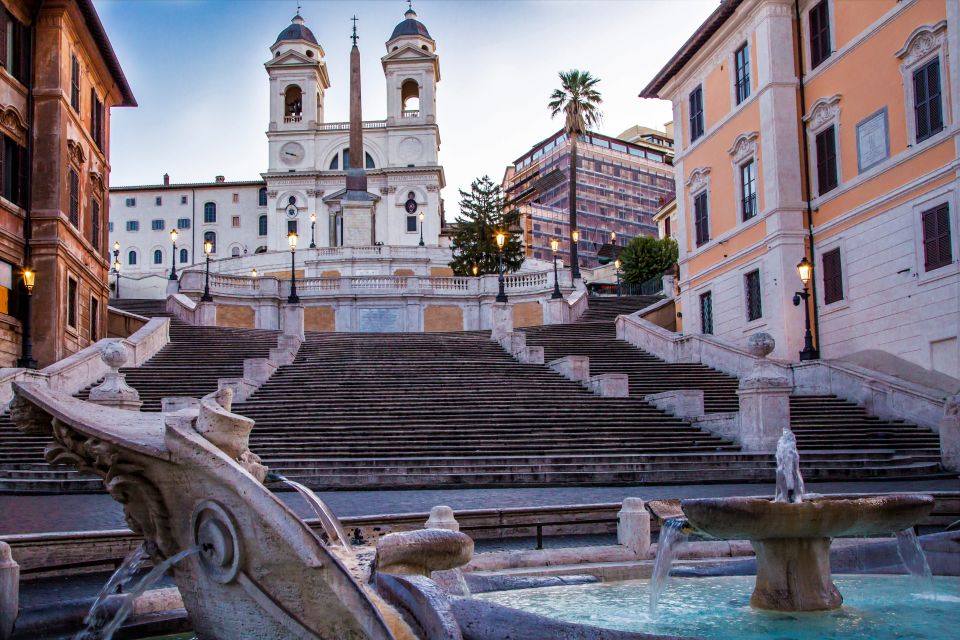
Piazza di Spagna and the Spanish Steps: From Keats and Shelley to Fashion
To wrap up the historic center loop, the tour goes to Piazza di Spagna and the Spanish Steps. You’ll get about 20 minutes at this section, with guided context that’s honestly more interesting than it sounds on paper.
The guide explains how this area went from being connected to famous British writers like Keats and Shelley to becoming the current high-end fashion shopping district of Rome. That’s a neat contrast, because it helps you understand why the neighborhood feels like it does: it’s a place where people come to see and be seen, and it’s layered with cultural identity.
If you like walking and then looking back at what you just walked past, this finish works well. You’re ending with a neighborhood vibe that’s different from the monuments and temples earlier in the route, and it gives your Rome day a lighter emotional tone.
One thing to consider: the Spanish Steps area can feel busy because it’s both sightseeing and shopping-adjacent. If you want quiet, bring a flexible mindset. The tour’s job isn’t to keep you isolated—it’s to get you oriented, informed, and moving.
Price and Value: What $53 Actually Buys You
At $53 per person for about 2.5 hours, this tour offers straightforward value if you want a high-impact overview. You’re paying for two big things: an expert local guide and built-in time at multiple must-see landmarks, plus authentic Italian gelato or coffee included.
If you were to do this route on your own, the cost would shift from “guided time” to “your time and your planning stress.” You’d still have to figure out the order, where to stop, and what to notice. Here, the guide acts like a live filter: you’re not guessing what matters at each location.
What’s not included is also clear, so there are no surprises later. You’ll need to handle transportation to and from the meeting point on your own, and you should budget extra for any additional food and drink beyond the gelato or coffee included.
I think this tour is best when you treat it as your city-center orientation. Then you can return later to linger where you want more time.
Weather, Comfort, and Simple Packing That Saves Your Day
Because tours proceed in all weather conditions, I treat this kind of Rome walk as a packing exercise, not a nice-to-have. The guidance is direct: bring bottled water, sunscreen, a hat, and an umbrella.
In warmer months, there’s also a clothing note that matters for church visits: bring a cover for bare shoulders when needed. In colder months, dress warmly. None of these details are dramatic, but they’re exactly the things that keep you comfortable enough to enjoy the landmarks rather than tolerate them.
Who This Tour Suits Best (and Who Might Want to Skip It)
This is a smart fit for you if:
- you want a guided introduction to Rome’s center without spending your whole day planning
- you like seeing major sights in a logical walking order
- you enjoy having someone answer questions as you go, like the kind of guide who stays attentive and helpful during the whole walk
It’s less ideal if:
- you need wheelchair access, since it’s not suitable for wheelchair users
- you prefer to linger long at one specific site (the route is built as a steady sequence, not an all-day deep stay)
- you can’t commit to the walking pace and cobblestones for 2.5 hours
Should You Book the Rome City Center Walking Tour?
My take: book this tour if you want a fast, guided way to connect Rome’s iconic sights into one coherent route. The standout is the combination of Trevi Fountain, the Pantheon, and major square moments like Piazza Navona and the Spanish Steps, all with guided context that helps you see more than the obvious photo.
Skip it if mobility is a concern or if your style is to park yourself for a long time in one place. Otherwise, this is a practical way to get your bearings, toss your coin at Trevi, and leave with Rome feeling a little less chaotic and a lot more understandable.
FAQ
FAQ
How long is the Rome City Center Walking Tour?
The tour lasts about 2.5 hours.
What is the meeting point for the tour?
Meet at Foro Traiano, 84. Look for the orange Roman Vacations sign with a lion, with the greeter next to the fence at the northside of the column in front of the cafe.
What time should I check in?
Check in 10 minutes prior to your scheduled tour time. Late arrivals can miss parts of the tour, and tours cannot be delayed.
What language is the tour in?
The live tour guide speaks English.
What’s included in the price?
You get an expert local guide and an authentic Italian gelato or coffee.
Is transportation to and from the meeting point included?
No. Transportation is not included.
Does the tour run in bad weather?
Yes. The tour proceeds in all weather conditions.
Is the tour wheelchair accessible?
No, it is not suitable for wheelchair users.
Where do you toss the coin during the tour?
You toss a coin at Trevi Fountain.
Is gelato or coffee guaranteed?
The tour includes an authentic Italian gelato or coffee.
Can I reserve and pay later?
Yes. You can reserve now and pay later, keeping your plans flexible.
If you want, tell me your travel dates and whether it’s your first time in Rome, and I’ll suggest where to schedule this tour so it supports your day rather than competes with it.