REVIEW · ROME
Rome: 3-Hour Private Historical Highlights Walking Tour
Book on GetYourGuide →Operated by Raphael Tours & Events · Bookable on GetYourGuide
Rome can feel like a nonstop picture postcard. This tour gives you a smart, guided route so those famous spots actually make sense. In just three hours, you’ll see the Spanish Steps, Trevi Fountain, and the Pantheon, plus key civic sites like Piazza Colonna and Piazza Navona.
I love that it’s private, so the pacing is calm and flexible instead of a one-size-fits-all stampede. I also like the tangible payoff: you don’t just look from the outside—you enter the ancient Roman-era temple of the Pantheon and skip the ticket line. One thing to consider: there’s moderate walking and no pickup from your hotel, so you’ll want to start right at the meeting point near the Spanish Steps and wear comfortable shoes.
Quick hits you’ll care about
- Private group so your guide can set a comfortable pace
- Pantheon entry + skip the ticket line for less waiting and more time looking
- Trevi Fountain coin legend plus classic Rome viewpoints in a tight loop
- Piazza Navona context including Domitian-era connections and Bernini fountains
- On-the-way civic stops like Palazzo Chigi and Palazzo Montecitorio for Rome beyond the postcards
In This Review
- Why a private 3-hour highlights walk is a smart first move in Rome
- Meeting at Caffè Greco near the Spanish Steps
- Spanish Steps energy, then Piazza Colonna’s marble presence
- Trevi Fountain: the coin moment and how to handle the crowds
- Piazza Navona: Domitian-era space and Bernini fountains
- From the ruins to St. Ignatius: Temple of Hadrian on the route
- Entering the Pantheon: ancient temple access you’ll remember
- The guide matters: pace, questions, and real-world patience
- Gelato, cafés, and shops along the way (the useful kind)
- Price and value: what you’re really paying for
- Who this tour suits best
- Should you book this Rome walking highlights tour?
- FAQ
- Where does the tour start?
- How long is the Rome private historical highlights walking tour?
- What sites will I see on the walk?
- Do we enter the Pantheon?
- What language will the guide speak?
- Is the tour accessible and what about children?
- Is food or drink included?
Why a private 3-hour highlights walk is a smart first move in Rome
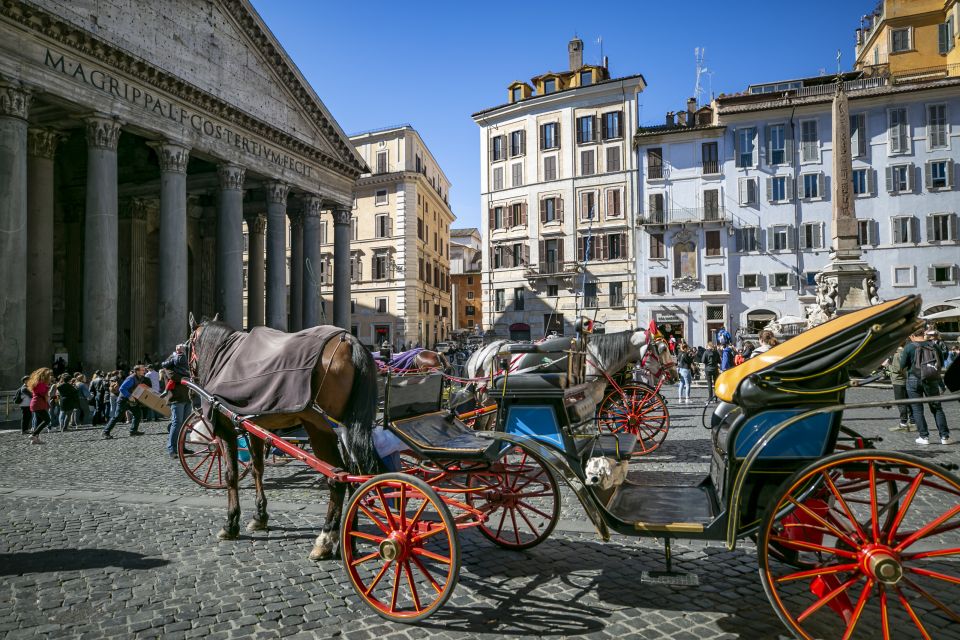
If it’s your first days in Rome, you’re probably trying to get oriented without burning half the trip on transit and lines. A 3-hour private walk works because it’s short enough to stay focused, but long enough to hit the city’s biggest “where am I?” anchors: the Spanish Steps area, the Trevi Fountain zone, and the Pantheon.
This kind of route is especially useful because Rome isn’t a straight-line city. You’ll be weaving between squares, fountains, and historic buildings, and that’s where a guide earns their keep. A good guide helps you connect what you’re seeing to why it matters, so it doesn’t all blur into one famous landmark list.
There’s also a practical advantage: the tour includes Pantheon entry and skips the ticket line, which is a big deal on a place that can have serious queues. The time you save usually turns into more time for your own pace—photos, lingering at a viewpoint, or just taking in the scale.
Meeting at Caffè Greco near the Spanish Steps
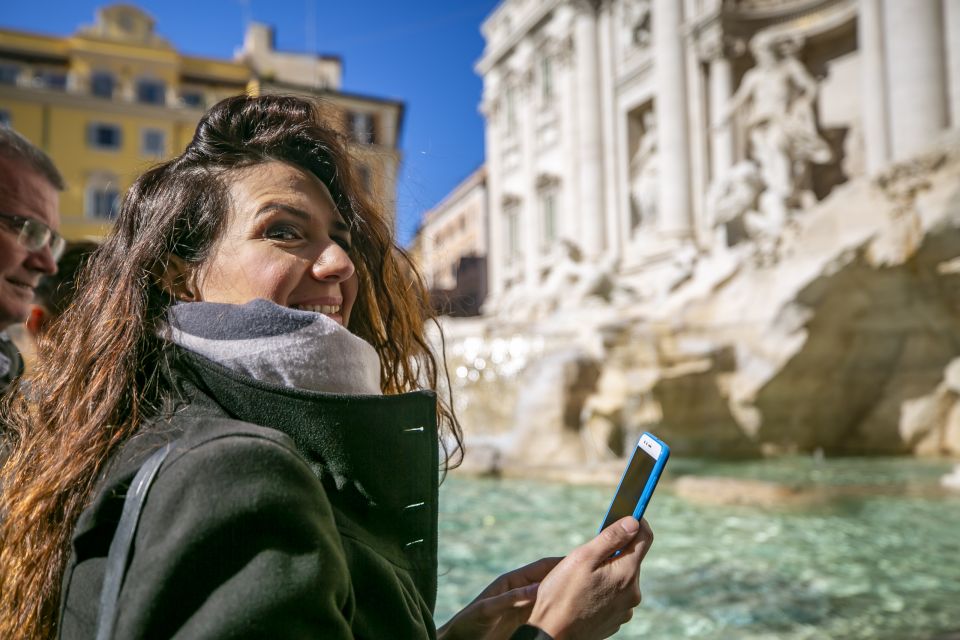
The tour starts at Caffè Greco, Via dei Condotti 86, and that’s a strategic choice. The café is close to the Spanish Steps, so you begin right where the sightseeing starts, without a complicated commute.
Because the tour ends back at the same meeting point, it’s easy to plan the rest of your day. You can pair it with an afternoon gelato run or a longer sit-down meal nearby—without needing to figure out how to get back across town.
No hotel pickup or drop-off is included, so plan to arrive on your own. If you’re coming in from a taxi or bus stop, give yourself a few extra minutes to locate the café entrance and settle in.
You can also read our reviews of more walking tours in Rome



Spanish Steps energy, then Piazza Colonna’s marble presence
The walk kicks off with one of Rome’s best-known visual magnets: the Spanish Steps. Even if you’ve seen photos a hundred times, being there lets you notice the way people flow around the steps and how the square-like setting supports those classic views.
From there, you move toward Piazza Colonna, where you’ll admire the marble column associated with Marcus Aurelius. This is the kind of stop that works well with a guide, because it turns a single monument into a story about power and public space. You’re not just checking a box—you’re watching Rome’s “day-to-day governance” buildings and monuments share the same walking lanes as tourist favorites.
You’ll also pass major historic architecture along the way, including Palazzo Chigi and Palazzo Montecitorio. These names matter because they remind you that Rome’s history isn’t only in ruins. It’s also in buildings that still shape how the city functions.
Trevi Fountain: the coin moment and how to handle the crowds
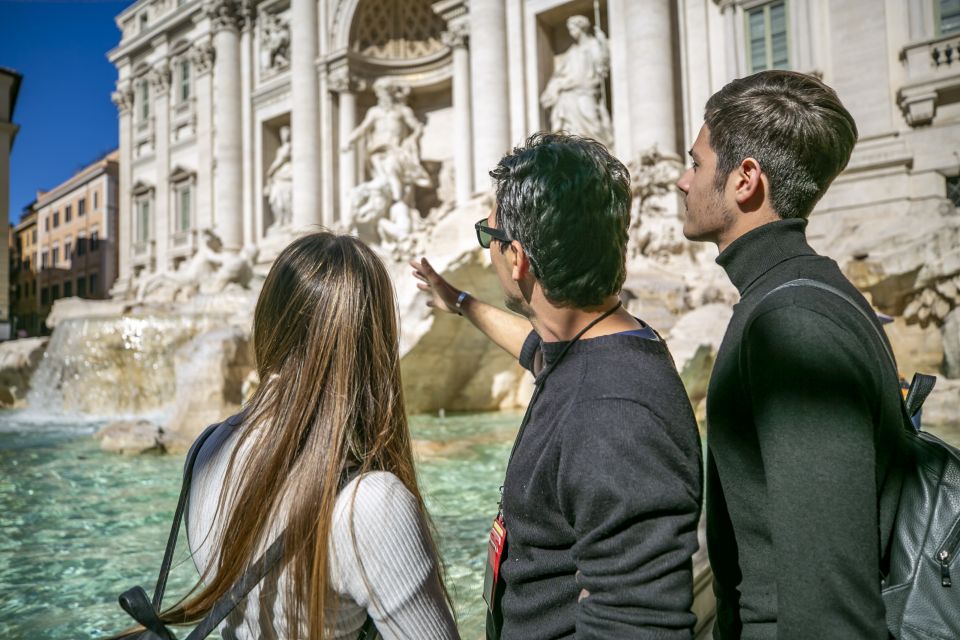
Next up is the Trevi Fountain, and yes, you’ll do the classic thing: throw a coin. The legend says the coin guarantees you’ll return to Rome. Whether you believe it or not, it’s a fun ritual—and it gives you a very clear moment to pause, look up, and take your photos with intention.
The key is using the guide to manage crowd flow. At Trevi, the slowest part of the experience can be just trying to move and find a decent angle. On a private tour, you’re not waiting behind the loudest group in the street; you’re moving as a unit that stays together at a comfortable pace.
A small practical note: wear shoes you’re truly comfortable walking in. Trevi’s area is tight, and you’ll do enough turning and stopping that you’ll feel the difference between shoes that are merely okay and shoes you can stand in for a while.
Piazza Navona: Domitian-era space and Bernini fountains
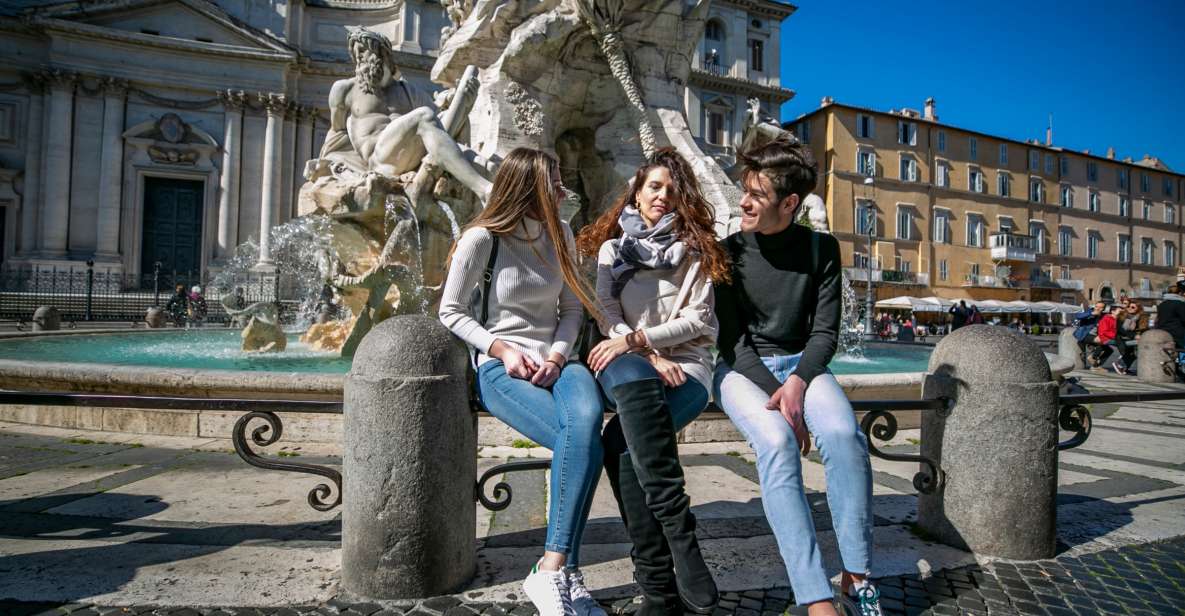
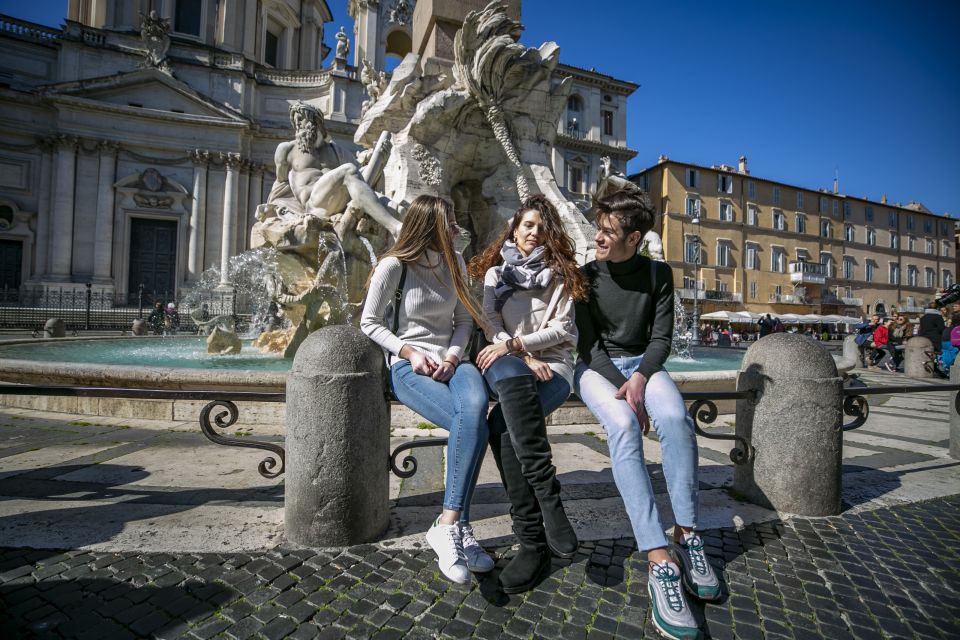
One of the best parts of Rome highlights is when the city shifts from “monument viewing” to “civic square living.” Piazza Navona is a perfect example. You’ll see it as a famous outdoor room, framed by architecture and made lively by fountains.
This tour adds context you might not get if you’re wandering alone. You’ll learn about the Senate House and Rome’s first university on the way, plus you’ll connect the square’s origins to emperor Domitian. Then, you’ll see how Bernini contributed the fountains that make the piazza so iconic.
The value here is that the guide ties together what you’re looking at: the square’s importance, the buildings around it, and the way famous art and civic history show up in the same place. That’s how Piazza Navona becomes more than a pretty stop—it becomes a snapshot of Rome’s public life across centuries.
From the ruins to St. Ignatius: Temple of Hadrian on the route
As you walk toward the Pantheon area, you’ll pass through layers of Rome instead of moving in a straight line. One of the stops built into the route is the remains of the Temple of Hadrian. Even if you only see fragments, those remnants help you understand that the Pantheon area didn’t appear out of nowhere. Rome grew by building over time.
You’ll also pass the Church of St. Ignatius on the way. That’s a helpful contrast: you’re moving between what’s left from ancient Rome and what stands today as a working place of worship. When you see both in one short walk, it’s easier to understand Rome as a city that kept rewriting itself rather than freezing in time.
This section of the tour is also a good “breather” rhythm-wise. You’re not stuck at one crowded photo spot; you’re traveling by foot, with moments to look, then moments to move. That often makes a 3-hour tour feel easier than it sounds on paper.
You can also read our reviews of more private tours in Rome






Entering the Pantheon: ancient temple access you’ll remember
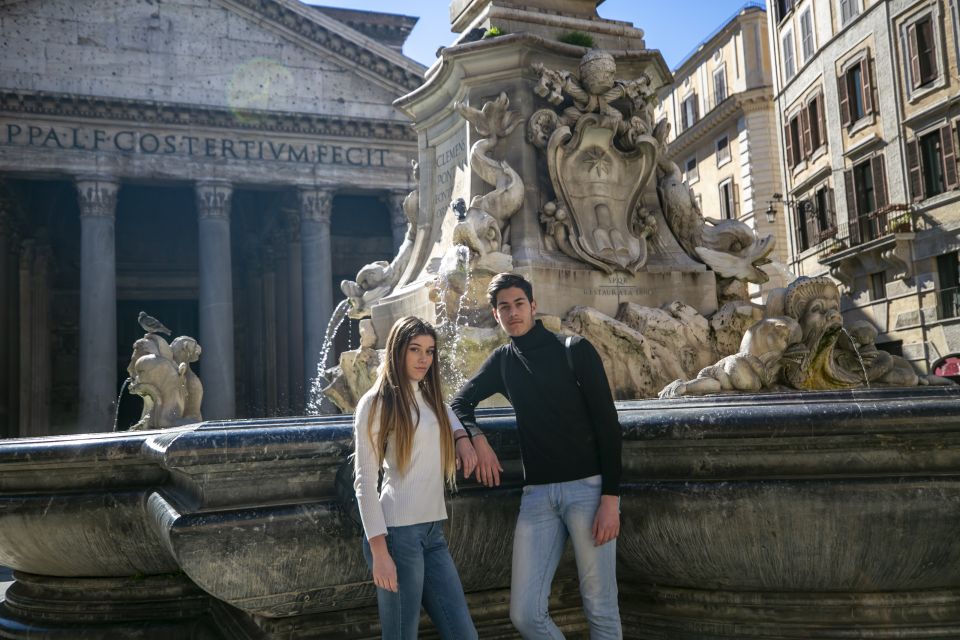
The big centerpiece is the Pantheon. You’ll enter the ancient Roman-era temple rather than simply viewing it from outside. That alone is worth it, because the interior experience is part of what makes the Pantheon so meaningful.
This tour also includes skip-the-ticket-line, and that matters because Pantheon waiting can eat into your sightseeing time. With a guide handling the flow, you can focus on what you’re actually there to see.
Inside, you’ll see tombs connected to major historical figures: Raphael, Queen Margherita, and King Victor Emmanuel II. Those names give you a fast way to anchor your attention, so you’re not just walking in and hoping it all lands. You’ll know what you’re looking for and why it’s there.
A tip for getting the most out of your time inside: don’t rush. With a private guide, you can let the moment be a moment. If the group is comfortable, you can linger at key spots and take a few photos without feeling like you’re slowing everyone down.
The guide matters: pace, questions, and real-world patience
A lot of “highlights” tours can feel scripted. What makes this one work is the human rhythm of the guide: adjusting pace, checking in, and making sure you’re not sprinting through Rome with tunnel vision.
One name that comes up in the guiding team is Matteo (Matthew). When he’s leading, the reported style is patient and comfortable—especially if you’re arriving right after a flight and still adjusting to time and energy. That matters because the first day in Rome can be physically rough even when you’re excited.
I also appreciate that you’re not just listening. You’ll get chances for questions and time for pictures. This is a walking tour where the guide helps you understand what you’re seeing while still respecting the pace of a normal vacation—walk, look, listen, repeat.
Gelato, cafés, and shops along the way (the useful kind)
The tour isn’t only monuments. Along the route, your guide points you toward places to eat and explore—gelaterias, cafés, restaurants, and shops. You’re not getting a vague list; you’re seeing where to go because you’re walking past the neighborhoods those suggestions match.
That’s a subtle benefit. Instead of saving restaurant research for later, you get immediate, location-based ideas. And because you’re already standing in the middle of the action, you can decide on the spot what sounds good for the rest of the day.
Price and value: what you’re really paying for
At $214.11 per person for a 3-hour private walking tour, it’s not a budget option. But the value isn’t just the price tag—it’s what the private format buys you:
- Time savings thanks to skipping the ticket line for the Pantheon
- A local English-speaking guide (with English and Italian support) who explains what matters
- Private pacing, which can be the difference between enjoying Rome and feeling rushed
- A tighter, smarter route that hits major anchors without long detours
If you were doing these stops alone, you’d likely spend extra time figuring out where to go next and you could lose time waiting around at the Pantheon. This tour bundles the hard parts—route, context, and pacing—into a single focused window.
Who this tour suits best
This tour is a strong fit if:
- You want a first-stay Rome orientation with classic highlights
- You prefer a guide-led route instead of self-planning every turn
- You care about seeing the Pantheon with entry and less waiting
- You like walking but want it kept at a comfortable pace on a private format
It may be less ideal if:
- You want a long, slow museum-style experience (this is built for highlights and walking)
- You’re counting on hotel pickup or drop-off
- You’re traveling with very young kids who might struggle with the moderate walking pace (kids must be accompanied by an adult)
Should you book this Rome walking highlights tour?
I’d book it if you’re arriving in Rome and want to get oriented quickly while still seeing the biggest hits the right way. The Pantheon entry and skip-the-ticket-line component makes it feel efficient, and the private nature helps you enjoy the route instead of just surviving it.
I’d think twice if you dislike walking in central Rome or if you absolutely need pickup from your hotel. Also, plan to meet at Caffè Greco and bring comfortable shoes—that part is on you, and it affects how enjoyable the whole thing feels.
If your goal is a smart, guided loop through Rome’s most recognizable landmarks, this is a solid use of a few hours. You’ll leave with a clearer sense of where you are—and why those places belong together.
FAQ
Where does the tour start?
The tour departs from Caffè Greco, Via dei Condotti, 86, 00187 Roma RM, Italy. The café is close to the Spanish Steps.
How long is the Rome private historical highlights walking tour?
It’s scheduled for 3 hours.
What sites will I see on the walk?
You’ll see major Rome highlights including the Spanish Steps, Trevi Fountain, Piazza Navona, Piazza Colonna, Palazzo Chigi, Palazzo Montecitorio, and you’ll walk toward the ancient Pantheon area.
Do we enter the Pantheon?
Yes. The tour includes entry into the ancient Roman-era temple of the Pantheon, and it also notes skipping the ticket line.
What language will the guide speak?
The live guide speaks English and Italian.
Is the tour accessible and what about children?
The tour is wheelchair accessible. Children must be accompanied by an adult, and unaccompanied minors are not allowed.
Is food or drink included?
No. Food or drink isn’t included, so you’ll want to plan for your own stops outside the tour.