REVIEW · ROME
Roman Nightscape: Exclusive Private Night Tour with Driver
Book on Viator →Operated by Eternal City Private and Guided Tours · Bookable on Viator
Rome looks totally different after dark. This private, 2.5-hour night drive strings together Rome’s most famous sights with hotel pickup and short photo stops so you cover more ground without getting footsore. The big thing I like is how smoothly it keeps moving; the possible drawback is that it is more of a driver-led sightseeing loop than a deep history guided tour, and English commentary can vary.
I also like the pacing: about 15 minutes at each stop for a first look and quick photos. It works especially well if you want the classic highlights in one night and you are traveling with limited time, or you just want Rome lit up in gold.
In This Review
- Key things to know before you go
- Private night driving: what hotel pickup and a custom route really buy you
- Five icons in 2.5 hours: how the stop timing shapes your experience
- Fontana di Trevi at night: the Baroque scale is the whole point
- Circus Maximus under lights: Rome’s stadium kept in perspective
- Pantheon quick stop: plan for the ticket and what you can see
- St. Peter’s Square at night: big Vatican views without extra walking
- Piazza Navona after dark: the stadium footprint still matters
- English commentary and guide style: what to expect from a driver-led tour
- Value check: is $214.12 per person worth it?
- Who this tour fits best (and who might skip it)
- Should you book Roman Nightscape?
- FAQ
- How long is the Roman Nightscape tour?
- Is hotel pickup included?
- Is the tour private?
- Which stops are included?
- Are admission tickets included for all the stops?
- Is the tour offered in English?
- Do I receive a mobile ticket?
- Is this a walking tour?
- What’s the cancellation policy if plans change?
Key things to know before you go
- Exclusive private format: it is only your group, not a shared bus crowd.
- Hotel pickup is part of the plan: you provide your hotel name so they can meet you.
- Short stops, big views: plan on quick snapshots and a street-level look at each landmark.
- Pantheon costs extra: the Pantheon stop is not included for admission.
- Driver-led, not a specialist guide: if you want lots of storytelling, you may need to ask more directly.
- Popular timing: it is commonly booked about 98 days in advance.
Private night driving: what hotel pickup and a custom route really buy you
The Roman Nightscape tour is built around a simple idea: let Rome’s landmarks come to you while you sit back and enjoy the drive. With hotel pickup offered and a private setup, it feels less like a public tour and more like you hired a local to design a smooth night route.
I like that the itinerary is flexible enough to match your interests, at least in how the drive and stops are handled. If you care more about photos than walking, or you need to keep things easy, tell the driver up front and you’ll get a better outcome than if you just wait for the plan to happen to you.
One thing to keep in mind: the experience is described as a tour with a driver, not a special guide with guaranteed long-form history at every stop. In practice, your enjoyment will depend a lot on your driver’s comfort with English and how much context they share while you are moving.
You can also read our reviews of more private tours in Rome

Five icons in 2.5 hours: how the stop timing shapes your experience
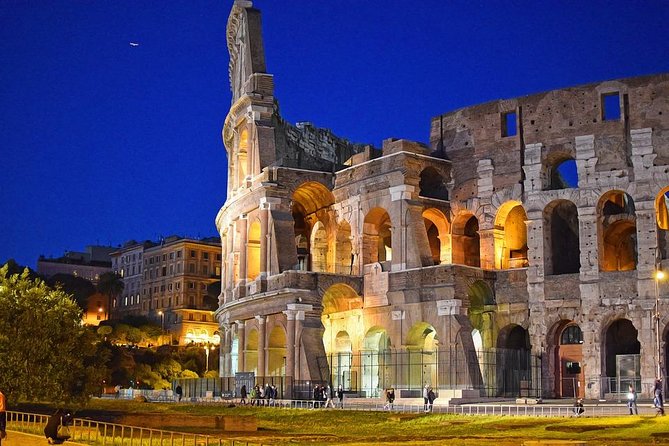
This tour is about 2 hours 30 minutes total, with roughly 15 minutes at each main stop. That is enough time to get oriented, take photos from the right angles, and enjoy the night atmosphere, but it is not enough for slow wandering.
So, think of it as a highlight sampler. If you want interior time in places like the Pantheon, you’ll have to plan around tickets and keep your expectations realistic about how much you can do during a short stop.
The upside is that you spend less time crossing town on your own. Rome can be a lot—cobblestones, crowds, and long distances add up fast—so using a car at night is often the smarter way to see more with less stress.
Fontana di Trevi at night: the Baroque scale is the whole point
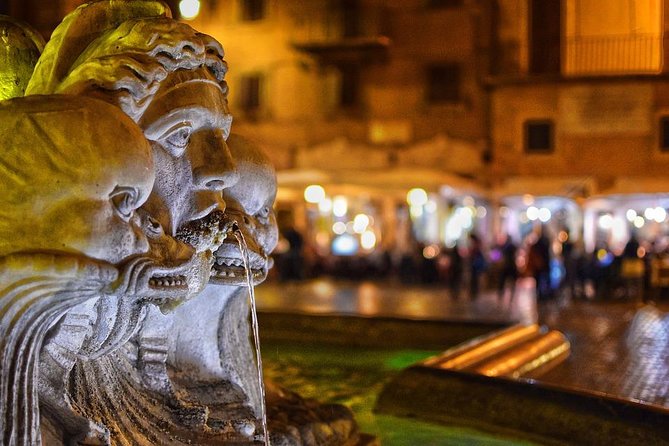
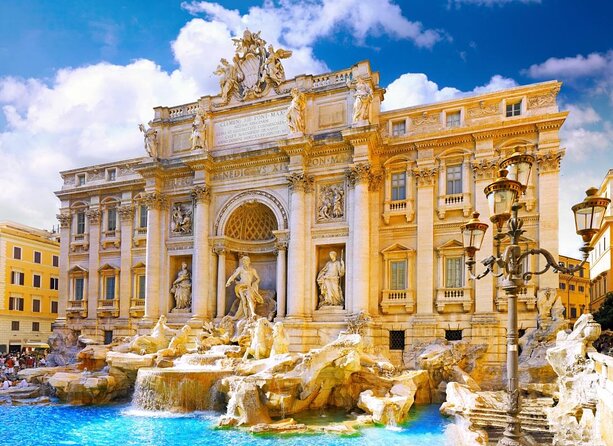
Fontana di Trevi is the showpiece. It is one of the world’s most famous fountains, a massive Baroque creation designed by Nicola Salvi and completed by Giuseppe Pannini and others. At night, it looks dramatic and monumental, and the lighting helps you get that postcard look without waiting for daytime crowds to thin out.
You get about 15 minutes here, and the admission ticket is free. That is a nice match for how Trevi works: you do not need a long museum-style visit to appreciate what it is. You need time to get a clear view, walk a few steps for angles, and take photos without feeling rushed.
Practical tip: go in ready to move. Trevi is popular, and even at night it can still be busy around the fountain. Use the full stop time to grab one or two strong angles rather than trying to photograph everything perfectly.
Circus Maximus under lights: Rome’s stadium kept in perspective
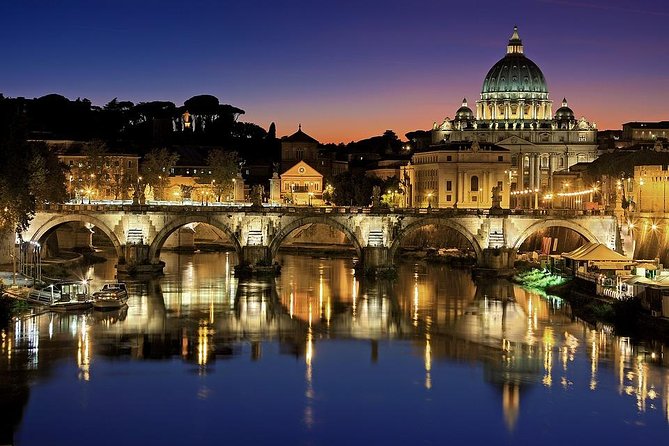
Circus Maximus is different from Trevi in the best way. This was the ancient Roman chariot-racing stadium and mass entertainment venue, sitting in the valley between the Aventine and Palatine Hills. It was the first and largest stadium in ancient Rome, measuring 621 meters long and 118 meters wide, with capacity over 150,000 spectators.
With about 15 minutes at the site and free admission, this stop is about perspective. You are not walking through a building; you are standing in the open air where the ancient layout still gives you a sense of scale. A night drive helps because the area can feel more spacious and less hectic than in the heat of midday.
Practical tip: if you want to understand the shape of the place, look for the broad lines of the valley and imagine what a stadium footprint means at that size. It is a good stop for curious minds, even if you keep the walking minimal.
Pantheon quick stop: plan for the ticket and what you can see
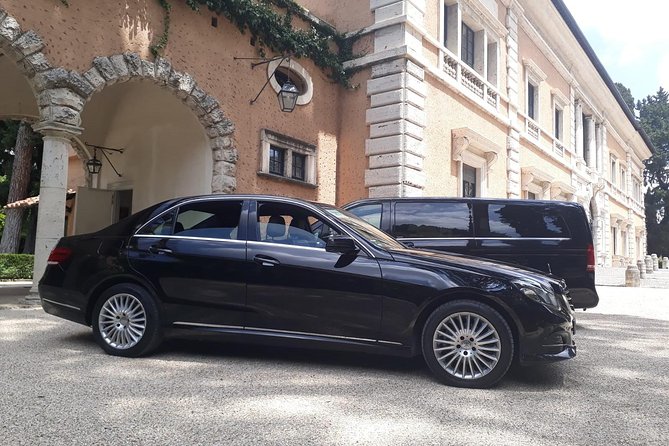
The Pantheon is one of those rare stops where the exterior alone is worth it. It is now a church and sits on the site of an earlier temple commissioned by Marcus Agrippa during Augustus’s reign. The current structure was completed under Emperor Hadrian and likely dedicated around 126 AD.
You get around 15 minutes here, and admission is not included in the tour price. That matters. If your goal is to see inside, make sure you budget for the entry cost and have a plan for how you will spend your time once you are there.
A quick reality check: with only a short stop window, you likely will not do a long, slow visit. You’ll get enough time to confirm you are standing in one of Rome’s most important spaces and soak up the interior if you prioritize it, but you should avoid assuming you can linger for everything.
If you care about interior details, arrive with a simple game plan: pick what you want to look at most, then move efficiently. That way, the ticket feels like value instead of a hurried box-check.
You can also read our reviews of more evening experiences in Rome
St. Peter’s Square at night: big Vatican views without extra walking
St. Peter’s Square sits directly in front of St. Peter’s Basilica in Vatican City. Both the square and basilica are named after Saint Peter, an apostle considered by some to be the first pope. Nighttime lighting often makes the square feel especially grand, with a clear sense of the open space.
You get about 15 minutes and free admission. This stop is usually best for: quick orientation, photos with the basilica framing the background, and a calm moment to see why this place is so significant.
Practical tip: treat it like a viewpoint. You are not here to climb or roam for hours; you are here to take in the scale and get a few images that show how the square opens up around you.
Piazza Navona after dark: the stadium footprint still matters
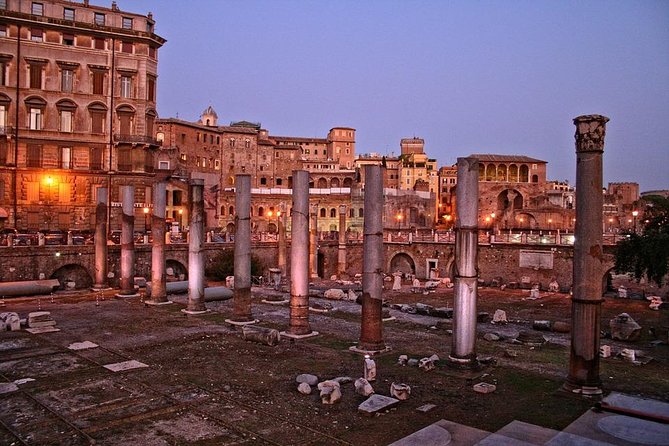
Piazza Navona is built on the site of the Stadium of Domitian from the 1st century AD. The ancient Romans used the space for games, known as Circus Agonalis. Over time, the name shifted through variations and became Navona.
At night, this square is all about the space itself: open, photogenic, and easy to enjoy with minimal effort. You get about 15 minutes here and free admission, so you can focus on the fountains, the architecture edges, and the classic Rome square feeling.
Practical tip: if you want a balanced final stop, Piazza Navona is a great place to slow down for a moment before you head back. You’re ending with a place that is designed for hanging out, not for a one-minute photo dash.
English commentary and guide style: what to expect from a driver-led tour
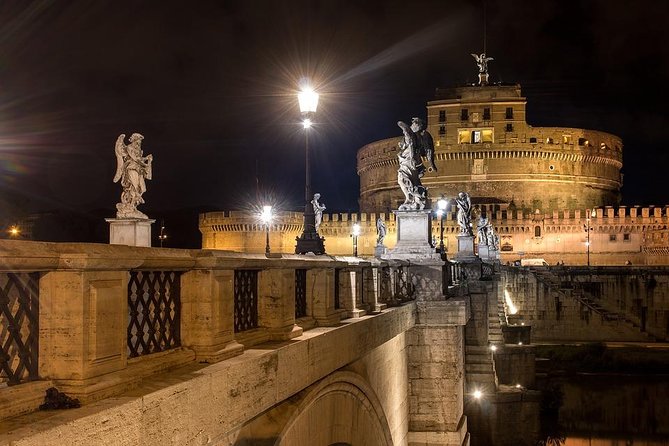
This tour is described as a private night sightseeing experience with a driver. That tends to mean you get commentary that is practical and friendly, but not always deep and academic.
In some cases, the driver is very helpful and answers questions well, including for first-time visitors. In other situations, English skills or history depth can be uneven, and phone-based support can feel harder to use for back-and-forth questions. I’d treat it like this: ask questions, but don’t assume a constant stream of detailed background facts at every stop.
If you get a driver with strong English and good storytelling, you can turn the ride into a mini lesson while you scan the monuments outside the windows. If the commentary is lighter, you can still get a lot from the visual experience by reading a few basics ahead of time.
Also, keep an eye out for names like Alessandro when it is offered in the booking. A guide with good pacing and clear information can make the whole night feel smoother.
Value check: is $214.12 per person worth it?
For $214.12 per person, you are paying for a private setup, a driver, and hotel pickup being offered, plus a route that hits five major landmarks in about 2.5 hours. That is not just about convenience; it is about time. You’re buying back energy you would otherwise spend walking long distances, crossing the city, and trying to coordinate logistics at night.
The value gets even better if at least one of these is true for you:
- You want multiple iconic sights in one night without planning every transit step.
- You prefer sitting during travel and using your energy for photos and short stops.
- You are traveling as a small group and you want privacy.
The one place where cost can feel less worth it is if you are only interested in one or two sites and want a deep visit. The stop times are short, and the Pantheon admission is not included. If you want long museum-style time, you may end up treating this as a prelude and coming back later.
Who this tour fits best (and who might skip it)
This is a great fit if you are a first-timer, you have a tight schedule, or you just want Rome at night without wearing out your feet. The private format helps families, couples, and friends who want a consistent experience with fewer interruptions.
It is also a good choice if you like structure. The sequence moves through the big hits—Trevi, Circus Maximus, Pantheon, St. Peter’s Square, Piazza Navona—so you leave with a clean mental map of where things are.
If you are someone who wants long indoor visits or a heavy history lecture, you might find the timing restrictive. In that case, you could do better with a daytime focused tour and then add a night option later.
Should you book Roman Nightscape?
Yes, I’d book it if your goal is Roman highlights after dark with minimal hassle. The mix of iconic stops, free admission at most of them, and the ability to cover more ground than walking makes it a solid use of an evening.
But book with two expectations set:
- The tour is driver-led, so ask questions, and don’t assume a full guide-style lecture every time.
- The Pantheon admission is extra and the stop window is short, so decide ahead of time whether inside access is your priority.
If you want a calm, photo-friendly night that helps you understand Rome fast, this tour does that job well.
FAQ
How long is the Roman Nightscape tour?
The duration is about 2 hours 30 minutes.
Is hotel pickup included?
Pickup is offered. You provide your hotel name so the team can coordinate pickup.
Is the tour private?
Yes. It is a private tour, so only your group participates.
Which stops are included?
The route includes Fontana di Trevi, Circus Maximus, the Pantheon, St. Peter’s Square, and Piazza Navona.
Are admission tickets included for all the stops?
Trevi Fountain, Circus Maximus, St. Peter’s Square, and Piazza Navona are listed as free. Pantheon admission is not included.
Is the tour offered in English?
Yes, it is offered in English.
Do I receive a mobile ticket?
Yes, a mobile ticket is included.
Is this a walking tour?
It is a driving tour with a driver, with time set aside at each listed stop.
What’s the cancellation policy if plans change?
Free cancellation is available up to 24 hours in advance for a full refund.