REVIEW · ROME
Private Walking Tour in the Historic Center of Rome
Book on Viator →Operated by Roman Vacations · Bookable on Viator
Rome feels personal on foot.
This private historic-center walking tour turns Rome’s big-name landmarks into clear, story-driven stops, led by an expert certified guide. I especially like that you get an authentic snack built into the route (Italian gelato or coffee) and that guides such as Angela and James are described as warm, focused, and great at making ancient facts easy to follow, even for a younger history fan.
You’ll also start in the middle of the action and finish with one of the best viewpoints in town. One possible drawback: it’s still a walk through central Rome, so you’ll want comfortable shoes and you should expect a packed, fast-moving schedule over roughly 2 to 3 hours.
In This Review
- Key things to know before you go
- Starting in Piazza Venezia, where empires leave footprints
- Largo Argentina: temples above the spot where Caesar was cut down
- Piazza Navona: Bernini’s fountains and the street theater of aperitivo
- Pantheon: the dome, the conversion story, and a coffee break
- Trevi Fountain: the coin toss, the history, and the movie magic
- Spanish Steps: Trinita dei Monti and a view that ends the walk right
- Price and value: what $83.40 buys you in Rome
- How the 2–3 hour pace actually feels on the ground
- Who this tour suits best (and who might want a different style)
- Should you book this private Rome historic-center tour?
- FAQ
- How long is the private walking tour?
- Is this tour really private?
- What language is the guide?
- Where do I meet the guide and where does the tour end?
- What’s included in the price?
- Do you cover any entrance tickets for the stops?
- Is there any food included besides gelato or coffee?
- Do I need to download something for the ticket?
- Can I get a refund if I cancel?
- Are service animals allowed?
Key things to know before you go
- Private guide, not a crowd: only your group, with time for questions.
- Free-feeling route: each of the listed major stops has admission ticket free time noted in the plan.
- Coffee or gelato included: a real break, not just a photo stop.
- Guided “how-to” moments: you’ll learn the story—and the method—behind classic Rome rituals like the Trevi coin toss.
- Architecture meets street-level stories: Julius Caesar, Bernini vs Borromini, and the Pantheon all connect through the walk.
Starting in Piazza Venezia, where empires leave footprints
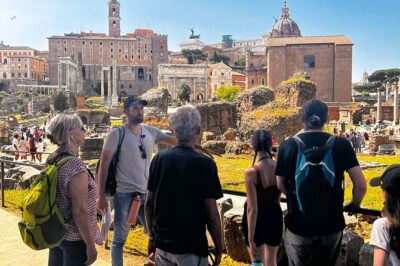
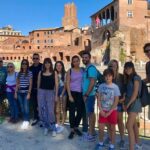
Most Rome tours begin with a blur of photos. This one begins with context. You meet in the center of the city in the area around Piazza Venezia, a square that has been shaping Rome’s view for over 2000 years. Your guide sets the stage by pointing out how different eras stamped their style on the same skyline—starting with the influence of Julius Caesar all the way to later leaders like Napoleon. Even Michelangelo comes into the story here, since an artist’s studio was in the square.
From this position, you also get an immediate view of the large monument called the Altare della Patria, better known as the Vittoriano. It’s the kind of sight you’ll recognize from images, but it lands differently when you understand what it’s dedicated to—Italy’s first king—and why it became a key symbol in the modern city.
I like this opening because it helps you read Rome instead of just staring at it. You’ll walk away with a mental map of Rome as a layered city: not one Rome, but many.
You can also read our reviews of more walking tours in Rome

Largo Argentina: temples above the spot where Caesar was cut down
A short walk takes you to Area Sacra di Largo Argentina. Here, ancient remains rise over the current street level, and the guide uses that physical contrast to make the Julius Caesar story feel real. You’re in the area around Largo di Torre Argentina, where ancient temples tower over the spot connected with Caesar’s assassination.
The way this stop is framed is the key value: the story isn’t only about a tragic moment. You get the arc—how Caesar went from an unknown soldier to ruling an empire—then the abrupt violence that changed everything. It’s dramatic history, yes, but it’s also the kind of background that helps you connect later sites in Rome, because Caesar is one of those names that keeps showing up behind the scenes.
If you care about how Rome’s political shifts shaped the city itself, this stop gives you the right “why.” If you only want postcard Rome, you might find it a bit story-heavy, but the payoff is that you’ll understand what you’re looking at.
Piazza Navona: Bernini’s fountains and the street theater of aperitivo
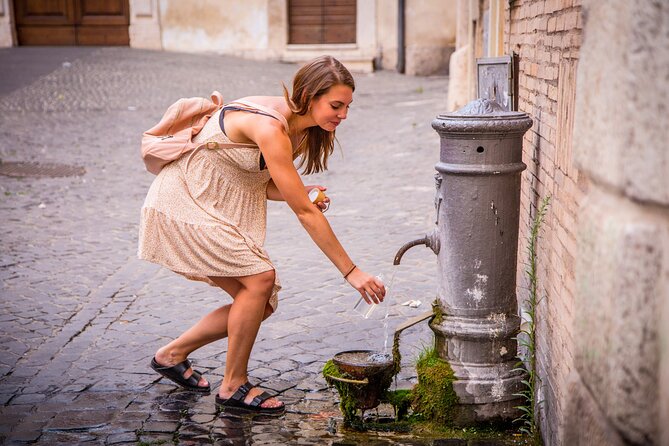
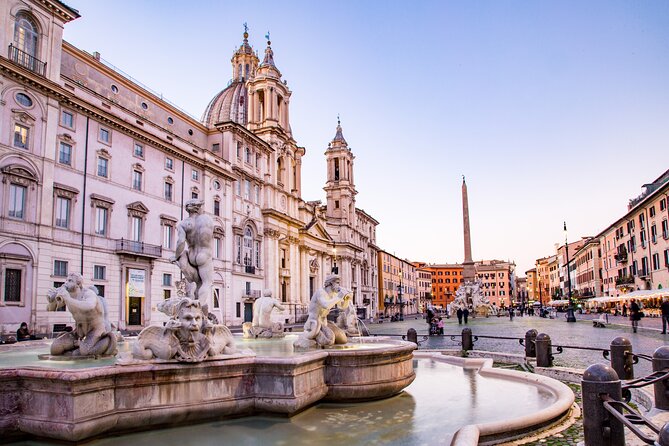
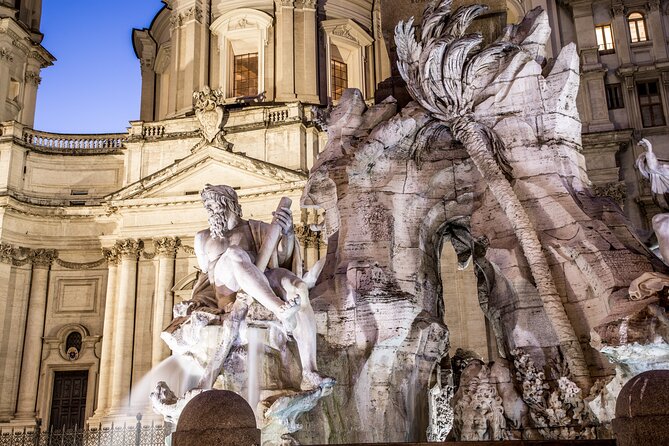
Next comes Piazza Navona, one of Rome’s most beautiful Baroque squares. The big attraction here is the fountain work associated with Bernini, but the tour doesn’t treat it like a standalone monument. Your guide talks about Bernini’s rivalry with Borromini, and how that competition spilled over into the nearby church scene—specifically the church of St. Agnes.
This is one of those moments where Rome’s art history becomes more than museum language. You’ll be standing in the same space where the city’s designers and patrons pushed each other, and your guide helps you see the square as a product of that tension, not just a pretty stage.
Then there’s a fun pop-culture thread: the story about Tom Hanks almost drowning in the movie connected to Angels and Demons. You’ll hear how the square shows up on screen, which is a handy way to keep the energy up while you absorb the architectural details.
Your guide also connects the sightseeing to local rhythm. You’ll get insight into the tradition of aperitivo in the square and guidance on where to partake if you want to keep the evening going after the tour. Even if you skip extra drinks, knowing this tradition helps you understand why locals treat Piazza Navona like a living room.
One practical note: this square is popular. If your goal is quiet, you won’t always get it, but the presence of a guide helps you use the busy atmosphere instead of fighting it.
Pantheon: the dome, the conversion story, and a coffee break
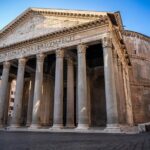
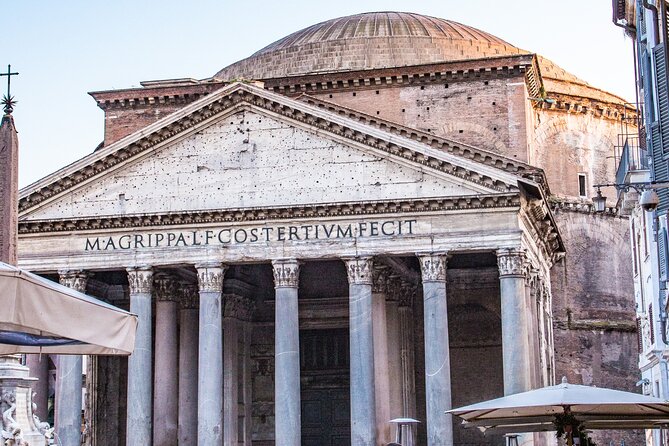
From Piazza Navona, you head toward the Pantheon—one of the most “you can’t fake this” monuments in Rome. Your guide frames it as a Christian church that used to be a temple to Roman gods. That single idea changes how you look at the building. It’s not just a famous church; it’s a building with a long afterlife that survived shifts in religion, politics, and taste.
The headline feature is the dome: the freestanding dome that has stood in its original form since the emperors ruled Rome. Your guide helps you connect the architecture to why it matters—how it still holds its shape and how the space feels when you’re standing near it.
If you want a breather, this is where the tour plan gives you the option to stop for coffee or gelato before you continue toward Trevi. I like that this break doesn’t come randomly. It’s placed right after a major “brain” stop (the Pantheon) so you don’t feel rushed through everything.
After the break, your guide points out the way toward Trevi Fountain, stopping along the route to show some smaller sights—the kinds of details you’d miss if you were only following a map.
Trevi Fountain: the coin toss, the history, and the movie magic
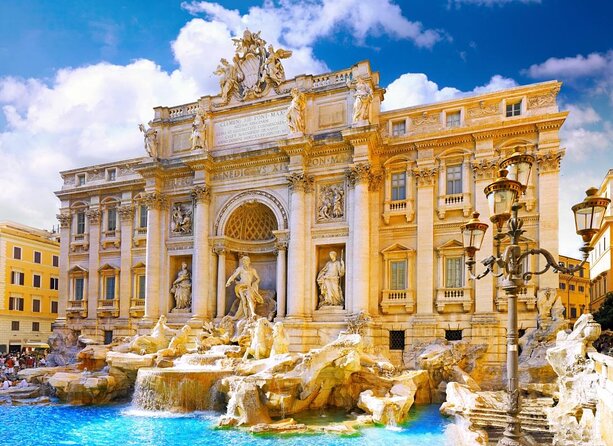
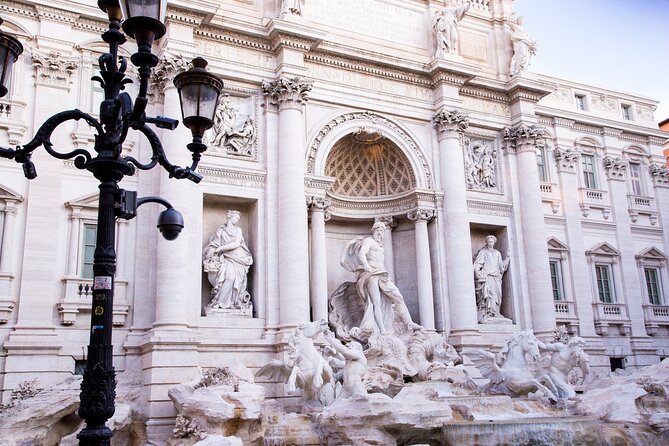
Then you arrive at Fontana di Trevi, the iconic fountain that has become a kind of Rome symbol in pop culture—from classic film associations to modern spy-movie fame. Your guide helps you understand the story of the site while you admire the fountain in person.
This stop also has a built-in ritual lesson. You’ll stop and learn exactly how to toss your coin into the fountain—so you’re not just doing it blindly based on tourist folklore. It’s a small thing, but the “how” makes the moment more fun and less chaotic.
Here’s why I think this part of the tour works: the guide balances spectacle with explanation. You get the visual drama, then you get the reason it became what people expect. When you understand the background, the fountain stops feeling like a checklist item and starts feeling like part of Rome’s identity.
If you’re sensitive to crowds, Trevi can be busy. The smartest move is to keep your camera ready but your eyes on your guide’s guidance, so you don’t spend the whole time scanning for a photo angle.
You can also read our reviews of more private tours in Rome





Spanish Steps: Trinita dei Monti and a view that ends the walk right
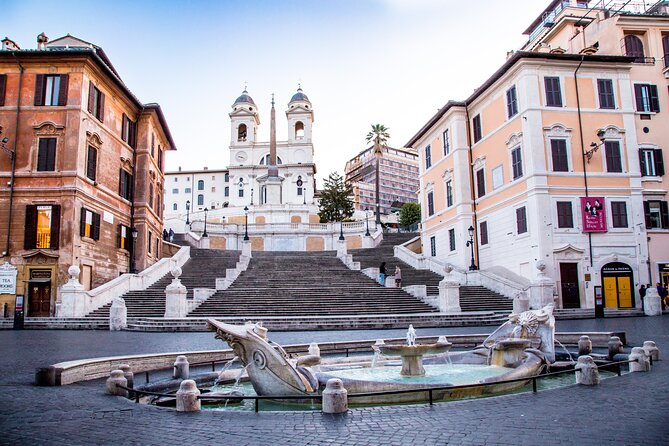
The tour finishes at Piazza di Spagna and the Spanish Steps, with your final moments spent near the Trinita dei Monti church. The area is famous today for fashion, but your guide explains that the steps have always drawn a fashionable crowd since they were completed in 1725.
You’ll also hear the human side of why people love this spot: artists, models, and poets used the steps as a place to gather and be seen. That doesn’t mean the steps are only about glamour—it means Rome uses public spaces to turn everyday life into theater.
The best part is that you end at the top of the stairs with a view over the city. It’s a strong finish because it gives you a physical sense of scale: you’ve walked through power, temples, art rivalries, and classic rituals, and now you get a wide-angle look at what ties it all together.
If you like planning your next steps, the end location is useful. Piazza Spagna has a metro station nearby, and you can also catch a bus or taxi from nearby streets like Via Tritone or Piazza del Popolo.
Price and value: what $83.40 buys you in Rome
At $83.40 per person, this tour sits firmly in the private-tour category. That usually means you pay more than a join-in group. The value comes from three concrete things you can feel on the walk.
First, you get an exclusive expert certified guide for your group. That matters on a city route like this, where the difference between a good story and a great story is often the extra explanation a guide can tailor to your questions.
Second, the tour includes authentic Italian gelato or coffee. It’s not a separate paid stop you have to squeeze into your day.
Third, many major moments are built from the exact types of places you’d otherwise try to research on your own. You’re not just paying to walk; you’re paying for how the guide connects the architecture and the politics behind it.
Also, the pricing notes group discounts. If you’re traveling with friends or family and can book as more than two people, it’s worth checking whether that discount applies to your date.
How the 2–3 hour pace actually feels on the ground
A 2 to 3 hour walk sounds manageable—until you picture Rome heat, crowds, and the pace of sightseeing. This route is designed for an efficient loop through the historic center, moving from Piazza Venezia to Largo Argentina, then onward to Piazza Navona, the Pantheon, Trevi, and finally Spanish Steps.
Because you’re hopping between heavyweight sights, you’ll want to do two things:
- Wear shoes you can walk in for an extended stretch.
- Keep expectations realistic. This is not a slow, lingering “stroll.” It’s a guided walk with short stops and a steady rhythm.
The upside is that you’ll cover a lot of classic Rome in a half-day window, without wasting time guessing where to turn next.
Who this tour suits best (and who might want a different style)
This tour is a strong match if you’re a first-time Rome visitor and you want the historic center in one organized arc. It’s also good if you like learning, but you don’t want to spend the day reading in silence on your phone.
It can work well for families too, especially if your guide keeps explanations clear and engaging. One guide like James is highlighted as doing a great job with a 13-year-old, which says a lot about how readable the storytelling can be.
If you only want quiet churches and slow photos, a walking tour with multiple stops may feel too structured. But if you enjoy short, focused moments where each place connects to the next, this route will click.
Should you book this private Rome historic-center tour?
I’d book it if you want an efficient, story-first walk through Rome’s most recognizable central landmarks—plus a real gelato or coffee break—and you care about understanding what you’re seeing.
Skip it only if you prefer total freedom over guidance, or if you have limited ability to walk between closely spaced downtown sights. Otherwise, the combination of private guide attention, well-chosen stops, and a finish with a city view makes this one of the easier ways to turn a “Rome day” into a day with meaning.
FAQ
How long is the private walking tour?
It runs about 2 to 3 hours.
Is this tour really private?
Yes. It’s a private tour/activity, so only your group participates.
What language is the guide?
The tour is offered in English.
Where do I meet the guide and where does the tour end?
You start at Foro Traiano, 84, 00187 Roma RM, Italy and the tour ends at Piazza di Spagna, 00187 Roma RM, Italy.
What’s included in the price?
The tour includes your own exclusive expert certified tour guide, plus authentic Italian gelato or coffee.
Do you cover any entrance tickets for the stops?
The plan notes admission ticket free time at each of the listed stops.
Is there any food included besides gelato or coffee?
No. Additional food and drink are not included.
Do I need to download something for the ticket?
You receive a mobile ticket.
Can I get a refund if I cancel?
Yes, you can cancel for free up to 24 hours in advance for a full refund.
Are service animals allowed?
Yes, service animals are allowed, and the tour is near public transportation.