REVIEW · ROME
Private Tour – National Etruscan Museum
Book on Viator →Operated by Rome Guides · Bookable on Viator
A Roman villa built for popes becomes a home for Etruscan artifacts. This private tour inside the Museo Nazionale Etrusco di Villa Giulia is a smart way to see key works of Etruscan art and daily life without fighting the museum crowd. I especially liked getting the kind of lively guidance you can feel in the details, like Vincenzo bringing the civilization to life.
You’ll get two things that are hard to match on a group tour: unlimited questions and the freedom to move at your pace. The tour is still structured, but you’re not stuck listening through someone else’s questions while you hold back your own.
One thing to consider: the experience is about 2 hours and stays focused on the museum itself (no hotel pickup or extra stops). If you’re hoping for a longer multi-site Etruscan route, you may need to pair this with another visit.
In This Review
- Key things you’ll like about this private Etruscan museum tour
- Villa Giulia makes the Etruscan collection feel like part of Rome
- What makes this a true private tour (and not just a museum walkthrough)
- Entering the Museo Nazionale Etrusco di Villa Giulia: what you’ll actually cover
- A practical note on museum pace
- The must-see Etruscan objects your guide will point out
- Apollo from Veio (sixth century BC)
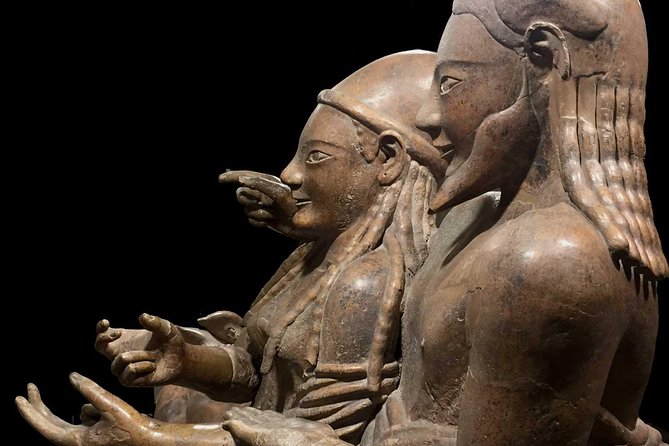
- Sarcophagus of the Spouses from Cerveteri (sixth century BC)
- Pyrgi: high relief and golden thin sheets (fifth century BC)
- Apollo dello Scasato from Falerii (fourth century BC)
- Centaur from Vulci (sixth century BC)
- Cista Ficoroni from Palestrina (fourth century BC)
- Why the private Q&A time changes your museum experience
- Morning vs. afternoon: how to pick the best time in Rome
- Price and value: when $138.18 per person makes sense
- Logistics that actually matter at Villa Giulia
- Who should book this private Etruscan museum tour
- Should you book the Private Tour – National Etruscan Museum?
- FAQ
- How long is the Private Tour – National Etruscan Museum?
- What language is the tour offered in?
- Is the tour private?
- What’s included in the price?
- Are admission tickets included?
- Where do we meet for the tour?
- Is hotel pickup included?
- Do I need private transportation to get there?
- What time options do you have?
- What is the cancellation policy?
Key things you’ll like about this private Etruscan museum tour
- A private guide (only your group), with room for real questions
- Villa Giulia as the setting, built for power and now used for pre-Roman treasures
- A ticket-included museum visit, not just a “walk-by” lecture
- Time at your own pace, so you can linger where you actually care
- A focused hit list of major objects, from Veio to Cerveteri and Pyrgi
- Morning or afternoon scheduling, so you can match it to your Rome rhythm
Villa Giulia makes the Etruscan collection feel like part of Rome
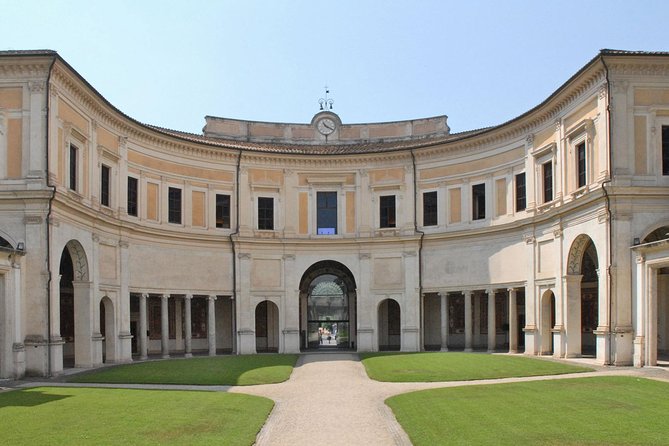
The National Etruscan Museum sits in Villa Giulia, the suburban residence of Pope Jules III (1550–55). Even before you reach the artifacts, the building itself adds a layer of meaning. You’re not only seeing Etruscan culture. You’re seeing how later Romans and institutions chose to preserve and frame it.
Villa Giulia’s story is a good warm-up for the tour. In 1889, the villa was set up as a museum for pre-Roman antiquities of Latium, and later, two wings were added between 1912 and 1923. That timeline matters because it explains why the museum feels both historic and curated: it was shaped over time, not created as a single finished snapshot.
You can also read our reviews of more private tours in Rome



What makes this a true private tour (and not just a museum walkthrough)
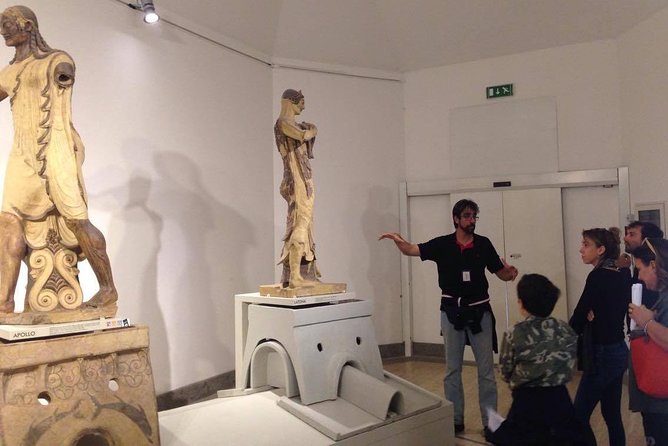
This experience is booked as a private tour/activity, meaning only your group participates. That sounds like marketing until you feel what changes: your guide isn’t rushing to keep a schedule for a big group, and you aren’t waiting your turn to ask something you noticed.
The format also matters because it supports curiosity. You can spend extra time on the objects that catch you, instead of racing through rooms. If you’re the type who wants to know what a tomb symbol means or why an artifact is so famous, this setup is built for that.
The reviews back up what you can expect from the guide experience, including that Vincenzo is lively and goes above and beyond to explain what you’re seeing. That style can turn a museum visit from passive viewing into active learning, especially for a civilization like the Etruscans, where details connect across art, burial customs, language, and trade.
Entering the Museo Nazionale Etrusco di Villa Giulia: what you’ll actually cover
The tour centers on one main stop: the Museo Nazionale Etrusco di Villa Giulia. It’s approximately 2 hours, and the entry ticket is included. So you’re not stuck coordinating extra payments or figuring out timed entry on your own.
As you move through the museum, you’ll run into sections that widen the frame beyond just pretty objects. There are areas dedicated to:
- Etruscan epigraphy (inscriptions and writing-related material)
- the history of the museum
- the architectonic complex of Valle Giulia
Even if you don’t read Etruscan, seeing epigraphy in context helps you understand that this culture wasn’t only about sculpture and tombs. It had a written world too. And when your guide connects the museum’s layout to what you’re seeing, it’s easier to remember facts instead of letting details blur.
A practical note on museum pace
If you choose a morning slot, you’ll likely get a calmer start and more energy for looking carefully. If you choose an afternoon slot, you’ll still have the same private structure, but plan your other Rome plans accordingly so you don’t stack back-to-back long walks right before or after.
The must-see Etruscan objects your guide will point out
This is where the tour becomes more than logistics. You’re led to a set of notable highlights, so you don’t waste your effort wandering blindly.
Here are some of the specific pieces you can expect to encounter:
You can also read our reviews of more museum experiences in Rome





Apollo from Veio (sixth century BC)
You’ll spend time with the Apollo from Veio, dated to the sixth century BC. A guide’s role here is key: mythology and art style can look “universal” until someone shows you what makes this Apollo Etruscan and connected to a specific place and era. You’re not just looking at a figure. You’re learning what that figure represents in the broader Etruscan story.
Sarcophagus of the Spouses from Cerveteri (sixth century BC)
The Sarcophagus of the Spouses from Cerveteri (sixth century BC) is another highlight that draws many visitors. If burial art is your thing, this is the kind of object that lets you connect symbolism to emotion. Even without getting lost in translation details, you’ll have context for why tomb-related art matters so much in Etruscan culture.
Pyrgi: high relief and golden thin sheets (fifth century BC)
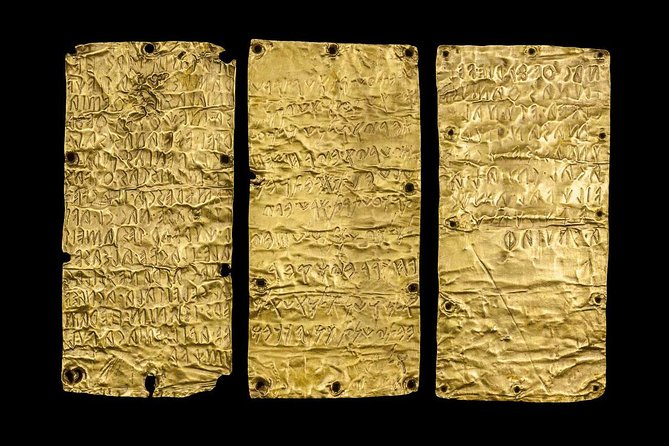
You’ll also see works connected to Pyrgi (fifth century BC), including high relief and the golden thin sheets. Golden details sound straightforward until you understand what they imply: materials, craftsmanship, and connections between places. A good guide helps you see these aren’t just decorations; they reflect how information and status traveled.
Apollo dello Scasato from Falerii (fourth century BC)
Another standout is the Apollo dello Scasato from Falerii (fourth century BC). Apollo figures can look similar at first glance, but comparing versions across centuries and locations is where learning clicks. Your guide can help you notice what changes as time moves forward.
Centaur from Vulci (sixth century BC)
The Centaur from Vulci (sixth century BC) is a great reminder that Etruscan art doesn’t live in a single mode. This kind of hybrid figure gives you a chance to talk about storytelling, influence, and how animals and myth could function in visual language.
Cista Ficoroni from Palestrina (fourth century BC)
Finally, there’s the Cista Ficoroni from Palestrina (fourth century BC). It’s the sort of object that can be easy to overlook if you’re scanning too quickly. In a private setup, you can pause long enough to understand why an object like this gets attention: it’s not only about what it looks like, but what it reveals about everyday life, ritual, or identity through art.
Why the private Q&A time changes your museum experience
Museums are easier to enjoy when someone helps you build a mental map fast. The private tour format gives you that advantage because the guide can answer your questions as they come up.
What I like about having that freedom is simple: it saves you from doing homework during your trip. You don’t need to read an encyclopedia in advance just to ask, Wait, what am I looking at? Or, Why does this object matter?
And since this tour is designed around unlimited time to ask questions, you’re more likely to leave with connections you can explain. For a culture like the Etruscans, where sites, artifacts, and themes all connect, that matters.
Also, the guide style described in the experience feedback—especially Vincenzo’s lively, passionate approach—can help you focus on meaning, not just dates. You end up picturing the people behind the artifacts as a real society, not a textbook chapter.
Morning vs. afternoon: how to pick the best time in Rome
You have a choice of morning or afternoon tour time. That flexibility is genuinely useful in Rome because your day can swing based on weather, crowds, and how you feel after walking.
- If you’re fresh and want a calm start, pick the morning slot.
- If you want your mornings for other must-sees and prefer a later museum rhythm, choose the afternoon slot.
Either way, the tour stays on its main target: the museum collection. You’re not adding extra transit or extra sites, and the tour ends back at the meeting point.
Price and value: when $138.18 per person makes sense
The price is $138.18 per person for a roughly 2-hour private guided experience. The value comes from what’s included, not from the headline cost.
Included in the tour:
- admission tickets
- a local guide (professional guide)
Not included:
- hotel pickup/drop-off
- private transportation
So what are you really paying for? Access plus interpretation, with the time and attention that usually cost more when you’re trying to book individual museum advising. If you’re traveling as a small group, this can feel like the sweet spot: one guide, two hours, and you’re inside the museum with support.
You may also see group discounts, depending on how you book and how many people are in your group. If you’re splitting with friends or family, this is the kind of experience that benefits from pairing up.
One more timing point: this tour is booked on average about 38 days in advance, which is a strong hint that it’s popular. If you have firm travel dates, don’t wait until the last week.
Logistics that actually matter at Villa Giulia
The meeting point is the National Etruscan Museum of Villa Giulia, Piazzale di Villa Giulia 9, 00196 Rome. The tour ends back at the same meeting point, so you won’t be dropped somewhere new.
It’s also listed as being near public transportation, which is useful if you want to keep your day flexible and avoid thinking about parking or complicated rides. Since hotel pickup and private transport aren’t included, plan to arrive on your own.
For timing, think of it like this: you’re trading an amount of time for clarity. If you show up and rush, you might miss the connections. If you slow down even a little because you have a guide and Q&A time, you get more out of the same two hours.
Who should book this private Etruscan museum tour
This works best if you:
- want a private guide instead of a packed group lecture
- like museums where the guide helps connect objects to a bigger cultural picture
- want extra time to ask questions about artifacts and themes you notice
- care about Etruscan art across different places and centuries (Veio, Cerveteri, Pyrgi, Vulci, and more)
It may be less ideal if you:
- want a full-day Rome itinerary with multiple stops
- prefer completely self-guided museum wandering
- need hotel pickup included in the price
If you’re on the fence, the decision comes down to this: do you want help learning as you go? If yes, this is the setup that makes that easy.
Should you book the Private Tour – National Etruscan Museum?
I’d book it if you want your Etruscan visit to feel intentional. The museum is focused, and the tour format is built for questions and pacing, so you’re not stuck rushing through highlights you don’t fully understand.
Book it especially if you’ll appreciate a guide who takes the time to make the culture feel real—like the lively, above-and-beyond style described with Vincenzo. For a two-hour museum experience with tickets included, it’s a solid value when you want more meaning than a quick scan.
Skip it (or pair it) if you’re looking for a long multi-stop tour or you prefer going fully on your own. In that case, you might still enjoy the museum a lot, but you’ll lose the tailored explanation and the chance to steer the conversation.
FAQ
How long is the Private Tour – National Etruscan Museum?
The tour lasts about 2 hours.
What language is the tour offered in?
It is offered in English.
Is the tour private?
Yes. It’s a private tour/activity, and only your group participates.
What’s included in the price?
Tickets, a local guide, and a private tour with a professional guide are included.
Are admission tickets included?
Yes, admission tickets are included.
Where do we meet for the tour?
The meeting point is the National Etruscan Museum of Villa Giulia, Piazzale di Villa Giulia 9, 00196 Roma RM, Italy.
Is hotel pickup included?
No, hotel pickup and drop-off are not included.
Do I need private transportation to get there?
Private transportation is not included. You can get there using public transport since it is near public transportation.
What time options do you have?
You can choose a morning or afternoon tour time.
What is the cancellation policy?
You can cancel for a full refund up to 24 hours before the experience’s start time.