REVIEW · ROME
Rome: Trastevere and Roman Ghetto Guided Walking Tour
Book on GetYourGuide →Operated by Rome - Tour · Bookable on GetYourGuide
One neighborhood, two very different sides of Rome.
I like this tour because it moves fast enough to feel energizing, yet slow enough for real explanations. You’ll start in Trastevere, then shift into the Roman Ghetto for a more sobering story of survival and memory, all capped with a major ancient landmark.
Two things stand out right away. First, the stops are chosen for meaning, not just photos: Santa Maria in Trastevere’s 12th-century mosaics and fountain, then the Great Synagogue area, and finally the Theatre of Marcellus dating back to 13 BC. Second, the guide style matters a lot here, and you can feel it in how guides like Estefi, Celia, and Sarah keep the walk engaging and question-friendly.
One drawback to plan for: it’s not suitable for people with mobility impairments or wheelchair users, and you’ll be walking continuously for about 2 to 2.5 hours. If you get tired easily or need frequent breaks, you’ll want to think ahead about pace and water.
In This Review
- Key points to know before you go
- Piazza Mastai: where the walk starts and how to find your guide
- Trastevere’s Piazza Santa Maria: mosaics, fountain, and medieval calm
- Piazza Trilussa and Campo de’ Fiori: local street life with an informed lens
- Entering the Jewish Ghetto: the Great Synagogue and stories you won’t forget
- Theatre of Marcellus: finishing in ancient scale and big-city perspective
- Guides, pace, and group size: why the $41 value feels real
- What to bring (and how to make the walk feel easier)
- Should you book this Rome Trastevere and Roman Ghetto guided walk?
- FAQ
- Where is the meeting point for the tour?
- How long does the guided walking tour take?
- Are headsets included?
- What languages is the tour offered in?
- Is the tour suitable for wheelchair users or limited mobility?
- What should I bring with me?
Key points to know before you go
- Small, guide-led feel: headsets are included only if the group is over 10, so smaller groups can feel more personal.
- Trastevere highlights in a tight route: Santa Maria in Trastevere, Piazza Trilussa, and Campo de’ Fiori are close enough to cover without rushing.
- Jewish Ghetto with specific architecture: you’ll encounter the Great Synagogue of Rome as a strong visual symbol tied to the area’s past.
- A well-timed historical sequence: you move from medieval church beauty to market-life squares, then into Jewish history, then back to ancient Rome.
- Guides bring context, not just facts: names like Estefi, Celia, and Giuseppe come up for their clarity and easy, fun delivery.
Piazza Mastai: where the walk starts and how to find your guide
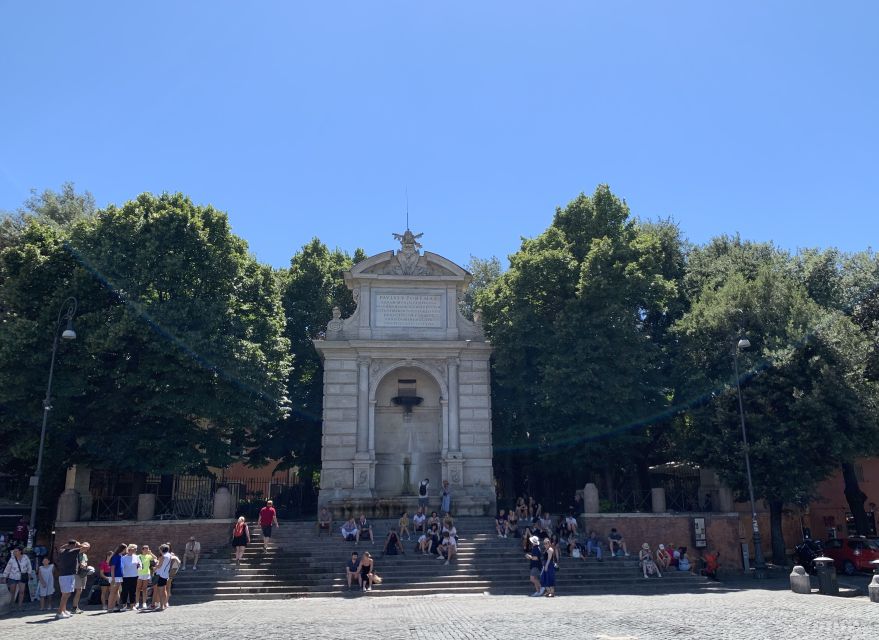
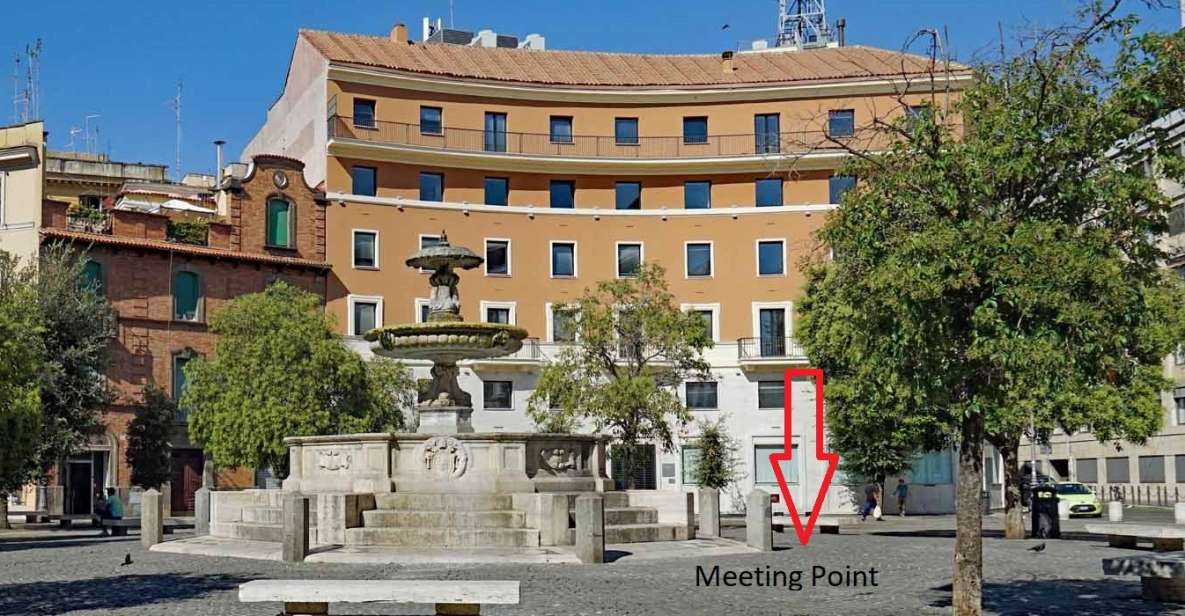
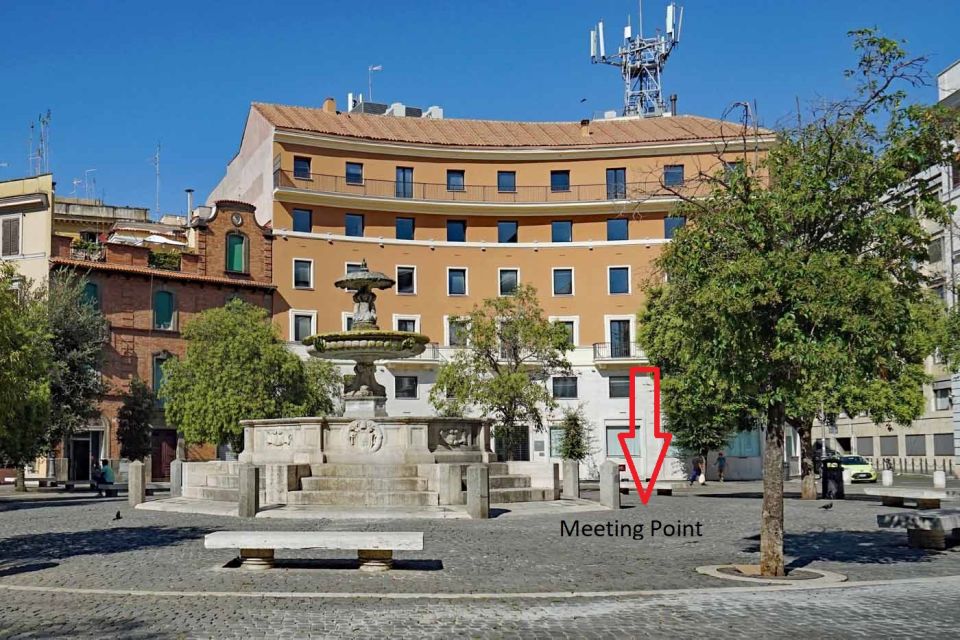
Your adventure starts at Piazza Mastai, a good choice because it’s the kind of spot where you can quickly orient yourself. The guide meets you around the main fountain and arrives about 15 minutes early, holding a sign with the tour name.
That small detail helps in Rome. Meeting points can be tricky when streets look similar and landmarks blend together. Here, the fountain reference is clear, and the early arrival gives you a buffer if you’re a few minutes late.
This tour is also a smart pick if you want structure without a rigid, timed museum feel. You’ll be walking through recognizable squares and landmarks, guided the whole way, so you’re less likely to wander off-course or miss key connections between neighborhoods.
Before you go, I’d recommend you show up with a simple plan for your first 30 minutes: water ready, sunscreen if it’s warm, and comfortable shoes. You’re about to cover multiple squares close together, and Rome’s cobblestones can punish sloppy footwear.
You can also read our reviews of more walking tours in Rome



Trastevere’s Piazza Santa Maria: mosaics, fountain, and medieval calm
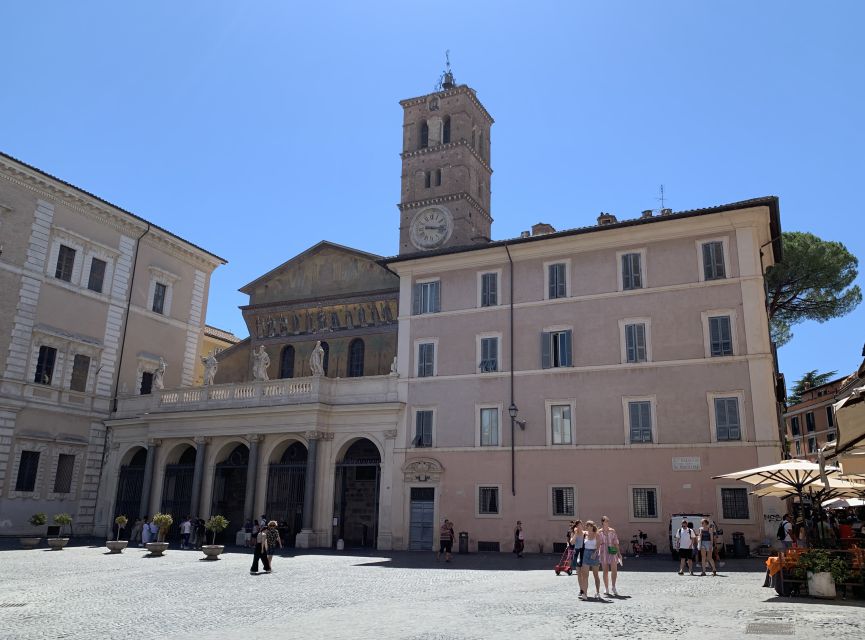
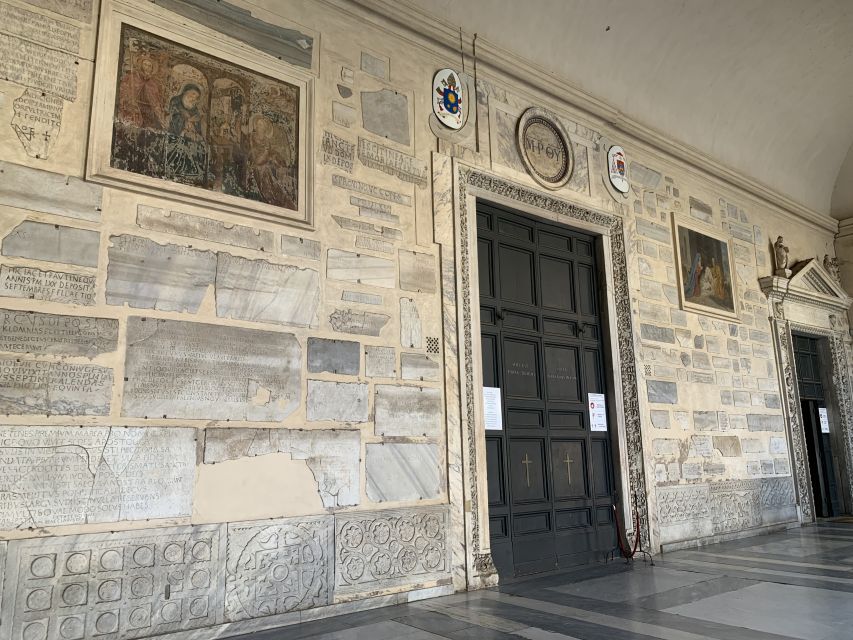
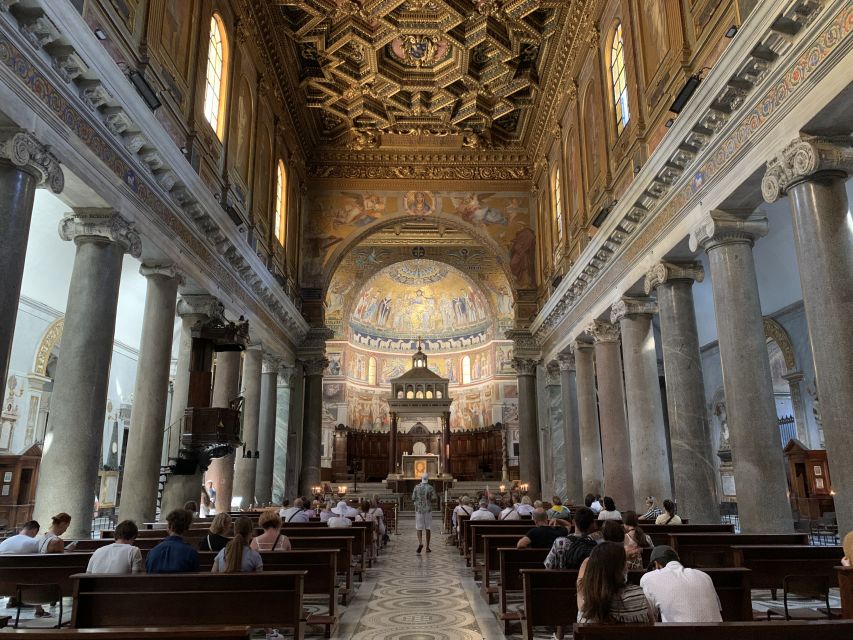
The tour’s first big architectural moment is Piazza di Santa Maria in Trastevere, where you’ll see the Basilica of Santa Maria, dating to the 12th century. The key draw here isn’t just the building. It’s what you notice inside the experience: captivating mosaics and a serene fountain right in the center.
Santa Maria is a great “tone-setter.” Trastevere is often associated with a lively, bohemian atmosphere, but this stop slows things down. It gives your eyes something beautiful to latch onto before you move into busier squares.
Practically, this is also a good place to get your bearings. You’ll understand the style of Rome you’re about to see: layered stonework, religious art, and small urban details that you’d normally walk past without a guide.
One more reason I like this first stop: it helps you understand why Trastevere feels different from other Roman areas. It isn’t only about streets and vibes—it’s about how architecture shapes the mood of a neighborhood.
Piazza Trilussa and Campo de’ Fiori: local street life with an informed lens
Next comes Piazza Trilussa, named after the Roman satirical poet Carlo Alberto Salustri, known as Trilussa. This square is a people-watching stop. You’ll pick up the rhythm of the area—street performers, everyday motion, and that lived-in Rome feeling that doesn’t show up in guidebook-only visits.
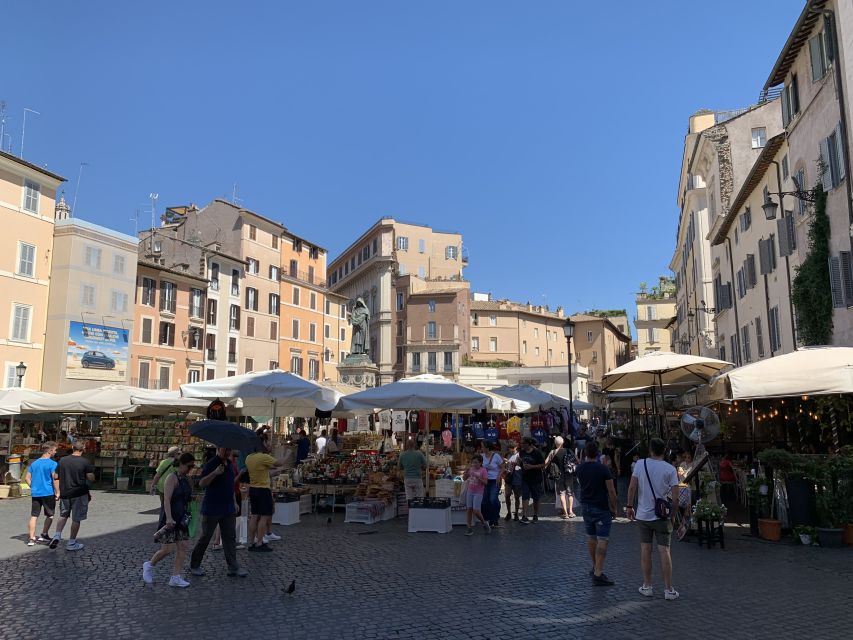
Then you move to Campo de’ Fiori, another key square that balances history with daily activity. The tour frames it as a place with a strong Roman past and a market atmosphere, which is exactly how you should experience it: as a square that has always had a role in city life, not just a pretty stop on a route.
If you like tours that explain how a place works—where people gather, why squares matter, and what you’re actually looking at—this middle stretch is one of the best parts. It’s also a natural moment to grab a quick drink or snack, since the walk is still manageable and the pace stays relaxed.
A small planning note: if you’re visiting on a hot day, squares like these can feel exposed. One tip from the guide style shown in past groups: shade breaks and pacing matter, and the tour tends to take that into account.
Entering the Jewish Ghetto: the Great Synagogue and stories you won’t forget
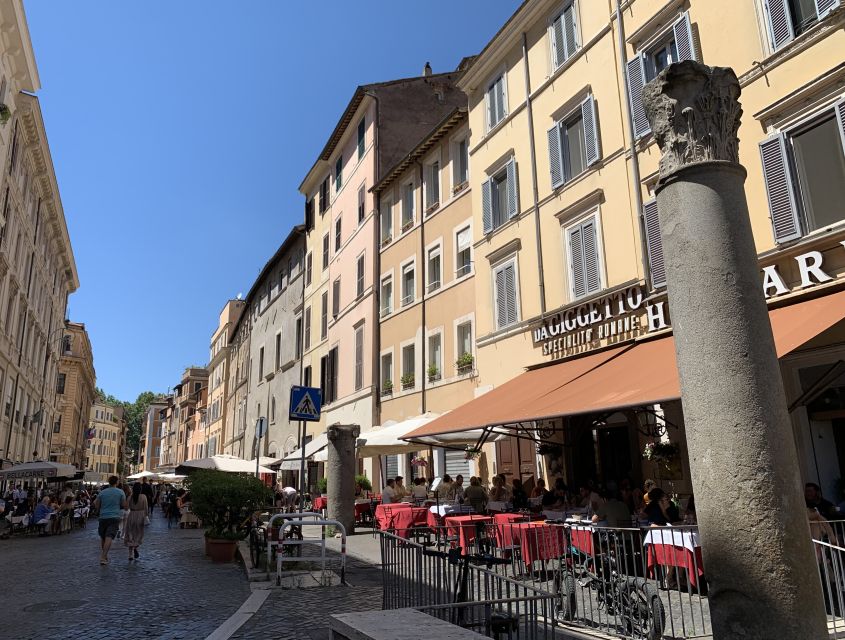
This is the emotional centerpiece of the walk. The tour enters the Jewish Ghetto, where you’ll hear stories that connect the neighborhood to centuries of hard history. You’re not just looking at buildings; you’re being guided through meaning—what the community endured, and what that endurance looks like in the city.
The specific highlight here is the Great Synagogue of Rome, presented as an architectural marvel and a symbol of strength and resilience. Even if you’re not studying architecture, having a guide point out what makes a structure significant helps you slow down and see it as more than a backdrop.
Guides like Estefi and Fabiano are praised for depth in this section, and that matters. The Jewish Ghetto isn’t a place where a quick, surface explanation feels satisfying. You want context that respects the weight of the subject while still making the walk feel human and understandable.
Also, don’t treat this part as a separate attraction. The route is built to connect. Coming from Trastevere squares into the Ghetto helps you feel how Rome can hold different realities within short distances.
One practical consideration: plan for the emotional shift. If you’re the type who likes to keep moving without getting overwhelmed, this section is still manageable, but it does carry more gravity than the lighter square stops.
Theatre of Marcellus: finishing in ancient scale and big-city perspective
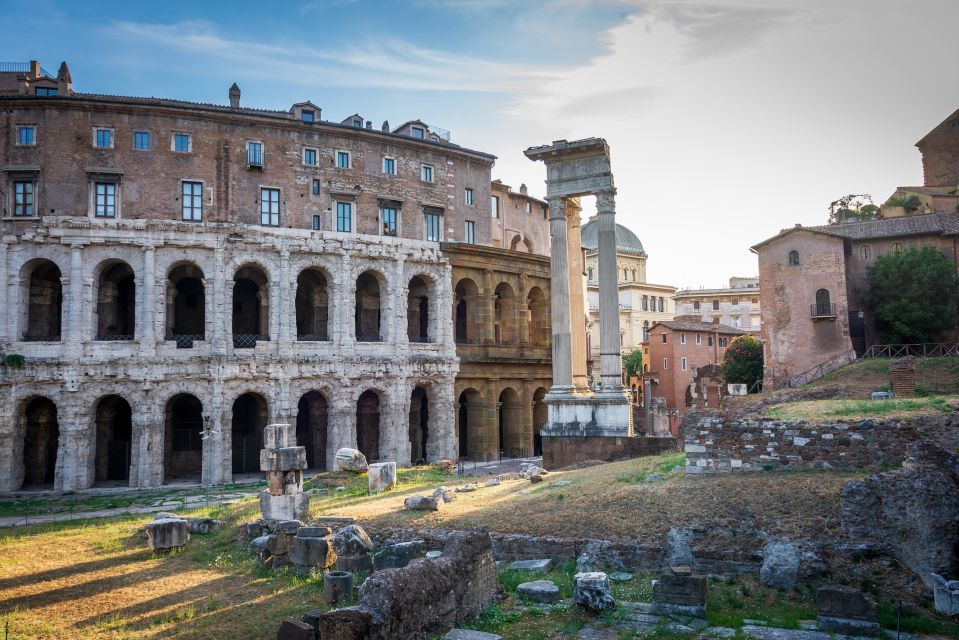
The final landmark is the Theatre of Marcellus, an ancient amphitheater dating to 13 BC. Ending here is smart, because it snaps you back to the scale of ancient Rome and the way old structures continue to shape modern streets.
This stop works especially well after the Ghetto. You’ve just been thinking about community, survival, and memory. Now you’re looking at Rome’s long timeline—how the city keeps reinventing itself while preserving traces of what came before.
Even in a short stop, a guided explanation can change what you notice. Instead of seeing ruins as a generic photo, you start looking at size, form, and how theater architecture influenced public life.
By the time you reach Marcellus, the tour’s pacing feels like it’s doing its job: you don’t just collect landmarks, you get a sequence. That sequence is part of why people rate this tour highly—Cecelia, Giuseppe, and Sarah are all called out for helping the walk feel smooth and meaningful.
You can also read our reviews of more guided tours in Rome






Guides, pace, and group size: why the $41 value feels real
At $41 per person for about 2 to 2.5 hours, this tour is priced like a solid guided experience rather than a long, museum-heavy day. The value comes from three practical things.
First, you’re getting a guided walk across multiple distinct areas. You’re not paying only for one stop; you’re paying for someone to connect the dots between Trastevere, the Ghetto, and ancient Rome.
Second, you get headsets if the group is larger than 10. That matters because you’re outside, in open squares, where voices can be swallowed by street noise. If you end up in a smaller group, you’ll likely enjoy an easier back-and-forth with your guide (and past groups have been small).
Third, guide quality shows up repeatedly in feedback: Estefi, Celia, Estafania, Sarah, and Giuseppe all get credit for clarity, friendliness, and keeping things relaxed. Some guides even help with practical extras like food recommendations and photos, which can turn a short tour into a better-than-expected memory.
Pace is another big deal. This is not an all-day marathon. It’s designed to feel like a focused stroll. One review mentioned a moment for coffee and juice in the market, which tells me the tour doesn’t treat everything like a sprint.
If you hate long standing in groups, you’ll probably prefer this shorter format. If you love asking questions, it’s also a good match, since the route stays walkable and the stops are spaced enough to absorb explanations.
What to bring (and how to make the walk feel easier)
The tour keeps things simple, and that’s good. Bring water (and a reusable bottle if you have one). Rome can be warm, and you’ll be moving for a couple hours with several outdoor pauses.
Wear comfortable shoes with decent grip. You’ll be walking between squares, and old-city surfaces can be uneven. If you’re sensitive to heat, plan shade breaks and start the tour with sunscreen already on.
Also, come ready for two different vibes in the same outing: the lighter atmosphere of Trastevere squares and the more serious tone of the Jewish Ghetto. That shift is part of why this tour works, but it helps to mentally prepare so you can actually enjoy it.
Finally, if you need a restroom, plan to ask your guide or look for the nearest option in advance. One piece of feedback specifically calls for adding a WC visit in the middle, so you shouldn’t assume there will be a dedicated stop.
Should you book this Rome Trastevere and Roman Ghetto guided walk?
Book it if you want a short Rome outing that feels like more than sightseeing checkboxes. This is a good choice for your first days in the city, or anytime you want a guided route that mixes neighborhood life, architecture, and Jewish history without turning into an all-day commitment.
I’d especially recommend it if you:
- enjoy walking tours where the guide explains meaning, not just dates
- want both Trastevere’s squares and the Jewish Ghetto in one trip
- like structured pacing with a relaxed feel
Skip or reconsider if you:
- need wheelchair-accessible routes or mobility support (this one isn’t suitable)
- can’t handle 2 to 2.5 hours of continuous walking
- prefer tours that focus only on lighter subject matter
If you do book, do one smart thing: go with curiosity. The best part of this tour is how the guide helps you read Rome. One square at a time, you start seeing the city as a layered story.
FAQ
Where is the meeting point for the tour?
You meet in Piazza Mastai, around the main fountain. Your guide waits about 15 minutes early and holds a sign with the tour name.
How long does the guided walking tour take?
The tour lasts about 2 to 2.5 hours.
Are headsets included?
Yes. Headsets are included if the group is more than 10 people.
What languages is the tour offered in?
The live guide is available in Spanish, French, and English.
Is the tour suitable for wheelchair users or limited mobility?
No. The tour is not suitable for people with mobility impairments or wheelchair users.
What should I bring with me?
Bring water. A reusable water bottle is also suggested.