REVIEW · ROME
Jewish Ghetto Walking Tour with gelato
Book on GetYourGuide →Operated by Vitus · Bookable on GetYourGuide
A neighborhood walk that tells you how Rome changed. This Jewish Ghetto walking tour pairs ancient landmarks with stories of a community that endured, survived, and rebuilt. You’ll cover sites tied to daily life and big moments of history, from the Theater of Marcellus to the Great Synagogue area.
I especially like two things. First, the way the tour connects architecture you can actually see today to the pressures that shaped this quarter. Second, the stop for homemade kosher gelato, where you get practical advice on choosing the real flavors.
One drawback to plan for: you’re on your feet for a solid 3 hours, and the route includes uneven historic areas. Bring good walking shoes and water.
In This Review
- Key things you’ll notice on this tour
- Why Rome’s Jewish Ghetto walk matters on a guided route
- Meeting point and making sense of the 3-hour flow
- Quick tip for comfort
- Theater of Marcellus and the Portico d’Ottavia: seeing Rome’s age stack up
- Homemade kosher gelato: a real break that still fits the story
- What to expect during the gelato stop
- Piazza Mattei and the Turtle Fountain (Fontana delle Tartarughe)
- The last wall piece, the Great Synagogue, and what the guide connects
- Tiber Island: WWII stories and the Asclepius site now as a church
- Crossing the oldest functioning bridge in Rome
- Price and value: what $46 buys you
- Who this walking tour suits best (and who may prefer another plan)
- Should you book this Jewish Ghetto walking tour with gelato?
- FAQ
- How long is the Jewish Ghetto walking tour with gelato?
- Where does the tour start and where does it end?
- What’s included in the ticket price?
- Is the gelato kosher and homemade?
- Do I need to bring anything for the sacred sites?
- Are there any photography rules?
- Is the tour wheelchair accessible?
- Is there a charge for entrance fees to sites?
Key things you’ll notice on this tour
- Jewish Ghetto history tied to places you can still visit, not just vague background
- Big Roman landmarks like the Portico d’Ottavia mixed into the neighborhood story
- Homemade kosher gelato at a local gelateria, with tips for tasting the best texture and flavor
- Piazza Mattei’s Fontana delle Tartarughe as a fun break in the middle of heavy history
- Tiber Island stories, including WWII rescue efforts and the Asclepius site now used as a church
- The oldest functioning bridge in Rome as a memorable crossing and a natural story transition
Why Rome’s Jewish Ghetto walk matters on a guided route
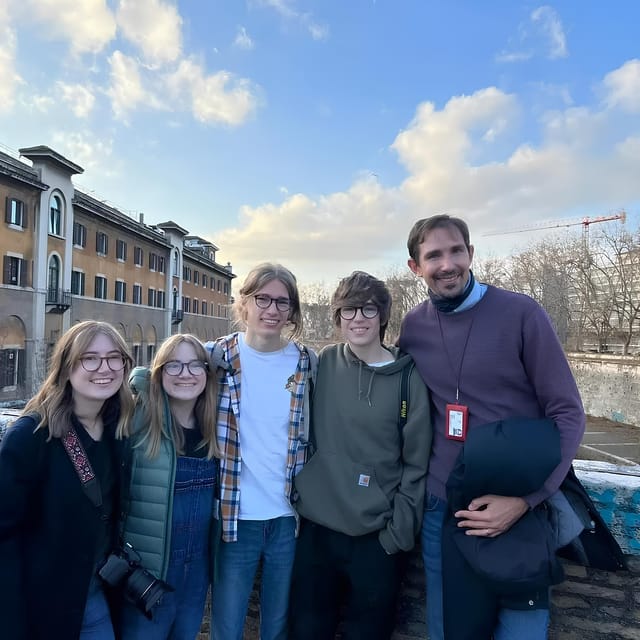
Rome’s Jewish Ghetto isn’t just a “historic district” on a map. It’s a place where rules, risk, and resilience show up in real streets, real walls, and real buildings you pass by every day.
On this tour, the guide keeps linking the past to what you’re standing next to. You’ll see structures like the Theater of Marcellus and the Portico d’Ottavia, then move into the Ghetto area where the story turns more personal. That structure makes the history easier to hold onto.
The best part is the human angle: the tour focuses on the turmoil and the ongoing strength of Rome’s Jewish community. You’ll also hear about WWII-era lifesaving at a hospital connected to the island, which changes how you think about these calm-looking corners.
You can also read our reviews of more walking tours in Rome



Meeting point and making sense of the 3-hour flow
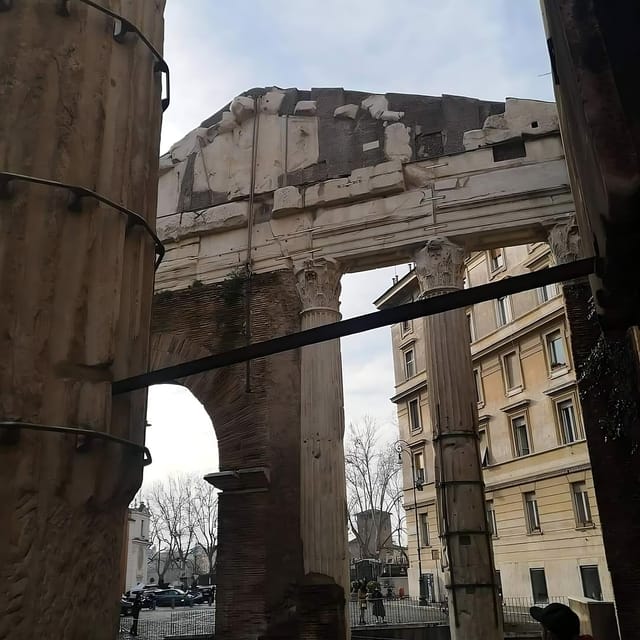
The tour is listed as a 3-hour walking experience. The starting details include both Trajan’s Column as a meeting reference and an operational start at Piazza S. Bartolomeo All’Isola, 22, in front of a church, with the route built around reaching the Ghetto area and finishing near Piazza Venezia. Because meeting-point text can vary by departure, I’d confirm the exact spot in your booking message.
What you should plan for is simple: you’ll walk from central Rome through the Ghetto zone, then cross over toward Tiber Island. The pace is designed so you can see key stops without turning it into a sprint.
The itinerary sequence is built around a natural “history chain.” You start with major ancient backdrops, pause for gelato, take in Piazza Mattei and its Turtle Fountain, then continue through the synagogue area, ending on Tiber Island with the closing stories.
Quick tip for comfort
Wear comfortable shoes and carry water. The places you visit are historic, so expect cobbles and small changes in level.
Theater of Marcellus and the Portico d’Ottavia: seeing Rome’s age stack up
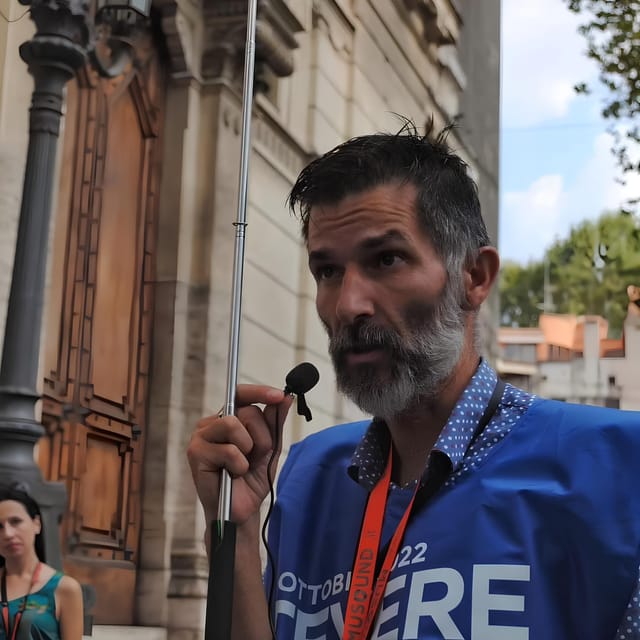
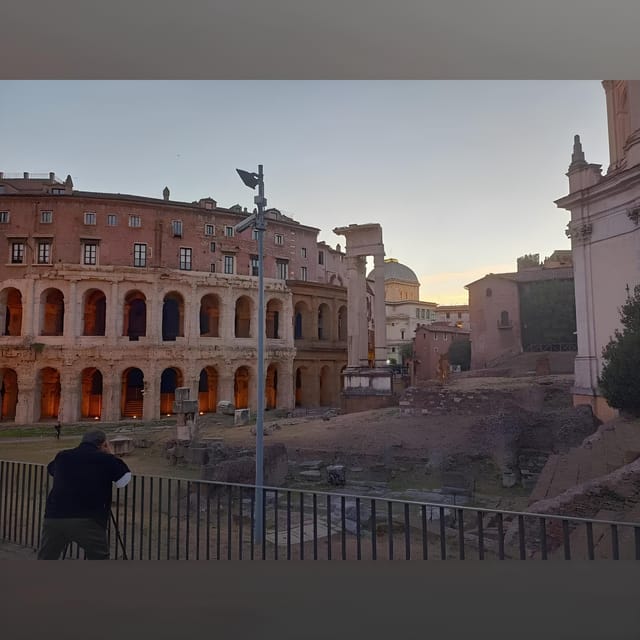
Rome has a talent for making everything look old, but this part helps you understand what old actually means. You’ll pass the Theater of Marcellus, one of the huge ancient reminders that this city has been rebuilding itself for thousands of years.
Then the tour heads toward the Portico d’Ottavia, an ancient structure still used today. Even from a distance, porticos are good “story spaces.” They help you picture how people moved, met, and lived around public architecture.
Why this matters for the Jewish Ghetto story: you get context before you get specific. The guide doesn’t treat the Ghetto as an isolated bubble. Instead, it’s framed as part of Rome’s larger urban engine—same city, different rules over time.
If you like history that’s tied to what you can actually see, this Roman-to-Ghetto transition is one of the smartest ways to experience the area.
Homemade kosher gelato: a real break that still fits the story
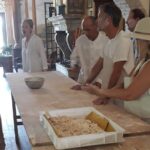
At some point, your guide takes you to a gelateria for homemade kosher gelato. This isn’t just a sugary pause. It’s a moment of everyday life, which helps balance the heavy parts of the tour.
One useful tip I’d take with you: ask for or look for the real gelato texture—often described as raw gelato—because it’s tied to the true flavors rather than just sweetness. A local guide perspective can make this stop more informative than you’d expect.
Practically, it’s also one of the best mid-tour resets. You’ll have a short sit-and-savor moment before heading back out toward Piazza Mattei and the synagogue area.

What to expect during the gelato stop
You’re not just handed a cone and sent off. The guide will keep you oriented so you know where you are in the story as you go from the ancient streets to the Ghetto and beyond.
Piazza Mattei and the Turtle Fountain (Fontana delle Tartarughe)
Piazza Mattei is one of those places that feels like it belongs in a postcard, but it works beautifully in the middle of a history walk. The star is the Fontana delle Tartarughe, known for its turtle-themed fountain design.
The reason this stop hits is the pacing. After you’ve learned about restrictions and the emotional weight of the neighborhood, the fountain gives you something lighter to focus on. It’s also a clear visual landmark, so you can keep track of where you are geographically.
If you like taking photos, this is the moment people usually enjoy most—just remember that flash photography is not allowed in certain areas, so use normal light and your phone’s regular camera settings.
The last wall piece, the Great Synagogue, and what the guide connects
As you walk deeper into the Ghetto area, you’ll see the last remaining section of a wall that once kept the community in this place for centuries. That physical remnant is the kind of detail that can feel small until the guide explains what it meant day to day.
You’ll also pass by the Great Synagogue. The tour uses that area to explain more about the Ghetto’s turbulent past and the community’s resilience. Even if you already know a few facts, the guided framing helps you understand why the neighborhood layout and the architecture matter.
This is also where the tour tone can shift from informative to reflective. The guide brings the story into focus while you’re still moving, which prevents the experience from turning into a lecture you tune out.
Tiber Island: WWII stories and the Asclepius site now as a church
Next comes the move onto Tiber Island, and the stories get even more cinematic. The tour includes information about a hospital saving people during WWII, which adds a powerful layer to what can look like peaceful island scenery.
You’ll also hear the story of Asclepius at the temple, and how that ancient site is now a church. That kind of continuity is one of the reasons Rome stays so watchable for me. A site can carry meaning across centuries, even when the labels change.
The guide ends the tour here on the island with the final context tying the whole loop together. It’s the kind of finish that makes you look at the landscape differently when you walk away.
Crossing the oldest functioning bridge in Rome
One of the tour’s most satisfying “movement moments” is crossing the oldest functioning bridge in Rome as you go onto Tiber Island. It’s a practical highlight and a story highlight at the same time.
Practically, you get a change of scenery and a clear boundary between what you saw on the mainland and what you’ll hear on the island. Story-wise, the bridge acts like a reset point. The guide uses that transition to steer you from the Ghetto history into the Tiber Island chapter.
If you like having structure in your travel days, that crossing is a built-in marker. You’ll feel like you’re progressing through the city rather than just ticking off stops.
Price and value: what $46 buys you
This tour costs $46 per person for about 3 hours, and that price includes a professional guide plus the homemade kosher gelato. Entrance fees to sites are not included, so your main “value” here is guidance and context, not skip-the-line access.
To judge whether it’s worth it, think about what you’re buying:
- A guided explanation of the Jewish Ghetto’s history tied to exact places you’ll pass
- A planned gelato stop that’s more than a casual snack
- A route that organizes ancient Rome + Ghetto + Tiber Island into one coherent walk
If you tried to self-guide, you could see the landmarks, but you’d likely miss the “why this matters” connections. The guide’s local perspective can help you spot details you’d otherwise overlook.
And one more value point: the experience description notes that it’s wheelchair accessible, yet it’s also marked as not suitable for wheelchair users and people with mobility impairments. That contradiction is exactly the sort of thing you should clarify before paying, so you don’t end up frustrated by the walking reality.
Who this walking tour suits best (and who may prefer another plan)
I’d recommend this tour if you want history that’s grounded in streets and buildings, not just museum facts. You’ll get a mix of Roman landmarks and the Jewish Ghetto narrative, plus a memorable payoff on Tiber Island.
It’s also a good choice if you like pauses. The gelato stop and the Turtle Fountain break the density of the story without undermining it.
You might want to skip or shop around if you can’t handle 3 hours of walking on uneven, historic surfaces. Even without a lot of steep climbs, the ground in this part of Rome can be unforgiving.
If your goal is quick photos and only a light explanation, a different short tour might fit better. This one is built for people who want the story to make sense.
Should you book this Jewish Ghetto walking tour with gelato?
Yes, I think you should book it if you value guided context and you want a route that connects ancient Rome to the lived experience of the Jewish community. The blend of major landmarks, a stop for homemade kosher gelato, and the WWII + Asclepius/Tiber Island finish makes it feel like more than a standard “walk and look.”
Just do two things before you commit: confirm the exact meeting point wording for your departure, and check suitability for your mobility needs given the accessibility notes. If that’s all clear, this is one of those Rome experiences where the city starts telling its story back to you as you walk.
FAQ
How long is the Jewish Ghetto walking tour with gelato?
The tour runs for 3 hours.
Where does the tour start and where does it end?
The starting details include Piazza S. Bartolomeo All’Isola, 22 with the meeting point described as in front of the church, and the tour description also references meeting at Trajan’s Column. The tour finishes at Piazza Venezia.
What’s included in the ticket price?
You get a professional live guide, a walking tour through Rome’s Jewish Ghetto, and homemade kosher gelato.
Is the gelato kosher and homemade?
Yes. The tour includes homemade kosher gelato at a local gelateria.
Do I need to bring anything for the sacred sites?
Yes. You should bring a head covering or kippah for visiting sacred places, along with comfortable shoes, water, hat, and sunscreen.
Are there any photography rules?
Flash photography is not allowed in certain areas.
Is the tour wheelchair accessible?
The activity info lists it as wheelchair accessible, but it also states it is not suitable for wheelchair users and people with mobility impairments. You should verify with the provider before booking.
Is there a charge for entrance fees to sites?
Entrance fees to any sites are not included.