REVIEW · ROME
Raphael and Caravaggio in the Roman Churches Private Tour
Book on Viator →Operated by Rome Italy Explora · Bookable on Viator
Caravaggio and Raphael, side by side in Rome. This private tour strings together some of the city’s most telling church masterpieces, with included entrance tickets and a private chauffeur to handle the moving around. I love the way the route forces you to compare styles in real settings, not in a book. I also like that the tour keeps you moving efficiently between four churches, with smart time blocks and clear explanations. One thing to consider: it’s still a church visit, so you’ll need to plan for the dress code (covered knees and shoulders) and the fact that some interiors are dim.
What makes this experience click is the contrast. You start in Santa Maria del Popolo, where a major decoration program pulled together top names from the 1500s. Then you go straight into Caravaggio’s world in the Contarelli Chapel at San Luigi dei Francesi, where the drama is all light, bodies, and emotion. In between, you get Raphael-related masterpieces and major Renaissance-to-Baroque architecture cues that help you understand why these artists ended up here in the first place. If you’re short on time in Rome but want more than the usual highlights, this format is a very practical win.
In This Review
- Key highlights you’ll feel on this route
- What You’re Really Paying For: Private, Focused, and Ticketed
- Santa Maria del Popolo: 1500s Art Power in a Church With a Legend
- Sant’Agostino and Caravaggio’s Madonna di Loreto
- Santa Maria della Pace: Baroque Theater Energy, With Raphael Nearby
- San Luigi dei Francesi and the Contarelli Chapel: Caravaggio’s Triptych in Real Light
- Timing, Listening, and Church Etiquette: How to Make It Feel Easy
- Who This Private Tour Is Best For (and Who Might Prefer Something Else)
- Final Verdict: Should You Book It?
- FAQ
- How long is the Raphael and Caravaggio in the Roman Churches private tour?
- What does the price include?
- Are tickets to the churches included?
- Is this tour private?
- Is there a dress code?
- Will I get help hearing the guide?
- Can I cancel for a full refund?
Key highlights you’ll feel on this route
- A four-stop arc that compares Renaissance grace with Caravaggio’s realism and dramatic light
- Chauffeured pickup and drop-off so you’re not juggling transit across Rome in a tight window
- Included church entrances across all four sites, so you spend less time queuing
- Caravaggio’s Contarelli Chapel triptych at San Luigi dei Francesi, explained as a set
- Raphael’s presence in multiple churches, letting you spot his influence beyond the Vatican
- Practical audio support may be used (headsets/radios were mentioned in feedback), which helps when churches get noisy or echoey
What You’re Really Paying For: Private, Focused, and Ticketed
At $656.87 per person for about 3 hours, this isn’t a budget walk. But it’s also not overpriced in the way tours can be when they only cover a short distance with no extras. You’re paying for three things that matter in Rome:
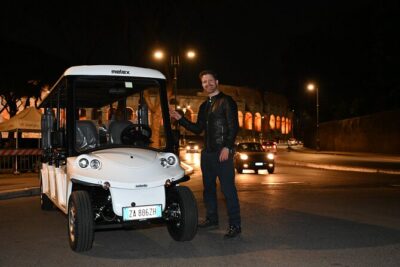
First, you get private pickup and drop-off with a luxury car and chauffeur. That’s a big deal in a city where hop-on/hop-off buses and taxis don’t always get you as close as you’d like to churches tucked into older neighborhoods.
Second, you get a private English-speaking tour escort and a professional guide on site. The difference shows up when you’re standing in front of paintings and someone can point out what to look for—composition, lighting, what the artist is choosing to emphasize, and what that says about the patron.
Third, entrances are included for the main stops. That saves you time and hassle, especially when church schedules and ticket lines can vary.
The pacing is also built for attention. Each stop is timed (roughly 20 minutes at the first three and longer at the final chapel). That keeps you from turning into a statue yourself, staring for 40 minutes at one panel and losing the bigger picture.
You can also read our reviews of more private tours in Rome
Santa Maria del Popolo: 1500s Art Power in a Church With a Legend
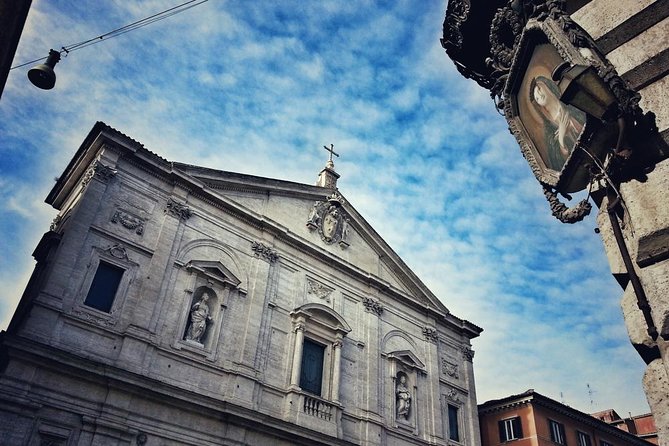
This first stop is a strong opener because Santa Maria del Popolo isn’t just a container for art—it’s a story place. The site has a legend attached: it was said to be haunted by the ghost of Nero, with a bewitched walnut tree full of crows on the burial ground. When Pope Paschal II ordered the tree cut down in 1099, the myth got interrupted—and later, the church became a stage for major Renaissance-era artists.
In the early 1500s, artists like Raphael and Caravaggio were among the influential names called on for decoration work in the church. That matters because you’ll see how artists weren’t just working in isolation. They were pulled into big collaborative projects tied to patrons, politics, and the desire to make religious spaces feel current.
What you’ll like here is the sense that this church has multiple layers: architecture first, then decoration, then specific artworks you’ll want to slow down for. The timing is short, so it helps if you go in ready to look for details rather than trying to read every inscription.
Possible drawback: because you’re only here for about 20 minutes, you won’t have the luxury of total wandering. If you want a museum-style experience with long stops and lots of quiet, you may feel a bit rushed.
Sant’Agostino and Caravaggio’s Madonna di Loreto
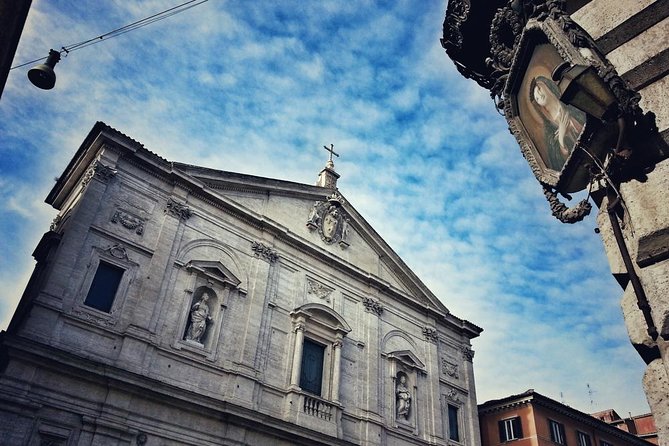
Then comes the jump from decorative programs into one of the defining Caravaggio subjects on the Roman church circuit: Sant’Agostino and the Madonna di Loreto.
This work was commissioned thanks to a legacy left by Ermete Cavalletti for the family chapel. The contract from 1603 also spelled out the devotion of the deceased Marquis to Our Lady of Loreto—meaning the patron didn’t just fund art. He shaped what the painting had to communicate.
Here’s why the image is interesting for your eye: Caravaggio’s Madonna di Loreto is described as more down-to-earth than the usual pattern. Instead of the Madonna enthroned and placed in a grand, angel-driven transport scene, she’s shown like a commoner in front of a doorway. She’s holding the well-lit Infant Jesus, who blesses.
That detail is the whole Caravaggio lesson in miniature: he takes sacred subjects and brings the sacred closer to ordinary reality. You’re not just looking at a religious symbol. You’re looking at people, light, and how attention gets directed.
In terms of how the visit feels, this is a smart second stop. By now, you’ve started noticing how Rome’s churches communicate through art programs, not just through single masterworks. This one helps you connect contracts, patrons, and a very specific iconographic choice—then moves you forward quickly.
Santa Maria della Pace: Baroque Theater Energy, With Raphael Nearby
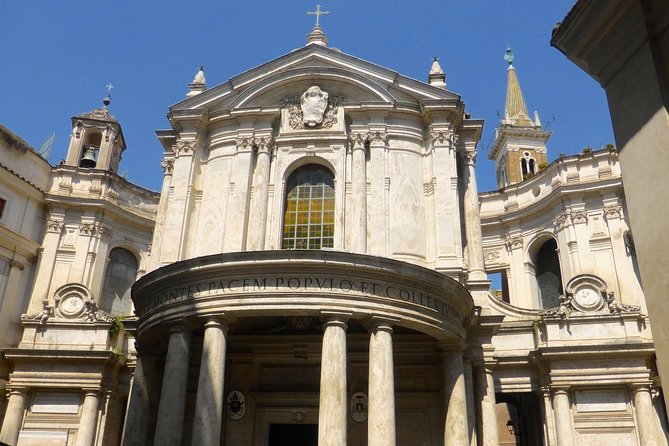
Next is Santa Maria della Pace, and this stop is great if you like architecture as much as paintings. The church sits on a medieval chapel site, and Pope Sisto IV commissioned the build in the late 1400s. Later, the church was rebuilt by Pietro da Cortona, whose façade includes a semicircular pronaos—an architectural move that signals how baroque Rome wants you to experience space.
What I like about this is the way the square around it works like a stage. The church plus its setting create a kind of controlled drama. It’s not the “walk in and stare” model. You notice angles, volumes, and how the façade frames what comes next.
Inside, the focus shifts back to art, and you’ll hear about major names tied to the church: masterpieces of Raphael and Maderno, plus the cloister of Bramante. Even if you don’t have time to study every corner, the guide’s job here is to make these names meaningful, not random labels. You’ll start to recognize how Renaissance and Baroque art don’t just “replace” each other—they overlap and respond.
Small practical consideration: this church is still active in a way that can affect your flow. Plan to stay aware of where you’re standing and when you’re stepping aside for others. With a guided pace, you’ll still have time to see what’s important.
San Luigi dei Francesi and the Contarelli Chapel: Caravaggio’s Triptych in Real Light
The last stop is the reason many people book this route: the Contarelli Chapel at San Luigi dei Francesi and Caravaggio’s triptych for San Matteo.
The chapel takes its name from Cardinal Mathieu Cointrel, Italianized to Contarelli, who commissioned Michelangelo Merisi (Caravaggio) with three altarpieces focused on St. Matthew. This is a moment where the guide’s explanation can really change how you read the paintings, because each panel is its own problem-solving exercise in composition and storytelling.
You’ll see the set as a triptych of:
- The Martyrdom of St. Matthew
- The Vocation of St. Matthew
- St. Matthew and the Angel
What makes this chapel special is that the descriptions you get aren’t generic. The Martyrdom panel is singled out as the first canvas Caravaggio created for this chapel, and it’s described as more overcrowded, with a tangle of bodies that pulls toward Mannerism—while the nudes still carry Michelangelo-like clarity. That kind of mix matters. It tells you Caravaggio wasn’t arriving fully formed. He was learning in public, composing, testing, and sharpening his approach.
Caravaggio’s fame often gets reduced to “dark paintings.” The practical takeaway from being here is the opposite: darkness is used to aim your attention. Light becomes a tool. Faces, gestures, and the direction of bodies become the evidence. In one piece of feedback tied to this kind of visit, people specifically noted how the interior darkness helps the paintings and their contrasts really pop.
Dress code note matters even more here. You’ll be standing still at the front in many churches, and you’ll want to be comfortable without violating the rules. Keep knees and shoulders covered, and you’ll avoid last-minute stress.





Timing, Listening, and Church Etiquette: How to Make It Feel Easy
This is a short, intense route by design. You’re not going to stroll Rome for hours. You’re going to focus.
Because the visits are timed, your best strategy is mental: treat each church like a chapter. When you arrive, quickly reset your expectations:
- In the first church, look for the overall art program and big ideas.
- In the next, focus on how a single subject gets interpreted.
- In the baroque church, watch the architecture and the way space sets mood.
- In the final chapel, concentrate on light, body language, and how the story unfolds across three paintings.
Audio support can help a lot. One review described receiving earphones and radios for clearer listening, which is a smart solution in churches where sound can bounce. If you get audio gear, use it right away and keep it accessible. It’s a small thing, but it affects whether you catch the key points when the guide is explaining from the front.
Also, keep your pace steady. These sites are near public transportation, but you still walk between points. Wear comfortable shoes you trust. You’ll be happier spending energy on the art instead of fighting your feet.
Who This Private Tour Is Best For (and Who Might Prefer Something Else)
This tour makes the most sense if you fall into any of these buckets:
You want quality explanations in a short time window. Rome is full of art, but church context is where it becomes coherent. This route puts Raphael and Caravaggio into a dialogue rather than treating them as separate bucket-list stops.
You prefer private comfort over group logistics. Chauffeured pickup, private time, and an English-speaking guide remove a lot of guesswork.
You’re okay with a church-focused experience. This isn’t a museum with long galleries and repeat visits built in. It’s art inside working spaces, so you need to be ready for etiquette and short viewing blocks.
You might want to consider another format if you’re the type who wants to linger quietly for a long time in each chapel. This route is efficient, not slow. It gives you the map and the highlights; it doesn’t pretend to replace a personal, unhurried day.
Final Verdict: Should You Book It?
I’d book this tour if you want a tight, high-impact way to see Caravaggio and Raphael in Roman churches without wasting your time on logistics. The included entrances and chauffeured transport make it feel like someone planned your day with the reality of Rome in mind. And the route works because it doesn’t just show famous works—it teaches you how to look at them by comparison: patronage, subject choices, composition, and the way light shapes emotion.
I wouldn’t book it if your top priority is maximum time in a single church or if you dislike structured pacing. This experience is designed to be a guided sequence. If that matches your travel style, you’ll get a lot out of it fast.
If you’re visiting Rome for a short stay and want your highlights to feel meaningful, this is a strong pick.
FAQ
How long is the Raphael and Caravaggio in the Roman Churches private tour?
It lasts about 3 hours.
What does the price include?
It includes pickup and drop-off with luxury transportation and a private chauffeur, a private English-speaking tour escort and professional guide, mobile ticket access, and entrance fees for the listed churches.
Are tickets to the churches included?
Yes. Entrance is included for Santa Maria del Popolo, Sant’Agostino, Santa Maria della Pace, and San Luigi dei Francesi (for the Contarelli Chapel).
Is this tour private?
Yes. Only your group participates.
Is there a dress code?
Yes. You need to cover your knees and shoulders to enter the churches.
Will I get help hearing the guide?
Audio equipment may be provided, such as headsets or radios, to help you hear clearly inside the churches.
Can I cancel for a full refund?
Yes, free cancellation is available if you cancel at least 24 hours before the experience starts.