REVIEW · ROME
Rome Undergrounds Full Day Guided Tour
Book on Viator →Operated by Rome-Limousines · Bookable on Viator
Underground Rome feels like time travel with better air-conditioning. This full-day guided route strings together several lesser-seen subterranean and transformed spaces, so you get a clearer picture of how Rome layered itself over centuries. I like that it includes guided context instead of just tickets, and I especially like the calm pacing that comes from a private group in spots many visitors skip.
What I like most is the way the day is built around key places with serious architectural stories. St. Clemente shows Rome stacked literally on top of itself, and the guide’s explanations of how each level evolved are the kind of detail you just don’t get from reading alone. I also like the practical comforts: bottled water, WiFi on board, and an air-conditioned car that keeps the day moving smoothly.
One consideration: the big ticket items are entry fees and lunch, and those aren’t included. So if you’re budgeting, you’ll want to plan for add-ons on top of the $378.16 per person price.
In This Review
- Key Highlights Worth Booking For
- Why Rome Undergrounds Feels Like a City-Building Lesson
- Private Pickup, Air-Conditioned Comfort, and a Guide You Can Actually Follow
- Basilica of San Clemente: Three Levels of Rome in One Building
- Catacombs of San Sebastiano: Early Christians Beneath the City
- Case Romane del Celio: When Homes Became Churches
- Santa Cecilia in Trastevere: Water, Crafts, and a Neighborhood Outside the Walls
- How the 7–8 Hour Schedule Actually Feels
- Price and Value: Does $378.16 Make Sense for This Day?
- Who Should Book This Underground Full-Day Tour
- Should You Book It or Keep It for Another Day?
- FAQ
- How long is the Rome Undergrounds Full Day Guided Tour?
- Is pickup included?
- Are entry fees included for the sites?
- Is lunch included?
- Is this a private tour?
- Can I cancel if my plans change?
Key Highlights Worth Booking For
- A private driver-guide means you can ask questions and set your own rhythm
- San Clemente’s layered building shows Roman mint space, then a later church, then a 12th-century rebuild
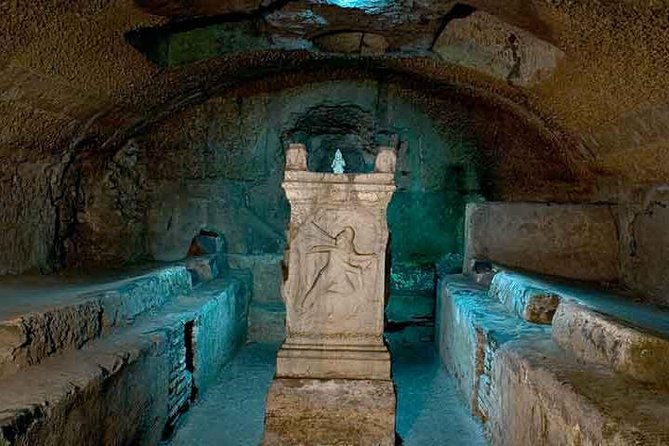
- Catacombs of San Sebastiano take you into early Christian underground burial networks across multiple levels
- Case Romane del Celio lets you see how wealthy Christian homes could transform into churches
- Trastevere’s Santa Cecilia connects the neighborhood’s water-and-crafts life with the basilica tradition
- Air-conditioned transport plus WiFi keeps a long day comfortable
Why Rome Undergrounds Feels Like a City-Building Lesson
Rome above ground gets the big applause: marble, piazzas, and the postcard stuff. Underground, the story changes. You start seeing Rome as a living stack—new eras built over older ones, sometimes after destruction, sometimes after neglect, sometimes because the city had to keep going.
This tour is interesting because it focuses on spaces that explain how everyday life and belief systems physically rearranged the city. You’re not just looking at monuments; you’re watching Rome’s materials, power, and community shift over time. And because the stops are not the most obvious headline attractions, the day tends to feel more about understanding than surviving crowds.
You can also read our reviews of more guided tours in Rome

Private Pickup, Air-Conditioned Comfort, and a Guide You Can Actually Follow
The format is simple: you start at 9:00 am and spend about 7 to 8 hours moving between sites, using a private air-conditioned vehicle with bottled water and WiFi on board. Parking fees are included, which matters more than it sounds when you’re trying to avoid time-wasting detours.
The guide is a major part of the value. In the past, this tour has run with Alessandro (and sometimes Alessandra) as the guide name you’ll see tied to excellent English and an easy-to-follow style. The common theme: the explanations are detailed, and you’re guided through what you’re looking at, not just marched past it.
That private-group setup is also practical. You can ask for clarification when you’re standing under an old surface that once had a completely different purpose. For many people, that’s the whole point of paying for a guided day like this.
Basilica of San Clemente: Three Levels of Rome in One Building
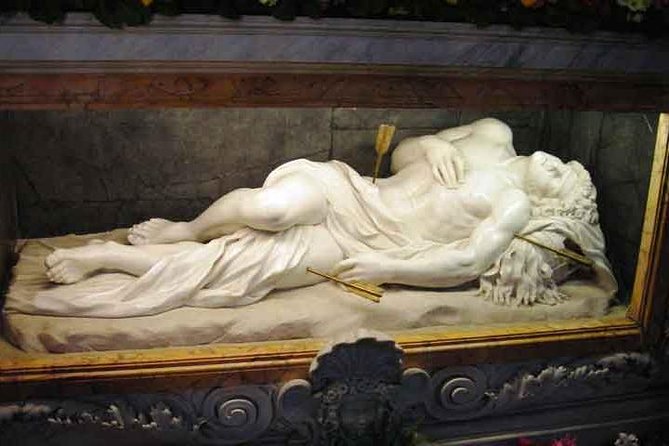
Stop one is the Basilica of San Clemente, and it’s famous for a reason. The building is described as a three-leveled structure that lets you see Rome in layers: an original Roman ground level that was occupied by a mint, then a later 4th-century church built on top, and then a 12th-century period where the earlier structure was found unsafe and filled in with rubble to serve as the foundation for the next church.
Here’s what makes this stop click on a guided day. Even if you’re staring at walls and floors, the guide’s explanation helps you interpret what you’re seeing as a timeline you can walk through. Instead of thinking of the basilica as one static site, you begin seeing it as Rome constantly rewriting itself.
A practical note: admission is not included, and the stop runs about 1 hour 30 minutes. That’s enough time to absorb the layered story, but it’s also long enough that you’ll want to keep your questions for the guide as you go, rather than trying to remember everything at the end.
Catacombs of San Sebastiano: Early Christians Beneath the City
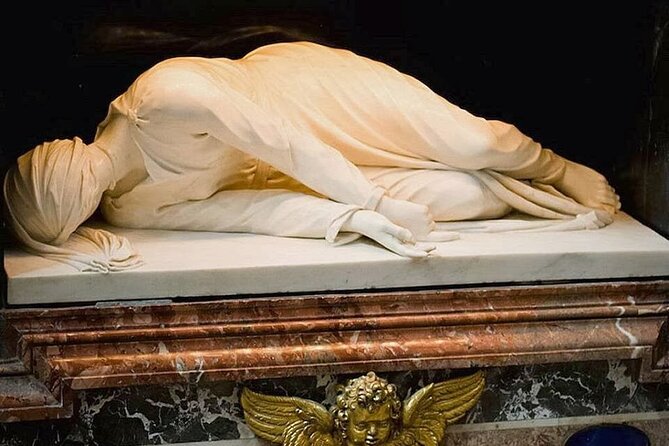
Next up are the Catacombs of San Sebastiano. This is where the tour shifts from layered architecture to underground networks. You’re looking at the original tombs of early Christians, described as a vast system of subterranean underground galleries that crisscross and extend for miles, with multiple stories—often explained as two or three levels.
This stop works best when you treat it as a guided geography lesson. Catacombs can feel confusing on your own because the space is underground and the pathways can blur together in your head. With a guide, you can connect what you’re seeing to why these spaces were organized the way they were, and how the burial network expands beyond the idea of a single tomb.
Duration is about 1 hour 30 minutes, and again, entry is not included. If you’re the type who likes to ask why things were built a certain way, the underground setting makes those answers feel more concrete.
Case Romane del Celio: When Homes Became Churches
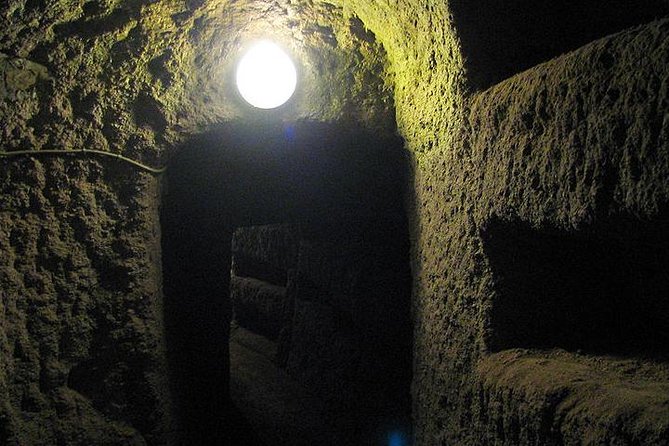
Stop three is Case Romane del Celio, and the angle here is fascinating: transformation. This site is described as a typical example of how the private home of rich Christian people could change into churches. The effect is astonishing in the sense that you’re not just seeing a church and calling it a day—you’re seeing a conversion of purpose, space, and community.
On a guided tour, this kind of stop can be more memorable than the headline monuments because it forces you to think about adaptation. People didn’t have a blank slate. They had buildings, neighborhoods, and changing needs. Case Romane del Celio shows you that Rome’s architecture wasn’t only about grand public statements—it was also about how private and communal life could shift over time.
You’ll have about 1 hour here, with admission not included. Keep in mind that this is a shorter stop than the catacombs and San Clemente, so pace yourself: don’t try to take in every detail at once. Let the guide explain the main transformations, then use the remaining time to connect it visually.
You can also read our reviews of more tours and experiences in Rome






Santa Cecilia in Trastevere: Water, Crafts, and a Neighborhood Outside the Walls
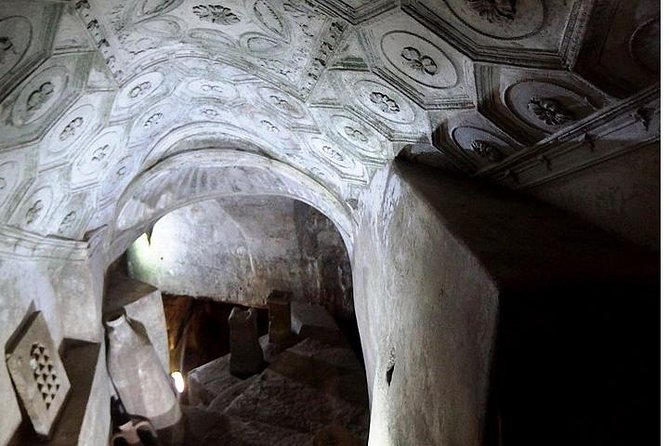
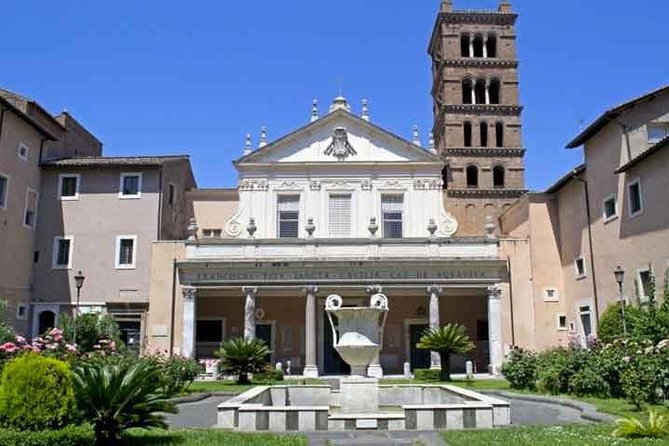
The last stop on the provided route is Santa Cecilia in Trastevere. Even though it’s a church, it’s framed around the Trastevere neighborhood and the everyday systems that supported the area. Trastevere was known as the 14th region of Rome, Transtiberim, which included the Janiculum hill and the Vatican area kept outside the wall boundary.
What I like about this stop is the way it links city planning to daily life. The area’s loop in the river and access to water made crafts possible, including leather curing. It also points to a dense mix of practical spaces—mills, baths, fields, and temples—plus public housing. Then there’s the tradition that Cecilia lived in a home on its foundation, and that tradition connects to why the basilica was built there.
The stop runs about 1 hour, with admission not included. Santa Cecilia is also a reminder that “underground Rome” isn’t just literal tunnels. It’s also how old foundations, neighborhoods, and traditions shape what you see above ground.
How the 7–8 Hour Schedule Actually Feels
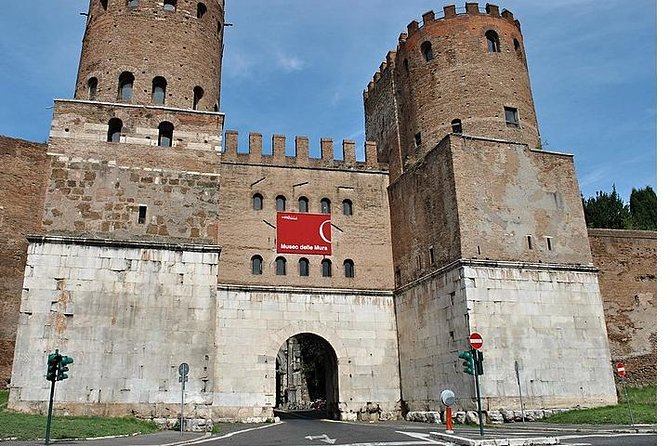
A full day like this can be tiring, but the structure helps. You’re out from 9:00 am for about 7 to 8 hours, with transport handled by a private, air-conditioned car. Bottled water is included, which is a small detail, but it helps you stay comfortable across longer museum-like stretches.
The main time variable is how quickly you move through each site and how many questions you ask. The guide being able to explain each place clearly makes a difference. When the explanations are easy to follow, you don’t waste time trying to translate your own impressions into coherent history.
Two add-on reminders that affect your day:
- Entry fees are not included, so you should expect to pay on-site or at the entrance for each stop that requires it.
- Lunch isn’t included, so you’ll want a plan for food timing so you don’t lose momentum.
If you’re trying to see Rome beyond the obvious hits, this schedule tends to make sense. You’ll trade off some “big monument time” for a more unusual, layered Rome story.
Price and Value: Does $378.16 Make Sense for This Day?
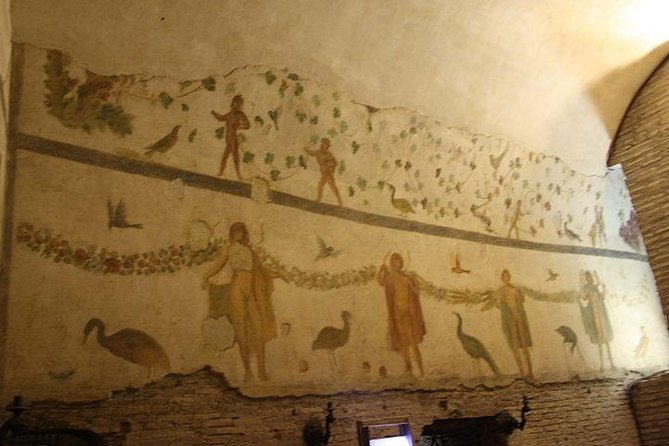
At $378.16 per person, this is not a budget tour. But it’s also not just a ticket bundle. You’re paying for a private driver-guide and an air-conditioned vehicle for most of a workday, plus parking fees, bottled water, and WiFi on board.
So the value math changes depending on who you are:
- If you’re a couple or small group, the private format can feel worth it because you’re not sharing a guide with strangers.
- If you care about the explanation part—how sites relate, why they were built or converted—the guided component is a big part of what you’re buying.
- If you’re counting every euro, the fact that entry fees and lunch are extra matters. Those add-ons can be meaningful on top of the tour price.
Where this tour usually earns its price is comfort and clarity: you get transport, you don’t have to figure out connections between scattered sites, and you’re guided through architecture that benefits from interpretation. Underground and early Christian sites reward guidance more than you might expect.
Who Should Book This Underground Full-Day Tour
This tour is a good fit if you want Rome that feels less like a checklist and more like a story. It’s especially suited to you if you:
- Enjoy architecture and the way buildings change over centuries
- Prefer quieter, less obvious stops over the most famous monuments
- Want a guide with strong English and a calm, scholarly style (this is a recurring theme tied to the Alessandro/Alessandra guide experience)
- Like having space to ask questions without feeling rushed
It’s also a strong option if you value comfort. An air-conditioned car with bottled water and WiFi isn’t a luxury you notice once—you notice it after a few hours when you’re still engaged and not drained.
Should You Book It or Keep It for Another Day?
I’d book this tour if your goal is to understand how Rome’s layers work: literal levels in buildings like Basilica of San Clemente, and underground networks like San Sebastiano, plus transformation stories like Case Romane del Celio. The combination of private transport, guided context, and sites that aren’t the main stage makes it feel like an extra week of city understanding in one day.
Skip it—or at least compare it—if you mainly want the biggest above-ground icons and don’t care much about early Christian spaces or architectural transformation. Also consider your budget carefully since entry fees and lunch are not included.
If you’re the kind of traveler who loves the Rome you can’t find as easily on your own, this is a smart way to buy time, comfort, and guided clarity in one package.
FAQ
How long is the Rome Undergrounds Full Day Guided Tour?
It runs about 7 to 8 hours, starting at 9:00 am.
Is pickup included?
Yes, pickup is offered, and the tour uses an air-conditioned vehicle from central Rome.
Are entry fees included for the sites?
No. Admission ticket(s) are not included, so you should plan to pay entry fees separately.
Is lunch included?
No. Lunch is not included.
Is this a private tour?
Yes. It’s private, so only your group participates.
Can I cancel if my plans change?
You can cancel for a full refund up to 24 hours before the experience’s start time, with free cancellation allowed as stated by the policy.