REVIEW · ROME
Haunted Rome: Eternal City Night Walking Tour
Book on Viator →Operated by Republic Experiences · Bookable on Viator
A walk through Rome with a darker pulse. This Haunted Rome evening stroll turns the centro storico into a storybook of executions, poison, and eerie relics, told as you move from landmark to landmark. It also has the practical bonus of going at night, when you can dodge some of the day crowd and heat.
I really like how the tour keeps the stops close together and easy to connect into one clear thread. I also enjoy the way it blends famous places (like Campo de’ Fiori and Castel Sant’Angelo) with lesser-known corners such as madonelles along narrow lanes. That mix makes the walk feel like Rome, not a checklist.
One thing to watch: even though it’s advertised at around two hours, some departures can run shorter, with extra time taken for longer breaks.
In This Review
- Key things to know before you go
- Why this Haunted Rome walk feels different after dark
- Campo de’ Fiori at night: a famous piazza with a grim start
- Piazza Farnese and the idea of wealthy trouble
- Via del Mascherone and vicolo lanes: the madonnelles that were meant to stop crime
- Ponte Sisto: the oldest bridge and the past that clung to it
- Fontana del Mascherone: don’t drink from Rome’s deadliest fountain
- Chiesa di Santa Maria dell’Orazione e Morte: a church decorated with human remains
- Via di Monserrato: when a building becomes the legend
- Chiesa di Santa Maria in Monserrato degli Spagnoli: scandal with chapel walls
- Via Giulia: cosmetics, poison, and the cost of beauty
- Via dell’Arco dei Banchi: Mastro Titta and the architecture of punishment
- Castel Sant’Angelo finale: angels now, warning signs once
- Guides, pacing, and what to expect from the storytelling
- Price and value: $17.97 for a full night of stories
- Who should book this Haunted Rome tour
- Should you book Haunted Rome: Eternal City Night Walking Tour?
- FAQ
- How long is the tour?
- Where does the tour start and end?
- Is it offered in English?
- Is there an admission ticket for the stops?
- How large is the group?
- What happens if the weather is poor?
Key things to know before you go
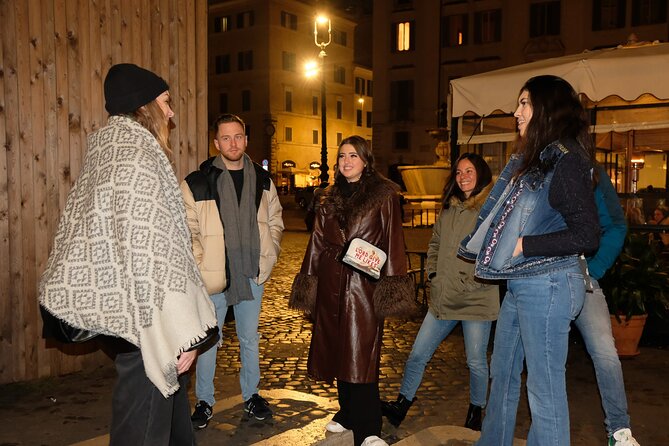
- Small group size (up to 20), which helps you stay together and hear the guide
- Evening timing to reduce day crowds and scorching temperatures
- No separate admission charges listed at the stops on the route
- A dark-history focus, often more crime and true stories than spooky jump scares
- Route covers major + offbeat spots, from Campo de’ Fiori to Castel Sant’Angelo
- English tour with a mobile ticket format
Why this Haunted Rome walk feels different after dark
Rome at night has a different sound. Less tour-bus noise. More street-level life. And on this tour, that setting matters, because the stories are tied to places where something terrible happened—or where people believed something terrible might happen.
You start in the thick of the historic center and end at one of Rome’s biggest landmarks, Castel Sant’Angelo. Along the way, you’re not just looking at monuments. You’re getting the human context behind them: power struggles, public punishment, rumors, and secrets that make the city feel much closer to real life than postcards.
The other big practical win is timing. This is an evening tour designed to help you avoid the worst day crowds and heat. That alone can make it easier to stay alert and actually enjoy the walk.
You can also read our reviews of more walking tours in Rome

Campo de’ Fiori at night: a famous piazza with a grim start
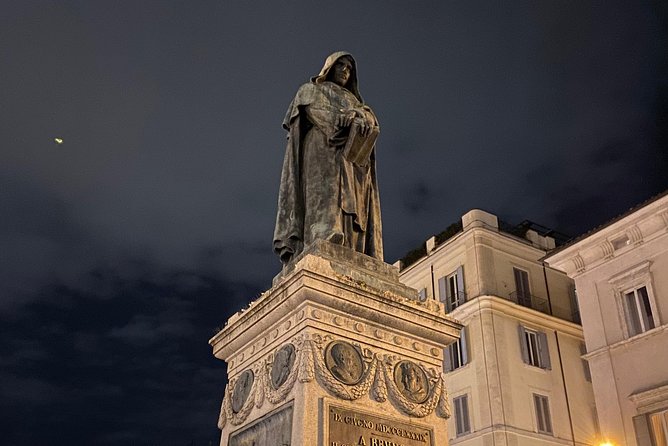
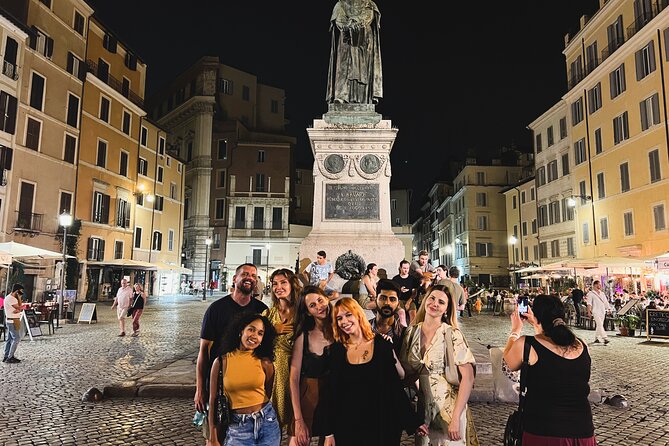
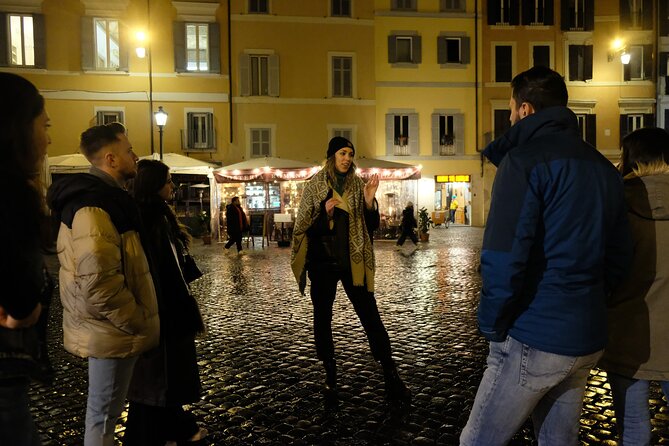
Your evening kicks off at Piazza Campo de’ Fiori, one of Rome’s most recognizable squares. Today it’s known for bars and restaurants, but you’re also reminded that the ground beneath it has held deaths. That’s the tone-setter for the whole tour: even if the location looks relaxed now, the past can be heavy.
What I like about this opening is that it’s immediate. You don’t ease in with vague ghost lore. You get a strong hook and a clear reason to pay attention to what’s around you—facades, corners, and street geometry. It’s the kind of start that makes the rest of the walk click.
A small consideration: Campo de’ Fiori is popular. At night, it’s lively. So if you’re sensitive to noise, plan to bring a steady mindset and keep your ears tuned for the guide.
Piazza Farnese and the idea of wealthy trouble
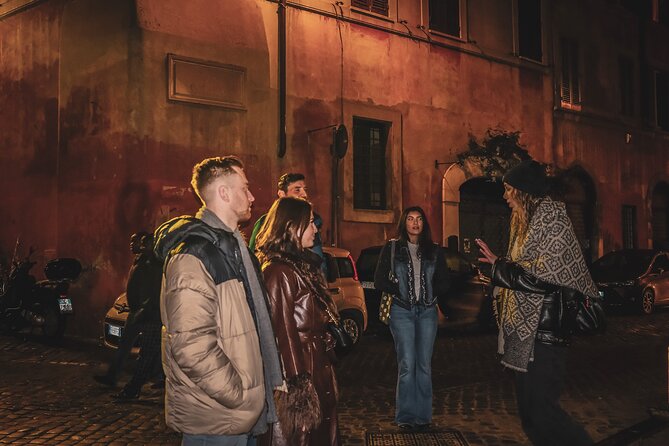
Next you move to Piazza Farnese, a square tied to old-school elite living. The story centers on lavish parties hosted by the city’s wealthy elite—and the idea that even in a glamorous setting, trouble follows.
This stop works because it reminds you that crime and consequences weren’t limited to alleys and executions. Power lived close to the spotlight. You’re also learning how Rome’s social layers map onto geography: where people gathered mattered, and so did who had influence.
Via del Mascherone and vicolo lanes: the madonnelles that were meant to stop crime
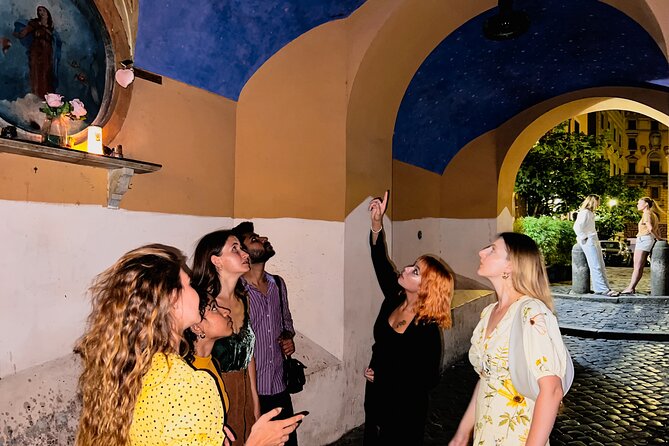
One of the most interesting stretches is around Via del Mascherone & Vicolo dei Venti. Here you’ll hear about the madonelles—little “madonnas” placed along the route—and why they exist. The guide’s focus is on their role as crime-stopping statues, which turns what could look like casual street shrines into something more purposeful.
I love this part because it teaches you how to read Rome at walking speed. You start noticing small details: niches, plaques, and religious images that you’d otherwise pass without a second glance. It also makes the city feel like it has a moral geography—places where people hoped protection would appear.
Ponte Sisto: the oldest bridge and the past that clung to it
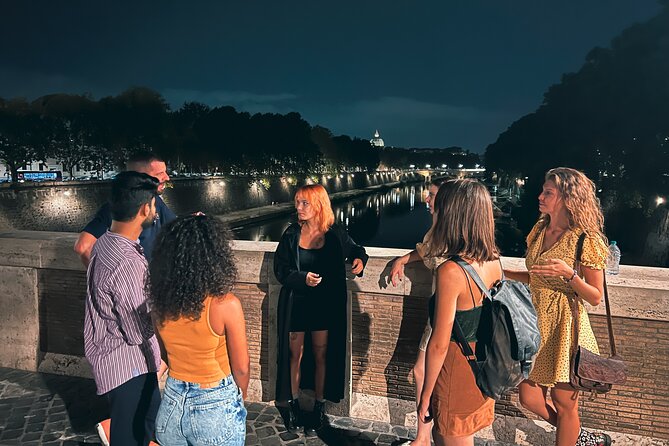
You’ll cross into Ponte Sisto, described as the oldest bridge in Rome. The story attached to it is grim: tragic accidents, power struggles, theft, and suspicious deaths.
This is where the tour’s “dark history” tone becomes very clear. It’s not only about haunting atmospheres. It’s about what happened in real life—and how those events shaped fear and reputation. Standing on a bridge like this, you’re seeing a structure built for daily movement, but you’re also hearing how that movement intersected with danger.
If you’re a person who likes cause-and-effect stories, this stop is a good payoff.
You can also read our reviews of more city tours in Rome



Fontana del Mascherone: don’t drink from Rome’s deadliest fountain
Next comes Fontana del Mascherone. The instruction is simple: whatever you do, don’t drink from Rome’s deadliest fountain.
That line is doing more than setting up a scare. It signals the tour’s recurring theme—objects in plain sight hiding danger. Fountains are everyday landmarks, but on this walk they become linked to poison and betrayal (a point the tour really leans into when it talks about cosmetics and toxins later).
This is the kind of moment where you remember that Rome’s “beauty” and “horror” often sit within the same frame.
Chiesa di Santa Maria dell’Orazione e Morte: a church decorated with human remains
At Chiesa di Santa Maria dell’Orazione e Morte, the focus turns to mortality head-on. You’ll hear how this 17th-century church is decorated in human remains and functions as a reminder that death is never far away.
If you’re expecting a traditional ghost story, this stop may surprise you. It’s unsettling in a different way: not supernatural fear, but the physical presence of death within religious space.
This is also a strong moment for perspective. Rome’s most famous sights can feel grand and distant. A church like this can feel intimate and close, even if you’re just standing outside or viewing what the tour brings to your attention.
Via di Monserrato: when a building becomes the legend
Next is Via di Monserrato, an apartment block described as one of the most haunted places in Rome.
This is where the tour balances “true crime-ish past” with the kind of legend that people repeat because it refuses to go away. Haunted buildings are a universal story device, but Rome has the added ingredient of old construction and layered ownership. So the legend feels anchored.
From a practical standpoint, this stop also helps you connect the dots between tiny street segments and big city myths.
Chiesa di Santa Maria in Monserrato degli Spagnoli: scandal with chapel walls
You then shift to Chiesa di Santa Maria in Monserrato degli Spagnoli, where the tour leans into scandalous stories with an almost soap-opera feel.
This part is fun, especially if you like character-based history. You’re not just learning dates. You’re hearing how people behaved, schemed, and suffered consequences. And because this is a church in a real neighborhood, it lands with extra realism.
If you’ve ever visited Rome and thought, Everyone lived their lives so dramatically back then, this stop confirms it.
Via Giulia: cosmetics, poison, and the cost of beauty
One of the most talked-about stops on the route is Via Giulia. You’ll hear about an iconic building that was once a beauty shop—and the story of when cosmetics can kill.
This is such a clever angle because it’s both believable and shocking. Beauty culture has always existed; the difference is the extremes. The guide connects beauty products to power, secrecy, and harm, and you start seeing Rome as a place where “public image” and “private danger” were tightly linked.
If your interests run toward crime stories, this will likely be one of your favorite segments.
Via dell’Arco dei Banchi: Mastro Titta and the architecture of punishment
Next is Via dell’Arco dei Banchi, where a charming house on an unsuspecting street connects to the chilling story of Mastro Titta, described as Rome’s most infamous executioner.
This stop does something important: it shows you how violence becomes normal in the city’s fabric. You walk past a place that looks like any other home, then the story turns it into a node in Rome’s history of punishment.
This is also a reminder that executioners were part of the social order, not just distant criminals.
Castel Sant’Angelo finale: angels now, warning signs once
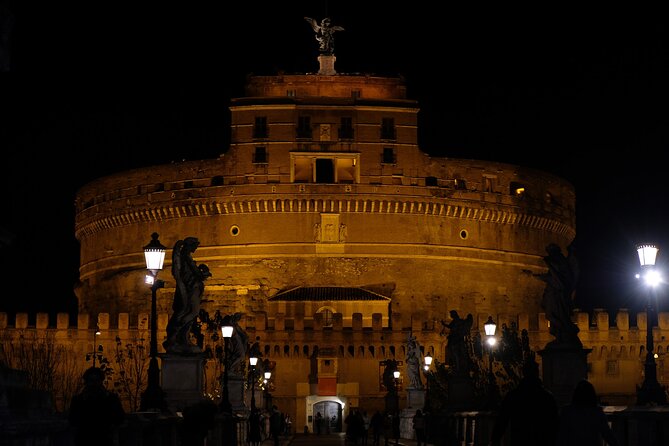
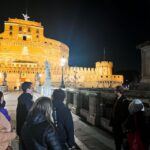
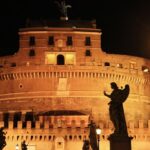
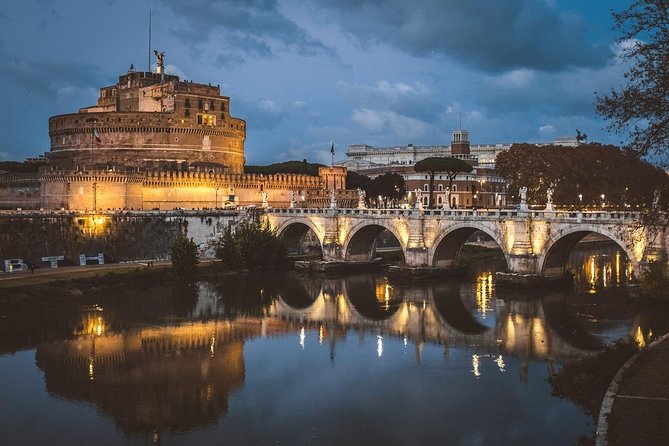
The walk finishes at Castel Sant’Angelo. The tour story explains that the bridge used to expose bodies of the executed as a warning to sinners. Today, you’re surrounded by angel statues, and the narrative shifts toward the Cenci family and how their fatal end shaped what people remembered.
Finishing here is smart because it gives you a big visual capstone. You can compare past and present instantly: a fortress and a complex of meaning that still sits in the middle of modern Rome.
If you want a clear emotional landing after a night of heavy stories, this ending provides it.
Guides, pacing, and what to expect from the storytelling
This tour feels very guided. The success of the experience often comes down to the person leading it and how they handle group control—keeping everyone together and keeping the story audible in busy streets.
The good news: the tour has a small group limit (max 20), and many guides are praised for clear, entertaining storytelling. Names that show up in the guide line-up include Antonio, Simon, Sarah, Maham, Domenica, Diletta, Ana, Vanessa, Clara, Ben, and Bruce. I’d treat that as a sign you may get a performer-type guide rather than someone reading facts off a page.
Still, there’s one practical reality. Street noise can interfere, especially in crowded lanes and near piazzas. If your hearing is picky, you might want to stand closer to the guide and avoid lingering at the back.
Also, pacing can vary. Even though the tour is advertised as around two hours, some departures appear to finish early or include longer pauses. If you have a strict dinner reservation right after, I’d schedule a bit of breathing room.
Price and value: $17.97 for a full night of stories
At $17.97 per person for about two hours, this tour is priced like a solid add-on to your Rome plans, not a big splurge. And the value works for a few reasons.
First, the stops are packed into one evening walk across central Rome, so you’re not spending sightseeing energy on transit. Second, you’re getting story context for major landmarks and smaller, easy-to-miss details. That makes the price feel lower than it sounds once you’re actually watching Rome through a different lens.
Third, the itinerary lists the stop entrances as free, which means you’re mostly paying for the guided interpretation, not for entry fees.
If you’re trying to balance a Rome itinerary, this fits well as your first night walk. It helps you get your mental map—what areas feel connected, where the city’s “power stories” concentrated, and which streets you’ll want to return to in daylight.
Who should book this Haunted Rome tour
Book it if you want:
- A night walk through Rome’s historic center with dark stories tied to real places
- A tour that mixes famous sites with side streets and odd details like madonelles
- Crime and consequence history more than jump-scare horror
Skip it if you want:
- A tour that’s purely ghost-spooky. The tone trends toward darker true stories and unsettling history, not constant supernatural activity.
- A perfectly timed two-hour slot every time. Some runs seem shorter.
This is also a great match for people who like to travel with curiosity rather than checklists. If you enjoy asking Why is this here? you’ll get a lot from the way the guide connects each spot to a wider story.
Should you book Haunted Rome: Eternal City Night Walking Tour?
I think this is worth booking for most first-time visitors who want a memorable way to see Rome after dark. The price is reasonable, the route is concentrated, and the storytelling angle gives you a different kind of satisfaction than just sightseeing.
If you’re going because you want creepy ghosts, adjust your expectations toward dark history and chilling true stories. If you’re okay with that, you’ll likely leave with streets you can picture, and landmarks that feel personal instead of generic.
FAQ
How long is the tour?
The tour runs for about 2 hours.
Where does the tour start and end?
You start at Piazza Campo de’ Fiori and end at Castel Sant’Angelo (Lungotevere Castello, 50).
Is it offered in English?
Yes, the tour is offered in English.
Is there an admission ticket for the stops?
The route lists admission tickets as free for the stops included.
How large is the group?
The tour has a maximum group size of 20 travelers.
What happens if the weather is poor?
The experience requires good weather. If it’s canceled due to poor weather, you’ll be offered a different date or a full refund.